




Abstract
Chlamydia pneumoniae is a human pathogen that causes multiple diseases worldwide. Despite appropriate therapy with antichlamydial antibiotics, chronic exacerbated diseases often occur and lead to serious sequelae. The use of the macrolide clarithromycin and the fluoroquinolone ofloxacin has improved the treatment of chlamydial infection, but therapy failure is still a major problem. In this work, we studied the pretreatment with natural polyphenols and subsequent treatment with clarithromycin or ofloxacin. The phenolic compounds resveratrol and quercetin improved the antichlamydial effect of clarithromycin and ofloxacin. In particular, resveratrol at 40 μM and quercetin at 20 μM exhibited significant growth inhibition on C. pneumoniae in presence of clarithromycin or ofloxacin compared to controls. In addition, we demonstrated that both resveratrol and quercetin decreased IL-17 and IL-23 production in a time-dependent manner in C. pneumoniae-infected cells. The results showed a particularly strong inhibition of the IL-23 levels released with combined treatment of resveratrol or quercetin and ofloxacin or clarithromycin, suggesting that the combined treatment may afford a synergistic effect in controlling Chlamydia infections.
Introduction
C
Chlamydiae show a unique developmental life cycle that includes the metabolically inactive but infective elementary bodies (EBs) and the metabolically active but noninfective reticulate bodies, which multiply inside the host cell cytoplasm. 2
C. pneumoniae is able to enter a nonreplicative persistent state within the host cells, forming morphologically aberrant inclusions.18,36 Persistent C. pneumoniae is refractory to antibiotic treatment and is associated with chronic infection, as demonstrated in an infected vasculature. 18
This intracellular bacterium has been shown to survive 30 days of antibiotic treatment in a cell culture mimicking chronic infection, 24 and similar persistence has been shown in animal models. 43 Hammerschlag et al. 17 described five patients with culture-positive C. pneumoniae respiratory infections who had multiple positive cultures over several months despite specific antibiotic therapy. The most commonly used antibiotics against C. pneumoniae are ofloxacin and clarithromycin. Clarithromycin (macrolide) is highly effective against Chlamydia in vitro, but resistance to this compound, can develop. 30
It has been demonstrated that in the Mycobacterium avium complex, the activity of the efflux pumps has been identified as an important contributor to bacterial resistance and is recognised as an important cause of intrinsic antibiotic resistance. 45 Ofloxacin (fluoroquinolone) is widely used against Chlamydia but it may also induce persistence instead of eradication if the cellular concentration remains sub-inhibitory. This antibiotic prevents DNA replication through the inactivation of the DNA-gyrase enzyme, which is present exclusively in bacterial DNA, and has little effect on metabolically inactive EB and only a partial effect on the aberrant chlamydial bodies seen in chronic infections. 28
High doses and prolonged treatment are often needed to achieve a clinical cure, and there is still a risk of persistence or aberrant structures of C. pneumoniae in the tissues after treatment. 2 Thus, it is extremely important to find new compounds that can be used in the treatment or prophylaxis of C. pneumoniae infections.
In addition to general antibiotics, some in vitro chlamydiocidal compounds are known. For example, the natural flavonol, rhamnetin, was shown to inhibit chlamydial growth and recurrence completely at a concentration of 50 μM. 2 A large number of antimicrobial substances called phytoalexins (including flavonoids) are found in nature, and they make up a variable group of compounds playing important roles in the natural defense against several organisms. 40
Resveratrol is a natural compound produced by some spermatophytes, such as grapes and other plants 11 and has been shown to be anti-inflammatory. The effects of flavonols and flavones on the enzymes regulating cell division and proliferation and inflammatory and immune responses are well documented.3,27,29
Mechanistic studies demonstrated that resveratrol also possesses antioxidant, anticancer and antiaging properties. 47 In particular, Bae et al. 4 has indicated that resveratrol functions not only as a chemoprotective agent in A549 human nonsmall-cell lung cancer but also has therapeutic effects against inflammatory diseases and existing lung carcinoma. In addition, Xuzhu et al. 47 demonstrated that resveratrol modulates inflammatory diseases, such as arthritis by reducing the number of Th17 cells and the production of IL-17. Th17 cells are induced after infection with Mycobacterium tuberculosis, 20 Francisella tularensis and Chlamydia muridarium, 19 suggesting a role for Th17 cells in immunity against intracellular pathogens. In particular, IL-17A has been reported to play an important role in the pathogenesis of respiratory conditions, such as bacterial pneumonia and asthma.31–34 Indeed, the concentration of IL-17A and the percentage of IL-17A-positive cells in BAL fluid from patients with asthma were higher compared with those in BAL fluid from healthy subjects. 31
The polyphenols in tea have been shown to inactivate C. pneumoniae in vitro, 48 and the antichlamydial activity of at least one flavonoid (luteolin) has also been demonstrated in vivo. 44 Since the detailed mechanisms are not fully understood, in the present study, we evaluated the inhibitory effects of resveratrol and quercetin with and without clarithromycin or ofloxacin on C. pneumoniae growth. In addition, we investigated whether these compounds in the presence or absence of antibiotics exert a regulatory effect on the expression of the proinflammatory cytokines IL-17 and IL-23 in C. pneumoniae-infected pulmonary epithelial cells.
Materials and Methods
Materials
Resveratrol (trans-3,4′,5-trihydroxystilbene) and quercetin (3,3′,4′,5,7-pentahydroxyflavone; ≥98% purity) were obtained from Sigma Chemicals Co. (St. Louis, MO). Resveratrol was dissolved in methanol at a concentration of 5, 10, 20, and 40 μM, while quercetin was solubilized in dimethyl sulfoxide at the same concentrations. Fetal bovine serum (FBS), RPMI-1640,
Ofloxacin and clarithromycin were purchased from Abbott Italia (Rome, Italy). The solutions were prepared on the day of the experiment.
Cell line and culture
The A549 human type II alveolar epithelial cell line (American Type Culture Collection ATCC CCL-185) at passage numbers 5–15 was used in this study. A549 cells were maintained in Dulbecco's modified Eagle's medium (DMEM) F12 (Sigma-Aldrich, Oakville, ON, Canada) supplemented with 10% heat-inactivated FBS, 1%
C. pneumoniae strain
C. pneumoniae (AR39) was propagated in HEp-2 cell monolayers, as described by Roblin et al. 38 In brief, C. pneumoniae was inoculated onto a preformed monolayer of HEp-2 cells in 35-mm-diameter wells, centrifuged at 1,000g for 60 min at 25°C and incubated at 37°C with 5% CO2 for 60 min. Supernatants were replaced with growth medium consisting of RPMI-1640 containing 1 μg ml−1 of cycloheximide. Infected cultures were incubated from 24 to 72 hr at 37°C in 5% CO2. C. pneumoniae was harvested by disrupting HEp-2 cells with glass beads, followed by sonication and centrifugation at 250g to remove cellular debris. For some experiments, supernatants containing C. pneumoniae were further centrifuged at 20,000g for 20 min to pellet the EBs. The EB pellet was then suspended in sucrose–phosphate–glutamate buffer, aliquoted, and stored at −70 C. 9 Infectivity titers of chlamydial stocks were quantified by the titration of the inclusion forming units (IFU) per milliliter in HEp-2 cells. These titers were used to determine the infectious doses for the cell lines studied. Cell cultures and chlamydial stocks were confirmed to be free of Mycoplasma infections using 4,6-diamidino-2-phenylindole fluorescent staining (Sigma-Aldrich S.r.l., Milan, Italy). In addition, contamination with Mycoplasma was excluded regularly by the polymerase chain reaction (PCR) Mycoplasma test using specific primers (MWG Biotech, Martinsried, Germany).
Pretreatment of A549 cells before infection
To analyze whether resveratrol and quercetin could induce inhibition of the C. pneumoniae growth and activity, A549 cells were preincubated for 24 hr with resveratrol or quercetin at concentrations 5, 10, 20, and 40 μM before infection. Infection was performed according to the infection protocol.
Effect of resveratrol or quercetin on A549 cell proliferation and viability
To study the effect of resveratrol or quercetin on cell proliferation and viability, A549 cells were seeded at 5×10⁴ cells/well in 96-well plates and allowed to grow in the medium for 24 hr. The cells were then washed once in serum-free RPMI-1640 medium and incubated for 24 hr with resveratrol or quercetin at concentrations of 40 and 20 μM, respectively, (preliminary experiments demonstrated that these concentrations were optimal). Cell proliferation and viability were measured as described by Rizzo et al. 37
In vitro infection
The concentration effect of the compounds was studied with traditional immunofluorescence (IF) labeling.
39
A549 cells were seeded onto 6-well plates at a density of 5×10⁴ cells/well in the growth medium. The cells were then infected with C. pneumoniae by centrifugation at 1,000g for 60 min at a multiplicity of infection (MOI) of 4 IFU/cell (a preliminary study showed this MOI to be the optimum rate) and incubated for 24, 48, and 72 hr. For some experiments, A549 cells were pretreated with polyphenols for 24 hr, and then infected with C. pneumoniae without antibiotics or with 2 μg/ml ofloxacin or 2 μg/ml clarithromycin. The count of IFU was evaluated as described by Salin et al.
39
In brief, at indicated times, the medium was removed from the wells and the coverslips were washed twice with PBS and fixed in methanol for 10 min. The coverslips were allowed to dry and the chlamydial inclusions were stained with fluorescein isothiocyanate (FITC)-conjugated anti-MOMP monoclonal antibody (Dako Cytomation, Milan, Italy) according to the manufacturer's instructions. After removal of the unbound antibody by three washes with PBS, the stained inclusions were examined under a fluorescence microscope (AxIOSKop2 ZEISS; Carl Zeiss, Milan, Italy) with a 400× magnification. The formed inclusions were counted from four eye fields of each coverslip, totalling 12 observations per compound and the chlamydial growth inhibition percentage was determined using the following formula:
Measurement of cytokine concentrations
To investigate whether C. pneumoniae induced IL-17 and IL-23 production in A549 cells pretreated with resveratrol 40 μM or quercetin 20 μM, the cells were infected with viable bacteria. In addition, to determine the effect of the polyphenols on the infected cells in the presence of antibiotics, each serially diluted experimental and control sample (containing no polyphenols) was then incubated with 2 μg/ml of ofloxacin or clarithromycin for 24, 48, and 72 hr.
The concentrations of IL-17 and IL-23 in the culture supernatants were determined by an enzyme-linked immunosorbent assay (ELISA), (R&D Systems, Minneapolis, MN), while the cells were collected for total RNA extraction by reverse transcription (RT)-PCR analysis. Preliminary experiments showed that pretreatment with the compounds resveratrol or quercetin did not induce a release of the cytokines studied.
RT-PCR analysis
Total RNA was isolated by a High Pure RNA isolation Kit (Roche Diagnostics, Milan, Italy) from A549 cells infected with viable C. pneumoniae for 24, 48, and 72 hr. Total cellular RNA (100 ng) was reverse-transcribed (Expand Reverse Transcriptase; Roche Diagnostics) into complementary DNA (cDNA) using random hexamer primers (Random hexamers; Roche Diagnostics, Milan, Italy) at 42°C for 45 min according to the manufacturer's instructions. Aliquots of 2 μl of cDNA were amplified in a reaction mixture containing in a final volume of 50 μl, 10 mM Tris-HCl (pH 8.3), 1.5 mM MgCl2, 50 mM KCl, 200 μM dNTP and 2.5 units Taq DNA polymerase (Roche Diagnostics), and 0.5 μM primers for IL-17 and IL-23. For the amplification, 0.05 μM primers for β-actin were used. Table 1 shows the primer sequences, PCR conditions and product sizes. The reaction was carried out in a DNA thermal cycler (Gene Amp PCR System-2400; Applied Biosystems, Foster City, CA). All PCR assays were carried out in the exponential phase of amplification and started with a 3-min denaturation step at 95°C. Samples without DNA were subjected to PCR as negative controls. To exclude contamination by genomic DNA, PCR was carried out without a previous RT reaction. The PCR products were analyzed by electrophoresis on 1.6% agarose gel in Tris-borate-EDTA (TBE). The identity of the amplification products was confirmed by comparing their size with the size expected from the known gene sequence. For densitometry analysis, the intensity of the bands was measured by NIH image V 1.6 software and normalized with β-actin intensity.
RT-PCR, reverse transcription–polymerase chain reaction.
C. pneumoniae growth in the presence of anti-Il-23 antibody
For some experiments, A549 cells pretreated for 24 hr with resveratrol or quercetin (40 and 20 μM, respectively) were incubated for 48 hr with C. pneumoniae (preliminary experiments demonstrated that this time of infection was the best) and anti-Il-23 antibody (Santa Cruz Biotechnology, Inc., Santa Cruz, CA) or goat IgG antibody (Santa Cruz) at concentrations of 1,000 ng/ml. The cells were stained and counted as described in section In Vitro Infection.
Statistical analysis
The significance of the differences in the results of each test and the relative control values was determined with the Student's t-test. Values of p<0.05 were considered statistically significant.
The data are presented as means±standard deviation (SD) of three independent experiments.
Results
Effect of resveratrol or quercetin on A549 cell proliferation and viability
We first performed a time-response experiment to determine whether resveratrol or quercetin can modify the proliferation of A549 cells. Figure 1A and B showed that resveratrol and quercetin at concentrations 40 and 20 μM, respectively, after 24 hr of treatment had no significant effect on cell proliferation and viability compared to cells alone, as determined by the colorimetric MTT assay and lactate dehydrogenase (LDH) activity, respectively. However, longer times (48 and 72 hr) significantly reduced cell proliferation and viability. In particular, after 48 hr in the presence of resveratrol or quercetin there was a proliferation of 70%±2.3% and 73%±2.4%, respectively, compared to the control (86%±3.0%). At 72 hr post-treatment no further significant variation was observed. These results were confirmed by LDH activity.
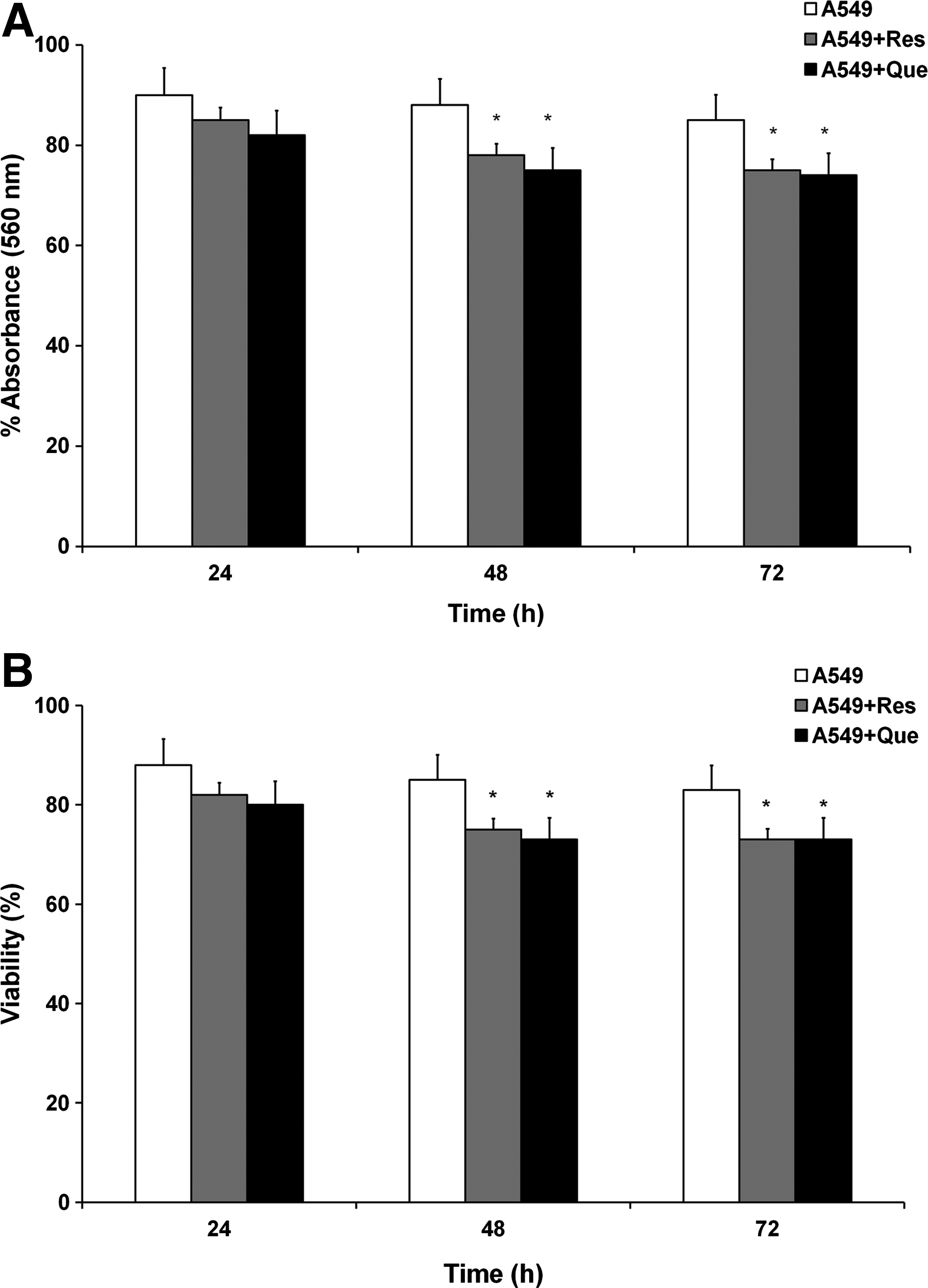
Effect of resveratrol (Res) (40 μM) and quercetin (Que) (20 μM) on proliferation
Effect of resveratrol or quercetin on C. pneumoniae growth in A549 cells
To assess the antichlamydial effect of the compounds, A549 cells were incubated with resveratrol or quercetin at a concentration of 5, 10, 20, and 40 μM for 24 hr and subsequently infected with C. pneumoniae and incubated for another 72 hr. Figure 2A shows that A549 cells exposed to different concentrations of the polyphenols induced activity against C. pneumoniae in a concentration-dependent manner. In particular, resveratrol and quercetin at 40 and 20 μM, respectively, showed the greatest activity towards C. pneumoniae at 48 hr. Both resveratrol and quercetin showed inhibition of C. pneumoniae growth in a time-dependent manner (Fig. 2B). Resveratrol showed a lesser inhibition of C. pneumoniae growth at 24 hr postinfection (25%±2.3%) and a maximum (37%±2.5%) inhibition at 48 hr postinfection, as determined by IF. Figure 3A shows that resveratrol at concentration 40 μM after 48 hr of treatment determined a significant inhibition of the IFU (40%±2.4%) compared to the control (nonpretreated infected cells) (Fig. 3B). No further significant increase in growth inhibition was observed between 48 and 72 hr. Under the same culture conditions, quercetin at concentration 20 μM determined a similar profile. All compounds in this study were nontoxic to the host cells, as established by the trypan blue test (data not shown).
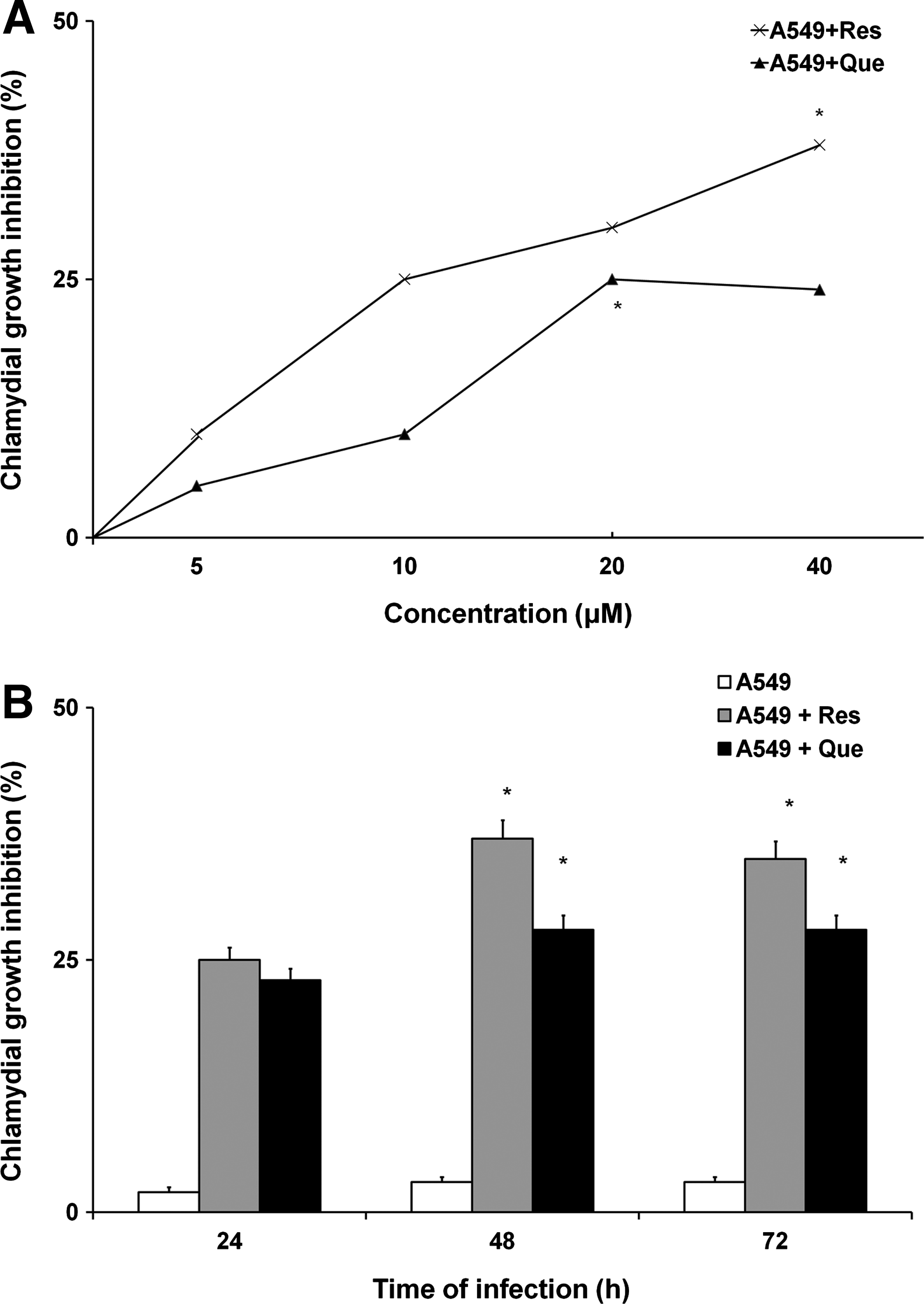
Effect of Res and Que at concentrations 5, 10, 20, and 40 μM on Chlamydial growth inhibition in A549 cells infected with Chlamydia pneumoniae (MOI=4) at 48 hr
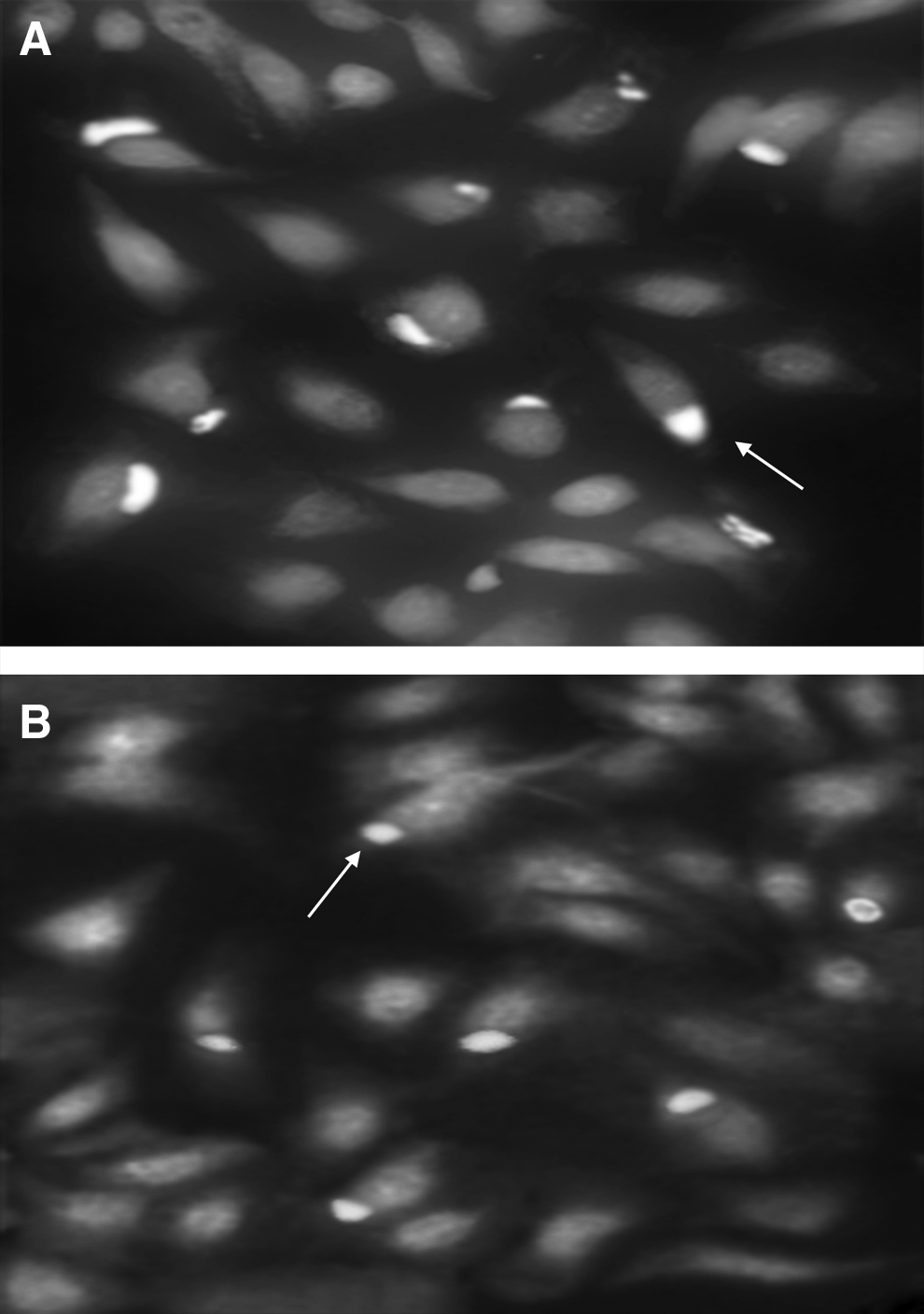
A representative experiment of A549 cells pretreated and infected with C. pneumoniae after 48 hr of incubation. The pretreated
Effect of resveratrol or quercetin and antibiotics on C. pneumoniae growth in A549 cells
To determine whether polyphenol pretreatment enhances the antibiotic sensitivity to C. pneumoniae growth in A549 cells, we investigated the effect of resveratrol and quercetin on ofloxacin or clarithromycin sensitivity. The A549 cells were preincubated with 40 μM of resveratrol or 20 μM of quercetin for 24 hr, and then infected with C. pneumoniae in the presence of ofloxacin or clarithromycin (2 μg/ml) for 24–72 hr. When the C. pneumoniae-infected cells were treated with ofloxacin, a time-dependent inhibition of C. pneumoniae growth was seen: at 48 hr of infection in the presence of ofloxacin, there was a 55%±2.6% inhibition of C. pneumoniae growth; no further significant variation was observed at longer times (Fig. 4A). When the cells were pretreated with resveratrol for 24 hr and infected in the presence of ofloxacin (2 μg/ml) for 48 hr, the C. pneumoniae growth inhibition increased by at least 20% (80%±3.0% vs. 55%±2.8% control). Similarly to resveratrol pretreatment, quercetin pretreatment (20 μM) at 48 hr induced C. pneumoniae growth inhibition (74%±3.0% vs. 55%±2.8% control). Figure 4B shows that under similar culture conditions, treatment with clarithromycin in cells pretreated with the polyphenols determined a similar growth inhibition compared to treatment with ofloxacin. In particular, at 48 hr postinfection and in the presence of clarithromycin, pretreatment with resveratrol or quercetin induced an increase in growth inhibition to 85%±3.1% and 78%±3.0%, respectively, compared to the control (60%±2.8%).
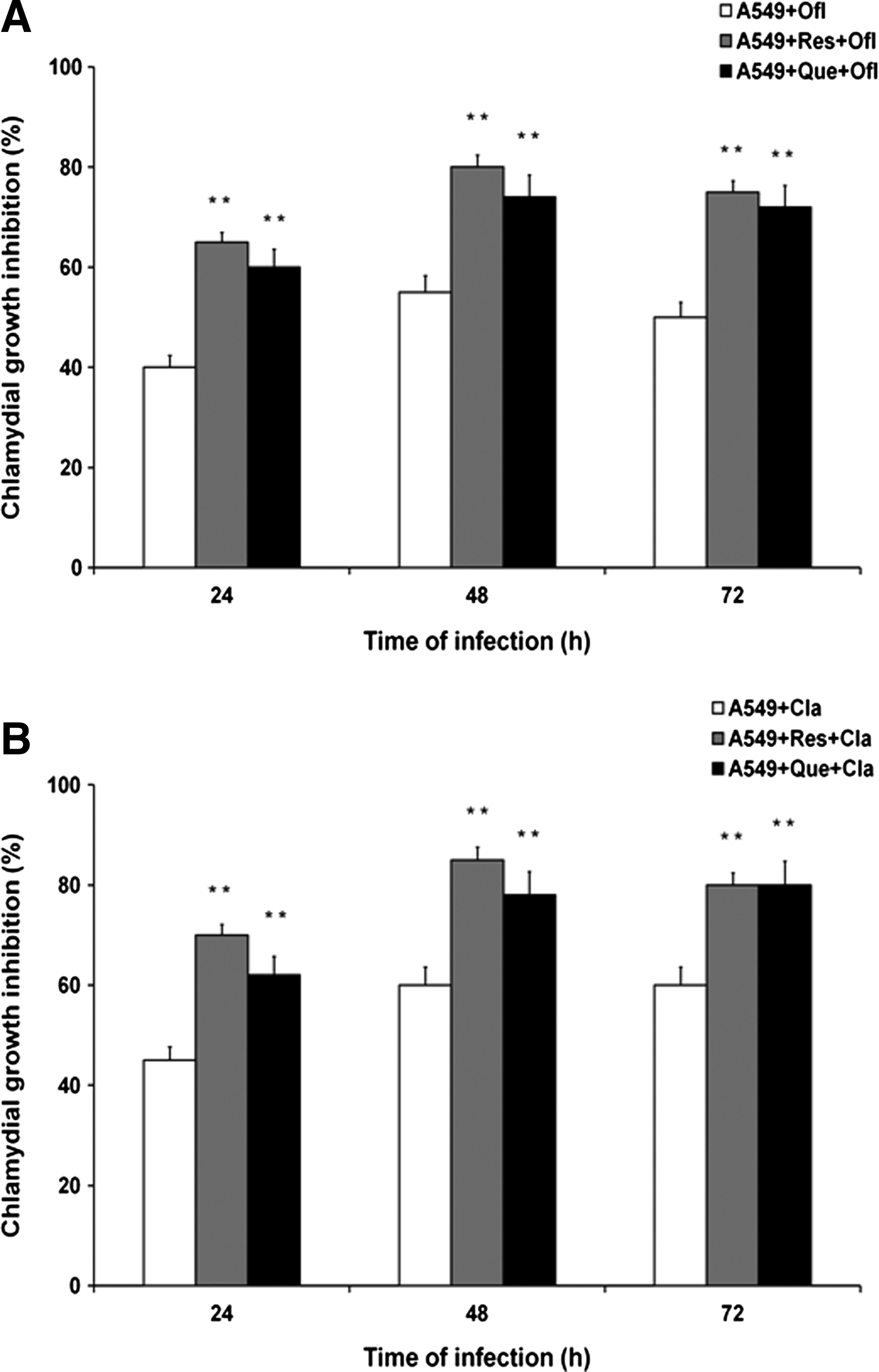
Effect of Res (40 μM) and Que (20 μM) in A549 cells infected with C. pneumoniae (MOI=4) at 24, 48, and 72 hr in presence of ofloxacin (Ofl)
Expression of proinflammatory cytokines in A549 cells treated with polyphenols and infected with C. pneumoniae
A549 cells were pretreated with resveratrol or quercetin at 40 and 20 μM, respectively, for 24 hr, and then infected with C. pneumoniae for up to 72 hr; the cell samples were evaluated for IL-17 and IL-23 in the culture supernatants by ELISA immunoassay (Fig. 5). The results obtained showed that at the times considered, resveratrol and quercetin pretreatment did not determine any significant difference in the IL-17 and IL-23 production by A549 cells compared to the controls (nonpretreated; data not shown). On the contrary, C. pneumoniae infection alone of A549 cells determined an increased release of both IL-17 and IL-23 (Fig. 5A, B). Pretreatment for 24 hr with resveratrol or quercetin brought about a decreased cytokine release. Resveratrol pretreatment of infected cells at 24 hr induced a lesser decrease in IL-17 release (80±2.7 pg/ml), similar to that obtained with quercetin (75±2.6 pg/ml), while after 48 hr of infection a greater decrease in the cytokine production was observed, compared to the control (cells infected but not pretreated) (Fig. 5A). Resveratrol or quercetin pretreatment induced a decrease in the IL-23 production, with a maximum effect (320±3.9 and 300±3.8 pg/ml, respectively) after 48 hr of infection compared to the cells without pretreatment (450±4.2 pg/ml) (Fig. 5B). Also in this case, no further significant variation was observed at 72 hr postinfection. No detectable IL-17 or IL-23 production by unstimulated A549 cells was seen with the assay used (data not shown).
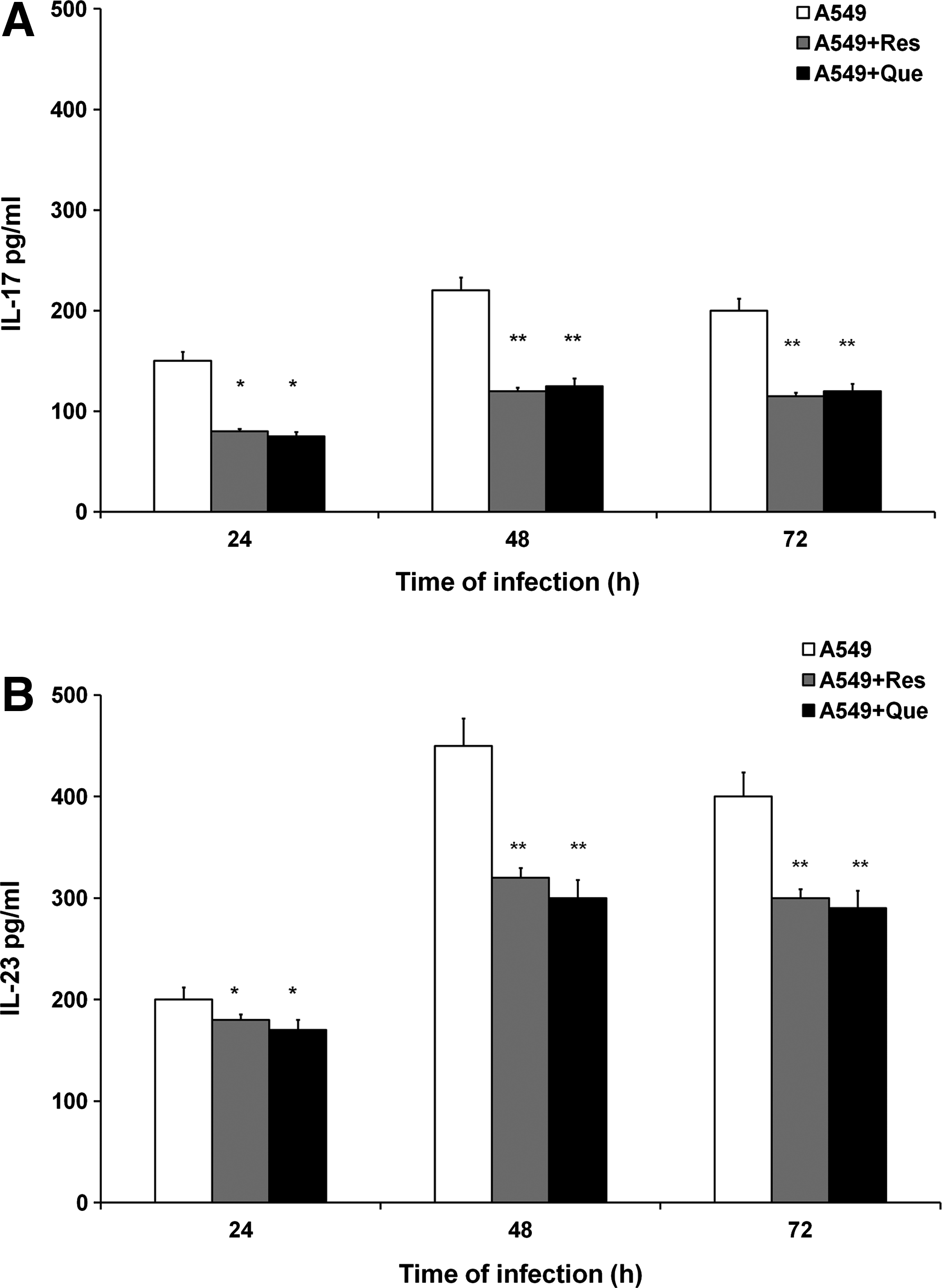
IL-17
The expression of inflammatory cytokines induced by combined treatment with polyphenols and antibiotics
The proinflammatory potential of C. pneumoniae was assessed using A549 cells: C. pneumoniae induced an elevated IL-23 production and a lesser IL-17 production. To evaluate whether resveratrol or quercetin treatment combined with antibiotics influenced the production of proinflammatory cytokines, we investigated the cytokine production after pretreatment with resveratrol or quercetin and subsequent treatment with ofloxacin or clarithromycin. When ofloxacin was added, there was an increased inhibitory effect on the production of both IL-17 and IL-23, with a maximum inhibitory effect at 48 hr postinfection (Fig. 6A, B). An even greater effect was seen with the combination of resveratrol or quercetin and clarithromycin compared to the controls (infected cells in presence of antibiotics but not pretreated with the polyphenols) (Fig. 6C, D).
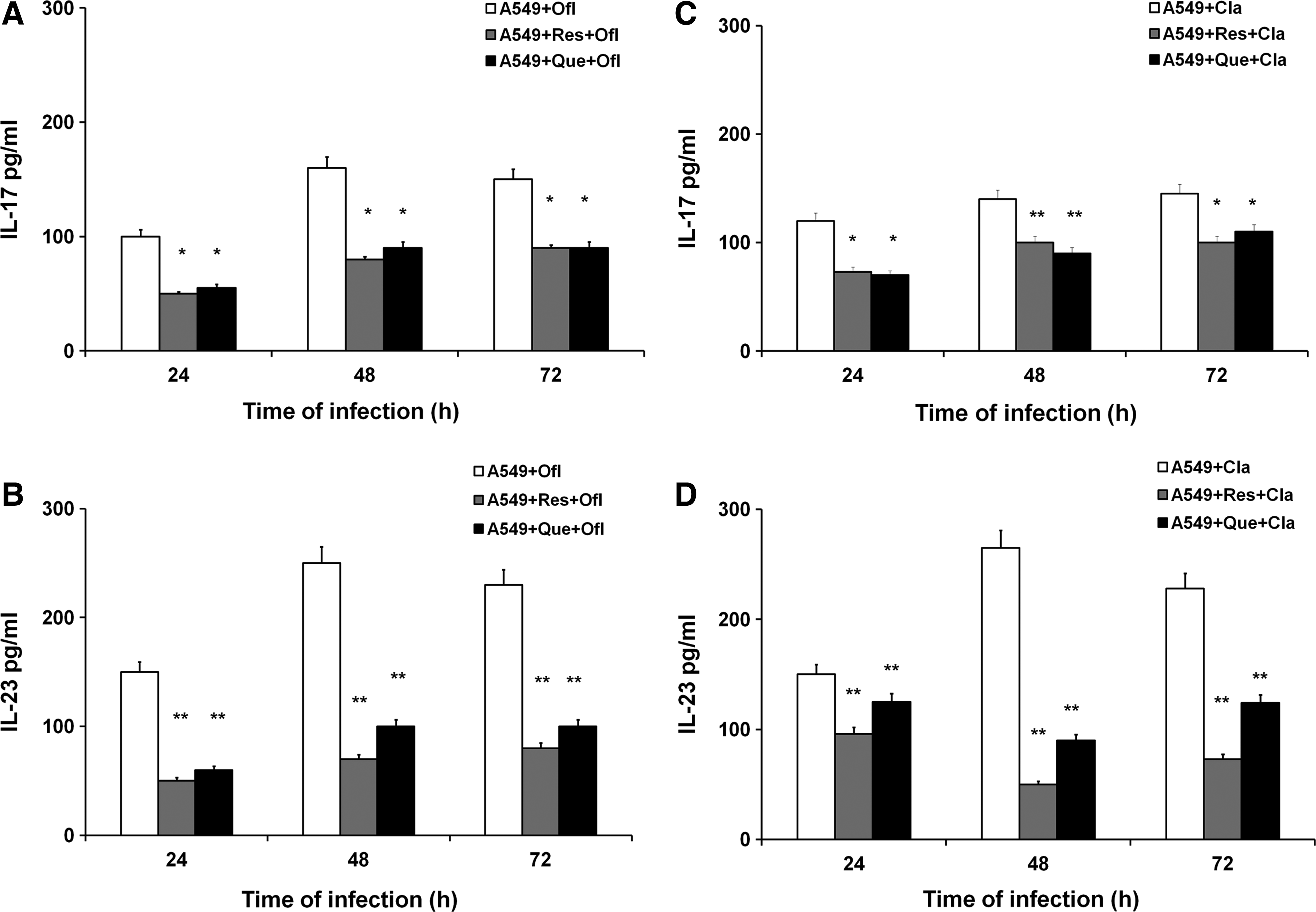
IL-17 and IL-23 secretion in A549 cells pretreated with Res or Que and infected with C. pneumoniae (MOI=4) in presence of Ofl
The combined resveratrol+clarithromycin treatment determined a greater protective effect, since the production of IL-17 after 48 hr of infection decreased (100±2.8 pg/ml) compared to the control (140±2.9 pg/ml), and the release of IL-23 at 48 hr postinfection showed a greater decrease (50±2.3 pg/ml) compared to the control (265±3.6 pg/ml) (Fig. 6C, D). A similar profile, albeit to a lesser proportion, was obtained for quercetin and clarithromycin combined treatment (Fig. 6C, D) compared to resveratrol and clarithromycin treatment.
To confirm further the effect of resveratrol or quercetin on IL-17 and IL-23, the mRNA levels were determined by RT-PCR at 48 hr postinfection in the presence of the antibiotics. Consistent with the results from ELISA analysis, treatment with ofloxacin decreased the levels of IL-17 and IL-23 secretion about 1.5- and 2-fold, respectively, compared to the control, and pretreatment with resveratrol further decreased the induction of cytokines almost 2.5- and 3-fold, respectively, while quercetin pretreatment induced a decrease of 2.2- and 2.7-fold, respectively (Fig. 7A, B). The mRNA expression of the proinflammatory cytokines induced by C. pneumoniae infection decreased after combined treatment with resveratrol or quercetin and clarithromycin to a greater extent compared to ofloxacin (Fig. 7C, D).
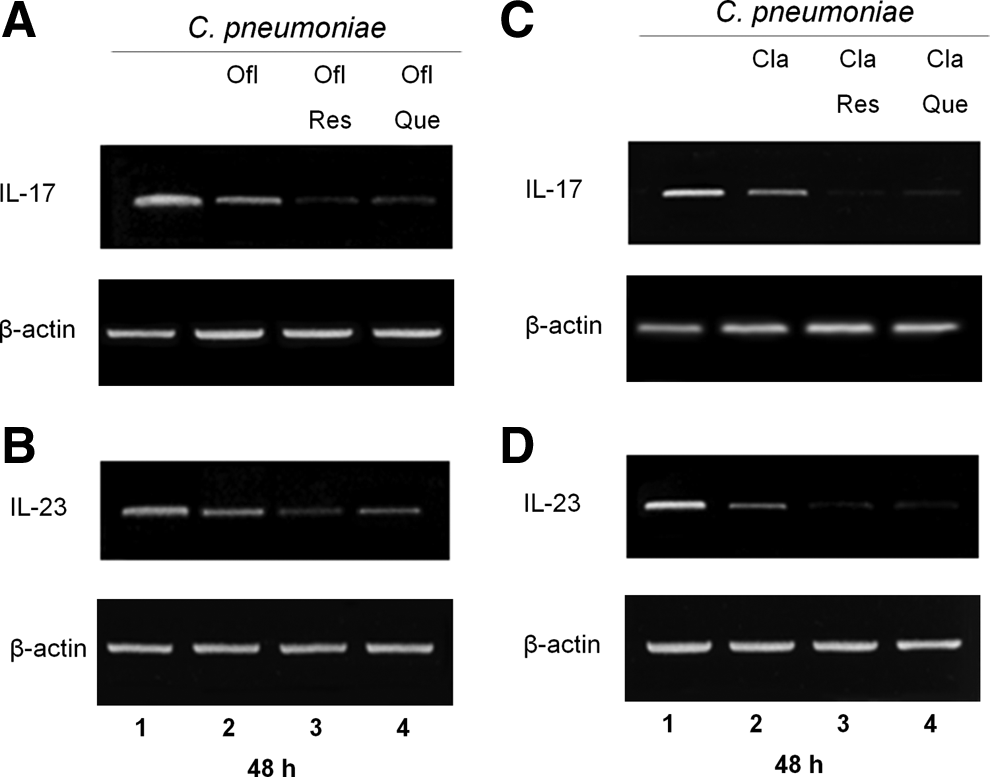
RT-PCR determination of the relative levels of mRNA coding for IL-17 and IL-23 in total RNA obtained from cell pretreated with Res or Que and infected with C. pneumoniae in presence of Ofl
The growth inhibition of C. pneumoniae induced by anti-IL-23 antibody treatment
To determine whether IL-23 contributes to C. pneumoniae growth, we cultured the A549 cells pretreated with resveratrol or quercetin, and then incubated with C. pneumoniae and neutralizing antibodies to IL-23 or IgG. As shown in Figure 8, anti-IL-23 antibody treatment significantly induced C. pneumoniae growth inhibition in a time-dependent manner compared to the IgG control.

The growth inhibition of C. pneumoniae in A549 cells pretreated with Res
Discussion
Polyphenols have been studied for their antioxidant and antinflammatory effects. Recently it was shown that some flavonoids exhibit antibacterial action 21 and that some dietary polyphenols exert antibiotic, antidiarrheal and antiulcer activities.3,5 In this study, we found that resveratrol and quercetin inhibit intracellular C. pneumoniae growth. We also found that these compounds increase the antimicrobial activity of the antibiotics clarithromycin and ofloxacin, as well as decreasing IL-17 and IL-23 production by C. pneumoniae-infected cells.
The mechanism of the antimicrobial activity of natural compounds is thought to be specific rather than nonspecific. 13 The sensitivity of bacteria, in particular, to polyphenols depends on the bacterial species and on the polyphenol structure. 41
It is has been hypothesized that flavonoids may also modulate the host response by protecting the host cells from the toxic effects of bacterial infection and by decreasing programmed cell death. 35 Akai et al. showed that green tea polyphenols reduce gastric epithelial cell proliferation and apoptosis stimulated by Helicobacter pylori infection. 1
Our data indicated that resveratrol or quercetin treatment for 24 hr did not exert any significant antiproliferative effect on A549 cells, while an antiproliferative effect was observed after 48 hr of treatment compared to the cells alone. These results indicate that, depending on the duration of treatment and the dose, resveratrol can exhibit effects ranging from no effect or suppression or upregulation of the immune responses. Although the mechanism by which treatment of cells with resveratrol interferes with cellular responses remains to be determined, resveratrol might cause pharmacological preconditioning of the cells for a different signal transduction by the ligands. 14 Although antichlamydial antibiotics are generally effective, they sometimes fail to resolve chlamydial infection, 46 and persistent infections after specific therapy may implicate the antibiotics in persistence development. 10 The antibiotics usually administered in chlamydial infection do not resolve infection by Chlamydia trachomatis, which remains alive, as revealed by the continuous expression of 16S unprocessed rRNA, 16S processed rRNA and Omp-1 gene mRNA. 30 A persistent C. trachomatis infection despite therapy with the bactericidal antibiotic ofloxacin has been demonstrated. 30
Prolonged exposure to antichlamydial compounds may render the chlamydial population increasingly resistant by means of an efflux activity, which may explain the relapses due to macrolide-resistance in patients undergoing monotherapy. C. pneumoniae is able to create an intracellular niche from where it promotes host cell survival, 6 modulates regulatory host cell signaling pathways and bypasses the host cell defense mechanisms. 18
Our data demonstrate that the polyphenols resveratrol and quercetin induced a time-dependent decrease in C. pneumoniae growth, a possible hypothesis might be that resveratrol or quercetin stops the growth of A549 cells and thus, prevents C. pneumoniae growth.
Treatment regimes for this infection have become increasingly complex due to the development of resistance to antibiotics, including clarithromycin and ofloxacin, a mainstay of most therapeutic regimes devised against C. pneumoniae.2,11 The antibiotics clarithromycin or ofloxacin did not completely protect cultured cells from C. pneumoniae infection in vitro as the pathogen remained viable without initiating the host cell lysis, which marks the end of the regular chlamydial replication cycle. 16
Recently, resistance rates have doubled, 30 resulting in increased interest in alternative/adjunctive therapies, including antioxidants from plants and other natural sources. 11 With rising rates of C. pneumoniae resistance to clarithromycin or ofloxacin, our results suggest the possibility of adding one of these antioxidants to therapeutic regimes for C. pneumoniae infection for enhanced activity, in accordance with the data obtained by Salin et al. 40 . Further studies in animal models and humans are required to evaluate the potential of such combinations.
We also examined the compounds for their anti-inflammatory action, since the suppression of inflammatory cytokines is a potent therapeutic target and chlamydial persistence may be dependent on the cytokine network. 8 IL-17 and IL-23 are cytokines involved in various physiological and pathophysiological processes, including granulopoiesis, autoimmune diseases, rheumatoid arthritis, and inflammatory bowel diseases. 25 Il-23 promotes expansion and maintenance of Th17 cells, which secrete the proinflammatory cytokine IL-17, a process that has been implicated in the pathogenesis of many chronic inflammatory disorders. 15 Kotloski et al. 22 showed that IL-23 plays an important role in the development of arthritis in mice after infection with Borrelia burgdorferi. When Borrelia-vaccinated and challenged mice were given antibodies to the p19 subunit of IL-23, they failed to develop the histopathological changes observed in untreated mice. 22 The data obtained in our study demonstrated that the neutralization of IL-23 by anti-IL-23 antibodies increased the percentage of C. pneumoniae growth inhibition, hypothesizing that a reduced bacterial number could be a consequence of resveratrol and quercetin treatment with a general reduction in the inflammatory response. If the IL-23/IL-17 immune pathway operates in human as in mice, then specific blocking of the IL-23 immune pathway may be an effective and safer therapy for immune-mediated inflammatory diseases, which is in accordance with the data of Tang et al. 42 who hypothesized that inhibition of IL-23 might be a novel and promising therapeutic strategy, especially in the therapy of autoimmune inflammatory diseases.
Our results also showed that both resveratrol and quercetin decrease the IL-17 and IL-23 production in infected cells in a time-dependent manner; in particular, we demonstrated that a strongly inhibited release of IL-23 was obtained by combined treatment with resveratrol and ofloxacin or clarithromycin (70±3.0 and 50±2.2 pg/ml, respectively) or combined treatment with quercetin and ofloxacin or clarithromycin (100±2.7 and 90±1.8 pg/ml, respectively) at 48 hr.
The exact molecular mechanism that leads to IL-23 over-expression during C. pneumoniae infection is still unknown, and it remains to be ascertained which cells produce the functional heterodimeric IL-23. It is likely that IL-23 is mostly produced by antigen-presenting cells (APC), since only APC concomitantly express IL-23/p40 and p19 and are capable of making functional heterodimeric IL-23.
From an analysis of the signaling pathways, the involvement of STAT3 proteins can be hypothesized, since the STAT molecules play key roles in intracellular signal transduction after cellular stimulation. Indeed, neutralization of endogenous IL-23 by the anti-IL-23 antibody reduces Stat3 activation and inhibits IL-17 production in C. pneumoniae infection. 7 The mechanism by which STAT3 regulates IL-17 synthesis is not yet fully understood. It has been suggested that STAT3 may enhance the expression of IL-23R, thereby amplifying a positive feedback loop that helps stabilize and/or maintain the IL-23/IL-17 pathway. 49
In conclusion, our study shows that resveratrol and quercetin significantly reduce C. pneumoniae growth in A549 cells and enhance the sensitivity to the antibiotics ofloxacin or clarithromycin suggesting the potential use of these compounds alone or in combination with antibiotics as therapeutic agents for the treatment and prophylaxis of C. pneumoniae infection and to combat resistance in combination therapy with existing drugs.
Footnotes
Disclosure Statement
Antonietta Rizzo, Caterina Romano Carratelli, Antonio Losacco, and Maria Rosaria Iovene declared that no competing financial interests exist.