




Abstract
Antimicrobial resistance and plasmid profile of Gram-positive and Gram-negative bacterial strains isolated from the urbanized Eltsovka-1 River (Russia) were investigated. Sequencing of the 16S rRNA of of G+ strains showed 99–100% identity to that of Bacillus aerophilus, Bacillus altitudinis, Bacillus amyloliquefaciens, Bacillus anthrancis, Bacillus barbaricus, Bacillus cereus, Bacillus flexus, Bacillus indriensis, Bacillus stratosphericus, Bacillus subtilis subsp. subtilis, Bacillus thuringiensis, Streptomyces albidoflavus, Streptomyces albus, Streptomyces exfoliatus, Streptomyces odorifer, and Streptomyces sampsonii. Sequencing of the 16S rRNA of G-strains was similar in 99–100% to that of Aeromonas bestiarum, Aeromonas encheleia, Aeromonas hydrophila, A. hydrophila subsp. anaerogenes, A. hydrophila subsp. dhakensis, Aeromonas media, Aeromonas molluscorum, Aeromonas popoffii, Aeromonas salmonicida subsp. masoucida, A. salmonicida subsp. pectinolytica, A. salmonicida subsp. salmonicida, Aeromonas punctata, Aeromonas sobria, and Shewanella putrefaciens. The highest percentage (88.4%) of strains was resistant to polymyxin B followed by 69% to lincomycin, 61.5% to benzilpenicillin, 57.7% to ampicillin, and 50% to carbenicillin. A low level of resistance (4%) was found to kanamycin (8%), to streptomycin (11.5%), to neomycin and tetracycline, and (15%) to erythromycin. No resistance was found to gentamycin, monomycin, and chloroamphenicol. The majority (80.7%) of strains was multidrug-resistant. Ninety-two percent of all strains carried plasmid DNA of various sizes.
Introduction
M
In this survey we present results on antibiotic resistance and plasmid profile of bacterial strains isolated from the Eltsovka-1 River. Based on the expressed activity, these bacteria are likely to have pathogenic properties.
Materials and Methods
Brief description of the Eltsovka-1 River
The Eltsovka-1 (55°02′11.07" N, 82°52′16.52" E), is a 9 km long river with the square catchment basin of 24 km2. It crosses the territories of two of the largest districts in Novosibirsk city (Russia) from northeast to southwest and empties into the Ob River—one of the greatest rivers in the world flowing in Western Siberia (Fig. 1). Water basin of the Eltsovka-1 River is formed from flood water, surface water, and groundwater.
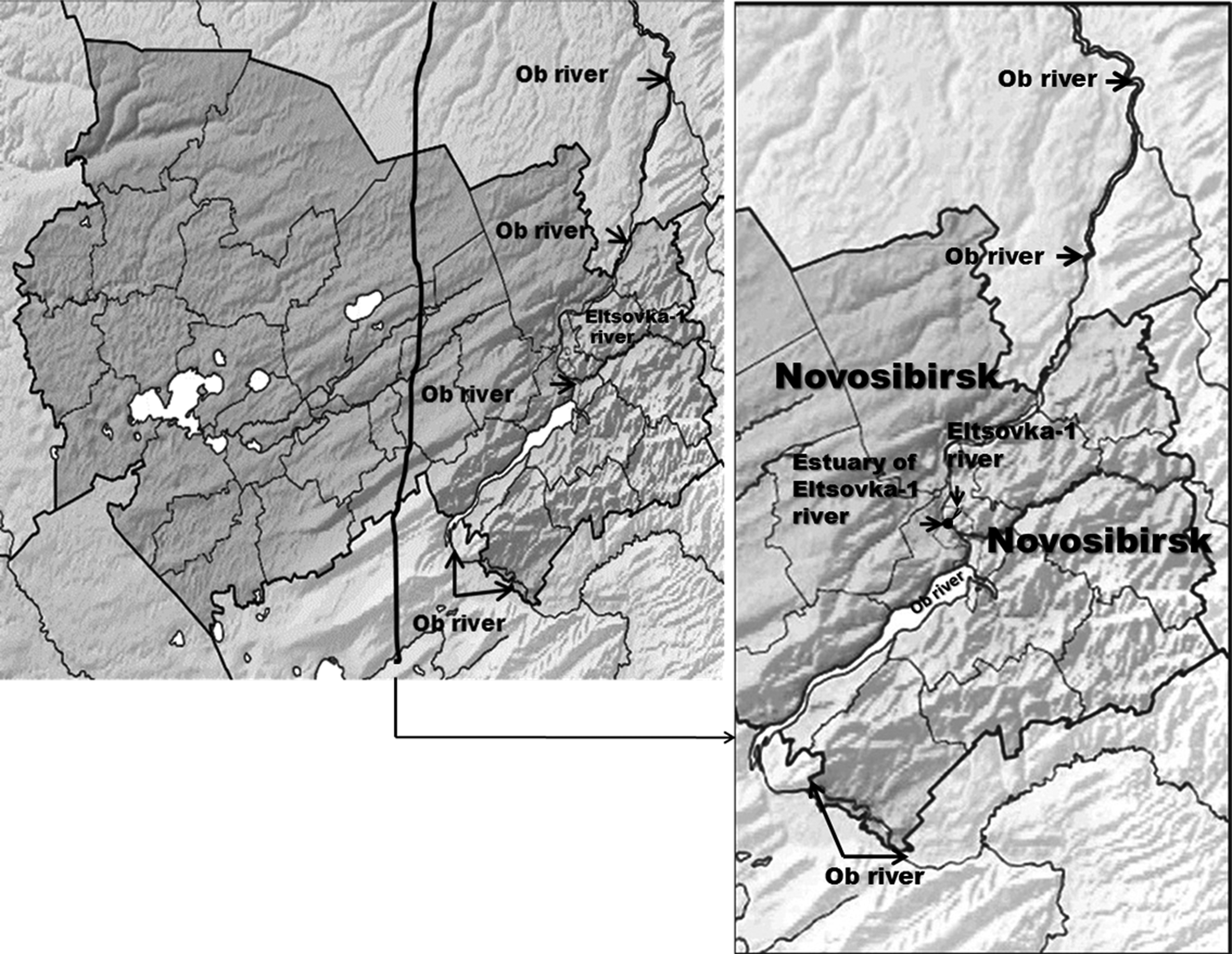
Map of the Eltsovka-1 River. Adapted from https://ru.wikipedia.org/wiki/%D0%95%D0%BB%D1%8C%D1%86%D0%BE%D0%B2%D0%BA%D0%B0_1-%D1%8F#/media/File:Relief_Map_of_Novosibirsk_Oblast.png
Isolation of bacterial strains and growth media
One hundred fifty-eight bacterial strains were isolated from the surface water in the springhead, in the midstream, and in the estuary from March 2003 to September 2005. Water samples were plated on fish peptone agar that favors the growth of a wide variety of microorganisms and contained 17.9 g/L pancreatic hydrolyzate of sprat, 7.7 g/L NaCl and 11.2 g/L agar, pH 6.0–8.0. The morphology of bacterial cells was investigated using phase-contrast microscope (Axioskop 40; Carl Zeiss).
A preliminary test was also conducted for analysis of pathogenic properties such as hemolytic and fibrinolytic activity and coagulase production (coagulase test) (data not shown). Bacterial strains which exhibited either one or/multiple properties were selected for further study of their sensitivity to antibiotics.
Antimicrobial susceptibility testing
Test on sensitivity to antibiotics was carried out using the disk diffusion method (Kirby-Bauer method) 9 with 17 antibiotics widely used in medicine and belonging to different groups (Table 1). The concentrations of the antibiotics were chosen on the basis of those generally used in treatment of infectious deseases in Russia. Each antibiotic susceptibility testing disc was placed onto fish peptone agar and incubated at 30°C for 24–48 hours. Drug-free plates were also incubated for growth control. The diameter of inhibition zone around each disc was measured (in mm) and the results were interpreted as resistant or susceptible to each antibiotic according to the manufacturer's recommendations (LTD “Scientific Research Centre for Pharmacotherapy,” St. Petersburg, Russia). Bacterial strains showing resistance to two and more different groups of antibiotics were defined as multiple antibiotic resistant (MAR).
Amp, ampicillin; Ben, benzilpenicillin; Car, carbenicillin; Ert, erythromycin; Gen, gentamicin; Kan, kanamycin; Lev, levomycetin (chloramphenicol); Lin, lincomycin; Mon, monomycin; Nen, neomycin; Oxn, oxacillin; Oln, oleandomycin; Pon, polymyxin; Ris, ristomycin; Rif, rifampicin; Str, streptomycin; Tet, tetracycline.
MAR index of bacterial strains was further calculated using the following equation: MAR=a/b, where “a” represented the number of antibiotics to which the tested bacterial strain was resistant to and “b” was the total number of antibiotics that the strain was tested against. 12
Sequencing of bacterial strains
The 16S rRNA gene was amplified by PCR using prokaryotic 16S rDNA universal primers fD1 and rP1 102 as described previously. 109 The purified PCR products were sequenced directly using the sequencing primer fD1 and a CEQ Dye Terminator Cycle Sequencing Kit through an automated sequencer MegaBACE 1000 (JSCGE Healthcare). The sequences of these genes were compared with the data available in the GenBank.
Identification of the bacterial strains was carried out in the Institute of Ecology and Genetic of Microorganisms of the Ural Branch of the Russian Academy of Sciences.
Plasmid DNA from bacteria was isolated by alkaline lysis method. 51 The marker for molecular size of plasmids was of λ (lambda) virus DNA restricted by the StyI. 51 Electrophoretic analysis of the isolated plasmids was carried out on 0.8% w/v agarose gel in a tris-borate buffer pH 8.2. 51
Results
Resistance of bacteria against single antibiotics
Out of 158 bacterial strains isolated, 26 strains (16.4%) exhibited hemolytic and/or fibrinolytic and/or coagulation activity (data not shown) and were further tested for sensitivity to antibiotics (Table 2). It was shown that 26 strains were resistant to all antibiotics, except to gentamicin, levomycetin (chloramphenicol), and monomycin. The highest percentage of the strains was resistant to polymyxin B 88.4% (n=23) followed by lincomycin 69% (n=18) and benzylpenicillin B (penicillin G) 61.5% (n=16). The number of the strains resistant to oxacillin (n=15), amplicillin (n=14), and carbenicillin (n=13) was 57.7%, 54%, and 50%, respectively (Fig. 2). The same level of resistance was detected for oleandomycin and ristomycin (38.4% [n=10]) and (31% [n=8]) of the strains was resistant to rifampicin. A low level of resistance was also found to erythromycin (15% [n=4]), tetracycline, and neomycin (11.5% [n=3]) and streptomycin and kanamycin (∼8% [n=2]) (Fig. 2).
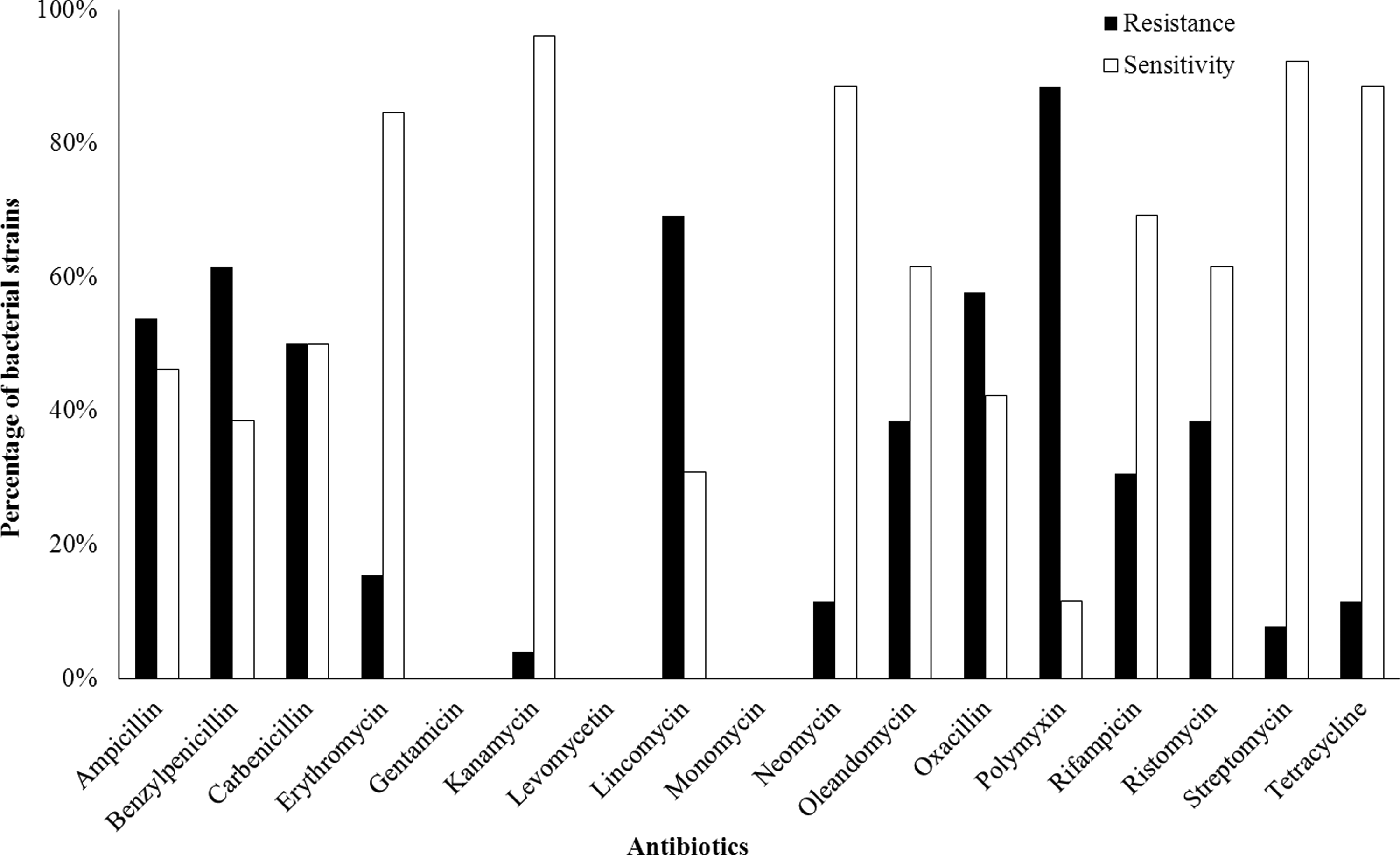
Resistance of bacteria isolated from the Eltsovka-1 River to single antibiotics.
Since aeromonades (strains No. El 23, El 43, El 47, El 56, El 58, El 149, El 158, and El 159) are intrinsically resistant to β-lactam antibiotics (ampicillin, benzylpenicillin, carbenicillin, oxacillin), so we did not include this group of antimicrobials for calculation of MAR indexes for the strains.
MAR, multiple antibiotic resistance.
Multiple resistance of bacteria to antibiotics
Investigation of MAR of the isolated strains showed that out of 26 strains only 6 (23%) were resistant to one antibiotic (MAR index: 0.058) where 5 strains (El 27, El 30, El 55, El 107, and El 109) were resistant to polymyxin B and 1 strain (El 151)—to lincomycin (Table 2 and Fig. 3). Other bacterial strains showed multiple antibiotic resistance.
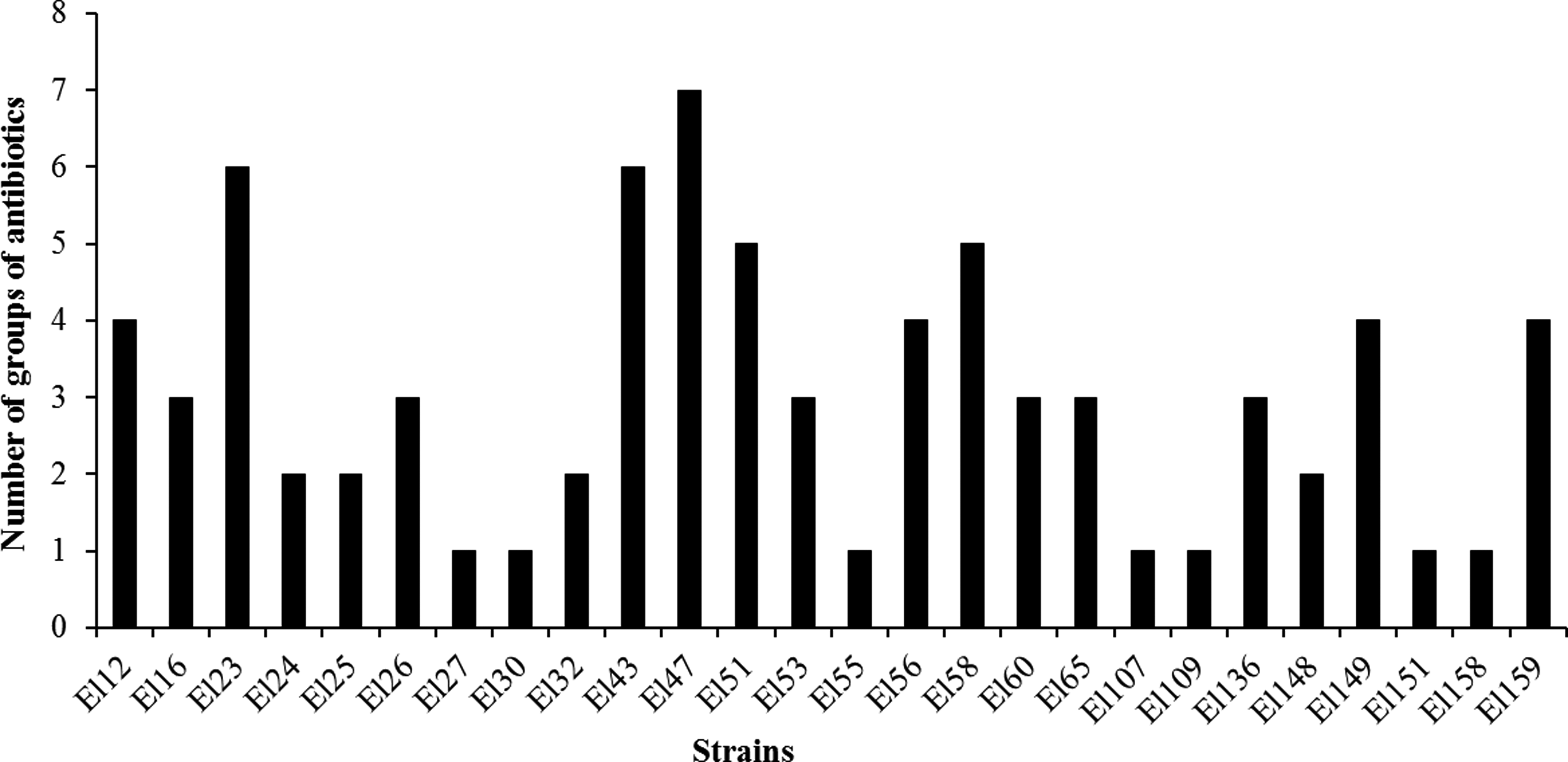
Multiple resistance of bacterial strains isolated from the Eltsovka-1 River to antibiotics.
The highest MAR index (0.7–0.59) was found for strains El 47, El 23, and El 43 which were resistant to 12, 11, and 14 antibiotics, respectively, belonging to 7 and 6 different groups (Table 2). Resistance in these strains appeared predominantly to β-lactams, lincosamides, macrolides, polypetides, and rifampicin (Table 2 and Fig. 3). Whereas, resistance to aminoglycoside antibiotics and tetracyclines was rarely detected in these strains, only one strain (El 43) was resistant to kanamycin/streptomycin, two strains (El 43, El 47) and three strains (El 23, El 43, and El 47) were resistant to neomycine and tetracycline, respectively (Table 2 and Fig. 3).
All other bacterial strains presented in this work had MAR index from 0.11 to 0.47 and were resistant from 2 to 10 antibiotics belonging to 2–6 different groups (Table 2). Resistance to two groups of antibiotics was found in five strains: El 24–25, El 32, El 148, and El 158, which were resistant to polypeptides (polymyxin B) and lincosamides (lincomycin) except one strain El 158, which was resistant to polymyxin B and carbenicillin (a β-lactam antibiotic) (Table 2 and Fig. 3).
Five strains (El 16, El 26, El 53, El 60, and El 136) were resistant to three groups of antibiotics (β-lactams, lincosamides [lincomycin], and polypeptides [predominantly to polymyxin B]) and five other strains (El 51, El 56, El 65, El 149, and El 159) were resistant to five groups of antibiotics belonging to β-lactams, lincosamides, polypeptides, macrolides (oleandomycin), and rifampicin. The only exception from this group of the strains was El 51 which, along with resistance to β-lactams, lincosamides, and polypeptides, was also resistant to aminoglycosides (streptomycin) and two macrolide antibiotics (oleandomycin and erythromycin) and was sensitive to rifampicin.
One strain El 12 was resistant to four groups of antimicrobials belonging to β-lactams, lincosamides, macrolides (oleandomycin), and polypeptides (polymyxin B) (Table 2 and Fig. 3).
Analysis of taxonomic composition of isolated strains showed that multiple antibiotic resistance was mainly observed in aeromonads (strains El 43, El 56, El 58, El 65, El 149, and El 159) and in unidentified strains of Gram-negative (El 23, El 32, El 47, El 60) and Gram-positive (El 12 and El 51) bacterial strains (Fig. 4 and Tables 2 and 3). Since majority of bacteria belonging to genus Aeromonas are intrinsically resistant to β-lactams, we excluded this group of antimicrobials from evaluation of the MAR indexes for the strains. Thus, MAR for strain El 43 included aminoglycosides, lincosamides, macrolides, polypeptides, rifampicin, and tetracycline, for strain El 56—lincosamides, macrolides, polypeptides, and rifampicin, for strain El 58—aminoglycosides, lincosamides, macrolides, polypeptides, and rifampicin, for strain El 65—lincosamides, macrolides, and polypeptides, and for strain El 149—lincosamides, macrolides, and rifampicin (Table 2 and Fig. 3).

Antibiotic resistance of bacterial species isolated from the Eltsovka-1 River. The numbers in the pie chart correspond to the number of isolated bacterial strains, and the numbers on the top of the bars refer to the number of strains resistant to antibiotics.
Identification was based on comparison of the 16s rRNA sequences in PubMed data base using BLAST and submitted to GenBank.
U.I., unidentified.
Gram-negative strain El 53 Shewanella putrfaciencs was resistant to two groups of antibiotcs: β-lactams and polypeptides. Strains of Gram-positive bacillus (El 24–27, El 30, El 55, El 107, El 109, El 136, El 148, and El 151) were resistant predominantly to polymyxin B. Out of 11 Gram-positive bacillus, 3 strains were resistant to 2 groups of antibiotics: strains El 24 and El 25 were resistant to β-lactam/polypetides (polymyxin B)/lincosamides and strain El 148 was resistant to polypetides (polymyxin B)/lincosamides. Two strains El 26 and El 136 were resistant to three groups of antibiotics: β-lactam/polypetides (polymyxin B)/lincosamides/rifampicin (Fig. 4 and Tables 2 and 3). Antibiotic resistance pattern of one strain El 16 belonging to Streptomyces spp. was very similar to that of Bacillus thuringiensis strains El 24 and El 136.
Plasmid profile of antimicrobial resistant strains
It is known that antimicrobial resistance in bacteria is frequently encoded by genes carried on mobile genetic elements, in particular by plasmids. In this connection, bacterial strains resistant to a minimum of one antibiotic as well as multiple antibiotics were tested for the presence of plasmids.
Analysis of plasmid profile of 26 strains showed that they contained plasmids differing in size from 1.49 to 19.3 kb or large size (all isolates were screened three times). It was found that majority of the strains had at least one plasmid with size of 19.3 kb; the exception was strains El 56 and El 27 which carried two and five plasmids, respectively (Fig. 5 and Table 2).

Plasmid profile of bacterial strains isolated from the Eltsovka-1 River. Lines: 1, El 23; 2, El 24; 3, El 25; 4, El 27; 5, El 30; 6, El 32; 7, Lambda DNA/StyI marker; 8, El 43; 9, El 47; 10, El 51 (white arrow indicates a very low copy number of the plasmid); 11, El 53; 12, El 56; 13, El 58; 14, El 12; 15, El 16; 16, El 60; 17, El 109; 18, El 65; 19, El 107; 20, El 148; 21, El 151; 22, Lambda DNA/StyI marker; 23, El 136; 24, El 158; 25, El 149; 26, El 159; 27, El 26; 28, El 55.
Strains El 30 and El 109, resistant to polymyxin B, were plasmid-free unlike other polymyxin B-resistant strains such as El 27, which harbored five different plasmids (19.3, ∼6.2, 4.25, 3.47, and ∼1.49 kb) and El 55 and El 107 with one plasmid with size of between 19.3 and 7.7 kb and 19.3 kb, respectively (Fig. 5 and Table 2).
Strains El 25, El 32, and El 148 that were resistant to 2 antibiotics (lincomycin and polymyxin B) as well as strains El 24, El 136, El 149, El 159, and El 23 which were resistant to 5, 6, 8, 9, and 11 antibiotics, respectively, had 1 plasmid with size of 19.3 kb (Fig. 5 and Table 2).
Strain El 151 resistant to 1 antibiotic (lincomycin) as well as strains El 158, El 26, El 12, and El 47, resistant to 2, 3, 7, and 12 antibiotics, respectively, had 1 plasmid with size of between 19.3 and 7.7 kb (Fig. 5 and Table 2).
Strains El 53, El 16, El 51, El 65, El 159, and El 43 were resistant to 5, 6, 8, 9, and 14 antibiotics, respectively and had 1 plasmid with size of about 19.3 kb.
A large plasmid (>19.3 kb) was found in two strains, one of which (El 60) was resistant to 6 antibiotics and the other one (El 58) to 10 antimicrobials (Fig. 5 and Table 2).
Discussion
Investigation of antibiotic resistance of bacterial strains isolated from the Eltsovka-1 River has shown that they were mainly resistant to different groups of antibiotics, including β-lactams, lincosamides (lincomycin), and polypetides (polymyxin B). β-Lactams are one of the leading groups of antimicrobials used for the treatment of a majority of infectious diseases. Increasing level of resistance to these antibiotics in aquatic bacteria is determined by entery of bacteria carrying β-lactam resistance genes4,29,50 as well as antibiotics41,61 into ecosystems, which facilitate the selection of resistance in bacteria.
In Russia 94 and particularly in Novosibirsk city, 95 β-lactams (penicillins) and lincomycin are vastly used in medicine. In the current work, resistance to β-lactams was majorly found in aeromonads and unidentified nonspore Gram-negative species of bacteria. Resistance to this group of antibiotics is intrinsical for a vast majority of aeromonads and is encoded by chromosomal genes producing β-lactamases against a wide variety of antibiotics, including penicillins, cephalosporins, and extended-spectrum cephalosporins.18,36 However, there are examples of resistance encoded by large conjugative plasmids in Aeromonas media, 76 Aeromonas caviae, 104 and Aeromonas salmonicida subsp. salmonicida 58 as well as small plasmids in Aeromonas aquariorum 79 and A. caviae. 106
Along with a high level of resistance to β-lactams, Gram-negative bacilli, including aeromonads and unidentified strains, were resistant to lincomycin which is used for the treatment of acute and chronic osteomyelitis, pneumonia, purulent infections of the skin and soft tissues, otitis, and other infections caused by Gram-positive cocci and anerobes. Thus, a high level of lincomycin resistance by Gram-negative bacteria isolated from the Eltsovka-1 River may be due to lack of activity of this antibiotic against these bacteria. 45 The only exception was strain El 158 that was resistant to β-lactams (carbenicillin) and polypeptides (polymyxin B). Sequencing of the 16S rRNA of this strain showed 100% similarity to that of the following species: Haemophilus piscium (syn A. salmonicida subsp. salmonicida),6,31 Aeromonas sobria, Aeromonas bestiarum, A. salmonicida subsp. salmonicida, A. salmonicida subsp. pectinolytica, A. salmonicida subsp. masoucida, Aeromonas popoffii, and Aeromonas encheleia. Results on antibiotic resistance of strain El 158 are in disagreement with those of other studies that showed resistance of nonclinical strains of A. bestiarum, A. popoffii, A. sobria, A. encheleia, and A. salmonicida to clindamycin (a lincosomide), benzylpenicillin, oxacillin, erythromycin, and rifamicin and susceptibility to tetracycline and chloramphenicol.32,38 Due to the lack of data on antibiotic resistance of A. salmonicida subsp. pectinolytica and A. salmonicida subsp. masoucida, it was impossible to compare this feature with our strains. Nevertheless, it is known that the typical strain A. salmonicida subsp. pectinolytica was first isolated from a heavily polluted river and was highly resistant to heavy metals and other pollutants and contained genes coding for several efflux pumps and virulence-related genes.72,73 A. salmonicida subsp. masoucida is one of atypical subspecies of A. salmonicida, which is a significant pathogen of many freshwater and marine species of fish and has been known to cause furunculosis and may contain virulence genes.28,36,103 In accordance, our strain El 158 also exhibited hemolytic activity (data not shown). In contrast to strain El 158, another strain El 159, which was also isolated from the estuary of the Eltsovka-1 River, showed similarity in sequencing of the 16S rRNA to strain El 158 and had the antibiotic resistance pattern that has been described for those species.
Therefore, significant differences in antimicrobial resistance and plasmid profile of strains El 159 (∼19.3 kb) and El 158 (between 19.3 and 7.7 kb) may indicate that they have different origins. It seems complicated to explain the high antibiotic susceptibility of strain El 158 as it is expected to exhibit antibiotic resistance. With respect to the plasmid of strain El 158 we assumed that either it does not contain genes of antimicrobial resistance or it has resistance genes to some antibiotics which we did not use in this study. We also do not exclude a possibility that genes of antibiotic resistance may be localized in the content of integrons incorporated with a plasmid, but their expression is very low since they are located far from the Pc promoter, which is responsible for the expression of inserted gene cassettes, as it has been shown on a sample of Aeromonas isolates, revealed from human diarrheic stool, harboring genes conferring resistance to chloramphenicol and streptomycin, but not resistant to them. 75
Differences in antibiotic resistance pattern and plasmid profile were found in two other strains El 58 and El 65 isolated from the midstream, and they were shown to belong to the same bacterial species as well. In addition, results on preliminary identification of these strains were very similar to those of strains El 158 and El 159. Strain El 65 belonging to H. piscium (syn A. salmonicida subsp. salmonicida), A. bestiarum, A. salmonicida subsp. salmonicida, A. salmonicida subsp. pectinolytica, and A. salmonicida subsp. masoucida, had the same antibiotic resistance pattern as well as a plasmid (∼19.3 kb) that was also found in strain El 159. Strain El 58 had similar antibiotic resistance profile to strain El 65 and was also resistant to neomycin and contained a large plasmid (≥19.3 kb). It is known that aeromonads are naturally sensitive to aminoglycosides and tetracyclines.3,36 Resistance to these groups of antimicrobials in these bacteria rises through acquisition of R-plasmids and associations of resistance genes with mobile elements such as transposons and integrons.34,42,58,91 According to a preliminary identification of strains El 58 and El 65, they were mostly identical to atypical subspecies of A. salmonicida which are predominantly isolated from aquaculture and are frequently resistant to aminoglycosides and tetracyclines17,58 that are used for preventing and treatment of furunculosis in fishes. Neomycin resistance of strain El 58 is in agreement with the data reported by other studies for A. salmonicida and A. bestiarum isolated from frozen fish. 17 The current available data on the diversity of plasmids in atypical species of A. salmonicida does not include similarity in size to those obtained from our strains El 58, El 65, El 158, and El 159. However, it has been found that subspecies of A. salmonicida harbor plasmids ranging in size from small to large6,91 with unknown functions. In contrast, investigations of Sørum et al. have shown that medium and large-sized plasmids: 25 MDa (∼37.5 kb), 8 MDa (∼12 kb), and 27 MDa (∼40.5 kb) found in atypical strains of A. salmonicida isolated from farmed Atlantic salmon in Norway are R plasmids. 91 Likewise, a freshwater strain of A. bestiarum resistant to, along with different groups of antibiotics, aminoglycosides, and tetracyclines, had a plasmid with size of 24.7 kb. 26 So far, neomycin resistance mediated by plasmid was shown only for Aeromonas hydrophila. 13 Therefore, plasmid-determined resistance of strain El 58 to this antibiotic should not be excluded as well.
The same assumption has been made with respect to strain El 43 belonging to A. media, and two unidentified Gram-negative strains El 23 and El 47 resistant to aminoglycosides (kanamycin and neomycin), macrolides (erythromycin and oleandomycin), and tetracycline. The antibiotic resistance patterns of our strains were similar to that of a MAR strain Aeromonas sp. P2G1 found in the Ter River in Ripoll, Spain which had a plasmid with size of 26.6 kb, encoding resistance to β-lactams (penicillins and cephalosporins), aminoglycosides, chloramphenicol, macrolides, quaternary ammonium compounds, quinolones, rifampicin, and sulfonamides, 52 but with difference in sensitivity to gentamycin and chloramphenicol. Our data are in accordance with those obtained by Jacobs and Chenia and Sharma et al., who found resistance to ampicillin and sensitivity to gentamycin in one strain of A. media isolated from South Africa aquaculture systems 34 and in all isolates of aeromonads obtained from the river Narmada, India, 85 respectively. However, in both cases the aeromonads were resistant to chloramphenicol. On the contrary, other studies have reported strong susceptibility of both nonclinical and clinical aeromonads to chloramphenicol and gentamycin.16,38,64,67 Contradictory data with respect to chloramphenicol resistance among aeromonads may be due to different reasons such as geographical region of bacterial isolation, frequency of usage of the antibiotic, quality of sewage treatment and, as a consequence, level of selective pressure leading to acquisition of resistance to the antibiotic in aeromonads. Since, near the Eltsovka-1 River, there is no hospital or farm wastewater which may contain antibiotics and thus, contribute to the spread of chloramphenicol resistance in freshwater bacteria, the absence of these two factors explains sensitivity of A. media strain El 43 to this antibiotic as well as for other strains examined in this survey. The type strain A. media sp. nov. 3 is susceptible to chloramphenicol, gentamicin, kanamycin, neomycin, and tetracycline, hence, resistance of our strain to the three last antibiotics seems to be inherited. In addition, A. media strain El 43 had a high MAR index value (0.59) followed by strain El 23 and El 47 (MAR index values 0.64 and 0.7, respectively), meanwhile aeromonads isolated from nonantibiotic-contaminated environments had MAR index 0.2. 12 Thus, as noted above, as the Eltsovka-1 River does not have sewage containing antibiotic substances, but wastewater from the private sector of the district within which the river flows, so resistance of strains El 43, El 47, and El 23 to aminoglycosides, macrolides, and tetracyclines is more likely to have been acquired. Moreover, resistance to macrolides—erythromycin can be transferred among bacteria since it is associated with plasmids 47 and transposons. 68 Thus, plasmids found in the strains El 43 (∼19.3 kb), El 47 (between 19.3 and 7.7 kb), and El 23 (∼19.3 kb) are of our special interest for their further investigation in terms of determining gene sequences coding for the resistance phenotypes of the strains and comparing them to already known sequences in human and animal-associated bacteria.
Other strains of Gram-negative bacteria such as El 149, El 53, and El 56 showed antibiotic resistance profile that was characteristic for the species of bacteria to which sequencing of the 16S rRNA of our strains showed similarity. Strain El 149 seems belonging to any of the following species: A. hydrophila subsp. dhakensis (syn A. aquariorum10,54); A. hydrophila subsp. hydrophila; A. hydrophila; A. hydrophila subsp. anaerogenes, and Aeromonas punctata. It has been established that A. hydrophila subsp. anaerogenes and A. punctata are the synonym of A. caviae43,62 that is known to cause bacteremia, skin, soft tissue, and intestinal infections in humans. A. aquariorum strain El 149 was resistant to antibiotics described for the type strain A. aquariorum sp. nov., 55 with the only exception in resistance of our strain to oleandomycin instead of erythromycin. A. hydrophila subsp. hydrophila, A. hydrophila, and A. caviae exhibited the same antibiotic resistance described for bacteria of these species. 36 Strain El 53 Shewanella putrefaciens, a saprophyte widely distributed in nature37,39,56 and is known to cause different infections in humans such as osteomyelitis, 15 soft tissue infection, bacteremia,70,107 and pneumonia. 71 It is also a pathogen of different species of freshwater fish. 74 Antibiotic resistance of S. putrefaciens strain El 53 was similar to that of isolated human clinical specimens, that is, it was resistant to β-lactams 39 and sensitive to aminoglycosides, chloramphenicol, and tetracycline. 19 So far, no plasmids in S. putrefaciens have been found. To the best of our knowledge, in this study we present the first data on a plasmid (19.3 kb) in bacteria of this species. Aeromonas molluscorum strain El 56 as well as the type strain A. molluscorum sp. nov.—is a newly described species, was resistant to β-lactams, oleandomycin and sensitive to gentamycin and tetracycline. In contrast to the type strain A. molluscorum, strain El 56 was sensitive to streptomycin and resistant to polymyxin B. 63 A. molluscorum strain El 56 had two plasmids differing in size: 6.2 and ∼19.3 kb. The presence of small and large plasmids had been found before, despite their functions still remains to be known. 20
Polymyxin B is used for the treatment of diseases caused by some Gram-negative bacteria such as Enterobacteriaceae and nonfermentative species such as Pseudomonas aeruginisa, Acinertobacter baumanii, Burkholderia cepacia, Burkholderia pseudomallei, Stentrophomonas maltophilia, and Ralstonia pickettii. Aeromonads are sensitive to this antibiotic23,57,69 except for some cases described for A. hydrophila and more rare for A. caviae and A. sobria obtained from highly polluted rivers by raw wastes and from beaches.2,33,59 Resistance to polymyxin B in clinical isolates develops slowly and it is determined by two mechanisms. The first is acquired by stepwise adaptation of bacteria to the presence of polymyxin B in the growth medium. This type of resistance is unstable and those bacteria become sensitive after being in the polymyxin B-free medium. The second mechanism of resistance involves genetic mutation and it is inheritable. 23 Cases of plasmid-mediated polymyxin B resistance in bacteria are unknown. Thus, resistance of all Gram-negative species presented in this survey to polymyxin B, except of strain El 149, has to be investigated for possible resistance-mediated genetic mutation. Current studies of resistance to polymyxin B in A. hydrophila, A. caviae, and A. sobria have not yet described a mechanism of that resistance as whether this resistance was stable in the bacteria. However, the authors have noted that aeromonads were isolated from wastewater along with bacteria of family Enterobacteriaceae. Thus, there is an issue resolving, of which is critical to the public health protection, that is, whether polymyxin B resistance can be transferred from clinical bacteria to environmental bacteria. Resistance to polymyxin B in aeromonads isolated from the Eltsovka-1 River is a reason for reassessment of the level of anthropogenic impact onto the ecosystem.
Resistance to polymyxin B as well was predominant in Gram-positive species, including those which are unidentified. This is most likely due to the inactivity of this antibiotic against Gram-positive bacteria. Also we think that this resistance may not be plasmid encoded since some strains (El 30 and El 109) demonstrated resistance to polymyxin B, but were plasmid free.
Two unidentified strains El 12 and El 51 and 1 strain El 23 presumably belonging to Streptomyces, out of 14 strains of Gram-positive bacilli isolated from the Eltsovka-1 River, have been found resistant to macrolides (erythromycin and oleandomycin) and aminoglycosides (streptomycin). These strains had at least one plasmid differing in size. Streptomyces spp. is inhabitant of soil and water in all of the world and characterized by resistance to a big variety to antibiotics, 83 so isolation of Streptomyces to different groups of antimicrobials was not surprising for us.
The rest of the strains were resistant to β-lactams and lincomycin. Resistance to β-lactams that was found in B. thuringiensis strains El 24, El 55 and El 136 is in coincidence with the fact that it is typical for more than 95% of B. thuringiensis. 101 However, resistance to β-lactams was variable, that is, both B. thuringiensis strains El 24 and El 136 were resistant to ampicillin, benzylpenicillin, carbenicillin, and oxacillin. Strain El 55 was sensitive to these antibiotics. These results are in agreement with Luna and coauthors who showed variability in resistance to this group of antibiotics in bacilli belonging to this species and in disagreement with respect to resistance of B. thuringiensis strain El 136 to rifampicin. 49 Rifampicin is used for treatment of diseases caused by Mycobacterium infections, Staphylococcus aureus, Neisseria meningitides, Neisseria gonorrhoeae, Borrelia burgdorferi, Listeria species, Haemophilus influenza, Legionella pneumophila, and Bacillus anthracis, so this antibiotic seems not to be active against Gram-positive bacilli of other species. Survival at the presence of rifampicin through induction of the σB-dependent general stress response, which provides bacteria with the multiple resistance to different types of stress, has been shown in Bacillus subtilis. 7 Thus, the mechanism of resistance to this antibiotic described for B. subtilis might similarly provide survival of B. thuringiensis strain El 136 as well. Plasmids found in our strains of B. thuringiensis had approximately similar sizes with those obtained from different B. thuringiensis type strains with unknown functions. 80 B. thuringiensis is known to produce crystals that are toxic to insect larvae, 84 but virulence factors locate mainly on megaplasmids 48 which are obviously larger than those found in our strains.
Variability in resistance to β-lactams was also found for Bacillus stratosphericus strains El 26 and El 148. Antibiotic resistance pattern of these strains were particularly similar to that of the plasmid-free type strain B. stratosphericus 41KF2aT. 86 A plasmid with smaller size (6.8 kb) than those obtained from our strains (19.3 kb and between 19.3 and 7.7 kb) was found in another type strain B. stratosphericus LAMA 585 isolated from the sea floor sediment. 21 B. stratosphericus is a newly described species that was first isolated from the soil long-term irrigated with paper and pulp mill effluent. 105 Sequencing of the 16S rRNA of strain El 26 and El 148 showed 100% similarity to the species of Bacillus aerophilus and Bacillus altitudinis, which are being used in agriculture and biotechnology.27,96 Antibiotic resistance of our strains was partially similar to the type strains B. aerophilus sp. nov. and B. altitudinis sp. nov. B. aerophilus sp. nov. is multiple resistant, but sensitive to lincomycin, meanwhile B. altitudinis sp. nov. is resistant to ampicillin and lincomycin, but sensitive to penicillin. 86 So far, plasmids have not been found in bacteria of these species whereas our strains El 26 and El 148 possessed plasmids with size of between 19.3 and 7.7 kb and 19.3 kb.
To the best of our knowledge, this survey, for the first time, reports the presence of plasmids in Bacillus barbaricus strain El 25 and Bacillus flexus strain El 27. One of the five plasmids (4.2 kb) of B. flexus strain El 27 was similar in size to that found in Bacillus sp. isolated from soil and water samples from the metal polluted sites of copper complex. 35 Bacteria belonging to B. flexus are known to have a big potential for their application in biotechnology, 87 bioremediation, 88 medicine, 78 and physical chemistry. 1 Strains of B. barbaricus were first isolated from wall paintings 97 and also shown to act as a potential antagonist of plant pathogens. 46 We found that B. barbaricus strain El 25 was resistant to lincomycin and polymyxin B. Due to lack of data on the antimicrobial resistance as well as plasmid profile of bacteria of this species, it is impossible to compare these characteristics with those obtained by other studies.
The functional role of the found plasmids in Gram-positive bacilli is currently unknown and identification of genes resistance to antibiotics is a target of our next survey. Plasmids of strains El 12, El 16, El 24, El 51, and El 136 will be of our special interest since these strains are multiple antibiotic resistant. We also do not exclude a possibility that other Gram-positive bacilli isolated from the Eltsovka-1 River may contain genes of antimicrobial resistance, but they are silent as it has been shown on an example of Bacillus cereus. 81 Plasmids found in newly described bacteria are necessary to be investigated since study of their structure will expand our knowledge about ecology and genetics of these bacteria.
Analysis of plasmid diversity of Gram-negative and Gram-positive strains isolated from the Eltsovka-1 River and their antibiotic resistance has revealed correlation between these two characteristics for some strains El 25, El 32, and El 148, which were resistant to lincomycin and polymyxin and contained a plasmid with the size of 19.3 kb. However, for the majority of bacterial strains we have not found correlation between antibiotic resistance pattern and presence of plasmids. Also, multiple antibiotic resistance of bacteria was not always accompanied by the presence of either several plasmids or large/megaplasmids. As an example, strain El 43, resistant to 14 antibiotics, had only 1 plasmid of medium size (∼19.3 kb). In addition, we have not found correlation between phenotype of antibiotic resistance and size of the plasmids. Our results are in agreement with those obtained by Messi et al. who did not find correlation between plasmids in Gram-negative heterotrophic bacteria isolated from mineral waters and their antibiotic resistance because antibiotic-resistant bacteria do not always harbor plasmids. 60 The plasmids of waterborne A. hydrophila, 59 A. hydrophila isolated from cultured fish Tilapia mossambica 90 and A. salmonicida, Aeromonas veronii, Aeromonas jandaei, Aeromonas eucrenophila, Aeromonas trota, A. hydrophila, and A. caviae isolated from food samples (chicken, fish, and ready-to-eat sprouts) 67 also showed no correlation with drug resistance phenotypes of the bacteria. Thavasi and coauthors did not reveal a link between MAR index of B. subtilis isolated from the estuary water (India) and molecular weight of plasmids as well as antibiotic resistance pattern and plasmid profile. 98 Goni-Urriza et al. also did not show the correlation between the number of antibiotics to which wastewater bacteria belonging to Aeromonas spp. and Enterobacteriaceae were resistant and number of plasmids in their cells. 24 However, the presence of the extrachromosomal DNAs in antibiotic-resistant bacterial strains from the Eltsovka-1 River does not exclude a probability for locating of antibiotic-resistant genes in the content of their plasmids. A survey of antimicrobial resistance and plasmid profile of bacteria isolated from the river Mahananda (India) polluted with sewage showed that 77.43% of the bacteria appeared multiple antibiotic resistant and bacteria harbored plasmids of different sizes 3.6, 47, 48, and 49.4 kb. Correlation between the presence of plasmids of the bacteria and their phenotype of antibiotic resistance also has not been described. However, all plasmids had genes for resistance to antibiotics. 66
Footnotes
Acknowledgments
The authors are very thankful to Dr. Elena Plotnikova and Dr. Lyudmila Ananina, Institute of Ecology and Genetics of Microorganism of the Ural Branch of the Russian Academy of Sciences, for the sequencing of microbial strains.
Disclosure Statement
No competing financial interests exist.