




Abstract
The aim of our study was to characterize third-generation cephalosporin (3GC)-resistant Enterobacteriaceae isolated over two different periods from patients hospitalized in the Military Hospital of Tunis with special focus to class A β-lactamases. This study included 180 Enterobacteriaceae resistant to 3GC isolated from samples of patients hospitalized in various services of the hospital. Enterobacteriaceae species detected by the Vitek 2 Compact® (BioMérieux®) automated system showed the dominance of Klebsiella pneumoniae followed by Escherichia coli during both periods. These strains were mainly isolated from urine samples and rectal swabs of patients hospitalized mostly in neonatology service and intensive care unit. The molecular research of genes encoding CTX-M, TEM, and SHV β-lactamase types showed a high rate of strains producing CTX-M β-lactamases, all of them harbored the blaCTX-M-15 gene. However, a huge diversity of SHV and TEM β-lactamases types was discovered in our study. In fact, nine various subvariants of blaSHV gene (blaSHV-1, blaSHV-11, blaSHV-12, blaSHV-27, blaSHV-28, blaSHV-31, blaSHV-38, blaSHV-79, and blaSHV-81) and eight subvariants of blaTEM gene (blaTEM-70, blaTEM-71, blaTEM-76, blaTEM-77, blaTEM-79, blaTEM-105, blaTEM-148, and blaTEM-186) were identified among our Enterobacteriaceae species during both periods. All subvariants of blaTEM gene and some subvariants of blaSHV gene (blaSHV-31, blaSHV-38, blaSHV-79, and blaSHV-81) have not been previously detected in our country.
Introduction
The Enterobacteriaceae family includes various bacterial genera and species involved in human pathology. 1 These species are quickly evolving by the acquisition of resistance genes to many antibiotics, especially to β-lactams, which complicates the treatment of infections caused by these bacteria. 2 Indeed, the massive use of β-lactams, a major class of broad-spectrum antibiotics, in human medicine has worsened the situation in most countries, especially the developing countries.
The main mechanism of resistance to β-lactam antibiotics is the enzymatic production of β-lactamases. These enzymes are encoded by several genes located either in the chromosome or plasmids. 3 The genes encoding class A β-lactamases have quickly disseminated and evolved over time around the world.4–6 Thus, several variants and subvariants of genes encoding CTX-M, TEM, and SHV β-lactamases types have been identified worldwide. Currently, 172, 223, and 193 variants and subvariants of CTX-M, TEM, and SHV, respectively, have been described (https://www.lahey.org/studies). In Tunisia, some variants of CTX-M type (CTXM-15, CTX-M-14, CTX-M-9, CTX-M-8, CTX-M-16, CTX-M-27, and CTX-M-28) were reported with dominance of CTX-M-15 in hospital settings.7–12 Furthermore, several variants and subvariants of ESBL and non-ESBL SHV and TEM types (SHV-1, SHV-2, SHV-11, SHV-12, SHV-27, SHV-28, SHV-32, SHV-33, SHV-66, SHV-76, SHV-103, SHV-104, SHV-128, SHV-148, SHV-186, TEM-1, TEM-2, TEM-24, TEM-26, TEM-52, TEM-53, TEM-116, and TEM-158) were detected in clinical Enterobacteriaceae strains in Tunisian hospitals.13–20 This huge diversity of β-lactamase types shows a serious problem in this country, thus, surveillance and epidemiological studies are needed to establish strict programs to limit this serious situation.
Materials and Methods
Bacterial isolates
A total of 180 non-redundant Enterobacteriaceae strains showing resistance to third-generation cephalosporins (3GCs) were isolated from patients hospitalized in the Military Hospital of Tunis during two different periods (90 strains were collected during 2012–2013 and the remaining other 90 strains were collected during 2016–2017). These strains were isolated from different samples and various services of the hospital and were identified using the Vitek 2 Compact® (BioMérieux®) automated system.
Antimicrobial susceptibility test
Antibiotic resistance of Enterobacteriaceae isolates was carried out by Vitek 2 Compact (BioMérieux) automated system using AST 235 card that includes the following panel of antibiotics: ampicillin, ticarcillin, combinations of amoxicillin + clavulanic acid, piperacillin + tozobactum (penicillins), cefotaxime, ceftazidime, and cefepime (3GC), gentamycin (aminoglycoside), nalidixic acid (first-generation quinolones), ciprofloxacin/ofloxacin (fluoroquinolones), and trimethoprim/sulfametoxazole.
Characterization of β-lactamases genes
The main genes encoding β-lactamases (blaTEM, blaSHV, and blaCTX-M) were screened by PCR and sequencing using primers previously described.21–23 Subsequently, these sequences were analyzed using the “BLAST” program by comparing and aligning the obtained sequences with other sequences already listed in international “NCBI” databases.
Results
This study included 180 Enterobacteriaceae resistant to 3GC isolated over two different periods from various samples of patients hospitalized in the Military Hospital of Tunis. Various species were identified by the Vitek 2 Compact (BioMérieux) automated system as shown in Fig. 1. Our results show that Klebsiella pneumoniae was the most detected species followed by Escherichia coli for both periods with a slight increase in the rate during 2016–2017 (Fig. 1).
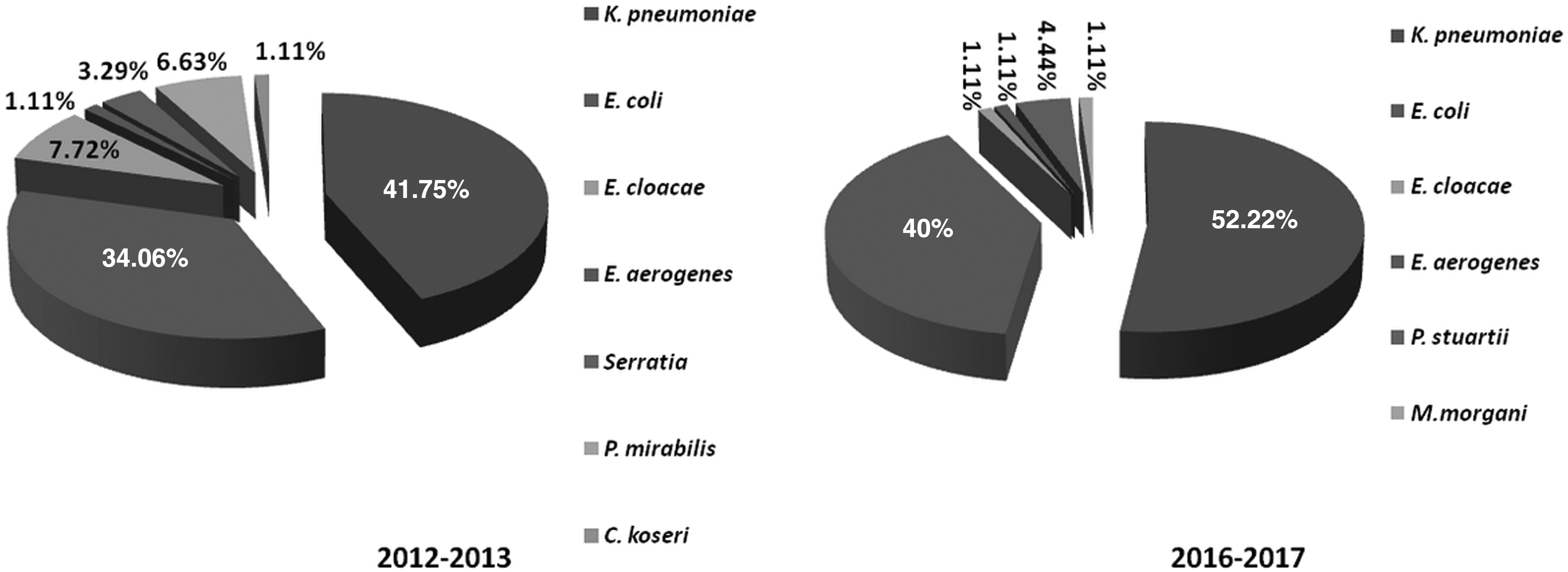
Frequencies of 3GC-resistant Enterobacteriaceae species during two different periods. 3GC, third-generation cephalosporin.
Some services appeared to be more affected by the problem of the emergence of 3GC-resistant Enterobacteriaceae strains, especially the neonatology service and intensive care unit as shown in Fig. 2. This does not preclude the existence of a minority of strains from other services such as urology, emergency department, and other services. High frequency of 3GC-resistant Enterobacteriaceae (47.80%) was noted in neonatology service during 2016–2017 than during 2012–2013 that showed lower frequency (13.19%) (Fig. 2). These strains were derived from various samples, mainly from urine samples and rectal swabs.
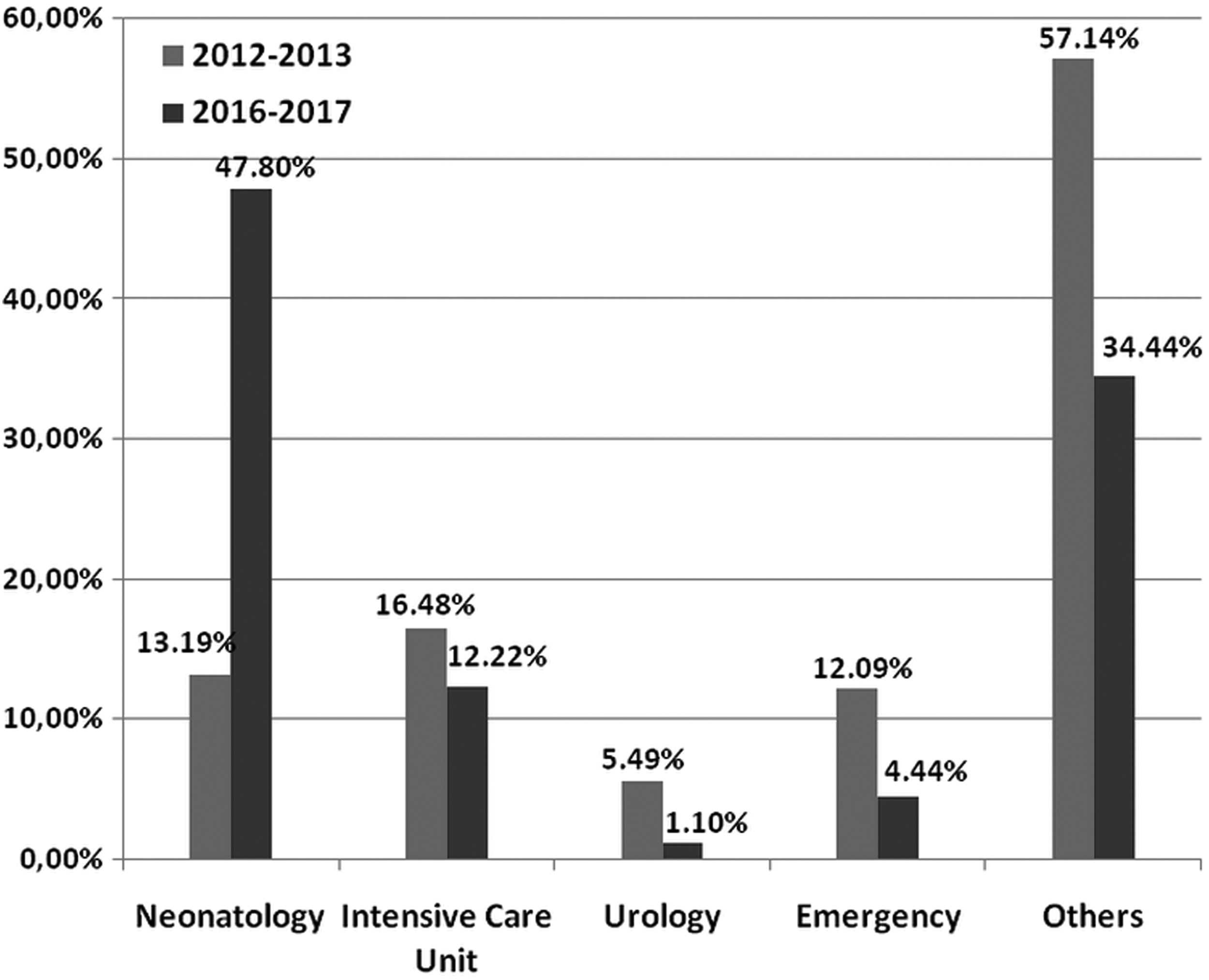
Prevalence of 3GC-resistant Enterobacteriaceae isolates in hospital services during two different periods.
The resistance rates of Enterobacteriaceae strains to five different antibiotic families during the two periods are shown in Fig. 3. A high rate of resistance was observed for both periods with an increase in the resistance rate to penicillins, cephalosporins, aminoglycosides, and sulfonamides during 2016–2017 (Fig. 3).
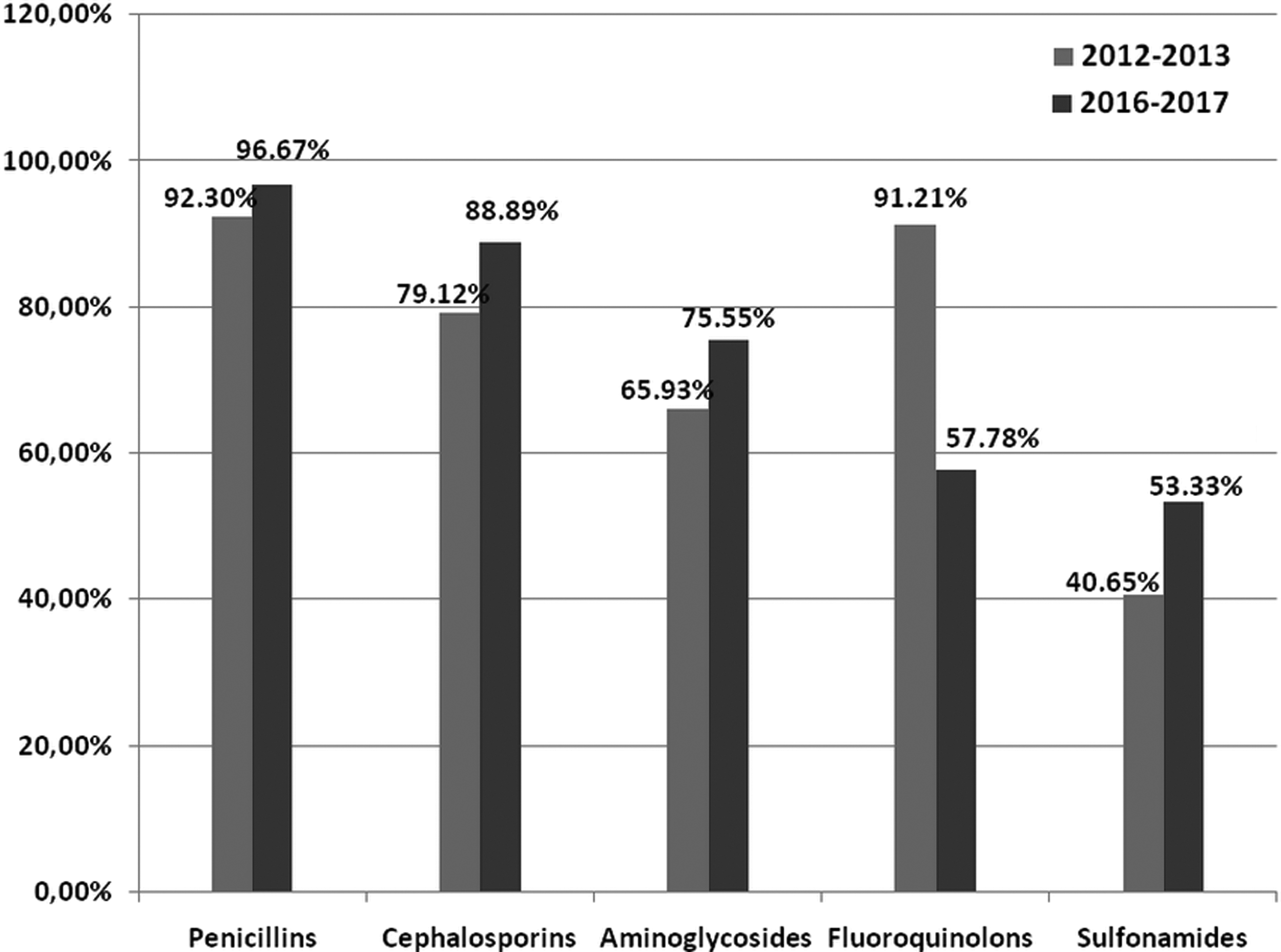
Percentages of antibiotic resistance among 3GC-resistant Enterobacteriaceae isolates over two periods.
The molecular research of genes encoding CTX-M, TEM, and SHV β-lactamases types showed a high rate of strains producing CTX-M β-lactamases type during both periods. An increase in the level of TEM-producing strains and a decrease in the level of SHV-producing strains during 2016–2017 were observed (Fig. 4).
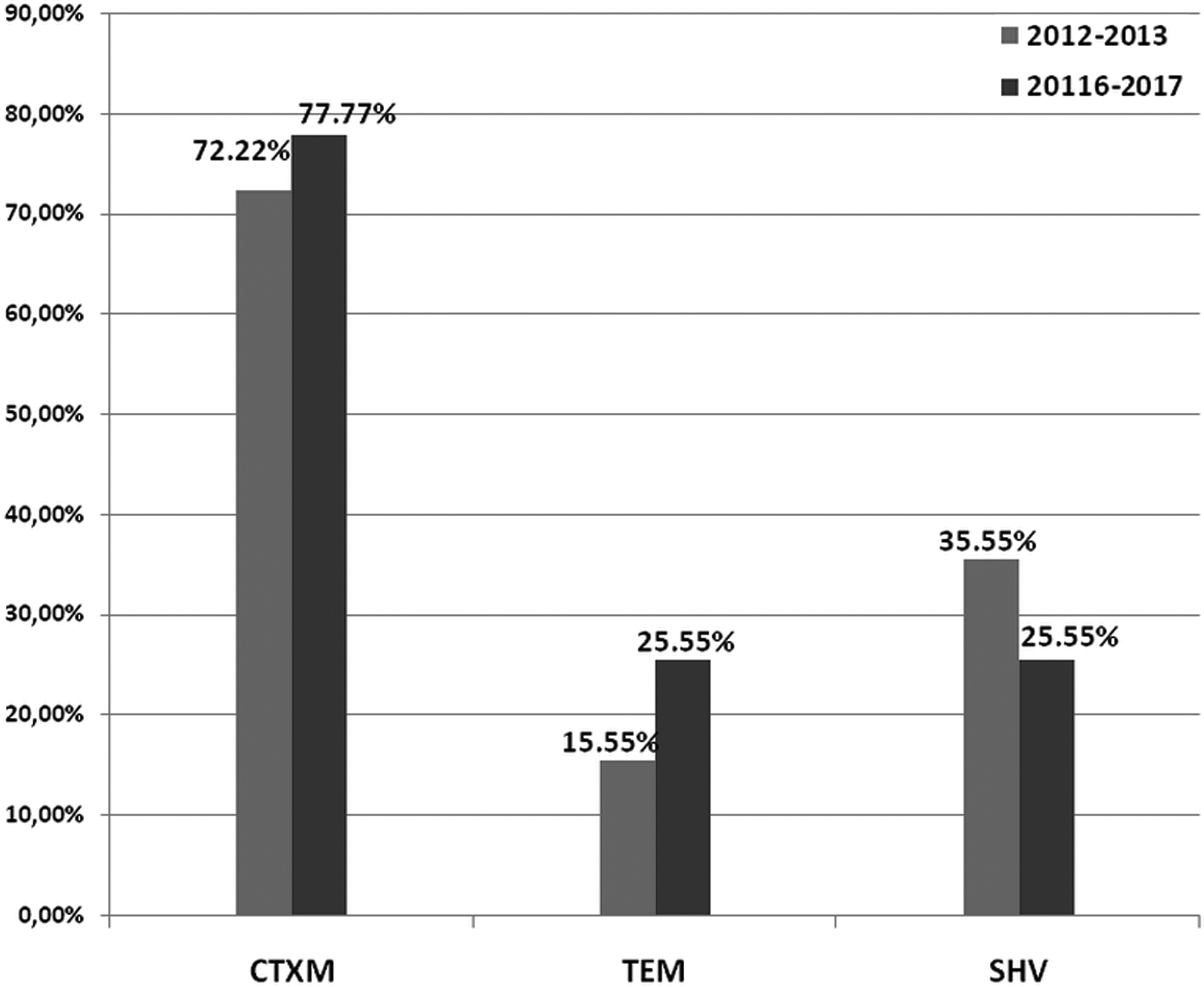
Prevalence of CTX-M, SHV, and TEM β-lactamases types among 3GC-resistant Enterobacteriaceae isolates during two different periods.
Variants and subvariants of β-lactamases genes were identified by sequencing and showed that all strains producing CTX-M β-lactamases type harbored the blaCTX-M-15 gene. However, several variants of genes encoding TEM and SHV β-lactamases types were detected during both periods (Table 1). The SHV β-lactamases type was observed only in K. pneumoniae strains, blaSHV-1 was the most detected gene among these strains. Other variants including blaSHV-11, blaSHV-12, blaSHV-27, blaSHV-28, blaSHV-31, blaSHV-38, blaSHV-79, and blaSHV-81 were also detected. Various variants of genes encoding TEM β-lactamases type including blaTEM-70, blaTEM-71, blaTEM-76, blaTEM-77, blaTEM-79, blaTEM-105, blaTEM-148, and blaTEM-186 were detected in Enterobacteriaceae species as given in Table 1. It was noted that TEM-producing Enterobacter cloacae strains harbored the blaTEM-70 gene.
β-Lactamases Genes Detected Among Enterobacteriaceae Species Over Two Periods
Serratia marcescens; Proteus mirabilis; Providencia stuartii; Enterobacter aerogenes.
Discussion
Our study involved 180 Enterobacteriaceae strains collected over two different periods from patients hospitalized in the Military Hospital of Tunisia. Our results showed that K. pneumoniae and E. coli are still the most prevalent species among clinical Enterobacteriaceae over time. These results confirm previous investigations in hospital settings in Tunisia.19,24 In fact, it was reported that K. pneumoniae and E. coli are the two main pathogens among Enterobacteriaceae species involved in severe infections.25–28
In our study, it was noted that the majority of these resistant strains were isolated from patients hospitalized in the neonatology and intensive care units. Thus, several factors can explain the high levels of 3GC-resistant bacteria in these two services, such as antibiotic use, long hospital stay, fragility of patients, and severity of illness.29–32 The nature of samples showed that most strains were detected in urine samples, proving that Enterobacteriaceae species especially E. coli and K. pneumoniae are often responsible for urinary tract infections as reported by other investigators.25,27,33,34
Our study showed that CTX-M was the frequent β-lactamase type during both periods and was conferred by blaCTX-M-15 gene in all isolates. It was reported that this gene was the most common gene not only in Tunisia7–12 but also in several countries of the world 5 ; it has, therefore, become a global epidemic ESBL gene. 5 Furthermore, a huge diversity of SHV and TEM β-lactamases types was described in our study. In fact, nine various subvariants of blaSHV genes were identified in K. pneumoniae isolates with dominance of blaSHV-1. This gene was among the most important non-ESBL variant usually detected in the chromosome of K. pneumoniae species. 35
We have described also in our study other non-ESBL variants such as blaSHV-11, blaSHV-79, and blaSHV-81. The two latter subvariants blaSHV-79 and blaSHV-81 were first identified in K. pneumoniae strains isolated from 17 Portuguese health institutions, 36 but these have not been previously detected in our country. We have also identified other ESBL subvariants such as blaSHV-12, blaSHV-27, blaSHV-28, blaSHV-31, and blaSHV-38 of which blaSHV-31 and blaSHV-38 have not been previously detected in Tunisia. Besides, eight subvariants of blaTEM gene were reported for the first time in our country. Thus, our study revealed the huge diversity of β-lactamase genes among various Enterobacteriaceae species collected over two different periods in the Military Hospital of Tunis, showing a serious problem of increase, evolution, and quick dissemination of these resistant bacteria over time in our hospital settings.
Conclusion
Our study provides new data of 3GC-resistant Enterobacteriaceae in our country, the Military Hospital is one of the biggest clinical settings in Tunisia that receives a significant number of patients from different regions of the country, showing, therefore, the serious problem of the quick dissemination of several β-lactamases producing Enterobacteriaceae species over time in our country.
Footnotes
Acknowledgments
This study was supported by The Tunisian Ministry of Higher Education and Scientific Research and The Military Hospital of Tunis.
Disclosure Statement
No competing financial interests exist.