




Abstract
ZTW-41, an indolizinoquinoline-5,12-dione derivative, was investigated for antibacterial activity against Gram-positive bacteria, especially methicillin-resistant Staphylococcus aureus (MRSA). In our study, the MIC90s (minimum inhibitory concentrations) of ZTW-41 against MRSA (MRSA, n = 200), methicillin-sensitive S. aureus (MSSA, n = 100), Enterococcus faecalis (E. faecalis, n = 32), and Enterococcus faecium (E. faecium n = 32) were 0.25, 0.25, 0.125, and 8 μg/mL, respectively, whereas the MBC90s (minimum bactericidal concentrations) were 2, 1, 1, and >32 μg/mL, respectively. ZTW-41 maintained its potency at different pH levels (range 5–9) and in starting inoculum size up to 107 CFU/mL. The presence of human serum (25–75%) increased ZTW-41 MICs by two- to eightfold. Time-kill curves showed that ZTW-41 had bactericidal activity against MRSA, MSSA, and E. faecalis strains within 8 hours, and rebound growth occurred after 8 hours except at higher multiples of the MIC (4 × and 8 × ). In the acute toxicity study, no mortality or signs of toxicity was noted in mice after 14 days of observation at doses <50 mg/kg. ZTW-41 exhibited good selectivity indices (SIs) (SI = IC50/MIC90) ranging from 1.12 to 71.76 against clinical isolates, demonstrating excellent therapeutic selectivity in MRSA, MSSA, and E. faecalis strains. Moreover, the in vivo efficacy (effective dose [ED]50 = 6.59 mg/kg) of ZTW-41 was found comparable with vancomycin. Collectively, our favorable results supported ZTW-41 as a promising investigational candidate for treating drug-resistant bacteria infection.
Introduction
Over the last decade, multidrug-resistant bacteria have posed serious threats to global public health, and represent a leading cause of morbidity and mortality globally.1,2 Among them, methicillin-resistant Staphylococcus aureus (MRSA) is an infamous pathogen and rises as a significant clinical concern as it can cause life-threatening infections such as septic shock, endocarditis, and severe pneumonia, which brings great challenge to human beings. 3
In recent years, the rocketing incidence of MRSA infections has been found in the community and hospitals. 4 According to the Centers for Disease Control and Prevention (CDC), 5 >2 million people suffer from antibiotic-resistant infections every year, and ∼23,000 people die from these infections in the United States. It is estimated that 80,461 invasive MRSA infections and >11,000 related deaths occurred in 2011 in the United States. Based on the monitoring results from China Antimicrobial Surveillance Network (CHINET), the prevalence of methicillin-resistant strains was 35.3% in S. aureus in Chinese hospitals in 2017, which represented predominant pathogens in multiple infectious diseases for its high resistance rates to most of antimicrobial agents. 6
At the same time, hospital-acquired MRSA has become increasingly resistant to the limited available antibiotics, 7 and few new drugs are introduced into market, 8 which means that the world is going to lack effective antibiotics. Therefore, the current situation puts forward an austere challenge, and highlights the need for the development of more potent antibiotics as alternative therapy against MRSA.8,9
In the previous research, 9-bromo-substituted indolizinoquinoline-5,12-dione derivatives showed excellent antibacterial activity against Gram-positive bacteria, especially MRSA. 10 According to structure–activity relationship studies of these derivatives,10,11 the structure of 9-bromo-substituted indolizinoquinoline-5,12-dione is essential for the antibacterial activity, and ester analogs with a longer side chain and amino terminal group at 6-position play a vital role in its improved water solubility. Among many derivatives, ZTW-41 (Fig. 1) is the most promising candidate compound for its potent anti-MRSA activity and satisfactory water solubility. 10 The mechanism of the active compound was to inhibit the activity of DNA gyrase and DNA topoisomerase IV. 12 This dual targeting is believed to help reduce the selection of resistant mutants and enhances potency against bacteria. 13
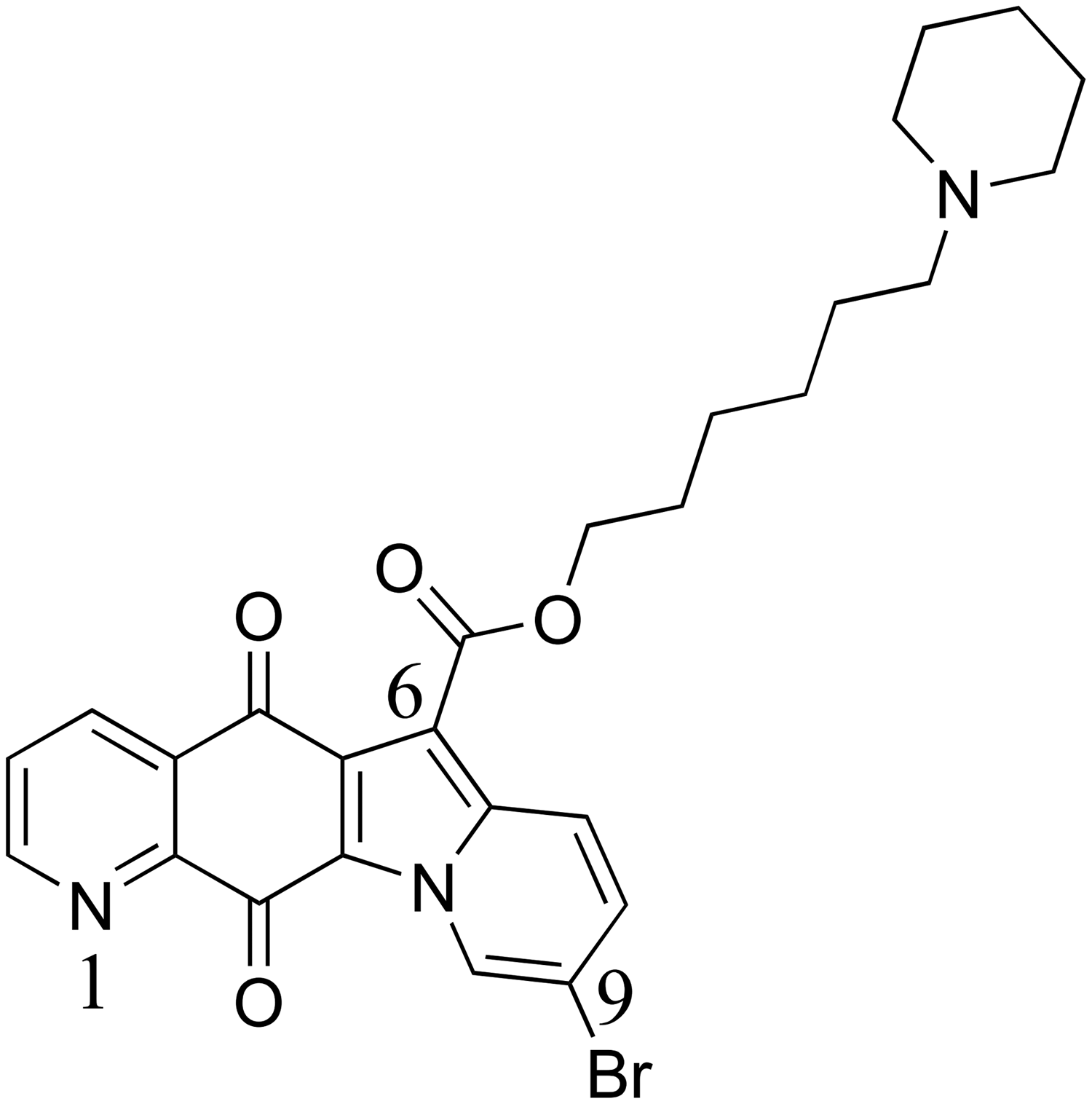
The structure of ZTW-41.
However, the in vitro pharmacodynamics properties of ZTW-41 were unknown, and the in vivo efficacy in animal model remained to be evaluated. The objective of the present research was to investigate the in vitro activity of ZTW-41 against Gram-positive isolates, and the mouse sepsis protection model was used to evaluate in vivo efficacy. In addition, the cytotoxicity in HepG2 cells and the acute toxicity study of ZTW-41 were primarily assessed in mice. The plasma protein binding rates were also determined in rat and human plasma.
Materials and Methods
Bacterial strains and antimicrobials
Minimum inhibitory concentrations (MICs) were determined against 364 clinical isolates, including MRSA (MRSA, n = 200), methicillin-sensitive S. aureus (MSSA, n = 100), Enterococcus faecalis (E. faecalis, n = 32), and Enterococcus faecium (E. faecium n = 32). These strains were collected from General Hospital of Southern Theatre Command from 2015 to 2018. All of the isolates had been identified by VITEK® 2 COMPACT fully automated microbial identification system and were preserved as suspensions in 50% glycerol broth at −80°C. The following control strains were tested: ATCC 29213 (MSSA), ATCC 43300 (MRSA), ATCC 29212 (E. faecalis), ATCC 700699 (vancomycin-intermediate S. aureus, VISA), ATCC 25922 (Escherichia coli), ATCC 19606 (Acinetobacter baumannii), ATCC 27853 (Pseudomonas aeruginosa), and ATCC 700603 (Klebsiella Pneumoniae), and these strains were purchased from American Type Culture Collection (ATCC). Ampicillin, oxacillin, vancomycin, ciprofloxacin, levofloxacin, Moxifloxacin, and linezolid were purchased from Aladdin Bio-Chem Technology Co., LTD. ZTW-41 was synthesized by School of Pharmaceutical Sciences, Sun Yat-sen University, China.
Minimum inhibitory concentration
The MICs were determined by standardized broth microdilution recommended by CLSI guidelines. 14 The test medium for these strains was cation-adjusted Mueller-Hinton broth (CAMHB) except S. aureus were grown in CAMHB supplemented with 2% NaCl when the susceptibility of oxacillin was determined. Exponential-phase organisms were generated to the turbidity of 0.5 McFarland standard (Densimat; BioMerieux, SA, France) and further diluted in CAMHB to target a final cell density of ∼5 × 10⁵ cells/mL. The plate was incubated at 37°C for 16–20 hours, except the incubation time was 24 hours when the MIC of oxacillin and vancomycin was tested. The MIC was defined as the lowest concentration of antimicrobial agent with no visible growth. Experiments were performed with biological triplicates. Susceptibility and resistance to these antibiotics were determined using CLSI breakpoints.
For evaluating the pH effect on MIC, CAMHB was adjusted to pH 5, 7, or 9 with appropriate volumes of HCl or NaOH. Inoculum effects were tested in the starting inoculum size from 103 to 108 CFU/mL. And the effect of serum concentration on MICs was estimated by supplementing CAMHB with 25%, 50%, and 75% (vol/vol) human serum (Sigma-Aldrich, China).
Minimum bactericidal concentration
The minimum bactericidal concentrations (MBCs) of ZTW-41, vancomycin, ampicillin, and oxacillin were determined. An aliquot 100 μL content from the wells containing concentrations higher than or equal to the MIC was plated onto blood agar by the surface viable-count method. The colonies were counted after incubating for 24 hours at 37°C. The MBC was defined as the lowest drug concentration that reduced viable organism counts by ≥3 log10 in 24 hours. 15
Time-kill kinetics
For time-kill kinetics, ZTW-41 was tested against ATCC 43300, ATCC 29213, ATCC 29212, and each clinical isolate of MRSA, MSSA, and E. faecalis at concentrations of 0.5 × , 1 × , 2 × , 4 × , and 8 × of the MIC. At time 0, 2, 4, 8, and 24 hours, an aliquot of 100 μL from all ZTW-41 concentration tubes was sampled; serially 10-fold dilutions of the suspension in sterile PBS were plated on blood agar and incubated at 37°C for 24 hours. Dilution was expected to minimize the carryover effect of antibiotics. Colonies were enumerated, and results were expressed as log10 CFU/mL. Time-kill experiments were done in triplicates. Growth control was done with no antibiotic added to the studied strain. The lower limit of bacterial detection utilized was 2 log10 CFU/mL. Bacterial concentrations <2 log10 CFU/mL were counted as 2 log10 CFU/mL. Bactericidal and bacteriostatic activities were defined as a ≥3 log10 CFU/mL decrease and 0 to <3 log10 CFU/mL decrease in bacterial counts after 24 hours of incubation, respectively.
Mammalian cytotoxicity
Cell Counting Kit-8 (CCK-8) was used to determine the cytotoxicity of ZTW-41. In brief, HepG2 cells (ATCC HB-8065) were cultured in Dulbecco's modified Eagle's medium supplemented with 10% fetal bovine serum. The cells were incubated at 37°C and 5% CO2 for 24 hours, and the medium was replaced with fresh medium containing different concentrations of ZTW-41 or vancomycin. After 2 hours of incubation, the A490 nm (OD490) was measured using a Thermo Multiskan GO Microplate Reader. IC50 values were determined from biological triplicates. The selectivity index (SI) was calculated using the IC50 and MIC data for ZTW-41 and vancomycin.
Mouse sepsis protection model
All the studies on animals followed the Guidelines for the Care and Use of Laboratory Animals. Kunming mice (18–22 g) were purchased from Animal Experimental Center, Guangdong Academy of Medical science. All the animals were acclimatized under controlled conditions (temperature 25°C ± 2°C, humidity 40–60%, 12-hours light/dark cycle) with standardized diet for ∼7 days. All the mice were fasted for 12 hours before the experiments with free access to water.
The mouse sepsis protection model in mice was performed as previously described. 16 In brief, Kunming strain-derived male mice were infected intraperitoneally with 0.5 mL of MRSA 43300 suspension (1.25 × 10⁸ CFU/kg), a concentration that achieves 100% mortality within 72 hours after infection. At 6 hours, 1, 2, 3, 4, 5, and 6 days postinfection, mice (10/group) received ZTW-41 at single intraperitoneal doses of 2.5, 5, 10, and 20 mg/kg. Control mice were dosed with vehicle or vancomycin at a dose of 10 mg/kg. Mortality was observed daily for 7 days postinfection. The median effective dose (ED50) and 95% confidence limits were determined by GraphPad Prism 6.0 software.
Acute toxicity study
Acute toxicity test was carried out according to the Organization for Economic Co-operation and Development (OECD) guidelines for Testing of Chemicals. 17 A total of 20 mice weighing between 24 and 30 g were randomly divided into 5 experimental groups of 4 mice each. After an overnight fast, ZTW-41 was administered intraperitoneally to each treatment group at single doses of 25.6, 32, 40, and 50 mg/kg, respectively. The control group was treated with the same volume of normal saline. All animals were observed for the mortality and changes in general behavior for 24 hours after treatment. Symptoms of toxicity such as hypoactivity, piloerection, breathing difficulty, tremors, and convulsion were evaluated after administration of the various doses of ZTW-41. During the remaining experimental period, the animals were monitored and observed at least once daily for the postdosing period of 14 days. Body weights were measured at the initiation of treatment, and on days 2, 7, and 14 after administration. All results were expressed as mean ± standard deviation. The statistical significance of differences between means was calculated using one-way ANOVA, followed by Dunnett's test for multiple comparisons with the control group.
Plasma protein binding
The protein binding of ZTW-41 in rat and human plasma was performed using a rapid equilibrium dialysis (RED) kit (Thermo Fisher Scientific) with LC-MS/MS analysis.
16
Drugs were added to rat or human plasma to achieve final concentrations of 2,000 ng/mL. Plasma solutions (200 μL) were placed into the sample chamber and 350 μL of PBS into the adjacent chamber. The plate was incubated at 37°C on an orbital shaker (1.5 g approx.) for 4 hours. Then, aliquots (50 μL) of the samples from both sides were processed, and 50 μL of blank plasma or PBS was added to each sample. Five hundred microliters of methanol containing 1 μg/mL carbamazepine IS was added and centrifuged at 12,800 g for 5 minutes before LC-MS/MS analysis. Experiments were performed with six biological replicates. The percentage of the compound bound to protein was calculated as the formula given below according to test compound concentration in protein-containing (PC) compartment and in protein-free (PF) compartment:
Results
MIC and MBC determinations
ZTW-41 was found to be highly active against a panel of standard Gram-positive pathogens, and the MIC values of ZTW-41 evaluated for ATCC29213, ATCC 43300 (MRSA), ATCC 29212 (E. faecalis), and ATCC 700699 (VISA) were 0.25, 0.25, 0.031, and 0.25 μg/mL, respectively (Table 1), which were comparable with or more active than vancomycin and oxacillin. However, Gram-negative bacteria were less susceptible than Gram-positive bacteria. The MIC of ZTW-41 against E. coli (ATCC 25922) was 4 μg/mL, and the MICs against A. baumannii (ATCC 19606), P. aeruginosa (ATCC 27853), and K. pneumoniae (ATCC 700603) were all >16 μg/mL (data not shown).
Summary of Minimum Inhibitory Concentration and Minimum Bactericidal Concentration Values (μg/mL) for ZTW-41 and Comparators Against Gram-Positive ATCC Strains
ATCC 29213: MSSA; ATCC 43300: MRSA; ATCC 29212: Enterococcus faecalis; ATCC 700699: VISA.
MBC, minimum bactericidal concentration; MIC, minimum inhibitory concentration; MRSA, methicillin-resistant S. aureus; MSSA, methicillin-sensitive S. aureus; ND, not detected; VISA, vancomycin-intermediate Staphylococcus aureus.
In previous work, MRSA was susceptible to ZTW-41 (n = 100), with an MIC50 value of 0.063 μg/mL and an MIC90 value of 0.125 μg/mL, 16-fold more active than vancomycin. 10 The potent antibacterial activity of ZTW-41 was further confirmed in a number of clinical strains in the present work, as shown in Table 2. Overall, ZTW-41 was the most potent agent against 364 Gram-positive bacteria tested compared with vancomycin, oxacillin, ciprofloxacin, levofloxacin, moxifloxacin, linezolid, and ampicillin. All MRSA and MSSA clinical strains in our study were highly susceptible to ZTW-41, with MICs ranging between 0.031 and 0.5 μg/mL, which were equal to or lower than comparator agents. The MIC50/90 values for ZTW-41 to MRSA were 0.125 and 0.25 μg/mL, respectively. And the MIC50/90 values for MSSA were 0.063 and 0.25 μg/mL, respectively. For E. faecalis tested, the MIC50/90 values were 0.063 and 0.125 μg/mL, and MIC50/90 values against E. faecium were 0.063 and 8 μg/mL, respectively.
Summary of Minimum Inhibitory Concentration Values (μg/mL) for ZTW-41 and Comparators Against Clinical Isolates
Interpretation based on CLSI breakpoints (M100-S25) for vancomycin, oxacillin, ampicillin, ciprofloxacin, levofloxacin, Moxifloxacin, and linezolid.
MIC50/MIC90, minimum inhibitory concentration reached by 50% or 90% of the strains; respectively; S, susceptible.
An important feature of ZTW-41 is its strong bactericidal property. An antibiotic was considered to show bactericidal activity against a particular strain when the MBC/MIC ratio was ≤4. 18 ZTW-41 showed excellent bactericidal activity to ATCC 29213 and ATCC 43300, with MBC values of 0.5 μg/mL against them. In addition, ZTW-41 showed bacteriostatic activity against ATCC 29212 and ATCC 700699 as the MBC/MIC values were 8 and 32, respectively (Table 1). As for clinical strains, the MBC90 values of ZTW-41 for MRSA and MSSA were 0.5 and 0.25 μg/mL, respectively, while those of vancomycin were both 2 μg/mL (Table 3). For E. faecalis and E. faecium tested, ZTW-41 MBC50 values were 0.25 and 4 μg/mL, respectively. ZTW-41 was bactericidal against 80.5% (161/200) of MRSA isolates and 90.0% (90/100) of MSSA isolates, exhibiting an MBC/MIC ratio ≤4, when vancomycin were 71.5% (143/200) and 72.0% (72/100), respectively. ZTW-41 was bactericidal against 46.9% (15/32) of E. faecalis, while vancomycin and ampicillin were 6.3% (2/32) and 37.5% (12/32), respectively (data not shown).
Summary of Minimum Bactericidal Concentration Values (μg/mL) for ZTW-41 and Comparators Against Clinical Isolates
Various cultural conditions for bacteria (such as pH, starting inoculum size, and human serum) may affect the MIC values. 19 In our study, the MICs of ZTW-41 against ATCC 29213 or ATCC 43300 were slightly affected by pH (5–9) or inoculum size (103 to 107 CFU/mL), a similar behavior to that observed with vancomycin (Table 4). However, the MICs increased 16-fold in 107 CFU/mL inoculum size compared with standard condition in ATCC 29212, which suggested an inoculum effect of ZTW-41 in this strain. The presence of human serum increased ZTW-41 MICs by two- to eightfold. In comparison, vancomycin was more stable in the presence of human serum, with the MIC values changing by one- to twofold (Table 4).
Effect of pH, Inoculum Serum, and Serum Concentration on the Minimum Inhibitory Concentrations of ZTW-41 and Vancomycin Against Staphylococcus aureus and Enterococcus faecalis
Time-kill studies
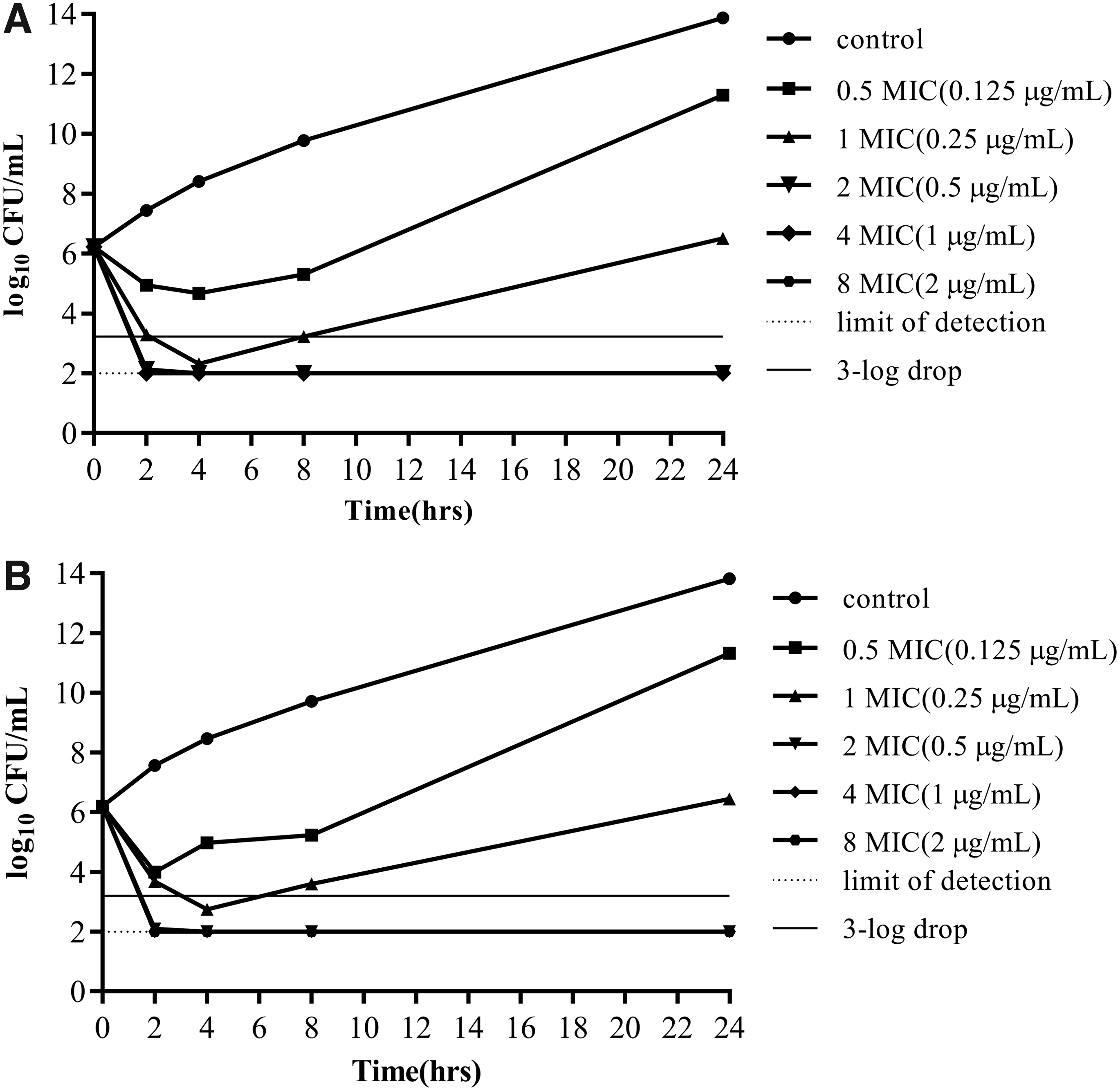
Our in vitro time-kill experiments suggested that ZTW-41 had bactericidal activity against MRSA, MSSA, and E. faecalis strains. For ATCC 43300, ZTW-41 demonstrated significantly killing activity at concentrations of 4 × and 8 × MIC in 24 hours (Fig. 2). Bactericidal activity occurred in the presence of 1 × and 2 × MIC within 8 hours, and rebound growth occurred after 8 hours. The results for MRSA clinical isolate 408235 were identical to that of ATCC 43300. Compared with MRSA, ZTW-41 exhibited better bactericidal activity against ATCC 29213 and achieved bacterial killing at 2 × , 4 × , 8 × MIC in 24 hours (Fig. 3). It could be observed that the isolates regrew at 0.5 × and 1 × MIC in which a remarkable increase in growth occurred from 4 to 24 hours time point. The curves for MSSA clinical isolate 616033 were similar to that of ATCC 29213. With respect to ATCC 29212, ZTW-41 showed bactericidal activity in 4 × and 8 × MIC in 4 hours, and no isolates were observed in 8 × MIC over 24 hours (Fig. 4). Regrowth was observed after 8 hours when exposed to 0.5 × , 1 × , 2 × , and 4 × MICs of ZTW-41. As for E. faecalis clinical isolate 306002, the same results were obtained as ATCC 29212.

Time-kill curves for ZTW-41 against ATCC 43300
Time-kill curves for ZTW-41 against ATCC 29213
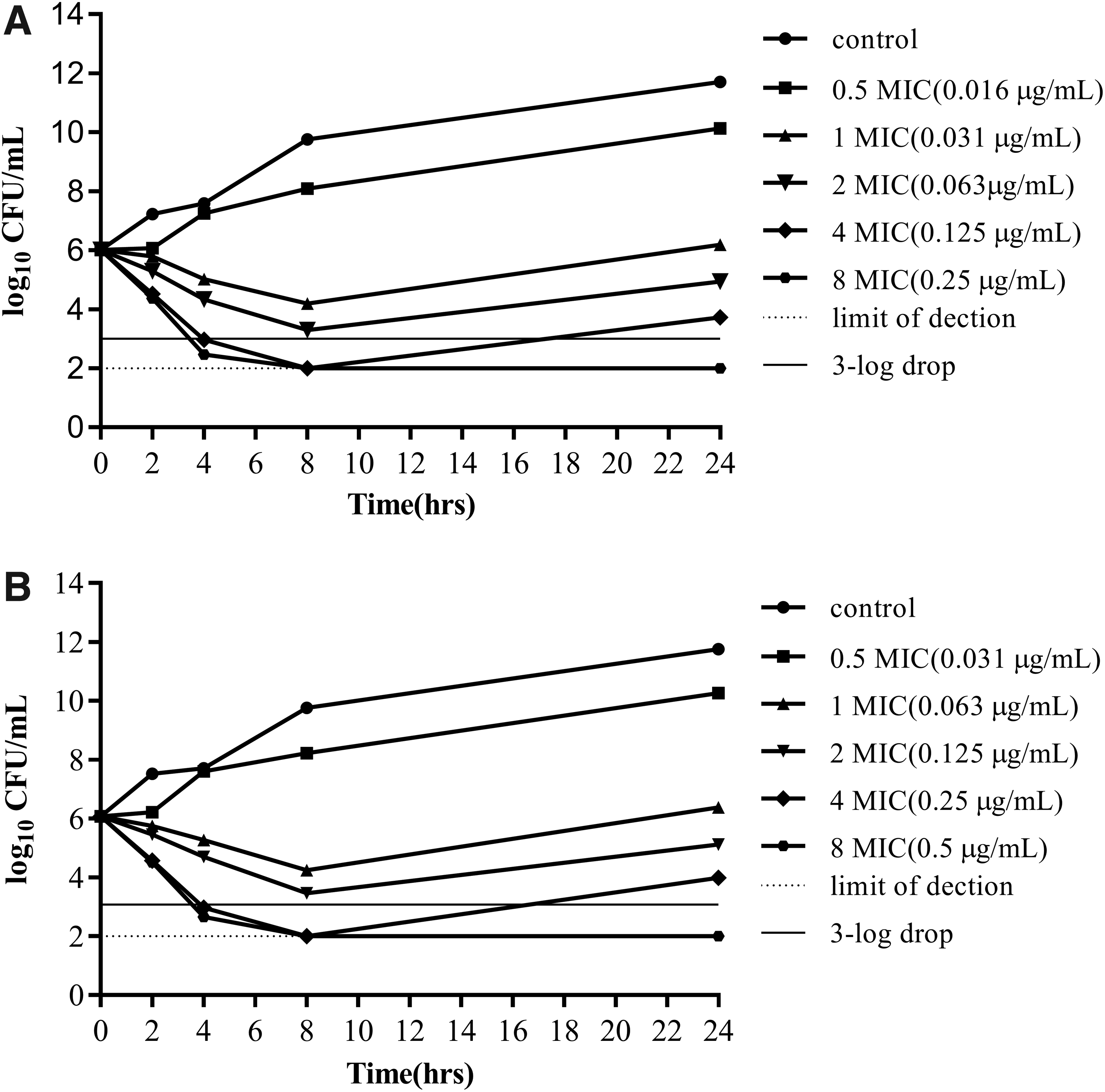
Time-kill curves for ZTW-41 against ATCC 29212
Mammalian cytotoxicity
It is critically significant to assess the potential cytotoxicity of a test agent as drug toxicity is an important aspect in new drug development. The in vitro cytotoxicity of ZTW-41 was investigated in HepG2 cells (Fig. 5). The IC50 values of ZTW-41 and vancomycin were 8.97 and 12.22 μg/mL, respectively. The inhibition rates of ZTW-41 and vancomycin were 80.3% and 67.8%, respectively, when tested at the highest concentration (100 μg/mL). The SIs of ZTW-41 and vancomycin were determined as an estimate of a therapeutic window. ZTW-41 possessed good SIs ranging from 1.12 to 71.76, while vancomycin showed much lower SIs ranging from 0.19 to 12.22 (Table 5). The highest value of 71.76 was determined for ZTW-41 against E. faecalis. Considering SI, ZTW-41 was a more favorable antibiotic than vancomycin.
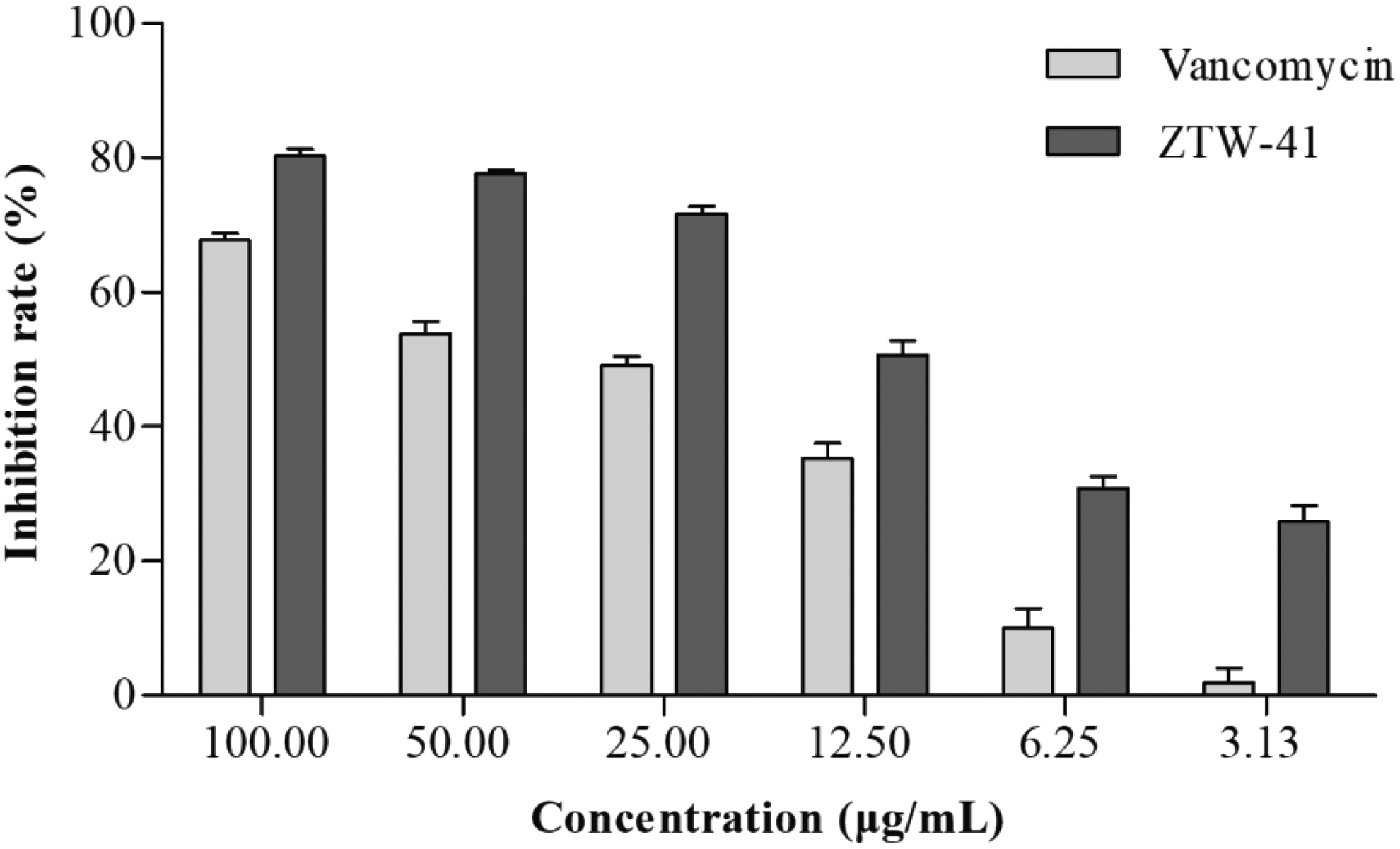
Cytotoxicity and selectivity index of the ZTW-41 and vancomycin. The cytotoxicity of ZTW-41 against HepG2 cells. HepG2 cells were incubated with different concentrations of ZTW-41 and vancomycin, and CCK-8 was used to determine cell viability. Graphs represent mean of three independent experiments ± SD (mean ± SD). IC50 values were calculated from the means of three independent experiments. CCK-8, Cell Counting Kit-8; SD, standard deviation.
Cytotoxicity and Selectivity Index of the ZTW-41 and Vancomycin
SI was calculated for ZTW-41 and vancomycin taking into account the MIC90 against clinical isolates and the IC50 on HepG2 cell line (SI = IC50/MIC90) by the CCK-8 assay.
CCK-8, Cell Counting Kit-8; SI, selectivity index.
Mouse sepsis protection model
Given the in vitro activity along with the desirable therapeutic selectivity, the in vivo efficacy of ZTW-41 against MRSA was determined in the mouse septicemia model. Figure 6 illustrates the survival rate of mice treated with ZTW-41 and vancomycin in experimental septicemia model. As shown in Fig. 6, ZTW-41 demonstrated dose-dependent effects on survival in this model infected with MRSA 43300. The treatment of ZTW-41 at 10 mg/kg resulted in a survival rate of mice comparable with vancomycin at 10 mg/kg. Moreover, up to 90% of mice survived >7 days when ZTW-41 was administered at the highest doses of 20 mg/kg. As control, injection with vehicle alone led to 100% mortality in this model within 7 days postinfection. In the septicemia model, the ED50 of ZTW-41 was 6.59 mg/kg. The ED50 values indicated that ZTW-41 was highly efficacious in treating mice infected with MRSA.

ZTW-41 is efficacious in septicemia protection model. ZTW-41 is efficacious in septicemia protection model. Survival is depicted 7 days after infection (10 mice/group). **p < 0.01, ***p < 0.001, compared with infection control group (determined by nonparametric log-rank test).
Acute toxicity study
The changes in the body weights in each ZTW-41 treatment group are shown in Fig. 7. Overall, ZTW-41 treatment decreased motor activity in each group within 30 minutes after administration, and then mice gradually returned to normal. At doses <50 mg/kg, ZTW did not produce any death or signs of toxicity in mice throughout the 14 days study period. Moreover, the treatment groups did not show remarkable changes in body weight during the experimental period compared with the control group.
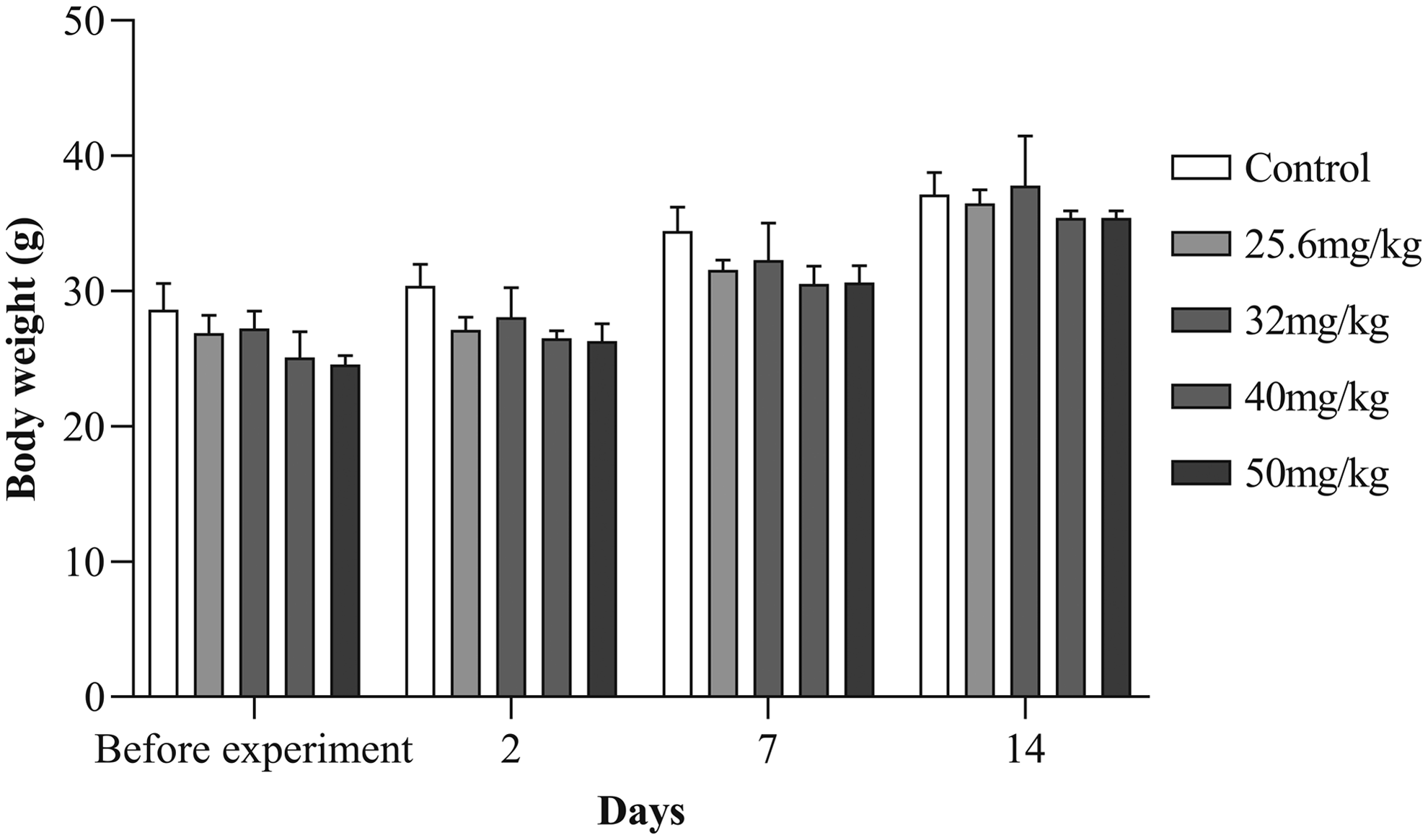
The acute toxicity study of ZTW-41. Changes in the body weights in mice treated with ZTW-41 in the acute toxicity study in 14-day treatment. Data are represented as the mean ± SD (4 mice/group). No statistical significance was found between control group and treatment groups (determined by one-way ANOVA).
Plasma protein binding
Plasma protein binding was assessed by the RED approach and determined as the percentage of bound drug. The protein binding rates of propranolol in rat and human plasma were assessed as the quality control, and our results were in agreement with those reported in the reference, 87.73% and 89.73%, respectively. 20 The protein binding rates of ZTW-41 were 97.87% and 97.80%, respectively (Table 6). No significant statistical difference was observed for plasma protein binding of ZTW-41 in rat and human plasma.
Plasma Protein Binding of ZTW-41 at Concentration of 2,000 ng/mL (n = 6, Mean ± Standard Deviation)
Discussion
Antibiotic resistance in bacteria has weakened the effectiveness of drugs that people have been relying on for nearly a century, and few new drugs have entered clinical trials from laboratories. 21 It is estimated that only two distinctly new antibiotic classes have been introduced into the market over the past 30 years 8 : the oxazolidinone linezolid in 2000 and the cyclic lipopeptide daptomycin in 2003. However, showing up resistance to some of these new antibiotics results in a growing demand for new antibiotics, pushing development of novel products and new chemical classes of antibiotics.22–24
ZTW-41 is an indolizinoquinoline-5,12-dione derivative that possesses potent antibacterial activity against Gram-positive bacteria. Similar to most anti-MRSA drugs, such as vancomycin and other newly approved antibiotics, such as dalbavancin 25 and delafloxacin, 26 the antimicrobial spectrum of ZTW-41 is limited to Gram-positive bacteria. In our study, ZTW-41 was significantly active against MRSA and MSSA. The strong antimicrobial activity of ZTW-41 was consistent with data reported by Yang et al. 10
Although vancomycin has generally been used as the first choice for treating MRSA infections, 27 vancomycin-intermediate S. aureus 28 and vancomycin-resistant S. aureus 29 are rising up and associated with vancomycin treatment failure in recent years. Notably, the MIC value for ZTW-41 to ATCC 700699 (VISA) was 0.25 μg/mL, 32-fold more potent than vancomycin, while the MBC value was 8 μg/mL, 4-fold more potent than vancomycin. These results showed the potential of ZTW-41 to cure these difficult-to-treat infections.
Despite a similar mechanism to that of quinolones, ZTW-41 remained active to those quinolone-resistant bacteria (Table 2). The lack of cross-resistance to present available quinolones and other cell wall-inhibiting antibiotics added important values to ZTW-41, which may find application in patients infected by drug-resistant bacteria.
Besides, our research first evaluated the activity of ZTW-41 against E. faecalis and E. faecium. ZTW-41 was the most potent agent against E. faecalis and E. faecium compared with vancomycin, ampicillin, ciprofloxacin, levofloxacin, Moxifloxacin, and linezolid, exhibiting MIC50 values of both 0.063 μg/mL against these two strains. In particular, the activities of ZTW-41 against E. faecium were generally lower than that of E. faecalis, which were similar to vancomycin and ampicillin. Of note, there were two E. faecium strains showing MIC values >32 μg/mL, suggesting ZTW-41-resistant phenotype in these strains. ZTW-41 showed comparatively potent activity against ATCC 29213 and ATCC 43300 even at high inoculum level, except an inoculum effect was observed in ATCC 29212. When evaluated at different pH levels, MICs of ZTW-41 did not show significant fluctuation.
Although moderate shift in MIC was observed in the presence of human plasma, ZTW-41 maintained potent antibacterial activity against these strains, showing 2- to 16-fold more potent than vancomycin. A possible explanation for this shift, to some extent, may be attributed to the binding to serum albumin, which could decrease the concentration of the free drug. 30 The effect of human serum on the antibacterial activities was paralleled to our protein binding results, which correlated with the significantly high levels of protein binding of ZTW-41.
The bactericidal index is an important feature to assess the bactericidal activity of antibiotics, representing the total bacterial killing over a drug concentration range.31,32 The bactericidal activity of ZTW-41 discussed in our study was presented in MBC results and time-kill curves. There were no colonies calculated at 4 × and 8 × MICs for MRSA and MSSA and 8 × MIC for E. faecalis in time-kill assays, which demonstrated the significant killing potential of ZTW-41. The rapid bactericidal activity of ZTW-41 against Gram-positive bacteria made it an ideal candidate for prevention and treatment of infections caused by these important bacteria. However, it should be noted that, in spite of reductions in the viable CFU/mL in time-kill experiments, there was evidence of rebound growth after 8 hours when the concentration of ZTW-41 was under MBC. Similar outcomes were also observed in previous studies, in which partial regrowth occurred with serial representative topoisomerase inhibitors after initial bacterial killing in time-kill kinetics.18,33 Therefore, it is important to further investigate the mechanism of reduced activity against the isolates and identify variations of the frequency of spontaneous resistance.
The high efficiency of ZTW-41 in vitro suggested the possible application of ZTW-41 to the treatment of systemic infections by Gram-positive bacteria. To confirm the consistency with the in vitro activity, further efforts have been made to evaluate the in vivo efficacy of ZTW-41, utilizing a MRSA-induced septicemia model, which resembles the human bloodstream infections. The mouse septicemia model is broadly used and has played an important role in evaluating in vivo efficacy of antibiotics. 34
ZTW-41 is currently developed as both an intravenous and oral antibiotic in preclinical research. Nevertheless, the extremely low oral bioavailability of ZTW-41 in rodents made it hard to achieve therapeutic concentrations in circulation (preliminary data not shown). To obtain desirable antibacterial effects systematically, ZTW-41 was administered to mice intraperitoneally. ZTW-41 demonstrated excellent protective effect in mice against septicemia model caused by MRSA with an ED50 value of 6.59 mg/kg, which was at least comparable with the reported ED50 value of vancomycin (5.00–10.00 mg/kg) for the same model. 32 Considering the novel class of the agent, our results suggested that ZTW-41 could be an alternative choice for treating systemic MRSA-induced infections without cross-resistance. To further substantiate the broad activities against Gram-positive pathogens, investigation of the efficiency of ZTW-41 in different infection models caused by different strains is ongoing.
The mammalian cytotoxicity in vitro and the acute toxicity study in vivo were performed to assess the drug toxicity of ZTW-41. HepG2 cell-based assay for cytotoxicity is a good preliminary marker to sort through potential lead compounds. 35 Our in vitro study indicated that the cytotoxicity of ZTW-41 was comparable with vancomycin. The SI is used to evaluate the therapeutic window of a drug and a mechanism to identify candidates for further studies. A candidate can be judged as a promising drug if its SI is >10.36–38 Except for E. faecium, the SIs for ZTW-41 were >10. In addition, our SI results showed that ZTW-41 exhibited 1.5- to 11.7-fold higher therapeutic selectivity than vancomycin did, especially for E. faecalis, demonstrating that ZTW-41 was a selective and less toxic antibiotic.
In the acute toxicity study, the changes in general behavior and body weight are considered as important indicators for the evaluation of early signs of toxicity caused by drugs. 39 The treated mice gained weight with age, and there was no significant change (p > 0.05) in their mean body weight compared with the control group during the14-day study. It can be concluded that the intraperitoneal administration at a dose up to 50 mg/kg did not affect the normal growth of mice.
To the best of our knowledge, the use of DNA gyrase/topoisomerase inhibitors, such as quinolones, has been associated with various kinds of adverse events. Thus, further long-term toxicity study should be performed to evaluate the central nervous system effects, bone and joint effects, cardiovascular effects, etc.
In summary, our research indicates that ZTW-41, with its potent activity against a variety of drug-resistant staphylococci and enterococci, rapid bactericidal activity, relatively low cytotoxicity, efficacy in mouse sepsis protection model, is a promising antibiotic worthy of further investigation.
Footnotes
Acknowledgments
This study was sponsored by the Department of Science and Technology of Guangdong Province (No. 2013A22100035), the National Natural Science Foundation of China (No. 81373257), and Guangdong Provincial Key Laboratory of Construction Foundation (No. 2017B030314030).
Disclosure Statement
No competing financial interests exist.