




Abstract
Background and Objective:
Combination therapy may be a treatment option against carbapenem-resistant Acinetobacter baumannii (CR-AB) infections. In this study, we explored the utility of fosfomycin in combination with meropenem (FOS/MEM) against CR-AB isolates.
Materials and Methods:
Screening of synergistic activity of FOS/MEM was performed using the checkerboard assay. A pharmacokinetic/pharmacodynamic analysis was performed for various FOS/MEM regimens using Monte Carlo simulations.
Results:
The minimum inhibitory concentration (MIC) required to inhibit the growth of 50% of the isolates (MIC50) and MIC required to inhibit the growth of 90% of the isolates (MIC90) of FOS and MEM were reduced fourfold and twofold, respectively. The combination was synergistic against 14/50 isolates. No antagonism was observed. Sixteen out of fifty isolates had MEM MICs of ≤8 mg/L when subjected to combination therapy, compared to none with monotherapy. Forty-one out of 50 isolates had FOS MICs of ≤128 mg/L when subjected to combination therapy, compared to 17/50 isolates with monotherapy. The cumulative fraction response for MEM and FOS improved from 0% to 40% and 40% to 80%, with combination therapy, respectively.
Conclusions:
Addition of MEM improved the in vitro activity of FOS against the CR-AB isolates. FOS/MEM could be a plausible option to treat CR-AB for a small fraction of isolates.
Introduction
A
Currently, the treatment of CR-AB infections presents a problem to clinicians due to a narrow range of available treatment options and a lack of novel antibiotics that are active against CR-AB—in this setting, repurposing “old” antibiotics by using them in combination, maybe a useful option. There are various combinations that have been explored in vitro and in vivo, including the fosfomycin (FOS)-carbapenem combination. 8 However, in vitro studies which explored this combination are scarce, and the outcomes are mixed. Menegucci et al. reported synergistic activity of the FOS-meropenem (MEM) combination in only 1 out of 6 multidrug-resistant A. baumannii isolates, whereas Zhu et al. reported synergistic activity of the FOS-imipenem combination in 12 out of 21 CR-AB isolates.9,10 In silico and clinical data examining the use of the FOS-MEM combination against CR-AB are not currently available.
One option to improve the rational selection of both the antibiotic combinations for the treatment of CR-AB and the associated dosing regimens is to use Monte Carlo simulations (MCSs). 11 MCS allows for the simulation of a set of pharmacokinetic (PK) parameter values, such as clearance and volume of distribution, within the known PK parameter population distribution, and generates the antibiotic concentration-time profile for each simulated patient. 11 The simulated concentration-time profiles can then be evaluated against the prospect of achieving a predefined therapeutic target by generating the probability of target attainment (PTA) outputs that describe the proportion of patients that will achieve a prespecified pharmacokinetic/pharmacodynamic (PK/PD) target for a given minimum inhibitory concentration (MIC). Such analyses have the potential to further support the findings from in vitro studies of antibiotic combinations.12,13 Therefore, the purpose of this study was to evaluate the PTA of FOS and MEM against CR-AB isolates, based on MICs of both agents when used alone and together.
Materials and Methods
Ethics approval or waiver is not applicable for this study.
Bacterial isolates and antimicrobial agents
Fifty clinical isolates of CR-AB were obtained from Zowawi et al., 14 from the University of Queensland Centre of Clinical Research (UQCCR). The carbapenem resistance mechanisms of each isolate are shown in Table 1. The isolates were stored at −80°C, in cation-adjusted Mueller-Hinton II broth (CA-MH) (Becton, Dickinson and Company, Sparks, MD) containing 20% glycerol. Before the intended use, the isolates were plated onto CA-MH agar (Becton, Dickinson and Company) plates using a 16-streak method and grown at 37°C for ∼16–18 hr.
The Minimum Inhibitory Concentrations and the Fractional Inhibitory Concentration Index of Meropenem-Fosfomycin Combination and Monotherapy Against 50 Carbapenem-Resistant Acinetobacter baumannii and the Carbapenem Resistance Mechanisms
Based on a study by Zowawi et al. 14
FICI, fractional inhibitory concentration index; FOS, fosfomycin; FOScombination, fosfomycin in combination with meropenem; MEM, meropenem; MEMcombination, meropenem in combination with fosfomycin; MIC, minimum inhibitory concentration; MIC50, the MIC required to inhibit the growth of 50% of the isolates; MIC90, the MIC required to inhibit the growth of 90% of the isolates.
Analytical grade FOS and MEM powder were purchased from Sigma-Aldrich, St. Louis, MO and Tokyo Chemical Industry Co. Ltd., Tokyo, Japan, respectively. These antibiotics were then dissolved in sterile Milli-Q water (FOS) and phosphate buffer 0.01M, pH 7.2 (MEM). To ensure sterility of stock solution, 0.22-μm polyvinylidene difluoride syringe filter was used during preparation. One milliliter aliquots of these antibiotics were then stored at −80°C until required. 15 On the day of an experiment, the required aliquots were thawed and subsequently diluted in CA-MH broth to the needed concentration. Broth or agar containing FOS was supplemented with 25 mg/L of glucose-6-phosphate (Sigma-Aldrich).
MIC determination
The MIC of FOS against the CR-AB isolates was determined by agar dilution. 16 The MIC of MEM against the isolates were ascertained by broth microdilution, which was done in quadruplicate. 16 Pseudomonas aeruginosa (ATCC 27853) and Enterococcus faecalis (ATCC 29212) strains were used as quality control strains for FOS and MEM, respectively. The MIC required to inhibit the growth of 50% of the isolates (MIC50) and MIC required to inhibit the growth of 90% of the isolates (MIC90) of FOS and MEM (monotherapy and in combination) were defined as the MIC required to inhibit the growth of 50% and 90% of the 50 isolates used in this study, respectively.
In vitro evaluation of FOS and MEM combination
We performed the checkerboard assay in 96-well microtiter, round-bottomed plates, to screen for synergistic activity of the FOS-MEM combination against the CR-AB isolates. The range of final concentrations of FOS and MEM in the assay was 8–512 mg/L and 1–128 mg/L, respectively. Each plate also included sterility and growth controls. The final inoculum was ∼5 × 10⁵ CFU/mL in each well. The plates were then incubated at 37°C for overnight (18–20 hr) and were subsequently examined by visual inspection. The lowest concentration of FOS and MEM that completely inhibited the growth of bacteria as detected by the naked eye (i.e., clear well) was taken as the MIC. The following Equation 1 was used to calculate the fractional inhibitory concentration index (FICI) 17 :
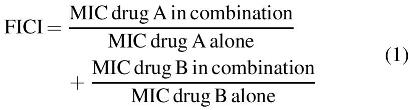
FICI of ≤0.5 was interpreted as synergistic, 0.5 < FICI ≤1 as additive, 1 < FICI ≤4 as indifferent, and >4 as antagonistic. 18
PK model of FOS and MEM
The population PK parameters of FOS in critically ill patients described by Parker et al. 19 was used to simulate the concentration-time profile of FOS for 10,000 virtual patients. Similarly, for MEM, the population PK of MEM described by Alobaid et al. 20 was applied. For both agents, the concentration-time profiles during the first 24 hr were generated. The weight of the simulated patients was fixed at 70 kg to represent the weight of an average adult,21,22 and a body mass index (BMI) of 24 was chosen based on a study by Alobaid et al., 20 which reported a mean BMI of 24 in nonobese patients. The creatinine clearance (CLCR) was preset at 100 mL/min/1.73 m2 to represent patients with normal renal clearance.
The population PK model of FOS was a two-compartment model 19 with the following parameters: clearance (CL), volume of the central compartment (Vc), volume of the peripheral compartment (Vp), and intercompartmental clearance (Q). The highest of the seven interoccasion CL value was used to prevent overestimation of the FOS concentration in plasma. 12 The population CL and Vc incorporated the CLCR and body weight (Wt) covariates as follows: CL (L/h) = 5.57 × (CLCR/90) and Vc (L) = 26.5 × (Wt/70)0.75. VP and Q were set at 22.3 L and 19.8 L/h, respectively. Intersubject variability was incorporated into CL and Vc, assuming a log-normal distribution of both parameters with the coefficient of variations (CV) of 91.9% and 39%, respectively. The unbound fraction of FOS was assumed to be 100%. 23
The two-compartment PK model of MEM 20 involved the following parameters: CL, Vc, the rate constant for MEM distribution from the central to the peripheral compartment (kCP), and rate constant for MEM distribution from the peripheral to the central compartment (kPC). The population CL and Vc incorporated the Cockcroft-Gault (CG) calculated creatinine clearance (CLCR) and BMI, respectively (CL [L/h] = 15.5 × CG−CLCR/100, and Vc (L) = 11.66 × [BMI/30]0.75). The kCP and kPC population mean was 25.6/hr and 8.32/hr, respectively. Intersubject variability was incorporated into CL, Vc, kCP, and kPC, assuming a log-normal distribution of the parameters with the CV of 38.8%, 49.3%, 137.2%, and 147.1%, respectively. The unbound fraction of MEM was assumed to be 98%. 24
PK/PD target indices
For FOS, the PK/PD index that is associated with bacterial stasis or killing is the area under the concentration-time curve over 24 hr (AUC24hr) to the MIC ratio (AUC/MIC24hr) of the unbound FOS concentration. 25 The target value of AUC/MIC24hr >15 was chosen as the PK/PD target as it corresponded to net stasis against P. aeruginosa. 25 For MEM, the PK/PD index that is associated with bacterial stasis or killing is the percentage of unbound MEM concentration that remains above the MIC during a dosing interval (%fT>MIC). 26 For MEM, the target value of 40% fT>MIC was selected as it corresponded to a 2-log10 reduction of the bacterial density against A. baumannii. 26
Monte Carlo simulation
MCS was carried out to generate the unbound drug concentrations of FOS and MEM for 10,000 virtual profiles using the Pmetrics package (v1.52; Laboratory of Applied Pharmacokinetics and Bioinformatics, Los Angeles, CA) 27 for R (v.3.6.2; R Core Team, Vienna, Austria). The following FOS regimens were simulated: 8 g every 8 hr (1-hr infusion), 6 g every 6 hr (1-hr infusion), 4 g every 4 hr (1-hr infusion), and a 24 g continuous infusion. The following MEM regimens were simulated: 2 g every 8 hr (0.5-hr and 3-hr infusion) and a 6 g continuous infusion.
The PTA for each dosing regimen was evaluated to determine the percentage of the simulated profiles that achieved or exceeded the PK/PD indices for FOS and MEM at a range of MICs. It was deemed successful when 90% or more of the simulated patient population achieved or exceeded the PK/PD indices. The cumulative fraction of response (CFR) for each dosing regimen was also calculated based on the PTA obtained from the simulation and the range of MICs obtained from the checkerboard assays of FOS and MEM alone and in combination. The summation of the fraction of bacteria at each MIC across the distribution multiplied by the PTA at the MIC is the CFR for the regimen (Eq.2).
28
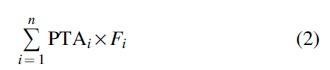
The subscript i indicates the MIC category ranked from lowest to highest MIC value of a population of microorganisms, PTA i is the PTA of each MIC category and F is the fraction of the population of microorganisms at each MIC category.
Results
MIC and checkerboard analyses
The MIC, MIC50, and MIC90 of the MEM and FOS, in monotherapy and combination against each strain and the FICI of the combination, are summarized in Table 1. The ranges of MICs were 128–2,048 mg/L for FOS monotherapy and 32–512 mg/L for MEM monotherapy. The range of MICs of MEM and FOS in combination was 1–128 mg/L and 8–512 mg/L, respectively. The MICs of the antibiotics in combination were lower than the MICs of the antibiotics in monotherapy. The MIC50 and MIC90 of MEM in combination were decreased twofold compared to the MEM monotherapy MIC50 and MIC90. For FOS in combination, the MIC50 and MIC90 were decreased by fourfold compared to the FOS monotherapy MIC50 and MIC90. When MEM was used in combination with FOS, 16% (8/50) of the isolates had MEM MICs below the resistance breakpoint (<8 mg/L) 29 and 52% (26/50) had FOS MICs of ≤64 mg/L 29 when FOS was used in combination with MEM. The MEM-FOS combination was synergistic against 28% (14/50), additive against 68% (34/50) and indifferent against 4% (2/50) of the isolates. No antagonism was observed.
PK/PD simulations
The simulated unbound FOS and MEM concentrations, with the 95% confidence interval (gray shading) after the highest doses of 2 g MEM (3-hr infusion) every 8 hr and 8 g FOS (1-hr infusion) every 8 hr are shown in the Supplementary Data. The PTA achieved by the different FOS and MEM regimens, against a range of MIC values and the respective frequencies of the isolates in monotherapy and combination therapy according to the MIC is shown in Tables 2 and 3.
Probability of Target Attainment of 40% fT > MIC Achieved by the Different Meropenem Regimens Against a Range of MIC Values and the Respective Frequencies of the Isolates in Monotherapy and Combination Therapy Against Carbapenem-Resistant Acinetobacter Baumannii
CI, continuous infusion; PTA, probability of target attainment; q8h, every 8 hr.
Probability of Target Attainment of AUC24/MIC >15 Achieved by the Different Fosfomycin Regimens Against a Range of MIC Values and the Respective Frequencies of the Isolates in Monotherapy and Combination Therapy Against Carbapenem-Resistant Acinetobacter Baumannii
q4h, every 4 hr; q6h, every 6 hr.
The highest MIC whereby a ≥ 90% PTA is achievable was 8 mg/L for all MEM dosing regimens tested. None of the isolates had MICs of ≤8 mg/L when subjected to MEM monotherapy. However, when exposed to FOS-MEM combination, 16 (32%) isolates had MEM MICs of ≤8 mg/L. All FOS dosing regimens were able to achieve ≥90% PTA for an MIC of 128 mg/L. When subjected to FOS monotherapy, 17 (34%) isolates had MICs of ≤128 mg/L. However, when subjected to the combination of FOS and MEM, 41 (82%) isolates had MICs of ≤128 mg/L.
Table 4 summarizes the CFR for each dosing regimen of MEM and FOS, respectively, against the 50 CR-AB clinical isolates used in the present study. Monotherapy of MEM did not achieve the desired CFR. However, due to the reduction of MICs of MEM with combination therapy, ∼40% CFR were attainable in patients with normal renal function, for MEM dosing regimens of 2 g every 8 hr (3-hr infusion). FOS monotherapy was able to attain ∼40% CFR for dosing regimens of 8 g every 8 hr and 6 g every 6 hr, both as 1-hr infusion, in patients with normal renal function. The CFR improved further to ∼80% when FOS was used in combination with MEM.
Cumulative Fraction of Response to Meropenem and Fosfomycin Regimens Against 50 Clinical Isolates of Carbapenem-Resistant Acinetobacter Baumannii
CFR, cumulative fraction of response.
Discussion
The current study is a worthy addition to our background understanding of the use of FOS in combination with MEM against CR-AB isolates. Evaluation of the CFR of FOS alone or in combination therapy with MEM clearly demonstrates the synergistic action between the two antimicrobials with the improvement of the CFR from 40% with FOS monotherapy to 80% with combination therapy, for all dosing regimens. Although lack of activity of FOS against A. baumannii is expected due to intrinsic resistance, the substantial increase in CFR when combined with MEM suggests that its activity may be successfully potentiated. 30 For MEM, a modest improvement in the CFR was observed, whereby the CFR improved from 0% with MEM monotherapy to ∼40% with combination therapy, for dosing regimens of 2 g every 8 hr (3-hr infusion) and 6 g continuous infusion. These observations demonstrated better coverage when combination therapy is used against these multidrug-resistant A. baumannii and also highlighted the importance of the addition of MEM to improve the action of FOS, thus recovering the utility of FOS against CR-AB to a certain extent.
In silico study examining the use of FOS-based combination therapy against A. baumannii is limited. In contrast to our findings, Menegucci et al. did not observe any benefit of the FOS-MEM combination against CR-AB isolates. 9 In their study, the FOS-MEM combination did not result in a reduction of the MEM MICs that is sufficient enough (≤8 mg/L) to for MEM to work against the isolates, considering a PTA of >90% at a MIC of 8 mg/L from their simulation. Our study, on the contrary, showed that 32% (16/50) of the isolates had MEM MICs of ≤8 mg/L when used in combination with FOS.
The rationale for proposing the use of FOS in combination with other antibiotics such as MEM for the treatment of infections due to multidrug-resistant A. baumannii is due to its potential for synergism with other agents, as exhibited in this study, and the possibility of resistance development during treatment when it is used as a single agent. 31 The potential synergism between MEM and FOS may be attributable to each agent affecting different stages of the bacterial cell wall synthesis. 32 Specifically, FOS interferes with the first cytoplasmic step of bacterial cell wall synthesis, which is the formation of the peptidoglycan precursor uridine diphosphate N-acetylmuramic acid (UDP-MurNAc) by inhibiting the Mur enzymes. MEM, on the contrary, interferes with the third step of cell wall formation, by binding to the penicillin-binding proteins (PBP). Inhibition of the PBP prevents the crosslinking of the peptidoglycan layers of the cell wall. 32
However, the question still remains if the combination of FOS and MEM will be an effective alternative against CR-AB infections. Considering the reduction in the MIC50 and MIC90 of both MEM and FOS when used together, and the PTA of the various dosing regimens of both antibiotics, this combination could potentially be used for CR-AB isolates with an initial MEM and FOS MIC of ≤16 and ≤512 mg/L, respectively. This is so that the MEM MIC can potentially be brought down to <8 mg/L. Moreover, due to the meek improvement in CFR for MEM even in the combination therapy, care must be taken, when using this combination, against CR-AB isolates with a baseline MEM MIC ≥32 mg/L.
There are some limitations to note for this study. For the screening of synergistic activity of the FOS-MEM combination, we only used 50 isolates, which may under- or overestimate the MICs and the fold-reduction. Furthermore, the PK models and the target PD indices of FOS and MEM were taken from studies which explored FOS and MEM as monotherapy. As there are no studies which examined the target PD index of FOS against CR-AB, we used the data from a study which investigated the target PD index of FOS against P. aeruginosa. 25 The PD drug-drug interaction was accounted for in the checkerboard assay through the reduction in MIC values in the combinations. 13
Conclusion
Our study demonstrated that the FOS and MEM combination could be a plausible option to treat CR-AB for a small fraction of isolates, and that addition of MEM improved the activity to FOS against the CR-AB isolates. Further, in vivo preclinical or clinical studies are needed to support this hypothesis.
Footnotes

References
Supplementary Material
Please find the following supplemental material available below.
For Open Access articles published under a Creative Commons License, all supplemental material carries the same license as the article it is associated with.
For non-Open Access articles published, all supplemental material carries a non-exclusive license, and permission requests for re-use of supplemental material or any part of supplemental material shall be sent directly to the copyright owner as specified in the copyright notice associated with the article.
