




Abstract
This study evaluated the antimicrobial efficacy of electrolyzed water (EW) and chlorine-based disinfectant (CLD) over time, focusing on the impact of pH, free chlorine (FCL), and oxidation–reduction potential (ORP). EW and CLD are commonly used for wound care and surgical instrument disinfection, but their chemical instability limits their use. The study was conducted in the Microbiology Laboratory of the University of Guanajuato, using Escherichia coli ATCC 25922 as the test organism. Disinfectants were maintained at 40°C, with systematic monitoring of pH, FCL, and ORP. Minimum bactericidal concentration was used to assess antimicrobial activity before and after thermal exposure. Statistical analyses included Kruskal–Wallis one-way ANOVA, and the Friedman test. Results showed that the antimicrobial activity of EW depended on FCL concentration, with a significant correlation between the absence of FCL and increased minimum bactericidal concentration (p < 0.01). Disinfectants with alkaline pH demonstrated greater stability over time (p < 0.01). The findings highlight the importance of FCL, pH, and ORP in the effectiveness of these disinfectants and underscore their limitations due to chemical instability in clinical settings.
Introduction
Concerns about infection control have driven the development of new generations of antibiotics and antiseptics, including electrolyzed water (EW).1,2 This disinfectant is produced through the controlled electrolysis of water and sodium chloride, resulting in a pH range of 2.7–9, hypochlorite concentrations exceeding 200 particles per million (ppm), and varying levels of oxidation–reduction potential (ORP).3,4 The antimicrobial efficacy of EW is primarily attributed to the reactive oxygen species that disrupt bacterial metabolic processes and damage cell membranes. 5 Its effectiveness has been demonstrated against a range of microorganisms, including Pseudomonas aeruginosa, Escherichia coli, Staphylococcus aureus, and Candida albicans.5,6 In addition, it exhibits a strong capacity to inhibit bacterial growth and biofilm formation. 7
In contrast, chlorine-based disinfectants (CLDs), which are formulated with sodium hypochlorite, typically have a pH above 9. 8 This high pH reduces their antimicrobial efficacy and increases their potential for corrosion. 9 Despite the absence of formal clinical guidelines, the widespread use of disinfectants has spurred extensive research into their efficacy and safety. EW products are marketed with a shelf life of 1 year and remain effective for up to 30 days after opening. 10 However, studies have shown that storage conditions, including room temperature and exposure to sunlight, significantly diminish their antimicrobial potential over time.11–14
A study conducted at the Microbiology Laboratory of the University of Guanajuato evaluated the efficacy of EW against various microorganisms, including P. aeruginosa ATCC 27853, multiresistant P. aeruginosa, S. aureus Methicilin-resistant ATCC 27853, E. coli ATCC 25922, and ESBL-producing E. coli. When compared with chlorhexidine, the study revealed a significant loss of antimicrobial efficacy in EW over time, regardless of the microorganism tested. 15
To date, the relationship between the key attributes of these disinfectants—pH, ORP, and free chlorine (FCL)—and their antimicrobial effectiveness remains unclear. We believe that identifying which of these factors plays the most critical role in maintaining antimicrobial activity over time is essential for developing effective clinical recommendations for the use of EW and CLDs.
Materials and Methods
Type of study
An experimental study was conducted at the Microbiology Laboratory of the University of Guanajuato in Leon, Guanajuato, Mexico, from August 2022 to June 2023. Approval was obtained from the local research committee, and biosecurity measures typical of a level 2 laboratory were implemented.
Bacterial strain
A gram-negative bacterium, identified as E. coli 25922 by the American Type Culture Collection, was used in this study. Bacterial isolation was performed 24 hours before each microbiological test by culturing on blood agar plates (BBLTM), which were incubated at 37°C.
Selection of compounds
For this study, we utilized a selection of EW and CLDs available in Mexico. Overall, we studied five EWs and two chlorine-based solutions, classifying them according to their initial pH values. Detail specifications for each compound are provided in Table 1.
Baseline Characteristics of Electrolyzed Waters and Chlorine-Based Disinfectants
BSES, broad-spectrum electrolyzed waters; CFEAS, control flow electrolyzed acid solution; EWCS, superoxide solution with sodium and chlorine; EWD, electrolyzed water disinfectant; EWS, electrolyzed water with sodium; GEW, generic electrolyzed water; HCS, high chlorine solution; ppm, particles per million, results shown as median and range.
Minimum bactericidal concentration assay
We determined the minimum bactericidal concentration (MBC) as a reliable method to assess antimicrobial activity. It was determined using the dilution method based on the Clinical and Laboratory Standards Institute protocol. 15 The procedure involved preparing a sterile test tube with 3 mL of 0.9% saline solution and 5 µL standardized bacterial inoculum, adjusted to a turbidity equivalent to McFarland 0.5 (1.5 × 10⁸ colony-forming units [CFU/mL]). The bacterial suspension was diluted 1:100 with 0.9% saline solution and 100 µL of the final suspension (equivalent to 106 CFU/mL) was used.
Ten sterile test tubes were prepared: one as positive control with the bacterial inoculum, one as negative control with the study compound, and the remaining eight containing 250 µL of deionized water; to each test tube, 250 µL of the compound was added, followed by a sequential dilution by transferring 250 µL from the previous tube. The contents of each tube were inoculated onto a 5% blood agar plate and incubated for 24 hours at standard temperature. Each compound was tested individually in triplicate and the MBC was confirmed by visually counting colonies.
Evaluation of solution stability and chemical properties during accelerated aging
To evaluate the behavior of pH, ORP, and FCL concentrations, we subjected the solutions to an accelerated aging process16,17 that had previously been standardized in the Microbiology Laboratory at the University of Guanajuato. Antiseptics were stored in screw-top tubes and subjected to constant heating at 40°C using an HH-2 bath thermostat (CIVEQ), with no exposure to light. The temperature was chosen based on the Q10 temperature coefficient 18 for an ambient temperature of 20°C, which reflects the average temperature in the city of Leon. This procedure adheres to current regulations for conducting accelerated aging tests and is equivalent to 9 months of natural aging. 19
All samples were analyzed every 24 hours to assess their chemical properties, pH and ORP were measured using Oakton potentiometer (PCTSTESTR™5, OKT35634-54), while FCL (hypochlorite ion and hypochlorous acid) levels were determined using generic test strips. The MBC was assessed in two stages as follows: first with the original disinfectants, and then after accelerating aging.
Statistical analysis
The results were analyzed using NCSS statistical software. Differences in the MBC were evaluated using a nonparametric Kruskal–Wallis one-way ANOVA for independent samples, followed by a multiple comparison analysis using the Tukey test. In addition, differences in pH, ORP, and chlorine values were assessed using the Friedman test.
Results
For the experiments, we utilized EW and CLDs commonly available in Mexico. All experiments were performed in triplicate, and results were reported as median and range. At the outset, we characterized each solution based on its pH, FCL concentration, and ORP (Table 1). Notably, three disinfectants lacked reported chemical characteristics, while three others displayed discrepancies between the actual concentrations measured and the manufacturer’s reported values (superoxide solution with sodium and chlorine [EWCS] ORP 906 ± 5.7; high chlorine solution [HCS] pH 8.7 ± 0.5).
To assess the antimicrobial efficacy of these CLDs and EWs, we determined the MBC for each solution at the following two points: (1) before any experimental manipulation and (2) after an accelerated aging process. At time point 1, disinfectants, control flow electrolyzed acid solution (CFEAS) (dilution 5 at 3.12 ppm), generic electrolyzed water (GEW) (dilution 5 at 0.62 ppm), and EWS (dilution 3 at 2.5 ppm), exhibited microbial growth at higher dilution concentrations compared with the other solutions. This is noteworthy because the remaining antiseptics demonstrated superior antimicrobial activity, requiring lower concentrations to achieve their effect. Following accelerated aging, MBC evaluation revealed that the same disinfectants requiring higher initial concentrations lost their antimicrobial efficacy more rapidly (the aging time was 72 hours for GEW, EWS, and broad-spectrum electrolyzed water, 96 hours for CFEAS), indicating a significantly shorter effective aging period compared with the others (Fig. 1).
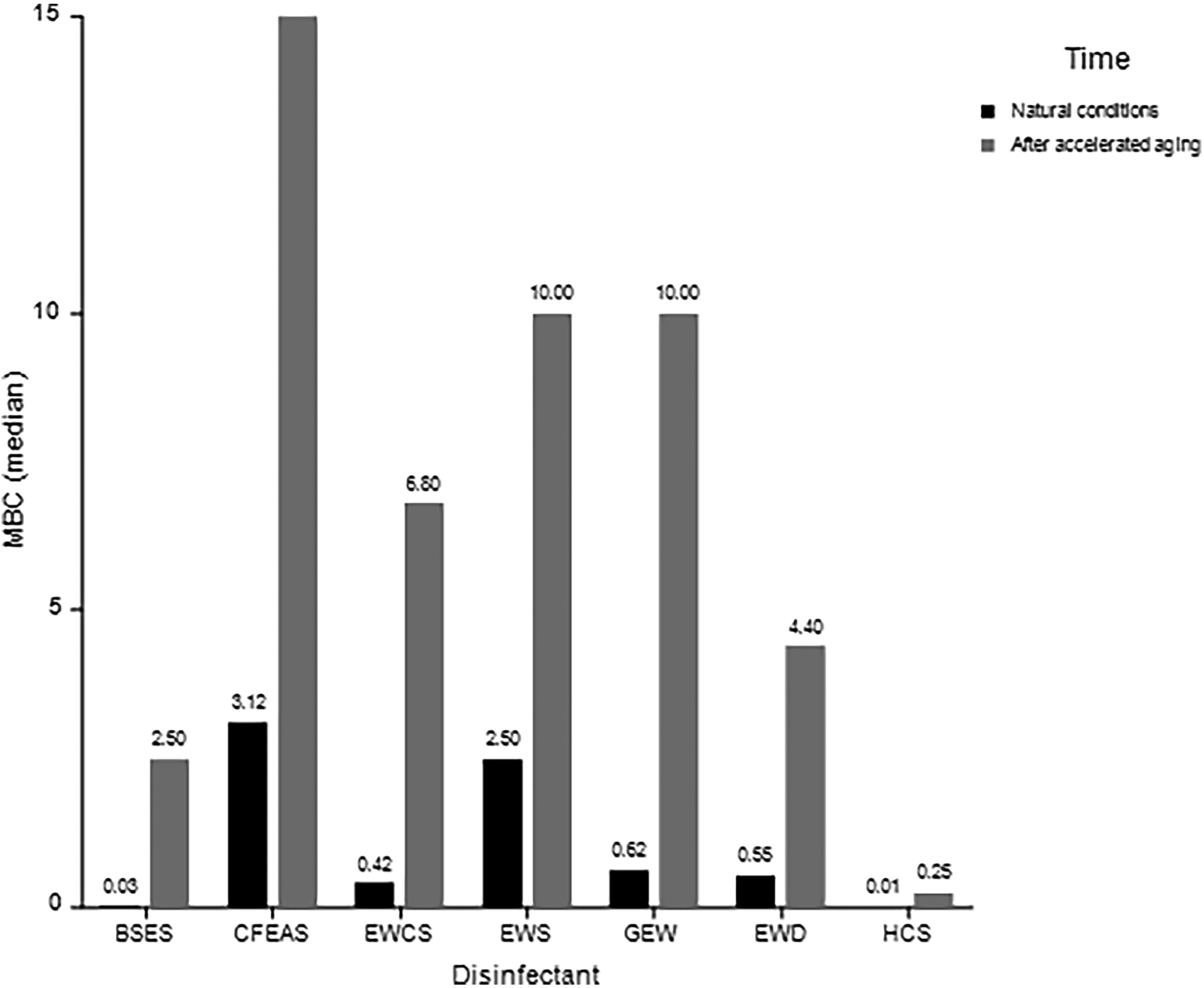
Minimum bactericidal concentration (MBC) of each solution under natural conditions and following accelerated aging. Each solution demonstrated a unique aging time before losing its bactericidal effectiveness. Notably, the MBC of the control flow electrolyzed acid solution (CFEAS) was greater than 50.
CLDs with the highest antimicrobial efficacy at low concentrations were HCS and EW disinfectant (EWD), alongside EW EWCS. These solutions exhibited a proportional reduction in efficacy over time but had longer aging periods before complete loss of activity (aging time of 240 hours for EWCS, 120 for HCS, and 312 hours for EWD). Although the experiment demonstrated clear clinical significance, the statistical significance of the differences in MBC before and after accelerated aging was evaluated using Kruskal–Wallis one-way ANOVA, indicating H(6) = 46.756, p < 0.05, and H(6) = 52.404, p < 0.05, respectively. A post hoc analysis with the Tukey test identified HCS as the disinfectant causing the greatest difference, as shown in Table 2.
Post Hoc of the Minimum Bactericidal Concentration in Time
A comparison of all disinfectants with HCS is shown. CI, Confidence Interval
A significant relationship was observed between antimicrobial efficacy, pH, and FCL concentration. Solutions with an initial alkaline pH and high FCL retained their antimicrobial effect for 312 and 120 hours, respectively, while those with neutral or acidic pH were effective for only 72 hours, except for EWCS. The loss of FCL closely matched the decline in antimicrobial efficacy. Although pH decreased and ORP rose above 1000 mV in all disinfectants, neither pH nor ORP alone influenced bacterial inhibition. FCL concentration, indicating hypochlorite ions and hypochlorous acid levels, was the main factor affecting efficacy, with its decline directly tied to antimicrobial activity loss. Statistically significant differences in pH, chlorine, and ORP were noted over time (95% CI, p < 0.01) (Fig. 2 and Supplementary Appendix A1).
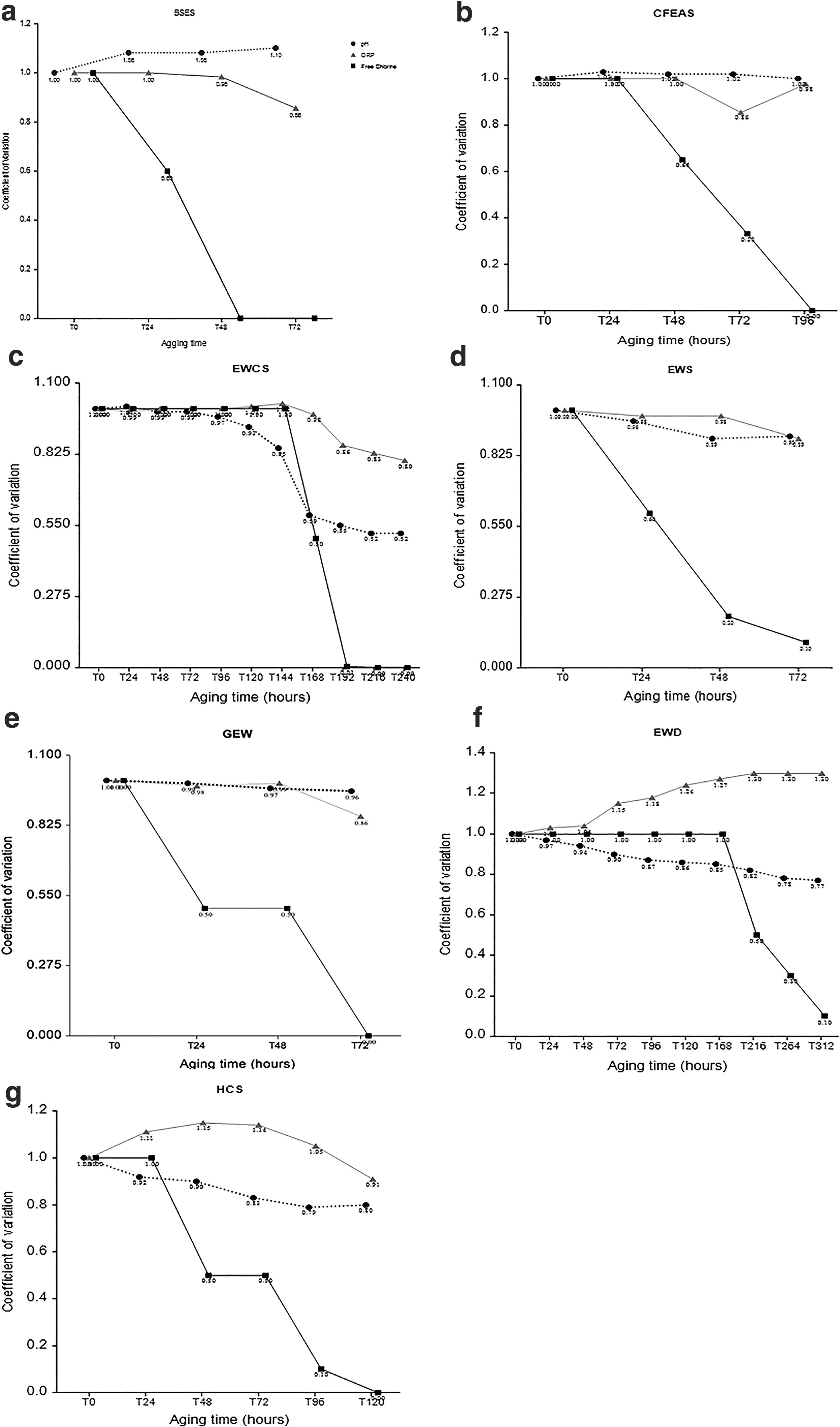
Line chart illustrating the variation in pH (black circles), free chlorine (black square), and oxidation–reduction potential (ORP) (gray triangle) for each disinfectant studied. The results are presented for
The comparison with shelf aging yielded results consistent with those of accelerated aging, both highlighting the gradual loss of FCL as the primary factor contributing to antimicrobial ineffectiveness (see Supplementary Appendix A2).
Discussion
Our study shows that FCL is the primary antimicrobial agent in EW and CLDs. This is the first research to analyze the antimicrobial efficacy of pH, FCL, and redox potential across five types of EW and two chlorine-based solutions. These findings are particularly relevant given the rise in disinfectant use following the COVID-19 pandemic, 20 alongside growing concerns about cross-resistance20,21 with antibiotics and the biocompatibility of these substances. 22 This highlights the need to reassess current guidelines for their use. Identifying FCL as the primary agent provides a strong scientific foundation to enhance the use and application of EW and chlorine-based solutions in medical settings.
Our study demonstrated that antimicrobial efficacy was linked to the gradual decrease in FCL concentration over time, both due to accelerated aging [H(6) = 46.756, p < 0.05, and H(6) = 52.404, p < 0.05] and shelf degradation. In this context, there are fundamental differences between our research and previous studies. First, we compared disinfectants with varying characteristics under the same experimental conditions, unlike prior studies that analyzed only a single disinfectant type, offering a broader perspective for result interpretation.23–25
Second, experiments attributing antimicrobial efficacy to pH or ORP were not performed in the medical context,26,27 so other factors could influence its outcomes. We conclude that FCL (chloride [Cl−] + hypochlorous acid [HClO] + hypochlorite ion [ClO−] + hydrochloric acid [HCl]) is the primary biocidal agent, causing morphological changes to bacterial membranes and inactivating cytoplasmic enzymes. 28 CLDs are more effective than EW due to their higher FCL concentration and greater stability over time, with less inactivation (Fig. 3).
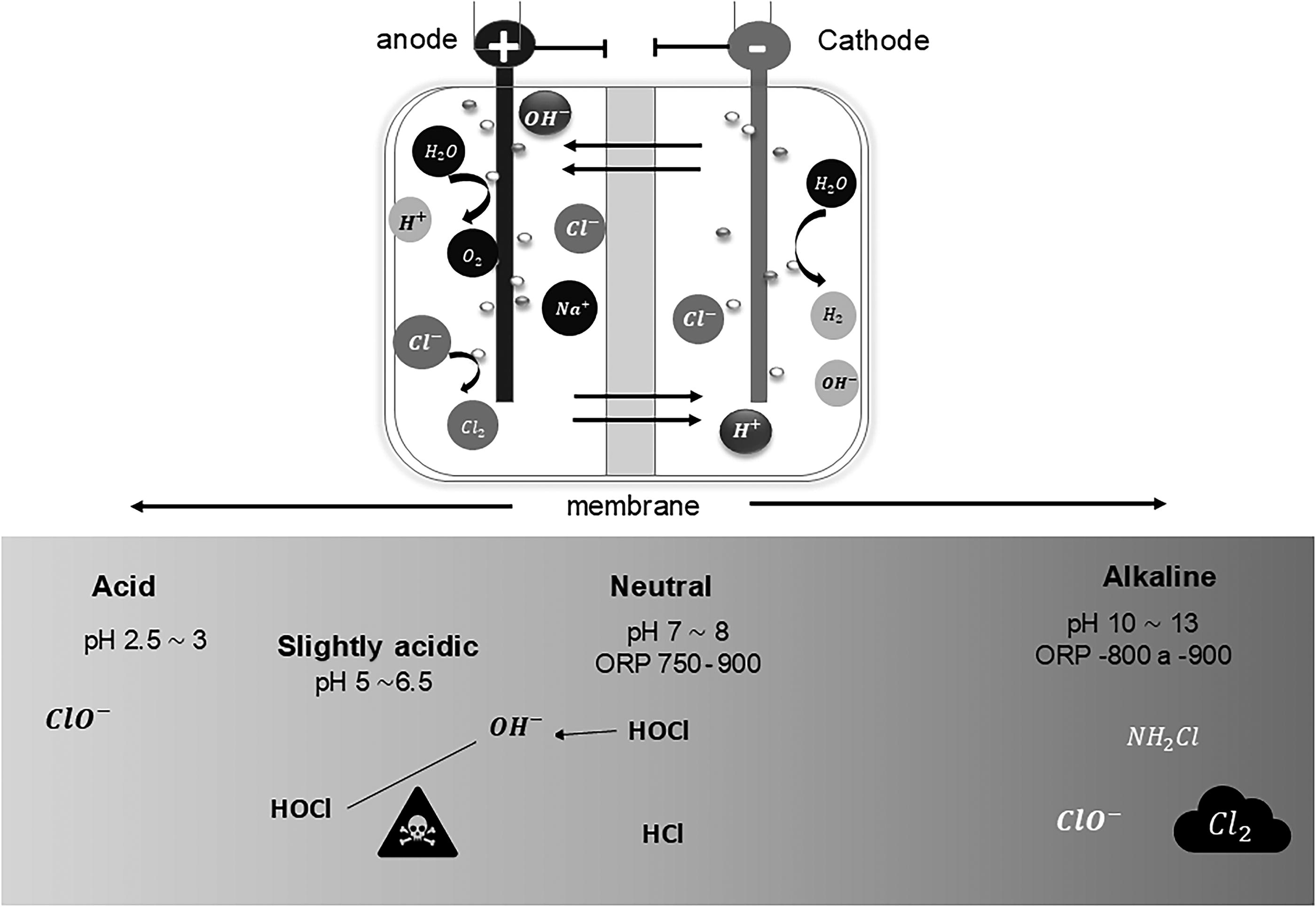
Controlled water electrolysis process and generation of chlorine species. The diagram illustrates the electrochemical reactions occurring during electrolysis, highlighting the formation of chlorine species and their distribution under controlled conditions. The interrelationship with pH is emphasized, as pH influences the speciation of chlorine, determining the relative proportions of hypochlorous acid (HOCl) and hypochlorite ion (OCl−), which in turn affect the overall oxidative potential and disinfection efficacy.
Previous studies have discussed the antimicrobial efficacy of ORP, particularly at levels exceeding 800 mV29,30 linking its value to cytotoxicity induction and intracellular reducing conditions—likely driven by hydroxyl radicals (OH)—that trigger microbial apoptosis.31,32 Our findings confirm the expected correlation between pH and ORP, 33 demonstrating significant stability over time. However, an increase in ORP did not necessarily enhance or ensure antimicrobial efficacy. Similarly, Gongora et al. 34 evaluated the impact of pH and FCL on ORP’s disinfection effectiveness and concluded that ORP alone is insufficient as a sole indicator of microbial inactivation potential. Therefore, ORP should not be used in isolation to assess a disinfectant’s efficacy; instead, its evaluation should consider both the concentration and species of chlorine present.
The pH level of a disinfectant determines the dominant chlorine species present, such as HClO, ClO, HCl, and Cl−.3,35 At a pH below 7, HClO predominates and is highly effective due to its strong interaction with reactive oxygen species (e.g., hydrogen peroxide [H2O2], superoxide [O2−], and hydroxyl radicals [−OH]). 36 This interaction leads to protein denaturation, membrane lipid oxidation, oxidative enzyme deactivation, and DNA damage. 35 However, the absence of available chlorine species can reduce its effectiveness.
Alkaline solutions are primarily composed of sodium hypochlorite, while acidic solutions contain more hypochlorite ions, 35 affecting their stability and efficacy. Our findings indicate that although disinfectants with a pH below 7 possess antimicrobial properties, they are not necessarily more effective than those with higher pH levels. However, pH does directly influence disinfectant stability. We recommend chlorine-based solutions with high sodium hypochlorite content, as they offer greater long-term efficacy compared with EW.
The strength of this experimental research lies in its use of the MBC as a robust measure of antimicrobial efficacy and its comparison of a wide variety of disinfectants. This approach allowed for an evaluation not just of a single efficacy factor, but of the interaction among three critical variables: pH, FCL, and ORP. A limitation of the study, however, is that FCL levels were not quantified; future research would benefit from more precise measurement. Nonetheless, the absence of FCL was directly associated with decreased antimicrobial effectiveness.
Conclusions
In conclusion, this study underscores the crucial role of FCL concentration in determining the antimicrobial efficacy of both EW and CLDs, reaffirming established scientific understanding that FCL is pivotal to bacterial inactivation. Our findings indicate that disinfectants with higher FCL and alkaline pH exhibit prolonged stability and effectiveness over time, as opposed to those with acidic or neutral pH, which lose antimicrobial activity more rapidly. Based on these results, we advocate for the use of CLDs with robust FCL levels for clinical applications, as they are more effective than EW and maintain their efficacy longer under various conditions. Future research should focus on precise quantification of FCL levels to optimize disinfection protocols and improve patient safety in clinical settings.
Footnotes
Acknowledgment
The author thanks the National Council of Humanities, Science and Technology for supporting the postgraduate studies and the master’s thesis coordinators.
Author’s Contributions
A.L.-A.: Writing—original draft preparation, review and editing, and project development.
Disclosure Statement
The author declares no conflict of interest.
Funding Information
No funding was received.

References
Supplementary Material
Please find the following supplemental material available below.
For Open Access articles published under a Creative Commons License, all supplemental material carries the same license as the article it is associated with.
For non-Open Access articles published, all supplemental material carries a non-exclusive license, and permission requests for re-use of supplemental material or any part of supplemental material shall be sent directly to the copyright owner as specified in the copyright notice associated with the article.
