




Abstract
Background:
Bariatric surgery has become a common treatment for morbid obesity. The relative changes in body tissue that comprise the substantial weight loss over time are not completely understood.
Methods:
We evaluated the differential rates of fat and lean tissue losses in morbidly obese patients who underwent Roux-en-Y gastric bypass surgery. Body composition was assessed using whole-body dual energy X-ray absorptiometry (DXA) performed at two timepoints in the postoperative period. Patients were stratified by the tertile of rapidity of weight loss expressed as percent reduction in body mass index per month.
Results:
Thirty two patients (25 women, 7 men) with a mean age of 46.7 ± 10.4 years and an average initial body weight of 141.4 ± 29.4 kg experienced a 52.3 ± 16.6 kg (36.5 ± 5.5%) weight loss over 13.9 ± 6.0 months. The incremental rates of lean body mass loss by tertiles were 0.3 ± 0.6, 0.5 ± 0.2, and 1.0 ± 0.8 kg/month (P = 0.02), whereas the rates of fat loss were 1.2 ± 0.9, 1.8 ± 0.4, and 2.9 ± 1.0 kg/month (P = 0.0001). The ratios for lean to fat loss among the respective tertiles were 1:4.0, 1:3.6, and 1:3.0. The correlation between rates of lean and fat mass loss was r = 0.37 (P = 0.04). Only three of the 32 patients (9.4%) patients maintained or gained lean mass following Roux-en-Y gastric bypass surgery.
Conclusions:
After bariatric surgery, those patients losing weight at the greatest rate appear to have accelerated losses of both lean and fat mass. Few patients maintain lean body mass after bariatric surgery, despite self-reported participation in conventional exercise programs. These data suggest the need for more aggressive interventions to preserve lean body mass during the weight loss phase after Roux-en-Y gastric bypass surgery.
Introduction
R
Practically speaking, conventional treatment options for obesity have limited efficacy and are fraught with high rates of failure. Bariatric surgery produces weight loss superior to traditional approaches in both short and long-term settings and has become increasingly employed as a therapeutic option in the treatment of morbid obesity.9 Individuals followed for 1–2 years after Roux-en-Y gastric bypass and adjustable gastric banding procedures experience a mean excess weight loss of 61% and enjoy a multitude of other health benefits including remission of type 2 diabetes and a reduction in cardiovascular risk factors.10 , 11
There is developing interest both clinically and in the research arena to better understand the changes in body composition after bariatric surgery. Prior to the advent of dual-energy X-ray absorptiometry (DXA) scanning, difficulties in calculating free-fat mass (FFM) using anthropometry, underwater weighing, total body potassium, and heavy-water dilution techniques precluded rapid, accurate measurement of resting energy expenditure (REE) in obese individuals.12 –15 As DXA scanning has become more commonly used in the obese, this technology has been shown to provide a valid measurement of FFM, thereby facilitating more accurate estimation of body composition.16 –19 The present study was designed to evaluate the relative rates of fat and lean tissue loss after Roux-en-Y gastric bypass surgery according to the rapidity of weight loss experienced in the postoperative period.
Materials and Methods
Study population
We retrospectively analyzed results from 32 patients (25 women, 7 men; mean ± standard deviation [SD] age = 46.7 ± 10.4 years) who underwent laparoscopic Roux-en-Y gastric bypass surgery and had DXA scans performed twice in the postoperative period. Their baseline body mass index (BMI) and body weight were 50.1 ± 8.9 kg/m2 and 141.4 ± 29.4 kg, respectively. Table limitations precluded DXA scans before surgery for most subjects, because patients could not exceed 160 kg in body weight, 68.6 cm in body width, or both for these scans. The first DXA test was done as soon as table restrictions permitted; the second DXA was done at the time of weight loss completion, which was determined clinically. All recovering patients were followed up with routine weight and BMI measurements during physical examinations at 10 days, 6 weeks, 3, 6, 9, and 12 months, and annually thereafter. Percent weight loss and BMI changes were calculated by dividing the difference between the initial and final measurements by the months of follow up. Patients were routinely prescribed supplementation with a multivitamin regimen as well as calcium with vitamin D twice daily and were encouraged to gradually increase aerobic physical activity after surgery and begin resistance training at 6 weeks postoperatively. There were no postoperative complications or reoperations, and none of the patients within the sample had undergone body-contouring procedures. The study was approved by the Human Investigations Committee at William Beaumont Hospital.
Body composition analysis
All patients underwent postsurgery body composition testing via DXA scanning (Hologic, model Discovery-Wi, Hologic, Inc., Bedford, MA) to determine the FFM.20 , 21 DXA scans were analyzed using the PIXImus2 software (version 1.46.007), with the head region excluded. As per the manufacturer's guidelines, the DXA scanners were calibrated for body composition measurements on a daily basis. Values for whole body bone mineral density (BMD, g/cm2), bone mineral content (BMC, grams), bone area (cm2), total tissue mass (calculated by the software, grams), total area (cm2), fat content (grams), lean content (total tissue mass minus fat content, grams), and percent fat (fat content divided by total tissue mass) were obtained at two time points in the postoperative period. Body weight (kg) was measured on a calibrated scale, immediately prior to scanning with subjects lightly clothed and without shoes or belts.
Statistical analysis
Baseline characteristics were expressed as mean ± SD or counts with proportions as appropriate. Univariate comparisons were made with the Student t-test, Fisher exact test, and chi-squared as appropriate. The Pearson correlation was used for bivariate comparisons. Analysis of variance (ANOVA) was used to make comparisons between lean and fat tissue changes according to tertile of rapidity of weight loss. A P value <0.05 was considered statistically significant.
Results
Baseline demographic and clinical characteristics are shown in Table 1, with specific reference to increasing tertiles. A total of 32 patients (25 women, 7 men) with a mean age of 46.7 ± 10.4 years and a mean initial body weight of 141.4 ± 29.4 kg experienced a 52.3 ± 16.6 kg (36.5 ± 5.5%) weight loss over 13.9 ± 6.0 months. The mean time from surgery to the first DXA scan was 3.2 ± 3.5 months; the range was 1.7 months preoperatively to 17.8 months postoperatively, and the median was 2.4 months. Detailed body composition data from first and second DXA scans are presented in Table 2. These scans were performed 10.7 ± 4.2 months apart. Subjects were separated into tertiles based on rapidity of lost weight. The mean percent BMI loss in the three tertiles was 1.0 ± 0.5, 2.1 ± 0.3, and 4.2 kg/m2 per month. According to tertile of percent BMI loss per month, the rates of lean body mass loss were 0.3 ± 0.6, 0.5 ± 0.2, and 1.0 ± 0.8 kg/month (p = 0.02), whereas the rates of fat loss were 1.2 ± 0.9, 1.8 ± 0.4, and 2.9 ± 1.0 kg/month (P = 0.0001; Fig. 1). The ratios for lean-to-fat loss among the respective tertiles were 1:40, 1:3.6, and 1:3.0. These ratios identify a greater differential loss of lean tissue in the highest tertile of overall weight loss by ANOVA (Fig. 1). The correlation between rates of lean and fat mass loss was r = 0.37 (P = 0.04) (Fig. 2). Interestingly, the first tertile exhibited the most rapid and greatest proportion of their weight loss preceding the first DXA scan, which may explain this group's observed lower lean tissue losses. This supports the general concept that the rate of weight loss is ultimately reflective of body composition changes (e.g., a slower weight loss is more likely to preserve lean body mass). Only 3 of the 32 patients (9.4%) maintained or gained lean body mass during the postsurgery follow up. All 3 of these patients self-reported regular exercise, and 2 of these patients participated in strength training and aerobic exercise as part of their postsurgical physical conditioning program. Among the remaining 29 patients who lost lean body mass, 86% and 52% reported participating in endurance exercise and strength training, respectively.
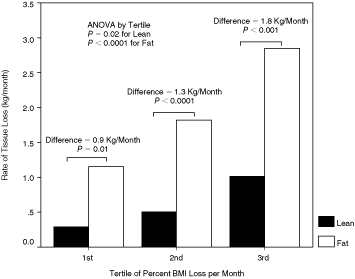
Rates of lean and fat loss between tertiles. BMI, body mass index; ANOVA, analysis of variance.

Scatter plot of the rates of fat and lean mass loss per month.
B
Abbreviations: LDL-C, low-density lipoprotein cholesterol; HDL-C, high-density lipoprotein cholesterol.
B
Abbreviations: BMI, body mass index; DXA, whole-body dual energy X-ray absorptiometry.
Discussion
Roux-en-Y gastric bypass surgery provides a unique opportunity to study substantial and sustained weight loss due to caloric restriction and intestinal malabsorption. Understanding the associated changes in body composition is important because the maintenance or enhancement of lean mass is associated with augmented muscular strength and endurance, improved insulin sensitivity, increased high-density lipoprotein cholesterol (HDL-C), and enhanced psychosocial well-being.22 Under ideal circumstances, weight loss would be limited to loss of fat mass with complete preservation of FFM; however, loss of lean tissues is commonly described. Webster et al.23 suggested a tolerable upper limit of 22% loss in FFM with weight loss, yet studies examining body composition changes are varied.24 Our study demonstrated that those patients who experienced the greatest rate of weight loss after bariatric surgery did so at the expense of losing relatively more lean body mass and fat tissue. Although previous investigations of body composition changes after bariatric surgery reported predominantly fat loss with relative preservation of lean tissue,25 –27 these studies used either laparoscopic adjustable gastric band or vertical-banded gastroplasty, both of which are restrictive surgical techniques that promote slower and lesser degrees of total body weight loss than the Roux-en Y gastric bypass. Other studies,28 however, have corroborated our findings by noting significant losses of lean tissue in the setting of rapid weight reduction. Guisti el al.29 reported that lean tissue losses correlate directly with the rate of weight loss after bariatric surgery. This concept was supported by Chaston and colleagues,24 who reviewed changes in body composition using dietary and behavioral techniques compared to surgical weight-loss strategies and noted that the rate of weight loss was highly influential over proportion of FFM losses. Collectively, these data and the present findings suggest that slower weight loss may promote more favorable changes in body composition. Accordingly, interventions to maximize the retention of lean body mass after Roux-en-Y gastric bypass should be strongly considered, as little can be done to alter the rapid rate of weight loss in this setting.29
Only 3 of 32 patients (9.4%) were able to maintain their lean body mass over the postoperative period. These patients demonstrated verifiable compliance with postsurgery diet and exercise recommendations, suggesting that body composition outcomes after weight-loss surgery may be influenced by adherence to lifestyle recommendations. Emphasis on dietary protein intake aids in the preservation of muscle mass, resulting in higher levels of resting energy expenditure.30 , 31 Thus, recommendations for bariatric patients include consuming a higher daily intake of lean protein (1.2 grams/kg of ideal body weight), which results in a greater daily intake than that of the typical American diet. Generally, these protein goals range between 55 and 75 and 70 and 110 grams/day for women and men, respectively. Regular participation in physical activity is also required to maximize postoperative results.
In 2001, the American College of Sports Medicine updated its position on weight loss and prevention of weight regain for adults, highlighting the advantages to progressively increasing exercise to 200–300 minutes of exercise per week (∼45 minutes/day). To prevent weight regain, resistance training is advocated to preserve fat-free mass while maximizing fat loss.7 Subsequently, the Institute of Medicine recommended “60 minutes of daily moderate intensity physical activity in order for Americans to prevent weight gain and accrue additional, weight-independent health benefits of physical activity.”6 More recently, the International Association for the Study of Obesity stated that: “There is compelling evidence that prevention of weight regain in formerly obese individuals requires 60–90 minutes of moderate intensity activity or lesser amounts of vigorous activity.”32 Although the majority of our subjects stated that they engaged in physical conditioning regimens postsurgery, it is likely that few achieved these threshold exercise dosages, and their exercise participation may have been vastly overreported.
The American College of Sports Medicine recommends the consistent practice of resistance training, which produces a positive effect on the composition and amount of muscle, adipose tissue, and bone in men and women of all ages.33 Increases in muscle mass may promote increases in the resting or basal metabolic rate, which, in conjunction with caloric expenditure of aerobic exercise, assists with long-term weight-loss maintenance.33 Our data suggest that more intensive exercise regimens after bariatric surgery, including resistance training, may be of benefit in the retention of muscle mass, particularly for those experiencing very rapid rates of weight loss. The relatively modest correlation between lean and fat tissue losses suggests heterogeneity of patients with respect to diet, exercise, and weight loss after bariatric surgery. In addition, age, gender, race, and underlying disabilities are likely to play a role in the differential loss of muscle and fat tissue after bariatric surgery.
Our study has all the limitations of small retrospective studies. Our patient population included men and pre- and postmenopausal women in different age categories. We did not perform DXA scanning before surgery because of patient size limitations. Moreover, the time intervals for the serial scans after surgery were not protocol driven and were done when feasible relative to body size and when convenient for our patients. Thus, we were unable to document changes in body composition during the first few months after surgery. Because our DXA scans were done at varying follow-up intervals, we recognize that the data regarding the decreases reported in lean body mass pertain only to the duration between the two scans and are not necessarily reflective of the entire period of follow-up. These data are representative of the time period for which we collected data and cannot be used as a predictive model for weight loss beyond the time points assessed. Finally, with DEXA we cannot rule out the possibility that the triglyceride content of skeletal muscle (intra- and extramyocellular) declined with weight loss and this contributed to the overall loss of lean mass loss. This type of measurement would have required 1H nuclear magnetic resonance spectroscopy.
Performing DXA scans to measure body composition in the morbidly obese can also be challenging. Commercial manufacturers of DXA scanners now offer models that are more accommodating for the superobese.32 Obese individuals often have chronic back pain, pulmonary impairments, or other co-morbid conditions that prevent them from maintaining the sustained supine position required for scanning. Thus, our study sample was a selected group of patients in whom the scan was feasible and convenient to perform after surgery. Finally, we did not collect detailed information about dietary intake or the amounts and types of exercise performed in the postoperative period. These variables may have influenced the relative degree of muscle loss observed in our study.
Conclusions
After bariatric surgery, those patients losing weight at the greatest rate appear to have accelerated losses of both lean and fat mass. These differential rates of tissue loss are modestly correlated; moreover, few patients retain lean body mass over time. These data suggest interventions to improve retention of lean body mass are needed after Roux-en-Y gastric bypass surgery to prevent excessive losses of muscle tissue with surgical induced weight loss.
Footnotes
Author Disclosure Statement
There are no conflicts of interest to disclose.