




Abstract
Background:
Globalization of the western lifestyle may contribute to worldwide increases of adiposity and type 2 diabetes. In combination with genetic influences, this results in different prevalence rates among different ethnicities, particularly at younger ages. Since 2007, the unified pediatric definition of the metabolic syndrome by the International Diabetes Federation (IDF) has allowed a global comparison of the prevalence. Therefore, we compared the prevalence of the metabolic syndrome and its components in two large representative samples of adolescents in Germany and Iran.
Methods:
We used data from 3,647 German adolescents aged 10–15 years old participating in the German PEP Family Heart Study and 2,728 Iranians in the same age range participating in the CASPIAN Study.
Results:
The metabolic syndrome was four times more prevalent in Iranian (2.1%) than in German (0.5%) adolescents. The prevalence of three components of the metabolic syndrome was significantly (P < 0.0001) higher in Iranian than in German adolescents—the prerequisite abdominal obesity (11.1% vs. 11.4% vs 1.9%), low-serum high-density lipoprotein cholesterol (HDL-C) (41.9% vs. 7.2%) and hypertriglyceridemia (7.2% vs. 11.4%).
Conclusions:
The prevalence of the metabolic syndrome according to pediatric IDF criteria and its three main components differed considerably in two large ethnicities. The clinical impacts of these findings should be confirmed in future longitudinal studies.
Introduction
I
Methods
In each country, ethics committees and other relevant national regulatory organizations approved the study. Written informed consent was obtained from the parents and additional oral consent was obtained from the adolescents. Adolescents between ages 10 and 15 were included. Exclusion criteria were incomplete data sets, apparent cardiovascular, metabolic, endocrine and malignant diseases, taking any medication, and ethnicity other than German or Iranian.
The PEP Family Heart Study12 , 13 is a prospective controlled, population-based, 15-year study in healthy families living in the city of Nuremberg. Here we report the cross-sectional findings from eight yearly surveys (2000–2008) collected in 3,647 adolescents (1,938 males). The Caspian Study14 , 15 was conducted in a large national, representative sample of Iranian children and adolescents. The whole study comprised 21,111 students aged 6–18 years living in 23 provinces with a subsample of 4,811 with biochemical tests. To present uniform information of the same age group with the German data, here we report the findings of the 2,728 (1216 males) participants aged 10–15 years.
The pediatric IDF definition of metabolic syndrome at age 10–16 years postulates central adiposity ≥90th percentile WC plus at least two of the following criteria: Triglycerides (TG) ≥1.7 mmol/L (150 mg/dL), high-density liprotein cholesterol (HDL-C) ≤1.03 mmol/L (40 mg/dL), blood pressure ≥130 mmHg for systolic blood pressure (SBP) or ≥85 mmHg for diastolic blood pressure (DBP), fasting plasma glucose (FPG) ≥5.6mmol/L (100 mg/dL), or known case of type 2 diabetes.1 Anthropometric (WC, BP) and laboratory (HDL-C, TG, FPG) measurements used international reference analytical methods and have been described in detail previously.12 –15 HDL-C was determined by identical methods in both centers after precipitation of apolipoprotein B-containing lipoproteins. All measurements were performed by trained research assistants, who conducted all assessments using the guidelines of the study manual.
Statistical analysis
Continuous variables are presented as mean ± standard deviation (SD), and categorical variables as frequencies. Variables were assessed for normality. We used age- and gender-specific reference curves of German and Iranian children for the 90th percentile.11 The categorical and continuous variables were compared using the chi-squared and t-tests, respectively; the Man-Whitney U-test was used for comparison of TG values that had a nonnormal distribution. SPSS version 15.0 (SPSS, Inc. Chicago, IL) was used for statistical analysis; the significance level was set at p < 0.005.
Results
The mean age of the German (12.2 ± 1.7 years) and Iranian (12.6 ± 1.7 years) adolescents had no significant difference. WC was significantly higher in males than in females in both ethnicities (p < 0.05) and higher in German than in Iranian males (69.9 ± 8.9 vs. 67.5 ± 66.3 cm, respectively, P < 0.05) and in German than in Iranian females (68.0 ± 9.1 vs. 66.3 ± 9.1 cm, respectively, P < 0.05). HDL-C was also significantly higher in German than Iranian males (1.44 ± 0.31 vs. 1.16 ± 0.31 mmol/L, respectively, P < 0.05) and German than Iranian females (1.41 ± 0.29 mmol/L vs. 1.16 ± 0.31 mmol/L respectively, P < 0.05). Iranian adolescents had higher TG concentrations (males 1.07 ± 0.49 mmol/L) and females (1.15 ± 0.54 mmol/L) than German males (0.75 ± 0.32 mmol/L) and females (0.84 ± 0.35 mmol/L). FPG was not different in Iranian males and females but significantly higher in German males (4.76 ± 0.53 mmol/L) than in German females (4.67 ± 0.62 mmol/L). SBP/DBP was significantly higher in German males (110.0 ± 10.2/69.6 ± 7.6 mmHg) than in German females (107.6 ± 9.3/68.4 ± 7.7 mmHg) in comparison with Iranian males (103.5 ± 13.0/ 64.3 ± 10,8 mmHg) and Iranian females (99.2 ± 12.4 /62.2 ± 10.4 mm Hg).
As shown in Table 1, the prevalence of metabolic syndrome is four times higher in Iranian than in German adolescents (0.5% vs. 2.1%). However, in Iranian adolescents, the prevalence increased steeply from 0.5% to 3.6% between ages 12 and 13 years, whereas German adolescents remained in the range of 0.3% to 0.7% during all these years. Increased WC was documented in 4.9% of German and 11.07% of Iranian children and adolescents. As demonstrated in Fig. 1, the most striking ethnic difference is the 4- to 6-fold higher prevalence of low HDL-C in Iranian adolescents compared with German adolescents in both genders and also the higher prevalence of increased TG in Iranians.
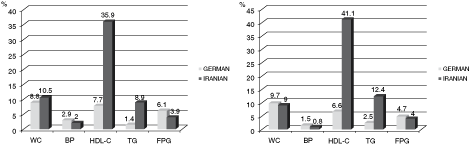
Prevalence (%) of the metabolic syndrome components in 3,647 German and 2,728 Iranian male (left panel) and female (right panel) adolescents aged 10–15 years. P < 0.0001 for differences between the prevalence of high TG, low HDL-C, and increased WC in German versus Iranian adolescents. Abbreviations: WC, waist circumference; BP, blood pressure; HDL-C, high-density lipoprotein cholesterol; TG, triglycerides; FPG, fasting plasma glucose.
Discussion
One of the main findings of this study, that to the best of our knowledge is the first of its kind in the pediatric population, is the high prevalence of low HDL-C and high TG in Iranian adolescents compared with German adolescents, consistent with a high prevalence of low HDL-C (42.8%) and of high TG (35.8%) in a previous study among 3,036 Iranian adolescents.16 Body fat distribution in adults had the greatest impact on plasma TG and HDL-C that might be consistent the higher prevalence of increased WC, TG, and HDL-C in Iranian than in German adolescents.17
P
Abbreviations: IDF, International Diabetes Federation; WC, waist circumference; TG, triglycerides; HDL-C, high-density lipoprotein cholesterol, BP, blood pressure; FPG, fasting plasma glucose.
However, in the current study, the percentage of Iranian individuals with WC above 90th percentile increased after the age of 11 years, but the prevalence of high TG and low HDL remained constant. This might suggest an ethnic predisposition to this type of lipid disorder. Different population-based studies in the Middle East have shown a considerably high prevalence of low serum HDL-C in this region.18 –20 National studies in Iran have found that irrespective of weight status, 80% of adults21 and 25% of children and adolescents22 had low serum HDL-C levels. The findings of a recent study of the significant association between migration from Iran to Sweden and the prevalence of hypertension and smoking but not dyslipidemia23 provide further confirmatory evidence for such ethnic predisposition. Such ethnic differences should be examined by future genetic studies.
The prevalence of the metabolic syndrome based on the IDF definition was 0.5% in German 10- to 15-year-old adolescents and very similar to 0.2% in 10 year olds, respectively, 1.4% in 15-year-old adolescents from a European sample from Denmark, Estonia, and Portugal24 and 2.4% in 16 years olds from Northern Finland,25 but lower than in U.S. adolescents.26 , 27 Thus, it may be prudent to consider the use of criteria specific for race ethnicity in an evaluation for the metabolic syndrome.28
Study limitations and strengths
The main limitation of this study is its cross-sectional nature; in addition, we did not present the lifestyle habits that might be related to differences in the prevalence of the metabolic syndrome and its components in the two populations under study. However, our findings are consistent with ethnic differences previously documented among adult populations. The main strengths of our study are its novelty in comparing two large population-based samples of European and Asian ethnicities in the pediatric age group by using an international definition for the metabolic syndrome. Our findings are confirmatory evidence on the ethnic predisposition of non-Europeans, especially Asians, to central body fat deposition and the metabolic syndrome documented in adults. Our study revealed such ethnic differences even in the pediatric age group.
Footnotes
Acknowledgments
We thank the staff and participants of the PEP Family Heart Study and the CASPIAN Study for their important contribution. Sources of funding were the Foundation for the Prevention of Atherosclerosis, Nuremberg, Germany; Ludwig Maximilians University, Munich, Germany; Bavarian Ministry of Health, Munich; and the City of Nuremberg.
The CASPIAN study was funded in part by the grant TSA03/11 WHO/EMR and was supported by the Iranian Ministry of Health and Ministry of Education.
Author Disclosure Statement
The authors have nothing to disclose. Part of this study was presented at the IAS Congress 2009 in Boston.