




Abstract
Objective:
This meta-analysis was performed to evaluate the relationships between genetic polymorphisms in the TCF7L2 gene and polycystic ovary syndrome (PCOS) risk.
Methods:
The PubMed, Centralised Information Service for Complementary Medicine (CISCOM), Cumulative Index to Nursing and Allied Health Literature (CINAHL), Web of Science, Google Scholar, EBSCO, Cochrane Library, and Common Biorepository Model (CBM) databases were searched for relevant articles published before November 1st, 2013, without language restrictions. Meta-analysis was conducted using the STATA 12.0 software. The relationships were evaluated by calculating the pooled odds ratios (ORs) and their 95% confidence intervals (CIs). Seven case–control studies with a total 2458 PCOS patients and 5109 healthy subjects' met our inclusion criteria for qualitative data analysis. Two common polymorphisms (rs7903146 C→T and rs12255372 G→T) in the TCF7L2 gene were assessed.
Results:
The results of our meta-analysis suggested that TCF7L2 genetic polymorphisms might be strongly correlated with an increased risk of PCOS (allele model, OR=1.33, 95% CI=1.15–1.54, P<0.001; dominant model, OR=1.40, 95% CI=1.12–1.75, P=0.003), especially for the rs7903146 C→T polymorphism. A subgroup analysis was done to investigate the effect of ethnicity on an individual's risk of PCOS. Our results revealed positive significant correlations between TCF7L2 genetic polymorphisms and an increased risk of PCOS among Caucasians (allele model, OR=1.26, 95% CI=1.08–1.47, P=0.004; dominant model, OR=1.33, 95% CI=1.00–1.76, P=0.046) and Asians (allele model, OR=2.02, 95% CI=1.42–2.89, P<0.001; dominant model, OR=2.02, 95% CI=1.40–2.92, P<0.001), but not among Africans (all P<0.05).
Conclusions:
Our findings provide convincing evidence that TCF7L2 genetic polymorphisms may contribute to susceptibility to PCOS, especially for the rs7903146 C→T polymorphism among Caucasians and Asians.
Introduction
P
Transcription factor 7-like 2 (TCF7L2) is one of the four T cell transcription factors that collaborate with free β-catenin to regulate proglucagon expression via the Wnt signaling pathway by repressing the proglucagon gene in enteroendocrine cells. 8 It is widely accepted that insulin resistance and its accompanying hyperinsulinemia may play a crucial role in the occurrence and progression of PCOS. 9 –11 Previous studies have demonstrated that TCF7L2 might be involved in insulin resistance, β-cell dysfunction, impaired glucose tolerance, dyslipidemia, etc. 12 –15 Consequently, TCF7L2 has been hypothesized to be involved in the etiology of PCOS by regulating glucose homeostasis. 12
Human TCF7L2 gene, located on chromosome 10q25.3, is composed of 17 exons with an overall length of approximately 21.5 kb. 16 Genetic variations in the TCF7L2 gene may lead to fat deposition of peripheral tissues and muscles, and thereby increase insulin resistance, which may confer a substantially increased risk for individual's susceptibility to PCOS. 17,18 Many previous studies have demonstrated that TCF7L2 genetic polymorphisms may be implicated in the pathogenesis of PCOS. 19,20 Nevertheless, contradictory results have also been reported in many other studies. 21,22 Therefore, we performed the present meta-analysis to evaluate the relationships between TCF7L2 genetic polymorphisms and PCOS risk.
Methods
Search strategy
The PubMed, Centralised Information Service for Complementary Medicine (CISCOM), Cumulative Index to Nursing and Allied Health Literature (CINAHL), Web of Science, Google Scholar, EBSCO, Cochrane Library, and Common Biorepository Model (CBM) were searched for relevant articles published before November 1st, 2013, without language restrictions. The following keywords and MeSH terms were used: [“SNP” or “mutation” or “genetic polymorphism” or “variation” or “polymorphism” or “single nucleotide polymorphism” or “variant”] and [“polycystic ovary syndrome” or “PCOS” or “Stein-Leventhal syndrome”] and [“transcription factor 7-like 2 ” or “TCF7L2” or “T-cell-specific transcription factor 4” or “T cell factor 4”]. We also performed a manual search to find other potential articles.
Selection criteria
The included studies had to meet all four of the following criteria: (1) The study design must be a clinical cohort or case–control study that focused on the relationships between TCF7L2 genetic polymorphisms with the risk of PCOS; (2) all patients should meet the consensus definition of PCOS specified in the 2003 Rotterdam Conference by European Society for Human Reproduction and Embryology (ESHRE) and American Society for Reproductive Medicine (ASRM) or in the 1990 National Institutes of Health–National Institute of Child Health and Human Development conference 23 ; (3) the study must provide sufficient information about genotype frequencies of TCF7L2 genetic polymorphisms; and (4) the genotype frequencies should follow the Hardy–Weinberg equilibrium (HWE). If the study did not meet the inclusion criteria, it was excluded. The most recent or the largest sample size publication was included when the authors had published several studies using the same subjects.
Data extraction
Relevant data were systematically extracted from all included studies by two observers by using a standardized form. The researchers collected the following data: Language of publication, publication year of article, the first author's surname, geographical location, design of study, sample size, the source of the subjects, genotype frequencies, source of samples, genotyping method, evidence of HWE, etc.
Quality assessment
Methodological quality was independently assessed by two researchers according to the Newcastle–Ottawa Scale (NOS) criteria. 24 The NOS criteria included three aspects: (1) Subject selection, 0–4; (2) comparability of subject, 0–2; and (3) clinical outcome, 0–3. NOS scores ranged from 0 to 9; a score ≥7 indicates a good quality.
Statistical analysis
The STATA version 12.0 (Stata Corp, College Station, TX) software was used for meta-analysis. We calculated crude odds ratios (ORs) with their 95% confidence intervals (95% CIs) to evaluate the relationships between of common polymorphisms in the TCF7L2 gene and PCOS risk. Genotype frequencies of healthy controls were tested for the HWE using the chi-squared test. The statistical significance of pooled ORs was assessed by the Z-test. The Cochran Q-statistic and I 2 -test were used to evaluate potential heterogeneity between studies. 25 If the Q-test showed a P value<0.05 or the I 2 -test exhibited >50%, which indicates significant heterogeneity, the random-effect model was conducted; otherwise, the fixed-effects model was used. We also performed subgroup and meta-regression analyses to investigate potential sources of heterogeneity. We conducted a sensitivity analysis to assess the influence of single studies on the overall ORs. Begger funnel plots and the Egger linear regression test were used to investigate publication bias. 26
Results
Characteristics of included studies
Initially, the keywords searched resulted in 96 articles. We reviewed the titles and abstracts of all articles and excluded 56 articles; full texts and data integrity were also reviewed, and 33 articles were further excluded. Finally, seven case–control studies with a total 2458 PCOS patients and 5109 healthy subjects met our inclusion criteria for qualitative data analysis. 19 –22,27 –29 Publication years of the eligible studies ranged from 2007 to 2013. Figure 1 shows the selection process of eligible articles. The distribution of the number of topic-related literatures in the electronic database during the last decade is shown in Figure 2. Overall, three studies were conducted among Asians, three studies among Caucasians, but only one study among Africans. The allele specific-PCR (AS-PCR) method was performed in three studies, the TaqMan assay method was performed in three studies, whereas only one study used the PCR restriction fragment length polymorphism (PCR-RFLP) method. Two common polymorphisms (rs7903146 C→T and rs12255372 G→T) in the TCF7L2 gene were assessed. Genotype frequencies of controls were all in HWE (all P>0.05). None of the studies deviated from the HWE (all P>0.05). NOS scores of all included studies were ≥5. The study characteristics and methodological quality are summarized in Table 1.
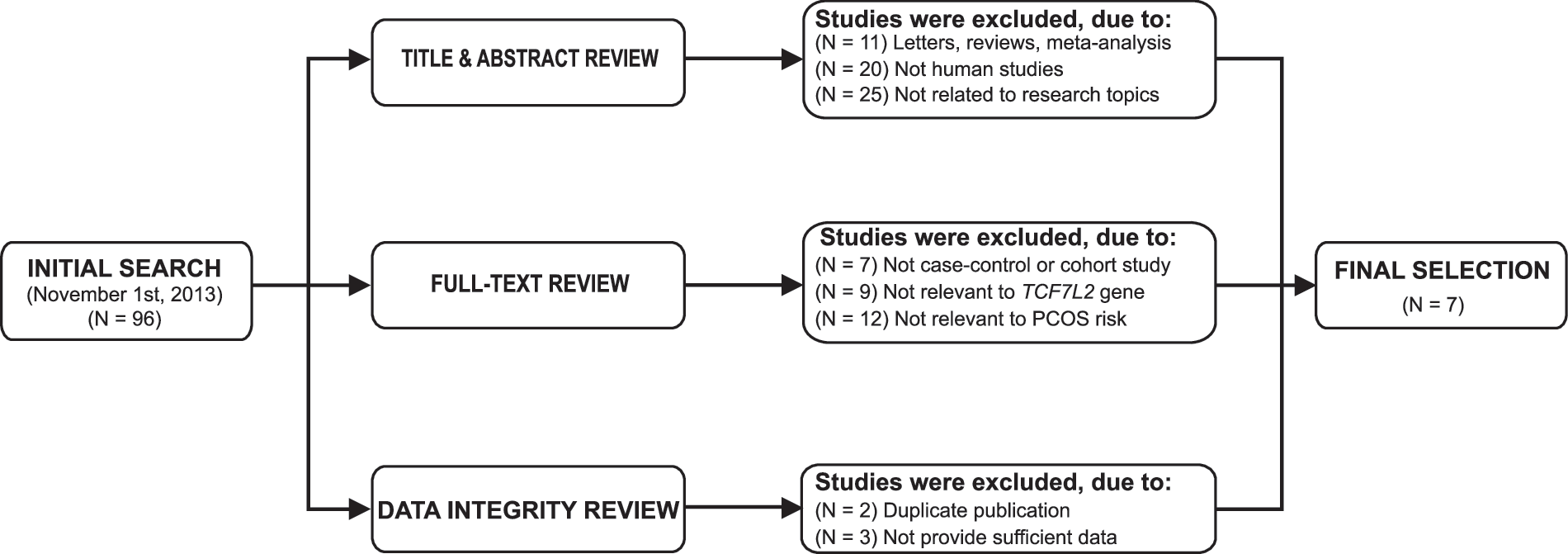
Flow chart of literature search and study selection. Seven case–control studies were included in this meta-analysis.

Distribution of the number of topic-related literatures in the electronic database during the last decade.
SNP, single nucleotide polymorphism; PCR-RFLP, polymerase chain reaction–restriction fragment length polymorphism; AS-PCR, allele-specific polymerase chain reaction; HWE, Hardy–Weinberg equilibrium; NOS, Newcastle–Ottawa Scale.
Quantitative data synthesis
Meta-analysis findings on the relationships of TCF7L2 genetic polymorphisms with the risk of PCOS are shown in Table 2. The random-effects model was conducted due to obvious heterogeneity existing between studies. The results of our meta-analysis suggested that TCF7L2 genetic polymorphisms might be strongly correlated with an increased risk of PCOS (allele model, OR=1.33, 95% CI=1.15–1.54, P<0.001; dominant model, OR=1.40, 95% CI=1.12–1.75, P=0.003), especially for rs7903146 C→T polymorphism (Fig. 3)
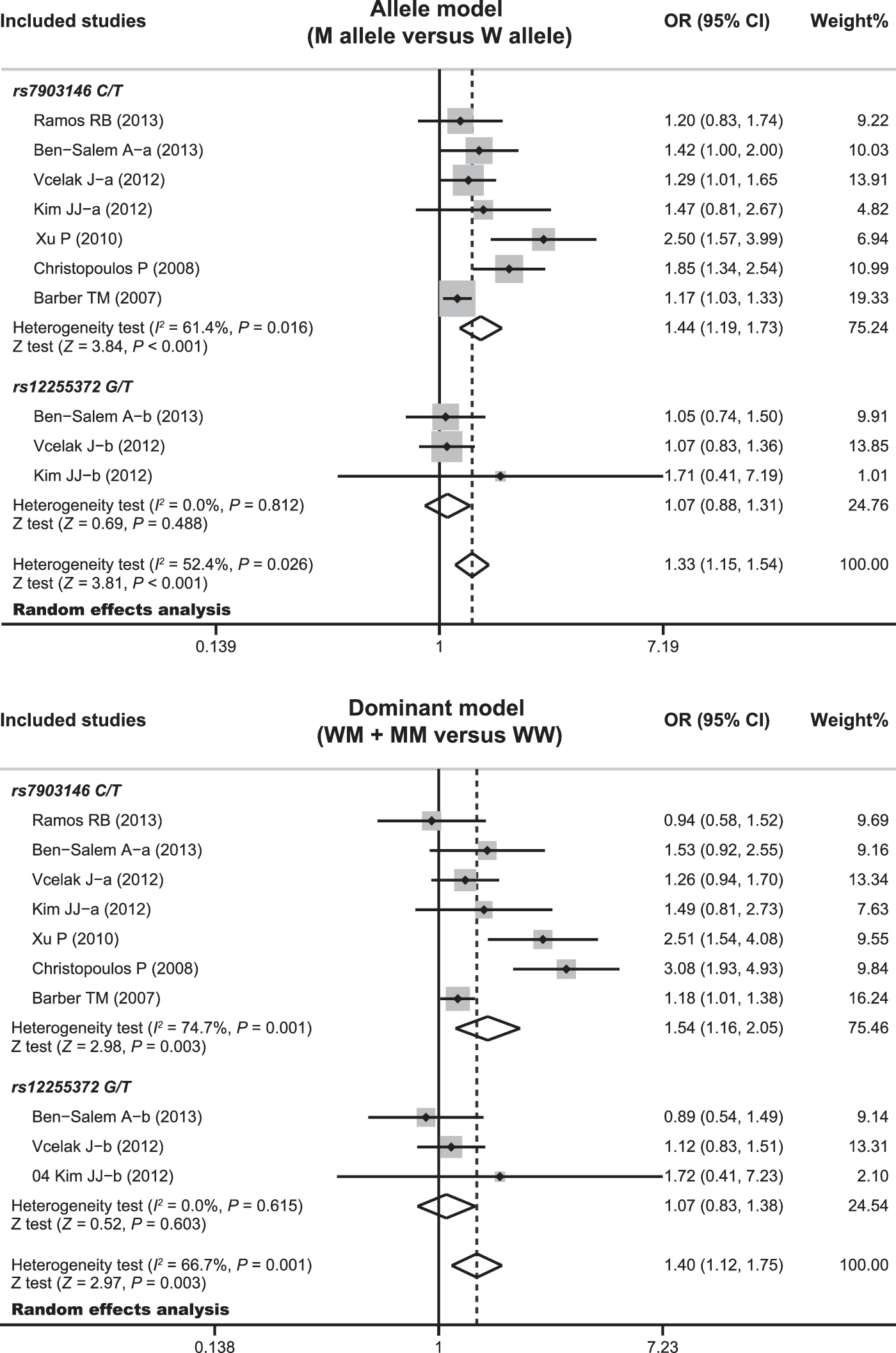
Forest plots for the relationships between TCF7L2 genetic polymorphisms and polycystic ovary syndrome (PCOS) risk under the allele and dominant models. References cited in figure are: Ramos et al., 22 Ben-Salem et al., 27 Vcelak et al., 29 Kim et al., 28 Christopoulos et al., 19 Barber et al., 21 and Xu et al. 20 W, wild allele; M, mutant allele; WW, wild homozygote; WM, heterozygote; MM, mutant homozygote.
PCOS, polycystic ovary syndrome; W, wild allele; M, mutant allele; WW, wild homozygote; WM, heterozygote; MM, mutant homozygote; OR, odds ratio; 95% CI, 95% confidence interval; AS-PCR, allele specific-polymerase chain reaction; PCR-RFLP, polymerase chain reaction–restriction fragment length polymorphism; SNP, single-nucleotide polymorphism.
A subgroup analysis was done to investigate the effect of ethnicity on an individual's risk of PCOS (Fig. 4). Our results revealed positive significant correlations between TCF7L2 genetic polymorphisms and an increased risk of PCOS among Caucasians (allele model, OR=1.26, 95% CI=1.08–1.47, P=0.004; dominant model, OR=1.33, 95% CI=1.00–1.76, P=0.046) and Asians (allele model, OR=2.02, 95% CI=1.42–2.89, P<0.001; dominant model, OR=2.02, 95% CI=1.40–2.92, P<0.001), but not among Africans (all P<0.05). We also performed a subgroup analysis by genotyping method and sample size. The results indicated significant associations between TCF7L2 genetic polymorphisms and an increased risk of PCOS in the majority of subgroups (as shown in Table 2).
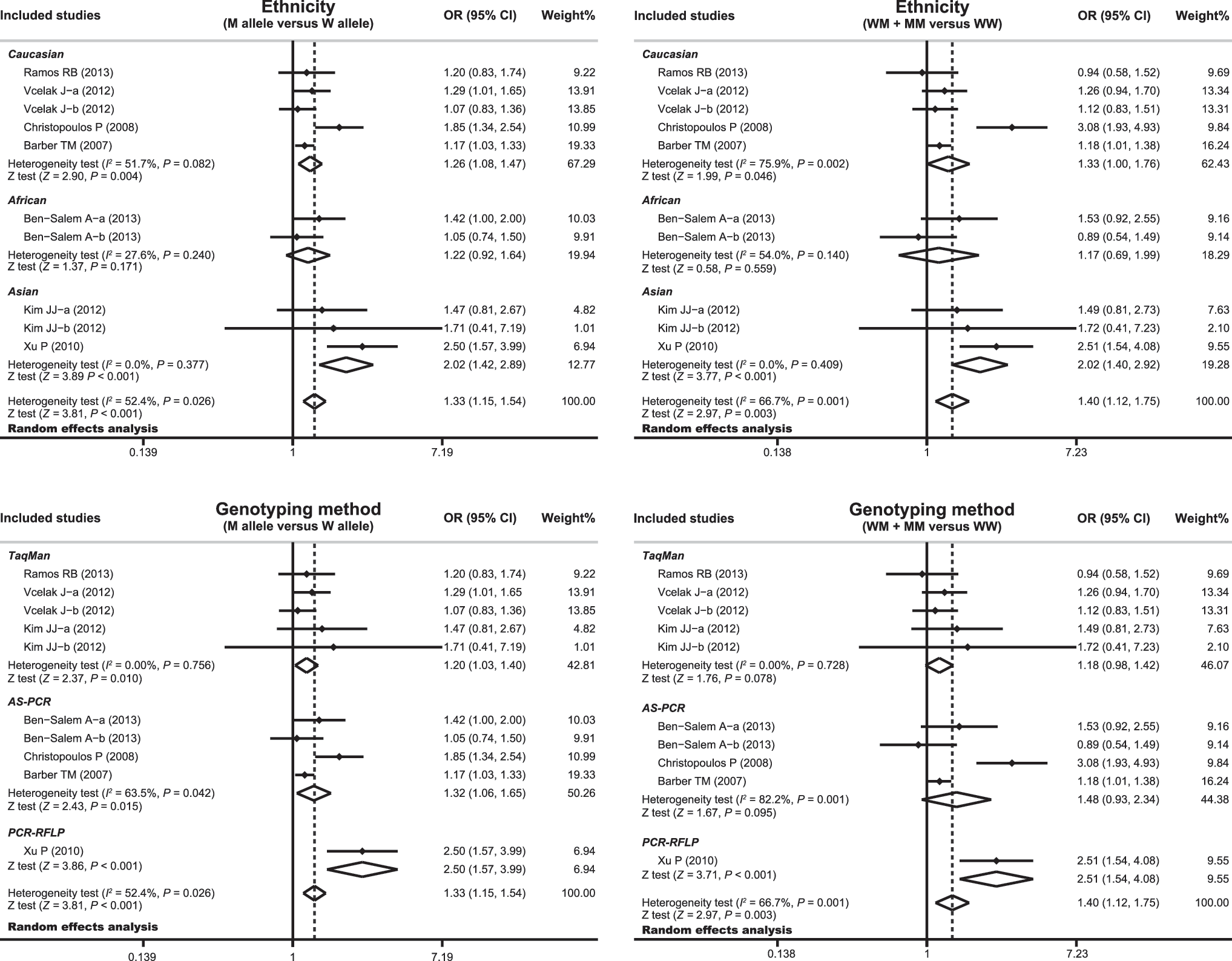
Subgroup analyses by ethnicity and genotyping method of the relationships between TCF7L2 genetic polymorphisms and polycystic ovary syndrome (PCOS) risk under the allele and dominant models. References cited in figure are: Ramos et al., 22 Ben-Salem et al., 27 Vcelak et al., 29 Kim et al., 28 Christopoulos et al., 19 Barber et al., 21 and Xu et al. 20 W, wild allele; M, mutant allele; WW, wild homozygote; WM, heterozygote; MM, mutant homozygote.
Meta-regression analyses results confirmed that no factors could explain the sources of heterogeneity (as shown in Table 3). The results of sensitivity analysis indicated that the overall pooled ORs could not be affected by single study (Fig. 5). No evidence for asymmetry was observed in the Begger funnel plots (Fig. 6). The Egger test also failed to reveal any evidence of publication bias (allele model, t=1.64, P=0.139; dominant model, t=1.16, P=0.280).
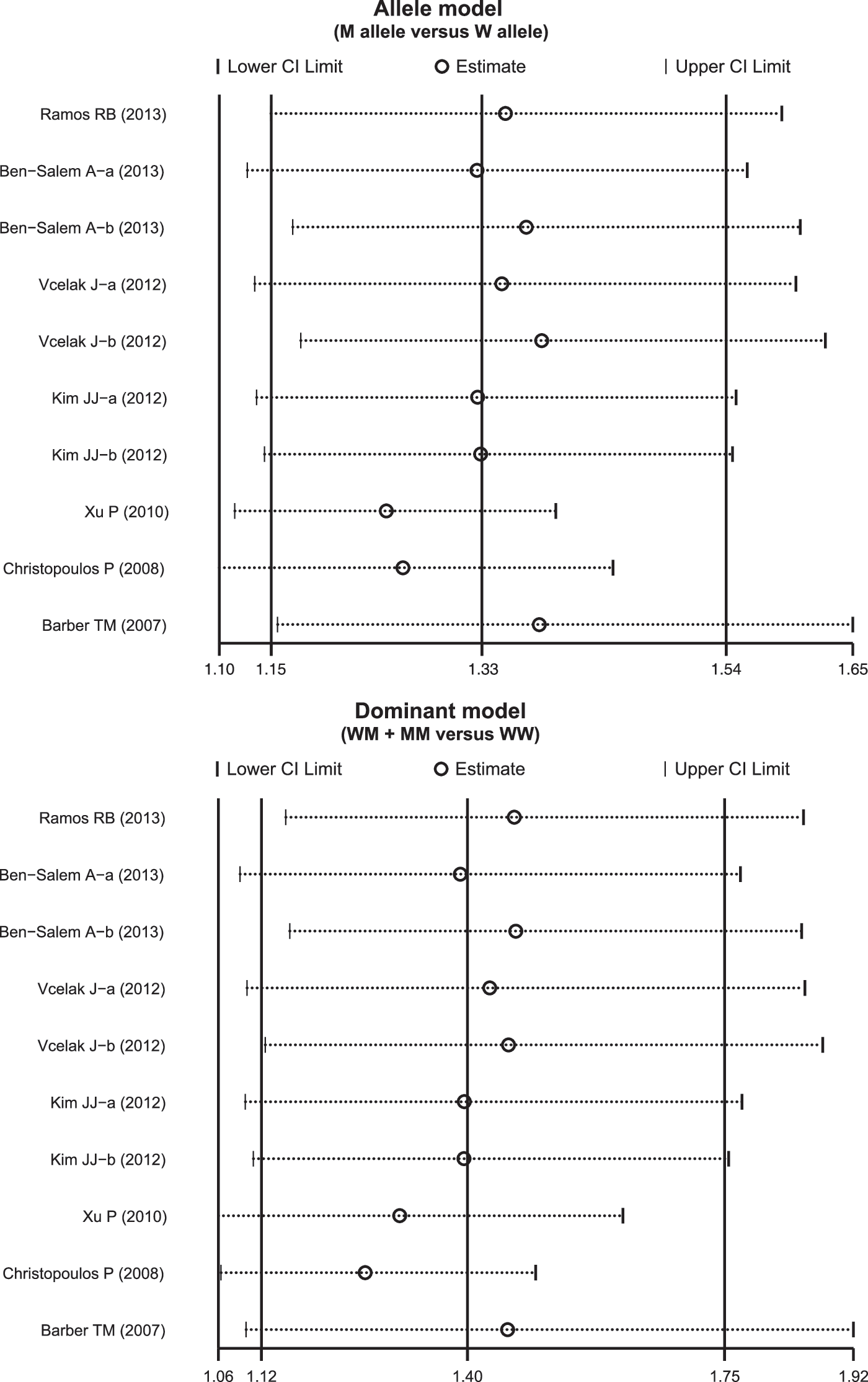
Sensitivity analysis of the summary odds ratio coefficients on the relationships between TCF7L2 genetic polymorphisms and polycystic ovary syndrome (PCOS) risk under the allele and dominant models. References cited in figure are: Ramos et al., 22 Ben-Salem et al., 27 Vcelak et al., 29 Kim et al., 28 Christopoulos et al., 19 Barber et al., 21 and Xu et al. 20 W, wild allele; M, mutant allele; WW, wild homozygote; WM, heterozygote; MM, mutant homozygote.
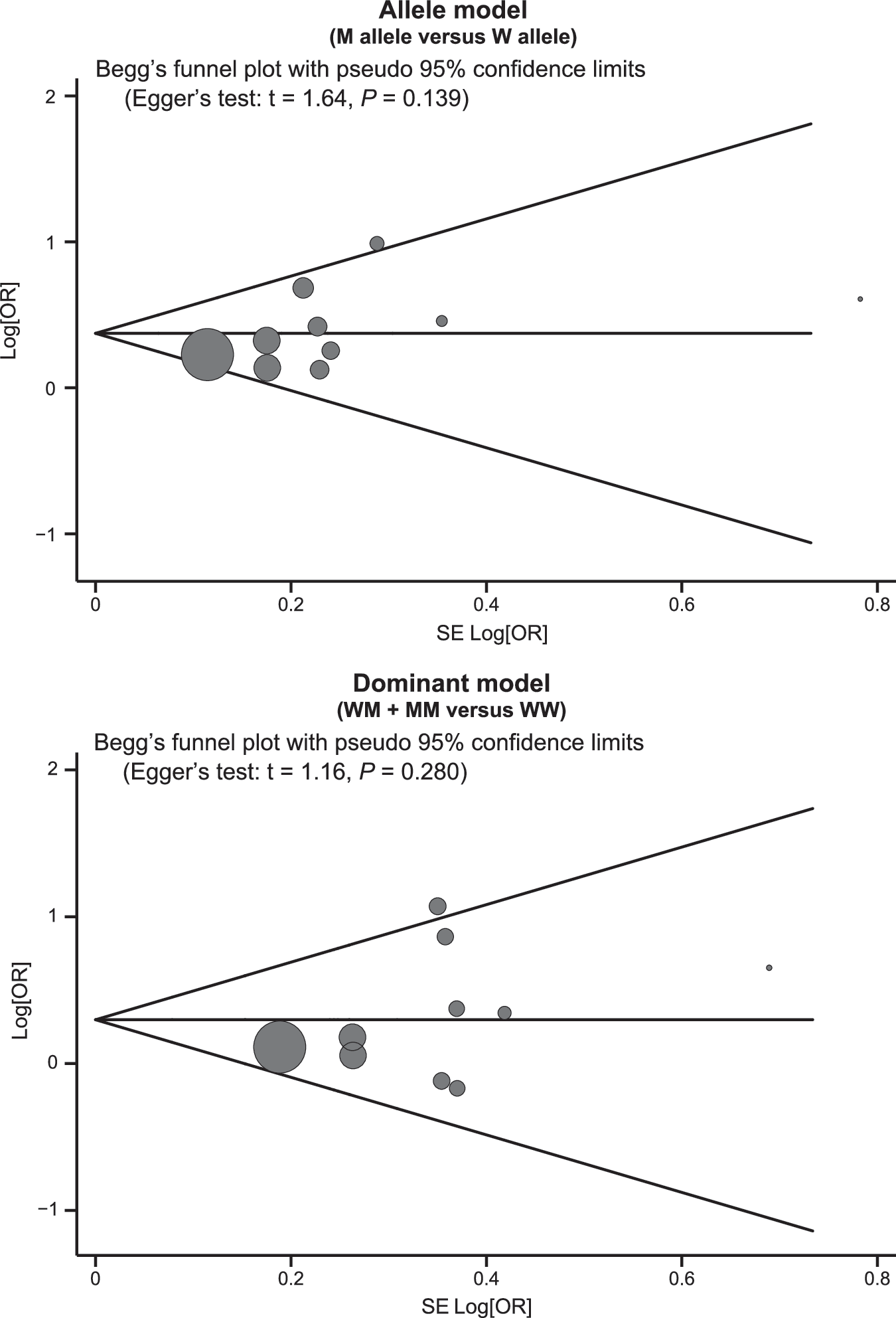
Begger funnel plot of publication biases on the relationships between TCF7L2 genetic polymorphisms and polycystic ovary syndrome (PCOS) risk under the allele and dominant models. W, wild allele; M, mutant allele; WW, wild homozygote; WM, heterozygote; MM, mutant homozygote.
SE, standard error; 95%CI, 95% confidence interval; UL, upper limit; LL, lower limit; SNP, single nucleotide polymorphism.
Discussion
TCF7L2 is a protein that acts as a transcription factor in the Wnt signaling pathway and may subsequently influence the transcription of several genes, thereby exerting a large variety of functions within cells. 30,31 It is widely known that the Wnt signaling pathway is critical for cell proliferation, differentiation, and embryogenesis, all of which are involved in diabetes mellitus. 32,33 In general, TCF7L2 regulates proglucagon expression predominantly via the Wnt signaling pathway in enteroendocrine cells, and it is also considered to be responsible for the dysfunction of β-cell and reduction of insulin secretion. 34,35 Thus, TCF7L2 has been postulated to play a significant role in the pathogenesis of PCOS that is characterized by insulin resistance. 12
In the present meta-analysis, our findings revealed that PCOS patients had a higher frequency of the TCF7L2 rs7903146 C→T polymorphism than healthy controls, suggesting that common polymorphisms in the TCF7L2 rs7903146 C→T polymorphism may be a causative factor for the incidence of PCOS. However, we observed no correlations between the TCF7L2 rs12255372 G→T polymorphism and PCOS risk, indicating that this polymorphism may not be an important determinant in susceptibility to PCOS. Although the exact function of TCF7L2 in the development of PCOS is not yet fully understood, a possible explanation might be that genetic mutations in the TCF7L2 gene might lead to increased the expression of TCF7L2 in pancreatic cells, which may increase proinsulin/insulin ratios and pancreatic β-cell apoptosis, and decrease insulin secretion and β-cell proliferation, thereby resulting in the occurrence of PCOS. 12,15 Biyasheva et al. have also demonstrated that genetic polymorphisms in the TCF7L2 gene may be related to defects in insulin secretion through altering conversion of proinsulin to insulin by the pancreatic β-cell, whereas the pathogenesis of PCOS is significantly associated with insulin resistance and pancreatic β-cell dysfunction. 12 Among different ethnic subgroups, our findings suggested that TCF7L2 genetic polymorphisms were associated with an increased risk of PCOS among Caucasians and Asians, but not among Africans, revealing that ethnic differences may cause heterogeneity between studies concerning the role of TCF7L2 genetic polymorphisms in the pathogenesis of PCOS. This may be explained that natural selection, and random genetic drift may affect an individual's susceptibility to PCOS. In short, the results of our meta-analysis were consistent with previous studies that TCF7L2 genetic polymorphisms may contribute to susceptibility to PCOS.
The current meta-analysis also had many limitations that should be acknowledged. First, due to the relatively small sample size, our results had lacked sufficient statistical power to assess the effects of TCF7L2 genetic polymorphisms on susceptibility to PCOS. Second, meta-analysis is a retrospective study that may lead to subject selection bias and thereby affect the reliability of our results. Third, our meta-analysis failed to obtain original data from the included studies, which may limit further evaluation of potential roles of TCF7L2 genetic polymorphisms in PCOS. Although our study has many limitations, this is the first meta-analysis focused on the relationships of TCF7L2 genetic polymorphisms with the risk of PCOS. Furthermore, we performed a highly sensitive literature search strategy for electronic databases. A manual search of the reference lists from the relevant articles was also conducted to find other potential articles. The selection process of eligible articles was based on strict inclusion and exclusion criteria. Importantly, rigorous statistical analysis of SNP data provided a basis for pooling of information from individual studies.
In conclusion, our findings provide convincing evidence that TCF7L2 genetic polymorphisms may contribute to susceptibility to PCOS, especially for the rs7903146 C→T polymorphism among Caucasians and Asians. Thus, TCF7L2 genetic polymorphisms may be used as potential biomarkers for early diagnosis of PCOS. However, due to limitations mentioned above, more research with larger sample sizes are needed to provide a more representative statistical analysis.
Footnotes
Acknowledgments
This study was supported by the Science and Technology Research Project of the Higher Education Department of Liaoning Province (no. L2010695). We would like to acknowledge the helpful comments on this paper received from our reviewers. This work was supported by the Science Foundation of Science and Technology Bureau of Liaoning Province of China (201202259).
Author Disclosure Statement
We declare that we have no conflicts of interest.