




Abstract
Shift work sleep disorder is prevalent in night shift workers due to prolonged misalignment of the circadian rhythm. Night shift workers comprise a significant portion of the workforce and it is important to study the potential implications on their health. Studies have shown the association of metabolic syndrome (MetS) and the components, that is, obesity, dyslipidemia, hypertension, and insulin resistance, with shift workers. Nocturnal exposure to bright light can affect various physiological processes including melatonin secretion, which is a regulator in insulin synthesis. A systematic review was conducted to identify studies showing the association between shift work and MetS and/or its components, as well as to review the pathophysiology for further investigations. This review follows the guidelines as per the Preferred Reporting Items for Systematic Reviews and Meta-Analyses (PRISMA) checklist 2009. One thousand nine hundred ten records were identified from the PubMed database using both keywords and medical subject headings terms. After applying the inclusion/exclusion and eligibility criteria, 18 observational studies were included in the qualitative synthesis. Quality appraisal was conducted by two investigators independently using the Newcastle/Ottawa Scale, and 11 articles were finalized for the review after scoring 60% and above. Each study measured the different components of MetS and/or the presence of MetS. Statistically significant results were reported for the association between shift work and MetS, shift work and obesity, shift work and dyslipidemia, shift work and hypertension, and shift work and insulin resistance. This review identifies a need to emphasize treatment plans for shift workers to manage not only sleep disorders but other chronic diseases such as MetS, obesity, hypertension, dyslipidemia, and insulin resistance.
Introduction
Essential workers make up a considerable share of the workforce, contributing to various fields in society such as manufacturing, transportation, health care, and public safety. Modern civilization has become highly dependent on the around-the-clock availability of goods and services. Thus, many jobs require employees to do shift work, which is work outside the conventional hours of 8 AM to 6 PM. 1 Night shift workers are of considerable research interest due to the potential implications on their health. 2 Shift workers involved with night work comprise about 20% of the working population in North America and Europe. 3 While night shift work has become crucial in a functional society, it is important to study this phenomenon further as a risk factor for potential adverse metabolic consequences. 2
Night shift workers are at risk of developing disturbances in their circadian rhythm and shift work sleep disorder (SWSD). SWSD is a syndrome that occurs due to prolonged misalignment of the circadian rhythm. 4 In humans, the suprachiasmatic nuclei in the hypothalamus regulate the physiological circadian rhythms. The interchange between light and dark cycles appears to be the most significant driver in the control of the biological clocks. Information regarding incident light is relayed via the retinohypothalamic tract to the central nervous system, which in turn synchronizes various physiological processes such as sleeping and feeding patterns, body temperature, brain wave activity, and hormone production. 3 Desynchronization of the rhythms due to nocturnal exposure to bright light can lead to deleterious health implications. Thus, night shift work has been tied as a risk factor to many chronic illnesses ranging from cancer, diabetes, depression, and metabolic syndrome (MetS). 5
MetS refers to a cluster of metabolic diseases, including abdominal obesity, dyslipidemia, hypertension, and insulin resistance. 6 Studies have shown the prevalence of these metabolic disorders in night shift workers. 7 A noted characteristic of MetS is insulin resistance, which can ultimately develop into type 2 diabetes. Insulin resistance has been noticeably associated with circadian rhythm misalignment, potentially because of changes in the levels of the hormone melatonin. Melatonin regulates insulin synthesis and secretion by triggering the phosphorylation of the glucose type 4 (GLUT 4) insulin receptor. As a result, melatonin supplementation is commonly suggested for shift workers with insulin resistance. 3 Other consequences related to circadian misalignment include decreased leptin secretion, increased blood pressure, and reduced sleep efficiency, which subsequently increase the risk of MetS. 2
MetS is correlated with an almost 2-fold increased risk for coronary artery disease, a 2 to 3-fold increased risk for cerebrovascular incidents, and between a 3- and 20-fold increased risk for diabetes. 8,9 Therefore, studies identifying significant risk factors for MetS and its components, that is, obesity, insulin resistance, hypertension, and dyslipidemia, are a high priority. Major risk factors for MetS are increasing age, larger body mass index (BMI), family history, sedentary lifestyle, and poor dietary habits. However, minor risk factors such as eating patterns, coffee consumption, alcohol consumption, and shift work require further investigation. 10 The purpose of this systematic review is to evaluate the literature and present studies supporting shift work as a risk factor for MetS and its components, that is, abdominal obesity, insulin resistance, hypertension, and dyslipidemia.
Methods
Protocol
This systematic review was conducted in accordance with the guidelines of the 2009 Preferred Reporting Items for Systematic Review and Meta-Analysis (PRISMA).
Inclusion/exclusion criteria
Articles were found after typing the keywords and medical subject headings (MeSH) terms noted in Tables 1 and 2, respectively. The criteria included were studies published between 2006 and 2021 (15 years); “free full-text” articles; studies in the English language; and human studies.
Database Search Results with Regular Keywords
Medical Subject Headings Search Strategy
The data shown in the Tables 1 and 2 display results for each keyword combination individually and contain duplicates that were subsequently removed.
MeSH, medical subject headings.
Eligibility criteria
The articles were additionally screened by title and abstract. Studies relevant to the topic of interest and describing night shift or rotating shift workers were included only. Reviews were excluded from the results. Full-text articles were screened based on results and only studies with best-evidence synthesis were included.
Search strategy
The literature review was performed on April 27, 2021, using the electronic database PubMed. A comprehensive search was conducted about the topic of SWSD and its relation to MetS using the keywords “shift work” AND “metabolic syndrome,” which yielded 245 results. The components of MetS, that is, obesity, insulin resistance, hypertension, and dyslipidemia, were also included in the search strategy. The keywords “shift work” AND “obesity” yielded 705 results; “shift work” AND “insulin resistance” yielded 221 results; “shift work” AND “hypertension” yielded 522 results; “shift work” and “dyslipidemia” yielded 72 results. The relevant MeSH terms were the following: (“Sleep Disorders, Circadian Rhythm”[Mesh]) AND “Metabolic Syndrome”[Mesh], (“Sleep Disorders, Circadian Rhythm”[Mesh]) AND “Obesity”[Mesh], (“Sleep Disorders, Circadian Rhythm”[Mesh]) AND “Insulin Resistance”[Mesh], (“Sleep Disorders, Circadian Rhythm”[Mesh]) AND “Hypertension”[Mesh], (“Sleep Disorders, Circadian Rhythm”[Mesh]) AND “Dyslipidemias”[Mesh]. The results found using the MeSH search strategy were 136.
Risk-of-bias assessment
Quality appraisal was done by two separate authors independently, AS and AH, using the Newcastle/Ottawa Scale for the included observational studies. Only studies scoring 60% and above on the quality assessment were included in the final analysis.
Results
Search outcome and quality appraisal
A total of 1910 articles were identified through database searching and the MeSH search strategy. A total of 482 duplicates were removed using EndNote Basic, and 1021 records were excluded after applying the inclusion and exclusion criteria discussed above. A total of 199 articles were excluded based on screening the title and abstract alone and 190 full-text articles were excluded based on the eligibility criteria. Eight articles were excluded for not meeting the requirements of the quality appraisal process (<60%), which was conducted by two authors independently using the Newcastle/Ottawa Scale adapted for cross-sectional studies. Ultimately, 11 studies were included in this systematic review. The results of the quality appraisal for the selected studies are listed in Table 3. The PRISMA flow diagram in Fig. 1 demonstrates the steps taken in conducting the data collection for the present review.
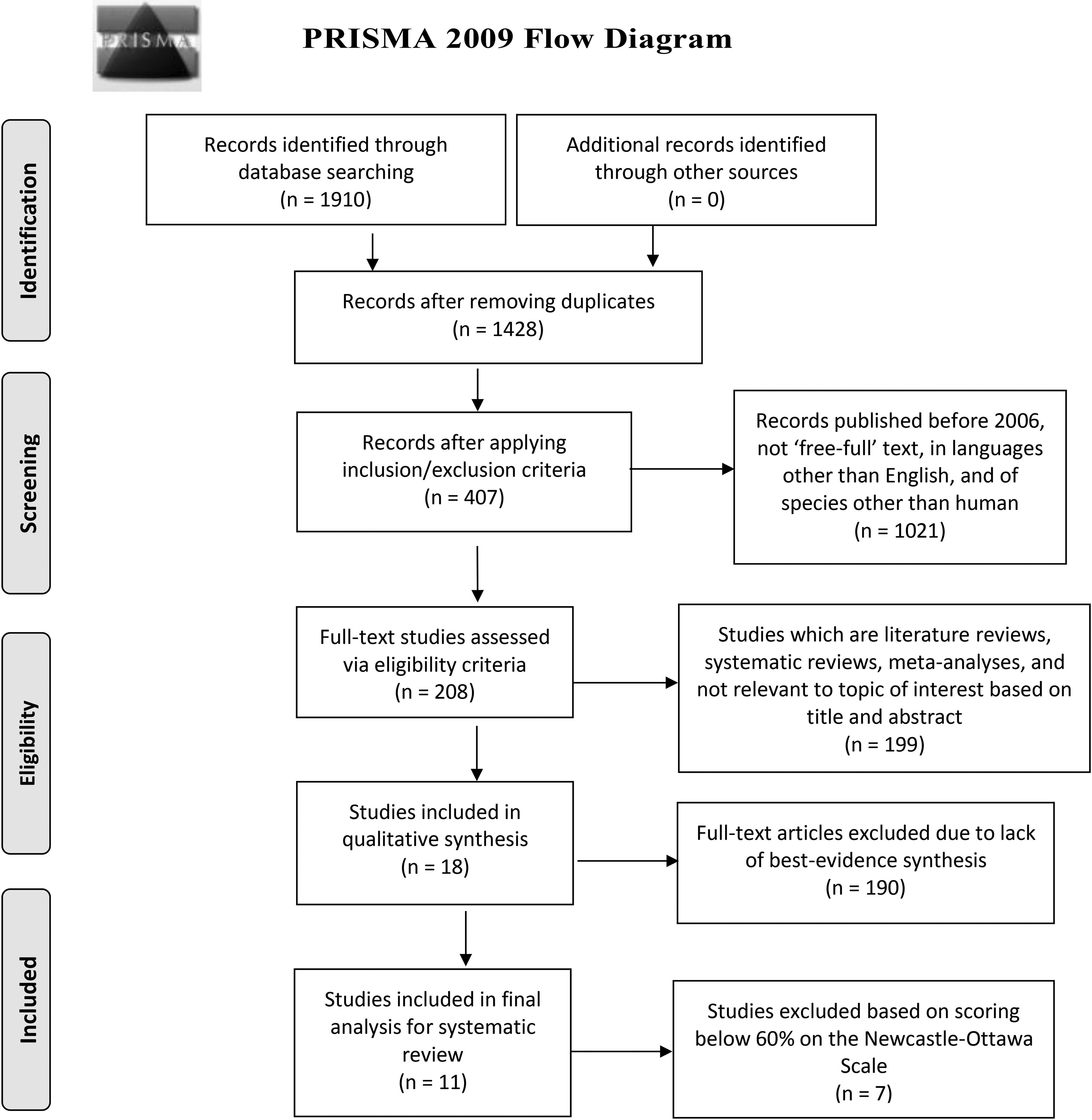
PRISMA flow diagram. PRISMA, Preferred Reporting Items for Systematic Review and Meta-Analysis.
Characteristics of the Studies on the Relationship Between Shift Work and Metabolic Syndrome Risk Factors
The presence of 3 of 5 factors is required for establishing the diagnosis of MetS. These factors were abdominal obesity, elevated triglycerides, reduced HDL-C, elevated blood pressure, and elevated fasting glucose. 21
BP, blood pressure; DBP, diastolic blood pressure; F, female; FBG, fasting blood glucose; HDL-C, high-density lipoprotein cholesterol; M, male; MetS, metabolic syndrome; QA, quality appraisal; SBP, systolic blood pressure; TG, triglyceride; WC, waist circumference.
Study characteristics
The characteristics of each chosen study are described in Table 3. All 11 articles were cross-sectional studies that were conducted in 8 different countries and 5 different continents. Sixty-seven percent of the studies included in this review were in Asia with three studies from Korea, two studies from China, one study from Iran, and one study from Japan. Other studies included in the review were in Canada, North America; Poland, Europe; Brazil, South America; and Egypt, Africa. A total of 47,596 participants were included in this study. Seven studies observed both male and female participants, while three studies observed only female participants, and one study observed only male participants. The exposed group was involved with night shift work and/or rotating night shift work. The control group was day or day-shift workers. The occupation types for the populations of study were vast and diverse. Some examples include health care workers, manufacturing workers, drivers, and plant workers.
Components of MetS
Each study measured different risk factors for MetS and its components, which are described in Table 3. The components of MetS are obesity, dyslipidemia, hypertension, and insulin resistance. Eleven studies measured obesity via waist circumference and the presence of obesity and abdominal/central obesity. Eight studies measured dyslipidemia via triglycerides and high-density lipoprotein (HDL). Seven studies measured hypertension via systolic blood pressure, diastolic pressure, and the presence of hypertension. Six studies measured insulin resistance via fasting blood glucose and glucose. Seven studies measured the presence of MetS.
Discussion
The MetS is a cluster of metabolic risk factors that appear to directly promote the development of diabetes and atherosclerotic cardiovascular disease. 1 The following subheadings are organized by each component of MetS. Each section discusses the relevant results related to the specific MetS component and reviews the pathophysiology of circadian rhythm disorder with obesity, dyslipidemia, hypertension, insulin resistance, and MetS, respectively. Table 4 displays the results from five observational studies measuring the presence of MetS in the respective populations. According to the Adult Treatment Panel III (ATP III) criteria, the presence of three of five factors is required for establishing the diagnosis of MetS. These factors were abdominal obesity, elevated triglycerides, reduced high-density lipoprotein cholesterol (HDL-C), elevated blood pressure, and elevated fasting glucose. 21
Main Results on the Relationship Between Shift Work and the Presence of Metabolic Syndrome
CI, confidence interval; OR, odd ratio; RSW, rotating shift worker.
Shift work and obesity
The increasing prevalence of obesity is a major public health problem. Obesity increases the risk of overall mortality and the development of many comorbidities such as diabetes, hypertension, coronary artery disease, stroke, and certain cancers. 22 In 2016, the World Health Organization (WHO) estimated that over 650 million adults aged 18 years and older were obese. 23 Excessive calorie intake and sedentary life are the commonly known contributors to obesity, but other factors such as sleep duration and shift work have also been shown to have a positive association with obesity. 22 A possible theory suggests that light exposure at night decreases the secretion of leptin, a hormone that suppresses hunger. This may enhance calorie intake and increase levels of ghrelin, a hormone that increases appetite and stimulates visceral fat accumulation in the abdominal region. 24 Table 5 reports the findings of the studies measuring the relationship between obesity and shift work. Eight out of the 10 observational studies indicate a significantly positive association between shift work and obesity, abdominal/central obesity, and/or waist circumference. 8,13,14,16 –20 Regarding the two studies that did not show statistical significance, both showed a significantly positive relationship between shift work and MetS. 11,15 Of the 11 studies chosen for this systematic review, obesity was the most frequently studied risk factor (10 out of 11). A BMI greater than 30 was considered the diagnostic criteria for obesity. The diagnostic criterion for abdominal obesity is a waist circumference of >102 cm (>40 in) for men and >88 cm (>35 in) for women according to the Adult Treatment Panel III (ATP III). However, when applying the ATP III criteria in Asian countries, a lower waist circumference cutpoint is used, that is, >90 cm (>35 in) for men and >80 cm (>31 in) for women. Individuals of Asian ethnicity appear to be vulnerable to metabolic syndrome at lower waist circumferences. 21
Main Results on the Relationship Between Shift Work and Obesity
DW, day worker.
Shift work and dyslipidemia
Abnormal blood lipid levels are directly associated with an increased risk of cardiovascular diseases. Shift work and, more specifically, permanent night shift work are associated with dyslipidemia through elevated triglycerides and reduced HDL. 25 In the present study, dyslipidemia was defined as having a high triglyceride level (>150 mg/dL) and low HDL-C (<40 mg/dL in men and <50 mg/dL in women). 21 Table 6 displays seven studies measuring the relationship between shift work and abnormal lipid levels. Three out of seven observational studies show a significant association between elevated triglycerides and shift work. Four out of seven studies show a significant association between low HDL and shift work. Two out of seven studies show a significant association for both variables. Circadian rhythm misalignment is associated with imbalances in lipid metabolism, mediated by melatonin secretion, which is inhibited by night work. In addition, studies have shown that nighttime eating may cause metabolic disturbances of triglyceride and lipid levels. 25
Main Results on the Relationship Between Shift Work and Dyslipidemia
Shift work and hypertension
There are many potential mechanisms for the prevalence of hypertension among shift workers. Hypertension is strongly associated with obesity in adults. An elevated BMI causes an increase in body fluid volume, which directly increases peripheral resistance. This is due to increased activity of the renin/angiotensin system, which causes functional constriction of blood vessels and high cardiac output. 26 Melatonin is also a regulator of peripheral tissues, by binding to vascular endothelial cells and activating the L-arginine pathway. This cascade produces nitric oxide and stimulates guanylate cyclase production in vascular smooth muscle, ultimately resulting in vascular relaxation. Circadian misalignment in shift workers inhibits melatonin secretion, which causes irregularities in blood pressure control. In a recent study, the prevalence rate of hypertension was seen to increase with shift work duration. 27 Table 7 displays six observational studies measuring the prevalence of high blood pressure in shift workers. Elevated blood pressure is defined as ≥130 mm Hg systolic blood pressure or ≥85 mm Hg diastolic pressure. 21 Three out of six studies show a positive association between shift work and hypertension.
Main Results on the Relationship Between Shift Work and Hypertension
Shift work and insulin resistance
As previously discussed, the dysregulation in melatonin secretion pattern is one of the main factors in developing insulin resistance for shift workers. 3 In addition, abnormalities in adipose tissue metabolism are found to cause worsening insulin resistance in individuals with abdominal obesity. Adipose tissue results in elevated nonesterified fatty acid levels, which modifies hepatic metabolism. Adipose tissues also produce inflammatory cytokines and other bioactive products, which may affect insulin resistance. 21 Table 8 displays five studies measuring fasting glucose as a determinant for insulin resistance. Elevated fasting blood glucose is defined as ≥100 mg/dL. 21 Two out of the five studies show a significant association between shift work and insulin resistance.
Main Results on the Relationship Between Shift Work and Insulin Resistance
Limitations
There are some limitations to this study. First, all selected studies were observational studies, and thus, only associations can be identified in this review and no causality can be established. Second, only studies conducted in the last 15 years were included in this study. Third, only articles that were available in “free full text” were able to be analyzed. Fourth, only studies in the English language were included. This may have caused us to miss many studies that were published before 2006, not available in “free full text,” and studies in other languages. Fifth, the populations of each study differ by their occupation. Some occupations may be more physically demanding or vary in stress levels, which may contribute to the findings. Sixth, 8 countries were represented among the 11 studies included in this review. They may have chosen different diagnostic criteria for defining MetS since many different guidelines exist. Lastly, due to time constraints and lack of resources, a meta-analysis could not performed for the article.
Conclusion
MetS is a known risk factor for many chronic illnesses such as cardiovascular disease and type 2 diabetes. Because these conditions can be life-threatening, it is crucial to understand the associating disorders that may contribute to the pathophysiology of MetS and its components. The circadian misalignment that occurs in SWSD causes desynchronization of vital physiological processes such as sleeping and feeding patterns, body temperature, brain wave activity, and hormone secretions. Melatonin has been shown to be a key player in regulating insulin secretion, blood pressure, and lipid levels. Leptin, another hormone inhibited during circadian misalignment, is also a contributor to developing abdominal obesity. Our review discusses 11 studies that have measured the presence of MetS and/or its components. The most frequently studied MetS component in our review was between shift work and obesity (10 out of 11). Further studies should focus on the relationship between shift work and other MetS components such as insulin resistance, dyslipidemia, and hypertension. These investigations may be useful to develop more standardized treatment plans for patients with SWSD before they develop MetS. Melatonin supplementation may be strongly recommended not only for sleep disorders but also as a preventative for MetS in shift workers. Since shift workers are an inevitable part of society, investigators and health care professionals should be motivated to develop solutions and protect them from chronic diseases.
Footnotes
Acknowledgments
I would like to express my sincere gratitude toward Dr. Tohid and Dr. Lubna at the California Institute of Behavioral Neurosciences and Psychology for their guidance and academic support while writing this review article.
Author Disclosure Statement
The authors have declared that no competing interests exist that may influence their actions, either financial or personal.
Funding Information
All authors have declared that no financial support was received from any organization for the submitted work.