




Abstract
RNA interference (RNAi), a gene regulatory process mediated by small interfering RNAs (siRNAs), has made remarkable progress as a potential therapeutic agent against various diseases. However, RNAi is associated with fundamental challenges such as poor systemic delivery and susceptibility to the nucleases. Targeting ligand-bound delivery vehicles has improved the accumulation of drug at the target site, which has resulted in high transfection efficiency and enhanced gene silencing. Recently, folate receptor (FR)-mediated targeted delivery of siRNAs has garnered attention due to their enhanced cellular uptake and high transfection efficiency toward tumor cells. Folic acid (FA), due to its small size, low immunogenicity, high in vivo stability, and high binding affinity toward FRs, has attracted much attention for targeted siRNA delivery. FRs are overexpressed in a large number of tumors, including ovarian, breast, kidney, and lung cancer cells. In this review, we discuss recent advances in FA-mediated siRNA delivery to treat cancers and inflammatory diseases. This review summarizes various FA-conjugated nanoparticle systems reported so far in the literature, including liposome, silica, metal, graphene, dendrimers, chitosan, organic copolymers, and RNA nanoparticles. This review will help in the design and development of potential delivery vehicles for siRNA drug targeting to tumor cells using an FR-mediated approach.
Introduction
RNA interference (RNAi) is an RNA-mediated gene knockdown process that has the enormous therapeutic potential [1,2]. Small interfering RNAs (siRNAs) are 21–25-nucleotide long, double-stranded RNA, comprising a guide (antisense) and passenger (sense) strand with two nucleotide 3′-overhangs [3–6]. The RNA-induced silencing complex (RISC) consists of siRNA, dicer, Ago2, and TRBP protein [7]. Ago2 protein in the RISC plays a vital role as the PIWI domain of Ago2 possesses RNase-H resembling cleavage activity [8,9]. The cleavage and subsequent unwinding of the passenger strand generate the active RISC consisting of the guide strand [10]. This activated RISC binds to the target messenger RNA (mRNA) with a complementary sequence, and Ago2 cleaves the target mRNA resulting in gene silencing [11,12].
RNAi is the most successful gene silencing mechanism by far. It can regulate the gene expression more efficiently than antisense and ribozyme-based therapeutic agents at a lower drug concentration [13]. There are several siRNA drugs in clinical trials, of which Onpattro (Patisiran) is the first siRNA-based drug to be approved by the US FDA in August 2018 [14]. This drug is encapsulated in lipid nanoparticles (LNPs) for the treatment of hereditary transthyretin (TTR)-mediated amyloidosis [15]. Patisiran is partially modified with 2′-O-Me modifications in both the strands of siRNA duplex. Patisiran specifically targets the TTR mRNA in the liver, resulting in a reduction of TTR protein and amyloid accumulation. Patisiran nanoparticles were absorbed by the low-density lipoprotein (LDL) receptors present on the hepatocytes. Givlaari (Givosiran) targets the aminolevulinate synthase 1 (ALAS1) gene and has received US FDA approval for the treatment of acute hepatic porphyria in 2019 [16]. Givlaari is the first GalNAc-conjugated targeted siRNA drug bearing phosphorothioate (PS) backbone modification, and 2′-O-Me, 2′-F sugar modifications [17]. The GalNAc-conjugated Givlaari binds to the asialoglycoprotein receptors that are greatly expressed on normal hepatocytes. Moreover, numerous siRNA drug candidates are in the late stages of clinical trials [18–20].
Despite such enormous progress at the clinical level, there are several challenges associated with siRNA therapeutics such as nuclease susceptibility, off-target effects due to partial complementarity, activation of adverse immune responses, intracellular uptake, and in vivo delivery [21–24]. These barriers impede the overall potential of siRNA drugs and hamper their progress and development at the clinical stage. siRNA drugs are primarily injected inside the body through local and systemic delivery pathways [25–27]. Local delivery of siRNAs is suitable for easily accessible organs such as eyes, lungs, and subcutaneous tissues [28]. However, not all the organs and tissues are available through the local delivery pathway [29]. Hence, systemic delivery of siRNA is an appropriate pathway for nonaccessible organs to achieve desired gene silencing. After systemic injection, the siRNA should reach the cytoplasm, where it can enter the RISC loading complex to achieve effective gene silencing.
However, several other barriers are accompanying the systemic delivery of siRNAs. Naked siRNAs administered through systemic pathways undergo renal filtration and get rapidly cleared from the bloodstream [30]. In addition, siRNAs should circumvent the uptake by phagocytic cells and unwanted aggregation with serum proteins, while navigating the circulatory system [31]. Naked siRNAs are unable to cross the hydrophobic cell membrane due to their large size, high molecular weight, and polyanionic nature [32,33]. Considering these barriers, target cell binding, cell engulfment, safe transportation, and specific release of siRNAs at the desired site are key challenges in siRNA therapeutics [34].
The effective use of chemical modifications in siRNAs has enhanced the overall efficacy of siRNA by increasing duplex stability and serum stability, and reduced activation of an immune response [35–40]. The 2′-position is the most explored position for sugar modification in siRNA therapeutics. Sugar 2′-modifications include 2′-O-Me, 2′-F, 2′-MOE, locked nucleic acids (LNA), 2′-O-allyl, 2′-O-aminoethyl, 2′-O-guanidinoethyl, and 2′-O-cyanoethyl, of which 2′-O-Me and 2′-F are extensively studied at clinical trials and already being used in recently approved drugs, Patisiran and Givlaari [15–17]. Likewise, various 2′,4′-dual modifications have also been explored in ribose, including 4′-AM-2′-O-Me, 4′-AMEt-2′-O-Me, 4′-AMPr-2′-O-Me, 4′-AMEt-2′-F, 4′-O-Me-2′-F, 4′-F-2′-O-Me, and 2′,4′-di-O-Me [41–46].
Most of the chemical modifications are well tolerated in the passenger strand, and in addition, the guide strand could be judiciously modified at certain positions. With regard to nucleobase modifications, siRNAs containing 5-bromo- or 5-iodouridine, 2,6-diamino purines, 2-thiouracil, 4-thiouracil, dihydrouridine, 5-methyl-uridine/cytosine, and N2-propyl or N2-cyclopentyl aminopurines can reduce unwanted immune activation and enhance the nuclease resistance [47–49]. Naturally occurring base modifications, including 5-methyl cytosine and 6-methyadenosine, are preferred base modifications over non-natural base modifications concerning the safety of metabolized products [49]. Backbone modifications in siRNAs such as PS, boranophosphate, peptide nucleic acids (PNA), morpholino, triazole, and phosphorodithioate (PS2) increase nuclease and duplex stability of siRNAs [50–54]. PS modification was extensively studied among all backbone modifications and also utilized under clinical trial studies [49,55]. PS, 2′-O-Me, 2′-F, and 2′-OH chemical modifications are employed in Inclisiran, against hypercholesterolemia, which is in late clinical trial 3 [55]. Most of these chemical modifications successfully increased nuclease resistance as well as gene silencing efficiency. However, in vivo delivery remains a major challenge to achieve maximum uptake of siRNA oligonucleotides at a particular target site and attain effective gene knockdown.
Various viral and nonviral vector-based gene delivery systems have been developed for safe and efficient delivery of siRNAs [56]. Viral delivery systems such as lentiviruses, adenoviruses, retrovirus, and adeno-associated viruses broadened their utility as delivery vehicles for transportation of siRNAs [57,58]. siRNA delivery using these viral vectors have shown high transfection efficiency; however, these are associated with limitations such as low loading capacity, challenging to produce on a bulk scale, and carries immunogenic and inflammatory effects [59]. In the past few years, nonviral delivery vectors, including liposomes, polymeric nanoparticles, LNPs, cationic polyplexes, and bioconjugates, have overcome most of these limitations and have been used for in vivo delivery [60]. Nonviral vectors employed in siRNA delivery have demonstrated enhanced cellular uptake, early endosomal escape, and effective gene silencing [56].
Targeted delivery of siRNAs involves conjugation of specific targeting ligands to the delivery carrier capable of binding to complementary receptors overexpressed on cell surfaces [61]. Several siRNA-targeting ligands conjugates, including antibody, aptamer, cyclodextrin, GalNAc, galactose, cyclodextrin, hyaluronic acid (HA), anisamide, and folic acid (FA), have increased cellular uptake, increased concentration of siRNAs at the target, and potent gene silencing [49,61,62]. For example, GalNAc-conjugated siRNAs bind to the N-asialoglycoprotein receptors overexpressed in liver hepatocytes [62]. Cholesterol modifications facilitate siRNA cellular uptake as modified siRNAs bind to complementary LDL receptors on hepatocytes [63]. Cholesterol-conjugated siRNAs, modified with 2′-O-Me and PS, have exhibited efficient in vivo gene silencing [64]. HA binds to CD44 receptors overexpressed on various primary and metastatic tumor cells [65]. Galactose-conjugated siRNA delivery vehicles show affinity for asialoglycoprotein receptors overexpressed on the surface of the liver, enhancing siRNA uptake in liver cells [66].
In addition, aptamers, antibodies, cell-penetrating peptides, dendrimers, anisamide, and transferrin are other delivery platforms that have been studied for siRNA delivery [67–70]. Along the same line, the folate receptor (FR) is considered a potential target for the treatment of cancers and inflammatory diseases. FR is a crucial molecular target that gets overexpressed in many cancer cells and immune cells (macrophages). Moreover, FRs have been studied extensively for siRNA delivery to many tumors and activated macrophages [60,71,72].
Overview of FR
FRs belong to the glycoprotein family (35–40 kDa) and are considered potential biomarkers for cancer cells. Folate receptors are overexpressed in a wide number of cancer cells, including ovarian, uterus, kidney, lung, breast, prostate, colon, and brain. FRs are classified into four different types: FRα, FRβ, FRγ, and FRδ [73,74]. These folate isoforms are 70%–80% identical in amino acid sequence, but distinguishable in their expression pattern on tumor cells [75]. Two isoforms, FRα and FRβ, are attached to the cell surface by glycosylphosphatidylinositol (GPI) anchor, whereas FRγ lacks the GPI anchor; therefore, it is mostly a secretory protein. All these FRs have restricted expression profiles. FRα is typically present in normal epithelial cells of the placenta, choroid plexus, uterus, retina, and kidney. It is overexpressed in several malignant tissues, including ovarian, uterus, breast, lung, colon, and kidney. FRβ is overexpressed in activated monocytes and tumor-associated macrophages (TAMs). FRγ isoform is a soluble glycoprotein present in hematopoietic cells, and FRδ is represented on regulatory T cells [76–78]. FRδ (Folr 4) does not bind to FA or reduced folate due to some differences in the amino acid sequences, which are involved in FA binding [79].
The dissociation constants (Kd) of FA to the folate isoforms are as follows: FRα (Kd = 0.1 nM), FRβ (Kd = 1 nM), and FRγ (Kd = 0.4 nM). FA has a 10 times stronger affinity for FRα compared to the FRβ isoform [77,80,81]. Chen et al. reported a crystal structure for the human folate receptor (FRα) at 2.8 Å resolutions, which revealed a globular structure consisting of cysteine-rich residues [82]. The folate pterin head group is buried in the receptor structure. Extensive interactions between the ligand and receptor explain their high affinity. Modifications at the pterin or p-aminobenzoic acid moieties of folate disrupt receptor binding, but attachment through either the α- or γ-carboxyl groups of FA preserves high affinity for FRs [82]. A γ-carboxyl linkage, on the other hand, is believed to yield a higher affinity protein conjugate.
FA, due to its small size, low immunogenicity, excellent in vivo stability, high specificity to cancer cells, and strong binding affinity toward FRs, has attracted much attention for targeted siRNA delivery. FR has been explored in various diagnostic and therapeutic tools for the treatment of carcinoma and inflammatory diseases [83]. FA-decorated siRNA carriers bind specifically to the FRs, which are overexpressed in cancer cells, which leads to site-specific delivery of FA-siRNA conjugates and increases in the concentration of siRNA drug at the target site. FR-based delivery vehicles get internalized by target cells through receptor-mediated endocytosis (Fig. 1).
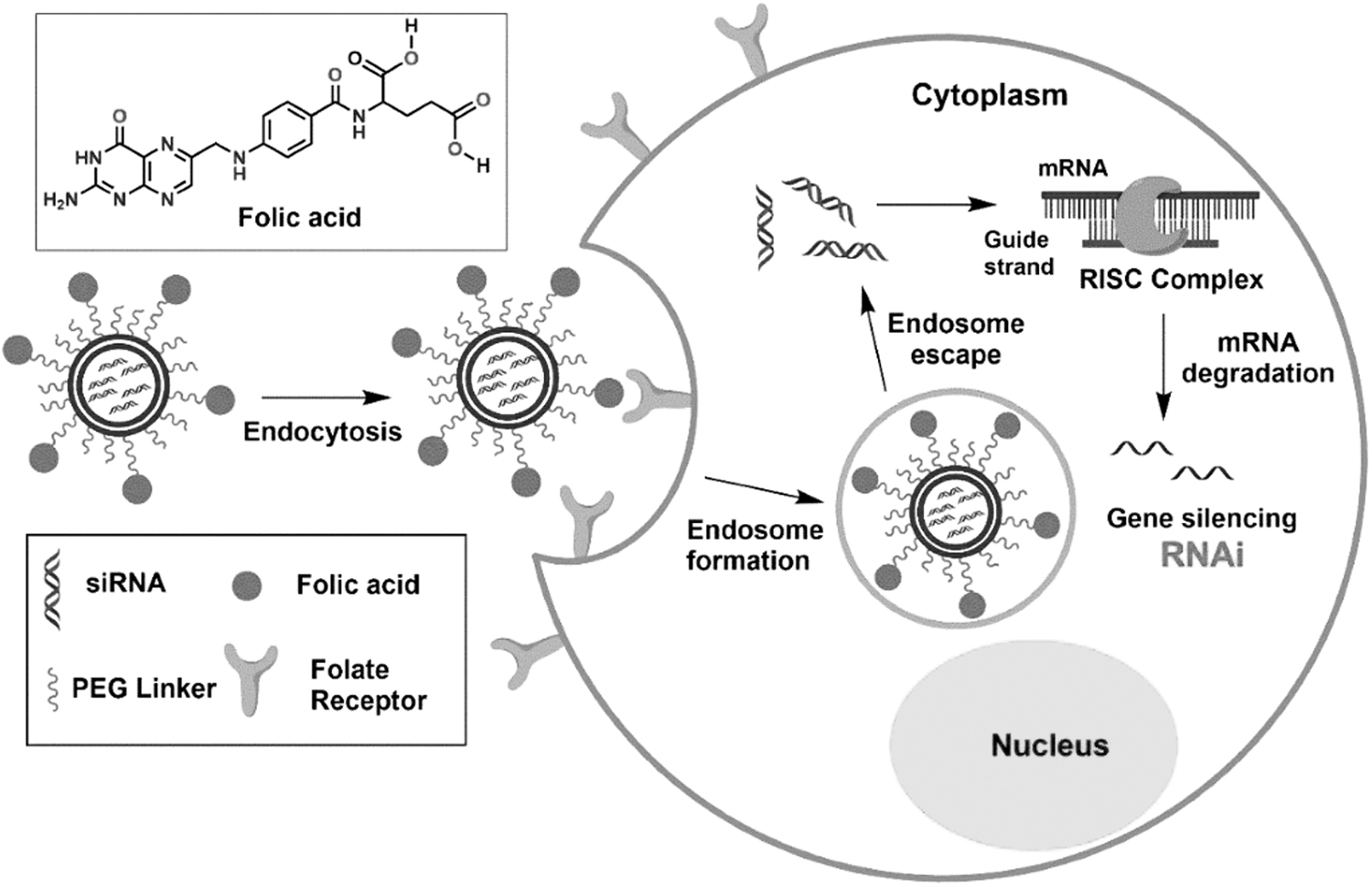
Schematic representation of folate-mediated endocytosis for siRNAs. siRNA, small interfering RNA.
FR-mediated endocytosis follows a nondegradative pathway for folate conjugates and facilitates cellular uptake into the cell through receptor recycling. Furthermore, the release of siRNAs from the endosome in the cytoplasm facilitates the RNAi pathway leading to gene silencing of target mRNA [84–86]. In this review, we discuss recent advances in FA-mediated siRNA delivery for the treatment of cancers and inflammatory diseases. The delivery platforms are categorized into three main sections: lipid-based, polymer-based, and miscellaneous delivery systems. This comprehensive review provides a detailed analysis of folate-mediated siRNA delivery carriers and will help to understand the pros and cons of folate-mediated targeted delivery.
Types of FR-Mediated Nanocarrier Delivery Systems
FR-mediated lipid-based delivery systems
Liposomes/lipoplexes have proved to be efficient delivery agents for the transport of chemotherapeutic agents as well as nucleic acid-based therapeutic agents [87]. Liposomes are the vesicular structure, consisting of an amphiphilic phospholipid bilayer (Fig. 2). This bilayer generally allows the encapsulation of drugs/siRNA into the central aqueous space of the liposome. Lipid-based nanoparticles are associated with several advantages such as low toxicity, biocompatibility, ease of production, and the ability to encapsulate hydrophobic and hydrophilic drugs [88–90]. The use of FA as a targeting ligand with liposome carriers was initiated for tumor-specific delivery of doxorubicin (DOX) in 1995 [91]. Surface modification of liposomes using folate ensures tumor-specific delivery of siRNAs and has resulted in enhanced cellular uptake, improved biodistribution, and enhanced gene silencing [91–94]. Yoshizawa et al. reported a folate-linked lipid-based siRNA nanoparticle (NP-F) against nasopharyngeal tumor KB cells (Fig. 2). The potential of NP-F was tested against human epidermal growth factor receptor 2 (HER-2) mRNA in KB cells and KB xenograft mice. Transfection of lipofectamine 2000 lipoplex with HER-2 siRNA, control-L siRNA, and enhanced green fluorescent protein (eGFP) siRNA duplexes into KB cells has strongly inhibited the tumor cell growth by 66%, 55%, and 34%, respectively [95].

FR-mediated lipid/liposomal based delivery systems.
While NP-F downregulates in vitro gene expression significantly without off-target effects, lipofectamine 2000 with control siRNAs showed unwanted knockdown through off-target effects. The NP-F nanocomplex with HER-2 siRNA inhibited the growth of tumor cells, in addition to suppression of HER-2 protein and in vivo growth of tumor KB xenografts in mice. The NP-F with HER-2 siRNA has achieved efficient in vivo tumor growth inhibition, but combinational therapy, including siRNA with chemotherapy, might be required for complete regression of the tumor. Moreover, enhanced transfection efficiency and selectivity of these NP-F nanoparticles make it favorable for further clinical implications [95].
Feng et al. reported an FR-mediated liposomal siRNA delivery vehicle comprising an MYCN siRNA-encapsulated liposome complexed with FA [96]. At 72 h post-transfection of FR-targeted MYCN siRNA-encapsulated liposome to human neuroblastoma (LA-N-5), cells have downregulated the expression of MYCN mRNA by 79% and MYCN protein by 71%, and reduced 66% tumor cell proliferation [95]. According to the in vivo studies performed in the SCID mouse model, MYCN gene knockdown was obtained ∼53% in tumor tissues using MYCN siRNA-containing liposome. These preliminary studies showed that the lipid formulation might be a desirable approach for siRNA delivery to FR-overexpressing tumors [96].
The two main aims for the development of siRNA therapeutics are the in vivo protection of siRNA against enzymatic degradation and targeted delivery of siRNA to the final RNAi site [97]. Lee et al. tested folate-functionalized polyethylene glycol (PEG)-siRNA lipopolyplexes (TLPs) against leukemia [97]. The siRNA polyplexes were optimized by co-formulating folate-PEG-oligomer and lipo-oligoaminoamides. Flow cytometry studies demonstrated that all TLP formulations showed strong cellular internalization in FR-overexpressed murine lymphocytic leukemia suspension cells (L1210) and murine lung carcinoma (M109) cells. The gene silencing using TLP formulations tested using siRNAs against eGFP gene in KB cells expressing eGFPLuc fusing protein (KB/eGFPLuc) cells demonstrated 73%–88% suppression of luciferase gene expression. Out of all the TLP formulations, tyrosine trimers modified lipoplex (TLP1) have shown the most efficient gene silencing activity (88%). Two tyrosine trimers with two additional oleic acid units have increased the in vivo stability and high transfection efficiency by TLP1 formulation.
Furthermore, TLP1 loaded with siRNA targeting kinesin-related motor protein (siEG5) significantly silenced the EG5 gene expression at the mRNA level in KB and L1210 cells by 92% and 85%. The TLP1 was administered intravenously to the leukemia mouse model, which resulted in 65% of EG5 gene silencing. These promising results by TLP1 formulation could be justified mainly due to the presence of hydrophobic oleic acid chain and additional tyrosine trimers, which have enhanced particle stability and protected siRNAs from degradation [97].
Kabilova et al. reported folate-containing targeted liposomes to human epidermoid carcinoma (KB-3-1) and human embryonic kidney 293 (HEK-293) cells [98]. The FC-liposome is an effective vehicle and exhibits threefold to fourfold higher transfection efficiency than conventional formulations [98]. The conventional liposome is a nontargeted liposome formulation comprising cholesterol-based polycationic amphiphile with zwitterion helper lipid 1,2-dioleoyl-sn-glycero-3-phosphoethanolamine (DOPE). MTT assay demonstrated that the folate-containing targeted liposome was nontoxic to cells (KB-3-1 and HEK-293 cells) up to 80 μM concentration. Moreover, 90% of cell viability was observed at 8 μM, which is typically employed for intracellular delivery. In vivo gene silencing was investigated in human xenograft tumor (KB-8-5) using siMDR targeting MDR1 (multidrug resistance 1) gene, reduced the PGP level to 40% compared to the nontargeted liposome formulation, and scrambled siRNA (siScr) with FC-liposome. The preliminary data demonstrated that the FC-liposome entrapped siRNA delivered to xenograft mice and exhibited efficient gene silencing [98].
Klein et al. evaluated the efficacy of folate-conjugated lipopolyplex loaded with siRNAs targeted to EG5 gene against leukemia [99]. The FR-targeted lipoplex was prepared using azide-functionalized cationic lipo-oligomer and folate conjugated DBCO (dibenzocyclooctyne acid)-PEG agent. FR-targeted lipopolyplex formulations containing eGFP-targeted siRNA (siGFP) showed moderate gene silencing (∼60%) in KB/eGFPLuc cells. The targeted lipoplex loaded with siEG5 was subcutaneously injected to L1210 tumor-bearing mice, induced ∼60% mRNA downregulation in tumor cells. The FR-targeted lipoplex formulation was also tested for tumor cell proliferation, reduced cell viability by ∼80% in KB cells, and ∼63% in the case of L1210 cells [99]. The combinational therapy with anti-microtubulin drug pretubulysin and siEG5 exhibited enhanced killing of leukemia cells. Folate-conjugated siRNA lipopolyplexes are, therefore, a useful platform in reducing the growth of L1210 leukemia in vivo without significant side effects.
In 2017, Krzyszton et al. employed monomolecular nucleic acid/lipid particles (mNALPs) to study the siRNA delivery in folate expressing wild-type epithelial carcinoma KB cells (KB/WT) [100]. Folate-bound mNALPs (FolA-mNALPs) showed specific binding to the FR and internalized into FR-positive KB/WT cells within 20 min. Despite endocytosis, mNALPs were stuck inside endosomal compartments and could not release inside the cytoplasm. Nevertheless, substantial gene silencing was observed when KB/eGFPLuc cells were incubated with FolA-mNALPs and chloroquine as an endosomolytic agent that facilitated the early endosomal escape of siRNAs [100]. The results indicated that the pH-dependent endosomal release of nanocarriers should be considered while optimizing lipid-based formulations.
In summary, modern liposome-based nanocarriers could efficiently be equipped with targeting ligands to achieve targeted delivery of nucleic acids. Liposome nanoparticles decorated with PEG exhibit prolonged circulation time, enhanced particle stability, high serum stability of siRNA, and avoid rapid clearance by reticuloendothelial system. Folate-mediated liposome nanoparticles improved in vivo biodistribution, capable of downregulating mRNA expression in vitro and in vivo. Moreover, FR-targeted lipid nanocomplexes suppressed the growth of tumor xenografts in mice without any side effect.
FR-mediated polymer-based nanoparticles
To overcome significant barriers in systemic delivery of siRNA, various organic, inorganic, and polymeric material-based nanoparticle delivery systems have developed for the effective delivery of siRNAs to the target organ [101–105]. The small size, large surface area, high loading capacity of siRNA, easy surface functionalization, and increased stability of nanoparticle formulations make polymer-based nanoparticles the efficient delivery platform for siRNAs [106–109]. Polymeric nanoparticles such as chitosan (CS), dendrimers, cyclodextrin, and nanogels have been employed for siRNA delivery [68,110–113]. Various synthetic and natural polymers have been developed as the nonviral nanostructures for siRNA delivery. Natural polymers are considered nontoxic, biocompatible, and biodegradable [114]. Several linear and branched synthetic cationic polymers have been reported, which are easy to manufacture, and possess unique self-assembling property, high stability, and ability to form core shell-shaped micelle structure [101,115,116]. Moreover, polymer-based siRNA delivery has emerged as a promising delivery strategy and has enormous potential for further therapeutic applications [117–119].
FR-mediated silica nanoparticles
Mesoporous silica nanoparticles (MSN) have been used extensively for various biomedical applications as well as in drug delivery. MSN have proved excellent gene delivery vehicles for chemotherapeutic drugs and siRNAs. It is associated with several advantages, including high surface area, large pore size, low cytotoxicity, sustained delivery, and flexibility in surface modification [120,121]. Ma et al. have developed hollow mesoporous silica nanoparticle (HMSNP) to facilitate the co-delivery of siRNA targeting the B-cell lymphoma 2 (Bcl-2) gene and DOX for enhanced cancer therapy [122]. The assembly is composed of FA-conjugated Polyethylenimine (PEI), which is coated on the surface of HMSNP by electrostatic attractions between amino groups of PEI-FA and phosphate groups on HMSNP (Fig. 3a). FA-coated Bcl-2 targeting siRNA/DOX silica nanoparticles showed considerably higher cell uptake in FR-positive HeLa cervical carcinoma cells, whereas low cellular uptake in low FR-expressing breast cancer cells (MCF-7) (negative control). At the protein level, Western blot assay was performed using these FR-targeted nanoparticles and exhibited substantial knockdown in Bcl-2 protein expression. Moreover, this drug/gene co-delivery vehicle exhibited an enhanced apoptotic rate in Hela cells due to the synergistic effect of siRNA (Bcl-2) and DOX. These results demonstrated that the HeLa cells exhibit high sensitivity toward DOX in the presence of Bcl-2 siRNA [122].

FR-mediated silica nanoparticles.
In 2016, Liu and co-workers reported magnetic MSN-based co-delivery vehicle, including vascular endothelial growth factor (VEGF), short hairpin RNA (shRNA), and DOX in HeLa cells (Fig. 3b) [123]. FR-targeted nanocomplexes showed negligible cytotoxicity on HeLa cells. Moreover, an elevated and facile intracellular uptake was observed using these targeted nanocomplexes compared to the nontargeted complexes in HeLa cells. In vitro gene silencing using FR-targeted nanocomplexes showed ∼90% of VEGF downregulation at the mRNA level in HeLa cells. Similarly, at the protein level, ELISA assay exhibited substantial suppression of the VEGF protein expression. The co-delivery of VEGF shRNA and DOX using FR-targeted nanocomplexes underscored the potential of folate-mediated dual delivery of oligonucleotides and chemotherapeutic agents for cancer treatment [123].
Yinxue et al. have reported another folate-targeted MSN for delivery of siRNA to non-small lung cancer cells (Fig. 3c) [124]. In this assembly, MSNs were loaded with myricetin (Myr), which is a natural flavonoid compound known to possess antitumor properties. Folate-functionalized MSN were used for simultaneous co-delivery of Myr and multidrug resistance associated protein-1 (MRP-1) targeting siRNAs. Myr-MRP-1/MSN-FA nanoparticles showed enhanced cellular uptake in FR-expressing lung cancer cells compared to nontargeted nanoparticles. In vivo studies performed in the A549 tumor-bearing mouse model revealed that these FA-coated co-delivery vehicles displayed higher accumulation at the tumor site, longer retention time in blood, and superior tumor inhibition. The results demonstrated that the FA-conjugated MSNs have improved the antitumor efficiency of myricetin in the presence of MRP-1 siRNA [124].
FR-mediated metal nanoparticles
Superparamagnetic iron oxide nanoparticles (SPIONs) are used as magnetic resonance imaging (MRI) contrast agents in the detection and diagnosis of tumors. SPIONs are also involved in the delivery of anticancer drugs and nucleic acids [125]. Luo et al. reported FR-targeted SPIONs loaded with siRNAs targeting programmed death ligand-1 (PD-L1) gene against gastric cancer [126]. The assembly comprised FA-conjugated PEG-PEI/siRNA SPION nanoparticle polyplexes (Fig. 4a).
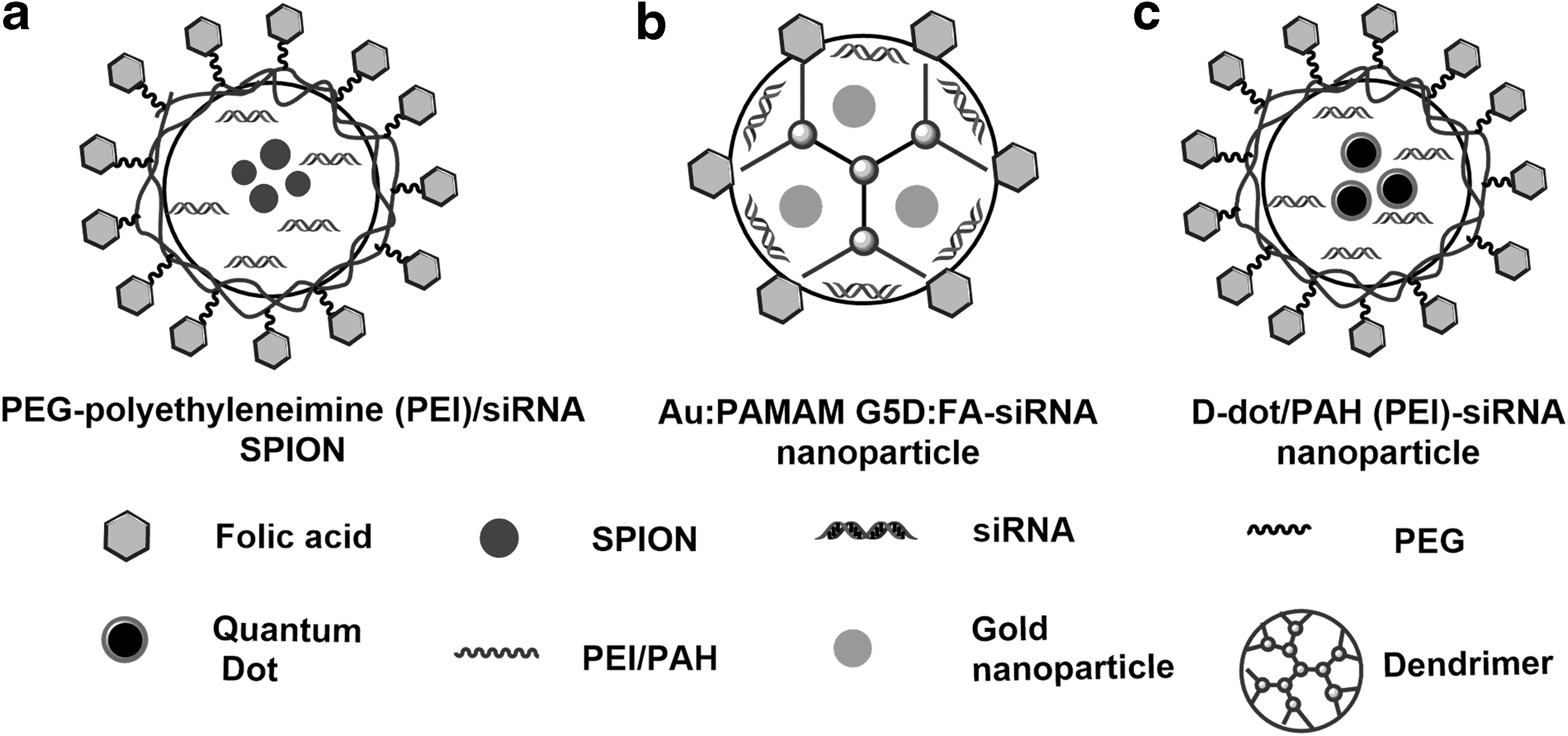
FA-conjugated polyplexes improved the cellular uptake and higher transfection efficiency in gastric cancer cells (SGC-7901) compared to non-folate-conjugated polyplexes. Among the four PD-L1-targeted siRNA designs, siRNA1 and siRNA2 showed significant PD-L1 gene knockdown at mRNA level by 76% and 91%. The FA-coated SPION polyplexes reduced T2 relaxation time in SGC-7901 cells, which proved as an efficient T-2 weighted contrast agent. These FA-decorated SPION nanoparticles achieved significant knockdown at PD-L1 mRNA and protein levels. The combined use of SPION and PD-L1 siRNA to tumor cells have enhanced the therapeutic efficiency, achieves improved MRI tumor contrast, and allows noninvasive observing of cancer growth.
Another class on metal nanoparticles has been reported for siRNA delivery, which includes gold nanoparticles (AuNPs). AuNPs possess some essential properties such as easy and large-scale synthesis, biocompatibility, easy surface functionalization, and stability [127]. Mbatha et al. have developed AuNP modified with FA-functionalized dendrimer-based delivery carrier for anti-Luc siRNA in FR-expressing HeLa-Tat-Luc cells (Fig. 4b) [128]. Although polyamidoamine (PAMAM) dendrimer has high transfection efficiency, it exhibits high cytotoxicity due to the nonspecific interactions of terminal amine groups with the cell membrane. The terminal amine groups of PAMAM dendrimers are modified with AuNPs and FA to reduce the cytotoxicity of PAMAM G5D. Cell viability was tested using targeted AuNPs and was found to be in a range of 70%–90% in HEK-293, HepG2, Caco-2, and HeLa-Tat-Luc cells, whereas G5D and G5D:FA nanocomplexes observed cell viability in between 50% and 70%, which indicated that the cytotoxicity of G5D was reduced due to AuNPs. The Au:G5D:FA-siRNA nanocomplex delivered to folate-positive HeLa-Tat-Luc cells has silenced the luciferase gene up to 75%. AuNP-functionalized dendrimer-based targeted delivery vehicles can be efficient and promising siRNA delivery vehicles with reduced toxicity, which need further advancement toward clinical implications.
Yong and co-workers exploited the FR-mediated quantum dot (QD) nanoplexes loaded with siRNA targeting to Kirsten rat sarcoma viral oncogene (K-Ras) gene against pancreatic cancer (Fig. 4c) [129]. QDs are known to be effective siRNA carriers due to several benefits such as large surface area, high siRNA loading capacity, optical properties, and cell imaging applications [130,131]. However, the QDs made up of heavy metals are associated with toxicity issues. Organic or inorganic protective coatings could effectively reduce the toxicity of QDs [129–131]. Results revealed that FR-targeted QD nanoparticles containing K-Ras siRNA significantly suppress the mutant K-Ras mRNA in Panc-1 cells by 43%. Cytotoxicity assay has shown over 90% cell viability, which indicates that D-dot nanocomplexes are nontoxic and biocompatible. The d-dot-based formulations proved to be an efficient platform for siRNA delivery, which needs to be evaluated in vivo against pancreatic cancer [132].
FR-mediated graphene-based nanoparticles
Graphene oxide (GO) has attracted much attention as a potential delivery platform due to its characteristic properties. GO nanoparticles possess beneficial properties to act as a potential delivery agent, including high solubility, flexible surface functionalization properties, high loading capacity, and photothermal effects. GO possesses a high photothermal conversion capability, especially in the near-infrared wavelength region. The GO can produce a strong absorption and heat transfer effect from light, and this heat could kill tumor cells directly [133,134]. Due to this photothermal effect, GO has also been used in several biomedical applications, including cancer therapy. The potential toxicity of GO precludes its use as a delivery agent; however, experimentally, it has shown that the toxicity could be reduced by coating the surface of GO with biocompatible materials such as PEG or proteins [133–135].
Li and co-workers have reported an FA-conjugated GO nanoparticle for co-delivery of dual siRNAs against pancreatic MIA PaCA-2 cancer cells [135]. It was assembled with PEGylated FA and positively charged poly-allylamine hydrochloride (PAH) combined with GO to form GO/PEG/FA/PAH-siRNA nanoparticles (Fig. 5a). This siRNA delivery system targeted against HDAC1 (histone deacetylase 1) and K-Ras gene (G12C mutant gene) is simultaneously responsible for cell proliferation, metastasis, and pancreatic cell growth in MIA PaCA-2 cells. The co-delivery of both HDAC1 and K-Ras siRNAs using FA-conjugated GO nanoparticles showed high internalization in FR-expressing MIA-PaCa cells. In vitro gene silencing was tested using FA-conjugated nanoparticles loaded with either HDAC1 or K-Ras siRNAs have downregulated gene expression by around 48% after 48 h. Moreover, nanoformulations loaded with co-delivery of HDAC1 and K-Ras siRNAs showed around 38% of mRNA downregulation. Moreover, these nanoparticles effectively suppressed proliferation and caused apoptosis and thereby resulted in cell cycle S phase arrest in MIA-PaCa cells. In vivo studies were performed by treating FR-targeted GO co-delivery vehicle by intraperitoneal injection in the MIA PaCa-2 xenograft mice model [135]. The synergistic effect of siRNA and the GO thermotherapy resulted in ∼80% tumor growth inhibition. GO-based delivery systems for siRNA delivery provided combinational benefits that can further be optimized for enhanced cancer therapy.
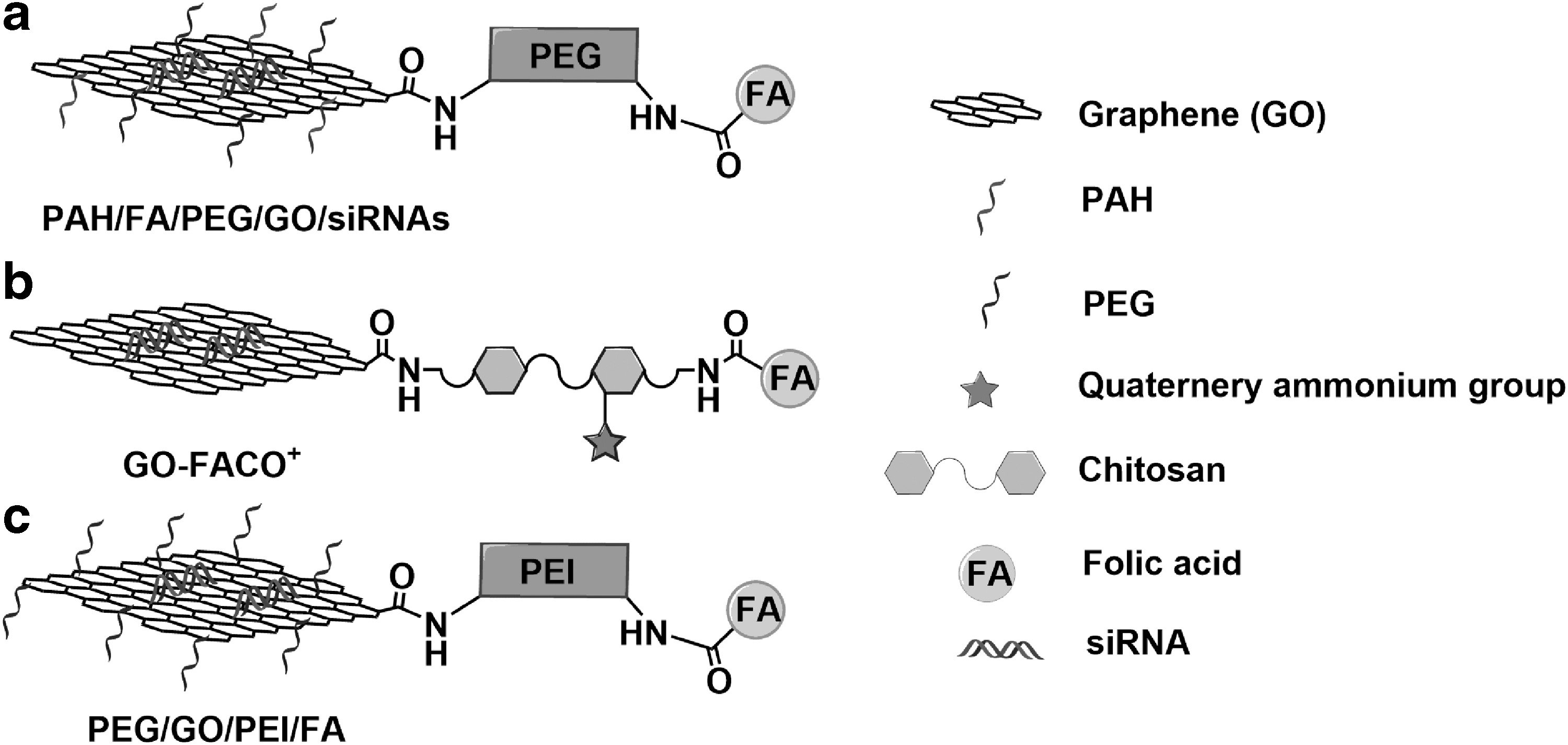
Wang et al. reported another folate-functionalized GO nanoparticle for delivery of siRNA targeting against the polo-like kinase-1 (PLK-1) gene in human ovarian cancer cells (SKOV3) (Fig. 5c) [136]. Cell viability of SKOV-3 cells was 94% for the FR-targeted GO nanocomplex (PEG-GO-PEI-FA), results in excellent biocompatibility and negligible cytotoxicity. Moreover, PEG-GO-PEI-FA exhibited enhanced endosomal release and high transfection efficiency due to the proton sponge effect of PEI moiety. PEG-GO-PEI-FA/siRNA nanoparticles exhibited a good growth inhibition effect in SKOV3 ovarian tumor cells.
Cao et al. reported the GO-based delivery carrier conjugated to FA and chitosan oligosaccharides for combinational therapy of MDR1-targeted siRNA and DOX to breast cancer (MCF-7) cells (Fig. 5b) [137]. Intracellular uptake was investigated with the FA-conjugated GO (GO-FACO+) assembly. The data revealed that siRNA was effectively transported in MCF-7 cells through receptor-mediated endocytosis. The transfection of MDR1 siRNA by GO-FACO+ significantly downregulates the MDR1 mRNA as well as P-gp (P-glycoprotein) protein expression level compared to the nontargeted controls evaluated using real time polymerase chain reaction and Western blot assay, respectively. Cellular uptake of DOX and MDR1 siRNAs by GO-FACO+ resulted in an increase in drug toxicity in MCF-7/DOX cells [137].
FR-mediated dendrimer-based nanoparticles
Dendrimers are cationic synthetic polymer-containing highly symmetrical and branched polymeric chains. Dendrimers provide many sites for surface functionalization, possess vital characteristics such as biocompatibility, provide multivalent surfaces, and have low polydispersity [138–140].
In 2012, Arima et al. synthesized the dendrimer-conjugated carrier, which includes FA, PEG, PAMAM dendrimer, and α-cyclodextrin [Fol-PαCs (G3)] for targeted delivery of siRNAs against pGL3 luciferase gene in vitro and in vivo (Fig. 6a) [141]. RNAi activity was tested in KB cells and exhibited a more significant reduction in luciferase gene expression. Cytotoxicity of Fol-PαCs (G3-DSF-4)/siRNA was measured in FR-positive KB cells and resulted in negligible cytotoxicity. In vivo activity of Fol-PαCs (G3-DSF-4)/siRNA was studied using FR-expressing colon-26-luc cell-bearing BALB/c mice. Intratumoral injection of Fol-PαCs (G3, DSF-4)/siGL3 resulted in a 60% reduction of luciferase gene expression. The Fol-PαC (G3)/siRNA complex transferred a significant amount of siRNAs to FR-positive cells, and exhibited negligible cytotoxicity and preferable RNAi effect in tumor-bearing mice [141].
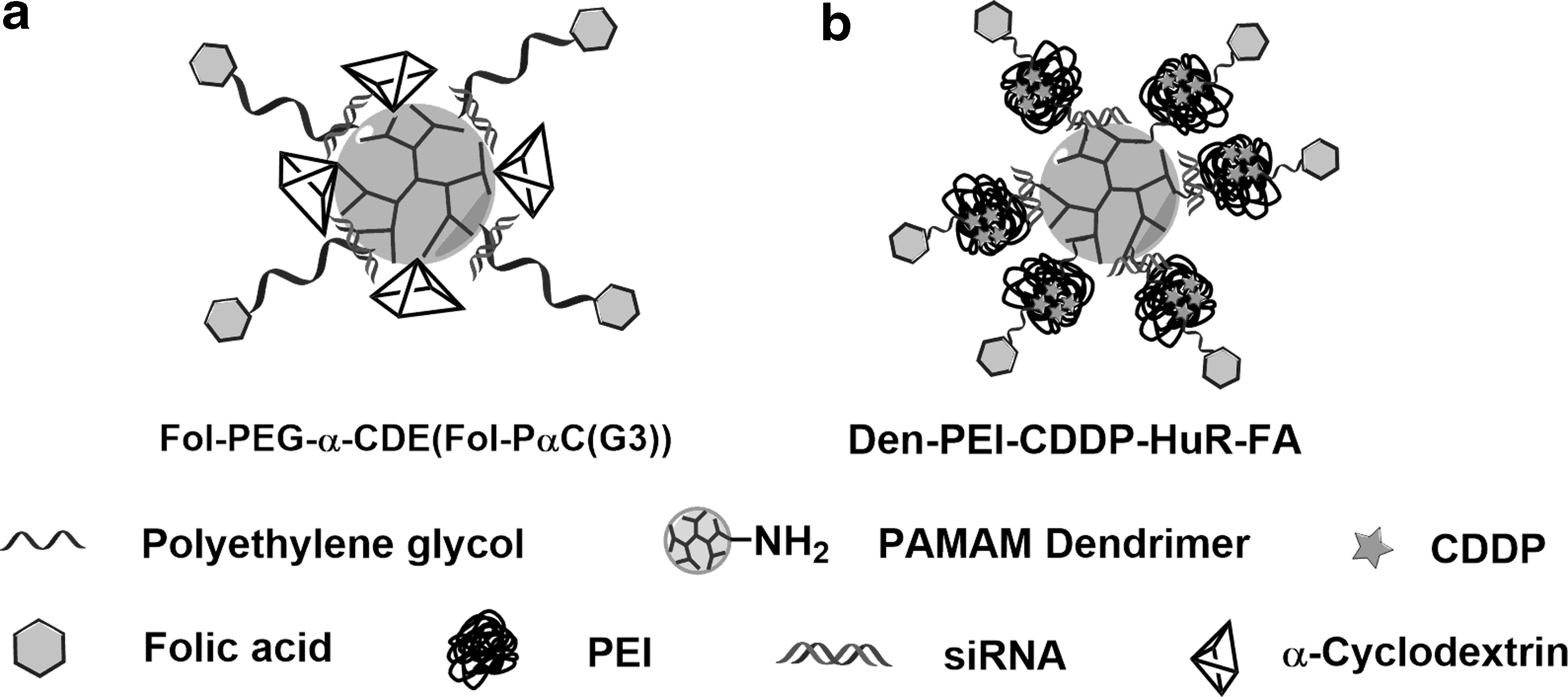
FR-mediated dendrimer-based nanoparticles for siRNA delivery.
Amreddy et al. reported G4-PAMAM dendrimer nanoparticles for the co-delivery of the anticancer drug (cis-diaminodichlorido Platinum II, CDDP) and human antigen R (HuR) siRNA (Fig. 6b) [142]. HuR is an RNA binding protein that plays a key role in cancer cell growth. HuR is a potential anticancer target as it gets overexpressed in lung cancer cells. Combinational delivery of CDDP and HuR siRNA using FA-conjugated dendrimer nanoparticles was tested in FR-positive lung cancer cells (H1299 and A549 cells) and compared with FR-negative normal lung fibroblasts (MRC9 cells). Cellular uptake studies using FR-targeted co-delivery (Den-PEI-CDDP-HuR-FA) nanoparticles demonstrated high cellular uptake in FR-expressing H1299 cells. The Den-PEI-CDDP-HuR-FA nanoparticle significantly reduced HuR protein expressions, and its treatment showed 71% apoptosis in lung cancer cells. H1299 cells, upon treatment with targeted nanoparticles, showed ∼64% cell growth inhibition. The enhanced synergistic effect of CDDP and HuR siRNA was observed, leading to greater anticancer activity than either therapeutic agent [142].
FR-mediated chitosan-based nanoparticles
Chitosan, a naturally occurring cationic polysaccharide, has attracted much attention as a delivery carrier for various nucleic acids [113,114,143]. Chitosan is made from repeating units of N-acetyl glucosamine and glucosamine units having β-1,4 glycosidic linkage. Chitosan is an efficient and promising nonviral delivery vector due to several advantages associated, such as biodegradable nature, less toxicity, and poor immunogenicity. Honke and co-workers developed an FA-based chitosan oligosaccharide (FA-PEG-COL) nanoparticle for siRNA delivery in ovarian cancer cells (OVK18#2) (Fig. 7) [144]. The FR-targeted chitosan nanoparticles were loaded with siRNAs targeted against the hypoxia-inducible factor 1-alpha (HIF-1α) gene in ovarian cancer cells. Cellular uptake of COL nanoparticles bearing FA was significantly higher compared to the nontargeted COL particles without FA. These results have been attributed to cell-specific absorption of folate in FR-expressing ovarian cancer cells. In vivo experiments in 6-week-old BALB/c mice bearing OVK18#2 tumor have shown greater accumulation of FA-PEG-COL nanoparticles at the tumor site than the passive targeting by nontargeted COL nanoparticles.
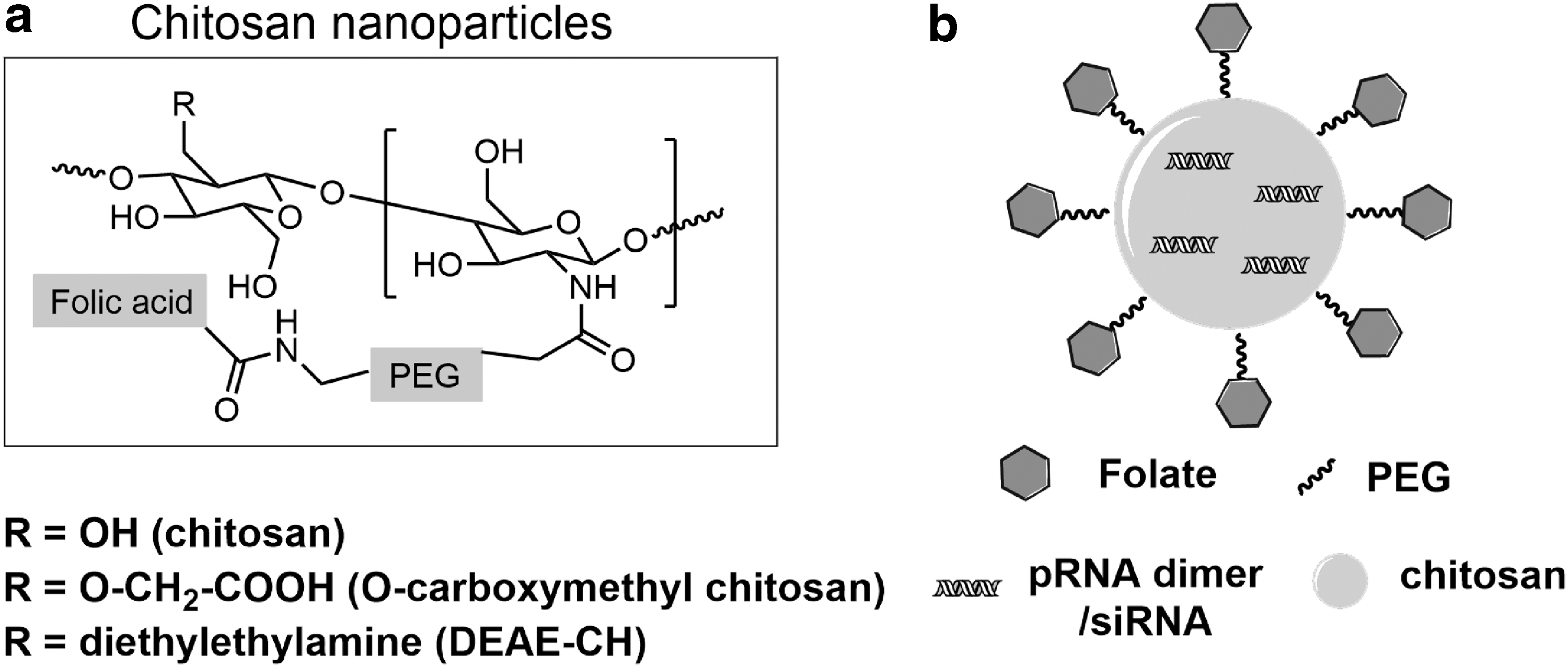
FR-Mediated chitosan-based nanoparticle delivery system.
Li et al. developed PEGylated and folate-conjugated chitosan nanoparticles encapsulated with pRNA dimers (CNPPs) carrying c-Myc siRNA and tumor-targeting FB4 RNA aptamers [145]. In this delivery carrier, pRNA is a packaging RNA that is a component of the bacteriophage phi29 DNA packaging motor, with the ability to form dimer structure [146,147]. Tumor-targeting FB4 RNA aptamer binds specifically to transferrin receptors overexpressed in breast cancer cells (MCF-7). FR-targeting dual tumor-targeting chitosan nanoparticles (CNPPs) carrying c-Myc siRNA and FB4 aptamer showed the highest c-Myc mRNA inhibition. Moreover, significant cell apoptosis (43%) was achieved using folate-coupled CNPPs. In vivo studies using MCF-7 xenograft-bearing nude mice revealed elevated siRNA accumulation at the target site and highest tumor inhibition compared to the nontargeted assembly [145]. Folate-decorated dual targeting siRNA delivery strategies could be a promising alternative to achieve high cellular uptake and gene silencing efficiency using siRNAs.
Fernandes et al. have synthesized folate-conjugated chitosan nanoparticles loaded with siRNA targeting to Sjogren syndrome antigen (SSB) gene in FR-positive HeLa and OV-3 cells (Fig. 7) [148]. In vitro gene silencing activity was measured by injecting 25 and 50 kDa folate-chitosan-siRNA nanoparticles in FR-positive (HeLa and OV-3) cells and FR-negative (MG-63) cells. In OV-3 cells, folate-siRNA-chitosan complexes (25 and 50 kDa) showed inhibition of SSB gene expression by around 42% and 57%, respectively. In HeLa cells, both complexes exhibited 57% gene inhibition activity. However, no significant gene silencing of SSB mRNA was observed in FR-negative MG-63 cells by either of the complexes. Folate-chitosan-siRNAs nanoparticles have less cytotoxicity than lipofectamine-2000 and exhibited higher transfection efficiency to folate-positive cervical carcinoma HeLa and ovarian carcinoma OV-3 cell lines [148].
Chen et al. reported another chitosan-based FA-conjugated nanocarrier system for siRNA delivery against signal transducer and activator of transcription 3 (STAT3) gene in FR-α-positive Lewis lung cancer (LLC) cells and FR-β-positive M2 macrophages (Fig. 7) [149]. FA-conjugated nanocomplex containing STAT3 siRNA significantly suppressed STAT3 gene expression in both LLC cells and M2 macrophages. Moreover, the cellular uptake rate of using these nanoparticles in M2 macrophages was ∼86%, and in LLC cells, of about 75%. In vivo studies using 6–8-week-old C57BL/6 mice showed an ∼45% reduction in tumor size when treated with FA-conjugated nanoparticles. Moreover, this dual system can target cancer cells and immune cells, which shows enormous potential and holds great promise in siRNA therapeutics.
FR-mediated chitosan nanoparticles against inflammatory diseases
Activated macrophages play a significant role in the pathophysiology of inflammatory disease and rheumatoid arthritis (RA). Activated macrophages are considered a potential target for the treatment of inflammatory diseases. FR-β is overexpressed in activated macrophages. Due to the nanomolar affinity of FR-β toward FA, the studies were conducted using folate-siRNA conjugates against inflammatory RA diseases [150–152]. Yang et al. reported chitosan (CS)-conjugated FA for the targeted delivery of siRNA in activated macrophages (RAW 264.7 cells) for the treatment of inflammatory disease [150]. FA-conjugated nanocomplex with siRNA against glyceraldehyde 3-phosphate dehydrogenase (GAPDH) targeted to activated macrophages resulted in 62% silencing of GAPDH mRNA expressions quantified by quantitative polymerase chain reaction (q-PCR). The nanocomplex containing siRNA-targeting cyclooxygenase-2 (COX-2) effectively silences an inflammatory factor COX-2 gene by 87% in activated macrophages. COX-2 enzyme plays an important role in the initiation and development of the inflammatory disease. In vivo bioimaging studies using a subcutaneous inflammation model, that is, BALB/c female mice, were investigated, revealing that CS/siRNA and FA-CS/siRNA nanoparticles were accumulated at inflamed tissue region. Moreover, FA-CS/siRNA nanoparticles showed negligible toxicity in RAW 264.7 cells.
Shi et al. synthesized chitosan-based nanocarrier (folate-PEG-CH-DEAE15) containing FA, diethylaminoethyl (DEAE) group, and PEG (Fig. 7) [151]. The DEAE is a cationic moiety attached to chitosan to improve the colloidal stability of nanoparticles, favors cellular uptake, helps to release delivery carrier inside the cytosol, and enhances gene silencing efficiency [152]. These nanoparticles entrapped with siRNAs targeted tumor necrosis factor-alpha (TNFα) gene, a proinflammatory cytokine in RA. FR-targeted nanocomplex has effectively downregulated TNFα expression in arthritic mice and showed a reduction in inflammation compared to untreated models. The TNFα targeting siRNA nanoparticles also minimized articular cartilage and reduced bone loss in collagen antibody-induced arthritis (CAIA)-induced mice model [151].
FR-mediated PEI-based nanoparticles
Polyethylenimine (PEI) is a cationic polymer, which is extensively studied in various delivery vehicles for siRNA delivery. PEI exhibits a proton sponge effect for releasing nanoparticles from the endosomal compartment into the cytoplasm. The use of high molecular weight PEI for delivery was hampered due to the cytotoxicity effects. On the other hand, low molecular weight PEI was less toxic, but showed limited transfection efficiency. Conjugation of biodegradable molecules to PEI has achieved efficient siRNA delivery and reduced cytotoxicity [153,154]. Zheng et al. have synthesized and evaluated reducible PEI-derivatized FA-based nanocomplexes to target siRNA against the survivin (Sur) gene in FR-positive HeLa and A549 cells [155]. FA was conjugated to reducible PEI-disulfide complex to form FA/PEI-SS-siRNA nanocomplexes (Fig. 8a). PEI-SS-folate-siRNA equally downregulated the survivin gene expression in FR-positive (HeLa) cells and FR-negative (A549) cells by 64%, and suggested that the nanocomplexes lacks selectivity based upon FR expressions. Cell viability was maintained over 90% by FA/PEI-SS-siRNA complexes in both HeLa and A549 cells. Results have demonstrated that the PEI-SS-folate-siRNA complex could achieve enhanced transfection efficiency of siRNA, but not by the FR-meditated pathway [155].
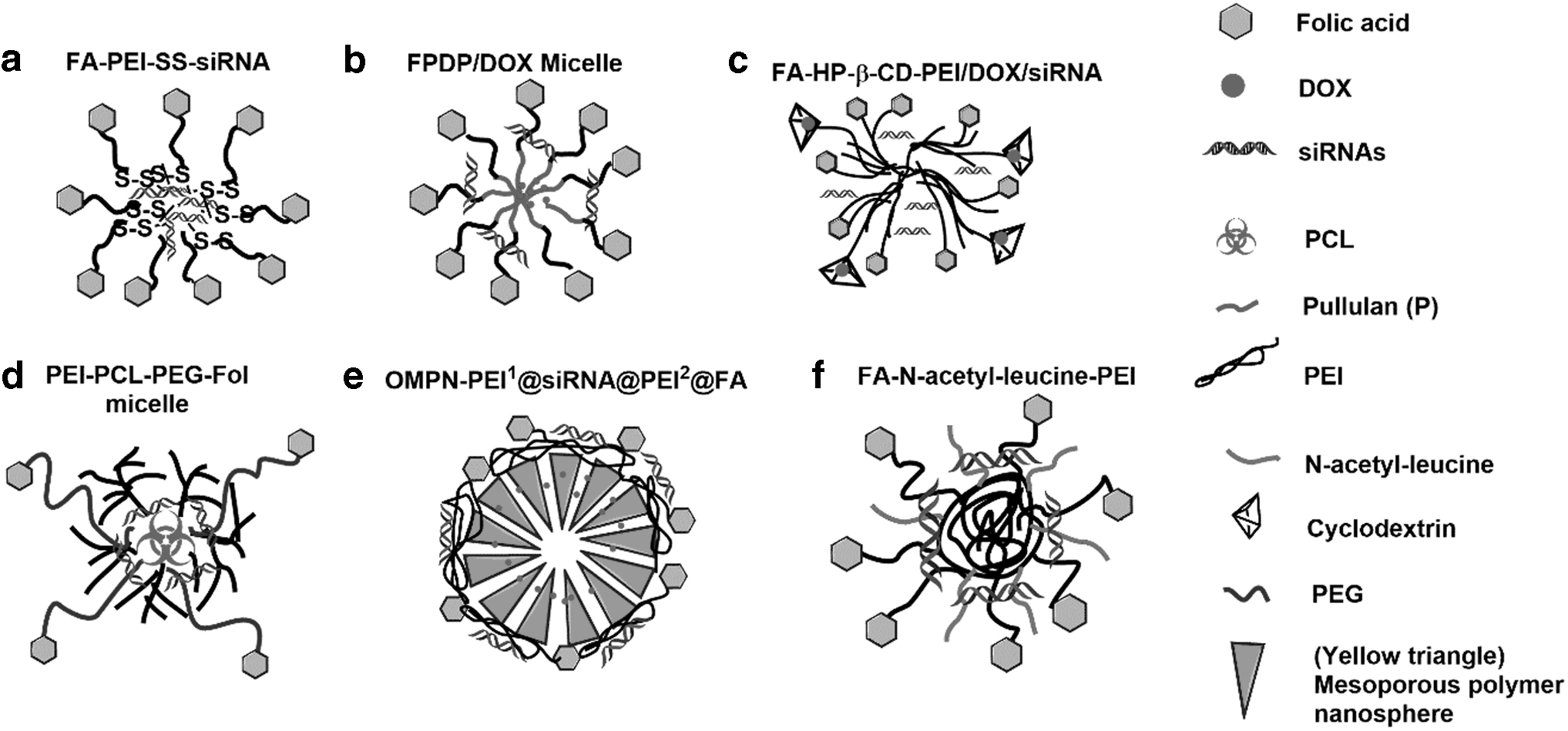
Chen et al. have reported the synthesis of FA-conjugated amphiphilic pullulan-based polymer (FPDP) linking with hydrophilic polyethylenimine (PEI) and hydrophobic desoxycholic acid (DA) (Fig. 8b) [156]. Pullulan is a neutral natural polysaccharide that has been explored for delivery due to its characteristic properties such as low biocompatibility, low viscosity, and low toxicity. Nanomicelles were tested for co-delivery of DOX and short hairpin RNA (shBeclin1) in FR-positive HeLa cells. Delivery of free DOX exhibited a 20% apoptotic rate, which was improved to 39% in the presence of FPDP/DOX in HeLa cells, whereas co-delivery of DOX and shBeclin1 led to a total 86% apoptotic rate. The synergistic effect of DOX and shBeclin1 containing FPDP exhibited high synergistic antitumor activity compared to FPDP/DOX or FPDP/shBeclin1 micelles. In vivo antitumor therapeutic efficacy was evaluated in HeLa tumor-bearing female BALB/c nude mice using FPDP/DOX/shBeclin1 nanomicelles. FPDP/DOX/shBeclin1 showed excellent tumor targeting due to FR-mediated endocytosis and antitumor efficiency in vivo compared to non-FR-targeted PDP micelle and free DOX [156]. Li et al. developed a nanocomplex constituting of the conjugation of PEI to hydroxyl propyl-β-cyclodextrin (HP-β-CD) and FA to form a co-delivery nanocarrier (FA-HP-β-CD-PEI) (Fig. 8c) [157]. This nanocarrier entrapped with DOX and Bcl-2 targeting siRNAs as a combinational therapy was utilized to test apoptosis in MCF-7/Adr cells. Folate-conjugated nanocomplex has transported DOX and siRNAs efficiently inside MCF-7/Adr cells. Western blot experiment achieved more than 90% Bcl-2 protein suppression in MCF-7/Adr cells. Cell apoptosis was found to be >70% using folate-targeted nanocomplexes, which demonstrated that the efficiency of DOX was enhanced in the presence of Bcl-2 siRNA.
Liu et al. reported a folate-conjugated siRNA micelleplex, comprising a PEI-graft-polycaprolactone (PCL)-block-PEG-folate copolymer encapsulated with siRNA targeting to GAPDH gene in human ovarian carcinoma (SKOV-3) cells (Fig. 8d) [158]. Flow cytometry demonstrated an enhanced cellular uptake using FA-targeted micelleplex compared to free FA and nontargeted micelleplex. FA-targeted micelleplex in SKOV-3 cell is found to be less cytotoxic than PEI-PCL-PEG and unmodified PEI 25K demonstrated that PEI modification with biodegradable PCL has reduced cytotoxicity. FA-targeted micelleplex has exhibited 60% GAPDH gene silencing compared to nontargeted nanocomplex. 111Radiolabeled siRNA polyplex revealed in vivo tumor accumulation in the 8-week old female BALB/c nude mice with subcutaneous SKOV-3 tumors [158,159].
Wu et al. reported FR-targeted mesoporous polymer nanospheres (MPNs) carrying the siRNA targeting the Bcl-2 gene against breast cancer (MCF-7) cells (Fig. 8e) [160]. MPN nanocarriers are phenolic resin-based polymer known to possess several advantages: large surface area, high porosity, and increased drug loading capacity, which make MPNs a promising carrier for drug and gene delivery [160]. Cellular internalization of these FR-targeted nanocomplexes was over 94% in MCF-7 cells. In vitro gene silencing studies displayed a 74% reduction of Bcl-2 mRNA and over 50% protein expression efficiency in MCF-7 cells. In vivo studies also revealed that OMPN-PEI1@siRNA@PEI2@FA showed ∼67% inhibitory rate of the tumor using female BALB/c nude mice model. The survival rate of mice when treated with OMPN-PEI1@siRNA@PEI2@FA was found to be ∼80% after 70 days of injection. These preliminary results demonstrated that the MPN-based nanocarrier could be a promising nanovector for targeted delivery of siRNAs in breast cancer treatment.
Hou et al. evaluated folate-bearing leucine-modified polyethylenimine (NPF) polymeric nanoparticles for site-specific delivery of siRNA in human gastric cancer (SGC-7901) cells (Fig. 8f) [161]. This FA-mediated targeted delivery carrier showed higher cell uptake and enhanced gene silencing of the PLK-1 gene than the nontargeted assembly. Blank NPF and FR-targeted NPF/siPLK1 nanoparticles inhibited the cell proliferation of SGC-7901 cells to 80% and ∼65%, respectively, which suggested that NPF/siPLK1 has improved apoptosis rate compared to nontargeted assembly. Incubation of NPF/siPLK1 with SGC-7901 cells arrested 45% of the cells in the G2 phase of SGC-7901 cells. This folate-mediated leucine-bearing polymeric siRNA delivery carrier exhibited enhanced siRNA delivery and reduced PLK-1 gene expression dramatically.
FR-mediated organic copolymer delivery systems
Several cationic polymers have gained interest as potential carriers for siRNAs. These copolymers have attracted much attention due to their ability to form self-assembled micelle structures and exhibit low cytotoxicity, and their nonimmunogenic nature. These polymer-based delivery platforms have found remarkable results for drug/gene delivery [162–166]. Suo et al. reported FA-mediated targeted co-delivery of DOX and siRNA against the Bcl-2 gene simultaneously to breast cancer (MCF-7) cells [163]. The nanomicelleplexes (NMPs) constituted of folate-conjugated PEGylated cationic triblock copolymer derived from modified polymethacrylamide (PAH-b-PDMAPMA-b-PAH) (Fig. 9a). The FA-conjugated NMPs were efficiently co-delivered DOX and Bcl-2 siRNA into MCF-7 cells. FA-DOX/siRNA-NMPs showed approximately threefold lower IC50 value, which demonstrated the enhanced cellular uptake and synergistic antitumor activity.
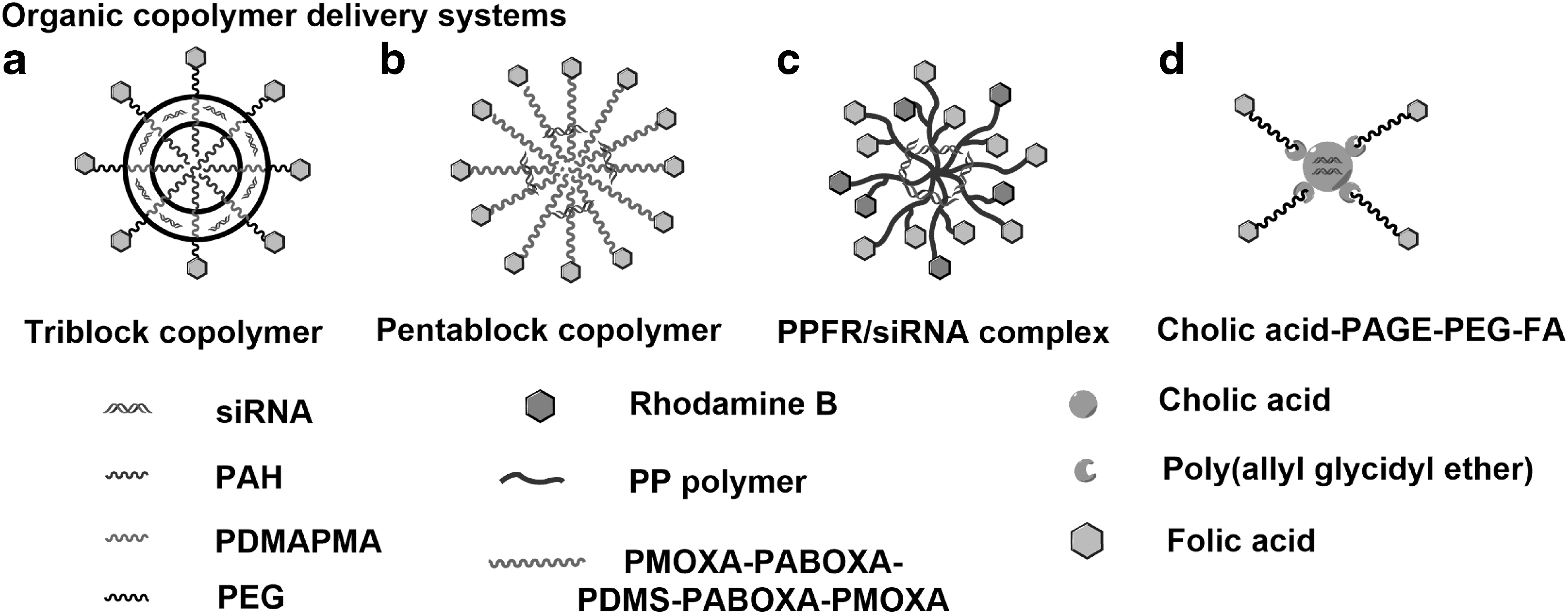
Lehner et al. reported an FA-based cationic pentablock copolymer micelleplexes composed of a siRNA-encapsulated hydrophobic cationic poly-2-(4-azidobutyl)-oxazole (PABOXA) moiety with a hydrophilic poly-2-methyl-oxazole (PMOXA) outer layer (Fig. 9b) [164]. The delivery carrier with folate assembled on the outer surface of the micelle targeted to green fluorescent protein (GFP) expressing FR-positive HeLa cells and compared with FR-negative HEK-293 cells. The enhanced cellular uptake of micelleplexes in HeLa cells over HEK-293 cells attributed to FR-mediated endocytosis. Cell viability exhibited ∼90% stability at 10 times higher concentration of polymer used for gene silencing. In vitro studies showed a GFP gene knockdown of 31% and 8% using this targeted and nontargeted siRNA delivery assembly, respectively. This study illustrated that the FA-linked block copolymer could be an effective nanocarrier for selective delivery of siRNA to cancer cells.
Wang et al. designed a citric acid-based polymer conjugated with FA and rhodamine B (RB) to form the PPFR complex (Fig. 9c) [165]. PPFR complex loaded with siRNAs targeted p65 gene (sip65) in rat-derived myoblast cells (C2C12), breast cancer cells (MCF-7), and human-non-small-cell lung cancer (A549) cells. RB and their derivatives are used as fluorescent probes and work as promising material for bioimaging applications. Moreover, RB has good photophysical properties, including high sensitivity, high quantum yields, visible light excitations, and red fluorescent emission [165]. In vivo fluorescence stability of RB was improved due to conjugation to the citric acid-based polymer. The tumor-bearing nude mice model treated with PPFR/sip65 nanocomplexes has downregulated the p65 mRNA level by >80% analyzed using quantitative real time polymerase chain reaction. There was no significant cell apoptosis observed in all of the cell lines, which demonstrated high biocompatibility of the PPFR nanocomplex.
In addition, in vivo fluorescence imaging studies observed a high accumulation of PPF/siRNA complex compared to the FA-unconjugated PPR/siRNA in the tumor tissue [165]. In the future, such multifunctional nonviral vectors can be of great potential in target gene delivery and tumor imaging in siRNA therapeutics.
In 2020, Cunningham et al. designed folate-targeted cholic acid-based polymeric delivery carriers to evaluate siRNA delivery and gene silencing efficacy in HeLa cells (Fig. 9d) [166]. Besides this, co-surfactant lipids, including DOPE, 1,2-distearoylphosphatidyl ethanolamine (DSPE)-PEG2k, and DSPE-PEG5k, have combined with mixed micelle formulations to improve their colloidal stability [166]. This folate-based copolymer mixed micelle assembly exhibited improved cell uptake and high transfection in HeLa cells. Cell viability was observed close to 100% using folate-targeted nanomicelles (ABP-NEt2-FA) in HeLa cells. Moreover, these folate-targeted nanomicelles have reduced GFP expression to 57%–65% in HeLa-GFP cells. The mixed micelle formulations bearing co-surfactant lipids provided new opportunities for developing better formulation in delivery systems. Further optimization in these polymers can enhance the cellular uptake, helps in the endosomal release, and improves the colloidal stability of these NPs.
The FA-siRNA direct conjugated delivery system
Receptor-mediated endocytosis is found to be a potential alternative to conventional delivery approaches. FA was known to conjugate at 5′-end, 3′-end, and central region, which exhibited good to excellent RNAi activity. Moreover, these conjugates demonstrated negligible cytotoxicity, which is one of the key features of this strategy. Willibald et al. have synthesized and evaluated the 3′-folate, 3′-cholesterol, and 3′-anandamide-modified siRNAs by Cu-catalyzed alkyne−azide click reaction (Fig. 10a) [167]. Three azides, FA, cholesterol, and anandamide, were conjugated to the 3′-alkyne modified terminus of siRNA sense strands. Folate-modified siRNA derivative was tested in folate-positive HeLa cells. 3′-Folate-siRNA conjugate exhibited considerable cell uptake through folate-mediated endocytosis. Dual-luciferase assay was utilized to evaluate RNAi effects by folate-siRNA conjugates. Results revealed around 60% Renilla luciferase knockdown in FR-expressing Hela cells. These preliminary results demonstrated the potential of the FA-siRNA direct conjugation approach, which needs to be further evaluated in vivo [167].
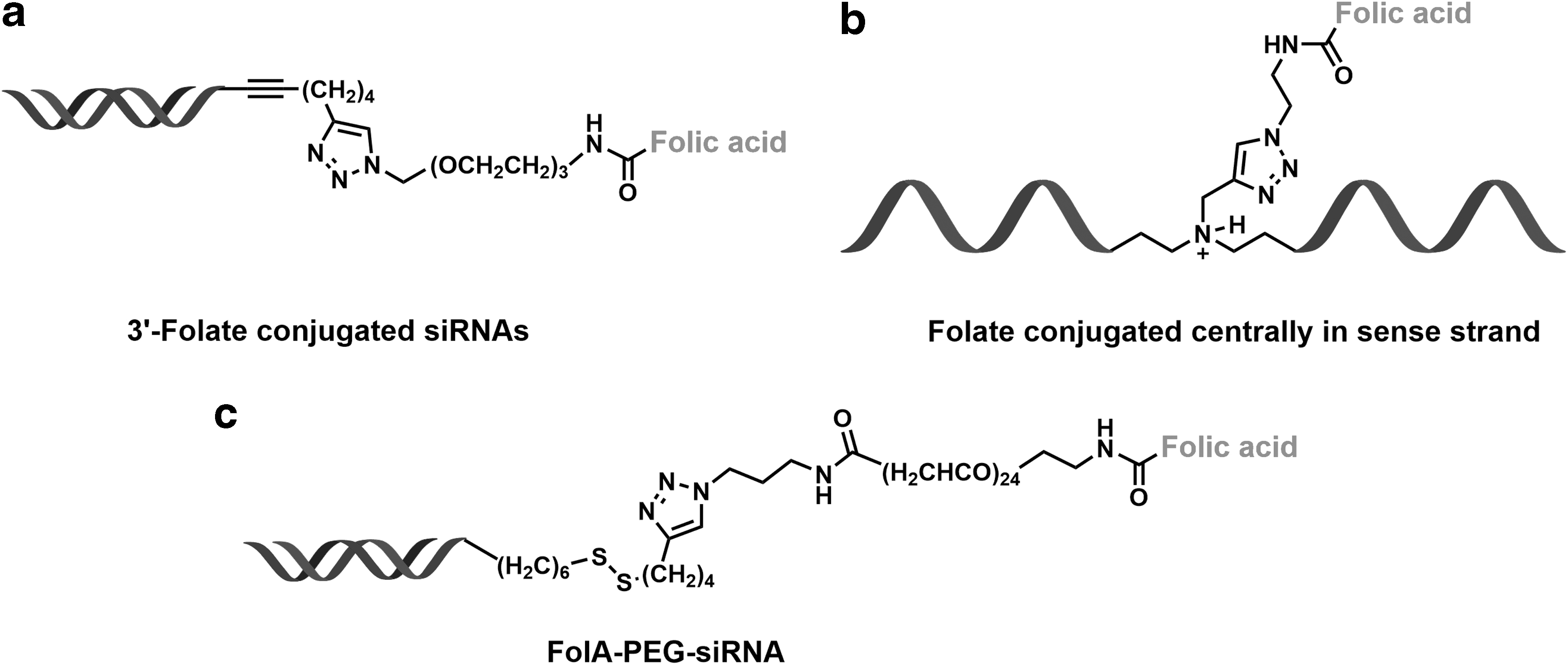
In 2020, Salim et al. reported FA-conjugated siRNAs through a copper-catalyzed cycloaddition reaction (Fig. 10b) [168]. The sense strand of siRNAs was modified with FA at certain places, including 5′-end, 3′-ends, and central regions. Gene silencing efficiency was tested against exogenous firefly luciferase in FR-positive HeLa cells and FR-negative HT-29 cells. Gene silencing using siRNAs with centrally placed FA showed about ∼80% gene knockdown of the exogenous firefly luciferase gene, whereas 40%–65% gene knockdown using 3′-folate and 5′-folate siRNAs. The maximum target gene knockdown by internally modified FA siRNAs was attributed to the loss of passenger strand uptake in the RISC. Cell proliferation assay showed about 80%–90% using FA-conjugated siRNAs, demonstrated low to no cytotoxic effects. Triazole-linked FA-modified siRNAs (10th position from 5′-end of sense strand) tested against endogenous Bcl-2 gene in Hela cells. Outstandingly, ∼72% knockdown of the endogenous Bcl-2 gene was observed using 1 μM treatment in HeLa cells. An earlier report by Low and coworkers has introduced 5′-folate-conjugated siRNAs in KB tumor-bearing mice xenograft model. Folate-conjugated siRNAs were trapped inside the endosomal compartment after successful receptor-mediated endocytosis, which resulted in low gene-silencing activity [169]. Therefore, these preliminary studies warrant further optimizations to provide new directions for developing novel RNAi therapeutic strategies for therapeutic applications.
Dohmen et al. have reported another folate-PEG-siRNA conjugate targeting the eGFP luciferase gene in FR-expressing KB cells [170]. The assembly consisted of FA conjugated to the 5′-end of the sense strand of siRNA by an azide linker (Fig. 10c). Furthermore, FA-siRNA conjugates were complexed with a defined polycationic carrier, which enables effective endosomal release. PEGylated FA-conjugated siRNA polyplex showed enhanced cell internalization through FR-mediated endocytosis. In vitro gene silencing was tested using FA-conjugated siRNAs against eGFP-luciferase fusion gene in human KB/eGFPLuc cells. The dose of 25–200 nmol/L concentration of siRNA showed potent gene silencing, but a reduced amount of 12.5 nmol/L siRNA showed significant downregulation of more than 50% of the target gene. Moreover, siRNA protection and early endosomal escape could be achieved due to diaminoethane moieties. The diaminoethane group has exhibited a proton sponge effect inside the endosomal compartment, helping to release the FA-conjugated siRNA effectively [170]. These preliminary results suggested that the folate-decorated polycationic polymer-based delivery carrier could be a promising delivery agent for further in vivo studies.
In a nutshell, FR-mediated polymer-based nanoparticles are the well-appreciated targeted approach for siRNA delivery against cancers and inflammatory diseases. FR-mediated silica nanoparticles, due to their large surface area, high colloidal stability, and flexible surface functionalization, have achieved improved antitumor effects by facilitating co-delivery of siRNAs and anticancer agents. FR-mediated metal nanoparticles involving SPIONs and QDs are the unique and potential approaches to achieve high gene transfection and silencing efficiency in cancers. The combined use of SPIONs and siRNAs has achieved efficient knockdown and effective MRI diagnosis against gastric cancers. Due to the photoluminescence properties of QDs, siRNA transfection could be monitored using fluorescence imaging. However, metal-based nanocarriers induce toxic effects in vivo. In light of these outcomes, flexible biocompatible nanocarrier platforms need to be developed for practical clinical applications. The utilization of GO for gene delivery is limited due to its cytotoxicity effects. Furthermore, the results suggested that the grafting of biocompatible organic polymer on the surface of GO has shown a profound effect in terms of reduced cytotoxicity. The synergistic effect of siRNA and the GO thermotherapy resulted in high tumor growth inhibition.
FR-mediated dendrimer-based siRNA delivery carriers conjugated with biocompatible polymers have exhibited reduced cytotoxicity, prolonged blood circulation of siRNA, and enhanced antitumor efficiency. Cationic chitosan-based nanocarriers loaded with siRNAs have targeted against cancers and inflammatory diseases, displayed the desired effects in achieving high transfection and gene-silencing efficiency. PEI based is one of the well-recognized siRNA delivery approaches due to its unique feature “proton sponge effects.” The results demonstrated that the conjugation of biocompatible polymers to PEI has provided good colloidal stability in serum and high cellular uptake, and reduced the level of mRNA expression. siRNA-folate conjugates through copper-catalyzed cycloaddition reaction have demonstrated negligible cytotoxicity, which is one of the key features of this strategy. In vitro studies suggested that the FA-siRNA conjugates need further optimizations and improvements to achieve high transfection and gene-silencing efficiency in vivo. We believe that polymer-based delivery systems are associated with various advantages and a few disadvantages, which need further improvements and require additional in vivo studies for their practical clinical applications.
FR-mediated miscellaneous delivery systems
Guo and co-workers have developed FA-conjugated pRNA-based nanoparticles containing siRNAs targeting breast cancer-associated antigen 1 (BRCAA1) gene in gastric cancer cells (MGC803) [171]. The assembly constituted a pRNA that possessed three-way junctions (3WJ) incorporated with BRCAA1 siRNAs and folate, further self-assembled to form RNA nanoparticles (Fig. 11a). In vitro studies evaluated cell binding and cell specificity of FR-targeted RNA nanoparticles and obtained 100% binding efficiency in folate-expressing MGC803 cells. In comparison, no binding to folate-negative GES-1 cells was observed.

FR-mediated siRNA delivery systems based upon
FR-targeted RNA nanoparticles specifically downregulated BRCAA1 gene expression, which led to subsequent knockdown of the Bcl-2 gene, ultimately inducing cell apoptosis and cell inhibition. Moreover, FR-targeted RNA nanoparticles revealed ∼45% growth inhibition rate of MGC803 cells. This result proved that the nanoparticles could induce apoptosis in MGC803 cells. In vivo studies performed on MGC-803 tumor-bearing mice showed that these fluorescent siRNA nanoparticles accumulated in high concentration at the tumor site within 5 h and retained at the targeted site for 96 h [171]. Moreover, these fluorescent siRNA nanoparticles also accumulated in small amounts at other organs such as the kidney, liver, and, spleen. RNA nanoparticles have reduced toxicity effects of delivery systems that have high potential in siRNA delivery and imaging against gastric cancer and have future clinical implications.
Choy and co-workers reported another delivery platform based upon cationic-layered double hydroxide (LDH) nanovector for tumor-specific siRNA delivery (Fig. 11b) [172]. The design comprised two separate nanovectors, passive LDH/survivin siRNA nanovector without folate ligand and active LDHFA/survivin siRNA nanovector conjugated to FA. In vitro gene silencing studies were performed in KB cells; it exhibited 72% of survivin gene regulation using active LDH nanovectors. MTT assay demonstrated the survival of only 20% KB cells, which indicated that the nanohybrids induced apoptosis by targeting the survivin gene. Fluorescent LDHFA/survivin was injected in mice tumor xenograft model, indicating a high accumulation of nanohybrids in tumor site. Moreover, fluorescent LDHFA/siSurvivin accumulation was around 1.2-fold higher in mouse tumors compared to the LDH/siSurvivin, confirming the preference of folate receptor-mediated endocytosis in tumor cells. However, these results demonstrated the poor tumor selectivity between FR-targeted and FR-nontargeted LDH nanovectors. This preliminary in vivo result will help understand the molecular interactions between delivery carrier and cells, it will guide in developing next-generation delivery platform for clinical applications.
Tai and Gao developed a ribonucleoprotein (RNP)-based nanocomplex loaded with siRNA-targeting PLK-1 gene in FR-positive KB cells and FR-negative prostate cancer cells (DU-145). The assembly consists of double-stranded RNA binding domain (dsRBD), endosome-releasing peptide (H2E), and PEG chain (Fig. 11c) [173]. FA was conjugated to siRNAs through a cleavable disulfide linker, cleaving and releasing siRNA in reducing biological environment. The PLK-1-targeting siRNA possessed O-methylated bases and PS modification to improve siRNA stability in blood serum. RNP-siRNA-FA complexes showed high selectivity to FR-expressing KB cells over DU-145 cells. In vitro gene silencing led to higher gene knockdown using the minimum concentration of RNPs in KB cells. In vivo antitumor efficacy using KB tumor-bearing athymic nude male mice showed that the siRNA-FA chimera displayed considerable tumor growth inhibition compared to free siRNA. Further optimizations such as scale-up at production scale and testing silencing efficiency in non-human primates will help in the future development of this gene carrier [173].
Guo and co-workers utilized exosome-based FR-mediated targeted delivery carriers for siRNA delivery against KB cells (Fig. 11d) [174]. Exosomes are extracellular vesicles having lipids/proteins as endomembrane. Exosomes have been used as an excellent carrier for cytosolic delivery of siRNAs. In this study, folate-decorated exosome (FA/Exo/survivin/siRNA) targeted the survivin gene, which inhibits apoptosis of tumor cells. The survivin siRNA strands were modified with 2′-F nucleotides at various positions, and folate was coupled to 5′-end to form 5′-folate-survivin-3′-NH2. KB cells transfected with folate-targeted exosome assembly showed enhanced cell binding and cell uptake compared to non-FA-coupled exosome assembly. Also, the targeted complex showed about 60% survivin gene knockdown; however, FA/siRNA(Sur)-A647 without exosomes showed no regulation in gene expression. In vivo studies in tumor xenograft mouse model showed that FA/exosome/survivin siRNA offered higher tumor suppression compared to Exo/survivin/siRNA without folate. Exosome-based folate-coupled delivery vehicles help overcome endosome entrapment of siRNAs and prove to be a superior targeting ligand to use in cancer therapy [174].
In summary, most of the above discussed FR-targeted polymer-based nanocarriers have achieved selective delivery to folate-expressing cancer cells over FR–negative cells. FR-targeted siRNAs achieved high transfection efficiency, significant tumor growth inhibition, and high gene silencing efficiency in vivo. Moreover, the co-delivery of anticancer drugs and siRNAs targeting apoptotic genes revealed a synergistic effect and displayed strong gene-silencing activity and efficient tumor growth inhibition. The summary of various FR-mediated siRNA delivery carriers is mentioned in Table 1.
Various Folate Receptor-Mediated Nanocarrier Delivery Systems
Bcl-2, B-cell lymphoma 2; BRCAA1, breast cancer-associated antigen 1; CDDP, cis-diaminodichlorido Platinum II; c-Myc, cellular Myc; COX-2, cyclooxygenase-2; CS, chitosan; DBCO-PEG, dibenzocyclooctyne acid-polyethylene glycol; DOX, doxorubicin; ds, double strand; EG5, kinesin-related motor protein; eGFP-Luc, enhanced green fluorescent protein (eGFP)-luciferase fusing protein; FA, folic acid; FR, folate receptor; GAPDH, glyceraldehyde 3-phosphate dehydrogenase; GFP, green fluorescent protein; GO, graphene oxide; HDAC1, histone deacetylase 1; HEK-293, human embryonic kidney 293; HER-2, human epidermal growth factor receptor 2; HIF-1α, hypoxia-inducible factor 1-alpha; HuR, human antigen R; I.P., intraperitoneal; I.T., intratumoral; I.V., intravenous; KB/eGFPLuc, KB cells expressing eGFPLuc fusing protein; KB/WT, wild-type epithelial carcinoma KB cells; K-Ras, Kirsten rat sarcoma viral oncogene; LDH, layered double hydroxide; LLC, Lewis lung cancer; MYCN, Proto-Oncogene; MDR1, multidrug resistance 1; M-MSN, magnetic-mesoporous silica nanoparticle; mNALPs, monomolecular nucleic acid/lipid particles; MPN, mesoporous polymer nanospheres; mRNA, messenger RNA; MRP-1, multidrug resistance-associated protein 1; MSN, mesoporous silica nanoparticles; ND, not determined; PAMAM, polyamidoamine; PD-L1, programmed death ligand-1; PEI, Polyethylenimine; P-gp, P-glycoprotein 1; PLK-1, polo-like kinase-1; RA, rheumatoid arthritis; shRNA, short hairpin RNA; siRNA, small interfering RNA; SSB, Sjogren syndrome antigen; STAT3, signal transducer and activator of transcription 3; Sur, survivin; TNFα, tumor necrosis factor alpha; VEGF, vascular endothelial growth factor.
Summary and Concluding Remarks
RNAi-mediated siRNA therapeutics holds enormous potential for the treatment of various diseases, especially cancers. Since its discovery, siRNAs have developed rapidly from its discovery to the clinical applications. Despite such successful implications of siRNAs as drugs, overcoming major barriers faced in siRNA therapeutics remains a crucial challenge, slowing down its progress at the clinical level. Efficient in vivo delivery of siRNA to the target site is a formidable challenge. In the past few decades, enormous efforts have been made to address significant issues associated with siRNA delivery. Various viral and nonviral delivery vectors have been employed for siRNA delivery, which has promoted many benefits such as the improved half-life of siRNA, protection of siRNA against blood serum, enhanced intracellular uptake, and high accumulation of siRNA at the target organ. In recent years, targeted delivery of siRNA using various targeting ligands coupled to the delivery carrier has emerged as an excellent approach to fight against the foremost challenge.
FR is considered a potential molecular target for treating cancers and inflammatory diseases. FRs are overexpressed in many cancer cells, including ovarian, uterus, kidney, lung, breast, prostate, colon, and brain. FA, due to its small size, low immunogenicity, excellent in vivo stability, and high binding affinity toward FRs, has attracted much attention for targeted siRNA delivery. So far, the FR has been studied extensively for siRNA delivery to many tumors. In this review, we discuss recent advances in FA-mediated siRNA delivery to treat cancers and inflammatory diseases. Different nanoparticle systems are associated with benefits and drawbacks based on their composition, physical and chemical properties of delivery carriers, and electrostatic interactions with siRNAs.
Liposome-based nanocarriers bearing folate are considered to be biocompatible and biodegradable carriers, which have achieved improved transfection efficiency and tumor growth inhibition in mice models. However, conjugating cationic polymer to liposome enhanced nanoparticle stability and protected siRNAs during transport. Moreover, the PEG spacer linked to liposome helps to avoid self-aggregation and prolonged circulation in vivo. Various FA-conjugated organic and inorganic polymers nanoparticles have developed for siRNA delivery. The experimental results demonstrated that the delivery of siRNAs targeting the antiapoptotic gene and the anticancer agents has shown synergistic effects, leading to greater anticancer activity.
Moreover, most of the folate/siRNA conjugates achieved selective transfection and potent gene silencing to FR-positive tumor cells and in vivo tumor models. Also, hybrid nanoparticles, including cationic polymer coated with biodegradable moiety and biologically reducible linker, showed enhanced antitumor efficiency. In direct conjugation approach, gene silencing was enhanced by centrally conjugated folic acid to siRNA sense strand. Along with positive results, some disadvantages are associated, which include cytotoxicity majorly due to off-target effects. Overall, these positive results warrant further in vivo optimizations for their potential therapeutic applications.
Footnotes
Acknowledgments
The authors thank the Indian Institute of Technology, Kharagpur, for providing the infrastructures and research facilities. They also thank Mr. Saurja Dasgupta, Howard Hughes Medical Institute, for critical reading of the article. R.R.N. thanks the Department of Science and Technology–Innovation in Science Pursuit for Inspired Research (DST-INSPIRE), the Government of India, for fellowship. S.G. thanks the Indian Institute of Technology, Kharagpur, for the fellowship.
Author Disclosure Statement
All authors declare no conflict of interest.
Funding Information
The authors thank the Department of Science and Technology–Innovation in Science Pursuit for Inspired Research (DST-INSPIRE), the Government of India, for financial support (sanction no. DST/INSPIRE/04/2015/000076). K.R.G. is a recipient of the DST INSPIRE Faculty Award.