




Abstract
Dr. John T. Povlishock retired from his role as Editor-in-Chief of Journal of Neurotrauma earlier this year after decades of service. The neurotrauma community is enormously grateful for his dedication and hard work. The sentiments of some of his colleagues in this Tribute express great respect, admiration, and friendship.
Dr. Povlishock's influence on neurosciences and brain and spinal cord injury is apparent in numerous aspects, but none is as evident as that demonstrated by the expansion of Journal of Neurotrauma. His guiding hand and mind have always been encouraging, probing, and stimulating, exploring the science of brain development, neurodegeneration and regeneration, cellular and structural responses, diffuse axonal injury, and other critical phenomena. The growth of the Journal and its specialization have been firmly established under his guidance, serving as an international beacon for research and clinical care. None have done better than he in conducting editorial board meetings and working to motivate, teach, and plan for priorities for research and ultimate publication.
Dr. Povlishock has not only directed the discovery and exploration, but has also established the modern era of neurotrauma science, research, and clinical care. We all owe him a tremendous debt of gratitude for what he has done both directly and indirectly for us as well as for our patients. Decades of excellence, commitment, and influence will be long-lasting and will continue to motivate and guide further discovery and encourage scientists.
University of Chicago Pritzker School of Medicine
Chicago, IL
University of Miami
Miami, FL
Bethesda, MD
His commitment toward achieving soaring levels of professionalism and the highest standards concurring with an enduring drive for wider knowledge effectively staged himself as the ideal role model for generations of researchers.
John taught us to exercise scrutiny, willingly accept self-criticism, and measure evidence and expert opinions through the honed optics of science while remaining gracefully humble regarding our responses and attitude. Because I am not entitled to conclude whether we all succeeded or not, one aspect is undeniably certain; he consistently endeavored to wisely advise us in seeking the right direction, while demonstrating honesty, transparency, and openness.
His tireless efforts in fields of mentorship generously bestowed upon us routinely stretched from dawn's first light through late nights. Ardently, we rehearsed our lectures until the slides and the presentation successfully conveyed the intended message. One of his simple yet eloquent forms of advice always pops to mind when my students prepare their work for presentation: always phrase your message as if telling a bedtime story to your daughter. Keep it simple, concise, and distinctly sharp.
Notably, it is well appreciated that John Povlishock contributed to global neuroscience through his leadership and mentorship at Virginia Commonwealth University, including his chief editorship of the highly respected Journal of Neurotrauma.
To this end, I wish to emphasize my sincere praise regarding his sustaining efforts to link scientists and facilitate networking. I can hardly remember anyone who committed more time during a formal or social event to the art of working a room and introducing individuals to one another, to bring brains and ideas together while fostering novel ideas which frequently manifested themselves during such interactions.
Most of us considered John the ideal role model in matters of social behavior and interaction. Distinctly, we were all proud of our mentor's style and attitude (and attire) that were always positively recognized within the community. He is always consistent. I have never heard any negative comment from him about anybody, and even in cases of someone's ample personality problems he still tried to understand the human nature behind them and to support those who failed till the last possible moment.
His dedication to pure science and objectiveness in decisions set an etalon for us, clearly explaining the duration and extent John was required to work among various bodies and study groups and grant panels. Unwaveringly, no one would have ever thought of him being partisan or subjective.
John Povlishock ranks as the most knowledgeable scientist in the field of brain trauma research. His comprehensive view of the field convinced him to continuously apply new tools in basic research including cutting-edge imaging techniques as well as the application of gyrencephalic animal models.
He also pioneered to open the Journal to translational research and high-quality clinical articles and was brave enough to expand Journal of Neurotrauma with the spine chapter. All this sent a clear message encouraging those working in the field of bench-to-bedside research that our efforts will be rewarded and that the path we are on does matter.
Nevertheless, I wholeheartedly acknowledge his role in advancing neurotrauma research and clinical care in Central and Eastern Europe. He never forgot his roots in this region of the globe and felt obliged to facilitate scientific events, guideline dissemination, and his founding, driving role in the Pannonian Symposia of Central Nervous System Injury. His devotion to supporting European scholars was of the utmost importance in positioning this region on the map of neurotrauma research.
While I am praising John Povlishock as a mentor and a friend, I also wish to acknowledge him as Honoris Causa Professor of Pecs University, Hungary.
John, may God bless you and grant all your wishes in the upcoming decades.
Medical University of Pecs
Pécs, Hungary
In every field he has entered, John has excelled mightily truly as a role model for all academicians in applied neuroscience.
University of Miami
Miami, FL
During your exceptional academic career, you mentored over 100 trainees and received many best teacher-of-the-year awards, which emphasizes your commitment to training the next generation of scientists and clinicians. You have certainly made an incredible impact on our field, in areas of research and education. Your dedication and hard work on Journal of Neurotrauma made it the leading journal on brain injury research, and I have enjoyed working with you and colleagues toward that goal. I have continued to benefit from your mentoring over the years and have enjoyed our interactions at social and work-related activities.
Thank you so very much for your impact on my scientific career and most importantly your friendship over these many years. I wish you all the best for the future, with more time to relax and spend time with your lovely family. I am also looking forward to celebrating your retirement in person in the near future.
University of Miami
Miami, FL
University of Pittsburgh
Pittsburgh, PA
To recall the experience in Richmond, Virginia 14 years ago, the first reflection in my mind is Dr. Povlishock driving me back to the apartment that night after our having dinner together with several professors. It was a beautiful spring night, and I was amazed by the blooming flowers covering the hills and lands. Dr. Povlishock told me the flower's name was azalea.
My life changed from that of a clinician to a lab fellow temporarily. The weekly schedule was observing the change in brain arteriole after traumatic brain injury. Fortunately, Dr. Enoch Wei could read the image-splitting device fluently, so my job was to follow the workflow: anesthetize the animal, tracheotomy, femoral vessel catheter, animal injury, skull opening, cranial helmet implement, and then hours of intervention and observation.
As an Asian and an introvert, I seldom went upstairs to Dr. Povlsihock's office during his busy desk working time. One day, this gentleman stopped by my bench, handed me a copy of Journal of Neurotrauma, and said: “Dr. Gao, please keep this copy and read the third verse of the guideline of severe traumatic brain injury treatment.”
Time flies quickly. I entered my mid-age, and Dr. Povlishock continued the friendship with Chinese professionals that lasted for 16 years. Every time we met, either at the Chinese academic meeting or international conference, he was always willing to show his kindness to communicate with me and many other young students and neurosurgeons. The most fantastic story was that he came across my head nurse in Guangzhou at a breakfast cafe and talked for half an hour. The head nurse can only speak single English words at a time.
Dr. Povlishock's most recent visit to China was before the pandemic of COVID-19. We talked a lot about his achievements as an editor-in-chief for more than 30 years. His presentation focused on more than the hot topic of traumatic brain injury; it also introduced the editorial process and manuscript preparation. He fully expressed enthusiasm for training the young generation in China. The wonderful scene in Guangfulin, the remnants of a Shanghai ancestor, together with Dr. Nino Stoccheti after the symposium, remains an unforgettable picture in my mind.
I believe I am a big fan of Dr. Povlishock's personality. We have had numerous academic exchanges and personal communications during the past years. His retirement will mean entering a new chapter in the story of friendship, and my thoughts are always with him, being a neuroscientist and a gentleman who will influence my entire life. Next time we meet, I will bring a bouquet of azaleas to await him at the airport gate, to welcome my dear mentor.
Shanghai Jiaotong University School of Medicine
Shanghai, China
My MD thesis described the quantitative changes occurring in cerebrospinal fluid eicosanoids in a rodent model of subarachnoid hemorrhage, postulating a role for these molecules in the global brain dysfunction induced by the presence of blood in the subarachnoid space. The logical mechanism of pathology set in motion was related also to the microvascular blood–brain barrier dysfunction, which was one of the study objectives at Virginia Commonwealth University in traumatic brain injury. Therefore, the study of blood–brain barrier dysfunction after subarachnoid hemorrhage in this model was decided on as topic of the stage.
I arrived in Richmond VA during the Christmas vacations, leaving sunny Sicily for the snow of Virginia. There, I was involved in different studies, centered on traumatic brain injury, on abnormal nociceptive responses associated with a rodent peripheral neuropathy pain, and finally, on behavioral deficits following experimental subarachnoid hemorrhage in the rat.
Weeks passed without anything new for a possible study on the blood–brain barrier and subarachnoid hemorrhage. 1
One day, people in the lab told me that the only way I may have to conduct the study was to convince the Chairman of Anatomy and Neurobiology, top scientist of the group, Dr. John Povlishock, already a guru and a leader at Virginia Commonwealth University and in the traumatic brain injury science community. So, I was scheduled as speaker at a Wednesday neuroscience meeting in front of all faculty members and residents and students of the group!
I still remember my confusion, fear, embarrassment, and quandary as if it was today! I was only 24 years old, my English was not fluent, my scientific bases were not solid, nor was I ready to face such a group! But it probably was my only chance to run the experiments. So I started to study 20 hours per day, finding and copying studies on the blood–brain barrier, on traumatic brain injury, on subarachnoid hemorrhage, and on rats, preparing hand-made blue slides with plastic frames and glasses. I broke with a local girlfriend and stopped beers and parties with friends, trying to be as best prepared as possible.
To my great surprise, because of my good star and my audacity and fearlessness, I survived the meeting test and convinced Dr. Povlishock!
I remember the time this colossal professor spent with me in the lab, with the grace and patience of a parent, observing with me and explaining the images in the dark in the electron microscopy room, re-evaluating the photos in his studio, detailing the pictures where we pressed the transferable letters and symbols, sitting together side by side, in a way that is imprinted in my memory with affection and respect.

Then with my stage finished, I went back home to Messina. But the project wasn't completed! After a few months, Dr. Povlishock sent me a package that I still keep with care, containing a letter, the figures, and the legends, as we have discussed: “…Enclosed are the long overdue plates and captions detailing the permeability change following autologous blood in the subarachnoid space of rats … I trust this information proves adequate for your needs … I would anticipate that these plates will allow to publish the paper without further delay. As I noted, please do not include me in the authorship of this publication …”.
His generosity, politeness, and attention to students allowed me to establish with him a still vivid and rich interpersonal human and academic relationship, that has produced, through the years, a significant number of positive initiatives, ranging from scientific collaborations, organization of an international meeting ad course, including Summer Schools in Neuroanatomy, and students and faculty visits and exchanges.
The period I spent at Virginia Commonwealth University remains profoundly in my memory, as I belong to the broad number of students and professionals that had the privilege to meet Dr. Povlishock on his path.
I may say, without any doubt, that Dr. Povlishock is one of the most recognized and well-reputed mentors among hundreds of investigators, doctors, and scientists, not only in neuroanatomy and in traumatic brain injury, around the globe.
University of Messina
Messina, Italy
Seriously, John, you have been a wonderfully generous personal as well as professional friend. Thank you for the great times we have shared during my invited seminar visits over the years to Richmond and your lecture visits to Lexington. Please give my best regards to Debbie. Please stay healthy and may God bless you both and your lovely daughters.
University of Kentucky
Lexington, KY
We all have, or will reflect, to recall what most added meaning and purpose to our professional lives. If we are fortunate, that meaning was offered not simply by events but also by remarkable individuals. John has been such a person in my own life. He is more than a force majeure. His presence influenced and nurtured the birth of modern neurotrauma research. In addition to a creative intellect, historical scientific productivity, and visionary leadership, John is an individual of unimpeachable integrity. If all authority is ultimately moral, then John will always remain a final authority!
Banyan Biomarkers, Inc
San Diego, CA
On a more personal note, you have always been supportive of the UCLA Brain Injury Research Center and of myself as a basic scientist in a clinical department. When faced with many challenges in my career, I have often reflected on what you taught me via our collegial relationship. I have, and will always be, a true friend and colleague.
In our profession as neuroscientists, we often think of our best friends as our immediate mentors and advisors. Dr. Dennis Feeney taught me that to be a good scientist one has to have a high degree of humility, work very hard, and only go from one experiment to another based on solid evidence mimicking a gradual process, thus, never taking anything for granted. Dr. A. Earl Walker taught me the love of neurosurgery; and that not only is it important to read the literature, but it is just as important to write it. Dr. Jamie Villablanca taught me that patience and kindness to other scientists and students result in a greater payback for my own academic success. Dr. Donald Becker taught me never to give up on a colleague or his/her science either in manuscript form or as described in a grant. You, Dr. John Povlishock taught me integrity and fairness in dealing with colleagues and their science; the quality of the reported science makes for a successful society and Journal. Although, I am grateful to all of these men, you have had a special effect on me, which I doubt I can ever repay.
Perhaps Dr. Patrick Kochanek was correct in stating that you should not be allowed to retire. However, you have worked so hard for so long, accomplished so much, and impacted so many lives around the world that your retirement should be looked upon as a reward. So, now you can spend time with your family and friends without interference from us, your scientific colleagues. Although, I bet we will still call on you for advice and counseling. We all know you will keep in touch, but I think I can speak for all of us by saying not only do you deserve time off, you have earned the respect and gratitude of all of us all over the world. What we have learned from you will allow us to carry on your tradition of excellent science, service, and teaching.
May God bless you and your family, and may He shine his blessings on you for a happy, restful, and fulfilling retirement.
Your Friend and Colleague,
David Geffen School of Medicine at UCLA
Los Angeles, CA
His leadership of Journal of Neurotrauma has been immense. The United Kingdom Research Exercise Framework for Academic Excellence and Funding of Universities relies on the output of scientific publications in high impact journals. John has taken Journal of Neurotrauma to this level. In the words of one of my colleagues “do you think the study is of a high enough standard for us to consider submission to the Journal of Neurotrauma?”
John's support for the International Neurotrauma Society has also been incredible and I truly hope that we will be able to continue to collaborate and interact with him in the future.
Thank you, John, for everything you have done for your colleagues, for your own scientific endeavors and findings, and for providing a first class forum to enable others to transfer their findings into the scientific and public domain, enhancing basic, translational, and clinical science for the benefit of patients and society.
University of Cambridge
Cambridge, United Kingdom
At the neurosurgical labs of MCV, we were the first group to investigate the cerebral protection of mild to moderate hypothermia in TBI rats. We had found that mild to moderate hypothermia significantly reduces mortality and improves the neurological functions following TBI in rats (Clifton, G.L., Jiang, J.Y., Lyeth, B.G., Jenkins, L.W., Hamm, R.J., and Hayes R.L. [1991]. Marked protection by moderate hypothermia after experimental traumatic brain injury. J. Cereb. Blood Flow Metab. 11, 114–121). However, we did not know the mechanisms of cerebral protection by mild to moderate hypothermia. So, our neurosurgical group (Dr. Hayes' labs) worked with neuroanatomy group (Dr. Povlishock's labs) to explore whether mild to moderate hypothermia protects blood–brain barrier function. We were the first group to confirm that mild to moderate hypothermia markedly reduced the disruption of the blood–brain barrier following TBI in rats (Jiang, J.Y., Lyeth, B.G., Kapasi, M.Z., Jenkins, L.W., and Povlishock, J.T. [1992]. Moderate hypothermia reduces blood–brain barrier disruption after traumatic brain injury in the rat. Acta Neuropathol. 84, 495–500,). It has very important findings for protective mechanisms of mild to moderate hypothermia in TBI.
As he is a world-well-known expert in diffuse axonal injury, Dr. Povlishock has been invited to give scientific lectures in many countries, including China. I invited him several times to travel to China to give lectures at the China Head Trauma Forum; thousands of neurosurgeons listened to his lectures, which help Chinese neurosurgeons understand the pathology of diffuse axonal injury and make diagnoses and manage TBI patients in China.
When he served as Editor-in-Chief of Journal of Neurotrauma, I had the honor to be an editor of Journal of Neurotrauma. I am the first editor for Journal of Neurotrauma in China. Dr. Povlishock's visit to China made many Chinese neurosurgeons familiar with Journal of Neuortrauma. Increasingly more Chinese neurosurgeons, neurologists, and neuroscientific researchers read and cited scientific papers from the Journal of Neurotrauma. Further, many Chinese neurosurgeons, neurologists, and neuroscientific researchers have submitted their manuscripts to Journal of Neurotrauma. So, Journal of Neurotrauma has a very strong influence in China now.
Dr. Povlishock is also a very good teacher. His postgraduate students have become regional leaders in TBI in many countries, including Dr. Guoyi Gao. Dr. Gao was my postdoctoral student and went to Dr. Povlishock's labs for diffuse axonal injury research over one year. He is now Executive Director of the Department of Neurosurgery, Shanghai General Hospital. He has made great contributions to improving the prognosis of TBI in China.
Dr. Povlishock is always my friend as well as a friend to the Chinese. We hope that he is healthy and happy. We are looking forward to meeting him in China in the near future.
Shanghai Jiaotong University/School of Medicine
Shanghai, China
Dr. Povlishock has been asked to come to Japan many times to give special lectures at national and international symposia. His lectures are always received with praise by many influential scientists in Japan. His achievements are highly regarded by them in opening up a new perspective in neurotrauma research.
Dr. Povlishock is enthusiastic in encouraging and promoting young people within the international scientific community. He kindly visited my laboratory in Tokyo almost every year and presented a lecture. Every time he came to my laboratory, many young investigators working at different laboratories in Japan traveled all the way to Tokyo to participate in the lectures as part of audience.
As we all know, Dr. Povlishock always works positively on new things. He quickly learned the Japanese language and became an expert about Tokyo. One day he invited us to a special restaurant in Ginza, located in central Tokyo. None of us even knew about the restaurant, which served us an excellent dinner. Dr. Povlishock ordered the food by himself in Japanese with clear pronunciation. We, including the waiter, were all surprised by his great intelligence and language capabilities as well as his knowledge about the restaurants of Tokyo.
Dr. Povlishock has contributed extensively to the development and expansion of a new scientific community for neurotrauma research in many countries, including Japan, during the last half a century. His input and encouragement to the Japanese community of neurotrauma research have been indispensable. I would therefore like to take this opportunity to thank Dr. Povlishock from the bottom of my heart for being so kind in promoting young investigators from many different countries in the field of neurotrauma research. I pray for the good health and happiness of Dr. Povlishock and that of his family.
Nihon University School of Medicine
Tokyo, Japan
On a more serious note, thinking back to our group's first submission to Journal of Neurotrauma now 31 years ago, you welcomed our work and the many papers of our young investigators in the field of pediatric traumatic brain injury, treated everyone to your remarkable statesman-like and collegial approach, and educated all of us on how we should improve our science, and interface with editors, reviewers, and other authors.
In that era, research in pediatric traumatic brain injury was limited. In addition, our group, with its primary focus on pediatric neurocritical care, was unusual and relatively unique—and certainly remote from your own areas of focus. Nonetheless, you were accepting of us and our many investigations without hesitation, reflecting your remarkable commitment to the breadth of the field of neurotrauma and your pioneering vision for the importance of multidisciplinary approaches to tackle this important problem. I also saw the same welcoming approach by you when Ed Dixon in our center expanded the scope of its work by mentoring several young investigators from our Department of Physical Medicine and Rehabilitation. Your vision for the Journal on that front and the academic successes that resulted similarly helped to integrate and accelerate rehabilitation science and practice into the continuum of care in the neurotrauma arena.
Thank you for all that you have done for me, our research group in Pittsburgh, the many graduates of our program who were all inspired by you, and for the entire field of neurotrauma. I believe that you have been the most important and influential person in our field in the modern era, while at the same time, one of the most collegial. That is a truly special combination! You should be so proud of what you have accomplished. I also know that everyone at the Safar Center for Resuscitation Research in Pittsburgh who did not have an opportunity to write a personal tribute to you in this issue echoes both a hearty thanks and best wishes on your well-deserved retirement.
UPMC Children's Hospital of Pittsburgh
Pittsburgh, PA
John's integrity is apparent in how he led Journal of Neurotrauma, demanding excellence and accountability with a genuine kindness, and in how he interacted with senior investigators and trainees alike. I remember, as a student and junior investigator, John showing interest in my research, and I observed him doing the same for others, all of which naturally generated trust among his colleagues. As an Editorial Board member, I observed John's perseverance in the success of the Journal, which is just an extension of his natural role as educator, mentor, and scientist.
In addition, John exemplifies humility in a way that is rare to find in scientists who have reached the top of their field. Whether offering impromptu mentoring or critiquing of a paper, he was not arrogant or egotistical. One instance that sticks to my mind is when he and I both presented posters on mechanoporation around the same time, but he published the finding first, which was a natural expansion of his previous work. Outside of the science, the remarkable part about that paper from the Povlishock lab was that they cited our abstract, which was not expected nor necessary, but it was a classy gesture. This is just one example, likely of many, when John demonstrated humility and mirrored respect.
John has a leadership style that is difficult to emulate, but which is greatly appreciated. I have no doubt that his example as a pioneering neurotrauma researcher and as Editor-in-Chief will help make the transition to the next generation of leaders easier. Congratulations, John, you have been a role model to me, and your career has been so impactful for neurotrauma researchers and clinicians, and the patients you have helped. I wish you a retirement filled with health, family, and rest!
Georgia Tech/Emory University
Atlanta, GA
John invited me to join the Editorial Board of Journal of Neurotrauma in 1995 when I was an associate professor at the Medical College of Virginia. I have continued on the Board, working closely for John refereeing hundreds of manuscripts over the years. I admire John for his honesty and integrity as well as for his dedication to science and the Journal. John treated the Journal as if it were his child; he worked tirelessly ensuring the scientific integrity of the final product while also promoting the scientific growth of the junior contributing authors. John's hard work, scientific prowess, and integrity have been the catalyst for the success and growth of the Journal.
John is an exceptional listener. Although extremely busy, he always made time to engage with me in discussion in person when I was at the Medical College of Virginia or by phone after I moved to the University of California, Davis.
John is a warm and caring friend. I can truly say that he has made me a better scientist and a better person.
University of California, Davis
Davis, CA
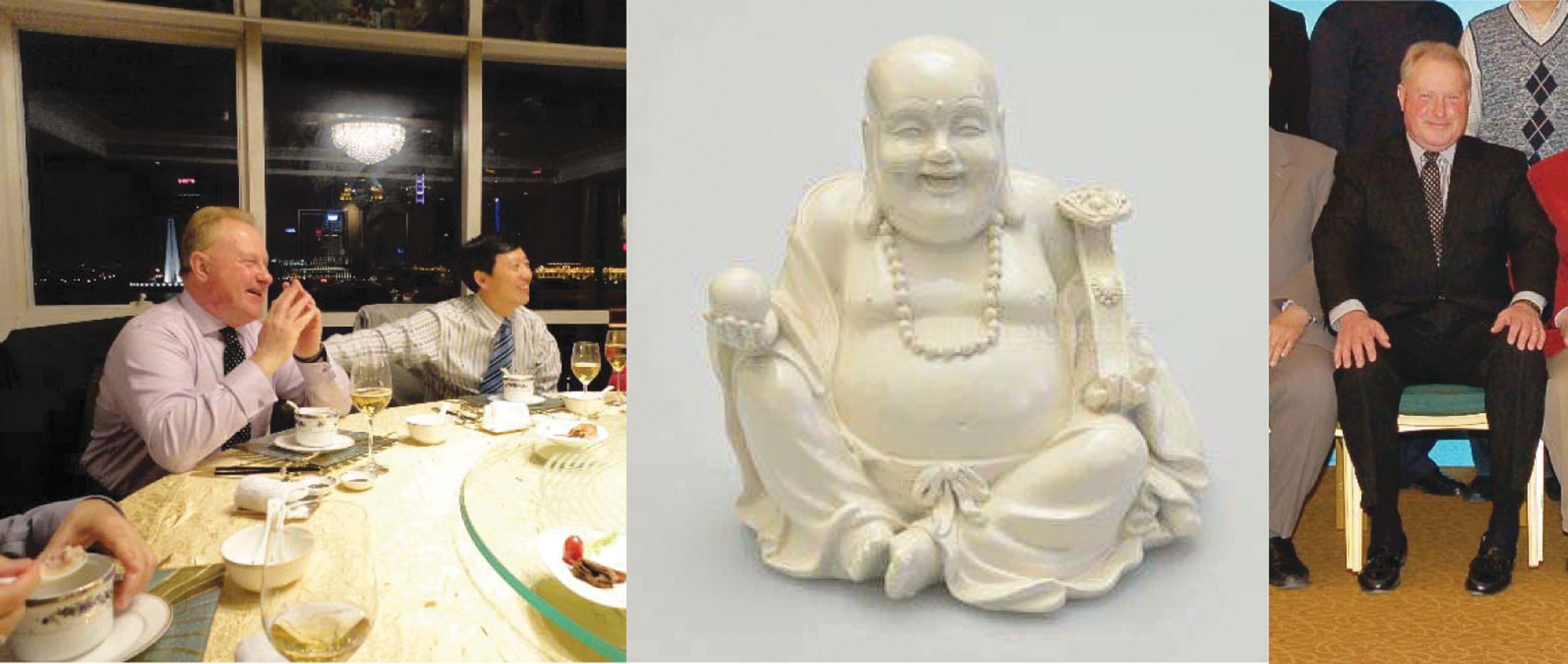
Over the years, my appreciation for John as a scientist, politician, and diplomat, and as a person, has only increased. True friendship developed during the course of many trips to China, where we were invited as faculty to the China Head Forum, organized annually by our colleagues and mutual friends Dr. Ji-Yao Jiang and Dr. Guoyi Gao, who previously had spent time in Richmond. These trips always provided occasions to visit the multiple cultural highlights of China and to socialize across the round table of continuously evolving Chinese food. It was during one of these occasions (2010) that I – likely under the influence of the traditional Chinese Moutai drink, served at every dinner – jokingly referred to John as the “Laughing Buddha.” To this day, I am not sure if he has ever forgiven me for that. However, it was intended as a compliment: A jolly nature, happy, content, and humorous personality are characteristics of both John and the Laughing Buddha. Laughing Buddha was known for excitement, entertaining the adoring children that followed him, like John does his students and followers. His unique capability to make complex matters appear simple is a gift many may envy.
I still consider myself one of John's disciples and am very grateful for the many scientific, philosophical, and cultural lessons he has taught me. I hope to enjoy his continuing education and friendship for many years to come!
I don't envy the task of the new Editor-in-Chief for Journal of Neurotrauma – John has set the bar in terms of dedication and performance so high that his standards are nearly impossible to meet. I wish David all the success in his brave endeavor to succeed John.
University Hospital Antwerp
Edegem, Belgium
Over the years, I have had the good fortune to work with John on many efforts in traumatic brain injury. John has always promoted the work of TRACK-TBI and the TBI Endpoints Development (TED) Initiative. He always had time, whether for a quick phone call or an extended discussion. It is no understatement to say that our work with TRACK-TBI and TED would not be where it is today without his support. Journal of Neurotrauma has become the international centerpiece for clinical and translational neurotrauma research. Under John's leadership, the Journal has broadened and heightened its reach and impact as the premier academic resource of evidence, for academic and industry readers alike.
On a personal note, I have been privileged to travel the world with John over the past two decades. These trips were an opportunity to reflect on the current state of traumatic brain injury research and clinical care and to discuss the way forward as we imagined how we might improve the diagnosis, treatment, and outcome of patients with traumatic brain injury. It also afforded us the opportunity to share many great meals and more than a few “beverages.” My career would not be where it is today without John. John is quite simply one of kind.
University of California, San Francisco
San Francisco, CA
When I then started publishing my early work on neurotrauma, I initially submitted a manuscript to another journal and within two weeks, it was accepted. I came under the impression that neurotrauma research was easy to publish and my second paper was then submitted to Journal of Neurotrauma. Here, sometimes the harsh reality of science became evident and I have yet to be as severely criticized, even hammered, by a reviewer as I was then. Since that time, I have kept that reviewer's comments on my desk as a reminder of the ups and above all the downs of science. Despite the deservedly devastating critique of this particular manuscript, Dr. Povlishock was extremely polite in his rejection letter, explaining to us why the paper could not be accepted. I assume this is a common and true perception of John, an outstanding scientist who sometimes had to deliver disappointing decisions, but at the same time always remaining friendly and polite.
Several years later after my PhD and post-doc years, I became interested in learning the central fluid percussion injury model and I contacted Dr. Povlishock. I received an immediate response and during my days in the Povlishock lab, Dr. Povlishock, as one of the busiest men on the planet, showed me an amazing hospitality by introducing me to Richmond, to his lab, and to his family. For this, I am most grateful. Later, my PhD student Anders Hånell became a post-doc in the Povlishock lab to continue his work on axonal injury using the central fluid percussion injury model.
Much has already been said of Dr. Povlishock's contribution to the Neurotrauma Society and of his outstanding work as the Editor-in-Chief for the Journal for an astonishing number of years. I would like to take this opportunity to acknowledge his excellence as a scientist. His pioneering and elegant work on axonal injury, expanding the knowledge from the in vitro and animal models to the clinical situation, has inspired me and so many others involved in this particular area of research. His studies of the axon initial segment, axolemmal permeability, and regeneration mechanism in axonal injury have contributed vastly to our understanding of the pathophysiology of traumatic brain injury. In addition, few if any can match Dr. Povlishock's ability as a speaker, providing inspiration at numerous meetings by presenting his often-complex studies in a clear and comprehensible way. Finally, he has reached worldwide recognition for his achievements, and his contributions to the global neurotrauma community are everlasting. I will end this tribute to Dr. John Povlishock by congratulating him for an outstanding career, and I hope to meet him in person in the not-too-distant future. Why not at one of the coming neurotrauma meetings in Lund, Sweden?
Lund University
Lund, Sweden
The TBI Center of Excellence, J-9, Defense Health Agency
Silver Spring, MD
Those of us who have made our academic home in neurotrauma research have much to thank John Povlishock for: his own excellent science, his stewardship of Journal of Neurotrauma, and his strategic academic influence.
Thank you, John.
University of Cambridge
Cambridge, United Kingdom
I have seen first hand your love for your family, always being there for them despite your demanding schedule. And, your constant willingness to assist any and all of your fellow colleagues and friends have made you loved and respected by all who have had the pleasure of knowing you.
Thank you, John, for always being there for me. I wish you many years of joy and happiness as you begin your well-deserved retirement!
God bless.
Managing Editor
Journal of Neurotrauma
As a participant in classes for which Dr. Povlishock served as a lecturer, my impressions were further supported by the ease with which he conveyed complex concepts to students just becoming familiar with the neurosciences. Dr. Povlishock is famous for his ambidextrous chalk drawings of neuroanatomical structures, illustrating concepts such as the details of the dorsal and ventral horns of the spinal cord in real time, before launching into a discussion of the anatomical and physiological significance of these structures. Despite the challenging nature of the subject matter, Dr. Povlishock has an uncanny ability to create a certain connectedness with the concepts he presents, allowing for students to transcend rote memorization, to a kind of pyramidical associative learning that allows for full access to reductionist elements of the knowledge through a broader, integrative framework.
In fact, this integrative approach seems to permeate every aspect of Dr. Povlishock's professional life. Data are never considered in isolation as a standalone entity, but as a collection of threads being continuously woven into a broader tapestry. Research is never simply performed for the sake of following a popular trend, but as a pursuit of the truth underlying the pathophysiological nature of traumatically injured systems, wherever that path may lead. Much as an archeologist carefully removes sediment to reveal the form of underlying structures, Dr. Povlishock's work over the years has carefully removed the ambiguity around the neuropathological sequelae of traumatically injured systems, allowing for the truth of these processes to be revealed, educating the community, and dispelling long held dogma along the way. It seems fitting that Dr. Povlishock's work has evolved in recent years toward the study of traumatically induced neocortical circuit disruption. After a career defining the individual neuroanatomical and neurophysiological elements that may be altered in TBI, his work has evolved toward how systems of elements may be impacted by a given traumatic insult, thus allowing for the integrative approach that has defined much of Dr. Povlishock's career to come full circle in the work itself.
One of Dr. Povlishock's most remarkable attributes has been his ability to meaningfully connect with others. He has always seemed to have a keen awareness of the thoughts and perspectives of others and has allowed for empathy and compassion to serve as the predominant tone throughout. Further, this approach has been available to all, regardless of status or academic rank. This ability to cultivate interactions based upon mutual understanding, along with an ability to assimilate complex elements into a cohesive whole, capacity to effectively communicate difficult concepts toward in-depth understanding, and general overall work ethic, have allowed Dr. Povlishock to become a truly impactful mentor to countless students, colleagues, and general members of the community. Many, including myself, will attest to the transformative nature his mentorship has had on their career paths. While Dr. Povlishock's retirement will be a loss to the community, he has built a legacy of mentorship, collaboration, and friendship, that will continue through generations of scientists to come.
University of Virginia
Charlottesville, VA
Preparing for an academic career in neurosurgery, I had been shaped – in Germany already – by looking at cerebral blood flow and metabolism and intracranial pressure, as well as cerebral perfusion pressure after (traumatic) brain injury.
Dr. John Povlishock changed my views substantially. He geared my attention toward a patho-anatomical perspective in brain injury, and moreover in stroke and even in brain tumor research. In this way, he became an eye-opener for me. Thank you, John!
When I first became acquainted with him at a lab barbeque, he was introduced to me as professor of anatomy with numerous honors as “outstanding teacher” and “best professor.” This was indeed so true! He taught in Richmond, nationally, and internationally and his talks, seminars, and lectures were always well prepared, conveying and explaining science in a clear and convincing manner, leaving listeners with a broadened horizon. Further, he was always open minded about alternative views and highly enjoyed lively discussions.
His research in neurotrauma is legendary. His scientific questions have always been extremely focused and he tried to answer them pertinaciously. The way he interacted with students and colleagues was exemplary, open-minded, humble, friendly, and sensitive. This makes him a highly charismatic teacher. John embodied the role model of a professor (from Latin profiteri, confessing to be a teacher). In this way, he became a role model for me, as well. Thank you, John!
Although I was never one of his research fellows, John made me one of his admirers and became my friend.
After having returned to Germany and to clinical neurosurgery, I met John at various International Neurotrauma Society meetings, at the Pecs conferences in Hungary, and at his visits to Germany. Moreover, recently we became travel companions to China on various occasions. I experienced his sense of humor, his empathy, his different ways of smiling, his pride in his daughters, and so much more. Thank you, John!
To summarize, this is definitively not a funeral oration, but this is my way of saying thanks to John.
for being a hero in neurotrauma research,
for being a true professor,
for being my friend.
And until we meet again: blessings!
Heidelberg University
Heidelberg, Germany
Through all this, what stood out most was John's professionalism. He was dedicated to the highest standards in his research, and he would go wherever the data took him. He was especially devoted to his students and to the team that worked in his lab. I would be remiss if I didn't add that he always had great stories to tell about his trips to Europe, China, Japan, Australia, and many other destinations both exotic and prosaic.
Years later, John invited me to serve as Deputy Editor for the Journal. It was humbling to be asked to be part of something that meant so much to John. Despite his busy schedule, he invested a lot of time in every manuscript that he received. His concerns about potentially accepting low-quality manuscripts were exceeded only by his fear of rejecting high-quality ones. Journal of Neurotrauma was certainly a labor of love for him.
We all have certain mentors or role models whose wisdom and advice continue to guide us on a daily basis. John continues to do so for me. I cannot thank him enough.
Virginia Commonwealth University
Richmond, VA
With my permanent return to Australia, I subsequently met John whenever I attended neurotrauma meetings, and he always had time for a quick catch up. On these occasions, he invited me to visit his lab in Richmond if ever I was in the United States. What was different about John's invitations is that he really meant them and actively followed up whenever I was visiting the United States. I had the pleasure of delivering a number of departmental seminars at Medical College of Virginia at John's request and as always, the Southern hospitality was right up front!
When he became the Editor-in-Chief for Journal of Neurotrauma, there was a profound shift in how the Journal was managed, with John introducing annual Editorial Board meetings to engage with and energize the board members. There was a leadership style about John that I particularly noted in the meetings he chaired: he was calm, respectful, and polite, but always with an undertone of firm confidence. This demeanor was also evident in his role as a Scientific Board member with the International Neurotrauma Society, where his passion for promoting neurotrauma research around the world was again at the fore, taking particular advantage of the vast network of international colleagues that had worked in his lab. This contribution was invaluable to the operations of the International Neurotrauma Society, and it was no surprise that the Journal Editor-in-Chief role was recently made a standing member of the International Neurotrauma Society Scientific Board because of John's profound contributions.
Without John knowing it, he taught me a lot about leadership. I have tried to incorporate many of his leadership traits in my own style over the years, although I suspect without such aplomb! I am afraid I have a long way to go to emulate this Southern gentleman.
Thank you for all your contributions over the years John.
University of South Australia
Adelaide, South Australia, Australia
Footnotes
1.
Pasqualin, A., and Da Pian, R. (eds.), (1992). Early blood-brain changes after experimental subarachnoid haemorrhage: A quantitative and electron microscopy study. In: New Trends in Management of Cerebro-Vascular Malformations. Springer-Verlag: Wien.
1.
Bell, M.J., and Kochanek, P.M. (2019). International traumatic brain injury research: An annus mirabilis? Lancet Neurol. 18, 904–905.
2.
InTBIR (2014).
3.
Saatman, K.E., Duhaime, A.C., Bullock, R., Maas, A.I., Valadka, A., Manley, G.T., and Workshop Scientific Team and Advisory Panel Members (2008). Classification of traumatic brain injury for targeted therapies. J. Neurotrauma 25, 719–738.
4.
Tosetti, P., Hicks, R.R., Theriault, E., Phillips, A., Koroshetz, W., Draghia-Akli, R., and Workshop Participants (2013). Toward an international initiative for traumatic brain injury research. J. Neurotrauma 30, 1211–1222.