




Abstract
The COVID-19 pandemic has underscored that systems medicine depends on health systems and services that can respond to planetary health threats in scale and with speed. After 2 years of the pandemic, there are lessons learned in South Korea, from governance to risk communication for planetary health. The learning is timely because COVID-19 likely signals future ecological crises and emerging pathogens amid the climate emergency in the 21st century. By the end of March 2022, South Korea, with a population of 51.6 million, administered more COVID-19 vaccine doses per 100 people than other developed countries, including United Kingdom, Italy, Australia, Israel, Germany, and United States. In South Korea, 233.47 doses of COVID-19 vaccine were administered per 100 people, while Italy (229.48), China (229.39), Australia (217.44), the United Kingdom (211.39), Israel (194.82), and the United States (170.59) fell behind in vaccine rollout. Korea's whole-of-government approach to robust COVID-19 vaccination rollout prompted broad interest in planetary health. Notwithstanding that vaccine rollout is a complex multifactorial outcome, six salient, and often interdependent, factors are identified in this study of South Korea: (1) governance system; (2) logistic capability; (3) delivery strategy and accessibility; (4) established public health infrastructure; (5) risk communication; and (6) public cooperation and engagement. Integration of these factors can create multisectoral synergy to achieve better outcomes in vaccine rollout. The lessons from South Korea can help cultivate planetary health action in other parts of the world during the current COVID-19 pandemic, and in ecological crises in the future.
Introduction
After 2 years with the COVID-19 pandemic, the world is still facing morbidity and mortality that have, as of March 31, 2022, already resulted in >6.1 million deaths worldwide (World Health Organization [WHO], 2022). Vaccination against the new coronavirus (SARS-CoV-2) infection is regarded as a pivotal response to stem the pandemic. The available evidence thus far supports the idea that mRNA-based vaccines display efficacy toward COVID-19 (Barbier et al., 2022; Chatterjee et al., 2021; Dey et al., 2022a; Dey et al., 2022b; Dey et al., 2021; Fiolet et al., 2022; Mahapatra et al., 2022; Mahapatra et al., 2021), although repeated doses and booster shots are also increasingly proving necessary, as with antiviral drugs going forward.
At the same time, long-term efficacy and safety of the available vaccines, mechanisms of interindividual variability in their efficacy and safety with the rise of new virus variants, not to mention the broad range of vaccines and related technologies that are being introduced in different countries, warrant research and careful evidence-based planetary health monitoring in the near future. Recent development of antiviral drugs for the current pandemic, as well as the endemic disease, has called for theranostics, that is, the fusion of therapeutics and diagnostics, to forecast pandemic intervention outcomes and, thereby, enable precision medicine in COVID-19 prevention and treatment (Al-Taie et al., 2022).
Understanding the ways in which countries around the world have responded to the pandemic early in its course remains an important task, and has been discussed in OMICS previously; for example, in relation to Singapore and Africa (Kuguyo et al., 2020). Moreover, COVID-19 is a systemic disease affecting multiple organ systems while the pandemic is impacting on health systems and services such that it is adversely impacting the governance of other diseases of relevance to planetary health, such as malaria (Prabhu et al., 2022).
Insofar as vaccines and their rollout are concerned, it is therefore timely to examine and identify the lessons learned in different countries with an eye to inform current and future planetary health practices and actions toward COVID-19 vaccines. While acknowledging that vaccine rollout is a complex process with multifactorial outcomes, this study identifies six salient, and often interdependent, factors in the case of successful vaccine rollout in South Korea (hereafter referred to as Korea).
Historical and public health context
During the year 2021, amidst the emergence of continuous waves of the rapidly evolving coronavirus strains, countries across the world were implementing mass immunization programs against the coronavirus to protect their populations. Nevertheless, rollout delays, inadequate vaccination coverage, overall drop in vaccination intent, and the spread of misinformation, disinformation, and “infodemic” on both digital and analog public spaces have stymied the massive efforts to achieve a critically-informed access and high uptake of COVID-19 vaccines (Anderson et al., 2020; Kosaka et al., 2021; Mascherini and Nivakoski, 2022; Springer and Özdemir, 2022).
On February 26, 2021, the Korean Ministry of Health and Welfare (KMHW) administered the first batch of COVID-19 vaccine doses to nursing hospital residents. A few months into the vaccination campaign, its pace accelerated and Korea achieved high vaccine coverage, with over 95% of the adult population being administered at least two doses by the end of December 2021. Meanwhile, the rollout across other countries, including the United States, Canada, Israel, and many European countries, was slower, with vaccine coverage declining, and many account of dosing challenges (Fig. 1).

The total number of COVID-19 vaccine doses administered per 100 people. The data were collated from Our World in Data, last updated July 25, 2022, available at https://ourworldindata.org/covid-vaccinations
What can we learn from Korea's experience? This study examined Korea's vaccination progress to help identify the critical attributes that allowed the successful rollout of the COVID-19 vaccine and, thus, offers new insights of relevance to public health practitioners and planetary health policy scholars, into how and why pandemic policy interventions might work.
Materials and Methods
This study is grounded by systematic document-based research, which is useful in comprehending a country's pandemic response when the collection of primary data, such as field visits, is difficult or hindered by the COVID-19 situation. This public policy research utilized publicly available documents and did not include human subjects nor required institutional research ethics board approval. In this case study, explanation building (Yin, 1984) was used to observe the specific characteristics of Korea's national level vaccination responses that enabled an effective policy outcome. I assessed Korea's vaccination strategies between January 2021 and March 31, 2022 using multiple source data namely the “Our World in Data” website (https://ourworldindata.org/covid-vaccinations), reports published by WHO and its online repositories (WHO, 2022; WHO, 2021; WHO, 2020; WHO, 2019; https://www.who.int/emergencies/diseases/novel-coronavirus-2019), Organization for Economic Co-operation and Development (OECD) (OECD, 2020).
I also monitored country-specific data (Statistics Data Centre, Korea, 2020), including official government documents or press releases from government websites (https://www.ktv.go.kr/news/latest/view?content_id=641401&unit=277), the KMHW (www.mohw.go.kr/eng/index.jsp), Korea Disease Control and Prevention Agency (http://ncvr.kdca.go.kr), and the overall coverage of COVID-19 national vaccination drives reported in international and local media, collected from two major databases (“Factiva” and “Big Kinds”). The data set was used to search for relevant articles.
Results and Discussion
I identified the following six factors that accounted for Korea's reportedly robust national vaccination initiative:
governance system; logistic capability; delivery strategy and accessibility; public health infrastructure; risk communication; and public cooperation and engagement, which matched with the polity's cultural orientation.
These findings could be informative for countries with slower or lower vaccination rates, and potentially offer lessons in developing practical solutions for future vaccine rollout risk management strategies. The concluding discussion provides ideas and reflections on how other governments, particularly resource-rich countries, can adopt this framework to inform their practice. Given these objectives, this study takes an integrative look at the Korean government's national level vaccination response to COVID-19, making a contribution to the literature on pandemic responses, which is now growing expeditiously. Interested readers might want to refer to case-based studies, for example, Levin-Zamir (2020); Perry et al. (2022); Bruine de Bruin et al. (2020); Arifin and Anas, (2021); and Suliman et al. (2021). These studies offer insights on COVID-19 responses from around the world as well.
Korea's pandemic response
Korea is a high-income country with a population of 51.6 million people (Statistics Korea, 2022). Migration to Korea has been increasing steadily and stands at 1.94 million (2.65% of the total population; Korea Immigration Service, 2022). The Korean government established universal health care coverage in 1989 and built a robust health care system for its population. The KMHW is the nation's health authority in charge of health policy and planning and oversees all public and private health care for citizens and residents. Due to its geographical proximity to China where the current pandemic began, Korea was one of the first countries to be severely affected by the early COVID-19 outbreaks in Asia, with its first confirmed case in January 20, 2020, the initial peak in the outbreak in mid-February to early March 2020, and the second peak in mid-August to September 2020 (KMHW, 2020a; Statistics Data Center, Korea, 2020).
Notably, Korea successfully flattened the epidemic curve in the initial stage without paralyzing the national economy or imposing hard restrictive measures, such as large-scale lockdowns, border controls, or other similar government policy instruments (Beech, 2020; Kwon, 2020; Oh et al., 2020). Korea was globally lauded for its effective pandemic policy strategies, using 3T health (massive Testing, intensive contact Tracing, and extensive Treating) and a quarantine model. An extensive number of PCR tests were conducted daily since the beginning of the pandemic to diagnose infected individuals, and possible points of contact were intensively tracked using mobile phone GPS, credit card records, and CCTV footage to detect and block the spread in real time.
During the pandemic, there arose concerns about government surveillance and social control that limited civil liberty. Nevertheless, a democratic government is responsible for the general welfare and public health needs of its citizens, and neglect in responding to the COVID-19 pandemic may also violate a democratic country's obligation to safeguard its residents (Wade, 2020).
In combating the virus, Korea emphasized three principles: openness, transparency, and democracy (Republic of Korea, 2020a) and, thereby, circumvented excessive restrictions on the public, endowing certain rights on the citizens. While Korea expanded government surveillance using digital technology, it also made efforts to increase transparency and accountability by balancing the power dynamic between the administration and the people. For instance, the Korean government adopted recommendations made by the National Human Right Commission regarding data privacy in March, 2020 (Park et al., 2020) and announced to the public that it will delete all personal data after the pandemic has subsided. Regarding data security, just a few administrative personnel had access to the data platform, and all their operations were monitored to prevent abuse (Yonhap News, 2020).
Moreover, the enforcement of quarantine surveillance required the government to ensure citizen rights by notifying quarantined persons that they are being monitored and to extend citizens' rights to obtain proper health care, treatment, and unemployment benefits (Republic of Korea, 2020a).
Korea's strategy to support its democracy, taking a Whole-of-Government approach (Hurlbert and Gupta, 2016) during the pandemic by being systematically attentive to civil rights, effectively generated a more cooperative sentiment from the public. For effective coronavirus management, Korean citizens allowed the government to access their personal data, accumulated through surveillance technologies without a prior court order. Moreover, they proactively participated in the government's pandemic policies, such as mask wearing, social distancing, curfews, and adapting to health surveillance technologies.
Millions of Korean citizens downloaded COVID-19 tracking apps that tracked user location and monitored their mobility through their smartphones; “Corona-19 Notice” or “self-quarantine safety protection” developed by the KMHW and Ministry of the Interior and Safety were widely used smartphone apps (Central Disaster and Safety Countermeasures Headquarters, 2020). Notably, such opt-in cooperation and voluntary participation in health surveillance in Korea proved essential to the government's COVID-19 management.
It has been recently suggested that Whole-of-Government and Whole-of-Society approaches warrant further research to improve population health and health equity (Ortenzi et al. 2022). Indeed, considering that planetary health is sorely in need of governance innovation, especially in times of pandemics and ecological crises, Whole-of-Government and Whole-of-Society approaches deserve attention from the global community of health and governance scholars not only in elective times but also in terms of the suitability of these governance frameworks in times of crises.
While the definitions for the Whole-of-Government and Whole-of-Society responses to health crises are often used interchangeably, Ortenzi et al. underline the following nuanced distinctions. Accordingly, the Whole-of-Government is “an approach ‘in which public service agencies work across portfolio boundaries' to develop integrated policies and programmes towards the achievement of shared or complementary, interdependent goals,” whereas the Whole-of-Society response “represents a broader approach, moving beyond public authorities and engaging ‘all relevant stakeholders, including individuals, families and communities, intergovernmental organizations, religious institutions, civil society, academia, the media, voluntary associations and […] the private sector and industry’” (Ortenzi et al. 2022).
According to Bloomberg's COVID Resilience Ranking in 2021, Korea ranked the world's fifth best country in managing the pandemic effectively (Bloomberg, 2021). Similarly, it was classified as one of the top countries in the world for a high daily uptake rate of COVID-19 vaccines, with an average of 233.47 per 100 people within a short period of time. As the pandemic continued, Korea's risk management strategy focused on vaccinating the entire population inclusively, including migrant communities, and reaching a high vaccination uptake (KMHW, 2021a). At the time of writing of this article (mid-April, 2022), Korea was planning to proceed with the fourth COVID-19 dose for its citizens.
Governance system
In examining the factors that contributed to Korea's effective vaccination policies, with a focus on drawing lessons for other countries, it is critical to understand the context within which the country's policy interventions emerged. Korea's centralized hierarchical administrative system with a strong state capacity facilitated more effective and speedier crisis management for vaccine rollout, despite the global vaccine shortage.
Different from the federal government system, Korea is an unitary democratic form of government where all political power is concentrated in the national government, and public health governance is centralized. In this setting, the local governments and other health units with limited autonomy had to deal with mandatory affairs that were assigned by the central government, in addition to their voluntary local affairs. As such, a hierarchical system with top-down leadership delegated a clear direction for collaboration and coordinated a faster chain of communication and responsibilities among different lines of ministries to implement speedy crisis management. Under the Prime Minister's leadership, the Korean government delivered a broad framework for virus control measures; the KMHW and Korea Center for Disease Control and Prevention (KCDC) developed specific action guidelines for local governments, municipalities, and other health units.
However, it should be acknowledged that bottom-up and federated governance systems are also important in the context of democracy to voice the aspirations, values, and expectations of the public. An ecological crisis and the pandemic call for future evaluation of both top-down and bottom-up governance approaches as the world should prepare for such ecological crisis in scale and speed.
In this regard, in addition to the top-down public health approach, the Korean government adopted a Whole-of-Government approach (i.e., a democracy-compatible pandemic response, regulatory safeguards, public opinion, COVID-19 support, assistance packages, and so on) to facilitate whole community coproduction so that democracy was assured even during the pandemic. Public health guidelines were accompanied by methods to protect citizens rights, along with implementing certain level of restrictive policies (i.e., massive diagnostic testing, transmission tracing, social distancing, and self-quarantine), and public engagement in following these public health protocols was voluntary (Lee et al., 2020).
As a result of the lessons learned from the MERS-CoV outbreak, the Korean government established a legal framework for epidemic prevention measures to respond swiftly in mitigating a nationwide crisis: it revised the overall regulatory system and the Infectious Disease Control and Prevention Act (IDCPA, Act No. 14286, amended on March 4, 2020) (Republic of Korea, 2016), which emphasizes capacity building, central-local cooperation, and information disclosure provisions. In addition, a provision for mandatory update of the disease control manuals every 5 years was established (Republic of Korea, 2021; Republic of Korea, 2020b).
The Korean government noted a need for a more strategic crisis leadership, such as an integrated control center to oversee the crisis at the national level, while facilitating horizontal collaboration between ministries to lead a more agile and coordinated response for infectious disease control and prevention. Thus, the Korean government granted more authority to the KCDC as an integrated control tower to provide a key response function over virus threats at the national level and upgraded it to a deputy ministerial level agency in June 2021 (KCDC, 2021a). The KMHW was in charge of amending the country's infectious disease plan and leading implementation.
Based on this provision, the Korean government responded quickly to COVID-19 situation and oversaw the vaccination operation. The government and the leaders also played an essential role in ramping up the vaccination drive, by vaccinating 70% of the population before the end of the third quarter in September, 2021 (British Broadcasting Company [BBC], 2021; KCDC, 2021b; KCDC, 2021c). The then Prime Minister, Chung Sye-Kyun, in regular briefings, often encouraged citizens and residents to get vaccinated as early as possible, while assuring the public of their safety given the rapid pace of the spread of the pandemic.
As the vaccination campaign started, Korean health officials strongly promoted vaccine uptake by referring to and citing data from related studies on vaccine efficacy, a reduction in severe symptoms, and mortality (KMHW, 2021c; KMHW, 2021b). The President, Moon Jae-in, received the AstraZeneca vaccine at the beginning of the campaign in March, along with a number of other Korean ministers, to set an example for the public. The Korean government was dedicated to increasing governance capacity for mass vaccination.
New policies were introduced to promote high vaccine uptake (KCDC, 2021e); the KCDC enforced a vaccine pass mandate nationwide for entry into “high risk” public places, such as cinemas, restaurants, cafes, indoor sport centers, nightclubs, public libraries, and private education facilities (for young students). If someone was unvaccinated, a negative PCR test result was required to be used at these places. The vaccine pass was valid for 180 days after receiving the second shot and booster (KCDC, 2021f). When the vaccine pass expired, the e-certificate app (e.g., COOV application, Kakao, and Naver) notified the user, enabling people to extend their vaccine passes by receiving the next shot.
Notably, while Korea enforced vaccine related restrictions on the public, it also made efforts to ensure that citizen rights were not violated and provided various incentives for voluntary compliance. Vaccinations were not compulsory, and the public was allowed to give informed consent before immunization. The government also offered several incentives for fully vaccinated individuals, associated with the status, such as exemption from social distancing rules in public gatherings, not wearing mask outside, and skipping mandatory 2-week quarantine after travel from abroad or contact with a confirmed case, while enjoying several benefits such as paid vaccine holiday of 1–3 days at work and discount benefits in using public parks, museums, sport arenas, and other resort facilities in the country (Korean Ministry of Culture, Sport, and Tourism [MCST], 2021a; MCST, 2021b). This approach also facilitated more bottom-up engagement in the national immunization campaign.
Logistical capabilities
Procurement of COVID-19 vaccines
One of the critical factors for the success of the national vaccination drive in Korea was its logistical capacity to deliver vaccines to the public when they became available. Although Korea suffered from a vaccine shortage during the initial phase of 2021, the country increased logistics capacity rapidly by striving to procure sufficient doses for efficient vaccination delivery. Korea's vaccine procurement strategy was threefold:
purchasing from vaccine developers or using COVAX;
utilizing local production; and
pursuing vaccine swap transactions with other nations with sufficient vaccine supply.
To obtain COVID-19 vaccines, countries had to negotiate directly with a vaccine manufacturer or buy secured vaccines from developers through COVAX under a pooled procurement scheme (Gavi, 2020). Preparing for the mass immunization scheduled for February 26, Korea's Ministry of Food and Drug Safety (MFDS) granted its first emergency authorization to AstraZeneca on February 10 (MFDS, 2021). To procure enough COVID-19 vaccines, which was a generalized challenge on a global scale, the Korean government participated in the COVAX program as a self-financing country. With its income level, Korea was unqualified to receive donor-funded vaccines.
In December 2020, an arrangement was made with COVAX for the first shipment of COVID-19 vaccines in early February, covering up to 50,000 people, and securing an additional 2.59 million doses of AstraZeneca vaccine through COVAX. The Korean government also purchased extra doses from several other vaccine developers; it secured 25 million doses from AstraZeneca in November 2020, purchased 40 million doses from Moderna in December 2020, and made agreements with Pfizer and Novavax in January 2021 to deliver enough vaccines to inoculate 76 million people with full doses (Hankyoreh Daily; 2021; Korea Times, 2020).
Another crucial procurement strategy of the Korean government was utilizing the local logistic system capacity to create an efficient supply chain. Local production circumvented the issues of late delivery from vaccine developers, granted the country procurement of a large number of COVID-19 vaccines at lower costs, accelerated domestic distribution, and enabled it to become a global COVID-19 vaccine production hub.
In July 2020, when the Oxford vaccine research progressed, Korea's MHW and AstraZeneca entered into an agreement that would allow SK Bioscience to manufacture the vaccine locally. Then, in May 2021, Samsung Biologics and Moderna agreed to internalize the country's production process (Yonhap News, 2021a). The agreements requested SK Bioscience or Samsung Biologics to adjust its facilities and instruct its personnel to meet their standards for quality control. Speedy production of COVID-19 vaccines at a large scale was then enabled. Proximity was a certain advantage; Samsung Biologics' Songdo factory and SK Bioscience's An-dong plant were located at a distance of 190 km from South Seoul, and rapid local transport of vaccines was enabled.
These large scaled temperature-controlled warehouse facilities with the capacity to manufacture and store up to 1 billion doses of COVID-19 vaccines accelerated the distribution of vaccines not only for domestic use but also across the world (Korea IT Times, 2021; Reuters, 2021).
In addition, the Korean government enhanced its logistics capability for vaccination delivery by attempting the world's first vaccine swapping initiative with other nations, such as Israel and the United Kingdom, who had sufficient vaccine quantities. In July 2021, Korea and Israel arranged the world's first COVID-19 vaccine swap. Israel delivered ∼700,000 expiring (but not yet expired) Pfizer-BioNTech vaccines to Korea in return for an equivalent amount in September and October (KMHW, 2021d; The Wall Street Journal, 2021). In September, Korea also arranged another COVID-19 vaccine swap deal with the United Kingdom and secured >1 million doses of Pfizer COVID-19 vaccines, used for the booster program during winter. Korea then returned the same volume of doses to the United Kingdom by the end of 2021 (MCST, 2021c; Yonhap News, 2021b). In doing so, the Korean government wisely increased its overall capacity of logistic capabilities for the national vaccination program.
Optimal delivery strategy and accessibility
The Korean government made COVID-19 vaccines accessible to all citizens and residents of the country at no charge (KMHW, 2020a; KMHW, 2020b). For optimal delivery, and with the goal of administering second doses to 70% of the population by the end of October, to reach herd immunity by November, the Korean health authorities divided the entire population into four different target groups and announced their vaccination plan in late January 2021 (Table 1). The inception of the rollout substantially relied on the accessibility to vaccines.
South Korea Vaccination Plan for COVID-19
While Korea had procured and received enough COVID-19 vaccines to begin the rollout, in February, the country suffered from a scarcity of global vaccines and inadequate distribution, just like most other Asian countries. To carry out mass vaccination that ensured the entire population was included, the Korean government prioritized 15 groups across all social dimensions of the society within the entire populace, following guidance from WHO's prioritization of the COVID-19 Vaccine (WHO, 2020).
Korean health authorities offered AstraZeneca and Pfizer BioNTech vaccines to the most vulnerable groups, including health care workers, the elderly in nursing homes, and populations over the age of 75 years, in the first quarter through a prior appointment. In the second quarter, essential workers, secondary-line workers, people with high risk of infection, and adults aged over 65 years received the AstraZeneca, Pfizer BioNTech, and Janssen vaccines; followed by educators, individuals in descending age categories, pregnant women, and children aged between 12 and 17 years in the next quarter. Digital health data were centralized effectively.
Citizens and residents could schedule their appointments immediately using the national vaccine registry online on the KCDC's website (http://ncvr.kdca.go.kr), and for the elderly, people with disabilities, and those who are unfamiliar with online reservation, the government offered different booking options through telephone, calling 1339 hotlines, or simply visiting designated local centers without reservation (KCDC, 2022b).
During the first month of the registration, over 1,267,473 people were registered and vaccinated, which translated to 82% of the uptake rate for the first priority group (KMHW, 2020a). To prevent wasting vaccines and meet the increasing demand from the public, the KCDC offered a digital app service “Vaccination Notification using Our Neighborhood” on Naver and KaKao Talk messenger, providing a real-time search for available leftover vaccines.
Korea's official COVID-19 vaccine reservation app that provided immediate updates on leftover vaccine data helped enormously to meet the growing demands for vaccines, particularly for people desperately waiting in line who could search for the next available shot in a vaccine-hoarding situation. People could download the Naver or Kakao app and search for leftover doses listed on the map. Remaining vaccines were quickly signed up for. In the first week, 131,993 people used this service, in which 90,576 people received AstraZeneca and 41,417 received the Janssen vaccine (JoongAng Daily News, 2021a).
Utilizing optimal policy strategies for efficient delivery and accessibility, supported by adequate ICT and digital infrastructure, the Korean government was able to enhance its governance capacity for the vaccination program. The pace of vaccine rollout was accelerated: in September, Korea surpassed its national immunization goal of vaccinating 3.6 million or 70.1% of the population and reached 86.7% of the adult population in the following month. By mid-April, 2022, Korea accomplished one of the highest uptake rates for COVID-19 vaccines in the region and across the world. Korea administered full doses to over 96.4% of the adult population and over 80% of young students (aged between 13 and 18) and provided boosters to 74% of the adult population. Currently, the fourth COVID-19 dose is being rolled out for adults over the age of 60 years (KCDC, 2022a).
Public health care infrastructure
It should be noted that the success of the COVID-19 vaccination program is also attributable to the existence of a well-functioning public health care capacity (Figueroa et al., 2021). Even though nations can bring in pharmaceuticals or produce them locally, they still require an effective health care infrastructure to deliver vaccines to their citizens. Korea has one of the most successful and widely accessible public health systems around the world, which is highly trusted by the public, providing high-quality affordable health services. Having one of the largest number of hospitals per capita in the world, the country's interactions with doctors per capita are also well above the levels of most OECD countries (OECD, 2020).
In responding to the COVID-19 situation, Korea further increased health care capacity and resilience by predesignating 69 KCDC public hospitals and an additional 18 community treatment centers solely for COVID-19 treatment, as well as providing supports for medical workers (KMHW, 2020c; KMHW, 2020d). Because of its health care capacity, Korea did not suffer as much from hospital bed shortage, even during the peak of the pandemic.
Having a large number of established health infrastructures that are capable of properly storing the mRNA vaccines that require ultracold chains, and prior experience with public vaccinations, greatly helped in the speedy rollout of large scale vaccination programs (Figueroa et al., 2021). When COVID-19 vaccines arrived from COVAX at the Incheon airport, the vaccines were quickly shipped across the country in refrigerated trucks, escorted by coast guards and policy officers to be quickly delivered to (1) predesignated hospitals and (2) vaccination centers, and stored there before being administered (Fig. 2).
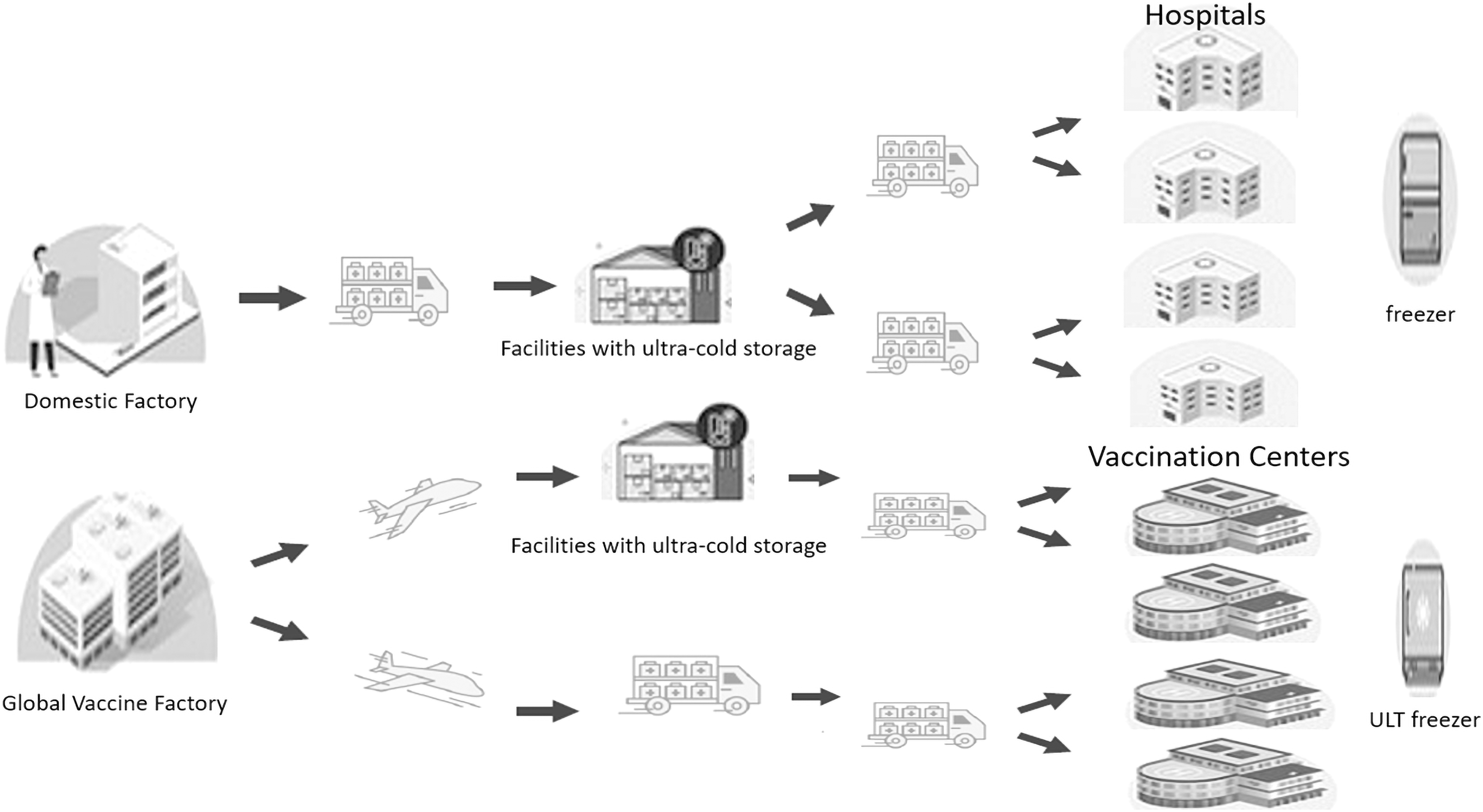
Both these types of health care infrastructure that handled mRNA vaccines were fully equipped with ultracold freezers to handle the Moderna and Pfizer mRNA vaccines, which require a cryogenic temperature of 60–80°C. For a speedy rollout, Korean health authorities designated 13,000 hospitals and established over 250 large vaccination centers, using sports complexes, theaters, conference venues, or large art halls in each region to ensure access to all inhabitants concurrently. In addition, a great number of eligible health professionals, including certified doctors and nurses who had experience in handling injections, were recruited by the government to be stationed at the designated hospitals and vaccination centers to administer the COVID-19 vaccines (KMHW, 2020d) (Fig. 2).
Using the existing health care infrastructure, as well as mass vaccination centers and large public spaces, the Korean government effectively distributed COVID-19 vaccines to all major cities, as well as rural areas with scarce populations concurrently. Relying on the well-established health care capacity, citizens could simply visit the local hospitals or the vaccination centers, ideally located near their homes, on the appointment day, after receiving a reservation text message or phone call. Such capacity enabled large-scale rapid dissemination of vaccination programs nationwide, immunizing up to 1.36 million people per day, even during the hottest days in the summer (JoongAng Daily, 2021b).
Risk communication
Since the start of the COVID-19 pandemic, the Korean government deployed risk communication with a high level of transparency and consistency that successfully allowed for changes across society (Choi and Powers, 2021). In the context of COVID-19 vaccine risk communication, the Korean government also exhibited a strong risk communication capacity to advance vaccine uptake. Vaccine hesitancy, which is defined as “delay in acceptance or refusal of vaccination despite the availability of vaccination services” (MacDonald, 2015), was considered as one of the major global health threats (WHO, 2021; WHO, 2019). A cross-sectional survey conducted in the prevaccine rollout stage, mid-January, 2021, found that only 46.8% of the Korean population was likely to get the vaccine, while 67.7% respondents stated that they would rather wait and see the vaccination outcome concerning its safety and effectiveness (Dailymedi News, 2021; You, 2021).
As such, an effective communication strategy to enhance public confidence on safety issues and promote its effectiveness and benefits in a reasonable way was vital to increase uptake and to achieve the target of vaccinating 70% of the population by September (KCDC, 2021b). However, the vaccine hesitancy claims, at times, conflated with legitimate questions on pandemic science around the world, such as the efficacy and safety of vaccines, especially in the long run, who produces the related scientific evidence and to what end? Questioning the production of scientific knowledge is important for robust science and trustworthy public health services. A trustworthy risk communication strategy includes delivery of scientific knowledge that is rigorously evaluated, tested, and examined for accuracy, efficacy, and safety of health interventions, including in times of pandemics (Springer and Özdemir, 2022).
Korea's public health officials focused on taking a rational approach to address the questions on vaccines; the health authorities fostered public trust by avoiding mandatory vaccination. By emphasizing the voluntariness of the vaccine, which is a better approach than pressuring people to get vaccinated, they ensured that the public signed the informed consent form before the administration of COVID-19 vaccines. Korean politicians clearly communicated the speed, prioritization, and schedule of rollout and addressed the publics' expectations. Prime Minister Chong Sye Kyun, the figurehead of the country's COVID-19 response, maintained an optimistic attitude regarding reaching their targets and anticipated a speedy rollout while transparently communicating the tiered priority strategy for vaccination, as well as addressing some of the uncertainty about when life would return to normal, so as not to damage public expectation (BBC, 2021).
The leaders also developed social trust by being transparent about data, informing the public of the nationwide COVID-19 infection rates, severe cases, available hospital beds, fatalities, and vaccination rates, while providing scientific evidence on COVID-19 vaccines in their public health campaign. Korean authorities consistently delivered the message that the vaccines were safe and effective and that the benefits of vaccination outweighed its risks. During daily briefings or interviews with news reporters, Jeong Eun Kyeong, head of KCDC, often cited the current reports and studies on COVID-19 vaccines to provide evidence of their effectiveness (WHO, 2022; WHO, 2021). In addition, the Korean government expanded its mitigation strategy to eliminate actions that could damage public trust. Since the onset of the mass rollout, the Korean government combatted disinformation on internet portal sites and social media regarding COVID-19 vaccines.
The KCDC and Korea Communication Commission (KCC) cooperated to eradicate falsehoods about COVID-19 vaccines spreading online. The KCC launched a website (www.KCC.go.kr/vaccinejebo) to uncover vaccine related misinformation. Any problematic contents on web portals were also immediately deleted using AI (KCC, n.d.). Cases related to COVID-19 were referred to police agencies for further investigation. While such measures can be questioned in relation to civil liberties and democracy, they increased the COVID-19 vaccine uptake. However, it is to be noted that AI technology and the nation states' governance of the pandemic warrant further evaluations and critical scrutiny, and it is important to ensure that democracy is not undermined by population surveillance in ways that consolidate and concentrate political power in the hands of a few (Boschele, 2021; Boschele, 2020).
In a survey, jointly conducted by the KMHW and the MCST on the public perception of COVID-19 vaccines, 7 out of 10 Koreans stated that they were likely to get vaccinated (Doctor's Daily, 2021). Despite the fact that Korea launched their vaccination program late in February, within a few months, its vaccination uptake rate increased, surpassing most of the early starters. The country's effective risk communication, aiming to enhance public trust, was a strong driver of the robust vaccine rollout.
Sociocultural aspects: public cooperation
In response to the COVID-19 pandemic, governments worldwide have adopted divergent emergency intervention approaches to minimize the economic and social impacts of the pandemic (Boschele, 2021; Boschele, 2020). To confront an unparalleled crisis, many democratic institutions, on the one hand, have prioritized protecting their citizens by delivering common public good and public health. On the other hand, some countries have, unfortunately, allowed vulnerable people to die by choosing political expediency and put wealth before health in this crisis (Kickbusch et al., 2020; Peci et al., 2021).
While there have been dissonances between politics, science, and economics in how to operate, and global debates over privacy and ethics when using digital surveillance systems for the control of infectious diseases (Klein, 2020), it is certain that governments worldwide may not be able to resolve the pandemic situation unless they leave their differences behind and work together to strengthen international solidarity for the public good (WHO, 2020). Importantly, countries must heed lessons from other cases with relative success where states have led successful community engagement and have strived to develop new national strategies by critically informing the global governance of ecological crises to help and benefit their public.
Unfortunately, the COVID-19 pandemic has made governments enforce some extraordinary and draconian demands on the public. For such a policy to succeed, citizens' active engagement and voluntary compliance with the government's public health guidelines are essential (Anderson et al., 2020).
As for Korea, the voluntary participation of citizens is another key factor for the success of the COVID-19 vaccination program. Although the government delivered the vaccines to the people, if the public had refused them, the vaccination policy would have failed. All through the outbreak, many Korean citizens proactively participated in the government's extensive public health measures and outreach, from COVID-19 protocols to accepting penalties for not wearing a mask on public transportation, compromising privacy for stringent contact tracing and public health, using their mobile GPS data, sharing credit card payment records, CCTV for contact tracing, and applying a government surveillance app during self-quarantine in their everyday lives. Some of these policy measures may seem rather controversial and drastic in certain societies, but they were feasible in Korea during the pandemic because of its collectivist culture.
Science and culture exist in a cultural context, something that needs to be further considered in designing pandemic responses that are effective, resilient, and democratic, both in short- and long-term governance of ecological crises. In Korea, particularly during times of crisis, members of society are more inclined to prioritize the collective good over civil liberty and place a greater emphasis on conformity that induces collective action (Porcher, 2019). A survey conducted by the Institute for Future Government confirmed this perspective; over 84% of Korean population chose to tolerate losing their privacy to ensure safety and help to mitigate the spread during public health calamities (Choi and Powers, 2021). Korea's community norms, governing behavior, and collectivistic appropriateness (such as valuing devotion, conformity, and harmony) were incorporated into its policy apparatus and worked throughout the pandemic crisis.
Although the Korean government made vaccination voluntary and optional, it strongly promoted its importance, both at the community level (for protecting the elderly and returning to normal life as a nation) and the individual level (such as exemption from self-quarantine, vaccine leave at work, and private social gathering allowances) (KCDC, 2021e). Given its collectivistic culture, citizens responded to the social norms and followed the nation's public health governance.
In early October, nearly 9 out of 10 Korean adults received their COVID-19 shots as scheduled by the government (The Korea Herald, 2021). According to a postvaccination survey, conducted jointly by the Central Disaster and Safety Countermeasures Headquarters and the MCST in April 2021, the motivation behind public intention to get vaccinated was to keep their family members safe (76.4%) and to contribute to the country's goal of reaching herd immunity (63.9%) (Yonhap News, 2021c).
It is true that the policy measures that worked in Korea may not be similarly operative in other countries particularly for Western societies, which are politically less hierarchical than collectivistic cultures and place more value on individual freedom, voice of the people, and individual uniqueness (Porcher, 2019). Nevertheless, public administrators must assess which principles of a policy measure are viable in their cultural disposition and could also improve community-oriented policy strategies rather than continuing individual-focused approaches to generate public cooperation and voluntary compliance.
Conclusions and Outlook
The COVID-19 pandemic has underscored, once again, that systems medicine depends on health systems and services that can respond to planetary health threats on a large scale and with adequate speed. In light of this, a big reset may be required in the whole planetary health system perspective of countries around the world when approaching policies and priorities around health and society to generate a more coordinated response for the future. After 2 years of the pandemic, there are lessons to be learned from Korea, from governance to risk communication for planetary health. This is also timely as COVID-19 likely signals future ecological crises and emerging pathogens amid the climate emergency in the 21st century.
It is noteworthy, however, that the dominant master narratives in pandemic-related science and governance have centered on essentialism and technocracy around the world, the idea that science is a product of pure technical knowledge, without due attention to its social and cultural context and the human values that shape and produce scientific knowledge. Hence, democratic governance should be considered more rigorously in theory and practice, especially in long-term governance crises, taking into account public values, cultures, and interests while shaping and implementing pandemic responses.
As noted by Steinberger (2019) in critical social sciences and cultural studies of knowledge production, “the scientific endeavor, since at least Enlightenment & Newton, tries to see its contributions as existing outside history and culture.” Questions such as: what evidence, produced in studies funded by whom, and to what end, and who determines expertise and why? (Boschele, 2021; Boschele, 2020; Springer, 2020), surface and call for reflection. These are some of the basic and essential questions that ought to be posed by the public and the public leaders for new health interventions against the pandemic in the current moment, and in the future, for democratic governance of pandemic science and the attendant governance crises in times of ecological crises.
Korea's rapid mass inoculation program achieved a great deal of success, both nationally and compared to other nations. This study illuminates the key aspects that contributed to the success of Korea's vaccination policies. These lessons may be particularly useful for high income countries with rich health care settings that struggle with other issues, such as dosing challenges, and may help them to develop more effective and fitting policies for inoculation programs (Nugent, 2021).
To recap, the present study identified six specific factors contributing to Korea's successful rollout: first, Korea's governance system (i.e., a centralized hierarchical system of governance), with strong state capacity, along with taking a Whole-of-Government approach where public mandate concurrently comes with good provisions (i.e., COVID-19 vaccination stimulus packages) encouraged to act promptly for speedy crisis management for vaccine rollout and facilitate high degree of civic engagement.
Second, the country strengthened their logistical capability by procuring enough vaccines for the public, thus reinforcing their resource security.
Third, Korean health authorities developed an optimal prioritization strategy to distribute COVID-19 vaccines, accessible to all citizens and residents by a set time line for different target groups, thereby avoiding public panic to book appointments.
Fourth, Korea's well-established public health infrastructure capacity, the custom of cooperation between state government and local hospitals, and the availability of a significant number of trained health care practitioners (doctors and nurses) hired under the government's emergency health plan facilitated the actual mass inoculation.
Fifth, the Korean government and Korean health authorities made concerted efforts in their risk communication with a high level of outreach and consistency to promote vaccine uptake; Korean leaders promoted vaccine uptake by providing evidence to foster general trust in the government, such as informing the public about up-to-date vaccine effectiveness data, while addressing and preventing misinformation on social media platforms that damaged public confidence in COVID-19 vaccines.
Sixth, Korea's tradition of collectivistic culture, which values collective good over individual comfort or freedom, has served as a key cultural context for the robust COVID-19 national immunization. This cultural context generated citizens' active participation in the voluntary-compliance vaccination program. In a nutshell, Korea's successful national vaccination drive can be summarized as multisectoral synergy created and facilitated by these combined critical factors under an ethos of Whole-of-Government response to the pandemic.
Future empirical field work is necessary to map the comparative pandemic responses of each country, as the pandemic transitions to an endemic. Future research may assess the transferability of these policy approaches adopted by Korea in other political administrative settings and compare the policy response across institutions to facilitate further insights. Nevertheless, it is important to note that this study illuminates a particular country's case of vaccination and highlights the main factors that influenced the speed of inoculation; this is one example of a comprehensive COVID-19 vaccination strategy. Therefore, future studies should be conducted by researchers from other countries to analyze the policy interventions in their countries with details and context about the vaccination drive and systematically categorizing insights in a comprehensive manner.
Footnotes
Disclaimer
Views expressed are the personal opinions of the author only and do not necessarily reflect the views of the affiliated institutions.
Author Disclosure Statement
The author declares that no conflicting financial interests exist.
Funding Information
This research was supported by the National Research Foundation of Korea (NRF) grant funded by the Korean government (MSIT) (No. 2021R1A2C1095688).