




Abstract

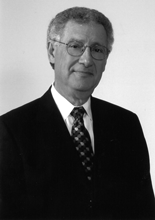
Dr. Taussig, throughout your remarkable career in pediatric pulmonology, what were the main areas in which you have focused your clinical and research interests? What led you to focus on these areas?
I was planning to be a pediatrician in private practice until I was fortunate enough to go to the National Institutes of Health in 1970 as a Clinical Associate, which satisfied my military service. I was picked by Paul A. di Sant’Agnese, who is considered one of, if not the father of cystic fibrosis (CF). He described the sweat abnormality that became the basis of the sweat test for CF. I went off to work in Paul’s laboratory and take care of his patients and as a result I became very interested in research, especially clinical research. Although almost all of my research at the NIH from 1970 to 1972 was gastroenterology-related, I became enamored with the lung and the lung disease affecting CF patients. I decided that instead of going into private practice I would do a pediatric pulmonary fellowship, and I went off to McGill University, which had very strong pediatric and adult pulmonary programs.
My clinical interests, if I had to rank them, have always been CF first, ever since that initial exposure, although asthma and other lung diseases would certainly be high up on the list. I got turned on to some of the issues related to asthma, especially the risk factors for its development. That led me to focus the bulk of my research career on questions related to asthma in children, physiology of the lungs, how the lungs develop and how that might relate to the development of respiratory diseases in children, and the development of lung function tests for infants and very young children. Drs. Louis Landau and Simon Godfrey and I perfected the chest compression technique for forced expiratory flows in infants.
I began a very large epidemiologic study called the Tucson Children’s Respiratory Study in 1980, which is still going on. This project enrolled 1,246 newborns in a long-term study to determine the risk factors for the development of asthma.
What would you highlight as your most important accomplishments? What were some of the biggest challenges?
My research career began when I went to the NIH. Then, at McGill, I was involved in a lot of physiologic studies of lung function and development. From there I went to the University of Arizona School of Medicine to start the Pediatric Pulmonary Section. I was head of the Pediatric Pulmonary Section and, subsequently, I became Associate Chair and ultimately Chair of the Department of Pediatrics and Director of the Steele Children’s Research Center.
I was recruited in 1993 as President and CEO of National Jewish Medical and Research Center, now known as National Jewish Health. While in that position I continued my academic involvement, not doing research, but chairing various committees for the National Heart, Lung, and Blood Institute (NHLBI); for the past 10 years, I have chaired the Steering Committee for the Childhood Asthma Research and Education (CARE) Network.
In terms of the highlights of my career, on the research side I would have to say the Tucson Children’s Respiratory Study and the development of various lung function tests for infants, the most important being the chest compression technique for flow rates in babies. On the administrative side, the highlights include building the Pediatric Pulmonary Section at Arizona into a very strong program; increasing the pediatric faculty from 30 to 65, and making the department very solvent. At National Jewish it would be making the institution fiscally strong, overseeing the building of a conference center and a research and clinical building, and increasing the clinical programs while maintaining the institution’s excellence in research. But the most rewarding part of my career has been the training of pediatric pulmonary fellows and seeing them become successful in their careers.
The main challenges over the years have mainly been the fiscal issues—making sure the institution you are heading up has the opportunity to grow while maintaining prudent fiscal practices. At times you have to change the culture of physicians and scientists, and that can be challenging. As the world changes one has to do certain things to confront those changes, and that is never easy.
On a broader scale, how has the field of pediatric pulmonology evolved and what would you highlight as some of the key events and advances that you have witnessed?
The discipline was initially a loose cadre of people taking care of children with lung diseases, and it evolved in the 1980s to become a defined discipline, especially when we were allowed to develop a Board examination and certify pediatric pulmonologists. That was a long-term process that required overcoming various hurdles, and it really established the specialty as a distinct entity. A number of other things happened around the same time, including the start of the journal Pediatric Pulmonology, and the formation of various committees in the American Lung Association and the American Thoracic Society.
The heyday was in the late 1970s and early 1980s, and the changes that took place then defined the specialty. In the late 1980s to early 1990s, the growth of pediatric intensive care began and, in my opinion, pediatric pulmonology made a huge mistake at that point and gave up pediatric intensive care to intensive care specialists. This has produced financial and programmatic issues for pediatric pulmonology.
In your view, what are the greatest challenges facing pediatric pulmonology at present?
The world of pediatric pulmonology is changing: asthmatic patients are not hospitalized or seen as outpatients as often; CF patients are not hospitalized as long; BPD, or bronchopulmonary dysplasia, may be changing, and pediatric pulmonologists gave up the ICU. In my opinion, the field needs to diversify, to get back into the ICU and into the neonatal intensive care unit, to work with hematologists on diseases like sickle cell, to work with cardiologists on pulmonary hypertension, to develop niches in interstitial lung disease, obesity, and asthma, to market itself, and, maybe, to get into businesses like chronic ventilator therapy. Pediatric pulmonology has to become more entrepreneurial. On the research side, we need to train more pediatric pulmonary scientists who can become funded, independent investigators. For this to occur, we need strong mentors.
What types of studies, strategies, and technologies, from both clinical and research perspectives, are needed to overcome these challenges?
What we are seeing is that the number of pediatric pulmonologists doing research and the number of fellows going into research-oriented careers are dwindling. Many physicians are choosing not to go into subspecialties because of the amount of debt they already have, so they are not pursuing fellowships. A lot of fellows do not have mentors who are doing research, so they lack the guidance needed to develop research careers and become accomplished researchers. Funding is also difficult because it takes a lot of time to get support from the NIH for young investigators. There are many roadblocks.
Very soon we may be asking the question, “Who is going to do the research on pediatric lung diseases? How will we train people when we don’t have the mentors to develop research initiatives?”
How would you like to see the field of pediatric pulmonology move forward in the future?
I would like to see young people in fellowships develop a strong research focus, work with the best people around, and go on to work in pediatric pulmonary sections and become mentors to the next group of fellows. This is not easy in today’s world of reimbursement because of the demands on people to do more clinical work. I think the Departments of Pediatrics are going to have to be creative in how they function. They need to hire full-time clinicians and support them to ensure that other faculty members can put in the time needed to get their research funded. These are complex issues, but it is possible to make these changes.
What advice would you give to young physicians considering a specialty in this area?
I think it is an exciting area. The diversity of diseases is remarkable. Dealing with chronic patients can at times be draining, but it can also be very gratifying. And there are many unanswered questions on the research side.
Who were your most influential mentors?
I was extremely fortunate to train with Paul A. di Sant’Agnese at the NIH; he really launched my academic career. His unit was a hotbed of training. I did my pediatric pulmonary fellowship at McGill University, at the Meakins-Christir Labs and The Montreal Children’s Hospital where I was mentored by Pierre Beaudry, Mary Ellen Avery, Peter Macklem, and others at these institutions. Lou Landau, of Australia, was a fellow with me, and we have collaborated on several research projects and together were the editors of the textbook, Pediatric Respiratory Medicine. We have been mentors to each other and colleagues who have advanced our respective academic careers.
What types of initiatives are you working on in your current position as Special Advisor to the Provost for Life Sciences at the University of Denver?
When I retired from National Jewish I was asked to come over to the University of Denver to help them develop strategies to grow the Life Sciences research program. The University had recently purchased the Eleanor Roosevelt Institute and I was asked to help integrate it into the Division of Natural Sciences and Mathematics. I am now working with the Provost on a major new campus-wide initiative.
—Interview by Vicki Glaser