




Abstract
Gelatin, a product obtained by the partial hydrolysis of collagen, is widely used in foods and pharmaceuticals. In the past, most commercially available vaccines, both live and inactivated, contained gelatin as a stabilizer, and allergic reactions to gelatin contained in measles, mumps, and rubella vaccine were reported. However, gelatin-allergy to foods was thought to be rare. It was unknown what factors predisposed recipients to vaccine-related gelatin allergy. There can be a genetic predisposition to gelatin allergy. We report a patient who experienced anaphylactic reaction on ingestion of jelly candy containing bovine gelatin and using hair gel.
Introduction
Here, we report a patient who experienced anaphylactic reaction by ingestion of jell candy containing bovine gelatin and using hair gel.
Case Report
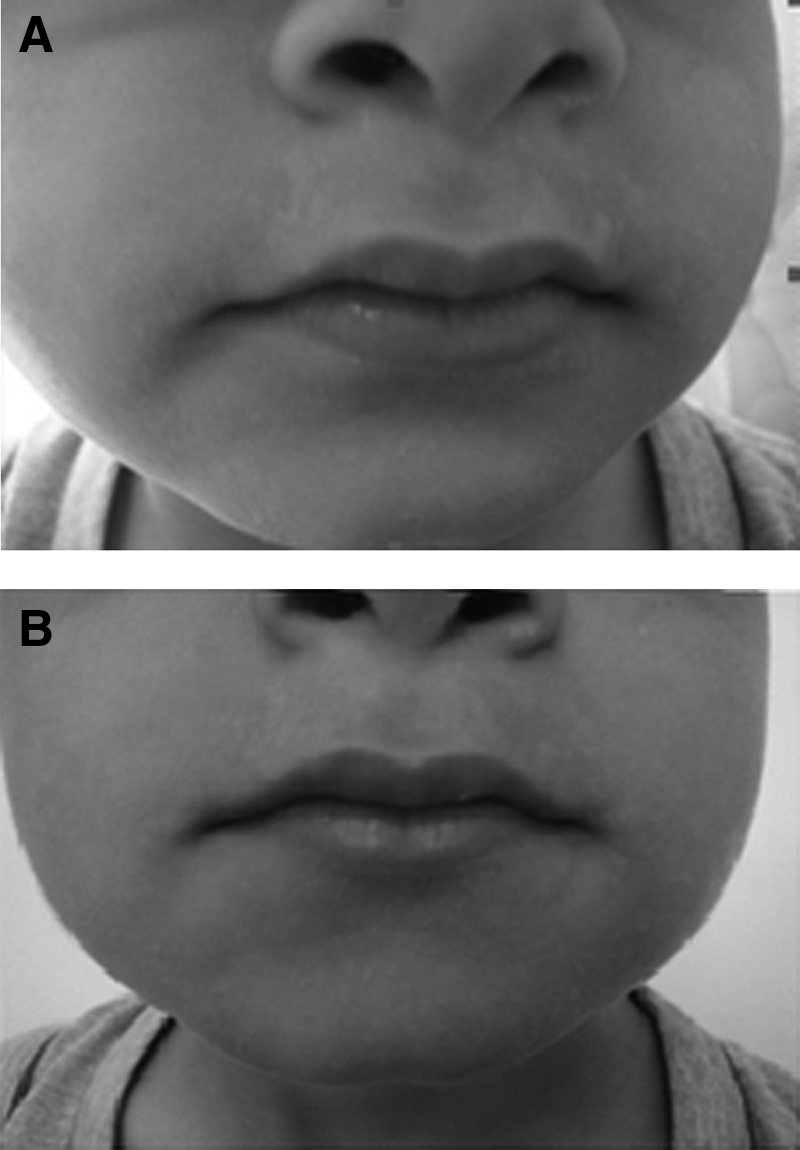
A 6-year-old boy, presented with rashes to our allergy polyclinic. It was found out that a sudden cough, rhinorrhea, facial swelling, and rash developed 4 h after eating beef gelatin-containing jelly beans and 1 h after using hair gel. He reported that he was recovered after the treatment in the emergency department, and his occasional rashes improved with antihistamine drugs. He did not describe anaphylaxis or any allergic reactions to vaccines. The clues of history and clinical features of the patient suggested a differential diagnosis of gelatin allergy. Sensitivity to grass pollen was detected in the laboratory studies. We have dissolved 1 teaspoon of gelatin powder in 5 mL normal salin. 2 Skin prick test was performed using stallerpoint with gelatin solution to back. We detected with gelatin solution 6×6 mm induration and a 10×22 mm hyperemia (Fig. 1). We failed to test anti-gelatin immunoglobulin E (IgE) because of technical impossibilities. Oral provocation test was performed with gelatin solution containing bovine gelatin, in which rash and swelling were observed around the mouth at the first stage of the test (Fig. 2A, B). Thus, the test was terminated. Then, gelatin and gelatin-containing foods and products were removed from the daily life of the patient. He did not experience any problems in the follow-up.

Skin prick test with gelatin solutions containing bovine gelatin to patients was performed; 6×6 mm enduration and 10×22 mm hyperemia were detected (positive control, negative control, gelatin solution, and 4 solutions of gelatin candy). Circle indicates reaction of gelatin solution.
Discussion
Gelatin allergy was first reported after measles, mumps, rubella (MMR) vaccination in the United States 3 ; then, it was reported that the anaphylactic reaction was caused by gelatin allergy, with a high prevalence of IgE antibodies against gelatin.4,5
Bovine and porcine gelatins, in particular, also have numerous applications throughout the pharmaceutical industry as integral components in drug capsules, plasma expanders, and stabilizers in vaccines, including MMR, varicella, yellow fever, rabies, and some influenza vaccines. Both IgE-mediated and cell-mediated allergic reactions have been reported. 6 Severe allergic reactions, including anaphylaxis, have been reported after intravenous administration of modified fluid gelatins as plasma substitutes. 7 Postvaccination allergic reactions to MMR and varicella vaccines have been linked to the gelatin excipient.3,8 Systemic allergic reactions have also been observed with the ingestion of gelatin-containing foods and administration of gelatin-containing medical products (eg, suppositories). Gelatin is a common ingredient in foods such as jellies, sweets, yogurt, and frozen desserts. It is also found in lunch meats, and is extensively used as clarifying agents in wine, juices, and other beverages. These gelatin exposures have been associated with sensitization as evidenced by the induction of gelatin-specific IgE antibodies. Allergic reactions to gelatin used as a food ingredient are rarely reported. In a study of 26 children with allergic reactions to vaccines, 7 had allergic reactions to gelatin-containing foods, including 2 who had reactions before vaccination, and 5 who had reactions after vaccination. 9
American 10 and Finnish 11 groups have reported that 27% and 14%–28%, respectively, of the children who experienced systemic reactions after measles, mumps, and rubella vaccination had gelatin-specific IgE antibodies. In contrast, a Japanese study reported that 86% of children who manifested an immediate-type hypersensitivity reaction after receipt of a gelatin-containing vaccine (measles, rubella, mumps, or varicella) had detectable gelatin-specific IgE in their blood. 12 However, the mechanism by which allergic children are sensitized to gelatin is unclear. Several reports describe gelatin allergy from Japan, and Japanese seem more prone to gelatin allergy than other nations. Sakaguchi et al. designed to investigate whether susceptibility or resistance to gelatin allergy is associated with human leukocyte antigen (HLA) class II gene. DNA-based HLA class II typing was performed to determine the DRB1, DQB1, and DPB1 alleles. The frequency of DQB1*0303, DPB1*0402, and DRB1*15 was found to be significantly higher in patients with gelatin allergy. 13
Allergic reactions toward colored fruit candies and gummy bears may result from an IgE-mediated hypersensitivity toward gelatin. Proteins with molecular weights in the range of 40–120 kD were determined as the allergens in by using Western blot analysis. To identify the cross-reactivity between gelatin, gelatin-containing products, and the modified gelatin, they were showed by RAST inhibition. 14 Sakaguchi reported that patients allergic to both fish meat and bovine gelatin may have IgE antibodies reacting with fish gelatin. 15 On the other hand, no cross-reactivity was found between fish gelatin and bovine, demonstrating diverse structures for these 2 collagen-derived proteins. 16
The amount of gelatin used in the food industry is increasing worldwide. Despite, this increase in food-related gelatin allergy is rare. A case of anaphylaxis after consumption of gummy bears without vaccine-related allergies has been reported in a young boy. 17 Kuehn et al. has been reported a patient who experienced a severe anaphylactic reaction on ingestion of marshmallows containing fish gelatin. 18
So far, no cases have been reported after contact with hair gel developing allergy in the literature. Further cases or prospective study will require for better understanding of gelatin allergy.
Footnotes
Author Disclosure Statement
No competing financial interests exist.