




Abstract

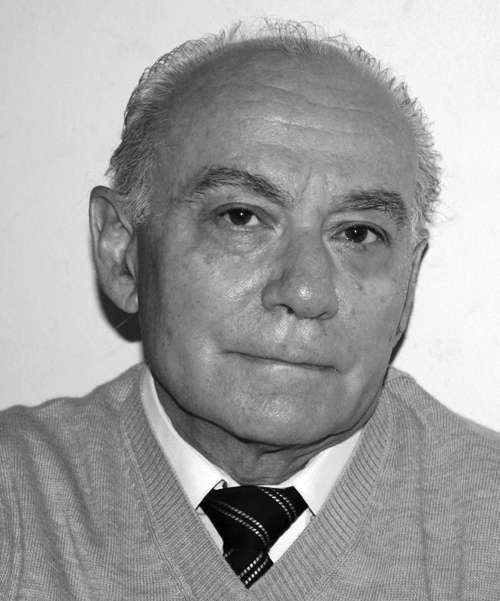
Dr. Lentini, how did you initially become interested in the field of pediatric pulmonology and in cystic fibrosis (CF) in particular?
By the 1970s, specialties in pediatrics were only beginning to appear in the pediatric sector of our general purpose hospital in Argentina, which served both adults and children. There were specialists in cardiology, gastroenterology, and nephrology who were only just beginning to make inroads to develop more complex organizations in their fields. There was no pulmonary section whatsoever, so I saw an opportunity to create a new specialty area. At that time, every difficult case involving a respiratory patient had to be referred to a hospital in Buenos Aires, the capital city of Argentina.
The challenge was to start a pulmonary section starting from virtually nothing, but back then I only saw the opportunity this presented and I could not foresee the tremendous difficulties that lay ahead. I could not imagine then the giant task that would be needed to organize a pulmonary section and a CF Center. My young age and energy at the time and a strong conviction to everyday work, taught to me by my father, who had been a professor of pediatrics in Mendoza, no doubt gave me the strength to face what lay ahead. The effort to establish a pulmonary outpatient clinic was led by me and Dr. Ana M. Lores. The main pathology for which we tried to establish guidelines was asthma.
How did you first approach the study of CF?
It was not clear at first why so few CF patients were receiving a diagnosis. Mail exchanges (letters) in 1989 with Dr. Beryl Rosenstein at The Johns Hopkins University School of Medicine, in Baltimore, MD, suggested that the use of the Orion electrode was the culprit. He made clear that this electrode was not a diagnostic tool but was only useful as a screening test. The Orion electrode technique was believed so deeply to be a good diagnostic tool by the chief biochemist at the hospital where I worked at that time that I had to ask a biochemist from outside the hospital to go to Buenos Aires to learn the pilocarpine iontophoresis sweat test technique.
From that time (1989) on, we saw only an increasing number of patients receiving a diagnosis of CF every year. The greatest challenge then was to develop a CF Center of increasing complexity, day by day, year after year.
In 1989, I attended a pediatric pulmonology conference in Chile, where I met Dan Schidlow, M.D., who was then head of the pulmonary service at St. Christopher's Hospital for Children in Philadelphia, PA. He had funding from the Cystic Fibrosis Foundation (through Dr. R. Beall) and offered me the opportunity to work for a short time with his team to learn more about CF care. I am deeply indebted to the U.S. Cystic Fibrosis Foundation and to Dr. Schidlow for their help in organizing what was later to become our CF Center.
The difficulties we faced can best be understood with one example: digestive enzymes had to be imported and were not included in the hospital budget, as CF was thought at that time to be nearly non-existent. So each month I had to go to the emergency section of the Provincial Health Ministry to convince them that this medication was necessary and to write a prescription to get funds to purchase the digestive enzymes. After a year, this purchase was included in the hospital budget.
What was the scope and management of CF like in Argentina when you started practicing?
Based on a retrospective study from 1960 to 1989 in 10 Latin American countries, it was concluded that the median age of CF diagnosis was 3.72 years and that the median age of death was 6.69 years. 1 During that time, the few if any suspected patients in Mendoza were referred to Buenos Aires where CF care was more developed. There were so few patients that some people thought the disease only affected people with a different genetic background. The small number of diagnoses was later proven to be the result of the use of the Orion electrode as a diagnostic tool for CF.
To give you an idea of the difficulties I faced early on in caring for patients with CF, I can describe some anecdotal experiences. For antibiotic dosing, for example, each time I wanted to prescribe antibiotics for a patient with CF, I had to provide references to colleagues on antibiotic dosing. Quite often, I discovered that over subsequent days they would have lowered the antibiotic dosing.
Additionally, I faced strong opposition regarding the more frequent use of a nasogastric feeding tube and gastrostomy, which I felt was indicated and my colleagues frequently did not. I remember clearly being told by a colleague that it “was an invention of mine.” With regard to the use of catheters, skill in central venous catheter insertion had to be developed from scratch. There was no experience either with peripherally inserted central catheters (PICC) or implanted ones. A response that I received from someone who was supposed to go to Buenos Aires to learn techniques of hyperalimentation—“I can't go because my dog has just had puppies”—sounds funny to me now, but was not so amusing at that time.
In terms of the scope of CF, I cannot quote present-day survival figures for CF in Argentina, since there is no national CF database. And I cannot cite local figures before 1975, since CF was practically not detected in Mendoza at that time. Nineteen eighty-nine is the year when I consider that our Center was reasonably operational to provide appropriate care. Since that time, our patients have been living longer. The median age of our CF population increased from 4 years (1985) to 12 years (2008). Currently, the Center cares for about 80 patients, 13.75% of which are older than 15 years, and 25% are older than 18 years. The number of annual outpatient visits to our CF Center has remained constant at about 738 visits per year since 2009.
What are the main challenges in providing CF care in a developing country?
Given the present-day world economic situation and power concentration, I would clarify that to say “in an ever-developing country.” There are dramatic disparities in CF outcomes when comparing the developed to the “developing” world. Factors contributing to the substantially poorer CF outcomes in Latin America are likely to include large socioeconomic and access to care disparities, low health care budgets, and few CF-focused organizations. The “haves and have-nots” dilemma is always present and is a local and global Latin American reality. The gap is even larger when compared to the developed world.
The health care system in Argentina is comprised of three subsystems: public; a combination of different health insurers, unions, province (state) employees; and the private sector. This organizational make-up implies a disorganized, fragmented coexistence of health care subsystems with overlapping populations, services, and budget resources. Resources are wasted and inequality is frequent. National Health Care policies depend on a Central Health Care Authority in only selected cases (i.e., vaccination campaigns), while most health care in provinces (states) depends on individual provincial budgets, and strategic health care decisions face important differences between “rich and poor” provinces. In most of these provinces, CF is not a health care priority. Mendoza is considered a “rich” province and so has some advantages. The global situation is that a province's budget focuses mainly on education and building. The main priority for the health care system is primary care, with asthma as a first-line target, and the common cold and bronchitis being the most frequent reasons for outpatient consultation. Undernutrition is not as important as it used to be. About 80% of the health care system budget is used to pay salaries. Within this context, CF is obviously not a priority.
The Argentine public health system does not include the development of CF Centers in its state policies, and it does not include specific investigations or any other specific support for CF except for a national CF screening law, which has to be endorsed by provincial (state) legislatures and provided for by their own funding. CF Center development must be decided by each province, and such centers are not included specifically in the public health system structure. The burden of CF Center development rests heavily in the hands of deeply involved doctors/specialists and CF organizations. Sometimes, as in the case of our CF Center, the province provides limited funding support through specifically allocated funds called “programas,” or “programs”.
How would you describe what the CF Center you helped create has achieved?
A timeline may be the best way to illustrate our progress. One must keep in mind that this timeline shows only the tip of the iceberg. “Below the surface” of this timeline lies the ceaseless, selfless, committed efforts of many people in our CF Center.
1989–1990: Organization begins.
1992: A pulmonary section is organized in a new hospital facility.
2003: A stated-funded “program” is created by law specifically to support CF patients.
2008: Genetic studies begin.
2010: CF Center begins systematic follow-up of immunoreactive trypsinogen (IRT) screening.
Present day: Follow-up is continued from diagnosis until death or lost to follow-up. There is no age limit for follow-up.
The most effective interventions in our particular situation can be ascribed to five main factors: a centralized pulmonary service that provides care in the CF Center; use of international treatment guidelines and advice; clinical experience that such a concentration of patient population allows; specifically allocated provincial funds; and partially independent administration of funds apart from hospital administrative bureaucracy. Improvements in survival can primarily be ascribed to use of inhaled DNase, use of inhaled tobramycin (which is not covered by state funds in 27.5% of cases), and use of guidelines-oriented high-dose intravenous antibiotic treatments.
Adherence to Cystic Fibrosis Foundation treatment protocols and guidelines published in the international literature has also contributed to improvements, including in the use of PICC, use of infusion pumps, changes in antibiotic use according to bacterial resistance and new antibiotic development and dosage changes, introduction of new medication regimens such as long-term azithromycin and inhaled colistin, gastrostomy feeding, bilevel positive airway pressure (BiPAP) respiratory support, family/patient training in chest physical therapy, development of a state-supported and private home care system, and the availability of a nearby transplant facility that performed the first heart–lung transplantation in Latin America in a 5-year-old boy. All of this only scratches the surface of what has been years of tremendous effort, challenges, and huge difficulties, with a successful ending, but the hard work is far from over.
What lies ahead?
We are working to improve survival figures and, obviously, the overall quality of CF care, which will undoubtedly require a continuous effort to improve budget allocations to cover all patients with inhaled tobramycin, improved coverage for IRT screening, and follow-up by our Center staff throughout the province for all newborns in state and private hospitals in Mendoza. We have made great strides and the situation should only improve if the effort is kept with the same enthusiasm. That I am sure we will do.