




Abstract

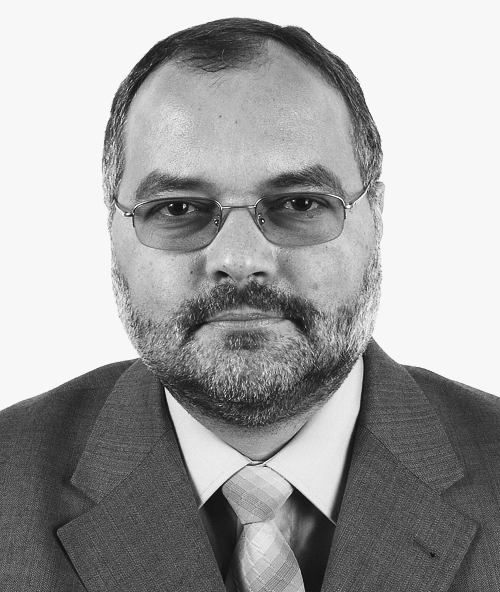
Dr. Pohunek, notable among your many accomplishments is helping to build a strong pediatric pulmonary clinical and research program in the Czech Republic and in Eastern Europe in general, during a time in which the region has undergone a great deal of political, social, and economic changes and challenges. Overall, how would you describe the types of changes that have been implemented, and how have these impacted and helped to improve the diagnosis and management of lung diseases in children?
When I started my activities as a pediatrician interested in respiratory diseases back in the mid-1980s, there was no established program of pediatric pulmonology in Czechoslovakia. Children with respiratory diseases were treated by pediatricians or allergists who at that time already had quite an established network. Some groups that focused on respiratory diseases in children already existed, mainly at the university hospitals. In Prague, it was the University Hospital Motol, where people like Alois Zapletal, Marta Čopová, Blanka Suková, and Věra Vávrová had established a center for respiratory diseases within a 2nd Department of Pediatrics. Zapletal is well known for his work in the field of pediatric respiratory physiology and lung function measurement; he authored a set of pediatric reference values used for a long time in Europe. Vávrová established an extremely effective center for cystic fibrosis in the early 1960s that she personally led until recently. Křepela developed a system of care for children with tuberculosis in the Thomayer Hospital in Prague. Kapellerová worked actively in the field in Bratislava, Slovakia, where there was also a very busy pediatric respiratory center in Smokovec in the mountain region of High Tatra.
Despite these examples, there was neither a real network nor any system of pediatric pulmonology training and certification. I did my board certification in 1989 after training in general respiratory diseases. With my pediatric background, I then tried to concentrate on children with respiratory diseases, trained in lung function testing, and started to perform pediatric diagnostic flexible bronchoscopies. There were several young people with similar backgrounds working in the field at that time, and we tried to collaborate and exchange experiences. In 1990, we started to work in a completely new environment, as at the end of 1989, there came a major change in the political system, and completely new circumstances gradually developed. In healthcare, we had to learn how to work in the background of a newly developed system of obligatory health insurance and a completely new system of healthcare funding. At the same time, the world opened up for us, and we gradually started to develop contacts and had the opportunity to exchange information with some established centers abroad. My first such experience was a 1-month stay with Professor Richard Kraemer in the Inselspital Bern in Switzerland. This was the most significant experience for me and gave me my first insights into an established system of pediatric respiratory care and my first sense of how to proceed.
What have been some of the key challenges you have had to overcome due mainly to the changing political climate and limitations in funding?
Initially, we mainly had to start thinking differently, learn how to be more aware of economic issues, and learn how to work with emerging scientific information and technologies. During the Communist era, resources were limited, and the availability of drugs and technologies was very limited. However, we did not really need to think too much about money and resources. This rapidly changed after the “revolution.” We had access to almost everything but still limited resources, and we had to learn quickly how to work more efficiently and how to use the limited resources to the maximum benefit of the patients. We had to learn how to work with the general health insurance and only partial reimbursement of medicines. At that time, a government initiative started with the aim of properly reforming the healthcare system. This was probably one of the weakest points in the whole story, as until recently, no reforms have been systematically implemented, and most of the changes were often left only halfway completed.
During the past 23 years, the Ministry of Health has been the ministry with the shortest survival time of the ministers. Several changes in the political system—switching from liberal rightists to social democrats several times—has not helped. Frequent legislative changes also have not helped in the development of a proper system of education. There was a complete disruption of centralized supervision and control of individual medical disciplines and their performance, yet the new system did not provide any new means of quality control. Especially in the 1990s, with the rapid development of a private system of primary medical care, many private physicians just did their jobs as they liked, often lacking any scientific rationale and proper knowledge. This took some time to overcome and required a lot of effort and education. We also temporarily lost communication with our Slovak colleagues after the split of Czechoslovakia and the establishment of two separate countries in 1993, the Czech Republic and Slovak Republic. Those contacts could then only be rebuilt slowly. Both healthcare systems developed independently and in different directions.
In developing a clinical and research pediatric pulmonology program, did you focus initially on any particular diseases that tended to be more prevalent among children in the region or that posed more severe or long-term problems. From your initial efforts, how did the program then evolve over time?
My primary focus since the very beginning was bronchial asthma. There was a historical reason for this: my first boss and tutor after I received pediatric 1st degree board certification was a well-known pediatric allergist, Václav Špičák. When I joined his team in 1984, he shared with me a vision that asthma is a complex disease that should be treated in a multidisciplinary way, and he wanted me to concentrate on other aspects of the disease in addition to the allergic component. Gradually, I managed to develop a small unit for pediatric pulmonology in one of the city hospitals in Prague where we worked, and I started to look more and more at other respiratory problems along with asthma. Even after all those years, asthma remained my favorite topic, and most of my research activities are related to asthma.
Early on, we started to focus on the pathologic mechanisms occurring in the bronchial mucosa of children with asthma. Using bronchoalveolar lavage and bronchial biopsies, we studied and monitored airway inflammation and remodeling. This research was further fostered after my move in 1994 from the city hospital to the University Hospital Motol, the main pediatric center in the Czech Republic, and again boosted by my 4-month visit to the respiratory center in Southampton, UK. Daily communication with Professor John O. Warner helped me to orient myself more in scientific methods and reinforced my interest in pediatric asthma. This program continues, and we now work mainly on the processes of inflammation and remodeling in very young children.
What led you to pursue a career specializing in pediatric pulmonary medicine and what are your main research interests?
As mentioned before, starting my career in pediatric respiratory medicine was partly a coincidence. I joined the team of Václav Špičák as a young, fresh pediatrician and was open to any direction. Špičáḱ's interest in asthma was probably the main determining force behind the beginning of my lifelong clinical and scientific focus. My current research activities are still in asthma, mainly looking at the very early events in the development of airway hyper-responsiveness in children, but also looking at some epidemiological and clinical aspects of the disease. Another main scientific direction of my team at the moment is research in the field of ciliary dysfunction—primary ciliary dyskinesia and secondary problems in mucociliary transport. We participate also in some other international research activities, mainly within the task forces of the European Respiratory Society.
You are head of the Czech Initiative for Asthma. What are the main mission and activities of that group, and how would you describe its key accomplishments to date?
The Czech Initiative for Asthma was established in 1996 in response to the establishment of the Global Initiative for Asthma and publication of the Global Strategy for Asthma Management and Prevention. We felt an immediate need to implement proper standardization of care into our everyday practice. This initiative was unique, as it was formed jointly by scientific medical societies comprised of allergists and pulmonologists. As a nonprofit organization, it mainly pursues education, dissemination of guidelines, and monitoring of asthma and allergies in the Czech Republic. Among the initiative's main accomplishments has been a major improvement in the diagnosis of asthma and implementation of modern systems of therapy. In the area of education, it targets primary care physicians and specialists, but also teachers and the lay public.
What was your involvement in the establishment of the International Congress of Pediatric Pulmonology? What is its mission and goals, and what do you see as its key strengths?
The International Congress of Pediatric Pulmonology (CIPP) is a traditional activity that was originally established in France and later transformed to a true global scientific event. The main event is the annual Congress organized in different parts of the world with the aim of supporting scientific communication and providing a unique platform for fellows and trainees to present their scientific work and learn from experts and established scientists both in formal educational sessions and at informal meetings and encounters. Besides the Congress, the CIPP also organizes a specialized course in pediatric pulmonology every year.
The special value of these programs is their global impact and focus on young clinicians and scientists. There is currently no other similar activity in the world that is focused on developing the global community of pediatric pulmonologists and disseminating current scientific knowledge in the field. CIPP has an international advisory board comprising representatives of many countries. This helps tremendously to foster global interaction between pediatric pulmonary clinicians and scientists. I was very much honored by the invitation to join the organizing team. For the CIPP XI Congress in 2012 held in Bangkok, Thailand, I worked as the chair of the Abstract and Award Committee. For the next Congress, CIPP XII in Valencia, Spain, I am working as one of the program committee members.
What would you identify, in general, as the main gaps in pediatric pulmonary research at present, and where would you like to see more research funding directed?
In research, we need to learn much more about the mechanisms of the diseases and the individual differences. Current knowledge about genetics and epigenetic variability has to be much more developed, with the aim of understanding more clearly different phenotypes of the diseases. In many diseases, we do not probe deeply enough into the pathogenesis, and as a result, too often the treatment we have available is nonspecific and nonselective. To improve the quality of clinical management and care, we need to intensify and unify training of young fellows, at least throughout Europe. This is now the main aim of the Hermes Task Force of the European Respiratory Society. We need to work on improving the Hermes curriculum and negotiating its acceptance by national societies and governments.
—Interview by Vicki Glaser