




Abstract
Biofilms, structured communities of microorganisms, pose persistent challenges in various industrial sectors such as food processing, water treatment, and energy production. Conventional control measures often depend on broad-spectrum biocides, which, although effective, are associated with significant drawbacks including environmental toxicity, biodiversity loss, and the emergence of antimicrobial resistance. In response to these concerns, bacteriophages, viruses that specifically infect bacteria, have gained attention as a targeted and environmentally sustainable alternative. Owing to their host specificity, self-replicating nature, and ability to disrupt biofilm architecture, bacteriophages offer a compelling strategy for biofilm management. This review critically assesses the shortcomings of traditional biocides and evaluates the promise of bacteriophage-based interventions in industrial settings. While their application has shown success in sectors like healthcare, aquaculture, and food production, broader industrial adoption is hindered by challenges such as targeting multispecies biofilms, optimizing delivery methods, ensuring phage stability, and the scale of implementation. We highlight recent advances in industry-specific use of bacteriophages and propose actionable strategies to address these barriers. Emphasizing both ecological sustainability and operational feasibility, this review positions bacteriophages as a viable solution for long-term biofilm and biofouling control in industrial environments.
Introduction
In nature, microbes are predominantly found on surfaces, creating a complex assemblage known as biofilms. Biofilms are one of the most widely distributed and successful lifestyles of microorganisms. 1 Due to their considerable negative impact, biofilms are becoming an area of intense research among microbiologists. Very high cell density, diffusion barriers created by the extracellular polymeric substances (EPSs) matrix, metabolic dormancy, distribution of labor, cross-protection, and persistent cells make biofilm mitigation a significant challenge. 2 Beyond healthcare settings, biofilms present significant challenges across numerous industrial processes. In food manufacturing, bacterial biofilms colonize food-contact surfaces, processing equipment, and transfer lines. These contaminations compromise the microbiological quality of food products, introduce potential pathogenic organisms, and substantially reduce processing efficiencies. 3 Larger industrial systems, such as reverse osmosis (RO) plants, cooling water intake structures in power plants, petrochemical facilities, and shipping operations, face substantial operational and financial challenges due to biofilm formation. Economic impact assessments indicate that biofilm-related issues alone cost approximately US$4000 billion annually. 4 Given these significant operational, societal, and economic consequences, considerable research efforts and technological innovations have been directed toward understanding biofilm dynamics and developing effective mitigation strategies.
Presently, biofilm mitigation approaches in large industrial settings predominantly involve the application of oxidizing biocides (such as chlorine, chlorine dioxide, and ozone) or non-oxidizing biocides [including quaternary ammonium compounds, dodecyl dimethyl benzyl ammonium chloride, and isothiazolinone]. 5 However, there are increasing concerns regarding their widespread usage due to several significant drawbacks: (1) Their broad-spectrum activity leads to substantial negative impacts on biodiversity and ecosystems, 6 (2) they exhibit direct toxicity toward aquatic organisms and humans, 7 (3) they cause indirect toxicity through the generation of disinfection by-products (DBPs),8,9 (4) emerging evidence establishes a strong correlation between biocide resistance and antibiotic resistance,10–12 and (5) they present operational and occupational hazards. In response to these concerns, environmental protection agencies and health authorities are imposing increasingly stringent guidelines for biocide use in biofilm control measures. 6 In 2024, the European Chemicals Agency, under the biocidal products regulation, established a new framework to accelerate biocide regulatory consultation. According to these guidelines, detailed exclusion and substitution criteria have been implemented. Any active ingredient in biocides found to be hazardous to humans or the environment will be denied authorization (exclusion criteria), while manufacturers must make concerted efforts to replace these compounds with alternatives that maintain biocidal efficacy while significantly reducing toxicity. 13 Increasingly stringent regulations highlight the well-documented adverse effects of biocides on both environmental ecosystems and human health. This growing recognition necessitates the development of sustainable, cost-effective alternatives for industrial biofilm and biofouling management.
Since their independent discovery by Twort (1915) and d’Hérelle (1917), 14 bacteriophages have been recognized as potent antimicrobial agents with distinct advantages over chemical biocides: natural ubiquity, narrow host ranges, self-amplifying capability, and unique active biofilm-penetrating capability. 15 Despite documented success in combating multi-drug resistant infections in healthcare settings (phage therapy) and managing pathogenic bacteria in food, aquaculture, and poultry industries, the application of bacteriophages for industrial biofilm control remains largely unexplored and underutilized.
This review critically examines the potential of bacteriophages for biofilm and biofouling control in industrial applications. We synthesize current research to build a compelling case for phage-based approaches to industrial biofilm and biofouling management, while systematically addressing key implementation challenges. Our analysis aims to establish bacteriophages as a sustainable and viable alternative to traditional biocides.
Environmental and Ecological Consequences of Conventional Biofilm Control Strategies
Conventional biofilm mitigation strategies in industrial settings predominantly rely on broad-spectrum biocides. For example, operational power plants use chlorination by dosing chlorine gas, hypochlorite addition, or in situ chlorine generation by electrochlorination.16,17 Similarly, biocides such as chlorine dioxide, ozone, and chloramine, and non-oxidizing biocides such as 2,2-dibromo-3-nitrilopropionamide (DBNPA), methylisothiazolinone (MIT), phenoxyethanol (PE), and lauroyl arginate ethyl are extensively used for fouling control in cooling towers, seawater RO,18,19 petroleum extraction, etc. While effective and economical, these biocides have significant environmental and ecological consequences. Chemical pollution caused by biocide usage is a major driver of biodiversity loss, ranking third among factors contributing to diversity decline, alongside climate change and habitat destruction.6,20–22 Biocides impact biodiversity through both direct toxicity and indirect mechanisms, such as altering species interactions, disrupting food chains, and interfering with biogeochemical cycles. 22 Among others, the direct and indirect impact of the most widely used biocide, chlorine, on biodiversity has been extensively documented.20,23–25 For instance, higher chlorine concentrations in potable water systems reduce microbial diversity, favoring a homogeneous microbiome dominated by Pseudomonas species. 26 Chlorination also perturbs intestinal microbiota in humans exposed to disinfected water, impacting health and physiological functions.27,28 Beyond microbial communities, chlorination affects higher trophic levels, including zooplankton and phytoplankton populations, triggering trophic cascades that amplify ecological damage.17,29–33 Similarly, DBNPA, the most widely used biocide in oil industries and to prevent RO membrane fouling, is known to be an endocrine disruptor and has substantial ecotoxicity. Other widely used non-oxidizing biocides like MIT, PE, Lauroyl arginate ethyl, etc. have also been found to have variable ecotoxicity and have a negative impact on humans. 34
The formation of DBPs during biocide use presents additional risks to human health. Over 700 anthropogenic DBPs have been identified, many classified as class II carcinogens. For example, bromoform alone contributes approximately 3.5–21.8 × 10⁶ kg/year in natural water bodies. 9 Furthermore, biocide-mediated enrichment of antibiotic-resistant bacteria has drawn significant attention in recent years. Multiple studies have established strong links between biocide use and the selection of multidrug-resistant organisms in water systems,12,35–37 exacerbating the global challenge of antimicrobial resistance, a critical issue in healthcare today. 38 Another limitation of conventional biocides is their inability to penetrate the EPS matrix of biofilms effectively, leading to “disinfection decay,” where insufficient concentrations reach the biofilm’s core and make them ineffective against biofilms. 39
Biofilms are surface-associated phenomena, and therefore, one needs to dose a much higher concentration of biocide in bulk than what is actually required to kill bacteria. Consequently, surface modification or antibacterial coatings were considered to be more environmentally friendly than dosing bulk biocide, and significant attention is being given to this methodology. 40 However, the eye-opening case of tributyl tin (TBT) containing antifouling coating was found to have endocrine-disruptive activity in gastropods. Therefore, its usage has been banned by the International Maritime Organization.41–43 The second-generation antibiofouling agents such as pyrithiones, diuron, chlorothalonil, and Irgarol 1051 developed as a replacement for TBT, have also been shown to have higher toxicity than TBT, and many of them have been removed from approved antifouling agents. 44 Similarly, emerging evidence about the most widely used copper-containing coatings indicates excessive copper leaching from copper-containing coatings, which has been shown to have adverse environmental consequences.43,45 In recent years, various coatings based on principles of hydrophobicity, surface energy manipulation, or foul-release mechanisms have been developed as environmentally sustainable alternatives.46,47 However, the costs associated with these paints have limited their wider application beyond the shipping industry. While biocide-based strategies (bulk dosing and surface modification) currently remain the most economically viable and effective method for industrial biofilm management, their wide range of adverse environmental effects and potential toxicity (Fig. 1) highlights the urgent need for more sustainable approaches to combat biofilms and biofouling. 48
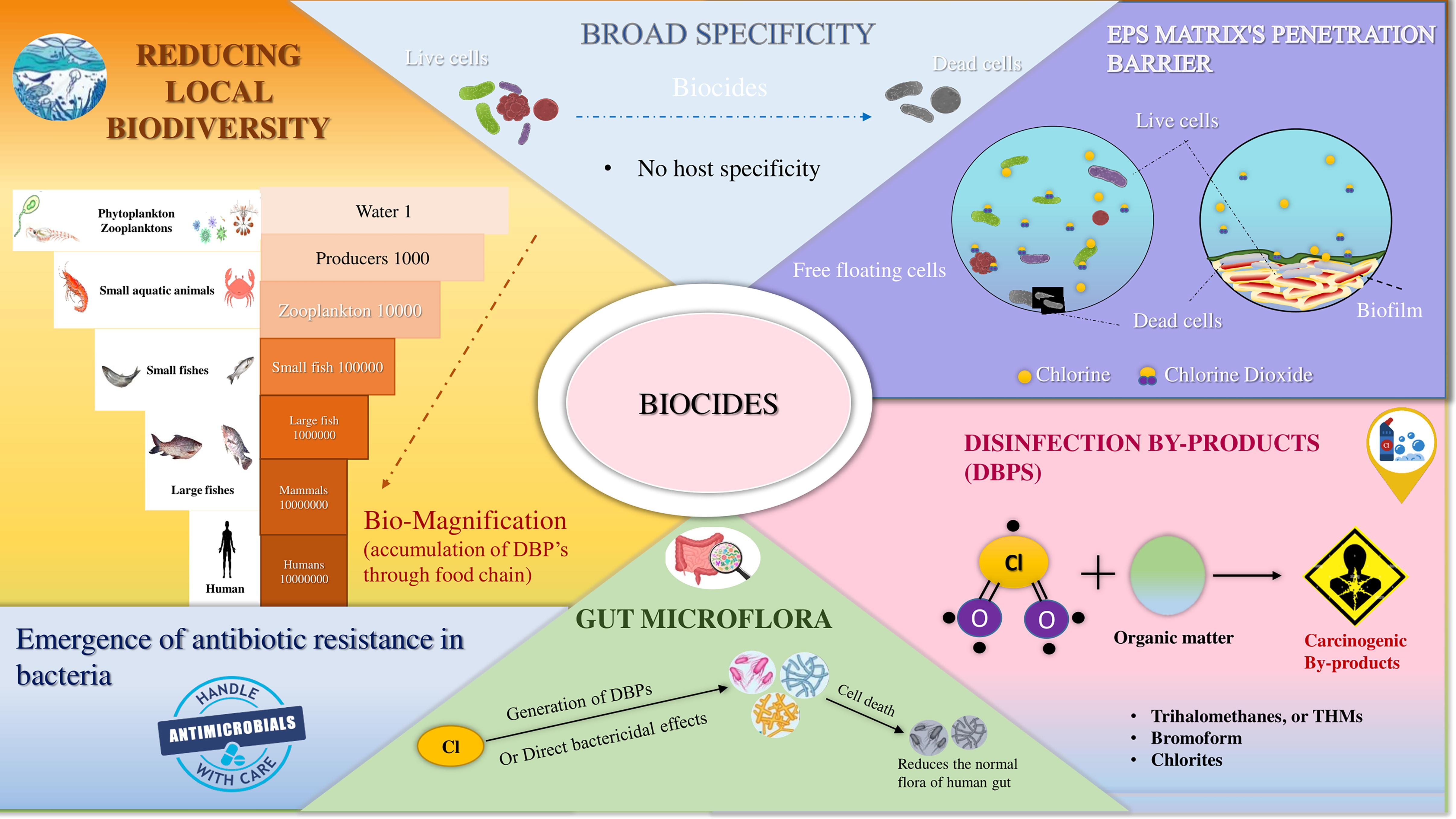
Concerns and limitations of traditional biocides.
Narrow Spectrum Versus Broad Spectrum Biocidal Approach
Classical microbiology views each cell within a biofilm as an independent entity (a single-cell-centric view). Consequently, broad-spectrum biocides have traditionally been the preferred method for managing the diverse bacterial species in industrial biofilms. However, in the last decade, this view has been challenged by a shift in our understanding of multispecies biofilms, known as the “biofilm-centric” view. 49 This perspective considers biofilms as multicellular organisms, where individual microbial cells are part of one organism. This concept of multicellularity can be further extended to another ecological concept of “holobionts” (a holobiont is an assemblage of a host and the many other species living in or around it, which together form a discrete ecological unit through symbiosis).49,50 While applying the holobiont concept to multispecies biofilms has its own limitations, the focus here is on emphasizing the significant interdependence of individual microbes within these multispecies biofilms. 51 This understanding opens up an alternative approach to managing industrial biofilms where one can achieve desired biofilm control by targeting an organism of interest without harming non-targeted organisms (narrow spectrum of activity). For example, targeting sulfate-reducing bacteria using organometallic inhibitors can significantly reduce microbial-induced corrosion in a given industrial system without harming other organisms. 52 Additionally, metagenomic analyses of natural biofilms have consistently shown that one or two species tend to dominate natural biofilms.53–55 This observation aligns with the ecological concept of “keystone species,” which are organisms that play a disproportionately large role in maintaining the structure of a biofilm or ecology.56–58 (For a detailed explanation, please refer to the subsection “Keystone species identification key to phage-mediated industrial biofilm control”). These findings emphasize that industrial biofilms often consist of multiple species. Nonetheless, targeting a single keystone or dominant species with narrow-spectrum agents, such as bacteriophages, can be an effective strategy for controlling the entire biofilm.
The Potential of Bacteriophages for Industrial Biofilms and Biofouling Management
Bacteriophage applications for biofilm control in healthcare have garnered significant interest over the past decade, with considerable success. 59 However, translating these achievements to industrial settings presents unique challenges due to fundamental differences in scale, cost considerations, biocide compatibility requirements, and regulatory frameworks. Despite the limited literature on the deployment of bacteriophages in large-scale industrial systems, several promising studies provide a foundation for developing comprehensive phage-based biofilm control strategies in industrial environments. For example, multiple research groups have successfully employed phages to mitigate biofilms on filtration membranes used across various industrial processes.60–63 In wastewater treatment, Kumar et al. demonstrated selective elimination of antibiotic-resistant bacteria from hospital effluent using phages, 64 while Aydin et al. utilized phage for targeted elimination of specific bacterial populations in bioreactors, thereby enhancing overall reactor performance through improved microbial community dynamics. 65 The food industry has also benefited from phages, with studies showing effective biofilm control on diverse surfaces, including steel, plastic, and other hard materials common in food processing environments. 66 Azari et al.’s comprehensive review of phage applications on stainless steel surfaces, ubiquitous in food processing, concluded that phage treatment consistently achieved approximately 40% reduction in bacterial counts. 67 Most significantly, Volpi et al. successfully demonstrated bacteriophage effectiveness against Salmonella contamination in a full-scale pork processing facility, providing compelling evidence for the viability of phage-based microbial control in large-scale industrial applications. 68 Collectively, these studies strongly support the potential of bacteriophages for biofilm control across diverse industrial settings, though this potential remains largely unrealized in many real-world, large-scale industrial applications like cooling water systems of power plants.
Advantage Bacteriophages: Unique Proposition for Biofilm Control
As we strive to overcome the hurdles of deploying bacteriophages to mitigate problems associated with industrial biofilms or biofouling, we must recognize the distinctive advantages that bacteriophages offer compared to traditional methods. Some of these advantages include:
Active penetration
Biofilms are complex structural entities involving a matrix of EPS. This matrix acts as a primary or physical barrier that needs to be broken before any biocide or antimicrobial agent reaches the bacterium. 39 This EPS is the primary reason behind the significant reduction in the effectiveness of biocides against biofilms compared to their activity against planktonic cells. Bacteriophages harbor various depolymerase enzymes, facilitating their penetration deep inside the biofilms.69–71 Several reports convincingly demonstrate the utility of those enzymes in mitigating biofilms. Rice et al. have shown effective removal of the biofilm of Proteus mirabilis using phage depolymerase. 72 An interesting observation by Hanlon et al. demonstrated the diffusion/penetration of Pseudomonas-specific bacteriophages through a 12% alginate gel, demonstrating this phage’s exceptional depolymerase-assisted penetration capability. 73 Interestingly, this active penetration capability is not just restricted to bacteriophages coding for depolymerase but has also been shown with phages devoid of depolymerase. 74 These observations establish the exceptional capability of bacteriophages to penetrate the biofilm matrix and infect the target organism sitting deep inside the biofilm. In addition, the biofilm-disrupting capabilities of bacteriophages were also shown to dramatically improve the efficacy of other biocides, which otherwise failed to provide desirable microbial control. For example, Varma et al. and Yilmaz et al. have shown that phage-mediated EPS matrix disruption facilitates antibiotic penetration into biofilm and, thereby, better control over infection.75,76 At the industrial setup, it was demonstrated that bacteriophages and conventional biocide treatments provide much superior biofilm control compared to bacteriophages alone.77–79 Collectively, the active penetration of bacteriophages inside the biofilm matrix makes them one of the most effective anti-biofilm agents compared to all other available anti-bacterial compounds. Additionally, combining bacteriophages with other biocides or antibacterial agents provides better efficiency than can be achieved by using them individually.
Auto dosing
The in vivo amplification of bacteriophages is a unique characteristic that sets them apart from other biocides, which must be continuously supplied to the system to maintain specific concentrations. In vivo, self-amplification, sometimes called “Auto-dosing,” is the process by which the number of bacteriophages increases without external addition.80,81 It has been shown that “active treatment” (i.e., killing by phage generated in situ) significantly contributes to eliminating the targeted organism along with the initial phage introduced in the system.82–84 Additionally, multiple reports from healthcare indicate a significantly higher concentration of phages at the site of infection than in the bloodstream, highlighting the role of in situ-generated phages in microbial control.85–87 This observation convincingly demonstrates the significant role of in situ-generated bacteriophages in microbial control. The phenomenon of ‘auto-dosing’ or ‘active treatment’ gives bacteriophages a considerable advantage over other antimicrobial approaches, which require continuous administration of active agents to control bacterial growth. Therefore, replacing traditional biocides or antimicrobial agents with bacteriophages could lead to substantial cost reductions in the biocide itself and the infrastructure needed for its dosing.
Environmentally safe or benign approach
As discussed in previous sections, chemical biocides are known to have significant environmental impacts. Therefore, many advocate using physical approaches like ultrasound, electric and magnetic fields, plasma, irradiation, and cavitation. 88 However, there is a significant knowledge gap between their rightful application and their toxic impact on non-targeted organisms. 89 On the contrary, bacteriophages are nature’s way of controlling specific bacteria. Various agencies have already certified bacteriophage formulations for the food and aquaculture industry as non-toxic, Generally Recognized As Safe (GRAS), organic, clean-labeled, and non-genetically modified (GM).90,91 The human body harbors many bacteriophages along with their respective host. As per the estimation, 1015 phages reside in the human gut alone. 92 They are also found in serum, blood, urine, ascitic fluid, and cerebrospinal fluid. 93 While comprehensive research is scarce on the interaction between bacteriophages and human cells and the immune system, existing perceptions and reported observations strongly suggest a minimal direct interaction between bacteriophages and human cells or the immune system. 94 The regulatory certification for the use of bacteriophages in food, poultry, and aquaculture, as well as substantial evidence indicating no negative impact on human health, confirms the bacteriophages’ safety and non-toxic nature. Therefore, unlike existing biofilm control methodologies, they can be used for biofilm control in industrial settings without any toxicity concerns.
Suitability for an integrated approach for biofouling control
Controlling biofilms and biofouling is a complex and multifaceted challenge, as no single approach or solution is sufficient to address this issue comprehensively. The most effective strategy involves adopting an integrated biofilm control framework that combines multiple approaches to achieve optimal results. 95 Crucially, the compatibility of these components is essential to ensure that one’s activity does not interfere with the efficacy of others. For instance, when combining bacteriophages with chemical biocides, bacteriophages must exhibit tolerance to those biocides. Studies have demonstrated that bacteriophages can remain stable and effective in the presence of chemical biocides.96–98 Chen et al., for example, reported that integrating bacteriophages with biocides significantly improved the disinfection of hard surfaces, with bacteriophages retaining their activity even in the presence of chemical disinfectants. 99 Similarly, Hayes et al. investigated the inactivation of Lactococcus lactis bacteriophages by biocides and found that biocide-resistant phages often exhibit broad tolerance to various categories of antimicrobial compounds. 100 In addition to simultaneous application, sequential use of bacteriophages and other antimicrobial agents has also proven effective in biofilm eradication. For instance, Salwa et al. demonstrated successful control of E. coli biofilms on minimally processed vegetables using a combination of E. coli-specific phages and gamma irradiation. 101 Stachler et al. have shown better efficiency of biofilm removal by biocide if the surface is pre-treated with bacteriophages. 77 All these reports indicate that bacteriophages can fit into the advocated concept of “integrated approach for biofouling control, 95 ” which can be used in conjunction with other controlling measures Figure 2 represent a schematic diagram of variaous advantages of bacteriophages over conventional appraoches for mitigation of industrial biofilms.
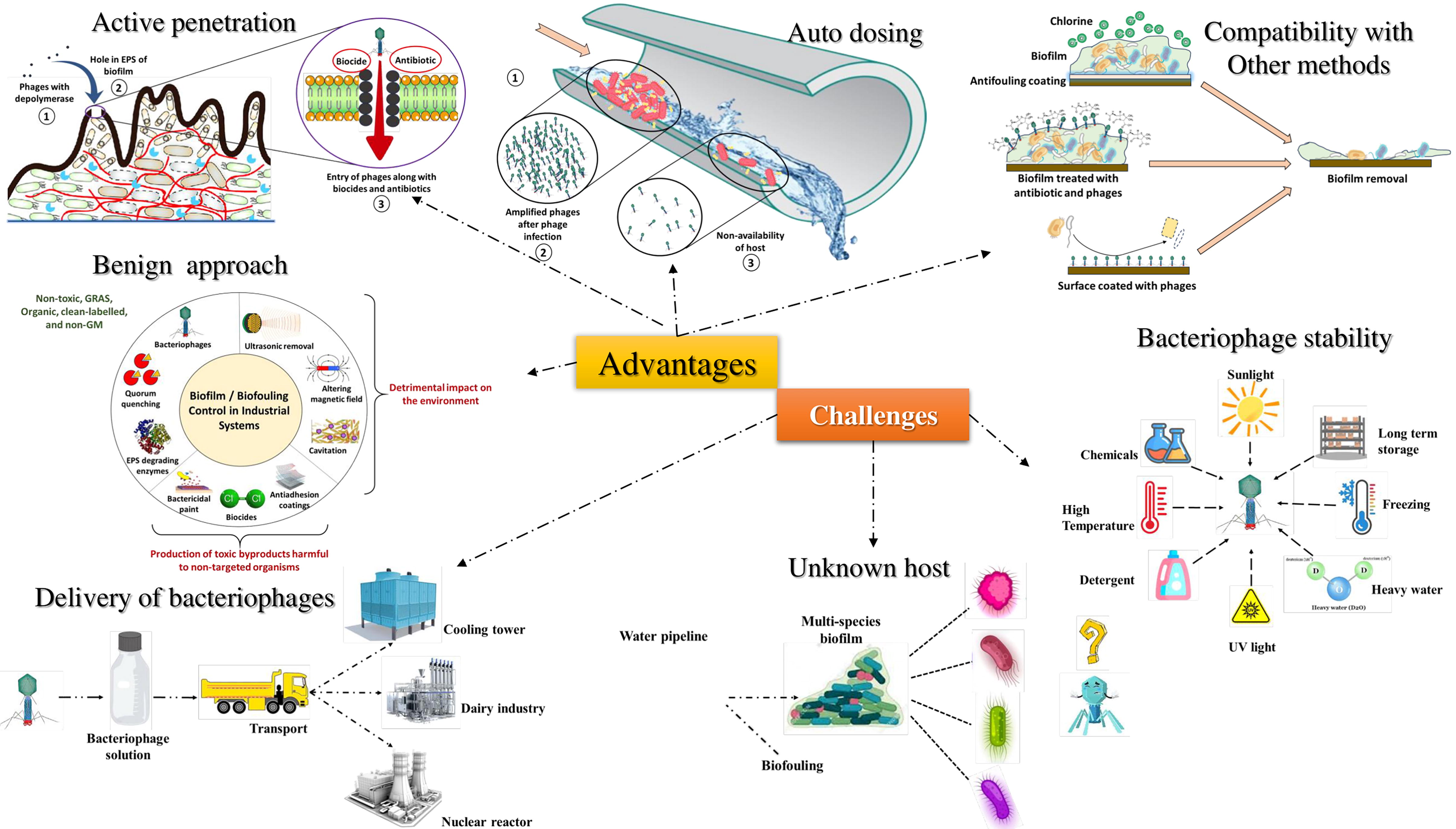
Advantages of bacteriophages over traditional biocides and challenges for their successful deployment for industrial-scale biofilm control.
The Limitations, Challenges, and Probable Solutions
Bacteriophages have been established as promising candidates for controlling medical and, to a limited extent, industrial biofilms. However, a few challenges must be overcome to successfully implement bacteriophages for biofilm control in industrial settings (Fig. 2). A few of those challenges and probable solutions are as follows:
Delivery of bacteriophages
Bacteriophage delivery at the appropriate concentration and location is critical for practical use in biofilm control. This component does not present significant obstacles in biomedical applications, as all conditions are carefully regulated within a controlled environment. However, at the industrial scale, the requirements are different. For instance, a cooling water system that operates at a high flow rate of thousands of liters per hour requires an adequate supply of phage to eliminate biofilms effectively. 102 There are a few approaches that can be used for the delivery of bacteriophages in large-scale industrial systems. For example, Salim et al. have proposed a “Lytics broadcasting” approach for continuously releasing bacteriophages into the system. 103 Sun et al. adopted the genetically modified M13 phages to deliver polyvalent phages to targeted organisms deep inside the polymicrobial biofilms. 104 In addition, film-forming formulations used in phage preparation for increasing local concentration, controlled release formulation, dispersant, etc., are a few more approaches proposed for the effective delivery of bacteriophages. 105 However, these approaches have only been validated in laboratory-scale experiments or simulated conditions with limited volumes (typically <100 L) and require rigorous testing in real-world, large-scale industrial systems.
Bacteriophage stability
Based on the reported literature, one can find extreme stability or sensitivity of bacteriophages against various physicochemical agents. Therefore, it is essential to evaluate the stability of phage preparations against potential physicochemical factors they may encounter during their application. Appropriate measures should be taken to ensure their stability in various conditions. A comprehensive review by Wdowiak et al. details various approaches to significantly enhance bacteriophage stability for diverse applications, including encapsulation, the addition of stabilizers, and immobilization through physical or chemical methods. 106 However, most of this methodology provides stability against pH, temperature, and salinity. However, phage stability against UV light and natural sunlight is still a concern.105,107–109 The deployment of bacteriophages in open recirculatory cooling systems or other industrial systems exposed to direct sunlight requires methods to protect phages from UV radiation. Further research is needed to enhance the stability of bacteriophages against UV and sunlight before they can be effectively used in open environments.
Optimizing the dose (phage dosing) or multiplicity of infection
The efficacy of bacteriophages in targeting biofilm-embedded bacteria is influenced by multiple factors, including nutrient availability, host encounter probability, and phage diffusion rates through the biofilm matrix. 110 Additionally, biofilm biomass, host susceptibility, initial phage titer, entrapment within the EPS, and biofilm architecture further modulate phage infectivity.111,112 Suboptimal anti-biofilm outcomes often arise from either (1) the use of unsuitable phages or (2) insufficient phage dosing. 113 Notably, sub-optimal phage concentrations promote biofilm formation, 114 making optimum phage concentration (phage dosing) or optimum multiplicity of infection (MOI) critical for effective biofilm eradication. Unfortunately, there are multiple challenges with determining the suitable MOI or required phage dosing for a natural, multispecies biofilm. For example, (1) determine the number of target organisms in biofilms, (2) determining the minimum concentration of phage to achieve the threshold concentration required for its effectiveness, which is shown to be independent of phage potency, 115 and (3) poor correlation of laboratory-derived optimum MOI with real-world scenarios. 84 Addressing these challenges requires a deeper understanding of multispecies biofilm ecology, phage-host dynamics, and in situ interactions. 116 In line with this argument, Røder et al. provide an excellent review emphasizing the importance of understanding multispecies biofilms, offering a comprehensive framework for investigating natural biofilms and thereby determining their mitigation strategy. 117 Similarly, in their book chapter, Díaz-Muñoz et al. highlighted the ecological ramifications of phage-bacteria interactions, emphasizing their broader ecosystem impacts beyond individual host lysis. 118 Therefore, understanding phage-bacterial interactions in natural biofilms and ecosystems is essential for developing well-calibrated strategies to combat natural biofilms using selected bacteriophages. Furthermore, bridging the gap between academic knowledge and industrial requirements necessitates developing methodologies that translate theoretical understanding into practical applications. 119
Current convention suggests that 107 PFU/mL represents an ideal phage concentration. When necessary, multiple dosing rounds at this concentration can achieve the desired biofilm control.116,120 Future directions should include generating extensive data sets to develop mathematical models for determining required phage concentrations for effective control of natural biofilms. For example, Konrad et al. simulated phage dynamics in multi-reactor wastewater treatment systems, demonstrating that weekly bacteriophage dosing or appropriate initial phage concentrations can effectively control foaming and bulking-causing biomass. 121 Many models and tools have been developed to overcome a similar challenge in healthcare, and one needs to look into those models and try to implement them for industrial applications.122,123
Keystone species identification key to phage-mediated industrial biofilm control
Industrial water systems are often exposed to natural environments, leading to significant seasonal variations in biofilm’s structural and functional composition. This variation complicates the use of bacteriophages for biofilm control due to their high specificity and difficulty in predicting their effectiveness. It is essential to address this uncertainty by implementing a bacteriophage-based biofilm control program. In this scenario, focusing on dominant species within the biofilm, often identified through long-term culturable or metagenomic analyses of microbial diversity in the given system, may offer a promising solution for more effective control. For example, Pinel et al. demonstrated a significant reduction in chlorinated cooling water’s operational taxonomic units compared to feed water. This reduction resulted in a microbial community dominated by the Obscuribacterales group, comprising 30% of the population. 25 Similarly, using full-scale cooling water plants, Rethinavelu et al. have shown the dominance of Azospirillum and Lactobacillus in biofilm generated on titanium, irrespective of the treatment regime followed. 124 Similarly, Rehman et al. demonstrated the enrichment of Planctomycetes in biofilm-associated with RO membranes in a full-scale seawater desalination plant. 125 These reports indicate that only a few bacterial species dominate naturally formed biofilms in industrial systems. Identifying these species and targeting them with bacteriophages that are specific to those species may achieve the desired biofilm control in a much more environmentally sustainable manner compared to broad-spectrum conventional biocides.
Natural biofilms are a community of microbes where complex interaction among constituent bacteria determines the progression of biofilm formation. This community also harbors many “Keystone species,” which govern the growth and sustainability of polymicrobial, natural biofilm.56,58,126 For example, using a genome-scale metabolic model and experimentation, Sun et al. have shown that keystone species in the synthetic biofilm community (SynComs) directly impact the overall biomass. 127 It was also demonstrated that keystone species play a central role in establishing, developing, increasing, and stabilizing multispecies biofilms in root, soil, drinking water systems, food, dairy industries, etc.56–58,126,128 Demonstrating the critical role played by keystone species in imparting disinfectant resistance, Wicaksono et al. have demonstrated that keystone species facilitate the survival of multi-species biofilm under disinfection stress and, therefore, might play a pivotal role in biocide-resistant biofilms in various industrial systems. 129 Therefore, targeting those keystone species using bacteriophages can be an approach to mitigate biofilms in a given system (Fig. 3).
To support the hypothesis of targeting keystone species to achieve the desired outcome, there are a few studies in healthcare where treatment was targeted towards keystone species to reduce the infection or pathogen load. 130 For example, Silveira et al. have demonstrated that targeting anaerobic bacteria (keystone species) in cystic fibrosis can significantly reduce the growth of Pseudomonas aeruginosa, the primary causative agent in cystic fibrosis. 131 Similarly, Wu et al. have demonstrated that targeting keystone species in fatty liver patients can help restore the pyruvate-producing bacteria and reverse dysbiosis. 132 Collectively, these reports provide foundational evidence for the central role of specific bacterial species or keystone species in overall multispecies biofilm formation, suggesting potential targets for biofilm control (Fig. 3).

Making narrow-spectrum bacteriophage effective against multispecies biofilms: (1) targeting the dominant species and (2) targeting the keystone species.
Identifying keystone species is challenging and needs more research and development. Developing bioinformatics tools capable of identifying keystone organisms from metagenomic data is a promising approach for this purpose. 133 For example, Wang et al. have proposed the identification of keystone species using deep learning. They have proposed a data-driven keystone species identification framework for identifying keystone species in a given ecosystem. 134 Berry et al. have proposed using co-occurrence networks to identify keystone species. 135 Identifying keystone organisms will help us design a bacteriophage-based biofilm control approach targeting those keystone organisms. Selective elimination of keystone organisms will significantly impact the overall biofilm, and thereby, one can get control over it.
Regulatory framework for application of bacteriophages for industrial biofilm control
The regulatory landscape for bacteriophages in environmental applications is continually evolving, with a focus on ensuring safety, efficacy, and minimal ecological impact. Regulatory bodies such as the US Environmental Protection Agency (EPA) and Canada’s Pest Management Regulatory Agency (PMRA) evaluate bacteriophage-based products on a case-by-case basis, prioritizing host specificity, low toxicity, and environmental persistence. These agencies often rely on existing scientific literature and reasoned arguments rather than requiring extensive new data, aiming to minimize risks to operators, consumers, and ecosystems. The Organisation for Economic Co-operation and Development has published guidance advocating for the adaptation of existing biopesticide frameworks to bacteriophages, taking into account their high specificity, low toxicity, and natural origin. 136 Key guidelines emphasize host specificity, the absence of antimicrobial resistance or virulent genes, and comprehensive documentation of production and quality control measures. While most approved formulations are currently used in food preservation and disease control in aquaculture and poultry,90,137 the regulatory framework developed for large-scale aquaculture applications, where millions of liters of water are treated, could be similarly applied to bacteriophage formulations for industrial biofilm control, given the potential for direct environmental exposure.
Conclusion
Industrial biofilm control faces mounting challenges as traditional broad-spectrum biocides encounter limitations from ecological concerns, regulatory restrictions, and antimicrobial resistance development. Bacteriophage-based interventions represent a transformative alternative, offering host specificity, self-amplification capabilities, and most importantly, active biofilm penetration capabilities, attributes that enhance both operational effectiveness and environmental sustainability. While phage applications have shown promise in healthcare, aquaculture, and food safety domains, their successful implementation in large-scale industrial setups requires addressing three fundamental challenges: (1) managing multispecies biofilm through strategic targeting of keystone species, (2) developing phage delivery systems that maintain number of infective phages and stability across diverse physicochemical conditions, and (3) establishing production protocols that can scale to meet industrial volume requirements. Addressing these issues will require interdisciplinary collaboration, advances in formulation and delivery technologies, and clear regulatory guidance. Recent progress in the implementation of phage-based methodology in relatively larger industrial systems like aquaculture and food processing industries, metagenomic and bioinformatics tools for the identification of keystone species, and innovative delivery systems demonstrates that these barriers are surmountable. Integrating phage-based approaches with existing control methods, such as combining phage and biocide, may yield synergistic benefits, enhancing both efficacy and sustainability.
Looking ahead, the adoption of bacteriophage-based methodology aligns with global trends toward greener, more sustainable industrial practices. By shifting from broad-spectrum chemical treatments to precision biological interventions, industries can reduce their ecological footprint while maintaining operational efficiency. Continued research, cross-sector collaboration, and supportive policy frameworks will be essential to realize the full potential of phage-based biofilm management.
In summary, bacteriophages represent a compelling next-generation solution for industrial biofilm control. Their successful implementation could transform current practices, offering a balance between operational demands and environmental stewardship.
Footnotes
Authors’ Contributions
A.K.: Original article draft, formal analysis, investigation, methodology, A.S.: Visualization, investigation. H.M.J.: Conceptualization, formal analysis, project administration, resources, supervision, and article review and editing.
Author Disclosure Statement
No competing financial interests exist.
Funding Information
No funding was received for this article.