




Abstract
Introduction
Pemphigoid causes pain, burning, and sensitivity to acidic foods, and eating may become difficult. Involvement of deeper areas of the throat may cause coughing. Nosebleeds may also be present. The gingiva is most commonly involved, followed by the palate and the buccal mucosa; however, any mucosal site in the mouth may blister. Involvement of the oropharynx may present with hoarseness or dysphagia. Progressive scarring disease may lead to esophageal stenosis requiring dilatation procedures, and supraglottic involvement may lead to airway compromise requiring tracheotomy. It may also affect areas of mucous membrane elsewhere in the body, such as the sinuses, genitals, and anus. When the cornea of the eye is affected, repeated scarring may result in blindness. 1 –4
Treatment of CP is carried out with topical cortisone creams but, sometimes, requires high doses of steroids. Severe pemphigoid may also require immune suppression drugs such as azathioprine. Tetracycline has been used as a treatment option. Other treatments that have been used for severe disease include intravenous immunoglobulin infusions, typically given monthly. Recent research has indicated that large quantities of high-potency topical corticosteroids applied to the entire body surface were safer and more effective in controlling extensive CP than oral steroids. It was felt by the researchers that topical corticosteroids should now be the treatment of choice for CP, particularly when the disease is not extensive. 5 –9
The magnitude of the effects of laser phototherapy (LPT) depends on the clinical stage of the condition before irradiation because LPT causes changes on several tissular factors and these changes lead to several specific effects on the tissues. Its efficacy depends on many factors including the given amount of energy, exposure time, and delivery method. Our clinical experience suggests that a patient responds well to treatment carried out every other day; there is no additional benefit if the patient is treated on a daily basis. Our clinical protocols always follow three sessions per week. 10 –15
The oral cavity and maxillofacial regions are very complex areas of the human body that may be affected by several pathologic conditions that can influence a patient's daily life with regard to social interactions and/or employment. This is the case with CP, and the aim of this paper is to report an efficacious treatment of this condition using LPT.
Material and Methods
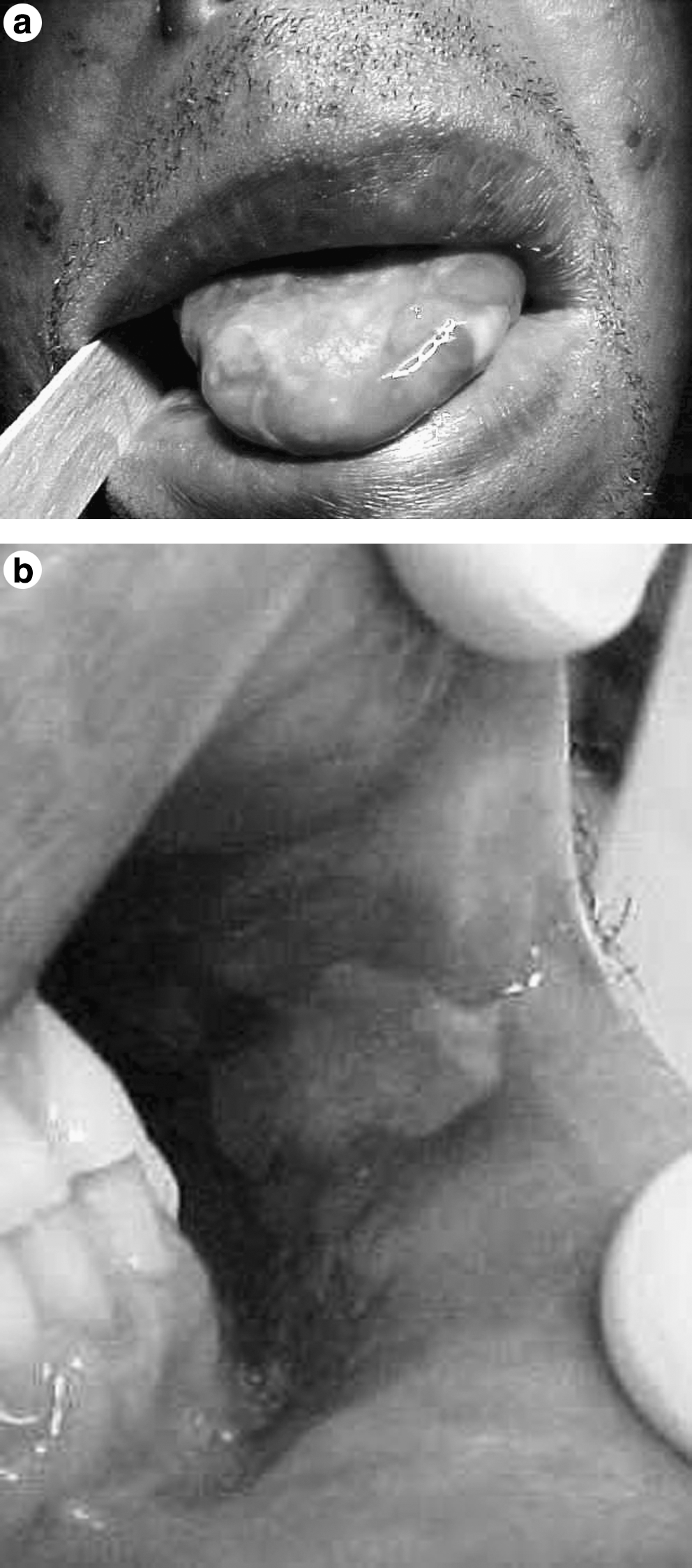
A white 47-y-old man with CP was initially seen at the Oral Medicine clinic of the School of Dentistry of the Federal University of Bahia. The patient reported daily use of 100 mg of diaminodiphenyl sulfone, 40 mg of Prednisone, and 100 mg of Azathioprine© over the previous 5 y. Extraoral examination revealed classic signs of the condition. Intraoral examination showed the presence of multiple painful ulcerated areas on the mucosa, gingiva, and tongue. The patient reported no improvement with the therapies being used. The patient was sent for assessment and treatment at the Laser Center of the School of Dentistry of the Federal University of Bahia-Brazil. LPT using a GaAlAs diode laser (660 nm wavelength, 30 mW, continuous wave, ∼3 mm diameter, 60 J/cm2 per session; Laser Unit, Kondortech, São Carlos, Brazil) was used in association with the steroids three times a week. Laser light was applied in a punctual manner around each lesion. The number of points and exposure times varied according to the size of each lesion. The mean dose per point was 2 J/cm2 and each point was approximately 1 cm away from each other. The dose per session was always 60 J/cm2. The initial appearance of the mouth lesions can be seen in Fig. 1a and 1b. The patient was examined weekly during the 4 week treatment time. Pain was assessed by Visual Analog Scale (VAS). 16 Clinical assessment was carried out according to the World Health Organization scale for oral mucositis. 17 Weekly digital photographs of the lesions were also taken. A modified Profile of Mood States (POMS) Short Form was used to assess the mood state of the patient. 18
(
Results
The modified POMS Total Mood Disturbance score decreased over treatment time. This aspect is important because it shows that well-being greatly improved during treatment, leading to a better quality of life. However, there is no previous report on the use of this scale on CP patients. The initial VAS score of 10 fell to 6 during the first week. By the third week, it had dropped to 1, and this low score was maintained to the end of the observation period. 16
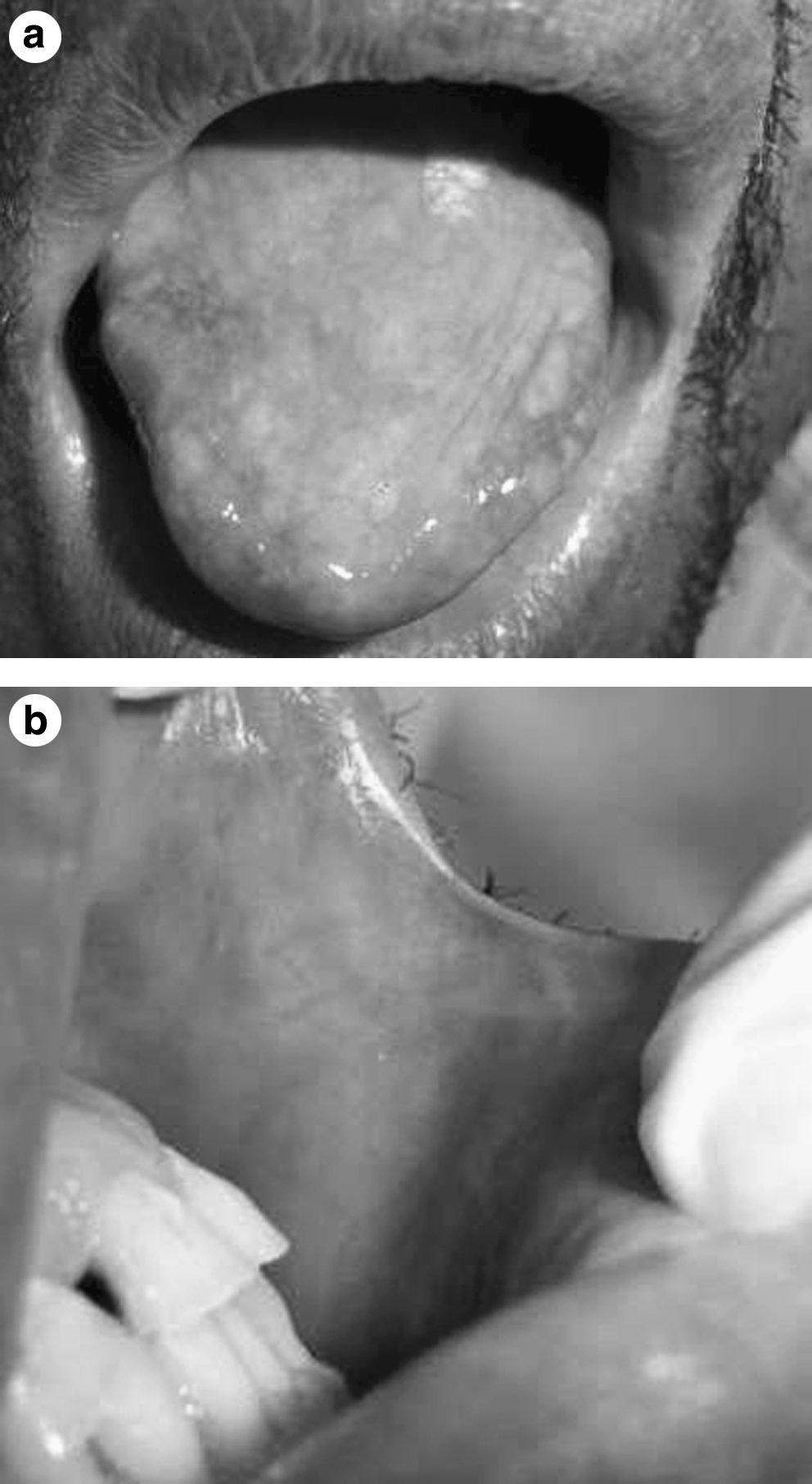
As there are no scales to assess the severity of the CP lesions, a scale for assessing oral mucositis was used. The lesions were initially graded as 2. After the seventh session (third week), most of the lesions had healed (Fig. 2a, 2b) and were graded as 0. LPT was maintained because it was observed that its interruption resulted in recurrence of the lesions. The patient has received treatment twice a week for 6 months as of this report without signs of lesion recurrence.
(
Discussion
Treatment of intraoral CP lesions has not been previously reported in the literature. The clinical status of the patient (i.e., no clinical response to drug therapy) when he was seen by our team prompted us to verify the usefulness of LPT for CP.
The lesions found on the patient were indicative of CP as previously described in the literature. 3,4,8 The drug therapy set by the patient's dermatologist has also been reported in the literature, 9 and recalcitrant lesions have also been described. 4
The literature has pointed out several humoral factors that are affected by LPT, which are not only increased but also modulated. 10,19,20 It is known that the efficacy of LPT depends on the amount of energy delivered to the tissue, exposure time, and delivery method. It is important to start the treatment with low doses and intensity, particularly in elderly patients whose cellular response is relatively weak. Dose may be adjusted during treatment. Care must be taken to avoid inhibitory threshold and overexposure during treatment. 18 In the present study we used low dose per point due to the fact that mucous membrane or wounds have less optical interference than the skin. 21
Dose and time interval depend on the status of the process (chronic or acute), patient systemic status, and skin pigmentation. Previous reports from our group and others suggested that the treatment protocol used is effective. 22 –24
Some systemic conditions such as diabetes, hypothyroidism, and undernourishment show impaired wound healing at different stages. Several studies have shown that phototherapies possess wide effectiveness on the healing of debilitating conditions due to their effects on local vascularization, release of growth factors, and increase in cell proliferation. 25,26
There are other situations, such as in some therapies used for cancer treatment, in which patients may develop severe and debilitating lesions of the oral cavity. This condition is called oral mucositis and its lesions may be clinically similar to the ones seen in CP. 27 –29 There are reports showing that LPT does improve or prevent the development of oral mucositis. 30,31
It is important to be clear that we did not cure the CP with LPT, but we were able to successfully improve the health of the oral tissues using laser light. We have previously reported success in treating oral ulcerations with LPT. 12 Other study evaluated the usefulness LPT on the control of painful stomatitis in patients with hand, foot, and mouth disease using LPT. 32 The painful period was significantly shorter in the LPT group (4.0 ± 1.3 d) than in the placebo group (6.7 ± 1.6 d) and treatment was considered acceptable for 90.0% (18 of 20) of the patients. Most importantly, no adverse events were observed in any of the cases.
The findings of this treatment indicate that LPT has a positive effect on controlling oral CP lesions. The association with drug therapy, in this case, effectively improved both oral health and the patient's quality of life. Further studies are needed.
Footnotes
Disclosure Statement
No competing financial interests exist.