




Abstract
Introduction
Cancer affects thousands of people worldwide and is responsible for many deaths. Many optical biopsy studies on breast, skin, lung, and brain cancers have been performed. 4 –6 However, few works concern inflammatory states that are always present in these lesions. 1 –3
In particular, oral pathologies had been focus of only a few studies. An animal experimental model performed with 21 hamsters by Oliveira et al. 7 showed that FT-Raman spectroscopy could differentiates normal, dysplastic, and oral squamous cell carcinoma tissues. Malini et al. 3 applied Raman spectroscopy to differentiated normal, premalignant, inflammatory, and cancerous oral tissues. The authors were just able to discriminate normal and altered tissues. Venkatakrishna et al. 8 , studying 37 samples of cancer and 12 of normal oral tissues, concluded that Raman spectroscopy can differentiate them with 85% sensitivity and 90% specificity.
Inflammatory fibrous hyperplasia (IFH) is a nonneoplastic benign lesion of the oral mucosa. 9 Its origin lies in some kind of low-intensity chronic trauma, such as wearing an ill-fitting full or partial or fractured denture prosthesis, rubbing on fractured teeth with sharp edges, diastemas, or improper oral hygiene. 9 The oral epithelium shows epithelial changes induced by the inflammation of the underlying lamina propria. In some situations, the epithelial changes are similar to the epithelial dysplasia seen in a premalignant lesion. 10 IFH is more prevalent in women in the fifth decade of life. 9 The histologic confirmation of the clinical diagnosis involves quite subjective inherent factors that limit the sensitivity for detection. 9,10 Therefore, IFH tissues could be considered good prototypes for studying inflammatory processes.
In the present work, a comparative study with normal (NM) and IFH oral tissues was performed. The main objective was to find the minimal spectral range enabling the correct diagnosis with the help of principal components analysis (PCA) and soft independent modeling of class analogy (SIMCA). One important implication of this study is related to the cancer lesion border. The cancerous normal border line is characterized by the presence of inflammation, and its correct discrimination would increase the accuracy of delimiting the lesion frontier.
Material and Methods
This research was carried out according to the ethical principles established by the Brazilian Healthy Ministry and was approved by the local ethical research committee 067/2006/PH-CEP. Patients were informed concerning the subject of the research and gave their permission for the collection of tissue samples.
Sample preparation
Samples of 14 patients diagnosed as having IFH and six with normal tissues (NM) were obtained from biopsies performed at the Department of Bioscience and Oral Diagnosis–UNESP/BRAZIL. The tissue samples were identified and immediately snap frozen and stored in liquid nitrogen (
FT-Raman Spectroscopy
Raman spectra were measured at five different points (A1 to A5 in Fig. 1), resulting in 70 spectra of IFH and 30 spectra of NM. Soon after the procedure, all samples were fixed in 10% formaldehyde solution for further histopathologic analysis. A Bruker RFS 100/S FT-Raman spectrometer was used with an Nd:YAG laser operating at 1,064 nm as the excitation light source. The laser power at the sample was kept at 230 mW, and the spectrometer resolution was 4 cm−1. Each spectrum was recorded with 300 scans. For FT-Raman data collection, all samples were brought to room temperature, kept moistened in 0.9% physiologic solution to preserve their structural characteristics, and placed in a windowless aluminum holder for the Raman spectra collection. We noticed that the chemical species present in the physiologic solution (Ca2+, Na+, K+, Cl−, and water) do not have measurable Raman signals, and their presence does not affect the spectral signal of the tissues.
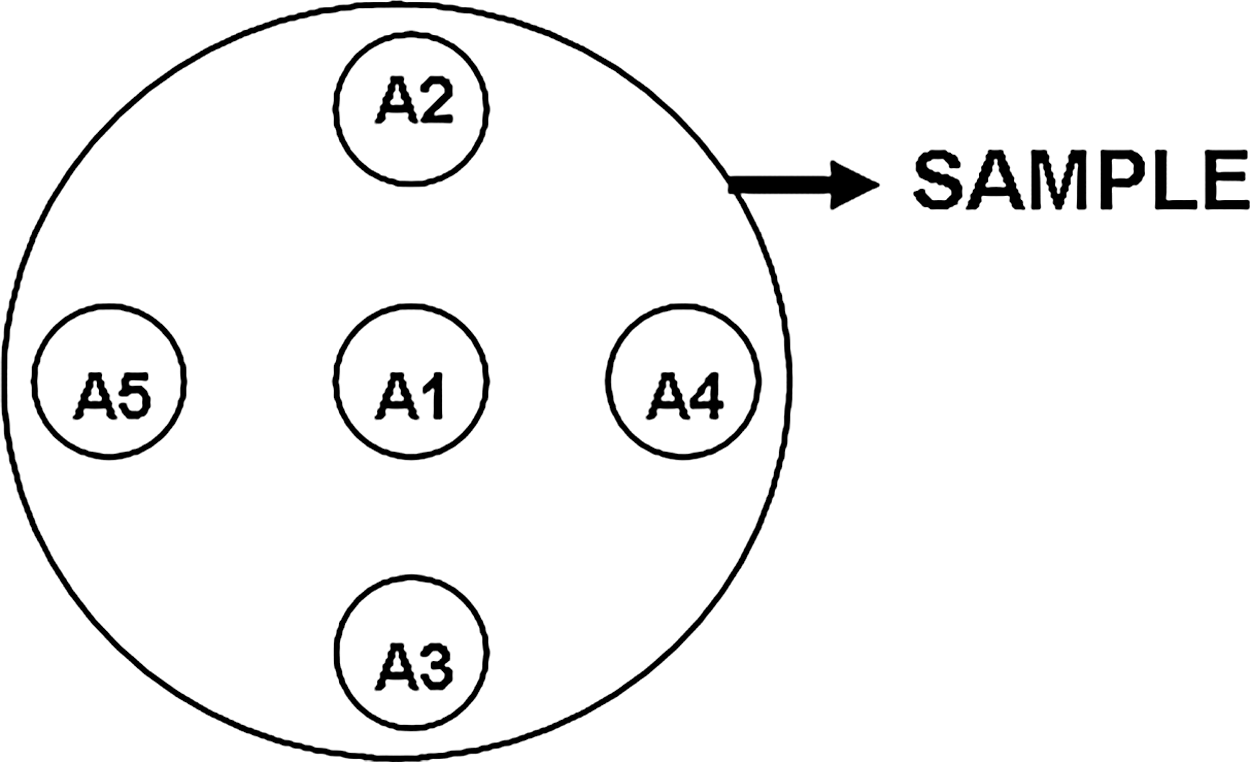
Scheme illustrating the position from which each Raman spectrum was collected on the sample.
Histopathologic analysis
NM samples showed normal epithelium, lamina propria with appearance of normality, and collagen fibers arranged in wavy bundles with typical cellular components (Fig. 2a). IFH tissues (Fig. 2b) showed epithelial changes as hydropic degeneration, exocytosis, spongiosis, acanthosis, and epithelial hyperplasia of cones. 11 The collagen fibrils had thick and irregular shapes. The diffuse inflammatory infiltrate is predominantly mononuclear, sometimes with congestive blood vessels. Depending on the relative amount of inflammatory cells, the infiltrate could be classified as mild, moderate, or intense. 11

Photomicrography of normal (NM) (
Data analysis
In this work, some pattern-recognition methods, such as PCA and SIMCA, were used to analyze the data set and to obtain the relation between Raman spectra and the two classes of collected spectra. Before using these methods, the spectral data were preprocessed (baseline corrected and normalized). Afterward, all variables were mean centered. The PCA and SIMCA analyses were carried out by using the Pirouette software (Infometrix Inc., Pirouette 3.11, Woodinville, WA). All analyses were investigated by using the cross-validated leave-one-out (LOO) method.
Soft independent modeling of class analogy
In the SIMCA method, a PCA model is constructed for each sample class, according to the position and distribution of the compounds in the raw space. 12,13 Consequently, a multidimensional (determined by the number of PCs necessary to describe the class) box is built for each class (this means that the shape and position of the samples in the classes are taken into account), and the limits of the boxes are defined according to a certain level of confidence. The classification of a test sample is achieved by determining which space the sample occupies and whether it can be a member of one, more than one, or none of the classes (boxes). The number of principal components of each class is determined by maximizing the sensitivity and specificity. 12,13 The main advantage of SIMCA over other classification methods is its ability to detect outlier samples. 12,13
Results and Discussion
Figure 3 shows the box plot for the normal (Fig. 3a) and IFH (Fig. 3b) vector-normalized data. The black lines correspond to the average spectrum, whereas the vertical gray lines are the region between the first and third quartiles. The assignment of the main Raman bands is presented in Table 1. The rectangular boxes in Fig. 3 indicate the spectral regions (close to 574, 1,100, 1,250–1,350, and 1,500 cm−1) with the biggest intragroup variations. According to Table 1, these bands are related to CO2 rocking, CC stretching, amide III/CH3, CH2 twisting, CH2 bending, and C = C stretching, which are primarily related to proteins such as collagen. Actually, the IFH group showed less intragroup variation than did the NM group. This fact could be related to the acanthosis process in the IFH epithelium. In this process, the thickness of the epithelium increases because of the growing of the spinous layer. The spinous layer has a more-homogeneous composition than does the connective tissue, which implies greater similarity of the Raman spectra within the IFH group than the NM one. This reinforces the accuracy of the FT-Raman spectroscopy when validated by histopathologic analysis.
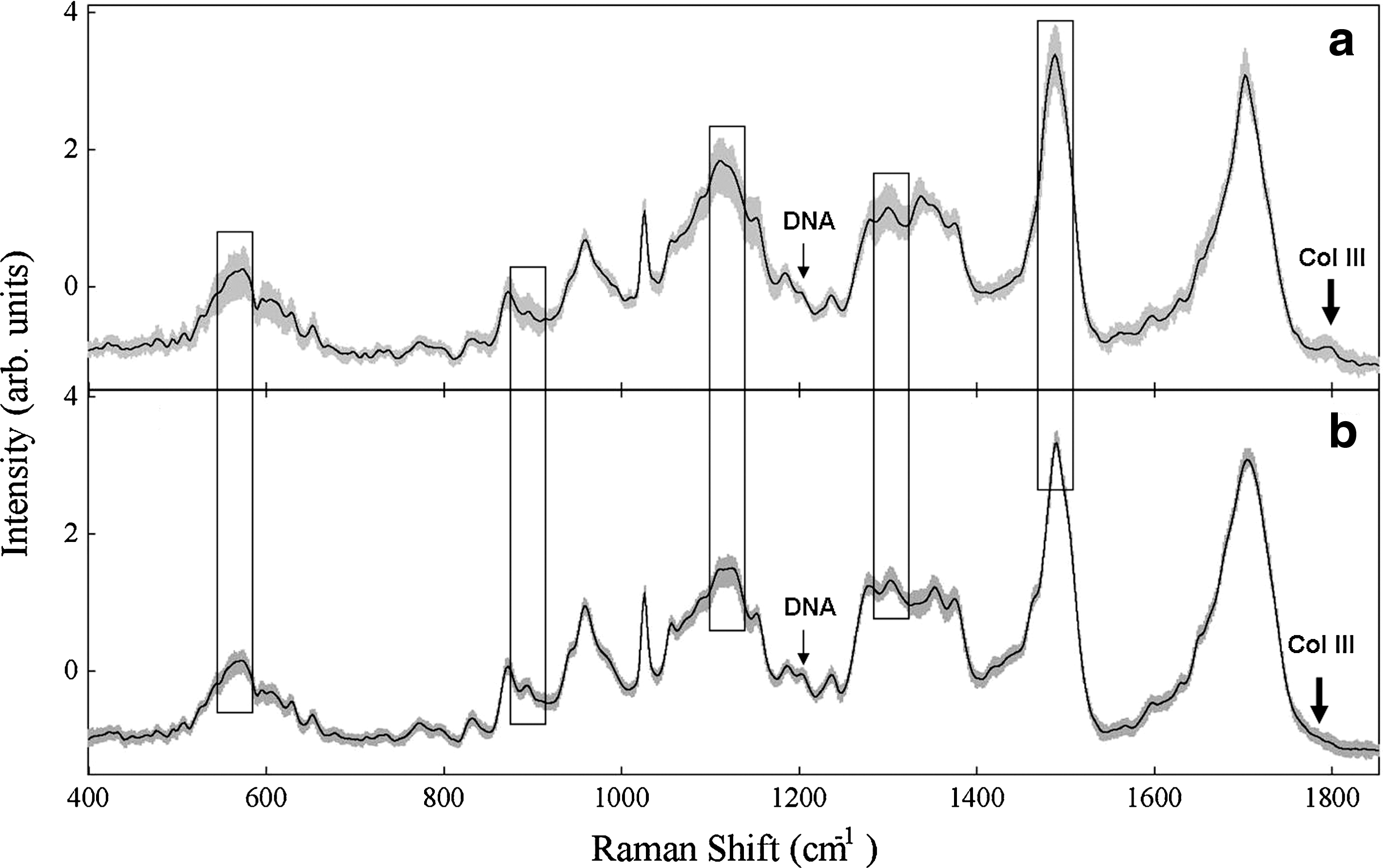
Box plot for the spectral data of NM (
Comparing the NM (Fig. 3a) and IFH (Fig. 3b) spectra, one could state that the main differences were observed in the 1,200 (C-C aromatic/DNA), 1,350 (CH2 bending/collagen 1), and 1,730 cm−1 (collagen III) regions. These bands appeared less intense in the IFH group.
The change in the DNA band is associated with the increased proliferation of inflammatory cells (neutrophils, macrophages, and lymphocytes) in inflammatory areas. 9,15 –17 This change may also be related to the increase in the production of collagen fibers, due to the increase in the number of fibroblasts and collagen synthesis in inflammatory tissue. 16,17
The collagen bands intensity decreases in the IFH group were closely related to the histopathologic findings. The collagen was observed as parallel thin and delicate bundles of fibers in NM and thick and mature bundles of collagen fibers, arranged in different directions, for IFH. The proliferation of inflammatory cells at the inflammation site, such as lymphocytes, macrophages, and neutrophils, causes degradation of several macromolecules in the extracellular matrix, as shown by Séguier et al. 15 for gingivitis.
As first step on the statistical analysis, all spectral data covering 400–1,820 cm−1 were analyzed. As can be verified in Fig. 4, no significant discrimination among the two classes was present. It is important to notice that the first 20 PCs summed 93.3% of information, where PC1 = 59.5%, PC2 = 18.2%, PC3 = 4.8%, PC4 = 2.7%, PC5 = 1.7%, PC6 = 1.4%, and PC7 = 0.71%. After that, the same procedure was individually repeated for each band listed in Table 1, as well all possible bands combinations. The best separation was obtained with a small set of variables covering the region between 530 and 580 cm−1, which corresponds to amino acids vibrations. The PCA results also show that the first six principal components (PC1 to PC6) described 91.7% of the overall variance, as follows: PC1 = 79.47%; PC2 = 2.98%; PC3 = 2.65%; PC4 = 2.65%; PC5 = 2.06%; and PC6 = 1.90%. Because almost all variance is explained by the first two PCs, their score plot is a reliable representation of the spatial distribution of the points for the data set. Figure 5 (PC2 vs. PC1) presents the PCA score plot, indicating a good separation between NM and IFH samples.
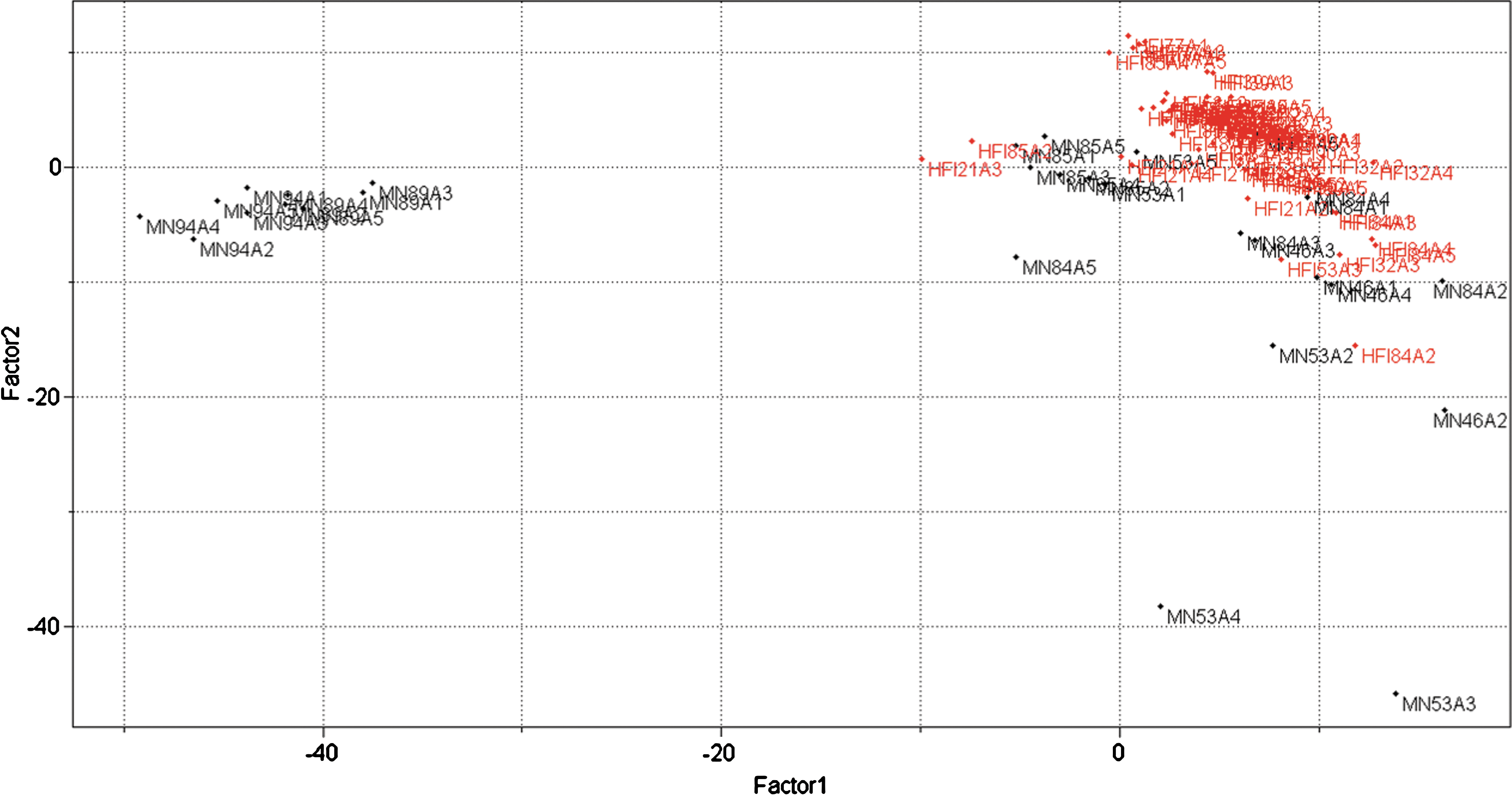
Score plot obtained for all spectral data (400–1,820 cm−1).
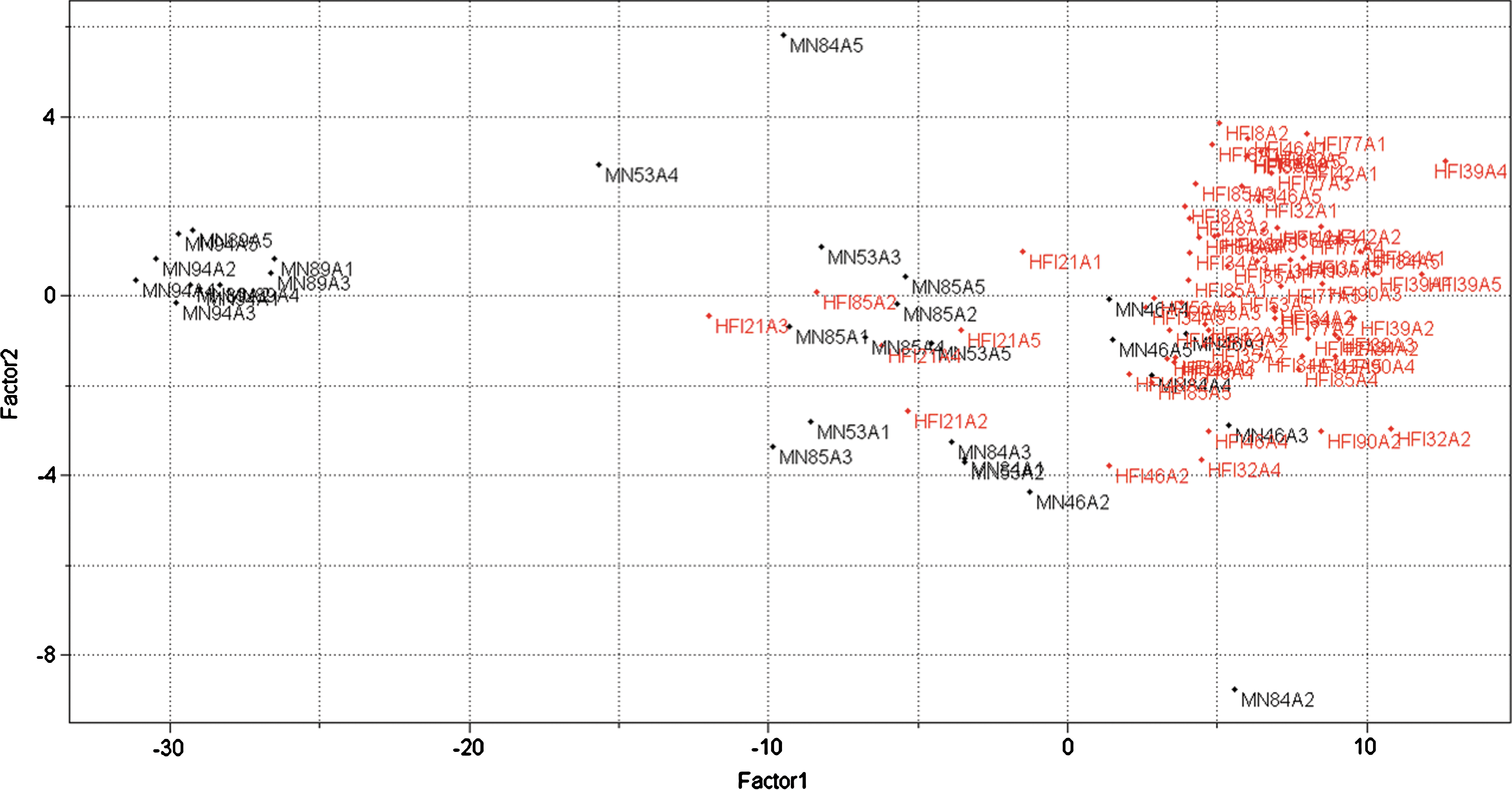
Score plot obtained for 530–580 cm−1 spectral region.
The SIMCA analysis was performed by using the first three PCs in the region between 530 and 580 cm−1. The three-dimensional projection of the samples is shown in Fig. 6 with the hyperboxes (small black points) representing two classes. The coordinates of the hyperboxes that determine the limits of the classes are obtained according to the standard deviations of the sample scores in the direction of each PC and state a confidence limit of 95% for the distribution of the classes.
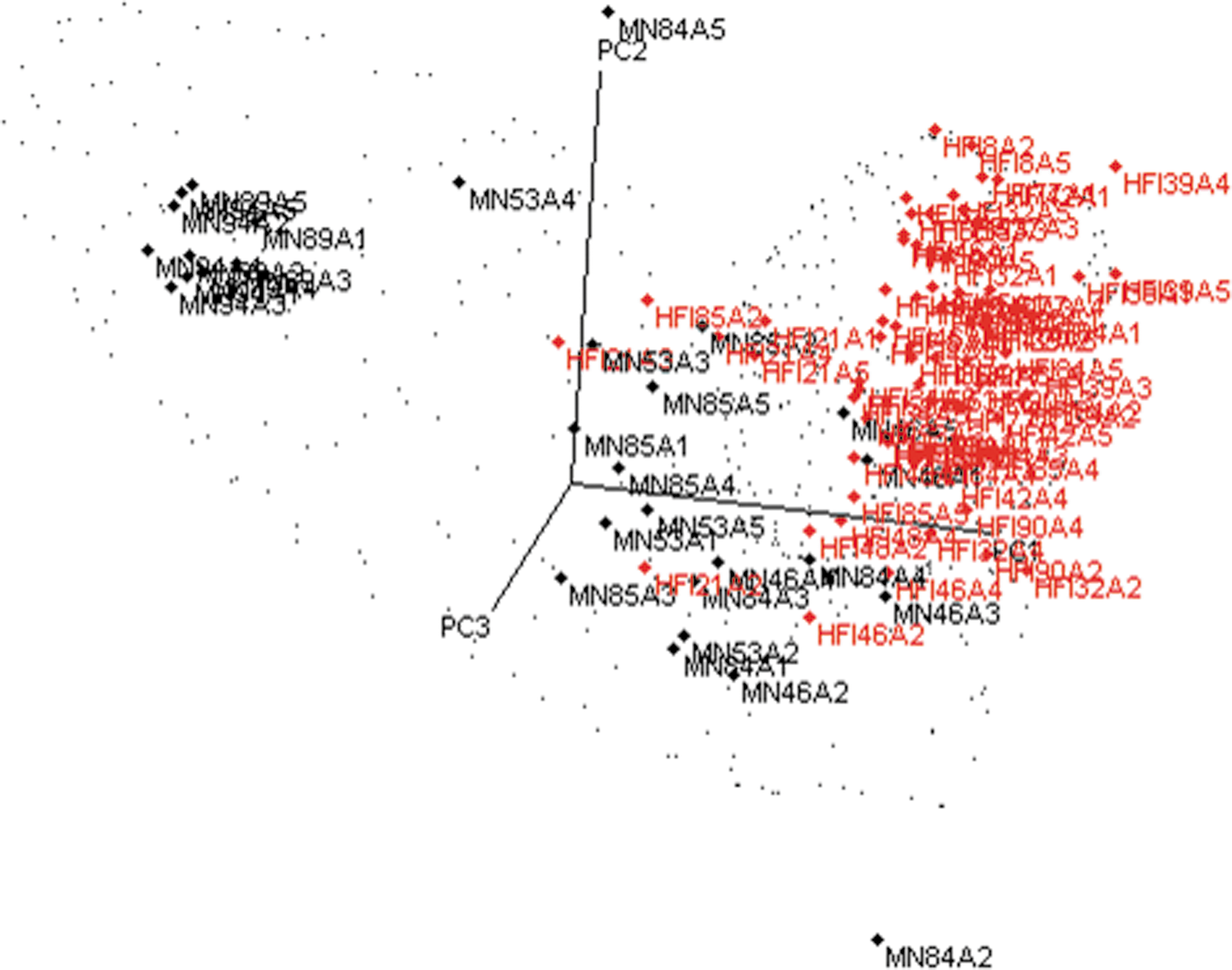
Three-dimensional projection of the samples obtained by the SIMCA method.
Another way to analyze the SIMCA results is to observe the plot of the distances among sample classes, which are calculated according to the residuals of the samples when they are adjusted to the classes. In general, this plot is divided by two lines that represent the confidence limits (95%). The samples lying in the northwest quadrant (NW) belong to the y-axis class. Analogously, the samples in the southeast quadrant (SE) are members of the x-axis class only. Samples positioned in the southwest quadrant (SW) may belong to both classes, whereas those in the northeast quadrant (NE) belong to none. Figure 7 displays the plots of the distances among the classes of the samples studied in this work. One can note that all normal samples are in the NW and SW quadrants. Otherwise, only five inflammatory spectra (labeled HFI35A4, HFI53A2, HFI85A3, HFI77A3, and HFI77A5 in the plot of Fig. 7) were classified incorrectly (i.e., these samples were classified into the quadrants occupied by the normal samples). However, only one inflammatory spectrum (HFI35A4) is located close to the normal class (the other four inflammatory samples near to the limit of classes). As these five spectra were taken near to the border lesion (points 2–5 of Fig. 1), probably they were taken in portions with had normal tissue characteristics, justifying the misclassification.
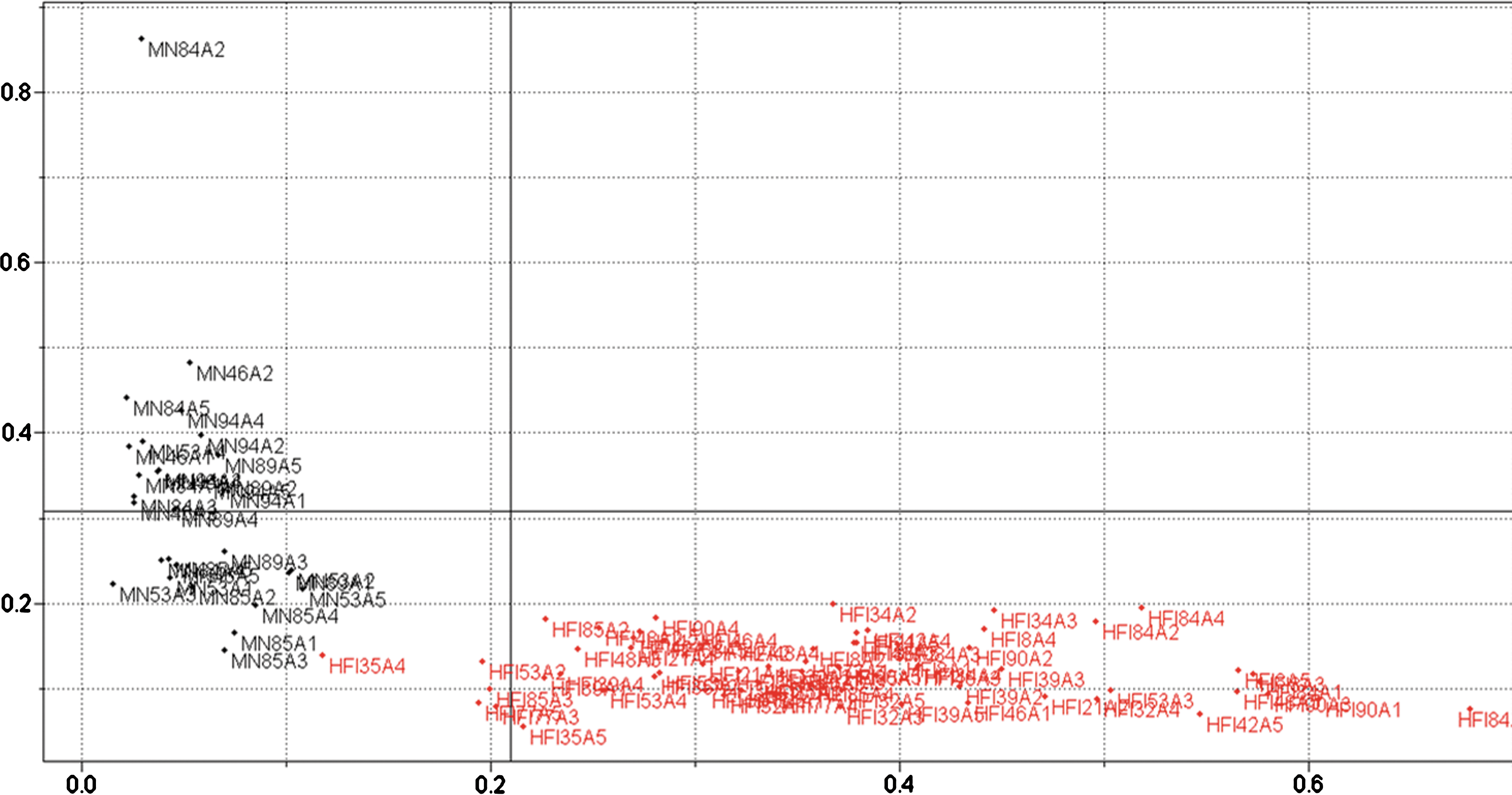
Plot of the distances among the classes of the samples studied.
Thus, the sensitivity and specificity obtained by the SIMCA method were 95% and 100%, respectively. From these results, one can consider this model very suitable for a good discrimination among the sample classes.
One important point in this work concerns the specific region (530–580 cm−1) with better classification. As these bands are related to vibrational modes of collagen amino acids cystine, cysteine, and proline, their relevant contribution to the classification probably relies on the extracellular-matrix degeneration process occurring in the IFH. In this process, cytotoxic cells and proteolytic enzymes attach the fibroblasts and matrix macromolecules, leading to a sudden and extensive breakdown of the collagen compound. 16
Conclusions and Summary
The analysis of the FT-Raman spectra of the NM and IFH buccal mucosa indicated that the PCA and SIMCA methods had a powerful discriminating capability (sensitivity of 95% and specificity of 100% for SIMCA) when using the 530–580 cm−1 spectral region. Thus by exploring this narrow spectral window, it is possible to discriminate normal and inflammatory tissues. This is very useful information for accurate cancer lesion border determination. The existence of this narrow spectral window assisting normal and inflammatory diagnosis also had useful implications for an in vivo dispersive Raman setup for clinical applications.
Footnotes
Acknowledgments
We thank the Brazilian agencies FAPESP, CAPES, and CNPq for financial support.
Author Disclosure Statement
No conflicting financial interests exist.