




Abstract
Introduction
R
Debonding between the fiber post and composite resin material is the most common kind of failure of fiber post restorations. 11 The polymer matrix of the fiber post is highly cross-linked and unable to react with the monomers of resin composite. 7 –12 Therefore, it has been been suggested to apply surface treatment procedures to achieve a chemical and micromechanical adhesion at the fiber post-composite resin interface, by roughening the surface and exposing the glass fibers of the post. 10,13,14 Silane-coupling agents are frequently used as a chemical surface treatment, which shows efficiency by improving the surface wettability with chemical bridge formation between the resin composite and the glass part of the fiber post. 15 Micromechanical surface treatment of fiber posts with airborne-particle abrasion 3,10,11,16 and hydrofluoric acid (HF) 17 –21 significantly improved the bond strength between the fiber post and resin cement. Micromechanical surface treatments roughen the surface, increase the surface area and energy, and also remove the superficial layer of resin matrix and expose the fibers for chemical interaction. 13,22,23 However, micromechanical treatments have been considered too aggressive for fiber posts, with the risk of damaging the fibers and reducing the strength of the post. 13,24 Therefore, alternatively to these treatments, different chemical solutions such as H2O2 13,25 potassium permanganate, sodium ethoxide, 14 and CH2Cl2 26 have been evaluated and found to be effective on the adhesion of fiber posts to resin materials.
Lasers have become more popular in dentistry in the last decade because of technological advances. Different types of lasers have been used as an alternative to airborne particle abrasion and other surface treatment methods to enhance the bond strength of dental materials. 27,28 In recent studies, 29,30 the erbium-doped: yttrium, aluminum, and garnet (Er:YAG) laser (4.5 W) was found to increase the bond strength between glass fiber posts and resin composite in comparison with airborne particle abrasion. On the other hand, Tuncdemir et al. 31 stated that an Er:YAG laser with different outputs had no effect on the adhesion of quartz fiber posts to resin cement. A new generation of erbium, chromium: yttrium, scandium, gallium, and garnet (Er,Cr:YSGG) laser has been also used for different dental applications. 32 –35 However, to the best of authors' knowledge, there is no study regarding the use of Er,Cr:YSGG laser as a surface treatment method for fiber posts in order to improve the bond strength.
The aim of this study was to compare the effects of Er,Cr:YSGG laser application among different surface treatments on the micropush-out bond strengths between glass and quartz fiber posts and composite resin core material. The null hypotheses tested in this study were: (1) bond strength between the post and resin core material does not depend upon the type of post, and (2) Er,Cr:YSGG laser application on post surfaces does not affect the adhesion at the post/core material interface.
Materials and Methods
In the present study, the effects of different surface treatments on micropush-out bond strength of glass and quartz fiber posts to resin core material were evaluated. The compositions, types, and manufacturers of the materials used in this study are presented in Table 1.
Ninety-six translucent quartz and 96 glass fiber posts with a coronal diameter of 1.8 mm were used in this study. Both quartz and glass fiber posts were randomly divided into eight groups each containing 12 posts according to the surface treatment method applied: Group 1: no surface treatment (control group) Group 2: the specimens were treated with 50 μm Al2O3 particles at a distance of 1 cm at 2.8 bar for 5 sec. Group 3: the posts were etched with 9% HF acid gel for 1 min, and rinsed with distilled water for 2 min and air-dried for 2 sec. Group 4: the specimens were immersed in 24% H2O2 for 1 min at room temperature, then all the post surfaces were rinsed with distilled water for 2 min and air-dried for 2 sec. Group 5: the specimens were etched with CH2Cl2 for 1 min at room temperature, then all the post surfaces were rinsed with distilled water for 2 min and air-dried for 2 sec. Group 6: the posts were irradiated with Er,Cr:YSGG laser (Waterlase MD, Biolase, Irvine, CA) on hard tissue mode with an MG6 sapphire tip using a noncontact mode at an energy level of 1 W, a repetition rate of 20 Hz, and 140 μs pulse duration with 80% water and 60% air for 30 sec (Fig. 1). Group 7: the posts were irradiated with Er,Cr:YSGG laser in hard tissue mode with a MG6 sapphire tip using a noncontact mode at an energy level of 1.5 W, a repetition rate of 20 Hz, and 140 μs pulse duration with 80% water and 60% air for 30 sec. Group 8: the posts were irradiated with Er,Cr:YSGG laser in a hard tissue mode with an MG6 sapphire tip, in a noncontact mode at an energy level of 2 W, a repetition rate of 20 Hz, and 140 μs pulse duration with 80% water and 60% air for 30 sec.
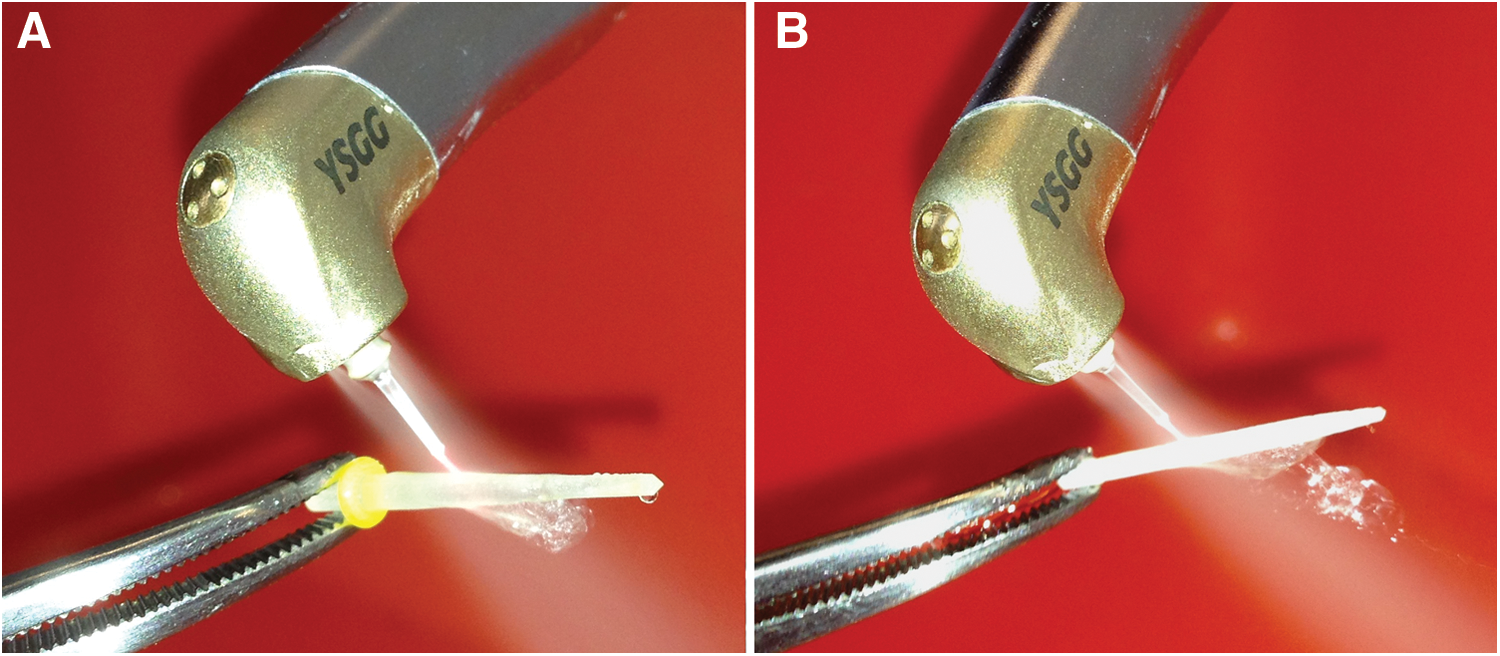
Irradiation of
After the surface treatments, only a single layer of the silane coupling agent was applied on the post surfaces of all groups for 1 min, and gently air-dried for 1 min.
For the core build-up procedure, vinyl polysiloxane (Optosil Comfort/Xantopren, Heraeus Kulzer, Germany) molds with an inner diameter of 5 mm were obtained, and to standardize central position, the apical part of the post was fixed into a hole at the bottom of the mold. After the post was placed, the resin core material was applied in 2 mm thick increments. Each increment was light-cured for 20 sec using a halogen light-curing unit (Hilux Dental Curing Light Unit 250, Benlioğlu Dental Inc, Ankara, Turkey) with an output of 500 mW/cm2 as close as possible to the material, according to the manufacturer's instructions. After 30 min, the mold was sectioned with a scalpel blade (Plusmed, Wuxi Xinda Medical Device Co Ltd, China) to remove the specimens, and an additional 40 sec of light-curing was performed to ensure optimal polymerization of the resin core material. This resulted in a cylinder of resin core material that was built up around the fiber posts. Before the sectioning procedure, all specimens were stored in distilled water at 370C for 24 h.
The posts used in this study both have double tapered designs at their middle and apical parts. To simplify calculation of the surface area, 5 mm long parallel, untapered, coronal portions of the posts were sectioned perpendicular to the long axis of the post with the cutting machine (EXAKT Cutting and Grinding system, Nordestedt, Hamburg, Germany) under water cooling. One disc with a thickness of 1 mm was obtained from each post-core sample (Fig. 2), and each surface treatment group consisted of 12 disc samples with a diameter of 5 mm (n=12). After measuring the thickness of each disc with a digital caliper (Max-Extra Professional Tools, China), the specimens were mounted in a universal test machine (EZ-test-500 N Shimadzu, Kyoto, Japan) for the micropush-out test (Fig. 3). The discs were loaded with a 1.6 mm diameter cylindrical plunger, which was placed at the center of the post segment to avoid contact with the surrounding core surface, with a cross-head speed of 1 mm/min. The load was applied in the apical-coronal direction until the post was dislodged and the maximum force at that point was recorded as bond failure value in Newtons, after which it was converted to MPa by dividing the load at failure by the bonding area. The total bonding area for each post was calculated using following formula:

The disc samples of quartz and glass fiber posts.
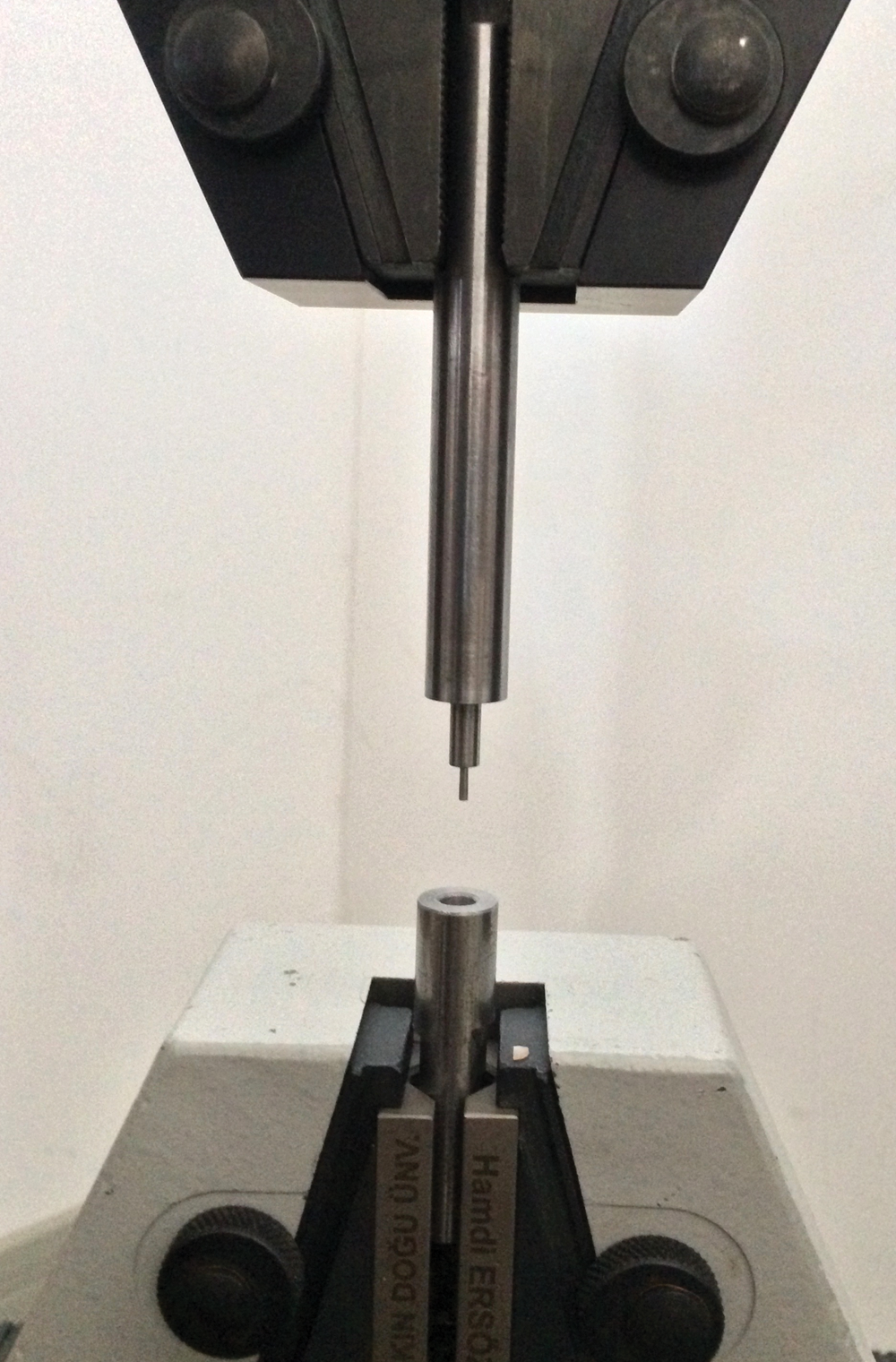
The micropush-out test tip of the universal test machine.
where r is the post radius, π is the constant 3.14, and h is the thickness of each post section in mm.
Failure modes were analyzed with a stereomicroscope (Olympus SZ61, Olympus Optical Co, Tokyo, Japan) at×40 magnification and classified according to four criteria: adhesive failure between the post and core material, cohesive failure within the post, cohesive failure within the core material, and mixed failure.
Statistical analysis
Mean micropush-out bond strength values and standard deviations (SDs) were calculated for all groups. Normality of the data distribution was checked by the Shapiro–Wilks test, and parametric tests were chosen because the data were distributed normally. Two way analysis of variance (ANOVA) and Tukey's test for post-hoc comparisons were used to determine the effect of surface treatment procedures within each fiber group (intragroup comparison) and the effect of fiber post type on the bond strength values (intergroup comparison). Values of p<0.05 were accepted as statistically significant.
Results
The mean micropush-out bond strength values, SDs and the statistically significant differences within groups are presented in Table 2. The results of statistical analysis revealed that for the quartz fiber post group, all surface treatments showed significantly higher micropush-out bond strengths (ranging from 12.53 to 14.48 MPa) than the control group (9.40 MPa) (p<0.05), except for the Er,Cr:YSGG laser 2 W group (10.12 MPa) (p>0.05).
Groups with the different lowercase superscripted letters in the same row are statistically different according to intragroup comparisons (p<0.05). Different superscripted capital letters in the same column are statistically different according intergroup comparisons (p<0.05).
HF, hydrofluoric acid.
For the glass fiber post groups; HF acid group showed the lowest (7.28 MPa) bond strength (p<0.01). The control (9.07 MPa) and 2 W laser (9.90 MPa) groups demonstrated significantly lower bond strength values than the other surface treatment groups (p<0.001), whereas no statistically significant difference was detected among the bond strength values of the Al2O3, H2O2, CH2Cl2, 1 W, and 1.5 W laser groups (12.59–13.51 MPa) (p>0.05).
The results of the statistical analysis revealed that there were no significant differences between quartz and glass fiber posts for the Al2O3, H2O2, laser, and control groups (p>0.05). However, after HF acid and CH2Cl2 application, quartz fiber post showed significantly higher bond strength values than glass fiber post (p<0.001) (Table 2).
According to the results of the fracture mode analysis, the most observed fracture pattern was adhesive failure for all the groups (Fig. 4). Among the surface treatments tested, cohesive type of failure within the post material was predominantly exhibited in the 2W laser group for both glass (8%) and quartz fiber posts (11%), whereas mixed type of failure was mostly noticed in the HF acid group for glass fiber post (18%) (Fig. 5). Cohesive type of failure within the core material was not detected.
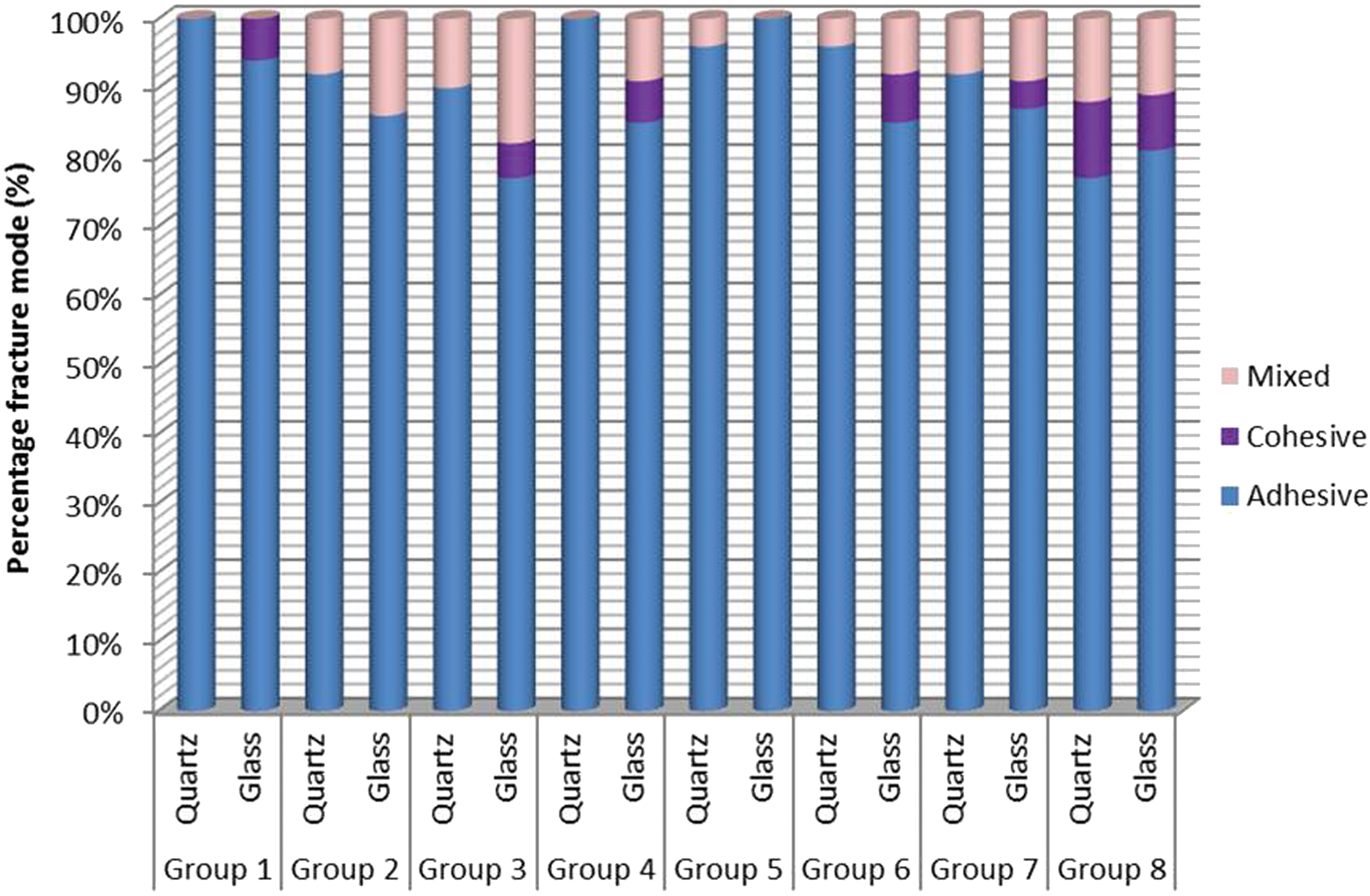
Fracture mode analysis of the specimens.
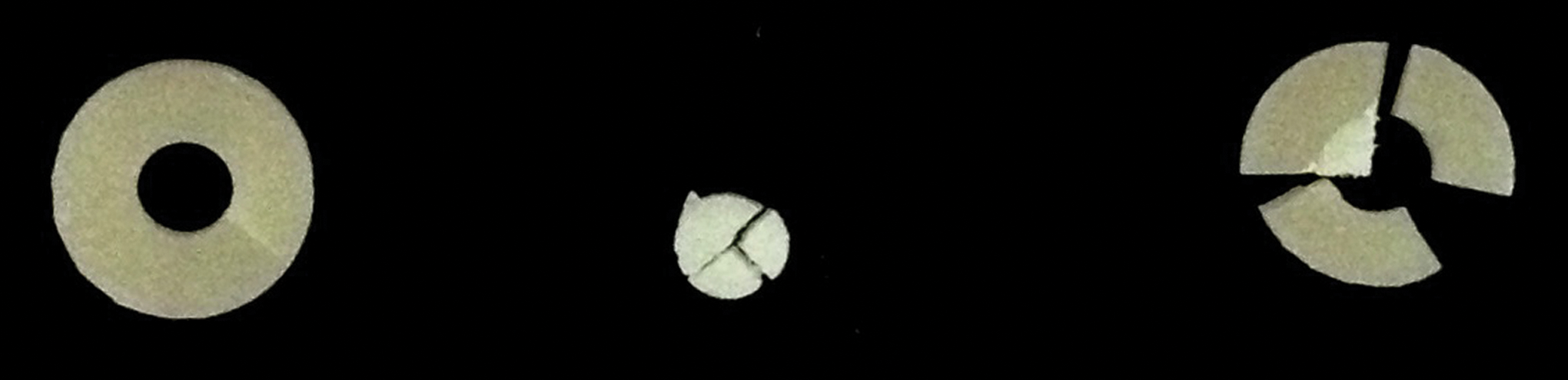
Adhesive, cohesive, and mixed failures analyzed by stereomicroscope.
Discussion
According to the results of this study, the first null hypothesis was partially rejected, as the type of fiber post was found to be effective in bond strength for HF acid and CH2Cl2 surface treatments; 1 and 1.5 W Er,Cr:YSGG laser irradiation improved the bond strength. However, 2 W laser irradiation had no significant effect on bond strength; therefore, the second null hypothesis was also partially rejected.
The micropush-out test is a type of shear bond strength test that reduces the size of specimens to achieve more homogeneous stress distribution and, eventually, less variability in mechanical testing results. 3,36 Cekic-Nagas et al. 37 noticed that with this method, fracture occurs parallel (not transverse) to the bonding interface, which provides more accurate and reliable bond strength results than the conventional shear test. Moreover, by using this method, multiple specimens may be obtained from a single fiber post and composite core complex. 26 With that in mind, in the present study, micropush-out test was preferred.
In previous studies 26,31,37 which compared two different types of posts, it was concluded that the differences in chemical composition (type size, distribution, and percentage of fibers) and surface topography of the post may affect the bond strength between the post and resin core material. In this respect, in the current study, the D.T. Light post system containing 62% quartz fiber with 38% epoxy resin matrix, and the Cytec Blanco post system with 60% glass fiber and 40% epoxy resin matrix were chosen to evaluate the effect of the post material.
The post surface had a relatively smooth surface area, which limited mechanical interlocking between the post surface and resin core material. 10 To achieve chemical bonding between the methacyrlate-based resin of the core and the resin matrix of the fiber post, the fibers should be exposed via chemical or mechanical surface treatment for reacting with silane molecules. 38 In the present study, as a micromechanical surface treatment, fiber posts were sandblasted with 50 μm Al2O3 particles. According to statistical analysis, Al2O3 treated quartz and glass fiber posts showed higher bond strength values than the control group. This result was consistent with previous studies. 11,19,37,38 It has been reported that sandblasting with Al2O3 may initiate cracks in the post. 39 In previous studies, the reduction of application time has been suggested to perform a mild form of sandblasting 40,41 to minimize the dimensional changes with the fiber posts. 10 Therefore, in this study, fiber posts were sandblasted with Al2O3 particles at 2.8 bar pressure for 5 sec from a distance of 10 mm, as suggested in a previous study. 42
The application of H2O2 is claimed to improve micromechanical bonding between epoxy resin matrix of fiber posts and methacrylate-based resin. In a previous study, 26 different concentrations (10%, 30%) of H2O2 were applied to the post surface in different durations (5, 10 min). It has been concluded that 30% H2O2 for 5 or 10 min increased the bond strength, but that 10% H2O2 was not sufficient to improve the bond strength of the post/core complex. On the other hand, de Sousa Menezes et al. 25 reported that the application of a relatively low concentration of H2O2 (24%) at a feasible clinical duration (1 min) generated bond strength similar to that obtained with a higher concentrations (50%) and longer application times (5–10 min). Consistent with the results of that previous study, 25 the current study indicates that 24% H2O2 surface treatment for 1 min, which is easy and feasible for clinical application, enhanced the bond strength between both glass and quartz fiber posts and resin core material.
In previous studies, application of CH2Cl2 to glass 42 and quartz 40,42 fiber post surfaces for 5 sec was not effective in increasing the push-out 40 and shear 42 bond strength between fiber posts and resin core material. The authors suggested that the application time might be inadequate to dissolve the epoxy resin matrix and expose fibers. Elsaka 26 reported that application of CH2Cl2 to glass fiber post surface for 5 and 10 min improved the micropush-out bond strength of fiber post to resin core materials. In the present study, to evaluate the effectiveness of a shorter application time than Elsaka 26 has suggested, glass and quartz fiber posts were exposed to CH2Cl2 for 1 min, and this was found to have a significant effect on the micro push-out bond strength of both glass and quartz fiber posts to resin core material (p<0.05).
The effects of different concentrations and application times of HF acid etching on fiber posts have been evaluated in several studies. 17 –21,37,39 It has been shown that etching glass fiber posts with 4% 18,19 and 5% 20 HF acid gel for 60 sec increased the bond strength of posts. Sipahi et al. 21 applied 9.5% HF acid gel for 20 sec on glass fiber post surface, and reported higher bond strength values in comparison to the untreated group. In the present study, 9% HF acid was applied for 1 min to both fiber post groups. In agreement with a previous study, 37 the micropush-out bond strength values of quartz fibers exposed to HF acid were significantly higher than those of the control group. However, HF acid etched glass fibers showed the lowest bond strength values. It has been claimed that HF acid alters the glass fiber post structure more radically, 18 and produces substantial damage. 39 Therefore, a higher concentration of HF acid (9%) and/or a longer application time (1 min) than in previous studies 18 –21 might cause a corrosive effect on the glass fiber, 19 which would lead to lower bond strength values. On the other hand, Güler et al. 17 evaluated the different application times of 9% HF acid gel on glass fiber post and concluded that etching for 120 sec revealed the highest bond strength values. The discrepancies between the findings of Güler et al. 17 and the present study may be attributed to the different glass fiber content of the fiber posts evaluated. It has been also shown that the glass fiber content of posts had a significant effect on the bond strength values of fiber posts exposed to 9.5% HF acid for 60 sec. 37
Laser application on dental materials has been suggested as a relatively safe and easy method for surface treatment. 30,43 In recent studies, the effects of Er:YAG laser application under different power settings on the bond strength of fiber posts were evaluated. 19,21,29 –31 Although Sipahi et al. 21 found 150 mJ Er:YAG laser application at 10 Hz to be effective on the bond strength of glass fiber posts, Tuncdemir et al. 31 reported that Er:YAG laser irradiation with the same power settings did not significantly affect push-out bond strength values of quartz fiber posts. Arslan et al. 29,30 applied the Er:YAG laser under 150, 300, and 450 mJ at 10 Hz power settings on glass fiber posts and concluded that 450 mJ Er:YAG laser application increased the push-out 29 and pull-out 30 bond strength between glass fiber posts and resin core material. On the other hand, Kurt et al. 19 showed that 300, 400, and 500 mJ Er:YAG laser application at 2 Hz significantly decreased the bond strength of glass fiber posts to core material in comparison with the untreated group. The authors 19 stated that lower bond strengths were derived by the higher power settings, which can cause heat damage on glass fibers. The discrepancies among the studies may be attributed not only to the differences in fiber post types, but also to the disparities in repetition rates of the lasers applied.
Er,Cr:YSGG laser has similar effects to those of Er:YAG laser because its wavelength (2.78 nm) is very close to that of Er:YAG laser (2.94 nm). 44 The effectiveness of Er,Cr:YSGG laser on surface conditioning of dentine, 32,34 ceramics, 33 and resin composites 35 has been investigated. However, there are no available data regarding the influence of Er,Cr:YSGG laser on the fiber post surfaces. Therefore, in the current study, the aim was to investigate the effect of Er,Cr:YSGG laser with different power settings (1, 1.5, and 2 W at 20 Hz) on micropush-out bond strength of glass and quartz fiber post to a resin core material. A preliminary study was conducted to determine the energy levels of the laser. A higher repetition rate (20 pulses/sec) was preferred in comparison with previous studies 19,21,29 –31 to increase the roughness of post surface and prevent excessive heat formation. According to the statistical analysis, regardless of the fiber post types, 1 and 1.5 W laser applications increased the bond strength significantly in comparison with the control group. However, there was no significant difference between 2 W and the control group in terms of micropush-out bond strength for either fiber post system. Higher power output (2 W) of laser might cause destruction of fibers and affect the integrity of the posts, and thus decrease the ability of fibers to bond with silane and resin core material. As a limitation of this study, treated post surfaces were not evaluated under scanning electron microscopy (SEM). In further studies, it will be useful to evaluate the application of Er,Cr:YSGG laser under different power settings and to use SEM to assess the effect of laser on post surfaces.
Failure mode analysis demonstrated that adhesive failure between glass and quartz fiber posts and resin core material was the predominant failure type for all surface treatment groups. This result might reveal that micropush-out is a suitable test for evaluation of the bond strength between fiber post and resin core material. 37 Among the surface treatment groups, the highest percentages of cohesive failure within both glass (8%) and quartz (11%) post materials were detected in the 2 W laser groups. This finding may be attributed to the weakening effect of the high power output (2 W) of the laser applied. Because the only way to repair the fractured post material is to completely remove the post, the debonding of the post from the core may be a clinically more desirable failure mode than the fracture of the post. 45
Conclusions
Within the limitations of this in vitro study, it can be concluded that: 1. Surface treatment with 24% H2O2, CH2Cl2, and Al2O3 enhanced the adhesion between the both fiber post systems and resin core material; 9% hydrofluoric acid gel application for 1 min increased the bond strength of quartz fiber post/core complex, however it caused a significant decrease in bond strength values in the glass fiber group. 2. Power settings of the Er,Cr:YSGG laser did have a significant effect on the bond strength values. For both fiber posts, 1 and 1.5 W laser groups increased the bond strength between the post and resin core material in comparison with the 2 W laser and control groups. 3. Fiber post type was found to be effective on the bond strength of the post/core complex for the HF acid and CH2Cl2 surface treatment groups.
Footnotes
Authors Disclosure Statement
No competing financial interests exist.