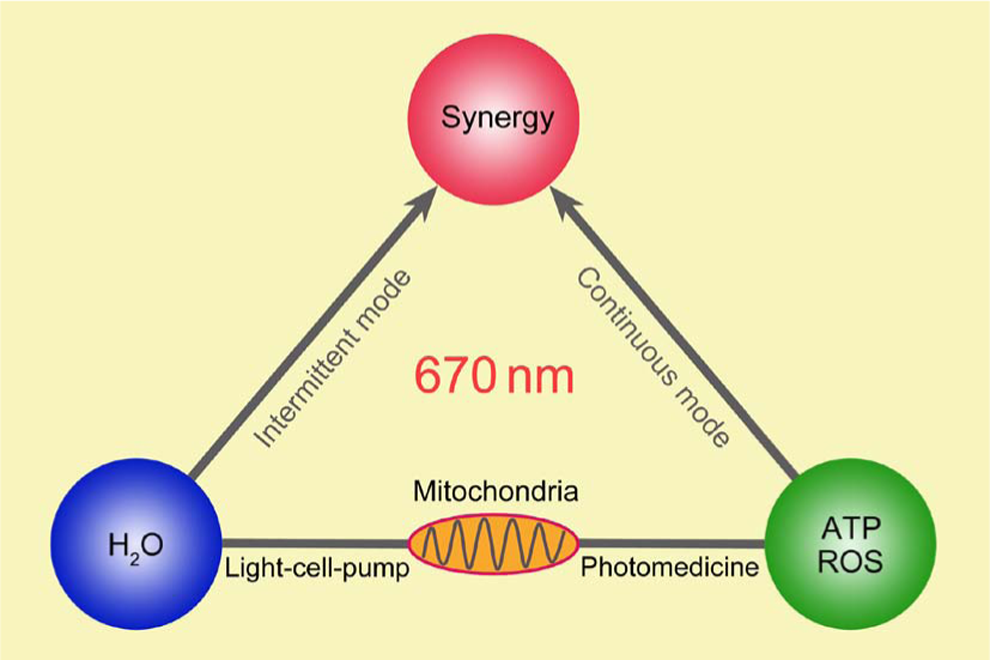
A recent finding reported in Mitochondrion1 may become the cornerstone of a therapy of stress-related disorders. Briefly, the authors provided first observational evidence supporting the view that decreased mitochondrial respiratory rate participates in the etiology of depression. By assuming a correspondence between platelet mitochondrial respiration and adenosine triphosphate (ATP) synthesis, we feel justified in putting forward the hypothesis that ATP levels in mitochondrial blood platelets of depressed patients are impaired relative to those in healthy subjects, a picture complemented by data suggesting an analogous situation for leukocyte mitochondria (Alexander Karabatsiakis, personal communication). This could indicate a possible involvement of the whole blood as well as systemic effects related to its circulation in organs, including the brain – a scenario raising the ‘‘chicken or egg’’ question of whether depression precedes weaker mitochondrial ATP synthesis or vice versa. The latter case would recommend blood as a possible target for a systemic therapy for depression. This approach receives immediate support from two sides, observational evidence that biostimulatory levels of visible to near infrared (NIR) light are instrumental in upregulating the ATP content in cells,2 and when applied in a pulsed mode, in activating cell metabolism.3 The specific contribution of the modes of irradiation is visually summarized in Fig. 1. Interpreting animal experimental results, other groups already suggested that pulsed irradiation with visible to NIR light could be a modality to treat depression.4,5 Recently, it was reported that weaker initial ATP synthesis resulted in a higher positive laser effect.6 Considering the need for fundamental information regarding the intrinsic cellular mechanisms of depression, on the one hand, and the fragmentary character of the synoptic picture resulting from our generalized approach, on the other hand, we hope that this Editorial will contribute to a reciprocal cross-contamination, which promises progress in both directions: modeling and clinical research.
Biostimulatory levels of pulsed near infrared light, for example, 670 nm, activated cell metabolism via an externally controlled pumping mechanism based on the modulation of nanoscopic interfacial water layers bound in the cell: a physicochemical process derived from laboratory experiments performed on diamond. Coincidentally, the same light, when applied in a continuous mode, stimulated mitochondria to generate adenosine triphosphate (ATP) [and small amounts of reactive oxygen species (ROS)], depending upon the irradiation parameters, as shown in work performed by others.
References
1.
HroudováJ., FišarZ., KitzlerováE., ZvěřováM., and RabochJ. (2013). Mitochondrial respiration in blood platelets of depressive patients. Mitochondrion, 13, 795–800.
2.
HuW.P., WangJ.J., YuC.L., LanC.C., ChenG.S., and YuH.S. (2007). Helium-neon laser irradiation stimulates cell proliferation through photostimulatory effects in mitochondria. J. Invest. Dermatol., 127, 2048–2057.
3.
SommerA.P., ZhuD., MesterA.R., and FörsterlingH.D. (2011). Pulsed laser light forces cancer cells to absorb anticancer drugs-the role of water in nanomedicine. Artif. Cells Blood Substit. Immobil. Biotechnol., 39, 169–173.
4.
AndoT., XuanW., XuT., DaiT., SharmaS.K., KharkwalG.B., HuangY.Y., WuQ., WhalenM.J., SatoS., ObaraM., and HamblinM.R. (2011). Comparison of therapeutic effects between pulsed and continuous wave 810-nm wavelength laser irradiation for traumatic brain injury in mice. PLoS One, 6, e26212.
5.
WuX., AlbericoS.L., MogesH., De TaboadaL., TedfordC.E., and AndersJ.J. (2012). Pulsed light irradiation improves behavioral outcome in a rat model of chronic mild stress. Lasers Surg. Med., 44, 227–232.