




Abstract
Introduction
T
Modern laser technology facilitates transmission of well-controlled energy to a specific target, which minimizes collateral damage. This characteristic renders laser treatment a safe and effective method for treating recalcitrant warts. The present study aimed to describe 51 consecutive patients with 146 recalcitrant hand warts that were treated using Nd:YAG laser.
Materials and Methods
The records of patients treated with Nd:YAG laser at our university hospital's department of plastic and reconstructive surgery between 2011 and 2014 were retrospectively reviewed. In total, there were 51 patients and 146 hand warts. Mean patient age was 22 years (range, 17–39 years). Before the treatment was administered, all the patients provided written informed consent. The study protocol was approved by the Ethics Committee and was performed in accordance with the principles of the 1975 Declaration of Helsinki.
All 51 patients had been previously treated with conventional methods that were not successful. All 146 warts were resistant to conventional treatment methods and the patients were referred to our clinic for surgical treatment. Each wart was photographed before and after treatment. Treatment was administered using 1064 nm long-pulsed Nd:YAG laser (XP Max, Fotona, Ljubljana, Slovenia), as follows: handpiece, R33; spot size, 3 mm; pulse duration, 23 ms; fluence, 180–200 J/cm2. A Cryo 6 Cold Air Device was used for cooling, with the cooling level set at 6 to minimize pain and thermal damage.
All patients and the physician administering the treatment wore eye protection during application of the laser treatment. A smoke aspiration system and a protective face mask were used to prevent inhalation of human papilloma virus (HPV). Topical anesthetics and/or local lidocaine injection was administered before laser treatment. All warts were administered at least three pulses as will be described. Each pulse was not directed over the lesion; instead, we overlapped the circle of all three pulses over the wart (Fig. 1), with the aim of reaching the maximum energy level over the wart by centrally overlapping each of the three pulses, so as to protect the adjacent tissue from unintended damage.
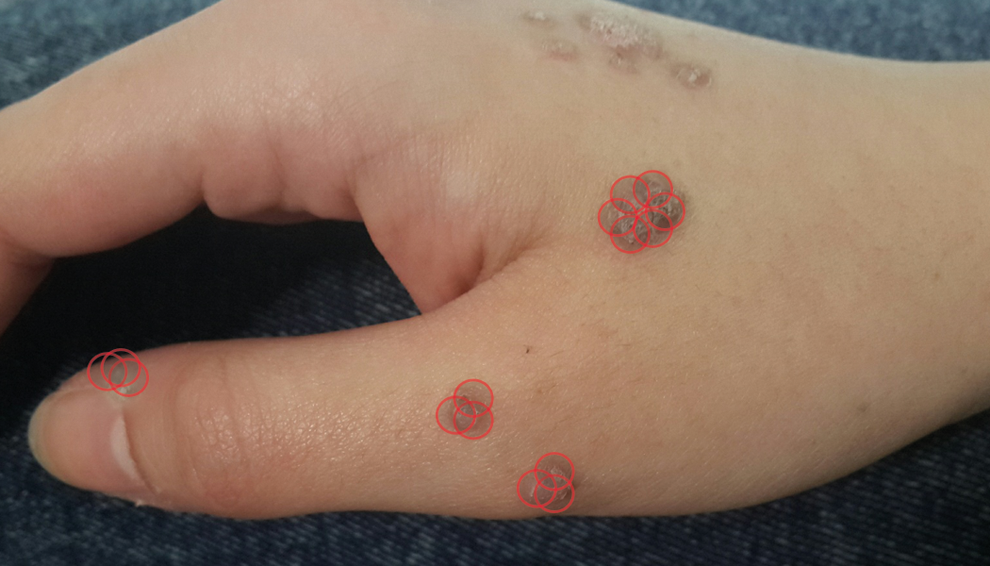
The overlapped circle pulse technique on the dorsum of a hand.
Mupirocin ointment was used after the treatment, and a light dressing was applied. The dressing was removed 72 h post-treatment and the area was observed. If the treatment area exhibited a small crust the dressing was kept in place. A thick crust containing necrotic debris was observed on most of the largest warts. In such cases the debris was gently removed in order to accelerate the healing process and to prevent secondary infection. Patients were instructed to apply mupirocin ointment and cover the treatment site with a bandage. Following epithelialization, patients were advised to use sun protection for at least 6 months to avoid postinflammatory hyperpigmentation.
Results
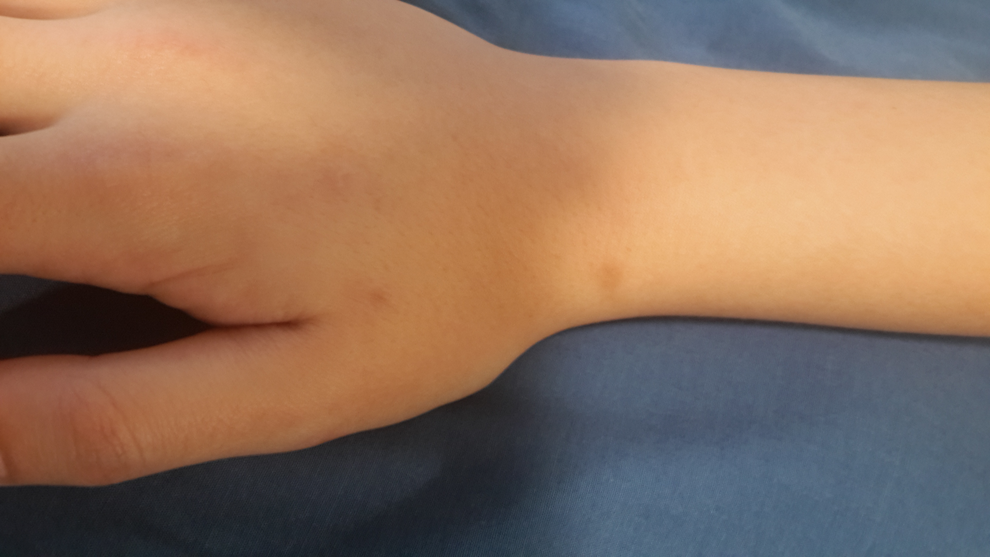
The follow-up period was 12 months for each patient. One laser application session was sufficient to successfully treat 129 (88.35%) of the 146 warts, whereas the remaining 17 (11.65%) warts required two treatment sessions. Anatomic localization of warts requiring a second treatment was periungual (n=13) and palmar (n=4). Almost all of the warts exhibited a crust formation post-treatment. Hemorrhagic blisters were observed in 27 warts (18.49%). Following appropriate wound care, all post-treatment areas healed without a major problem. Epithelization occurred 7–10 days and 10–14 days post-treatment in warts with a small and large crust, respectively (Figs. 2 –8). Nail dystrophy and severe post-treatment scarring were not observed in any of the patients. In 17 of the 146 (11.64%) treatment sites, barely noticeable thin scars were observed. Hyperpigmentation was observed in only 8 (5.48%) of the 146 treatment sites. Hypopigmentation did not occur in any of the patients, and none of the patients had recurrence at the 12-month post-treatment follow-up.

Three warts on a fifth finger before long-pulse Nd:YAG laser treatment.
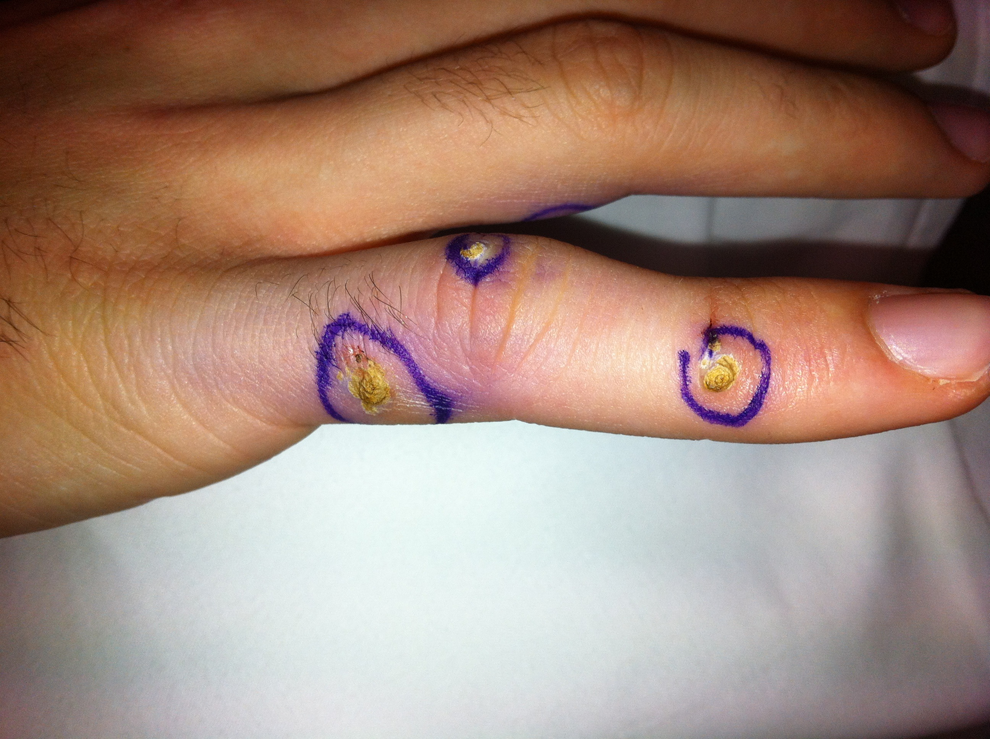
The three warts shown in Fig. 2 immediately after laser treatment.
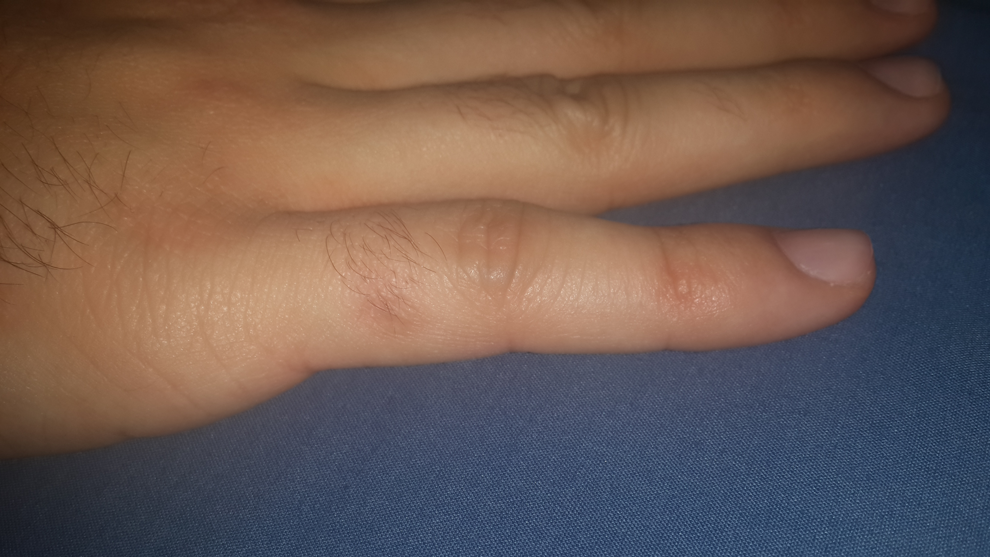
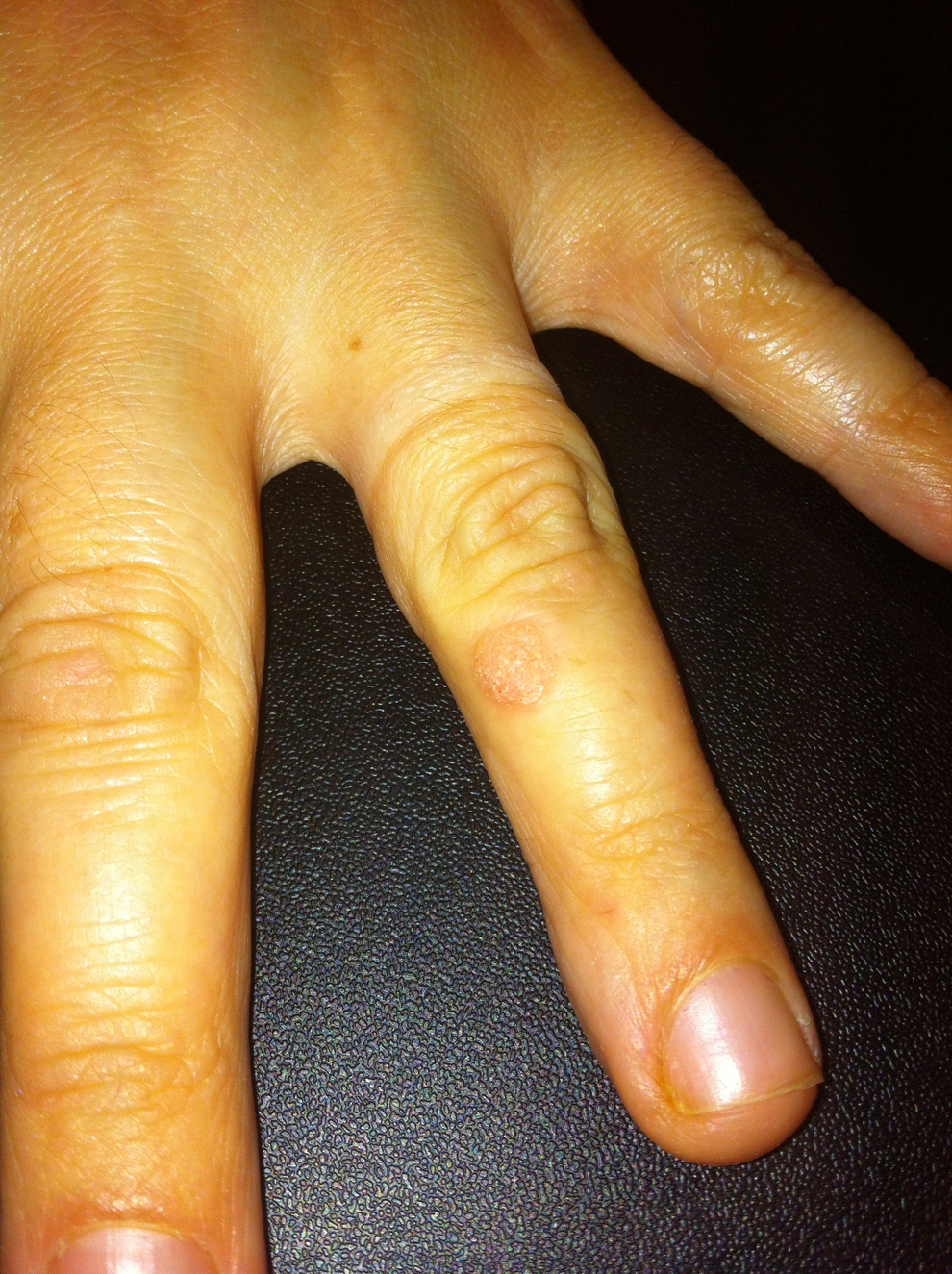
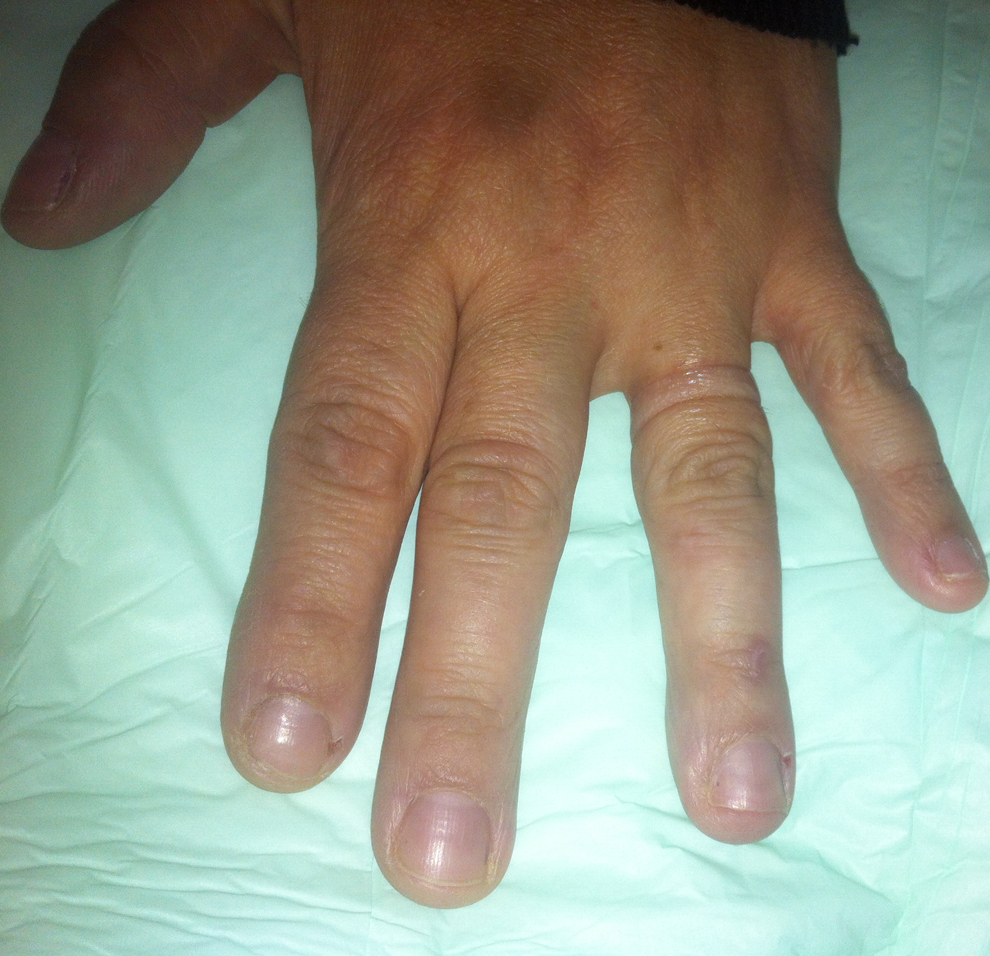
A wart on a fourth finger before long-pulse Nd:YAG laser treatment.
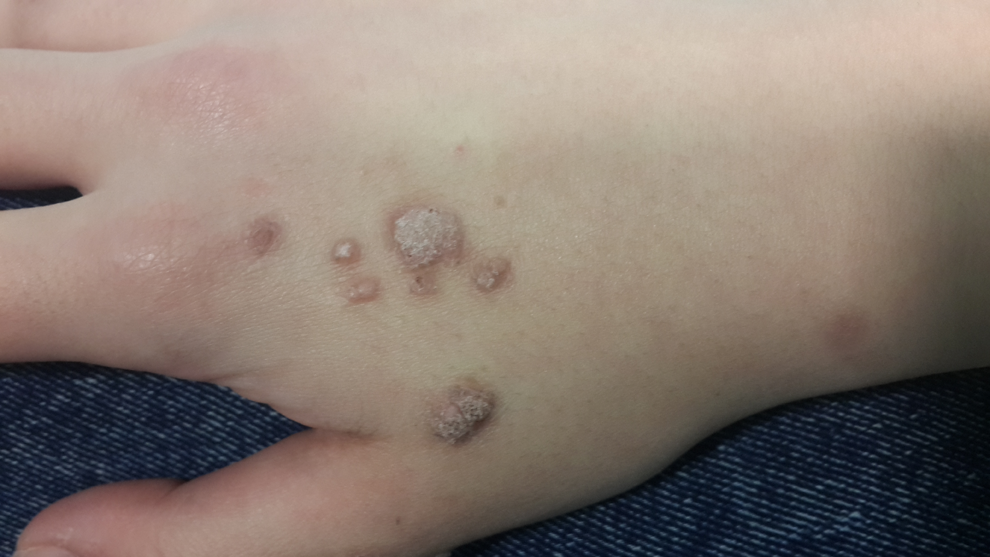
Multiple warts on the dorsum of a hand before long-pulse Nd:YAG laser treatment.
Discussion
Warts, which are lesions of the skin and mucosa caused by HPV, can appear anywhere on the body. Common warts, also known as verruca vulgaris, frequently occur on hands (95% of all hand warts) and are most commonly caused by HPV types 2 and 4, with a usual incubation period of 1–6 months. They are typically characterized by papular lesions of 1–20 mm. Plane warts (verruca plana) account for 5% of all hand warts. Warts are generally asymptomatic, but can cause aesthetic or functional problems. Although it is rare, squamous cell carcinoma can arise from warts in otherwise healthy individuals; however, the incidence of squamous cell carcinoma of wart origin is higher in immunocompromised individuals than in those that are healthy. As such, clinicians must avoid possible treatment errors in all patients with warts, especially recalcitrant warts.
Topical, local, systemic, and intralesional medical treatment, and surgical treatment have been used to treat warts; 5 –7 however, none have been shown to be completely effective. 8 The success rates for some common methods of treating warts are as follows: salicylic acid, 75%; 9 cryotherapy, 63%; 10 imiquimod, 56%; 11 and pulsed dye laser, 48–92%. 12,13 Topical treatments are commonly used because of the destructive effects of their constituents, such as salicylic acid. The primary concern related to destructive treatment is the risk of unavoidable damage to adjacent healthy tissue; therefore, many clinicians approach the treatment of warts conservatively, which can increase the recurrence rate. Especially for salicylic acid application, many protective precautions should be taken during the topical application of the agent on the wart. In addition, topical treatment regimens require multiple treatment sessions before complete eradication is achieved. 14
In the present study, all patients with recalcitrant hand warts had been previously treated with conventional methods that resulted in failure or recurrence. Subsequently, they were referred to our clinic for surgical treatment. Surgical removal is a treatment option for warts that are resistant to medical treatment. Surgical removal with a 1 mm margin has been reported to yield excellent results, with no recurrence; 15 however, small tissue defects in hands require complex reconstruction methods because of the lack of sufficient mobile tissue. In addition, scarring, and the potential for functional and cosmetic deformities, are other major drawbacks of surgically removing hand warts. 14 Because of these negative factors, many experienced surgeons remain reluctant to surgically remove hand warts.
Recently, lasers have been used to treat warts, including carbon dioxide laser, 16 pulse dye laser, 17,18 and Nd:YAG laser. 19,20 Long-pulsed Nd:YAG laser (1064 nm) is widely used to treat vascular lesions. Long-pulsed Nd:YAG laser is weakly absorbed by melanin, does not cause damage to tissue beyond the targeted area, and can be used safely in non-Caucasian patients. Long-pulsed Nd:YAG laser can reach deeper tissue than other types of laser. The Nd:YAG laser beam releases heat at the target tissue, which causes coagulation of the vessels, with or without perforation. 19 Warts are rich in vessels, especially in the papillary dermis layer. 21 Although the mechanism of action of Nd:YAG laser on warts remains unknown, the laser target is wart vessels, as damaging the vessels leads to necrosis of the wart. In addition, direct thermal injury to HPV may also play a role. In particular, the major problem after conventional and laser treatment in periungual warts is that nail dystrophy and disturbing and difficult to correct cosmetic problems can occur; therefore, the nail bed adjacent to the treated wart should be protected from the destructive effect of the treatment. Nail dystrophy did not occur in any of the present study's patients following Nd:YAG laser treatment, which we think was because of modification of the overlapped triple circle pulse technique that was used to ensure delivery of minimal or no laser energy to the nail bed.
The largest series of warts treated with Nd:YAG laser was reported by Han et al. 19 Their overall success rate in 369 patients was 96%. They also reported that after the first, second, third, and fourth treatment sessions the clearance rate was 65%, 83%, 92%, and 96%, respectively. Especially in periungual and deep dermoplantar warts, the reported success rate was lower than that for other body areas. Kimura at al. 22 recently reported a series of patients with recalcitrant hand and foot warts that were treated with Nd:YAG laser, in which the success rate was 56% at the 24 week follow-up.
To the best of our knowledge, the present study is the first to report a series of patients with refractory hand warts treated with Nd-YAG laser; all the patients in the present study had recalcitrant hand warts. The overall success rate after the first and second Nd:YAG laser treatment sessions was 88.35% and 100%, respectively, which is higher than the other reported series. We think that the higher success rate in the present study was the result of several factors. Although localization, wart size, and laser settings are important parameters that can affect the success rate, we think that the overlapped triple circle pulse technique employed might have positively affected the success rate. The technique described herein facilitated delivery of maximum therapeutic laser energy to the core of the warts while delivering less, but sufficient energy to the periphery of the warts.
Conclusions
In plastic surgery practice, we have seen the patients with warts who have been treated by the conventional treatment methods ending up with failure. Therefore, many such patients referred to plastic surgery were told by their referring physician that if common conventional treatment is not enough to cure warts despite all efforts, then there would be a benefit in choosing surgical removal. As Nd:YAG laser treatment of hand warts in the present study was observed to be safe, fast, and effective, we recommend that clinicians offer patients this treatment before proceeding with surgery. Lastly, in cases of recalcitrant hand warts, we recommend using Nd:YAG laser prior to considering surgical treatment.
Footnotes
Author Disclosure Statement
No competing financial interests exist.