




Abstract

T
With respect to tissue blood perfusion, nitric oxide is the main vasodilator molecule able to adjust or regulate local blood demand during physical activity, where the muscles require greater blood supply. If the blood supply is inadequate, the muscle activity will rapidly enter anaerobic metabolism with an inefficient removal of metabolites, acidification of neuromuscular junctions of the involved region, and inability to maintain muscle contraction, leading to muscle fatigue.
Several treatments such as food supplements and drugs, physical agents such as heat, and so on have been used with the purpose of delaying or alleviating the process of skeletal muscle fatigue in health or disease. However, almost all of them proved ineffective. In 2000, Maegawa et al. 1 demonstrated that low-level laser therapy (LLLT) was able to induce significant relaxation of mesenteric arterioles with a significant increase in blood flow. Based on these findings, we started in 2001 investigations of the effects of LLLT on the microcirculation of skeletal muscle to investigate the hypothesis that increasing skeletal muscle perfusion would be able to improve the oxygen supply to the muscle tissue as well as the removal of cellular metabolites. In this case, we would expect to be able to prolong the duration of exercise delaying the process known as muscular fatigue. Figure 1 illustrates the hypothesis formulated in 2001. Since then, we have investigated the effects of low level laser therapy in different models of muscle fatigue. In 2006, we published the first article that showed the effect of laser therapy, confirming our initial hypothesis. 2 The article has become a landmark in the scientific literature, and is succeeded by many others from our group and other researchers around the world, which confirmed our initial findings and our hypothesis (Fig. 2).
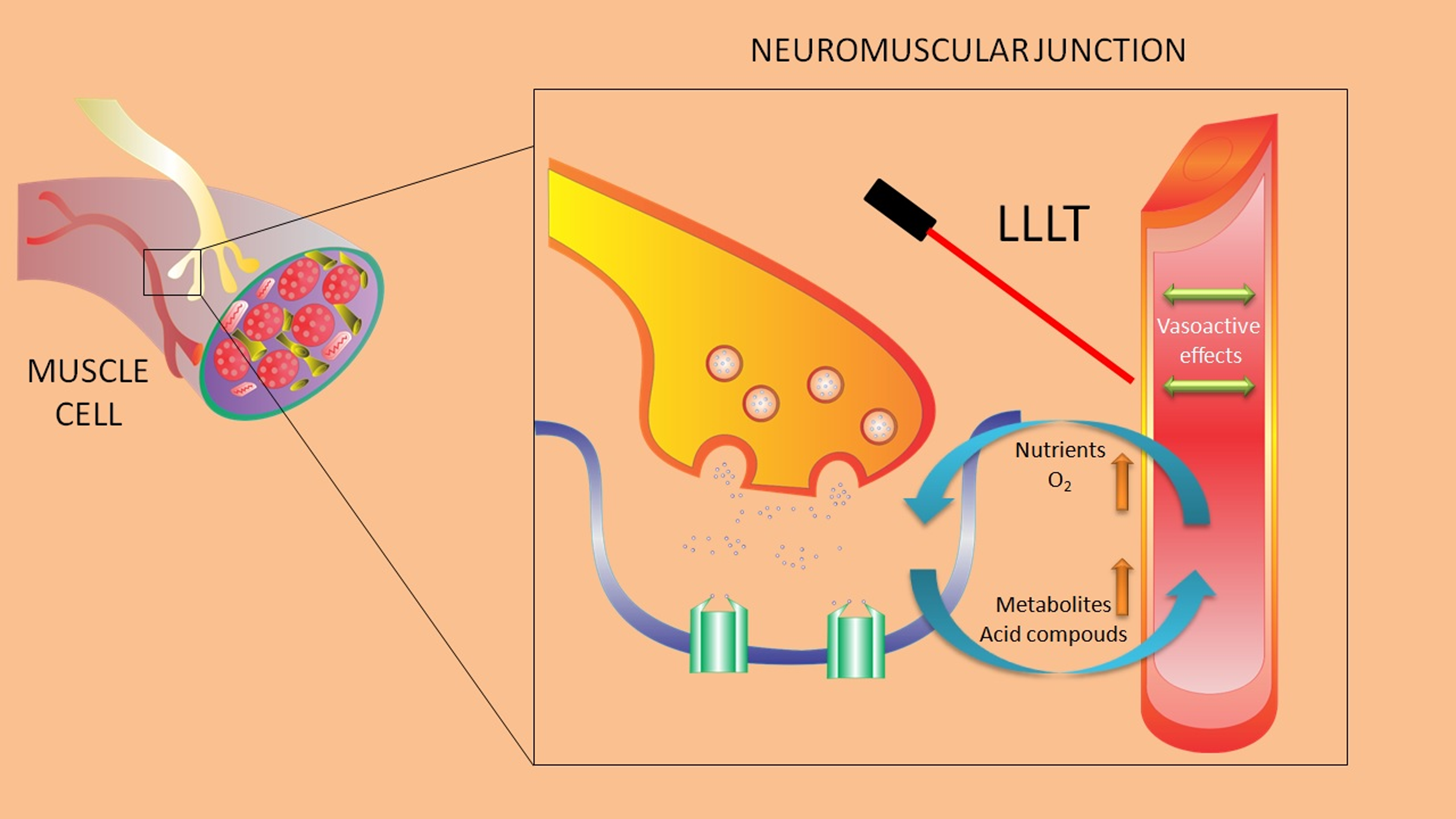
Figure illustrates the hypothesis that laser irradiation can modulate the increases in nutrients and oxygen supply and the removal of tissue metabolites through a vascular mechanism possibly including nitric oxide release, vasodilation, and increases in blood flow, resulting in skeletal muscle fatigue delay.
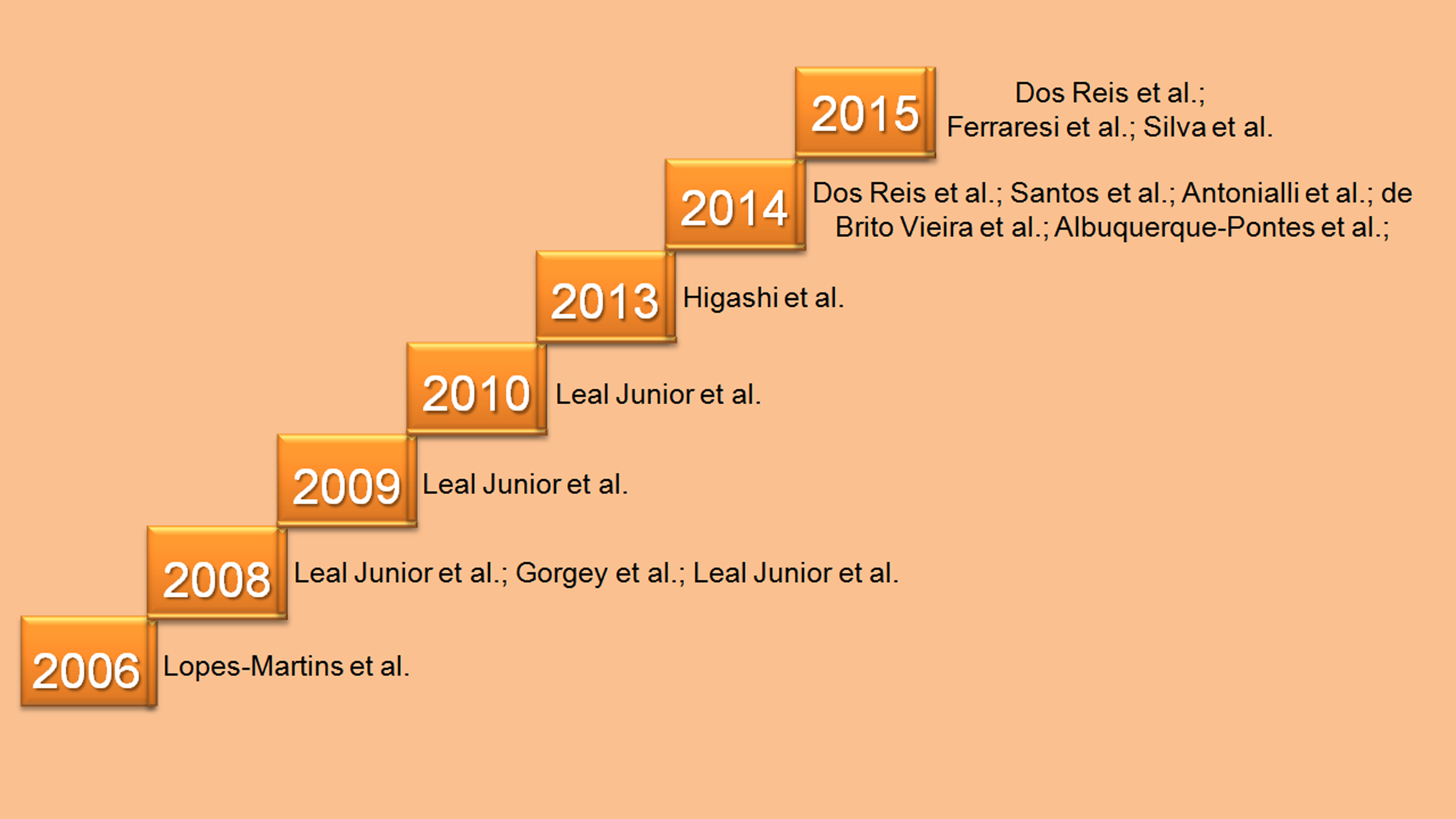
Figure shows chronologically the publication of articles that investigated the effects of laser therapy on performance or muscle fatigue in physical activity.
However, the potential of this discovery goes beyond the very simple effects investigated to date, to athletic performance.
In 2009, Chow et al. 3 have shown the effects of laser therapy for neck pain, which seem to involve in its genesis an important component of muscle fatigue. Other conditions such as fibromyalgia, 4 pre- and postexercise, 5 and airway hyperreactivity 6 may also be improved by laser therapy. Leal Junior and his group have been studying under different aspects the effects of laser irradiation on human skeletal muscle fatigue, bringing light over this important and innovative research area. 7 –11 Recently, Lindgård et al. 12 have demonstrated that red laser (632) was able to release nitric oxide from human monocytes, which points to the direction of local vasodilation in restricted areas, corroborating to our initial hypothesis. However, further clinical studies are necessary to investigate all these possibilities that involve muscle fatigue. Laser therapy and skeletal muscle fatigue are certainly a very rich and promising research area to be explored.
Footnotes
Author Disclosure Statement
No competing financial interests exist.