




Abstract
This review determines the characteristics and health-related and economic outcomes of employer-sponsored wellness programs and identifies possible reasons for their success. PubMed, ABI/Inform, and Business Source Premier databases, and Corporate Wellness Magazine were searched. English-language articles published from 2005 to 2011 that reported characteristics of employer-sponsored wellness programs and their impact on health-related and economic outcomes among US employees were accepted. Data were abstracted, synthesized, and interpreted. Twenty references were accepted. Wellness interventions were classified into health assessments, lifestyle management, and behavioral health. Improved economic outcomes were reported (health care costs, return on investment, absenteeism, productivity, workers' compensation, utilization) as well as decreased health risks. Programs associated with favorable outcomes had several characteristics in common. First, the corporate culture encouraged wellness to improve employees' lives, not only to reduce costs. Second, employees and leadership were strongly motivated to support the wellness programs and to improve their health in general. Third, employees were motivated by a participation-friendly corporate policy and physical environment. Fourth, successful programs adapted to the changing needs of the employees. Fifth, community health organizations provided support, education, and treatment. Sixth, successful wellness programs utilized technology to facilitate health risk assessments and wellness education. Improved health-related and economic outcomes were associated with employer-sponsored wellness programs. Companies with successful programs tended to include wellness as part of their corporate culture and supported employee participation in several key ways. (Population Health Management 2013;16:14–21)
Introduction
Wellness programs are designed to support employees in understanding their health risks and adopting healthy behaviors to decrease these risks. These programs can include health risk management (eg, screening for elevated cardiovascular disease risk factors such as elevated cholesterol and blood pressure), behavioral health (eg, smoking cessation, substance abuse, psychological counseling), and primary care promotion and lifestyle management (eg, weight loss, fitness, nutrition). Such programs aim for decreases in more costly health care utilization (eg, emergency room visits, hospitalizations, surgeries, specialist visits), reductions in absenteeism and presenteeism, increases in productivity, and better quality of life.
Past research has shown return on investment (ROI) associated with such programs. One example is the Live for Life program at Johnson & Johnson. Live for Life was introduced in 1979 with the stated purpose of making their employees the “healthiest in the world.” 2 Since the 1980s, Live for Life has been associated with decreased medical spending and employee health risk factors and an increased ROI for the organization. 1 Many companies have designed their comprehensive worksite health promotion programs using Live for Life as a model, and the Affordable Care Act of 2010 contains incentives to encourage even more companies to implement and sustain such programs. 2
The success of wellness programs such as Live for Life may not depend only on the type of wellness program, but also on the characteristics of the company. For example, the success of a company's wellness program may depend on factors such as a corporate culture of wellness with strong encouragement from a motivated chief executive officer, senior management, and employees.
This review of academic and real-world literature sought to identify studies that described the characteristics and outcomes of employer-sponsored wellness programs (both economic and health-related). The objective of this review was to determine the association between health-related and economic outcomes, as well as to identify potential organizational characteristics that could influence this relationship.
Methods
Search strategy and selection criteria
A search was performed of the PubMed, ABI/Inform, and Business Source Premier databases. Corporate Wellness Magazine, whose target audience comprises employers, also was searched. The aim was to identify articles that report on the characteristics of employer-sponsored wellness programs and their impact on health-related and economic outcomes among US employees.
Accepted articles had to have been published from 2005 to 2011 in the English language and could report all study designs except for animal studies, non-US-based studies, letters, editorials, general review articles, and economic models. Accepted articles had to report any of the following economic outcomes: direct costs (ROI, cost savings, workers' compensation) and indirect costs (absenteeism, presenteeism, work productivity). Articles were excluded that did not report employer-sponsored wellness programs, involved only a nonemployee study population (eg, general community, pediatric, retirees), only reported specific chronic condition management programs, and/or did not report any economic outcomes.
Wellness interventions
Interventions were categorized into 3 broad areas: health risk assessments, lifestyle management, and behavioral health programs.
Health risk assessments determine if employees are at risk for various specific conditions (eg, diabetes, cardiovascular disease). Biometric screening measures risk factors such as elevated cholesterol (total, low density lipoprotein), triglycerides, Hb1Ac, body mass index, blood pressure, and tobacco use. Assessments also can include questionnaires regarding health behaviors (eg, diet, exercise, sleep patterns, alcohol use) that can put employees at lower or higher risk. An employee found to have risk factors can learn how to reduce them through lifestyle management and/or behavioral health modification programs.
Lifestyle management involves any activities that promote health. These can include fitness activities such as exercising at an on-site gym, climbing the stairs instead of taking the elevator, and walking/running/cycling/other sports competitions; health education offered through classes, the Internet, printed literature, or one-on-one coaching; and weight loss competitions. Employees may receive various rewards for participation such as reduced health insurance premiums, cash, gift cards, or even vacations or paid time off from work.
Behavioral health programs involve behavior modification such as treatment for drug/alcohol abuse, smoking cessation, and psychological counseling.
Outcomes
Economic, clinical, and patient-related outcomes associated with employer-sponsored wellness programs were included in this review. The economic outcomes consisted of both direct (ie, ROI, cost savings, health care utilization) and indirect costs (ie, absenteeism, presenteeism, productivity, disability, workers' compensation). Health-related outcomes included changes in health risk factors, practice of healthy behaviors (eg, exercise, nutrition, stress management), and patient-reported outcomes (eg, quality of life).
Data collection and analysis
Trained health services researchers (LCK, KMG) abstracted data from the accepted articles into a predefined evidence table, which then underwent quality control checking. The table contained fields for publication features, study characteristics, intervention types, factors contributing to wellness program success, outcomes, results summary, and evidence grading. The quality of the evidence was graded according to the Completeness of Reporting (CORE-14) criteria. 3 Abstracted data were then synthesized and interpreted.
Results
Literature search results
The results of the literature search are shown in Figure 1. Most (14) of the accepted articles were published in magazines and 4 in newspapers. Only 3 were published in peer-reviewed journals, which were the only ones to report a study design: 2 were described as “quasi-experimental,” 2,4 and the other reported a survey. 1 Of note, the survey reported results from 22 health care benefit administrators from companies whose annual revenue was >$250 million.
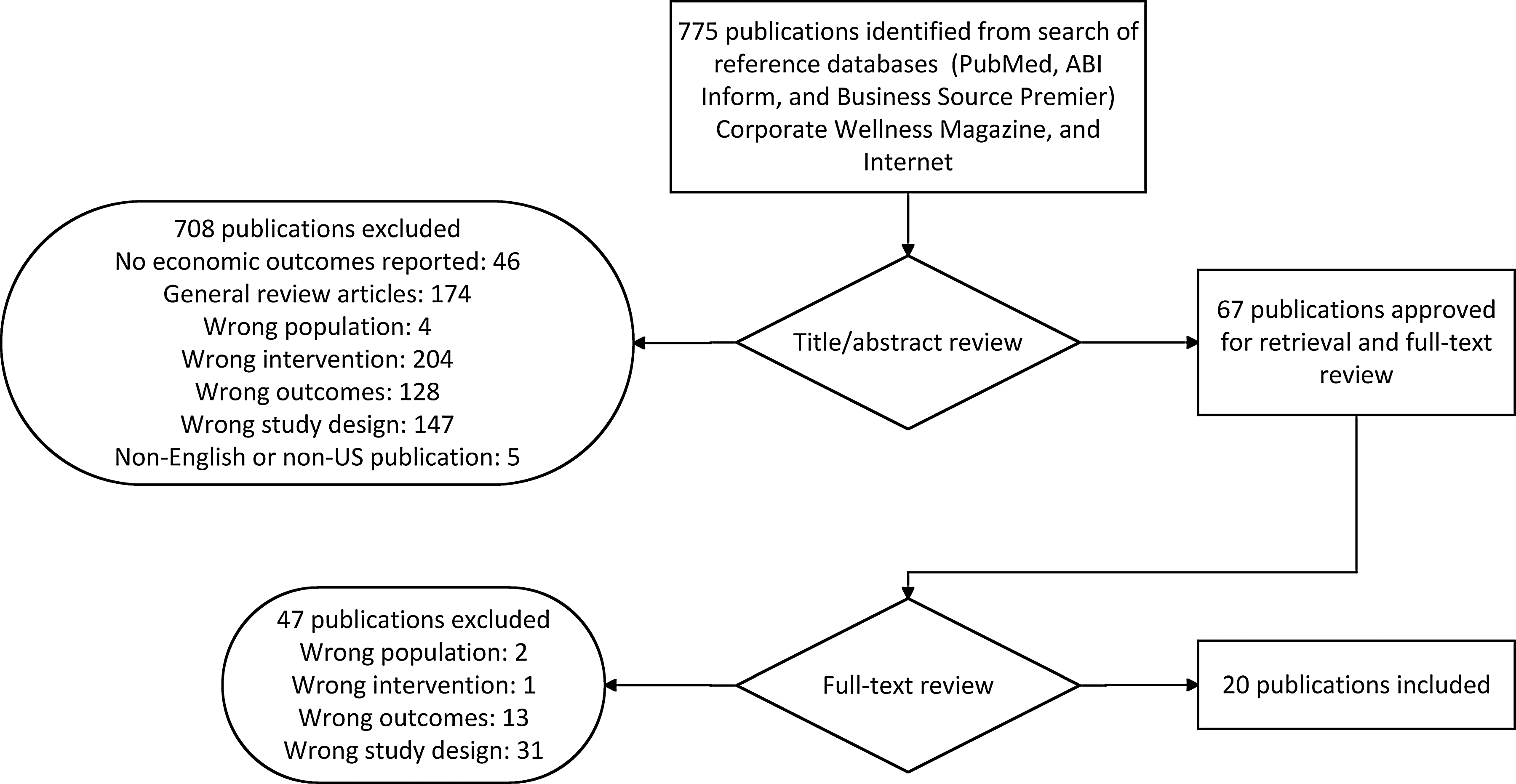
Literature search flow chart.
Three articles reporting data from individual companies were published in 2009, 3 in 2008, 4 in 2007, 9 in 2006, 2 in 2005, and 1 in 2004. Twenty companies reported information on wellness programs and economic outcomes (see Fig. 2 for type of industry). Five of the articles reporting data from individual companies noted the time period of the data analysis follow-up (3 articles 3 years, 1 article 11 years, and 1 article 7 years). Phillips surveyed health benefit administrators representing 22 companies and found that those companies had maintained wellness programs for periods ranging from newly initiated up through 30 years. Mean duration of specialized types of programs, such as health fairs and health coaching, ranged from 2 to 8.6 years. 1
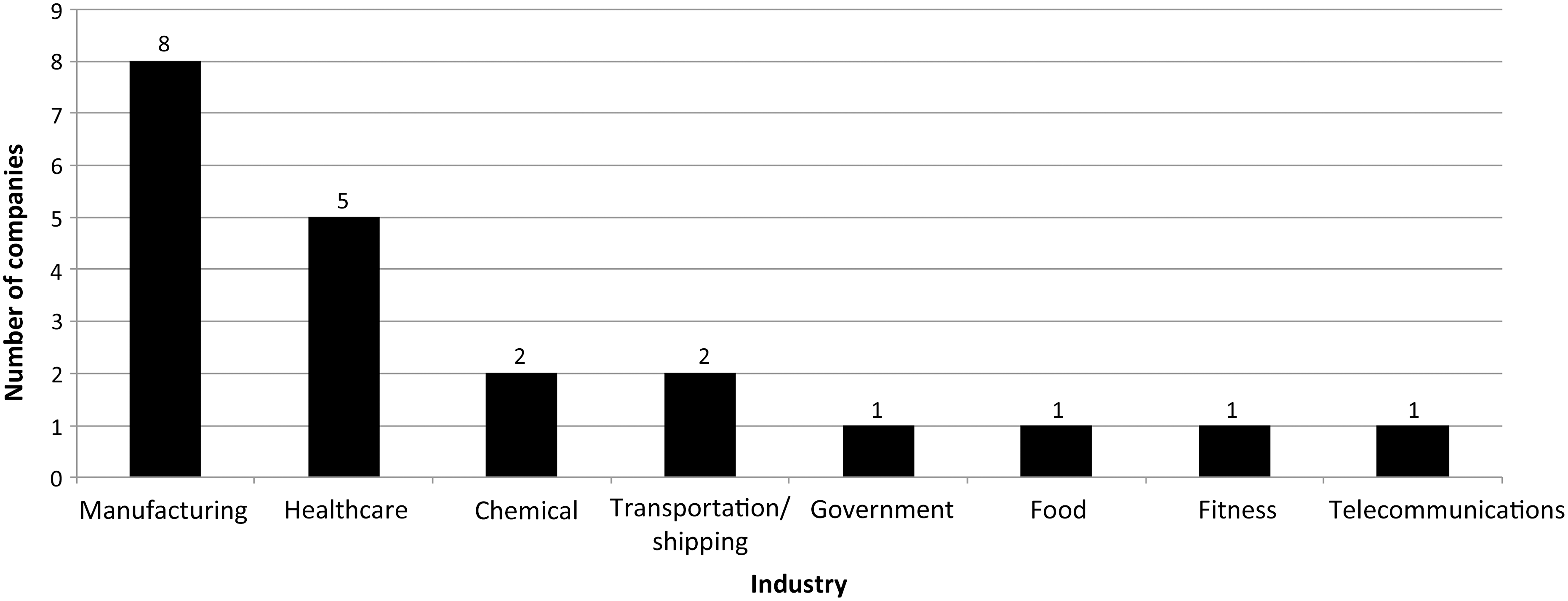
Types of industries. *The number sums to more than 20 because 1 company may fit more than 1 category.
Wellness interventions
The wellness programs of 20 companies, along with outcomes of interest, were described in sufficient detail for abstraction (Fig. 3). Health risk assessments were reported for 14 companies, lifestyle management strategies for 18, and behavioral health for 11. Note, the total does not include the results for Phillips 1 and the results for a review described by Sammer 5 because individual companies were not identified in those articles. Phillips surveyed health care benefit administrators regarding their companies' wellness programs. 1 At least 50% of the 22 survey respondents answered that their companies had smoking cessation, employee fitness, counseling, health risk screening, and biometric screening programs; 73% reported health care screening, 64% counseling, 55% smoking cessation, 50% biometric screening, 50% exercise/fitness programs, 41% stress management, 41% weight loss, 41% substance abuse, 41% financial incentives, and 23% annual employee fairs.
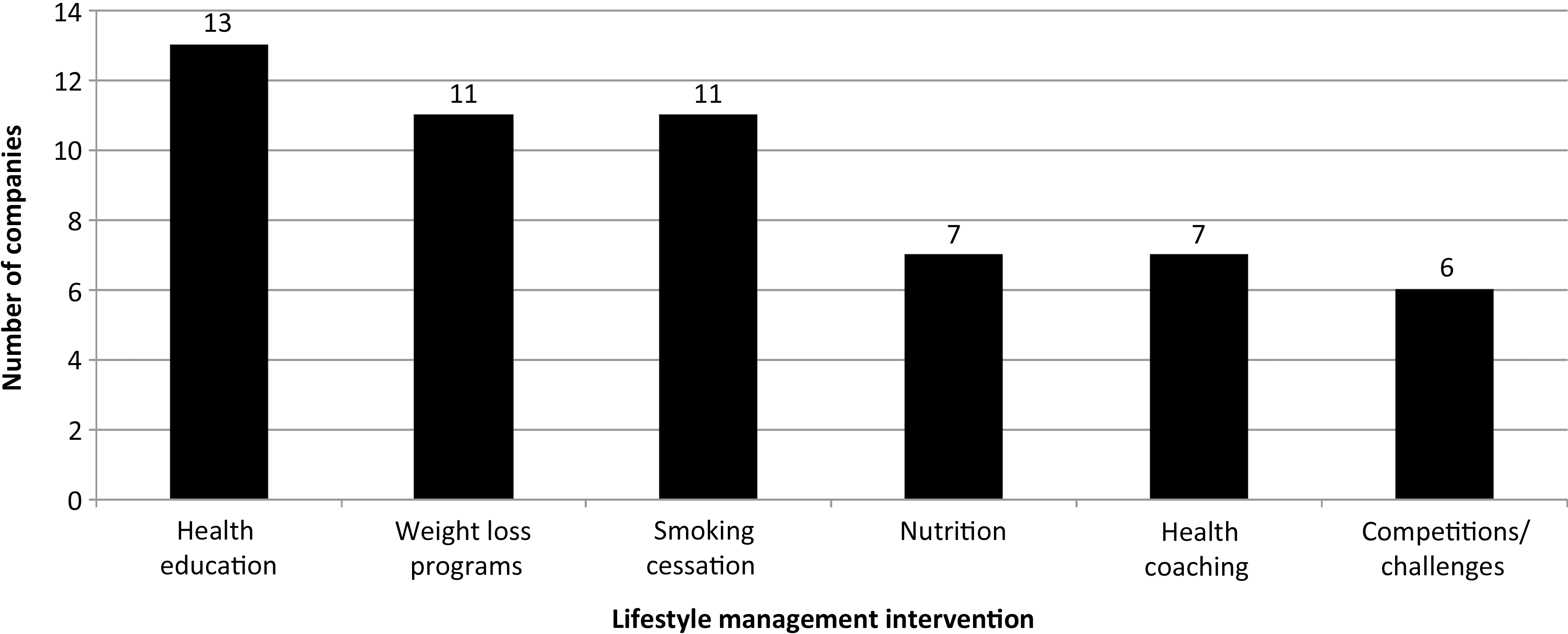
Types and reporting of lifestyle management strategies in companies.
Other examples of wellness programs that offer a wide range of such interventions included Johnson & Johnson's Live for Life 2 ; the wellness programs of Fairview Health Services, 6 Highsmith, 7 and American Cast Iron Pipe Company 7 ; Highmark's Health Tracks and Extra Mile programs 4 ; Wellness Coaches USA programs designed for Con-way Freight 8,9 ; Eastman Chemical Company's HealthFitness program; 10 Providence General Medical Center's Wellness Challenge program 11 ; and the Highmark Wellness Program. 4 Some of the wellness interventions involved competitions and challenges. Examples included Con-way Freight's Choose to Lose 8,9 ; American Cast Iron Pipe Company's risk-reduction Well-Body Club, weight-loss Teams of Three, and tobacco-cessation 100-Day Challenge 7 ; Highmark's 10,000 Step Walking Program 4 ; and Johnson & Johnson's seasonal fitness challenges. 2
Additionally, several companies reported offering employees financial rewards such as cash, 7,9,11 –14 gift cards, vacations, 4 and prepaid gasoline cards 8,15 for taking health risk assessments, 12 participation in wellness programs, 12,14,15 receiving preventive care, 12,13,15 and improving their risk factors. 7 –10,12,13 Certain companies provided financial support for their employees, such as discounts on health insurance premiums, 7,16 preventive care coverage, 6 and medicines. 12
The publications in this review reported that the majority of employees participated in the programs. At Fairview Health Services, participation grew from 54% in 2001, the beginning of the program, to 86% by 2004. 6 Participation at Johnson & Johnson was reported to be 94% in a 2006 publication, 16 and 76% of eligible employees completed a health assessment between 2002–2007. 2 When Con-way Freight's Wellness Coaches program was launched at several locations in 2007, as many as 95% of the employees met with on-site coaches for health assessment screening and counseling. By 2008, more than 5300 employees had attended 74,360 one-on-one coaching sessions. 8 At Eastman Chemical Company, 89% of the employees took a health risk assessment in 2009. 10
Results
Economic outcomes
Most companies reported on cost savings, ROI, and decreased absenteeism (Fig. 4). ROI ranged from 1.6 to 3.9 in dollars saved versus spent on the wellness programs, 11 with Johnson & Johnson's being the highest. 4 Since 1995, Johnson & Johnson's Live for Life has led to an annual savings of $225/employee, or $8.55 million annually. 2 They had a 3.7% lower average annual growth in medical costs compared to the comparison group (employees working for companies that were similar in industry and size) (P<0.001) over 2002–2008. The average annual savings per employee was $565 in 2009 dollars, yielding an ROI of 1.88–3.92 from the wellness program ($1.88 was based on a conservative assumption of $300 per employee per year wellness program cost).

Economic outcomes of employer-sponsored wellness programs.
Health care direct costs (ie, total costs, claims, premiums) either increased less or decreased over time. In Phillips' survey of 22 companies with wellness programs, the mean total health care cost per insured individual increased from $5191 in 2005 to $5753 in 2007. In contrast, an average of $7026 was spent on health care per person in 2006 in the United States. 1 Fairview Health Services' wellness program began in 2001 and expanded to a comprehensive health promotion program in 2002. Their overall medical cost per employee was $4640 in 1999, which was nearly $1000 above national health care industry averages. However, savings per employee in medical costs increased from $17 in 2001 to $41 in 2002 and to $282 in 2003. By 2004, their overall cost per employee was $6511, which was $200 per employee below the industry average. 6 Highmark's wellness program participants had lower annual health care expenditure increases compared to nonparticipants, with a savings of $176.47 per person per year. 4 Blue Ridge Paper Products, Inc. began their wellness program in 2001. In 2003, their overall claims costs were half national rate, and those costs decreased further in 2004. 12 Providence General Medical Center's monthly medical claims were 24% lower on average than those of the other 8 hospitals in the system, and their Wellness Challenge generated savings of more than $2 million over 6 years. 11
Several companies that sponsored wellness programs showed decreases in health insurance premiums. According to a study by the Oswald Company, organizations that had wellness activities had health insurance premiums that were $1030 per employee lower than those of a group of companies that had similar benefit plans and demographics but were not engaged in health initiatives. 5 Highsmith began their wellness program in 1989 and health insurance premiums rose only 4.6% from 2002 to 2007, while health care costs for US employers rose 60% during the same period. 7 Redstone began their wellness program in 2005 and their health care premiums decreased by 8% between 2005–2006. 15 The duration of Bar-S Food's wellness program was not reported, but the company raised premiums only once in approximately 8 years, even though other costs for the company had risen during the same time period. 17 Their group medical cost per employee per year was quoted as being 40% below the national average.
Another measure of health care costs involves workers' compensation. 13 Con-way Freight reported a decrease of approximately 20% in workers' compensation costs at terminals that had a wellness coach on-site overseeing the program for a year or longer. 9
Wellness programs also were associated with decreased indirect costs. Con-way Freight reported 75% fewer lost work days by 1 year following the initiation of their wellness program in 2007 at the pilot locations. 8,9 Participants in Providence General Medical Center's Wellness Challenge took 37% less sick time compared to nonparticipants. 11 Highmark employees who participated in 1 wellness program in 2005 were absent one third of a day less compared with nonparticipants the following year; those who participated in more than 1 program were absent one half of a day less compared with nonparticipants. 4
Health-related outcomes
Health-related outcomes associated with employer-sponsored wellness programs identified from the literature search results are shown in Figure 5. Increased exercise level, risk reduction, and smoking cessation were the 3 outcomes reported most often across articles.
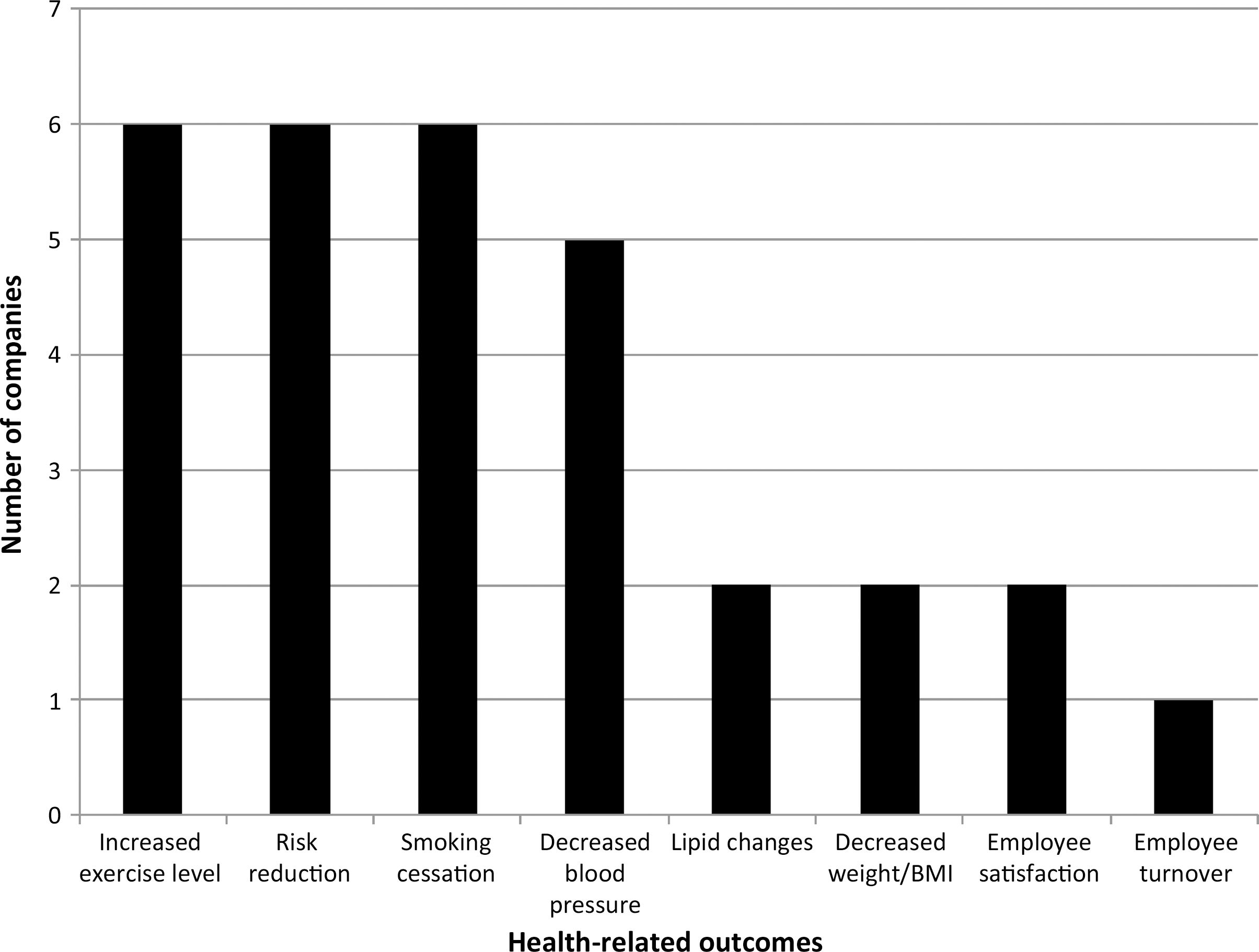
Health-related outcomes associated with employer-sponsored wellness programs. BMI, body mass index.
Decreases in health risk factors were observed among employees of several companies that sponsored wellness programs. For example, after a smoking cessation campaign was put in place at Union Pacific Railroad the population of smokers decreased from 40% of the total workforce in 1990 to 24% in 2001. 18 Additionally, Johnson & Johnson employees had a lower average predicted probability than comparison companies of being at high risk for high blood pressure (4.1% lower), high cholesterol (0.3% lower), poor nutrition (6.7% lower), obesity (6.6% lower), physical inactivity (0.7% lower), and tobacco use (10.6% lower). 2 At Highsmith Inc., from 2000–2006, the number of employees in the high-risk category for total cholesterol (≥240 mg/dl) decreased by 66%. Employees' blood pressure and other health measurements also improved. 7
At Con-way Freight, the number of employees who exercise at least twice a week for at least 20 minutes rose from 560 to 1350 over 1 year. 9 Nearly 831 employees lost a total of 6269 pounds 8 (including more than 1000 pounds lost among 25 people in their Biggest Loser competition 9 ). In addition, more than 170 employees quit smoking; 669 employees reduced their blood pressure from hypertensive levels; and nearly 1470 employees improved their overall health through exercise and diet regimens. 8
Discussion
This review found that many diverse companies that sponsored a wellness program showed benefits in terms of both economic and health-related outcomes. Notably, ROI ranged from 1.6 to 3.9, with Johnson & Johnson reporting the greatest return. Although a higher ROI ($5.81) was reported in a review, 19 Naydeck et al. noted that the review did not rigorously adjust for study design, which may have inflated the ROI value. 4 Health care costs either decreased or increased less than those of comparable populations, including the general US population, 1,12 the US health care industry, 6 and similar companies. 11 In addition, reduced absenteeism was reported. 4,11 Employees also experienced the benefit of improved health, including increases in well-being and decreases in health risk factors (eg, smoking, 2,18 high cholesterol, 2,7 hypertension, 2,8 obesity, inadequate physical activity 2,8,9 ).
Companies with successful wellness programs shared certain characteristics, most notably a corporate culture that recognizes the importance of employee health. A company with such a culture does not promote its wellness programs solely because of their ROI, but to encourage healthy lifestyles to improve their employees' lives. For example, Cianbro's health care insurance premiums rose 27% in 2001, but they neither shifted the cost to their employees nor cut their benefits. Instead, because the company understood the value of investing in preventive maintenance for their equipment, it made sense to do the same for their workforce. 14 This concern for employees also extended to their families, which is another attribute of a culture of wellness. For example, at Cianbro Corporation, both employees and their dependents can receive health risk advising 14 ; Highsmith Inc. 7 and Redstone offer similar benefits. 15 A culture of wellness also has a broad definition of health: for example, Highsmith, Inc. provides ongoing education and resources to address physical and emotional health, productivity, personal and professional relationships, and job performance. As evidence of their success, the company received the Wellness Councils of America's Well Workplace Award in 1994, 1997, 2000, and 2004. 7
Strong motivation on the part of employees and leadership alike was another characteristic of companies with successful wellness programs. Employees reciprocated their companies' concern for their health by giving strong support and input. Highmark's Wellness Program implementation was based on feedback from employee surveys and employee wellness communities, and was well publicized through the company Intranet and monthly e-mail newsletters to all employees. 4 Redstone's Health Tracks program was designed partly by employees appointed to a wellness committee by senior leadership; employees earned prizes for serving at least 6 months on the committee. 15 Under Worthington Industries' Wellness Champions program, employees with the highest level of participation communicated with third-party wellness vendors and encouraged other employees to increase their wellness participation. 13 When more office workers than drivers were participating in Con-way Freight's Biggest Loser competition, the office workers were asked to encourage and guide more drivers to join. 9
Aside from appreciating their company's support, many employees simply were motivated to improve their health, which prompted high rates of participation. For example, when Con-way Freight's Wellness Coaches program was launched as a pilot at several locations in 2007, participation quickly surpassed expectations: a 95% rate of one-on-one meetings with on-site coaches for health assessment screening and counseling. More than 5300 employees attended a total of 74,360 one-on-one coaching sessions. Employees were especially interested in receiving information on blood pressure, body composition, and nutrition. Considerable weight loss, smoking cessation, and lowered blood pressure were observed. 8
Successful employer-sponsored wellness programs also had participation-friendly corporate policies and physical environments. Some company campuses had walking paths, 15 while others had on-site gyms. 2,4,15,20 Classes that were offered on-site and scheduled around business hours, for example at Highsmith, Inc., made it easier for employees to participate. 7 In addition, employees were more likely to take time from work to participate in wellness activities if executives and senior management also took time to engage in health activities during the day. 18 For example, management at Bar-S Foods' Flex and Stretch program participated and encouraged employees to follow their example. 17 Financial support for preventive health care is another example of a participation-friendly corporate policy. Examples included subsidies 7 and discounts 16 on health insurance premiums, preventive care coverage, 6 and preventive medicines. 12 Similarly, employees received cash and prizes for lowering their health risks as well as for participating in wellness activities, as described earlier in the section Wellness Interventions. 6,7,12,16
In order for companies' wellness programs to remain successful, they had to adapt to the changing health needs of their workforce. Johnson & Johnson's programs have been updated several times according to the results of ongoing analyses of employee health data; studies in the 1980s, the 1990s, and the study cited by Henke et al showed consistently favorable results. 2 Fairview's program began in 2001 with a focus on health risk appraisals, health education, and self care, 6 but by 2002 their focus had shifted to behavior change, lifestyle interventions, and health coaching. By 2004, they were integrating programs with other departments and vendors/partners. Highsmith Inc.'s Well Body Club, which started in 1993, stratified employees into groups according to the number of risk factors, and offered greater monetary incentives to the healthier groups. The Well Body Club prompted the development of more than a dozen programs that focused on risk factors such as nutrition, diabetes, and smoking. 7
Successful corporate wellness programs also communicated with community health organizations that could provide support, education, and treatment. Highsmith, Inc. switched its health insurance plan to a health maintenance organization (HMO) that was more supportive of wellness efforts. 7 Employees could meet with a health educator from that HMO to discuss results of biometrics and health assessment evaluations, or seek counseling from Highsmith's employee assistance program provider. In Worthington Industries' Wellness Champions program, employees with the highest level of participation communicated with third-party wellness vendors. 13 Redstone's Health Tracks program was designed with assistance and support from their health insurance carrier's (Highmark, Inc.) wellness coordinator. 15 Cianbro Corporation hired an outside medical consultant to give talks and employee and family health risk appraisals; the consultant then worked with those assessed to address their health issues. 14
Some of the most successful wellness programs made use of technical aptitude, especially computer technology. Examples included online offerings of weight management tools, health coaching, and classes, publicized through e-mail newsletters and disseminated through the Web or telecommunications. 2,4,9
Limitations
This review has some limitations that should be addressed. First, the results of successful programs may be published more frequently and, consequently, the review may not represent the entire array of employee-sponsored wellness programs. Second, the quality of included publications was not high, and only 3 were published in peer-reviewed journals. Moreover, no systematic reviews or randomized trials were identified. Instead, most articles could be described as case studies describing one company's wellness programs and outcomes, with some reported changes over time. These limitations preclude a sensitivity analysis to determine how program results vary for studies with higher compared with lower quality.
Third, although some publications compared results to general health care trends, few assessed outcomes between employees who did and did not participate in the wellness program. Consequently, it is challenging to determine the effect of the program versus changes that occurred because of another influence on the employee population. Last, comparisons between publications was difficult because of the variety of outcomes interventions reported, as well as insufficient detail about the programs provided in many of the articles. Further research of a high methodological caliber is needed to support informed decisions by companies as to the value of starting a wellness program. Specifically, randomized trials and economic analyses are better designed to determine a causal relationship between participation in a wellness program and outcomes, both economic and health-related, as well as the relationship between these outcomes and possible factors affecting the success of employer-sponsored wellness programs. The articles found in this review can only suggest associations between health-related and economic outcomes. However, randomized trials involving companies would be challenging for logistic, financial, and ethical reasons.
Conclusion
This review found that improved employee health and cost savings were observed at companies that implemented and maintained wellness programs. These companies tended to have strong support and participation from highly motivated senior leadership, management, and the rest of the employees alike; a culture based on the idea that healthy employees are the most productive; and an environment that encouraged participation. These companies also maintained the success of their wellness programs by adapting to the changing needs of their workforce, taking advantage of technology, and receiving support from health programs in the surrounding communities. Although the need to cut costs was a strong motivator for implementing and updating wellness programs, companies especially recognized the value of maintaining the health and well-being of their workforce. Future studies of the benefits of employer-sponsored wellness programs should include randomized controlled trials and economic analyses for increased methodological rigor. Such studies would even more strongly support the value of such programs to help employers reduce health care costs and maintain a healthier, more productive workforce.
Footnotes
Disclosure Statement
Drs. Kaspin and Miller and Ms. Gorman disclosed no conflicts of interest regarding the research, authorship, and/or publication of this article. The authors received no funding for the research, authorship, and/or publication of this article.