




Abstract
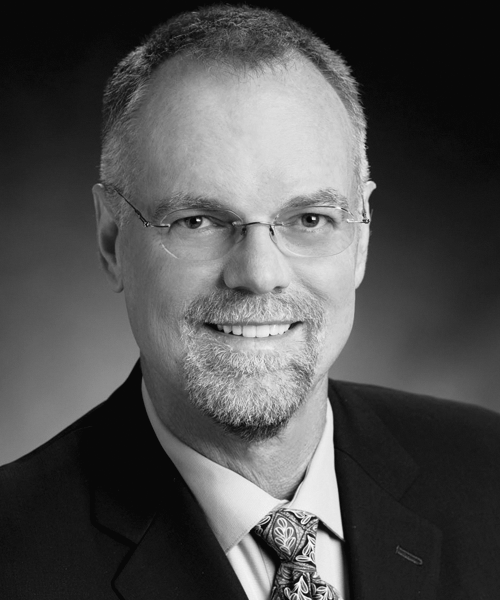
Dr. William H. Andrews has worked in the biotech industry for 31 years, focusing the last 19 years on finding ways to extend human life span through the intervention of telomere shortening in human cells. Dr. Andrews earned his Ph.D. in Molecular and Population Genetics at the University of Georgia. He was a Senior Scientist at Armos Corporation and Codon Corporation, Director of Molecular Biology at Codon and at Geron Corporation, and Director of Technology Development at EOS Biosciences. He is presently the founder, President, and CEO of Sierra Sciences, a biotechnology company focused exclusively on finding drugs that will transiently induce the expression of endogenous telomerase in human cells. Sierra Sciences has already identified more than 30 such drugs and is presently characterizing their mechanism of action. While Director of Molecular Biology at Geron Corporation, Dr. Andrews was one of the principal discoverers of both the RNA and protein components of human telomerase and was awarded second place as "National Inventor of the Year" in 1997 for this work. He is presently a named inventor on 43 U.S- issued telomerase patents.
W.H.A.: I know exactly what started my interest. When I was somewhere between 6 and 12 years old, my parents realized I had an interest in science and medicine, and my father said, “When you grow up you should be a doctor and find a cure for aging.” It seemed like such a simple thing at the time. It did not seem odd then that he used the word “cure” in reference to aging. Even today, people are uncomfortable with the concept of aging as a disease for which we need to find a cure—that we are suffering from something that is going to kill us. Even the National Institutes of Health does not describe aging as a disease.
My father got me tuned to the subject and I became adamant about it. Since high school, I have been using my abilities and focusing my energies on finding a cure for aging. I would stay up late with my friends and talk about, and in college I experimented with extending the lives of fruit flies, but was not successful. I have always been passionate about and obsessed with the subject of aging and the search for a cure.
As time went on and I studied the topic more, it did not make sense to me that people age due to wear-and-tear, that environmental impacts cause aging. If that were so, there would be a lot more variability in how we age. It would not be as easy to estimate a person's age from appearances. Also, people living near the poles age similarly to people living near the equator, and the environmental impacts are very different in those two environments. If you consider animals, different types of animals age very differently, even if they live in the same type of environment. Take cats, for example, which all live to be about the same age. The bell curve representing the age at which cats typically die is very different from the bell curve for humans. It seemed to me that the environment could not be the main cause of aging; it could play a role but not be the main cause. There has to be some type of clock that ticks inside of us, and that clock is different in different animals.
I had decided that when I had the education and training I needed I would begin working on finding a cure for aging. But when I was completing graduate school and looking for a postdoc position, I found that all the professors with whom I interviewed were focused on environmental impacts on aging. When I tried to explain to them that the environmental theory did not make sense to me and that I believed there had to be some kind of a clock, we did not see eye to eye. No one had made any major discoveries yet supporting the idea of an internal clock. As a result, I did not go into aging research at that time.
Instead, I went to work in biotechnology and, after a very successful 10-year career, I tried to talk the company I was working for at the time, Berlex Biosciences, into developing an antiaging project. I convinced them to let me go to a conference in Lake Tahoe, and I decided that my mission there would be to put together a research group or even explore the possibility of starting my own company. My number one goal was to try to bring a project back to Berlex Biosciences.
One morning I went to a talk by Dr. Calvin Harley, from McMaster University. He talked about telomere shortening and aging; he had published a paper on his telomere hypothesis of aging, and he was just about to start working at Geron. That talk was an “aha” moment for me. I was convinced that this was the clock I had been searching for. I met him at the bottom of the stairs as he walked down off the podium and asked him if anybody had cloned the enzyme telomerase he had talked about. He spoke about it being discovered in the organism Tetrahymena by the subsequent Nobel Prize winners Elizabeth Blackburn and Carol Greider, but nobody had yet discovered it in humans, even though they had been working on it for more than a year.
He knew who I was because of the earlier work I had done in biotech, and I asked him if I could come work for him. I told him that I would have the gene for telomerase cloned in 3 months. So I went to work at Geron and, 3 months and 17 days later, I had cloned the RNA component of telomerase. Later we cloned the protein component as well. The RNA component turned out to be constitutively expressed in cells—it was always turned on—and could not, therefore, have a key role in aging. The protein component, however, was inducible, and we were able to show that it does control aging. When we put the gene for the protein component into normal human skin cells they essentially stopped exhibiting replicative senescence. Replicative senescence is probably the cause of aging, although that has not yet been proven and probably will not be for quite some time.
W.H.A.: Cloning the RNA component of telomerase was probably the biggest accomplishment of my life. I certainly did not do it alone: Numerous people worked together as a team. I am still amazed that we succeeded, and I find it hard to believe that any other group, starting from scratch, could reproduce that experiment. Many people were skeptical that we had cloned the RNA component of telomerase at the time, and we proved that we did so by engineering the template sequence so it would encode a different telomere sequence. When we then put it back into cells, we were able to show that the newly synthesized telomeres had this synthetic sequence in them. That was the proof the skeptics needed.
The next highlight was cloning the protein component, putting that into normal human skin cells, and showing that the cells stopped aging. There was debate at the time, even at Geron, that aging could not be that simple. When I use the term “aging,” I really mean replicative senescence. I was convinced that replicative senescence is that simple. The cells given the protein component of telomerase never reached the Hayflick limit; they kept dividing and, years later, were deemed immortal.
I would probably still be at Geron if the investors had not decided that the company should focus principally on cancer rather than aging. They felt that cancer offered more immediate revenue potential. That is why I left Geron when I did and started Sierra Sciences.
W.H.A.: Nowadays, I think most people feel that the best way to fight cancer is to turn on telomerase, and that short telomeres are the major cause of cancer. I see Sierra Sciences as an anticancer company. We are focused on finding a cure for cancer at the same time we are searching for a cure for aging.
At the time I founded the company, I was totally obsessed with the idea of a cure for aging, and there was no way I could be happy doing any other kind of research any more. Fortunately, I had some things going for me. Cloning the RNA component of telomerase had earned me second place for National Inventor of the Year in the United States in 1997, and I had had a lot of successful publications and had been involved in many of the early successes and discoveries in the biotech industry. So I had a good resumé to present to investors. I was also very focused, and I needed to attract investors that were also very passionate about aging and especially about curing their own aging. I think they liked the fact that my stated mission was to cure my own aging and to extend my health span and life span.
I had the opportunity to talk to a lot of investors, mostly angel investors, and I gained the interest of several very quickly. I convinced them that telomeres and telomerase are the best avenue for curing aging, but that we had to answer a lot of questions and that it was not at all a certainty that this approach would work. I needed funding to do the experiments to answer those questions. I told potential investors that the company's mission was to cure aging, but if we were able to do that we would also cure practically every disease that involves cell division. To my surprise, most of the investors were mainly interested in curing their own aging.
In 1999, with $1.2 million, I started the company. We had a very exciting first year and met our milestones. One of my colleagues and I gave a 10-min presentation to an angel group of about 50 people, describing what we were trying to do and what we had accomplished so far, and afterward, every one of them got in line to invest in the company. I have had very good success in being funded, at least until the economic crisis hit about two and a half years ago. It has been a different story since then, but I am hoping we have found some solutions for getting out of the recent slump.
When we started the company we had a plan A and a plan B. Plan A was to discover the repressor that turns off the telomerase gene. We worked on that for about 5 years and had some candidates for a repressor, but we did not succeed in this goal. Nobody else in the world had been able to find a repressor either, or to replicate their occasional successful experiments. We decided to abandon plan A, at least temporarily. In 2005, we embarked on plan B, which was to screen cells against a library of random synthetic chemicals and to look for anything that would turn on telomerase. This approach would have been easier if plan A had found a repressor and we could then have developed a screen targeting only that repressor. That would have eliminated the major global effects of some compounds. We now had the risk of identifying compounds that could turn on 30% of the genes in a cell, including telomerase.
Another challenge with plan B was the lack of a good high-throughput screening strategy for telomerase induction. Telomerase is so low in abundance, even in cancer cells, that identifying a change in expression is very difficult. We developed a brute force, low-throughput screening approach and used it to screen a lot of different chemicals. One day, in 2007, we got a hit. It was the 57,684th chemical we had screened, so we called the hit C0057684. Everyone was a bit cautious at first, but the results were reproducible. The screen was designed to look for production of messenger RNA (mRNA), meaning that the telomerase promoter was turned on. The next step was to look for actual telomerase. We had determined that there were about 13–15 steps in the gene expression cascade that all had to be regulated; turning on the promoter was only the first step. But when we tested for the final step, for telomerase activity, it worked.
That was a very exciting time. Many people had told us that we would never succeed in turning on the telomerase gene. One argument was that if it were possible to turn on the telomerase gene we would find it occurring in nature. I didn't find that argument convincing.
We sent our “hit” to everyone who had told us this could not be done and asked them to test it for themselves, and they all responded, “Eureka, it works!” One problem with our low-throughput screen was that we did not have a positive control, something we could use to verify that our assays were working. C0057684 was now a positive control that we could use to design a high-throughput screen, figure out how to generate a stronger signal, introduce more automation, and make the whole process a lot easier. We went back and rescreened all the chemicals we had already screened and found that we had missed a lot of hits. About 1 in every 400 random synthetic chemicals was a hit, although far weaker than C0057684. At the time, though, weak hits were as important to us as strong hits. In drug screening you want to be able to collect a group of hits to be able to pass along to the medicinal chemists who will then redesign and optimize the leads to decrease toxicity and increase potency.
We continued to screen new compounds as well, and when we had screened about 300,000 chemicals we decided to start our medicinal chemistry program. At that time, we had more than 800 hits—chemicals that turned on telomerase. We were able to look at their structures and group them into 39 families, which we speculated had different mechanisms of action. Some were high inducers, whereas others were low inducers; some had very high toxicity, whereas others had low toxicity.
The first hit we found, C0057684, scored a 6 on a scale of telomerase expression we developed. Based on the assumption that HeLa cells (a cancer cell line) have the minimum amount of telomerase needed to make a cell immortal, we created a scale in which a compound that produced the same amount of telomerase as is expressed in HeLa cells would have a score of 100. If a compound induced no telomerase production, it would have a score of zero. Throughout the course of our random drug screening campaign we never got a score higher than 6.
In our medicinal chemistry program, our chemist, Federico Gaeta, Ph.D., started to synthesize new rationally designed chemicals that would have increased activity and decreased toxicity. Very quickly he took our record score of 6 from random drug screening to a score of 16. Given the fast pace at which things were proceeding, we expected to be able to bring that number up to 100 very quickly. But that is when the economic crisis hit, and that brought everything to a halt. My investors lost the ability to put any more money into the company, and we shifted to operating on a shoestring.
Now, the goals of the company are to find funding, develop a drug that has a score of 100 or higher, take it through preclinical and clinical trials, and bring it to the market. We believe that a drug with a score greater than 100 will reverse aging, and the best proof of concept for this is Ron DePinho's recent publications demonstrating age reversal in mice.
Regarding my even longer-term goals, I will be the first to say that telomere shortening is probably not the only cause of aging, and I am glad that other people are working on other mechanisms. Once we have developed a drug to deal with telomere shortening, then I want to focus my attention and support on the other causes, especially oxidative stress and mitochondrial dysfunction, both of which I believe are major players in aging.
W.H.A.: I am not familiar with the term “telomerase thrift,” but the concept is clear. On the subject of cancer, I would start by saying that there is no basis for why telomerase should cause cancer, and I have never believed that it does. I believe that you can have cancer with or without telomerase. All telomerase does is cure the aging of a cancer cell, so the cell does not undergo replicative senescence. In essence, cancer cells have figured out a way to cure their own aging.
Several papers have been published in which people tried to show that telomerase causes cancer, but those studies were typically done in engineered mice, and we know that genetic engineering can itself cause cancer. Many of these authors, though, are now saying that maybe telomerase does not cause cancer, maybe it can actually help stop cancer. People are starting to realize that short telomeres cause cancer, not telomerase. Furthermore, short telomeres are the reason that cancer cells turn on telomerase. When telomeres get short, chromosomes become unstable, causing chromosomal rearrangements and mutations, and these chromosomal rearrangements and mutations can cause telomerase to turn on, which then makes one cancer cell more successful than the other cancer cells and it becomes immortal. None of this happens until telomeres get short. That is why almost all cancer cells have short telomeres. If the telomeres had remained long, the chromosomal rearrangements and mutations would not have happened. That is why it is quite rare to find a cancer cell with normal length telomeres.
I like to say that telomerase does not cause cancer, rather cancer causes telomerase. I think the chance that telomerase causes cancer is so low that the benefits of inducing telomerase expression outweigh the risks. I believe strongly that short telomeres cause cancer and that if you turn on telomerase before your telomeres get short then you prevent them from getting short and therefore decrease the chance that the short telomeres will cause cancer. Our best defense against cancer is our immune system. The incidence of cancer increases dramatically when the telomeres in the immune cells become shorter. When this occurs, the immune cells senesce and lose the ability to fight the cancer. This has especially been shown in acquired immunodeficiency syndrome (AIDS) patients, whose immune cells undergo senescence due to short telomeres, leading to, for example, a high incidence of Kaposi sarcoma.
Because 85–95% of all cancers have been shown to express telomerase to keep their short telomeres from shortening even further, a telomerase inhibitor is an effective way to kill cancer cells. I can envision a regimen in which a person with cancer would take a telomerase inducer up until starting treatment with a telomerase inhibitor, and then afterward go back on the telomerase inducer to help cells fight the residual cancer. Theoretically, there is no reason a person cannot continue to take the telomerase inducer while also taking the telomerase inhibitor, but the telomerase inducer would be ineffective in the presence of the telomerase inhibitor, and therefore a waste of one's money.
W.H.A.: First of all, I was not aware that we have benefitted financially more than other antiaging groups. I really think it is important that all antiaging research groups find the funding they need if we are ever going to succeed at curing aging.
I attribute my success in finding money mainly to my passion about wanting to cure not only my own aging but everyone else's aging too, to my specific focus on the niche of telomere shortening, and to my past personal success and awards. When we at Sierra are successful in our efforts, I then want to put our resources and funds toward helping others who are pursuing other mechanisms of aging. I would not be at all upset if someone else cured aging.
W.H.A.: We need to bring more legitimacy to the field. The world has been plagued by quacks and charlatans and they have done a very good job of discrediting the field. It is no surprise when I or someone else approaches potential investors saying we want to cure aging and they just laugh it off and walk away. I think the situation has improved a great deal, and. I have been working hard the past 2–3 years, giving talks to show that antiaging is a real science. We also need to identify who are and are not legitimate researchers.
Furthermore, we need to improve the economy. Many people are very interested in investing, but they do not have the money available right now. It is a difficult time and, about a year and a half ago, I decided to look for alternative funding sources. Even though our focus has been on trying to find a drug that can stop or even reverse aging, maybe we could generate some revenue by searching for natural products that are generally recognized as safe, though they are likely to be much weaker telomerase inducers than those we could create with synthetic chemicals. Synthetic compounds might be able to extend life span and health span, but they would still need to go through the Food and Drug Aministration (FDA) approval process. Instead, we decided to start screening natural products for telomerase-inducing activity.
TA-65, a transient telomerase inducer from Geron, was already on the market through TA Sciences, and we had tested it and proved that it worked. I am a big proponent of TA-65 and I take it every day. But we set out to find a new natural product to bring to market. A company called Dream Master approached us to screen its natural products collection. It would then sell any hits to Isagenix to market. We ran the screens and found a lot of hits. The first product, called Product B, will soon be on the market. I am hoping that the money we make on the royalties will help fund our pharmaceutical efforts.
W.H.A.: To find funding, come up with a telomerase inducer that stops and possibly reverses aging, and then find ways to alleviate the other causes of aging. It would be great if we could do all of that in time for my parents to benefit from it!