




Abstract
The aim of this study was to assess the ability of a traditional Chinese medicinal ginger root extract (GRE) to prevent behavioral dysfunction in the Alzheimer disease (AD) rat model. Rat AD models were established by an operation (OP) in which rats were treated with a one-time intra-cerebroventricuIar injection of amyloid β-protein (Aβ) and continuous gavage of aluminum chloride every day for 4 weeks. GRE was administered intra-gastrically to rats. After 35 days, learning and memory were assessed in all of the rats. Brain sections were processed for immunohistochemistry and Hematoxylin & Eosin (H&E) and Nissl staining. The latency to show significant memory deficits was shorter in the group that received OP with a high dose of GRE (HG)(OP+HG) than in the groups that received OP with a low or moderate dose of GRE (LG, MG)(OP+LG, OP+MG) (p<0.05). The expression of superoxide dismutase (SOD) and catalase (CAT) in the OP+MG and OP+LG groups was up-regulated compared to the OP+HG groups (p<0.05). The rats in the OP+HG groups had lower levels of nuclear factor-κB (NF-κB), interleukin-1β (IL-1β), and malondialdehyde (MDA) expression than the rats in the OP+MG and OP+LG groups (p<0.05). This experiment demonstrates that the administration of GRE reverses behavioral dysfunction and prevents AD-like symptoms in our rat model.
Introduction
In this study, we examined the effects of GRE on behavioral function and brain metabolism using an operated rat model of AD, which is the most suitable model for studying the mechanisms of AD and potential treatments. The rat AD model is often used to study the efficacy of various therapeutic candidates for the prevention of AD.
AD is characterized by chronic and irreversible neurodegeneration. The major clinical manifestations of AD are memory loss and disordered cognition, and the main outcome is death. Effective treatments are scarce because the etiology and pathogenesis of the disease is unknown. 18 –22 The exact mechanism of damage in AD is still hotly debated among medical professionals. 23 Because there are many pathogenic factors in AD, therapeutic drugs used clinically are mainly anti-oxidants, anti-inflammatory agents, cholinergic agonists, estrogen, neurotrophic factor, etc. Through the use of organic synthesis, two or more pharmacophores linked to a multifunctional inhibitor for AD can be obtained; however, unpredictable side effects greatly hinder the implementation of this strategy. Therefore, attention has gradually moved from organic synthesis to multifunctional compounds in natural products. 24 Huperzia serrata is a plant commonly called “firmoss” that contains the acetylcholinesterase inhibitor huperzine A (HupA). 25 HupA is an effective extract treatment for AD, and GRE is thought to possess similar effects as HupA. GRE, which contains gingerol, shogaol, and other plant biomarkers, 26 is known to have low toxicity and is considered suitable for long-term administration. 27 Therefore, GRE may be an effective drug for the prevention of AD.
In previous research, 28 amyloid deposition, as well as the obvious pathological changes in morphology, including smaller neurons, reduced cytoplasm, karyopyknosis, disordered arrangement of neurons, neurofibrillary tangles, and reduction of cell number, could be seen in the hippocampus of a group of model disease rats.
Intra-cerebroventricular injection of amyloid to replicate the pathology performance of AD is satisfactory, but the behavioral manifestations of AD are not satisfactory. Intervention of aluminum chloride can partly replicate the behavioral manifestations of AD, but the pathology performance is not satisfactory. Therefore, we have adopted the two interventions to establish an animal model. We used as a model the operated (OP) rat treated with one-time intra-cerebroventricuIar injection of Aβ protein and continuous gavage of aluminum chloride every day for 4 weeks. Preliminary experiments demonstrated that administration of GRE reduced behavioral dysfunction, increased markers of oxidative stress, and decreased inflammatory cytokines in OP rats to a similar degree as treatment with HupA did. The purpose of the current study was to evaluate the effects of GRE treatment on OP rats and to determine whether the effects of GRE were similar to the effects of treatment with HupA. To elucidate the effects of GRE and its mechanism of action in OP rats, the expression patterns of metabolic markers were examined in brain tissue sections and serum samples collected from the rats after drug administration.
SOD is a very important anti-oxidant defense that catalyzes the dismutation of superoxide into hydrogen peroxide and oxygen. 29 CAT catalyzes the decomposition of hydrogen peroxide to oxygen and water, and it can be found in living organisms exposed to oxygen. 30 Nuclear factor-κB (NF-κB) is an important protein complex that controls the transcription of DNA. 31 IL-1β is one of the members of 11 β-trefoil cytokines that are involved in immune defense against infection, as are pro-inflammatory cytokines. 32 MDA, whose organic compound formula is CH2(CHO)2, exists mainly in the enol form. 33
Materials and Methods
Animals and treatments
Sixty 90-day-old, female Sprague-Dawley rats were purchased from Guangxi Medical College Animal Experimentation Center (certificate no. SCXK GUI 2009-0002) and used for the following experiments when they were 95 days old and weighed 260±10 grams. On arrival, the rats were housed in our animal laboratory (22°C). We used the method according to the Zhi-an Liu et al. 28 to establish AD model. After an adaptation period of 7 days, the rats were randomly separated into 6 groups of 10 rats each and were either sham-operated (SHAM, 1 group) or operated upon (OP, 5 groups). After the animals were anesthetized with an intra-peritoneal injection of chloral hydrate (80 grams/L in a saline solution; 0.4 mL/100 g body weight), we positioned the skull of each rat horizontally, shaved the hair, and made an incision in the skin of the head. The lambda suture was used as a surface anatomical landmark, and the injection coordinates were posterior 0.8 mm, right or left lateral 1.4 mm, depth 3.6 mm, according to the atlas of Paxinos and Watson. 34 Either Aβ protein (0.5 gram/L in a saline solution) (OP, 5 groups) or physiological saline (SHAM,1 groups) was injected using a 5-μL micro-injector at a rate of approximately 0.5 μL/min. After the operation, the needle was left in place for 10 min and then withdrawn slowly. Each rat received 30 μL as a total volume of injection. The incision was sutured and disinfected with iodophor after the surgery. Rats were housed singly until fully awake and recovered. After recovery, rats received a continuous gavage of aluminum chloride every other day for 4 weeks (3 g/L in a saline solution; 100 mg/kg body weight). After that, the OP rats were randomly assigned to additional groups as follows: (1) OP group (OP), treated with 30 mL physiological saline; (2) OP+HupA group (OP+HupA), treated with 100 mg/kg of HupA; (3) OP+GRE high-dose group (OP+HG), treated with 4 grams/kg of GRE; (4) OP+GRE medium-dose group (OP+MG), treated with 2 grams/kg of GRE; and (5) OP+GRE low-dose group (OP+LG), treated with 1 gram/kg of GRE. The doses of ginger GRE given to the rats were according to Hui Liu et al. 35 GRE was purchased from the Shanghai Sinopharm Chemical Reagent Company (gingerol content of ≥5% by high-performance liquid chromatography [HPLC]; GRE is equivalent to ten times that of fresh ginger), and HupA was purchased from Biosynthesis Biotechnology (purity >98.5%, by HPLC 99.1%). Drugs were administered intra-gastrically daily for 35 days. 36 After 35 days of treatment, the rats were sacrificed. Arterial blood was collected, and the serum was separated and stored at −80°C. The caudal third of the brain that included the site of injection was harvested. The segments were fixed in 10% phosphate-buffered formalin for 24 hr. Guidelines for the ethical care and treatment of rats from the European Community guidelines (EEC Directive of 1986; 86/609/EEC) were strictly followed.
Behavioral testing (Morris water maze)
After 1 week of adaptation training, rats were tested in the Morris water maze 37 to assess spatial learning and memory. 38 In the testing phase, rats had four sessions of trials per day for 5 days in which they had to find a hidden platform placed in the center of one of the quadrants of the tank and submerged 2 cm under the surface of water. The rat was placed in the water facing the wall of the tank on each trial, in one of four start locations (N, S, W, and E). The order of the start locations was varied. On acquisition-phase days, any given sequence was not repeated. If the rat did not find the platform within 120 sec, it was guided to the platform and allowed to remain there for 10 sec. The latency to find the platform was measured in each trial. One day after the last training trial, all of the rats were subjected to a probe trial in which the platform was removed. We measured the latency to cross on the location where the platform used to be as a measure of spatial memory.
Nissl staining, Hematoxylin & Eosin staining, and immunohistochemistry
Tissue samples were dehydrated in a graded series of ethanol solutions at 4°C, embedded in paraffin, and sectioned at a thickness of 5 μm. The sections were processed for immunohistochemistry and stained with Hematoxylin & Eosin (H&E) and Nissl. Immunohistochemistry was performed using previously described techniques 39 with the following primary antibodies: SOD (Santa Cruz Biotechnology, Santa Barbara, CA) at a concentration of 5 μg/mL, CAT (Boster Biotechnology, China) at a concentration of 5 μg/mL, NF-κB (Biosynthesis Biotechnology, China) at a concentration of 5 μg/mL, and IL-1β (Biosynthesis Biotechnology, China) at a concentration of 5 μg/mL.
SOD, CAT, NF-κB, and IL-1β immunoreactivity were assessed in ten areas that were chosen at random from one section of each tibia. Digital images of the SOD-, CAT-, NF-κB-, and IL-1β-immunostained slides were obtained using a Nikon E400 microscope equipped with a Nikon Digital Sight DS-U1 digital camera. Image-Pro plus Version 6.0 software (MediaCybernetics, Bethesda, MD) was used to measure the gray value and integrated optical density (IOD) of hippocampal CA3 region in the right side of brain.
Serum assessments
Serum MDA levels were assessed using commercially available enzyme-linked immunoassay (ELISA) kits (inter-assay coefficient of variation [CV]<10%; R&D Company, USA). All samples were assayed in duplicate.
Statistical analysis
All data are presented as the mean±standard error of the mean (SEM). The statistical analysis was performed using SPSS 16.0. One-way analysis of variance (ANOVA) followed by the least significant difference (LSD) multiple-range test was used to analyze the significance of the differences between the groups. p<0.05 (two-tailed) was considered statistically significant.
Results
Effects of GRE treatments on behavioral dysfunction
Latency was significantly decreased in the SHAM rats compared to the OP rats (p<0.05) 35 days post-surgery. Latency was decreased in the OP+HupA and OP+HG rats, and the high doses of GRE markedly decreased latency (p<0.05 vs. OP) (Fig. 1) . The moderate and low doses of GRE did not result in a decrease in latency compared to the OP group (p>0.05 vs. OP). There were also no differences in latency between the OP+HG and OP+HupA groups.
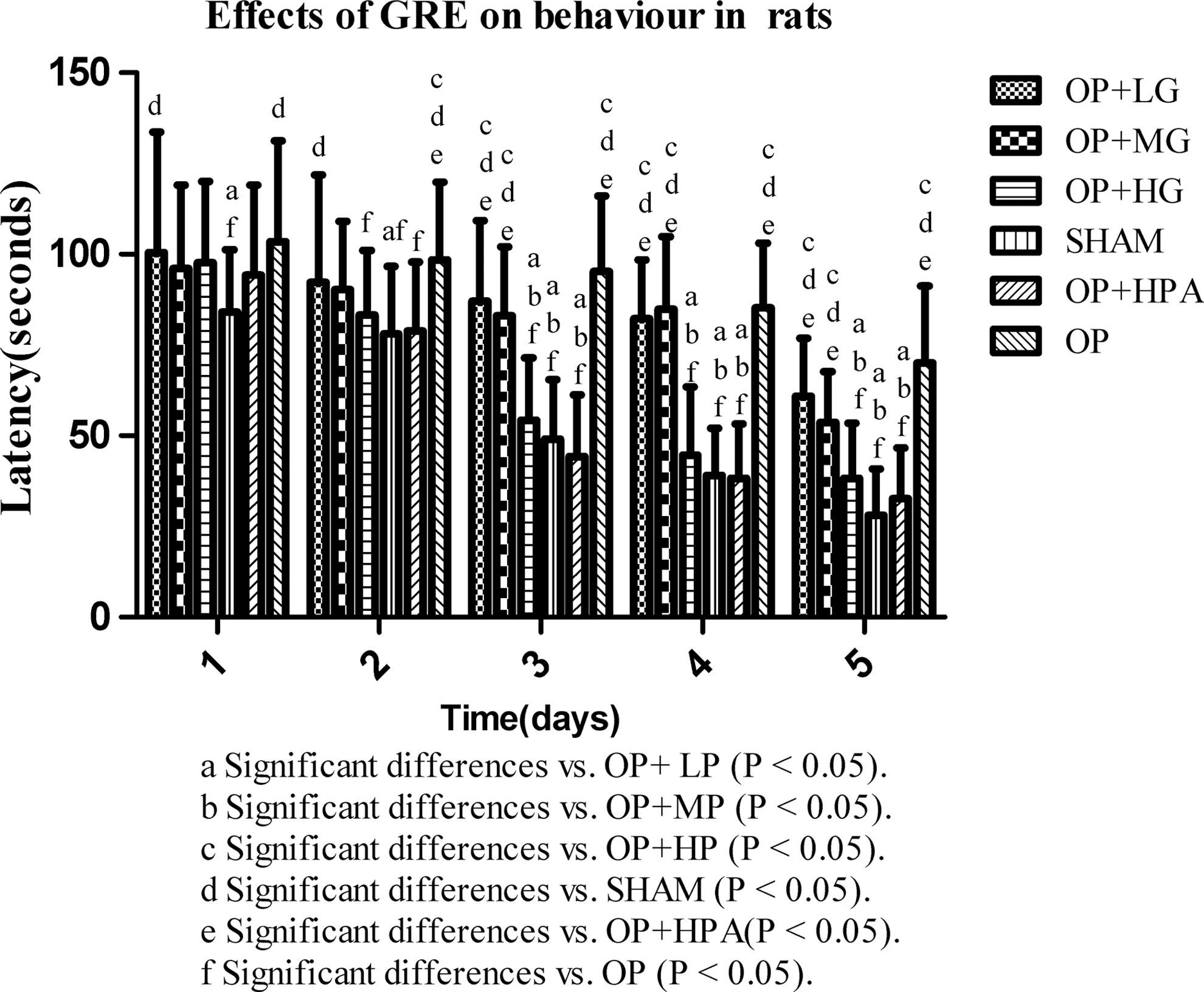
Effects of ginger root extract (GRE) on behavior in rats. aSignificant differences vs. OP+LP (p<0.05). bSignificant differences vs. OP+MP (p<0.05). cSignificant differences vs. OP+HP (p<0.05). dSignificant differences vs. SHAM (p<0.05). eSignificant differences vs. OP+HPA(p<0.05). fSignificant differences vs. OP (p<0.05). OP, Operated; LG, low-dose GRE; MG, medium-dose GRE; HG, high-dose GRE; LP, low-dose GRE; MP, medium-dose GRE; HP, high-dose GRE; HPA, huperzine A.
H&E and Nissl staining
After 35 days, neurons appeared as disorganized in the OP group. There were many glial cells present in the white matter of the OP group. The neurons in the brains of the OP+HupA and OP+HG groups were significantly more organized, and there were more glial cells in the white matter compared to the OP groups. However, neurons in the OP+MG and OP+LG groups had the same disorganized appearance as the OP group. In the OP+HupA group, the OP+HG group, and the SHAM group, H&E staining revealed a progressive increase in the organization and structure of the neurons. The numbers of neurons and the Nissl bodies of nerve cells in the OP group were significantly greater than the OP group (p>0.05 vs. OP) (Figs. 2, 3, and 4).
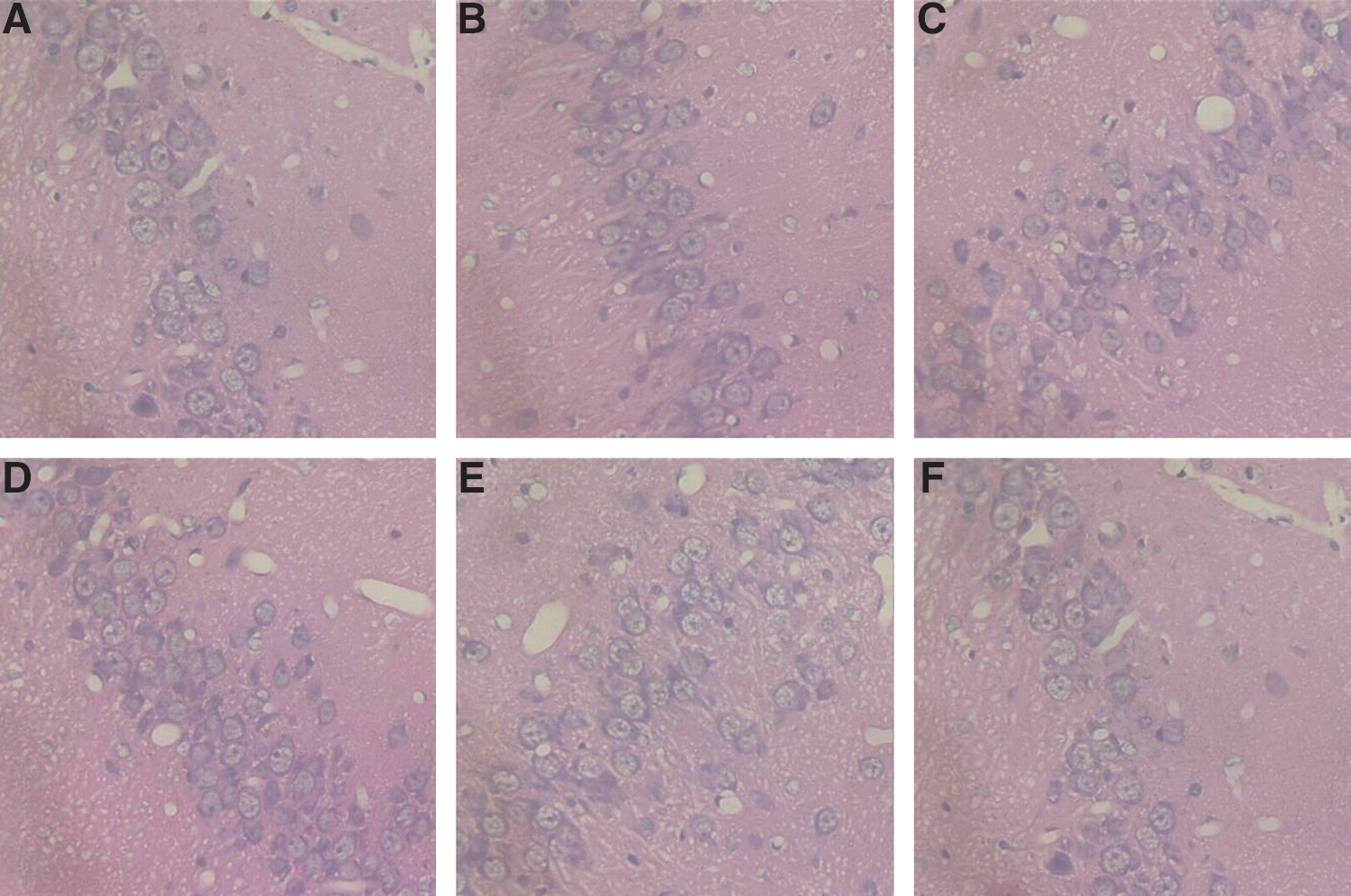
Hematoxylin &Eeosin (H&E) staining. OP+LG group (
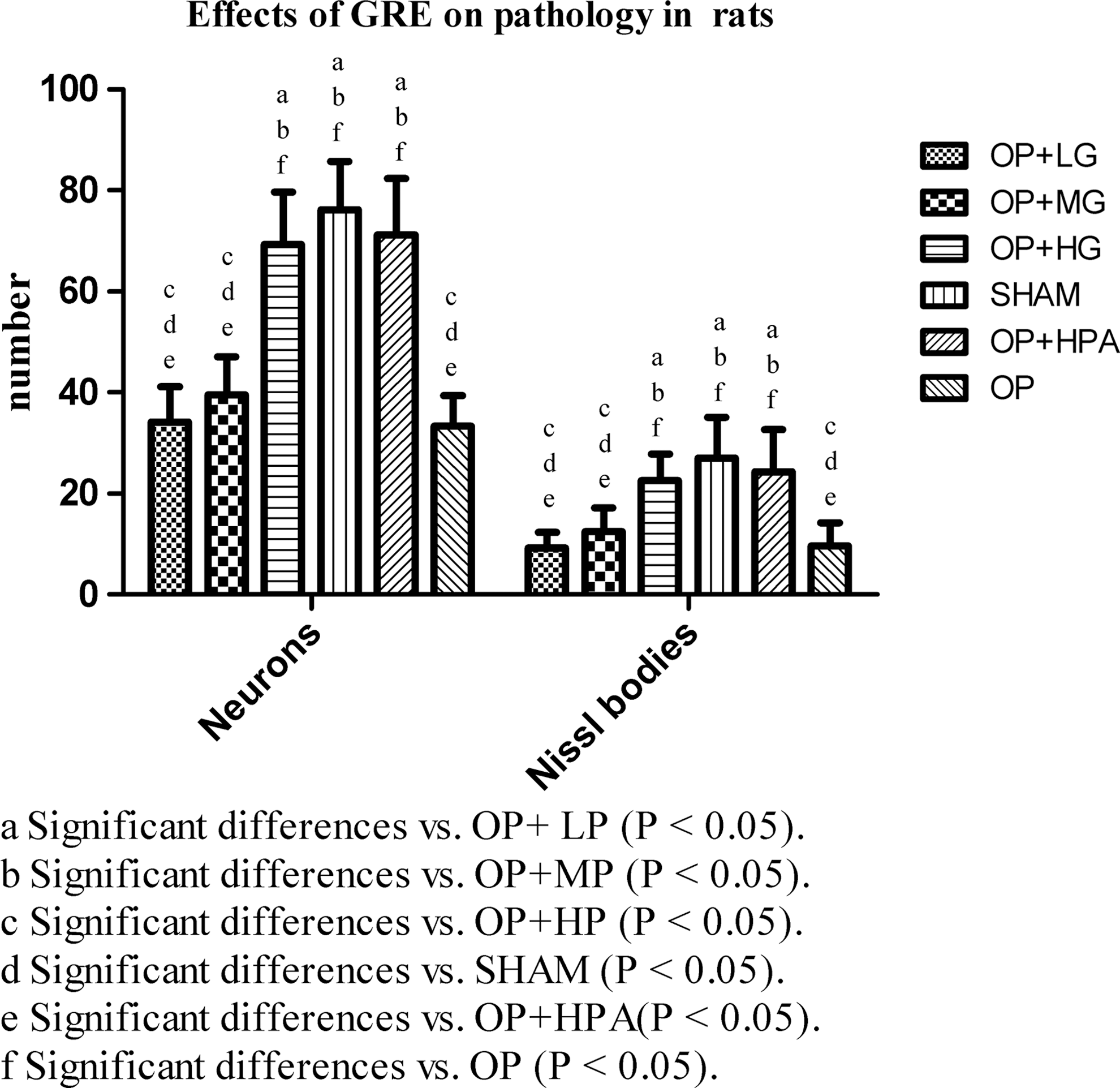
Effects of ginger root extract (GRE) on pathology in rats. aSignificant differences vs. OP+LP (p<0.05). bSignificant differences vs. OP+MP (p<0.05). cSignificant differences vs. OP+HP (p<0.05). dSignificant differences vs. SHAM (P<0.05). eSignificant differences vs. OP+HPA (p<0.05). fSignificant differences vs. OP (p<0.05). OP, Operated; LG, low-dose GRE; MG, medium-dose GRE; HG, high-dose GRE; LP, low-dose GRE; MP, medium-dose GRE; HP, high-dose GRE; HPA, huperzine A.
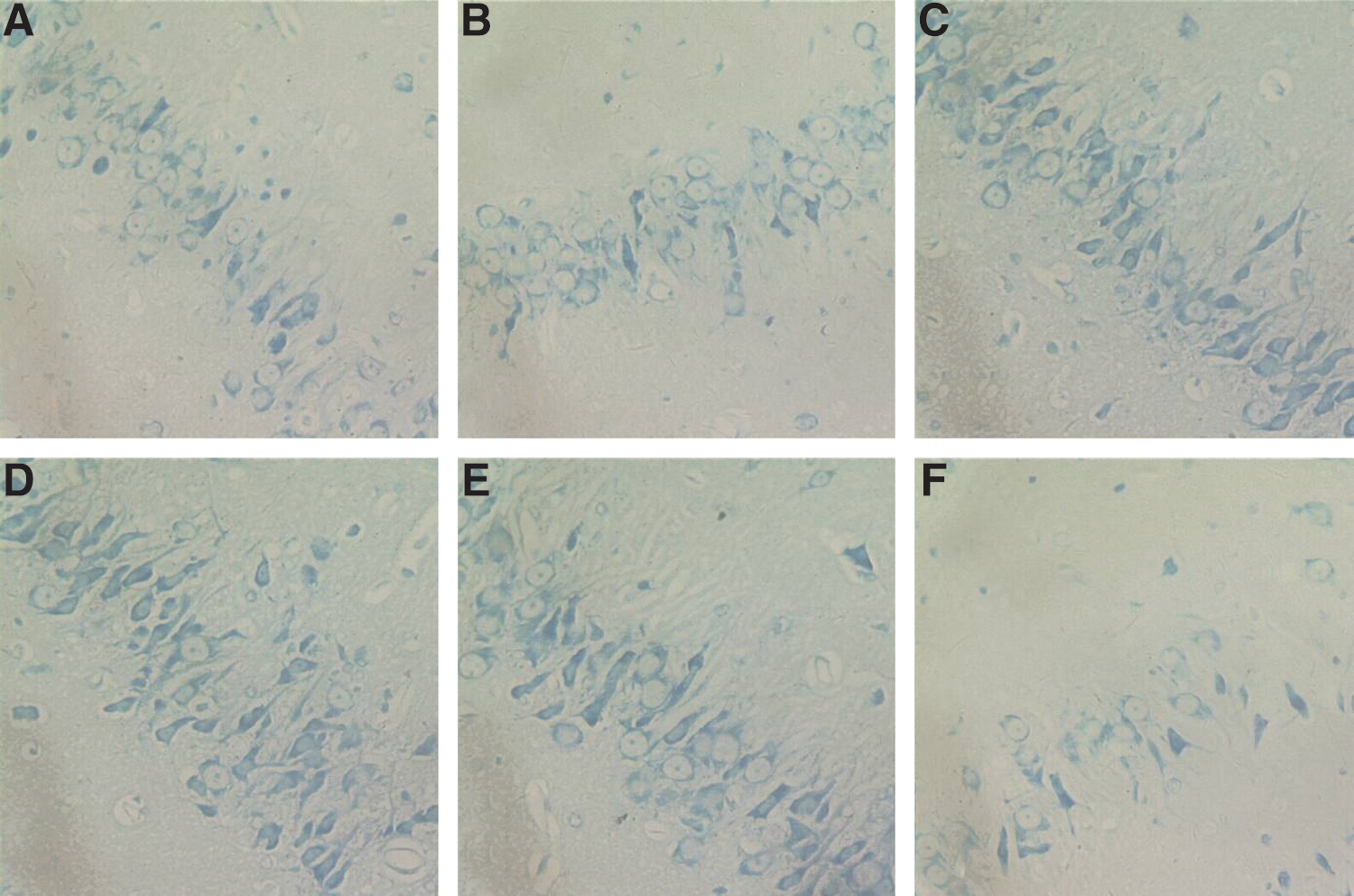
Nissl staining. OP+LG group (
Immunohistochemical studies
To assess the development of oxidative stress, the markers SOD and CAT were used. NF-κB and IL-1β were used to assess the inflammatory response. There was a direct relationship between the IOD and the level of expression of each marker. As previously demonstrated, there was more SOD and CAT expression in the OP+HupA group, the OP+HG group, and the SHAM group than in the OP group (p<0.05 vs. OP). Although the SOD and CAT levels were slightly increased in the OP+MG and OP+LG groups, the increase was considerably less than in the OP+HupA and OP+HG groups (p<0.05) (Fig. 5). OP+HG therapy led to a further increase in SOD and CAT expression in the operated rats (Figs. 6 and 7). There were no differences in SOD and CAT expression between the OP+HupA and OP+HG groups.

Effects of ginger root extract (GRE) on superoxide dismutase (SOD) and catalase (CAT) in rats. aSignificant differences vs. OP+LP (p<0.05). bSignificant differences vs. OP+MP (p<0.05). cSignificant differences vs. OP+HP (p<0.05). dSignificant differences vs. SHAM (p<0.05). eSignificant differences vs. OP+HPA (p<0.05). fSignificant differences vs. OP (p<0.05). OP, Operated; LG, low-dose GRE; MG, medium-dose GRE; HG, high-dose GRE; LP, low-dose GRE; MP, medium-dose GRE; HP, high-dose GRE; HPA, huperzine A.

Superoxide dismutase (SOD) immunoreactivity. OP+LG group (

Catalase (CAT) immunoreactivity. OP+LG group (
NF-κB and IL-1β expression were increased in the OP group (Figs. 8 and 9). In the OP+HupA and OP+HG groups, NF-κB and IL-1β expression were decreased (Figs. 5 and 6). Although there was a decrease in NF-κB and IL-1β expression in the OP+MG and OP+LG groups, the decrease was not as large as the decreases observed in the OP+HupA and OP+HG (p<0.05). However, 35 days of treatment with OP+HG decreased NF-κB and IL-1β expression compared to the OP group (p<0.05) (Fig. 10).
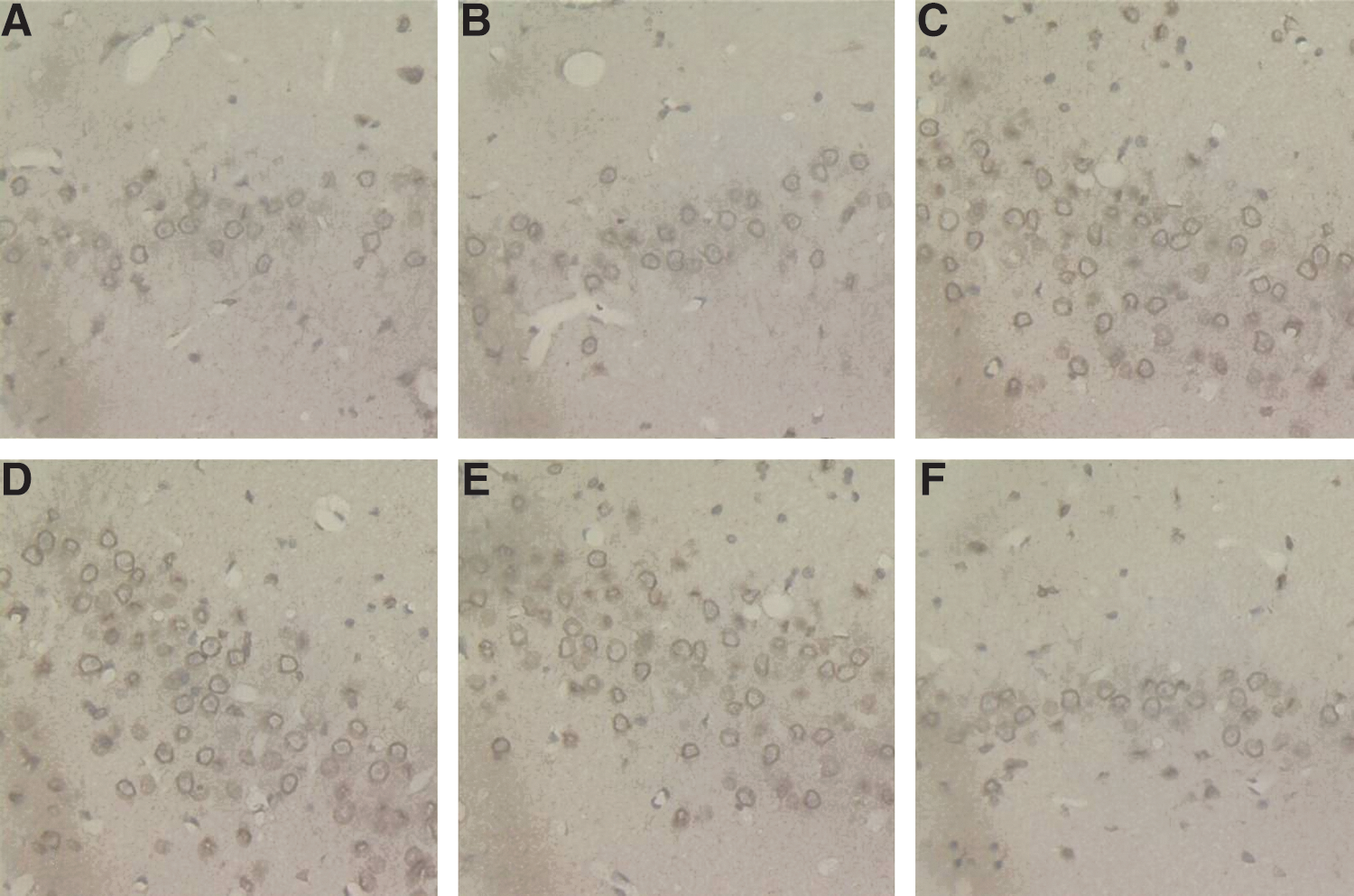
Nuclear factor-κB (NF-κB) immunoreactivity. OP+LG group (
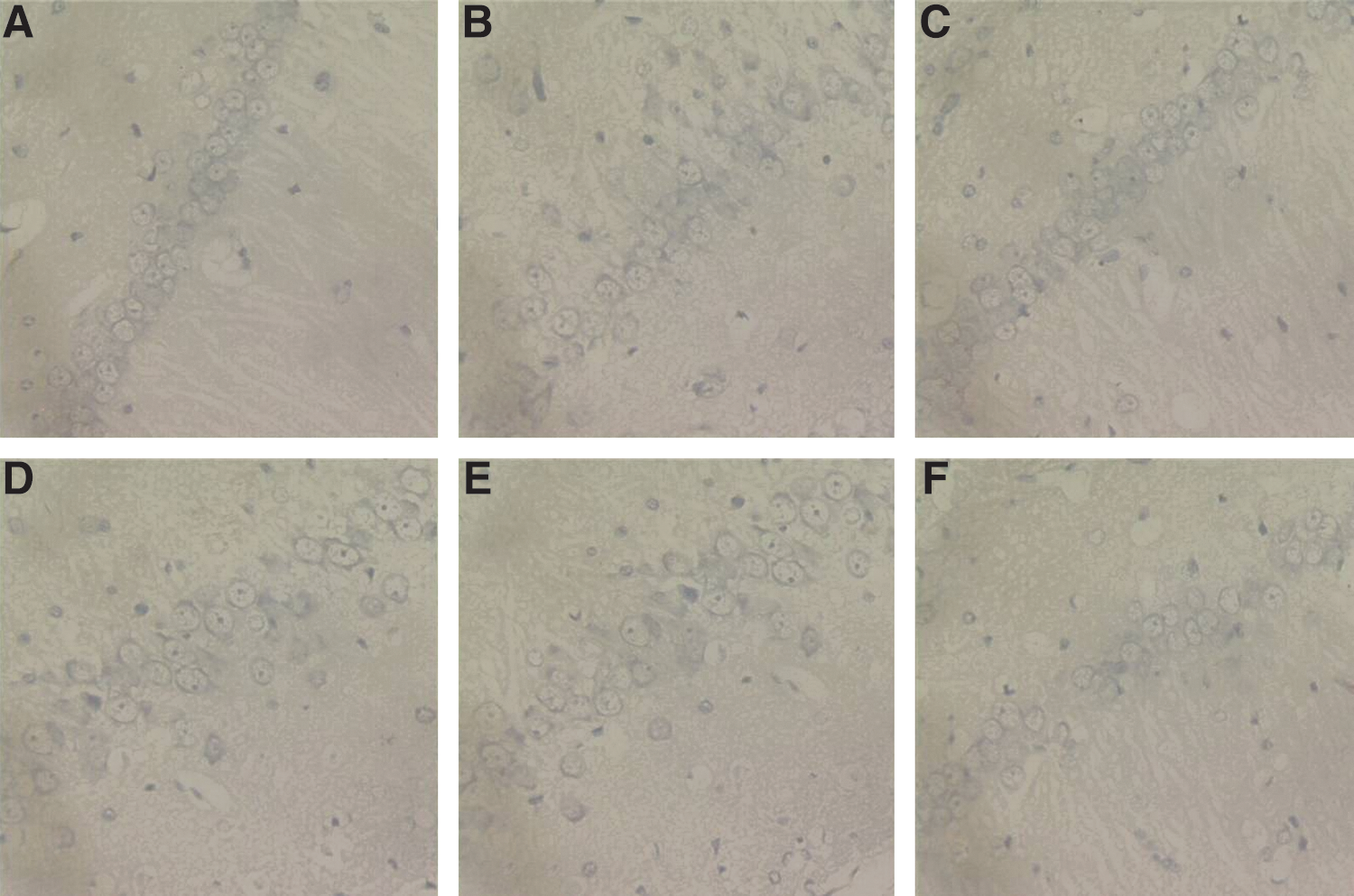
Interleukin-1β (IL-1β) immunoreactivity. OP+LG group (

Effects of ginger root extract (GRE) on NF-κB and IL-1β in rats. aSignificant differences vs. OP+LP (p<0.05). bSignificant differences vs. OP+MP (p<0.05). cSignificant differences vs. OP+HP (p<0.05). dSignificant differences vs. SHAM (p<0.05). eSignificant differences vs. OP+HPA(p<0.05). fSignificant differences vs. OP (p<0.05). OP, Operated; LG, low-dose GRE; MG, medium-dose GRE; HG, high-dose GRE; LP, low-dose GRE; MP, medium-dose GRE; HP, high-dose GRE; HPA, huperzine A.
MDA levels
The operation caused a significant increase in serum MDA levels compared to the SHAM group (p<0.05 vs. OP). The OP+HupA and OP+HG groups had significantly decreased levels of serum MDA compared to the OP group (p<0.05). However, no significant differences were observed between the OP, OP+MG and OP+LG groups (Fig. 11).

Effects of GRE on MDA in rats. aSignificant differences vs. OP+LP (p<0.05). bSignificant differences vs. OP+MP (p<0.05). cSignificant differences vs. OP+HP (p<0.05). dSignificant differences vs. SHAM (p<0.05). eSignificant differences vs. OP+HPA (p<0.05). fSignificant differences vs. OP (p<0.05). OP, Operated; LG, low-dose GRE; MG, medium-dose GRE; HG, high-dose GRE; LP, low-dose GRE; MP, medium-dose GRE; HP, high-dose GRE; HPA, huperzine A.
Discussion
German physician Alois Alzheimer (1864–1915) described AD 90 years ago. Since then, great progress has been made in the study of AD, but the exact pathogenesis is still unknown. The exact etiology and the process of pathophysiology are very complex. As the relatively accepted theories have demonstrated, the main pathological manifestations in the brain are neurofibrillary tangles (NFTs), composed mainly of phosphorylated tau protein and senile plaques composed mainly of Aβ peptide. 40,41 Aβ directly causes the death of neurons and induces neuronal apoptosis. 42 Because Aβ is one of the main factors that leads to the development of AD, we used Aβ injection as a method of establishing an animal model that shows some of the neuropathological changes of AD. 43 This model replicates memory dysfunction, but the effects on cognition and learning, which are also disrupted in AD, are not satisfactory. Aluminium chloride injection establishes an animal model that can replicate behavioral dysfunction in memory, cognition, and learning, but does not replicate the neuropathological changes of AD. 44,45 Therefore, we used Aβ and aluminium chloride as a combined intervention to establish an animal model of AD in this study. 33 Current hypotheses about the pathogenesis of AD include the oxidative stress hypothesis, the energy metabolism hypothesis, the amyloid cascade hypothesis and cholinergic hypothesis, 46 the Aβ neurotoxicity hypotheses, the free radical damage hypothesis, and the cerebral inflammation hypothesis.
GRE is a component of ginger, which is a traditional Chinese herbal remedy that is widely used as an anti-neoplastic agent, an anti-aging agent, as well as an anti-oxidant and anti-atherosclerotic agent. 1,2 In traditional Chinese medicine, GRE is considered effective in the treatment of AD. Because of the many pathogenic factors in AD, the therapeutic drugs used clinically are mainly anti-oxidants, anti-inflammatory agents, cholinergic agonists, estrogen, neurotrophic factor, etc. Although organic synthesis can produce two or more pharmacophores linked to multifunctional inhibitors for AD, unpredictable side effects greatly hinder the implementation of this strategy. Therefore, interest has gradually turned from organic synthesis to multi-functional compounds in natural products. 12
The present study shows that 35 days of daily treatment with 4 grams/kg of GRE, the dose chosen based on our preliminary experiments, protects rats from behavioral dysfunction. These effects are similar to 35 days of daily treatment with 200 μg/kg of HupA, the dose of HupA that is used to treat behavioral dysfunction in AD rats. Additionally, low and moderate doses of GRE had no effect on the behavioral dysfunction observed in AD rats. The AD rat model of behavioral dysfunction has been widely used as a model for the evaluation of potential treatments for behavioral dysfunction. There are many similarities between the behavioral dysfunction observed in AD rats and behavioral dysfunction seen in humans.
At the early stages of AD, the salient clinical manifestations are memory impairments and poor learning ability, likely due to lost synapses or loss of function of synapses. 47 It is believed that the number of the neurons in the brain is correlated with learning and memory ability. Nissl bodies consist of rough endoplasmic reticulum and associated ribosomal RNA and are related to the secretion of neurotransmitters. Nissl bodies are used as a morphologic marker to detect neuronal activity. Acetylcholine is one of the main neurotransmitters in the hippocampus. 48 It is associated with learning and memory and plays an important role in spatial memory during learning acquisition, storage, and retrieval. 49,50 The Morris water maze is currently the most effective and reliable method to detect learning and memory deficits in rodents and other animals and so was used in this study. Rats with high doses of GRE (OP+HG) displayed a decrease in latency compared to the OP group (p>0.05 vs. OP). There were also decreases in latency with low and moderate doses of GRE groups, but they were not as large as the decreases observed in the OP+HupA, OP+HG and SHAM groups (p<0.05). These results demonstrate that high doses of GRE can improve learning and memory in rats. The H&E and Nissl staining of the hippocampus revealed that low, moderate, or high doses of GRE increased the number of neurons and the number of Nissl bodies, but only the high-dose group showed statistically significant differences (p<0.05). Overall, rats given high doses of GRE exhibited improvements in the number of neurons and neuronal activity in the hippocampus.
Oxidative stress is often defined as an imbalance of pro-oxidants and endogenous anti-oxidants and can be quantified by measuring the redox state of plasma reduced and oxidized glutathione (GSH/GSSG). Oxidative stress causes cell death and triggers apoptosis, which may contribute to the pathological changes and cognitive and memory impairments in AD. 51,52 SOD and CAT are both capable of removing oxygen free radicals in the body, and the capability to scavenge oxygen free radicals depends on the activity levels of SOD and CAT. MDA is an in vivo biomarker of oxidative stress and is an end product of polyunsaturated fatty acid (PUFA) lipid peroxidation. MDA levels are reflective of the overall levels of oxidative stress in the body. In this experiment, rats given low, moderate, and high doses of GRE had higher levels of SOD and CAT, resulting in decreases in MDA compared to the OP group. However, only the high-dose group showed significant differences (p>0.05 vs. OP). High-dose GRE increased the expression of SOD and CAT and reduced the level of MDA. These data imply that high-dose GRE can reduce oxidative stress in the brain.
NF-κB) is a nuclear transcription factor that was first identified in B cell nuclear extracts by Baltimore and Sen in 1986. NF-κB possesses the ability to combine sequence-specific enhancers of the immunoglobulin K light chain gene. 53 The NF-κB family consists of a total of five species: NF-κB1 (p50/p105), NF-κB2 (p52/pl00), RelA (p65), RelB, and C-Rel. 54 Immunohistochemical analysis of brain tissue sections from AD patients shows that NF-κBp65 is in the activated form only in the vicinity of the senile plaques. 55 This suggests that the pathogenesis of AD may be related to the activation of NF-κB, and the level of activation of NF-κBp65 may be indirectly related to the severity of the disease. IL-1 is a cytokine that mediates the process of inflammation and also has a wide range of immunomodulatory effects, such as inducing fever. The activation of NF-κB is considered to be part of a stress response because it is activated by IL-1. 56 The level of activation of IL-1 may be related to the extent of an inflammatory reaction. Rats given low, moderate, and high doses of GRE displayed increases in NF-κB and IL-1β compared to the OP group, but only the high-dose group showed significant differences (p>0.05 vs. OP). High-dose GRE improved the expression of NF-κB and IL-1β, and the results of this study suggest that the high doses of GRE could reduce inflammation.
Compared with the OP group, high-dose GRE can increase the number of neurons and intra-cellular Nissl bodies in the hippocampus and increase the expression of SOD and CAT (p<0.05). However, the levels of NF-κB, IL-1β, and MDA dropped (p<0.05). These differences were not significant (p>0.05) when the mid-dose and low-dose groups were compared with OP group. These data imply that, in rats, high doses of GRE can improve learning and memory and reduce oxidative stress and inflammation. GRE could theoretically play a role in the treatment of AD. GRE achieves a therapeutic effect by increasing the number of neurons and intra-cellular Nissl bodies, increasing the activation of SOD and CAT, and decreasing the activity of MDA, NF-κB, and IL-1. However, we should also note that the therapeutic mechanism of GRE in treating AD by scavenging oxygen free radicals, or improving the activity of related enzymes, or both, still remains unclear. The therapeutic effect of GRE was only significant at high doses. The mechanism through which GRE plays a therapeutic role in treating rats may be dose dependent. Increasing SOD and CAT, and lowering MDA, NF-κB, and IL-1 might be just one mechanism of GRE in treating AD. As we know, the body is not a one-compartment model but rather a multi-compartment model. Therefore, the concentration of MDA observed in the blood may or may not reflect the level of MDA in brain. Other factors may influence oxidative stress formation in other tissues, especially muscle. What is more, immunohistochemistry has its own limitations. Therefore, further experiments should be conducted to uncover more detailed mechanisms.
Footnotes
Acknowledgments
Support for this study was provided by the Research Foundation of the Guangxi Administration of Traditional Chinese Medicine (GZKZ10-104).
Author Disclosure Statement
The authors have no conflicts of interest to disclose.