




Abstract
At the intersection of the late 20th century and early 21st century, a worldwide challenge began to emerge—how can the quality of life be improved for a steadily increasing elderly population. It is well known that elderly patients show increased susceptibility to infections and a higher incidence of co-morbidity rates. Older adults frequently demonstrate pharmacokinetic and pharmacodynamic changes promoting adverse drug reactions and complications. Analysis of world literature and practical observations indicate that new approaches are required in gerontology and geriatric medicine due to recent significant advances in biomedical science. Global interdisciplinary approaches to improve medical science and medical care services for growing elderly population are indicated. This global, interdisciplinary initiative should integrate select, tangible clinical results achieved in leading research centers and universities that are applicable in the field of geriatrics and helpful to geriatricians. Among past scientific and clinically significant study results in the field of biomedicine, one must consider targeted drug delivery systems (DDS), which are designed to minimize drug side effects, increase the efficacy of drugs, and prolong and target drug interactions with particular pathological foci in sick patients. Many review articles focus on various methods of drug encapsulation and pharmacokinetics, but not on developing clinical modalities. This article attempts to further the discussion with researchers and clinicians from various fields, as well as to encourage comprehensive and elderly patient-oriented research focused on clinical implementation of DDS, especially erythrocyte-based DDS.
Introduction
Pharmacodynamic changes in elderly populations are frequent and commonly ascribed to alteration in the sensitivity to drugs, irrespective of changes in drug deposition. Pharmacodynamic and pharmacokinetic changes in elderly patients necessitate development of the new medical approaches to improve pharmacotherapy results. Clinical practitioners are conducting research to understand physiologic and immunological changes in elderly populations, age-related changes in pharmacodynamics to adjust treatment strategies that might reduce morbidity and mortality among elderly patients. 14 –18
The theory of targeted delivery of antibiotics and various chemotherapeutic agents to the site of infection is very desirable in the treatment of many diseases. Targeted drug delivery systems (DDS) provide improved pharmacodynamics, with protection from circulating proteolytic enzymes and avoidance of early liver or renal clearance. Cell-based DDS minimize toxicity, decrease the risk of side effects and pathologic immune reactions against encapsulated agents, as well as improving their efficacy, leading to better patient compliance, especially among vulnerable elderly and older adult patients. 19 –22
Analysis of world literature and practical observations indicate that new approaches are required in gerontology and geriatric medicine due to recent significant advances in biomedical science. Global interdisciplinary approaches to improve medical science, ethics, and medical care services for a growing elderly population should be considered. This global, interdisciplinary initiative should integrate select, tangible clinical results achieved in leading research centers and universities that are applicable in the field of geriatrics and helpful to geriatricians. This approach will shift the emphasis away from illness to wellness and promote healthy aging. Among past scientific and clinically significant study results in the field of biomedicine, one must consider targeted DDS that are designed to minimize drug side effects, and increase efficacy.
Targeted DDS
Targeted DDS have been developed to optimize, prolong, and target drug interactions with particular pathological foci in sick patients. Additionally, DDS are an effective treatment protocol that avoids detection by the host's defense mechanisms and provides significant reduction of drug side effects. All of these indications are significant for geriatric patients and beneficial for geriatricians. There are different types of targeted DDS in biomedicine, such as synthetic and biological systems and cell-based and non-cell-based systems. The gap between systems has traditionally been very large. However, recent advances in the synthesis of novel materials and understanding of biological systems have paved the way toward bridging this gap. 23 From the clinical perspective, the most advanced and promising systems are cell-based and include applications of leukocytes, lymphocytes, platelets, monocytes, erythrocytes, genetically engineered stem and dendritic cells, and bacterial ghosts. 24,25 Cell-based systems can be conditionally divided into artificial cell-based and biological cell-based systems.
DDS research and the accumulating body of knowledge are rapidly advancing in terms of determining the desirable size (from microns to nano-scale dimensions to be able to penetrate and cross the cell boundary) and appropriate function. Indeed, a discovered disadvantage of nano-size is the possibility of removal of a drug by filtration through the kidney. Studies and identification of the intrinsic properties of a simple and specialized cell, a thorough comprehension of the biological properties, and in vivo trafficking of these cell types can help to establish new delivery paradigms that may increase treatment efficacy of various diseases. If, during the last century researchers attempted to use cells as simple drug carriers or containers, as well as to improve encapsulation procedure for different drugs, then today DDS has developed more fascinating, complex, and interactive systems. 26 –36
The main requirements for DDS include: (1) The drug should influence the pathological foci solely and must not have any side or toxic effects; (2) drug properties should remain intact on the way to the drug's destination, with mechanisms in place to control for over-dosage; and (3) there should be effective target reliability, which ensures that drugs reach their final settings. DDS can be conventional and can be target organ or tissue specific. Targeting can be active and passive. Passive targeting is based on the preparation of a drug–carrier complex, which avoids removal through physiological mechanisms like metabolism, excretion, opsonization, and phagocytosis, so that the complex remains circulating in the bloodstream. Many active targeting drug conjugates use a ternary configuration composed of a ligand or antibody as a targeting moiety, a polymer or lipid as a carrier, and an active chemotherapeutic drug. Drug targeting by ultrasonic energy and magnetic field is also considered active targeting. 37,38 The two main applications for DDS in clinical practice are therapeutic and imaging.
Targeted DDS have potential applications for the treatment of various diseases, including some diseases that are common in older adults (Table 1). The results summarized in this table show some of the potential medical applications of cell-based DDS and initial results of clinical implication. At the same time, there are numerous articles that focus on the technical features of drug loading, studies of the pharmacokinetics and pharmacodynamics of DDS (however, few papers relate to significant clinical implications of DDS), and studies of clinical indications and treatment results. Among DDS clinical applications, biological cell-based DDS, especially erythrocyte-based DDS, are more common. Table 1 shows that DDS have been implemented in clinical practice since the 21st century due to innovative advancement in biomedical science. Clinician involvement is essential to implementation and further development.
Biological Cell-Based Systems
Biological cell-based DDS include erythrocytes, leukocytes, lymphocytes, monocytes, platelets, and macrophages. Researchers are attempting to evaluate possible applications of cells that are in different pathological conditions aimed a further clinical implications. Table 2 shows examples of potential medical applications of biological cell-based delivery systems. Furthermore, Table 2 shows the broad spectrum of potential medical applications of biological cell-based DDS as they relate to improved diagnosis and treatment outcomes in various pathological conditions. More tangible results are seen as researchers employ red blood cells (RBCs).
Loken and colleagues (1985) presented studies involving the use of indium-111–labeled leukocytes for the detection of focal infection and the clinical utility of labeled platelets to detect the formation of thrombi in blood vessels and on vascular grafts and prostheses. 39 Platelet scintigraphy using indium-111-oxine platelets can help to visualize thrombi and distinguish the activation of platelet aggregation. 40 Leukocyte scintigraphy is usually used for the detection of inflammation and can be useful in detection of inflammation of the arteriosclerotic lesion of the aortic wall. It may be useful in detecting inflammation of the aortic aneurysm, and in evaluating the prognosis of aortic dissection. 41,42 Diagnosis of early pancreas allograft rejection with indium-111-oxine–labeled platelets can be conducted and used as a valuable diagnostic aid in the management of pancreatic transplant recipients. 43 Indium-111–labeled leukocyte imaging was effective in differential diagnosis of rejection versus cytomegalovirus infection in renal transplant patients, as well as in diagnosing cytomegalovirus pneumonia in a renal transplant recipient with a normal chest roentgenogram. 44,45
The value of autologous indium-labeled platelets was estimated in diagnosing renal transplant rejection as well. 46 Leukocyte scintigraphy was successfully used in diagnosing mycotic aneurysm. This technique provided early evidence of infected aneurysms in 4 patients, as well as identifying other sites of infection in 2 patients. Leukocyte uptake complemented computed tomography (CT), magnetic resonance imaging (MRI), and angiographic findings distinguishing between seroma/hematoma and adjacent infection to establish a preoperative diagnosis of infected aneurysms. 47 It is of scientific and practical interest to improve the bioavailability, pharmacology, cytotoxicities, and interval dosing of antiretroviral medications in treating human immunodeficiency virus (HIV) infection. Nano-formulated drugs are composed of anti-retroviral drug crystals and include indinavir (IDV), ritonavir (RTV), atazanavir (ATV), and efavirenz (EFV). For each parental drug, large crystals are fractioned into nano-particles by wet milling in the presence of surfactants. These micro- to nano-formulated anti-retroviral drugs are referred to as “nanoART.” Macrophages are then used to take up nanoART, which are slowly released over extended periods of time. The study authors manufactured, characterized, and tested 21 nanoART formulations of four anti-retroviral drugs to assess nanoART in a monocyte-derived macrophage (MDM) in vitro testing system. In the process, the authors hoped to discover some specific qualities that affected nanoARTfunction and that could be manipulated through manufacturing to optimize performance. Ultimately, these manufacturing, characterization, and testing systems will serve as a guide for the clinical translation of nanoART for use in infected patients. 48 –52 Considering analysis of the literature, more focused efforts can be made to conduct research and clinical implementation of erythrocyte-based DDS in geriatrics.
Erythrocyte-Based DDS
Human erythrocytes normally have a life span of 100–120 days. Senescent and damaged cells are eliminated by macrophages of the reticulo-endothelial system (RES) and other activated defense cells. Thus, macrophages of the RES represent a natural target for drugs encapsulated in erythrocytes. Erythrocytes transfer many naturally encapsulated molecules in the interior volume of plasma membrane substances in the bloodstream, including the most important oxygen-carrying hemoglobin. There are several approaches for drug encapsulation into RBCs: (1) Hypotonic dialysis of the erythrocytes under controlled hypotonic conditions; (2) drug-induced endocytosis; (3) the osmotic pulse method; (4) electroporation; and (5) “Red Cell Loader” (new apparatus) for the encapsulation of non-diffusible drugs into human erythrocytes. The main technological process used for drug encapsulation into human erythrocytes is hypotonic dialysis of the erythrocytes under controlled hypotonic conditions in the presence of the drug being encapsulated, followed by resealing and annealing under normotonic conditions. This procedure can produce a sufficient amount of loaded erythrocytes with good stability, reproducibility, and viability to be used in experiments or clinical practice.
At the same time, the following factors must be considered: (1) The composition and osmolality range of the hypotonic buffer used; (2) the duration of the hypotonic dialysis; (3) temperature; (4) the volume ratio between the erythrocyte suspension and the dialysis buffer; and (5) the conditions under which the final washing of the erythrocytes is carried out. The final consideration is how these factors may affect the morphological properties and later in vivo behavior of the ghost-obtained erythrocytes. 53,54 The field technique used for the loading of the cells is based on the dielectric breakdown of the cell membrane, which is observed when cell suspensions are subjected to external field pulses of 2–20 kV/cm for short time intervals (nano-seconds to micro-seconds). When an apparent membrane potential of about 1 V is reached in response to the external field, the membrane breaks down reversibly. 55
Magnani and colleagues 56 proposed a new apparatus and procedure for the encapsulation of non-diffusible drugs into human erythrocytes. The process allows 35%–50% cell recovery with approximately 30% encapsulation of added drugs, and can be completed in 2 hr. The new equipment designed and built for this procedure is the “Red Cell Loader.” 56 It should be noted, however, that it is very difficult to embark on industrial development of scaled-up production of drug-loaded human erythrocytes that some companies are currently pursuing in clinical studies. In 1973, the first paper describing enzyme-loaded erythrocytes for potential DDS was published by Ihler et al. 57 They demonstrated that β-glucosidase and β-galactosidase can be trapped inside erythrocytes by rapid hemolysis of the cells in the presence of these enzymes. These investigators believed that enzyme-loaded erythrocytes might have therapeutic possibilities for several diseases, including Gaucher disease. 57 In 1979, Dale et al. published their paper on incorporation of glucocerebrosidase into Gaucher disease monocytes in vitro. 58 In the past, erythrocyte-based DDS have been experimentally evaluated in thousands of drug, enzyme, and peptide administrations in humans, proving safety, increased duration of action of agents, and efficacy of the treatments. 59 –61 Erythrocyte-based drug delivery is used to improve drug efficacy, especially when it is limited by plasma inhibitors, rapid elimination, inactivation, and ineffective penetration into pathological foci.
The three main approaches for erythrocyte-based DDS can be identified as: 1. DDS by drug and other agent encapsulation into RBCs. 2. DDS by drug and other agents coupling to the RBC surface using different covalent and non-covalent cross-linkers, as well as anchoring onto circulating naïve RBCs using recombinant fusion proteins with specific affinity to RBC. Animal studies show that surface coupling to RBCs can be used to improve antigen delivery, mask RBC antigens, clear pathogens from blood, and deliver intravascular therapeutics proposed to act within the vascular lumen. Coupling plasminogen activators (PAs; tissue-type, tPA;) tPA to carrier RBCs followed by re-infusion of the RBC/tPA conjugates in animals provide protracted thrombo-prophylaxis in arteries and veins to include the vulnerable cerebrovascular circulation.
62
–64
Authors suggested that this RBC-based drug delivery strategy alters the fibrinolytic profile of tPA, permitting prophylactic fibrinolysis.) 3. DDS by magnetic erythrocytes engineered with a viral spike fusion protein.
These DDS approaches resulted in various therapeutic approaches based on experimental and clinical studies. 65 Among the most significant, clinically important, and promising benefits of erythrocyte-based DDS are the elimination of pathogens and toxins from the bloodstream and the correction of pathological aspects of thrombosis and hemostasis. Finally, delivery of RBC-encapsulated anti-inflammatory drugs into phagocytic cells enhanced bioavailability of detoxifying enzymes in the bloodstream, as well as clearing the HIV-1 macrophage reservoir by selective inhibition of STAT1 expression.
Clinical Implementation of Drug-Loaded Erythrocytes
Analysis of existing literature related to clinical implementation of erythrocyte-loaded DDS shows more tangible and promising clinical results in comparison with other DDS. In the mid 1980s, a feasibility study was conducted in the Department of Surgery of the Semipalatinsk State Medical Institute, Kazakhstan, using clinical implementation of RBCs bioengineered for targeted drug delivery in surgery and targeted for older adult patients considered at high risk for prevalent postoperative septic complications and increased mortality. Indeed, all papers were published in leading Russian journals during the Soviet era because scientists were isolated from the international scientific community, and it was difficult for scientists to publish research findings in prestigious international journals. The widely accepted and validated drug encapsulation procedure is based on a high-hematocrit dialysis process. Given clinical practice requirements, the process uses antibiotic encapsulation in erythrocyte ghosts through hypo-osmotic dialysis (Patent No. 1718955, 30.11.1989, USSR and Patent No. 1641350, 26.05.1988, USSR). Erythrocytes with entrapped drugs were called “erythrocyte pharmacocytes.” In vitro and animal studies of antibiotic-loaded human carrier erythrocytes revealed some features of entrapment of different antibiotics in erythrocyte ghosts for targeted drug delivery as well as pharmacokinetic features of selected antibiotics. 66,67
Experimental investigation in animals with acute suppurative-inflammatory bile ducts and liver diseases has shown a more prolonged concentration of antibiotic in hepatic tissues of animals treated by erythrocyte pharmacocytes in comparison with traditional treatment protocols, which included intravenous administration of kanamycin (Table 3). This experimental result was demonstrated by targeting activated macrophages in pathological foci. Activated macrophages recognized and attempted to eliminate the modified drug-loaded erythrocytes, which were able to release their content into the macrophage, and accounted for significantly higher and more prolonged antibiotic concentration in a pathological sample. Biliary antibiotic concentrations were much higher with this method than in the standard protocol, and serum levels were undetectable after 24 and 28 hr. This is especially important for clinical practice, given the need to maintain low blood serum levels, but high levels in the bile and hepatic tissues. This is a significant finding for research aimed at reducing the systemic toxicity of antibiotics. Examination of liver specimens by transmission electron microscopy (Fig. 1) shows considerable histologic and profound ultra-structural alterations in hepatic cells of dogs with experimental biliary abscesses of the liver, an experimental model. Figure 2 shows the examination by transmission electron microscopy of liver specimens of animals who received traditional treatment protocols, including an intravenous route of antibiotic administrations. It can be seen that ultra-structural hepatic alterations exist even after the treatment session. Figure 3 shows the examination of liver specimens by transmission electron microscopy of animals who received erythrocyte-loaded delivery of antibiotic (erythrocyte pharmacocytes). Stable normalization of hepatic ultrastructure can be detected.
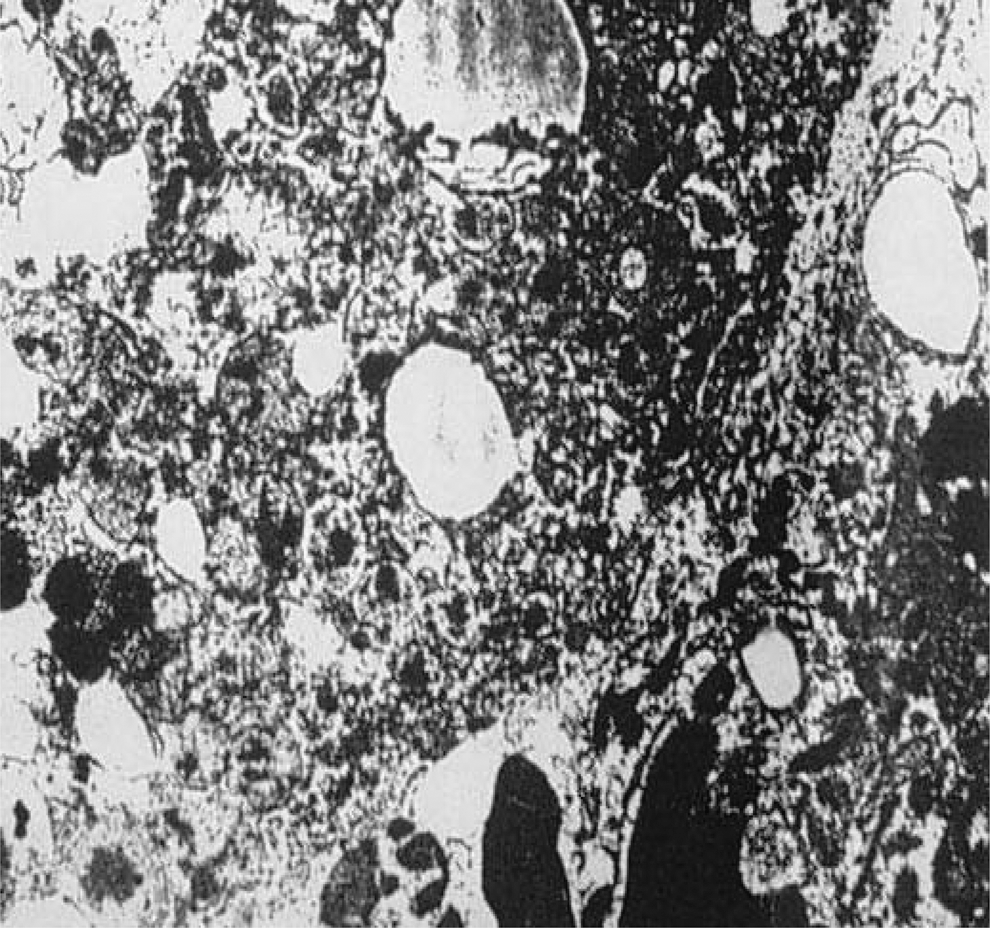
Examination of liver specimens by transmission electron microscopy shows Considerable histologic and profound ultrastructural alterations in hepatic cells of dogs with experimental biliary abscesses of the liver (an experimental model).
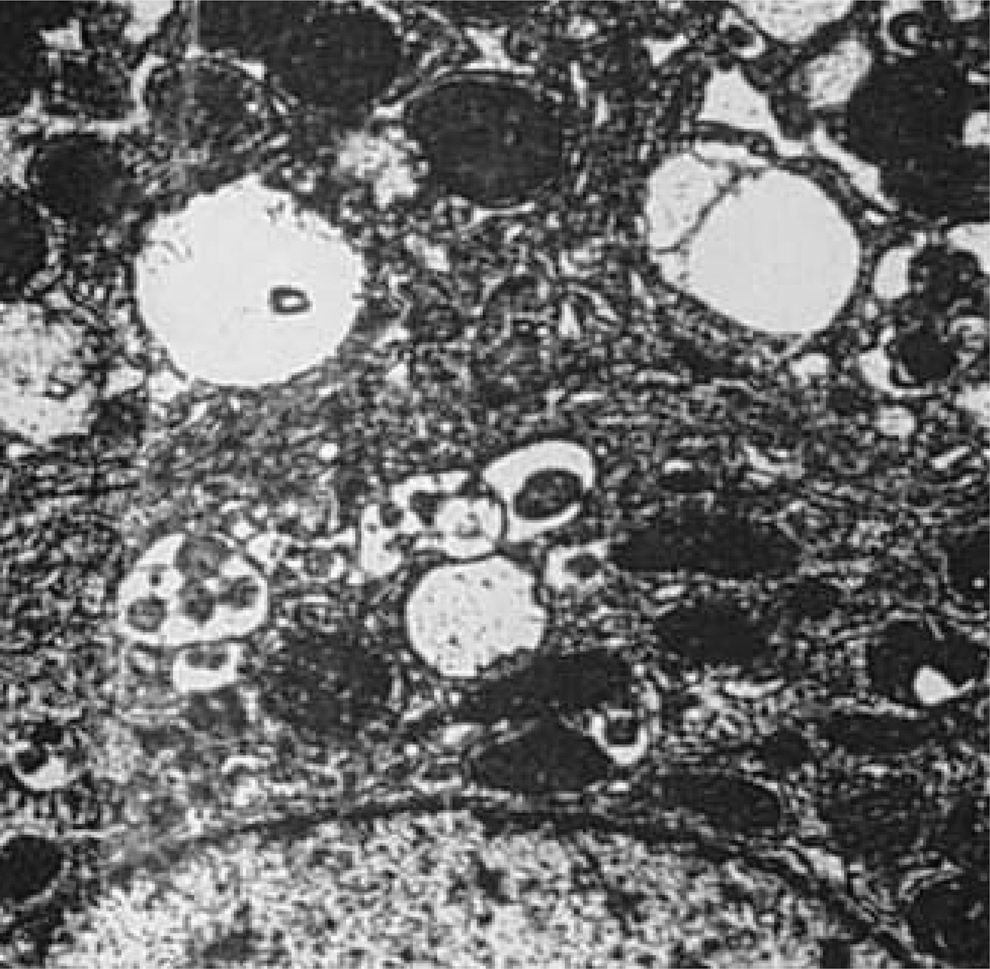
Transmission electron microscopy examination of liver specimens with traditional therapy (intravenous route of antibiotic administrations). Ultrastructural hepatic alterations exist.

Transmission electron microscopy examination of liver specimens with erythrocyte- loaded delivery of antibiotic shows stable normalization of hepatic ultrastructure.
The experimental investigation of the effectiveness of targeted delivery of antibiotic has demonstrated that the mechanisms of normalization of ultra-structures in the liver cells not only includes division of cells with alterations, but also an increase in intracellular regeneration. The finding of a possible increase in intracellular regeneration by use of this new method has enormous practical significance for clinical hepatology, especially for efforts directed at regeneration of the liver. It should be noted that the method described was not only effective for delivery of antibiotics, but also for peptides, contrast solutions, and other water-soluble medicines. Considering the safety and efficacy of erythrocyte pharmacocytes, this method was implemented in clinical practice for elderly patients with acute complicated cholecyctitis who were at high risk of urgent surgeries 68 –70 (Table 4). The study group comprised patients ranging in age from 68 to 83 years, with the average age 67.1±0.8. In the complex treatment, patients received erythrocyte pharmacocytes. The comparison group comprised patients aged from 60 to 82 years, with the average age 68.8±0.7. In the complex traditional treatment, they received antibiotics intravenously. Both groups were comparable in terms of severity of multi-morbidities, complications, the main disease, age, and gender. The clinical study revealed that the proposed method significantly reduced the time of full arrest and disappearance of clinical and laboratory signs of acute complicated cholecystitis in the study group compared with the comparison group of patients, who had received a traditional treatment protocol. In the study group, effectiveness of treatment avoided the need for urgent surgery, optimized patient examination, and pre-operative preparations for elective surgery. Furthermore, the rate of postoperative septic complication among study group patients was reduced 2.5-fold in comparison with the comparison group.
The feasibility of experimental delivery of antibiotic-loaded erythrocytes to accelerate wound healing by targeting activated tissue macrophages at the specific disease site is being explored. The tissue pharmacokinetics of antibiotics in animal experiments detected significantly higher and prolonged levels being observed in the wound tissue of the study group in comparison with the control group. Successful experimental results encouraged clinical implementation of the developed methods to treat elderly patients with severe soft tissue infections and at high risk of an invasive surgical procedure.
71
The proposed treatment approach allowed closing a surgical wound by primary suturing without any drainage right after surgical debridement and accelerated wound healing by primary intention, which has not been the practice in the treatment of severe soft tissue infections in general surgery.
In 2001, erythrocyte-mediated delivery of dexamethasone in patients with chronic obstructive pulmonary disease was described by Rossi and colleagues. 72 Drug-loaded erythrocytes acted as circulating bioreactors, converting the non-diffusible dexamethasone 21-phosphate into the diffusible dexamethasone. Pharmacokinetic analyses of these patients showed that a single administration of drug-loaded erythrocytes was able to maintain detectable dexamethasone concentrations in blood for up to 7 days. They concluded that dexamethasone 21-phosphate–loaded erythrocytes are safe carriers for corticosteroid analogs and are a useful alternative to frequent oral or inhaled drugs in elderly patients with chronic obstructive pulmonary disease. The feasibility and safety of the use of erythrocytes as DDS was also evaluated in 2004 in 10 patients with cystic fibrosis of the lung, where a sustained release of corticosteroids from dexamethasone 21-phosphate–loaded erythrocytes was obtained. 73
Moran and colleagues reported in 2008 that thymidine phosphorylase-loaded erythrocytes were used to treat mitochondrial neuro-gastrointestinal encephalomyopathy (MNGIE), which is caused by mutations in the gene encoding the enzyme thymidine phosphorylase, resulting in a complete or partial absence of enzyme activity, and leading to a plasma and tissue accumulation of thymidine and deoxyuridine. Erythrocyte-encapsulated thymidine phosphorylase is currently being developed as a therapy for MNGIE.
74
Adenosine deaminase (ADA)-loaded erythrocytes are used to treat severe immunodeficiency caused by a deficiency of ADA. Therapeutic efficacy has been determined by monitoring immunological and metabolic parameters.
75
Glutamine synthetase (GS)-loaded erythrocytes are used for ammonia detoxification as a potential enzymatic detoxification pathway.
76
A Phase I–II trial testing GRASPA® (ERYTECH Pharma, France) on 24 patients in relapsed acute lymphoblastic leukemia showed a strong reduction in hypersensitive reactions, coagulation disorders, and hepatic dysfunctions. The
Indeed, the level of expression of
The erythrocyte-based DDS is used to enhance anti-tumor drug efficacy while reducing toxicity. Anthracycline antibiotics, including doxorubicin, are among the most used anti-cancer agents and are highly toxic. The possibility of preparing doxorubicin-loaded erythrocytes (DLE) using patient blood was investigated. 79,80 Pharmacokinetics of doxorubicin in 15 patients with lymphomas was investigated after administration of DLE prepared using autologous patient blood (AB-DLE) and erythrocytes (AE-DLE) or donor erythrocytes (DE-DLE). Antibiotic peak concentration in blood decreased by 55%, doxorubicin circulated several times longer, and the area under the concentration–time curve increased five times when compared with standard doxorubicin administration. The DLE were well tolerated by patients. No prolonged or severe myelosuppression was observed, and no evidence of cardiotoxicity was seen. Moreover, DLE were infused without any negative consequences to a patient who earlier responded to standard doxorubicin form with strong paroxismal tachycardia and cardialgia, and to another patient presenting ciliary arrhythmia.
The kinetics of daunorubicin binding with erythrocytes was studied in blood and in washed erythrocyte suspensions from healthy donors and patients with acute leukemia. Incubation of patient blood with daunorubicin (0.5 mg/mL cells) did not affect erythrocyte deformability (filterability). After intravenous administration, the peak drug concentration and its elimination rate were lower for erythrocyte-bound daunorubicin (EBD) than for free daunorubicin. The patients tolerated EBD better than its standard free form. In 9 patients who received three EBD infusions, side effects were less frequent than in those treated with free daunorubicin.
In response to concerns associated with severe toxic side effects on healthy organs, drug resistance, and limited access of the drug to the tumor sites during cytotoxic chemotherapy of cancer, Cinti and colleagues have developed a new DDS based on magnetic erythrocytes engineered with a viral spike fusion protein. 81 This new erythrocyte-based DDS has the potential for magnetic-controlled site-specific localization and highly efficient fusion capability with the targeted cells. They showed that the erythro-magneto-HA virosomes DDS is able to attach and fuse with the target cells and to efficiently release therapeutic compounds inside the cells. The efficacy of the anti-cancer drug employed is increased and the dose required is 10 times less than that needed with conventional therapy. These investigators concluded that an innovative erythrocyte-based DDS presents many potential advantages, including: Enhancing the bioavailability of drugs through its high fusogenic capability with target cells; potential for magnetically driving the virosomes to desired sites of action; potential for protecting therapeutics from degradation or elimination prior to reaching target tissues or organs; and high biocompatibility relative to other carrier systems, which may be optimized by employing autologous erythrocytes. Finally, the composition of this erythrocyte-based DDS makes it applicable to many clinical settings, such as neoplastic and cardiovascular diseases, pathologies caused by the infection of a human or animal virus, and certain metabolic diseases. 82 –86 Erythrocytes loaded with ferromagnetic colloid compound can be magnetically driven at the target organ/tissue by means of an external magnetic field.
Thus, drug-loaded erythrocytes are safe and useful carriers of new and conventional therapeutics and can be advantageous delivery systems for new clinical applications where proteins and oligonucleotides are therapeutic agents. In the past decade, numerous conferences and seminars have been held to share the latest knowledge, innovative research, and experience regarding the preclinical and clinical applications of various targeted DDS. Of note was a seminar dedicated to erythrocyte-based DDS titled “The Red Blood Cells as Vehicles for Drugs” held in Lyon, France, on January 28, 2011. Speakers provided an overview of the applications, particularly for clinical use, for this innovative formulation and concluded that due to the intrinsic properties of erythrocytes, their use as a drug carrier is one of the most promising DDS investigated in recent decades. 59 This approach to vehicle drugs through RBCs is very appropriate for life-threatening diseases and where the toxicity of the drug is a limitation. This process is also especially well adapted for rare and/or orphan diseases.
Conclusions and Future Perspectives
In the 21st century, the molecular biology revolution has permitted more precise identification of new targets, drug delivery strategy, and cellular signaling processes. The current stage for development of DDS offers interesting and promising prospects in clinical settings that can be very useful in gerontology and geriatrics. Thanks to the introduction of powerful new research technologies and joint research efforts of scientists, DDS can be considered the basis for a paradigm-shifting therapeutic approach in clinical medicine. The results summarized in this review show some clinical and potential biomedical applications of DDS, especially RBCs. DDS provide improved pharmacodynamics with protection from circulating proteolytic enzymes and avoidance of early liver or renal clearance. They minimize toxicity, decrease the risk of side effects and pathologic immune reactions against encapsulated agents, as well as improving their efficacy, leading to better patient compliance, especially among vulnerable elderly and older adult patients. Treatment for various diseases has been carried out in different clinical centers with reduced side effects, improved drug pharmacodynamics, low toxicity, good tolerability, and patient compliance.
The documented efficacy confirms and encourages further research and medical applications of erythrocyte-based DDS. Indeed, a significant effort should continue to be made for the transfer of gained research knowledge into industrial development, preclinical and clinical testing, and daily clinical practice. At the same time, improved therapeutic approaches need to be rigorously selected for expanded clinical implementation to improve treatment outcomes in geriatric medicine. This paper attempts to further the discussion with researchers and clinicians from various fields, as well as to encourage comprehensive and elderly patient-oriented research focused on clinical implementation of DDS, especially erythrocyte-based DDS.
Footnotes
Acknowledgment
This work was supported in part by a research grant from the Kazakhstani Ministry of Education and Science.
Author Disclosure Statement
No competing financial interests exist.