




Abstract
The aim of this study was to assess the immunomodulatory effect of KC-1317 (a symbiotic mixture containing Saccharomyces boulardii lysate in a cranberry, colostrum-derived lactoferrin, fragaria, and lactose mixture) supplementation in immune-compromised but otherwise healthy elderly subjects. A liquid formulation of KC-1317 was administered in a randomized controlled trial (RCT) fashion to healthy volunteers (65–79 years) previously selected for low natural killer (NK) cell activity, and this parameter was checked at the completion of the study. A significant improvement in NK cell activity of KC-1317 consumers was observed as compared to placebo at the end of 2 months. Although preliminary, these beneficial immune-modulatory effects of KC-1317 in aged individuals might indicate its employment within a wider age-management strategy.
Introduction
T
Moreover, human intervention studies have shown that probiotics enhance innate immunity, including natural killer (NK) cell activity, phagocytic activity, and respiratory burst. 8 In recent years, a number of Gram-positive lactic acid bacteria strains have been generated showing probiotic properties and immunomodulatory functions in healthy adults 9,10 as well as elderly subjects. 11,12 Recently, we have shown that KC-1317, a symbiotic mixture containing a microbial lysate (Saccharomyces boulardii lysate in a cranberry, colostrum-derived lactoferrin, fragaria, and lactose mixture, named, Italy) was able to counteract stress-induced gut hyperpermeability. 13 This may help reduce translocation of the antigenic burden into the bloodstream. The aim of the present study was to further probe the possible more direct influence of KC-1317 on immunocompetence in healthy subjects with decreased NK cell activity.
Subjects and Methods
The inclusion criteria complied with the admission criteria for immunogerontological studies (SENIEUR protocol), a World Health Organization (WHO) performance status (PS) of grade 1, 2, or 3, and informed consent. Subjects who exhibited NK cell activity <10% (bottom 30% of population) were selected for the trial (48 out of the of the initially 186 screened). Blood samples were always withdrawn in the morning from all the subjects to avoid diurnal variation in NK cell activity. It was seen that average NK cell activity of the entire population was 12.4±0.54%, whereas the average activity of selected volunteers was 6.4±0.41%. The study population consisted of sedentary, non-smoker patients without infectious or viral disease, steroid or immunosuppressive therapy, major debilitating diseases, and prior or ongoing cancer. Patients were instructed to refrain from physical exercise; subjects under overt psychological and physical distress were excluded at the time of selection. Moreover, the web-based version of the National Institutes of Health Diet History Questionnaire (NIH DHQ) was used to assess diet history over the past month and throughout the study period; patients were given written and verbal instructions by a registered dietitian. The study was designed for a 9-week randomized, double-blinded, placebo-controlled trial.
Subjects were randomly distributed in two groups that were matched as for baseline NK cell activity (6.5%–7.3%) and for dietary and lifestyle questionnaire answers. Group A received 100 mL of fruit juice as a placebo; group B received 90 mL of placebo that had 10 mL of KC-1317 added. The sealed drink bottles were number coded for each participant and provided on a weekly basis to the study subjects. There was no noticeable difference in taste between the placebo and the S. boulardii lysate-added samples. The subjects were asked to consume the supplement twice daily, in the morning and evening for 2 months while avoiding any other food supplements or vitamins. Peripheral blood samples were withdrawn at two different time points during the trial—at selection and after completion of trial.
Isolation of lymphocytes
Lymphocytes were isolated from freshly withdrawn heparinized venous blood by the standard verographine method. Three milliliters of blood were layered on 3 mL of verographine and centrifuged at 2500 rpm for 30 min. The lymphocyte ring formed on the density interface was aspirated and washed three times with potassium buffer solution (pH 7.3) by centrifugation at 1500 rpm for 10 min, and then resuspended in RPMI-1640 (Sigma). The resulting lymphocyte suspension containing 5×10⁶ cells/mL was applied for the following study.
NK cell culture and activity assay
NK cell activity was measured from the blood at the indicated time points without further priming. K562, the NK-sensitive erythromyeloid cell line, was continuously maintained in vitro in Corning 25-cm2 tissue culture flasks in RPMI-1640 (Gibco Laboratories, Grand Island, NY) supplemented with 10% fetal bovine serum (FBS) with low-dose lipopolysaccharide (LPS) supplementation (Gibco Laboratories, Grand Island, NY), 100 μg/mL streptomycin (Whittaker Bioproducts, Walkersville, MD), 100 units/mL penicillin, 0.1 mM non-essential amino acids, and 2 mM
where FC is intensity for control K 562 and FT is intensity for K-562 in presence of NK cells. All experimental means were calculated from triplicate values.
Statistical analysis
All the values are presented as mean and standard deviation. All data were analyzed using SPSS (v. 15.0). Significant differences among treatments were evaluated by two-way analysis of variance or the Student t-test when applicable. A probability value of <0.05 was considered significant. When transforming the data did not result in normal distribution of the parameter, non-parametrical testing (Mann–Whitney) was performed. Values are reported as median with range.
Results
The subjects confirmed compliance with the dietary regimes. No significant differences were observed in routine biochemistry, body mass index, and white blood cell (WBC) count nor in daily dietary intake and energy expenditure between the two groups The baseline activity of NK cells of the volunteers in the two groups was comparable (6.2%–7.4%). On the basis of the questionnaire, it was also apparent that neither type of diet (vegetarian, western, mediterranean-like) nor the gender had any effect on NK cell activity. As compared to placebo-treated group, the KC-1317–treated group showed an overall significant increase of NK activity to 12.8±1.6% (data not shown, p<0.01). Only one subject (4.1%) responded poorly (<50% increase in NK cell activity; Fig. 1). In particular, 4 subjects (16.6%), 9 subjects (37.5%), and 10 subjects (41.6%) showed a mild (<100% increase in NK cell activity), moderate (100%–200% increase in NK cell activity), and intense (>200% increase in NK cell activity) response, respectively. The former and the latter two values were significantly different from placebo-treated group (p<0.01) (Fig. 2).
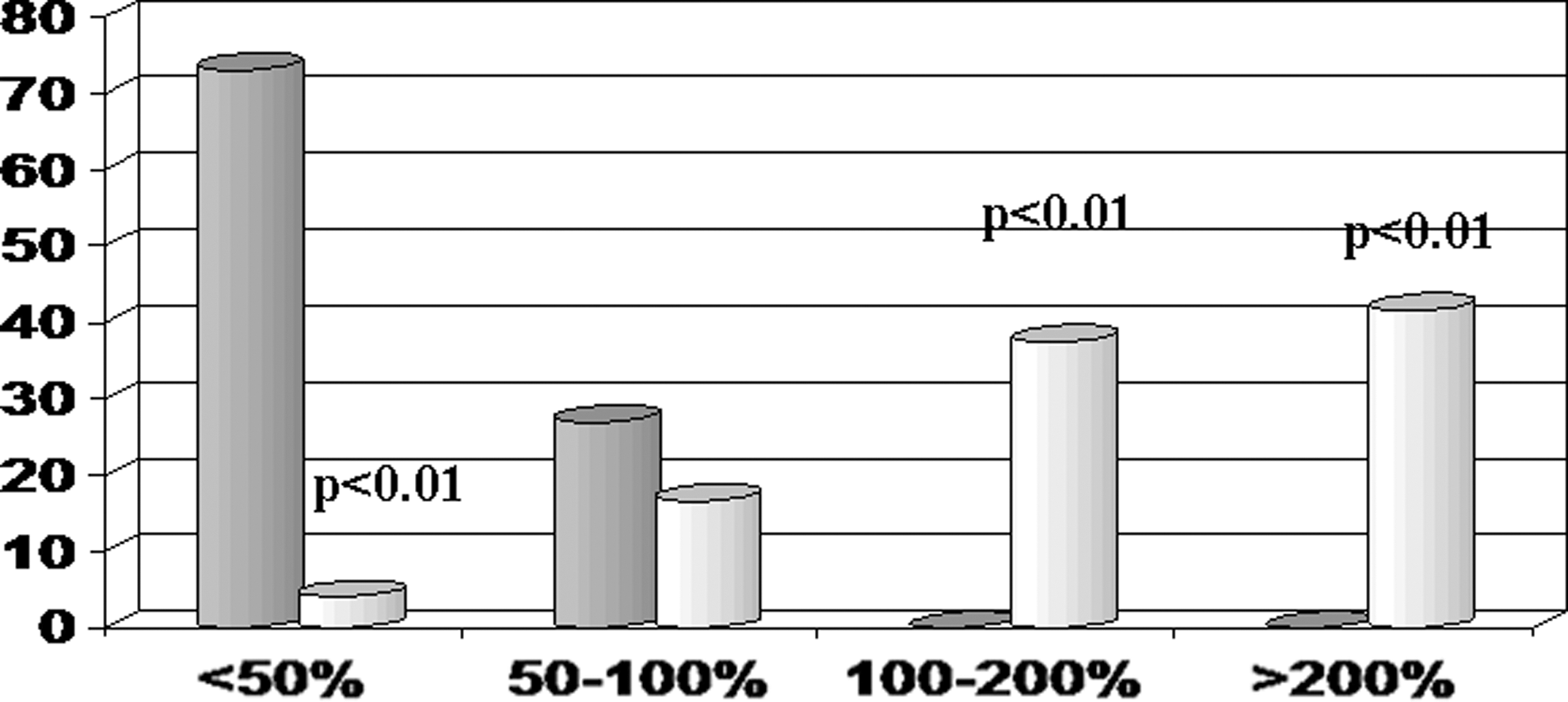
Proportion of volunteers showing natural killer (NK) cell activity change: Effect of KC-1317 supplementation.
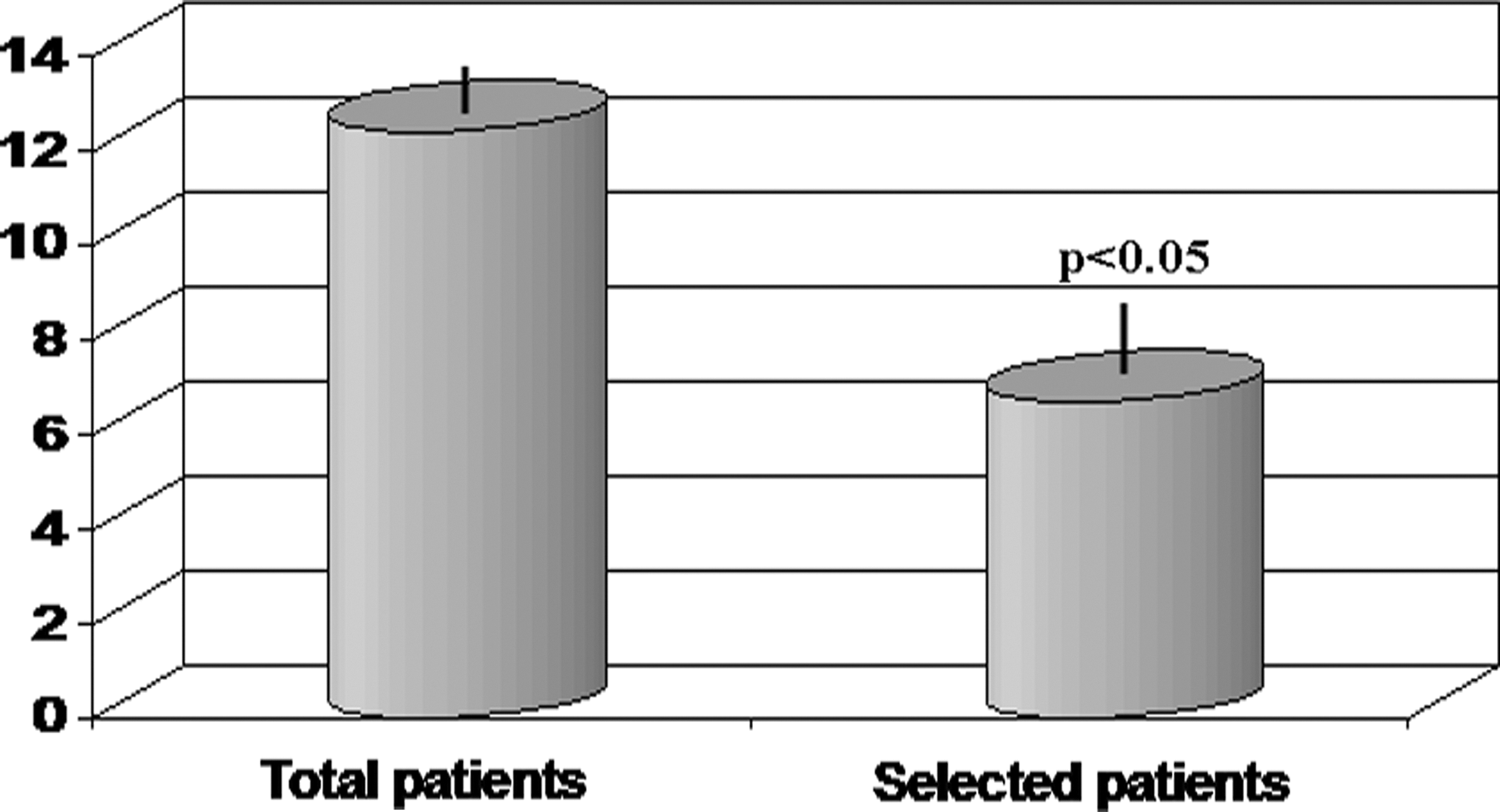
The natural killer (NK) cell cytolytic activity of total and selected healthy elderly subjects.
Discussion
Aging is associated with impaired specific immune response. 14 The loss of the ability of T cells of the elderly people to generate an immune response equal to that of T cells of the young is unquestionably an age-related phenomenon, and this deficiency can expose to the increased susceptibility of elderly subjects to infections, cancers, and autoimmune diseases 15 as well as to the limitation incurred when immune therapy is envisaged in this population. 16 Several studies have suggested that the monitoring of cytolytic activity of the immune cells both in vivo and in vitro can be related to the overall immunity status of an individual. Although, other members of cell-mediated pathways play significant roles in the regulation of immunity, this variable has been used and successfully modulated with probiotic interventions, 6 –12,17,18 although controversial data exist even using the same strain. 19 Indeed, to date, a lack of consistency among some experimental models and different methods of preparation and administration of the bacteria represent factors yet to be fully explored.
Our present data suggest that KC-1317 is efficiently enhancing the immune system in healthy elderly and at a comparatively low dose. One cannot rule out the possibility of a synergistic action of the symbiotic milieu of KC-1337. 20 Although these data need larger and longer-term studies together with correlations with several other health status markers, they offer a promising avenue to be pursued within a wider global health strategy by providing a safe dietary supplement enhancing innate cellular immune function.
Footnotes
Author Disclosure Statement
No competing financial interests exist.