




Abstract

The Rosalind Franklin Society (RFS), in partnership with Mary Ann Liebert, Inc., publishers, enthusiastically congratulate our distinguished recipient of the 2022 annual
Ji-Won Shin, Eunil Lee, Seungbong Han, Seung-Ah Choe, and Ok Hee Jeon, “Plasma Proteomic Signature of Cellular Senescence and Markers of Biological Aging Among Postmenopausal Women,” Rejuvenation Research 25, no. 3 (June 2022): 141–148,
Abstract
To investigate the association of circulatory senescence-associated secretory phenotypes (SASPs) produced by senescent cells with chronological and menopausal age in women aged 45 years or more, the proteomic profiles for 32 SASP factors of plasma samples were measured in 76 healthy postmenopausal. First, we composed a profile of proteins associated with chronological age, menopausal age, and years since menopause. In a single protein model, three proteins GDF15, IGFBP-2, and TNF-a are positively associated with chronological age. Menopausal age and years since menopause are interrelated with IL-8. The direction of association between menopausal age and MCP-1 was only negative, and IGFBP-2 and TNF-a were significant in all three aging factors. We also constructed parsimonious multiprotein models to confirm the association of the proteomic signature for aging after adjusting for covariates and the combination of proteomic signature of 13 proteins appear to be associated with chronological age and menopausal state of individuals. Thus, we examine how menopause in women relates to proteomic indicators of aging and highlight the potential use of SASP factors as a marker to reflect the state of biological aging attributed by ovarian senescence.
Biosketch
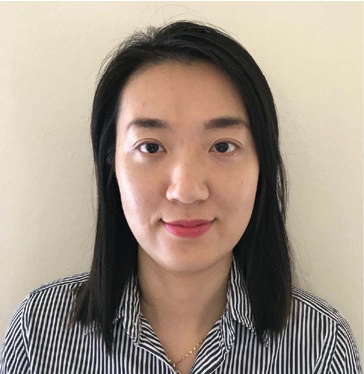
Dr. Ok Hee Jeon earned her PhD degree in biomedical engineering in 2017 from the Johns Hopkins University, where she conducted groundbreaking research on senescent cells and their contribution to the loss of joint function after injury and as a consequence of aging. Her work led to the development of new regenerative and pharmacologic therapies that target these cells. She then joined the Buck Institute for Research on Aging as a postdoctoral researcher, where she discovered secondary senescence phenomenon as a new mechanism by which senescent cells rise with age and contribute to aging phenotypes, to a molecular level, identifying circulatory pro-aging proteins produced by senescent cells at the root of age-related diseases. She is now an assistant professor at the Korea University College of Medicine, where she is developing innovative therapies for aging and aging-related diseases by using engineering platforms to target senescent cells. In addition to her achievements in the field of aging, Dr. Jeon's expertise also includes cellular senescence in women's fertility and ovarian reserve.