




Abstract
Environmental information has been included in sustainability reports for several years; however, some organizations have recently focused sustainability on other areas, such as social responsibility and economic information. The current study examined the frequency of reporting health and safety data of Fortune 100 companies communicated in sustainability reports, especially when the disclosed information may not be positive. The Global Reporting Initiative (GRI) first established their guidelines for sustainability in 2000 as part of their goal to address this problem (Occupational Safety and Health Administration, 2017). The methodology for the study utilized these guidelines in two cycles of qualitative content analysis using ATLAS.ti 8 software. The initial Cycle One results (n=77 documents) revealed that health and safety information was reported most frequently in sustainability reports (SRs) and corporate social responsibility (CSRs) reports for three sectors: financials, services, and technology. From these results, the study turned its focus on the technology sector in Cycle Two (n=13 documents). Using GRI 403 guidelines, which suggest reporting ISO 45001, initial results of Cycle Two revealed that reporting on OHSAS 18001 and ISO 45001 occurred in less than 30 percent of these documents. Despite some companies reporting zero fatalities, corporate communications of “death” listed in SRs and CSRs were primarily community health-related rather than occupational-related. To verify the data, OSHA inspection data was checked for fatalities and catastrophes to determine if any had occurred within the study period. The results showed that specific work-related injuries such as burns, hernias, or amputations were not reported frequently in the texts, diverging from the suggested GRI 403 guidelines. The study also revealed that the technology sector was reporting health and safety information and while this information is becoming more prevalent in technology companies' SRs, there is still a need to increase reporting of both positive and negative health and safety performance to meet GRI 403 guidelines.
Introduction
As businesses operate during the coronavirus (COVID-19) pandemic, health and safety issues are at the forefront of achieving corporate sustainability during these uncertain times. Companies are disclosing environmental, health, and safety (EHS) information on corporate websites to show their commitment to sustainability while using websites as an avenue to communicate corporate values to stakeholders (Wenstop & Myrmel, 2006). Sustainability reports are important not only to companies with EHS management systems such as ISO 14001 or ISO 45001, but also to any organization attempting to display top management's commitment to health and safety within an organization. This information is typically communicated to stakeholders in the form of annual sustainability reports.
According to Morhardt (2010), companies included in the Fortune lists had the highest sustainability scores because they had much more detailed reporting. Morhardt (2010) also noted that social responsibility is to some degree impacted by the corporation's size. For example, smaller companies typically have a smaller environmental footprint compared to larger companies and may decide to forego reporting on sustainability. Small companies may not have the resources or stakeholder-pressures that drive larger companies to focus on sustainability. This study examined Forbes Fortune 100 companies.
A study by Yadava and Sinha (2016) analyzing sustainability reports of top Indian companies revealed that they used similar reporting methods for economic information but used vastly different techniques for reporting social and performance of health and safety data. Corporations with larger revenues showed a significant, positive correlation with also issuing value statements (Wenstop & Myrmel, 2006).
According to Jose and Lee (2007), the Internet and world-wide-web provide a simple and inexpensive way to disseminate environmental information, and companies are utilizing it even more often today. Corporate sustainability reports and health, safety, and environment (HSE) reports are becoming more frequently included on corporate websites (Morhardt, 2010). The current study contributes to determining the frequency of health and safety information most commonly found in public sustainability documents.
Corporate executives are shifting toward transparency in reporting while also recognizing that social responsibility involves interrelations among environmental, social, and financial reporting (Vargas, 2018). Projects such as reducing energy can have a significant impact on both the environment as well as economics (Vargas, 2018). Fortune 500 companies are realizing the benefits of viewing corporate social responsibility as a strategy to attract and motivate employees, reduce costs, and gain market share (Kotler & Lee, 2005). Effective safety initiatives save lives while also reaping economic cost savings to the organization. Furthermore, the interconnection of safety measures and other company initiatives can be beneficial to an organization. For example, aligning the safety objectives of the organization with the corporate strategy will help safety professionals attain top-level commitment while also supporting the overall corporate strategy.
One of the most recognized, international voluntary reporting guidelines for sustainability reports that exist is the Global Reporting Initiative (GRI) (Roca & Searcy, 2012). Established in 1997, GRI released its first GRI reporting guidelines for sustainability in 2000 (OSHA, 2017). The guidelines encompass a vast array of topics, such as the environment, diversity and inclusion, and occupational health and safety. The reporting guidelines are based on the Triple Bottom Line (TBL) which includes environmental, economic, and social performance (Yadava, 2016; Young & Dhanda, 2013). At the time of the current study, most Fortune 100 corporate sustainability reports contained a section to address GRI reporting.
Methodology
Purpose
The purpose of the current study is to examine health and safety information communicated in corporate sustainability reports. GRI 403 is a set of guidelines for reporting occupational health and safety performance in sustainability documents. Fortune 100 companies were selected for the study because many of these firms disclose sustainability information on their websites. Also, a study revealed that a majority of Fortune 500 companies have corporate responsibility initiatives and report giving in CSR documents (Kotler & Lee, 2005).
Context
Although several GRI guidelines exist, this study focused specifically on GRI 403—Occupational Health and Safety—using the 2018 guidelines, the most recent version at the time of the study. GRI 403 attempts to address health and safety by considering leading indicators, international standards such as ISO 45001, and the amount of “recovery time” to measure the severity of the illness or injury (Lellis, 2019).
Problem
EHS professionals may be unaware of the updates to GRI 403 when discussing occupational health and safety in sustainability reports. Furthermore, negative information may be omitted to create an inflated report. Sustainability reporting, in general, has been under scrutiny because companies tend to greenwash or inflate these reports to demonstrate that they are performing in an environmentally responsible manner (Hahn & Lulfs, 2014). The current study attempted to determine the most frequently used GRI 403 terminology in sustainability reports.
The GRI guidelines were established to help reduce greenwashing by suggesting that companies report both their positive and negative information (Hahn & Lulfs, 2014). The problem is that companies tend to avoid reporting the negative information related to environmental, health, and safety to avoid criticism for poor occupational safety and health performance as well as to make their sustainability record appear better than that of the competition. Researchers have also pointed to the lack of consistency in sustainability reporting, especially related to the types of performance indicators publicized in sustainability reports (Roca & Searcy, 2012).
GRI 403 is an initiative to assist companies in determining specific and uniform information to report from a health and safety perspective. It also helps companies when reporting specific information that may have otherwise been avoided, such as fatalities or high incident rates of injuries. Another problem is that sustainability reports lack a consistent format and reporting practices. In the past, sustainability reports contained information primarily for environmental reporting. However, currently companies are writing social responsibility reports that include other areas such as employee safety, human rights, fair pay, animal welfare, and food safety, to name a few.
Research Questions
The following research questions in the study set out to address the frequency that GRI 403 text appears in sustainability reports (SR) and more specifically in the technology sector:
How frequently do Fortune 100 companies use the same terminology or code words stated in GRI 403 in the text of their sustainability reports (SR) or corporate social responsibility (CSR) reports? What health and safety information was reported most often in the text of SRs or CSRs of Fortune 100 companies in the technology sector?
Literature Review
Environmental Health and Safety Reporting
Research studies focused on the content of environmental sustainability information from Fortune lists in the United States and globally. Several researchers have studied the disclosures in sustainability reports (Gill et al., 2008; Jose & Lee, 2007; Roca & Searcy, 2012). According to Kolk et al. (2001), large multinational corporations were the focus of research possibly due to their impact on other firms. The trend is starting to shift toward studies in environmental performance for competitive or financial reasons (Jose & Lee, 2007). This study explored the potential gap in the literature related to research studying the content of health and safety information. Moreover, lack of safety leadership was identified as a problem that added to workplace injuries in a study that examined how safety-specific and general transformational leadership impacted safety outcomes (Mullen & Kelloway, 2009).
Jose and Lee (2007) performed a content analysis of the environmental reporting of the Fortune Global 200 companies. They pointed out that these companies were shifting their rationale for reporting environmental information, which changed from meeting regulatory needs to nonregulatory reasons, such as staying competitive. Following the guidelines found in the Writing Center at Colorado State University, their analysis was divided into four research categories: 1.) who reports environmental information, 2.) what is being reported, 3.) the way information is reported, and 4.) environmental outcomes using indices primarily used by investors. Their analysis concluded that companies went from reporting sustainability information in annual reports to using a separate document, such as the sustainability report. Companies that have a greater impact on the environment were found to communicate more environmental information than companies that have significantly less impact, such as the financial industry (Jose & Lee, 2007). Their analysis also found that planning was not a priority in environmental reporting. Kolk et al. (2001) found that the corporation's home country had an impact on the environmental reporting frequencies. In the study, the direct environmental impact versus the frequency in industries such as banking, telecommunications, retail, and services reported less frequently than other industries.
Morhardt (2010) examined sustainability information available on the websites of Fortune Global 500 and Fortune 1000 companies from 25 industrial sectors. Scoring was performed using the Pacific Sustainability Index (PSI) scoring sheet for all sectors and then a more specific scoring sheet. PSI measures the quality of sustainability using a general questionnaire across sectors and then a sector-specific questionnaire (Corporate Sustainability Reporting Research, 2019).
Bondy et al. (2008) investigated codes of conduct to explore reasons corporations adopt codes other than for corporate social responsibility reporting in the United Kingdom, United States, and Germany and found that the top reasons were to meet a requirement (27.2%), guide behavior (11%), and the protect company's reputation (4.6%).
Yadava and Sinha (2016) used the GRI 2011 guidelines to study environmental, economic, and social elements in Indian companies' sustainability reports. The results revealed that Indian companies covered economic elements thoroughly while reporting social and environmental elements with much less rigor. Therefore, additional emphasis is necessary to comprehensively cover social responsibility topics, such as occupational health and safety. Indian companies have since increased their social and environmental reporting in sustainability reports; however, this study revealed that more consistent, thorough reporting is still necessary. Furthermore, sustainability reports are being used for corporate accountability to show that a company is performing in a socially and environmentally responsible manner.
Methods
Content analysis was used in the current study to examine EHS information made public within Fortune 100 websites for sustainability reporting for the time period of 2017-2018. Fortune 100 companies were studied because large multinational corporations likely influence other firms, as pointed out in the research of Kolk et al. (2001). In the past, negative information was ignored while positive information was emphasized causing a greenwashing effect in sustainability reporting. GRI provides well-known voluntary guidelines for sustainability reporting. Moreover, GRI is considered the de facto international reporting instrument for sustainability disclosures (Young & Dhanda, 2013).
Although several related GRI guidelines exist, the current study focused on GRI 403, last released in 2018, designed to assist companies in reporting occupational health and safety performance measures. Specifically, the guidelines emphasize reporting on leading indicators, ISO 45001 management systems, and work-related injuries, illnesses, and fatalities in sustainability reports.
The current study attempted to use a systematic approach to define codes, capture data, and show that reliability and validity existed using Krippendorf (2013) analysis. The objective was to determine the frequency of occupational safety reporting of Fortune 100 companies. An initial codebook, consisting of 169 codes, was created from the GRI 403 guidelines for analysis and to help answer two research questions regarding the information contained in SRs and CSRs. Other researchers used content analysis, a qualitative approach, to study sustainability reporting (Guthrie & Abeysekera, 2006; Jose & Lee, 2007). Scholarly researchers developed three definitions for content analysis (Krippendorf, 2013):
Definitions that take content to be contained in a text
Definitions that take content to be a property of the source of a text
Definitions that take content to emerge in the process of a research analyzing a text relative to a particular context. (p. 25)
Jose and Lee (2007) pointed to the research of Gray et al. (1995), stating that qualitative content analysis has been “widely used in corporate social and environmental responsibility research” (p. 311). The data analyzed in the study by Jose and Lee (2007) came primarily from SR or CSR documents typically found in portable document format (PDF) on company websites. Corporate Code of Conduct reports, health, and safety information from websites, and/or EHS policy statements were excluded from the analysis.
Forbes advertises the Fortune 500 list annually on its website. For the study, the top 100 companies were identified (see Supplementary Table S1) and the available pdfs were used as the sample for the study. A priori codes were used following coding strategies developed at the Writing Center of Colorado State University (Krippendorf, 2013; Saldana, 2016). The current content analysis used a systematic approach to define the codes, capture the data, and ensure that it belonged within the specific assigned category, and show evidence for reliability and validity.
Data Gathering
EHS information was communicated by a company's leadership using a variety of formats ranging from EHS policy statements, social responsibility reports, and sustainability reports. The most recent sustainability or social responsibility reports were collected from the company websites. Code of conduct documents have a brief segment on worker safety but were excluded from the study to ensure that the focus would be on sustainability reporting. The data collection period spanned from February to April 2019. A spreadsheet was created listing each Fortune 100 company with a link to the document and Fortune 100 ranking. Either the CSR or SR was chosen as the primary document for analysis. Companies not providing EHS information on their websites were excluded from the study.
After all of the information was collected and entered in the spreadsheet, each company was placed into one of eight industry sectors—basic materials, consumer goods, health care, industrial goods, financials, services, technology, and utilities. For ease of data analysis, the list of industrial sectors established by Forbes was further simplified to help categorize industrial sectors. All of the collected documents in Adobe PDF or Microsoft Word were imported into ATLAS.ti 8 and then moved into the respective industry category for analysis.
Codebook
A codebook was established by obtaining a copy of the GRI 403 guidelines from the GRI website. The GRI 403 guideline was read carefully and keywords were highlighted from the text, which became the initial codes for the project. The initial codebook was entered into Microsoft Excel and commenced with a list of 169 codes, condensed to 166 codes when eliminating duplicates, redundancies, or overgeneralizations (Table 1). The codebook was then imported into ATLAS.ti 8 for analysis.
Codes for Current Study
Content Analysis
Qualitative methods, such as content analysis, utilize processes such as carefully reading to interpret the text and recognizing the researcher's biases that influence understanding (Krippendorf, 2013). This research used a deductive approach, moving from general principles employing simplified text to drawing conclusions after reading and interpreting the text. In the current analysis, sample sustainability documents were selected for analysis to initially code computer-aided text analysis followed up by human-read analysis. The two cycles of qualitative analysis were performed between April 2019 and August 2019.
Cycle One: Automated Content Analysis
Several advantages were apparent with beginning the initial coding with automated content analysis. The study reviewed 77 documents that ranged in length from a few pages to more than 100 pages. Auto-coding allowed the researcher to use the GRI 403 guidelines to code the document initially for the descriptive codes of interest in the documents and then narrow in on specific meanings in the text after more intensive manual coding. Some alterations were needed; for example, the code “ill” was removed and re-coded as “illness” to prevent coding information not related to occupational health and safety.
Content analysis was performed in two cycles. Cycle One was performed by using the autocoding feature in a separate ATLAS.ti file. The codes consisted of single words and each term was inputted manually with specific criteria or rules, such as ignoring case, for the autocoding process that allowed for greater reliability. The coding results were used to answer the research question regarding the frequency of GRI 403 terminology found in each document.
During Cycle One, each document that appeared to have codes was analyzed by performing a new search using the same criteria. Gill et al. (2008) used a similar autocoding technique to improve inter-coding and intra-coding reliability, and made an exception for ignoring case when coding for acronyms (for example, PPE or HIV). ATLAS.ti software was scanned for matches in the documentation to give an initial result. In Cycle One, 158 codes were run through computer-aided text analysis.
Cycle Two: Manual Coding
After reviewing the data, the technology sector was included in Cycle Two for manual coding and a more manageable study. Since the recent wave of technology is changing safety management, the study also tried to determine if corporate leaders emphasized health and safety in reporting. The technology sector contained 13 documents, ranging in length from 16 to 179 pages, which allowed for obtaining deeper meaning in this data.
The second cycle relied on a much higher level of thought, reflection, and interpretation to ensure that the codes were related to health and safety as described in GRI 403. According to Saldana (2016), descriptive coding or topic coding is useful for all qualitative studies leading to tabulated exploration or summary, except the case studies and small-group studies.
Moreover, Cycle Two involved reading longer sentences or a paragraph to obtain the meaning and determine if the code was related to the overall topic of health and safety. If the text was related, it was coded and counted toward the frequency data. If it did not relate to health and safety, it was not coded. In future analysis (Cycle Three), the researcher could analyze the text for potential themes that arose from these documents.
Reliability and Validity
Berlson (1952) defined content analysis as an objective, systematic, and quantitative description of a communication. However, Krippendorf (2013) stated that content analysis has been successful without quantification of the analysis results. Codes were extracted from the GRI guidelines to assist in validating the reporting information found in sustainability or corporate social responsibility reporting. Multiple methods of finding and collecting data were used.
As stated by Roca and Searcy (2012), the names of these reports can include terms such as “sustainability,” “citizenship,” “responsibility,” or “accountability.” To obtain the sustainability reporting information, words such as “sustainability,” “corporate social responsibility,” “safety,” “health and safety,” “environmental,” and “social responsibility” were searched in Fortune 100 websites.
Wenstop &Myrmel (2006), proposed a format that would identify corporate value statements used to gain strategic advantage and to make these statements more comprehensive. Their study analyzed the value statements of 300 publicly traded companies in the United States and Norway and determined that the information was positioned in diverse locations adding to the complexity and ability to categorize. Value statements are found in various reports such as the corporate code of ethics, corporate credo, privacy policies, or simply by searching using the word “value,” illustrated by the example of ConocoPhillips emphasizing its EHS performance in a corporate value statement (Wenstop & Myrmel, 2006). Stakeholders expect EHS to be upheld and valued by management within an organization as a duty, not exchanged for profit or productivity; anything less would be unethical (Wenstop & Myrmel, 2006).
Results
At the start of the analysis, a word cloud was created to view frequently-used words in sustainability reports. Words such as “business,” “sustainability,” “report,” and “health” appeared most frequently in the documents. Frequently-stated words related to the current study include “safety,” “health,” “employees,” “compliance,” “commitment,” and “risk.” (See Figure 1.) Although “health” and “safety” were frequently-used terms in these reports, Cycle One and Cycle Two determined the presence of specific GRI 403 terminology.
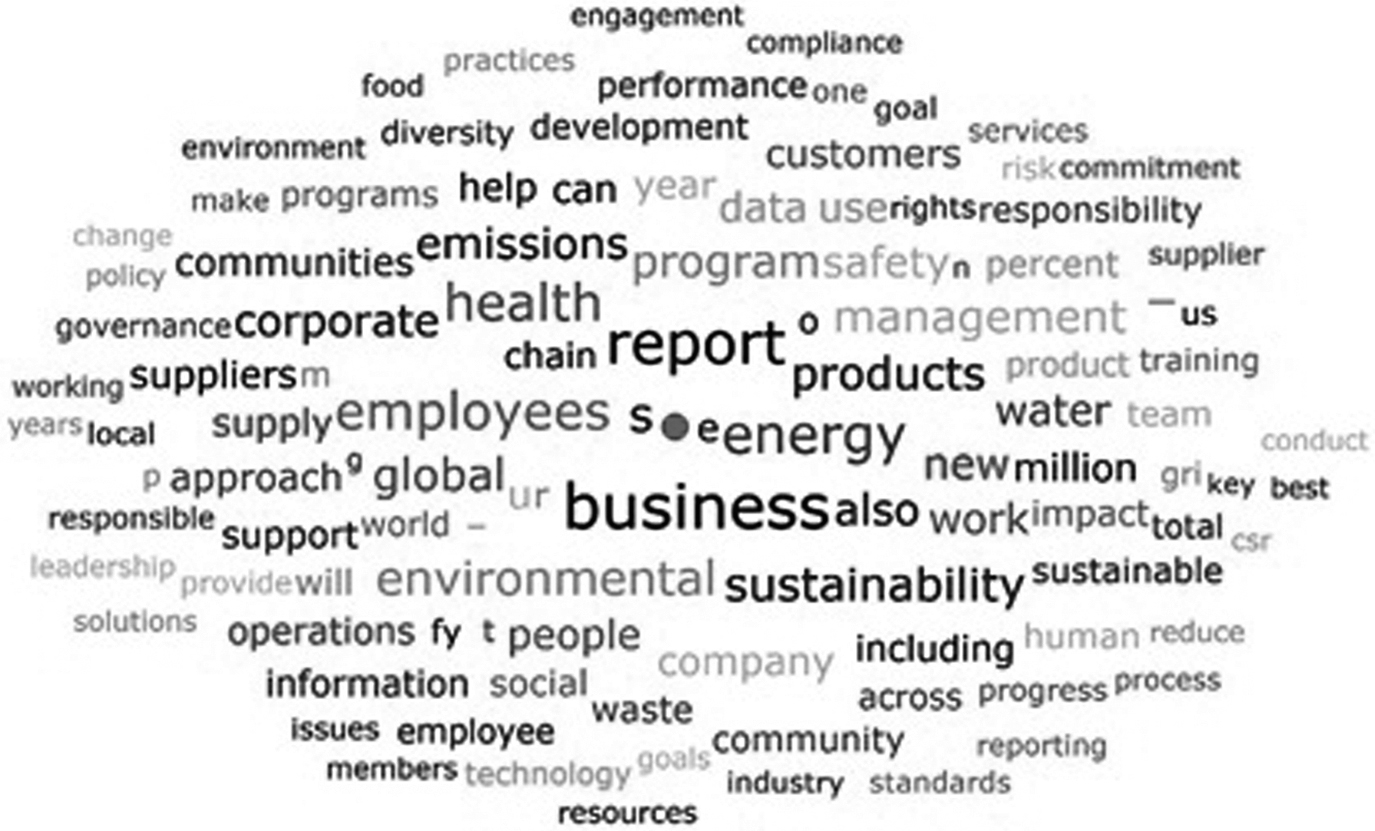
Frequently-used terms in sustainability reports (all eight sectors)
Cycle Two involved reading and coding the documents from companies in the Fortune 100 technology sector. The most frequently-used terms in sustainability and corporate social responsibility reports consisted of words such as “safety,” “health,” “risk,” “training,” “standards,” and “employee” (Figure 2). Other than health and safety, these documents stressed risk as related to health and safety.
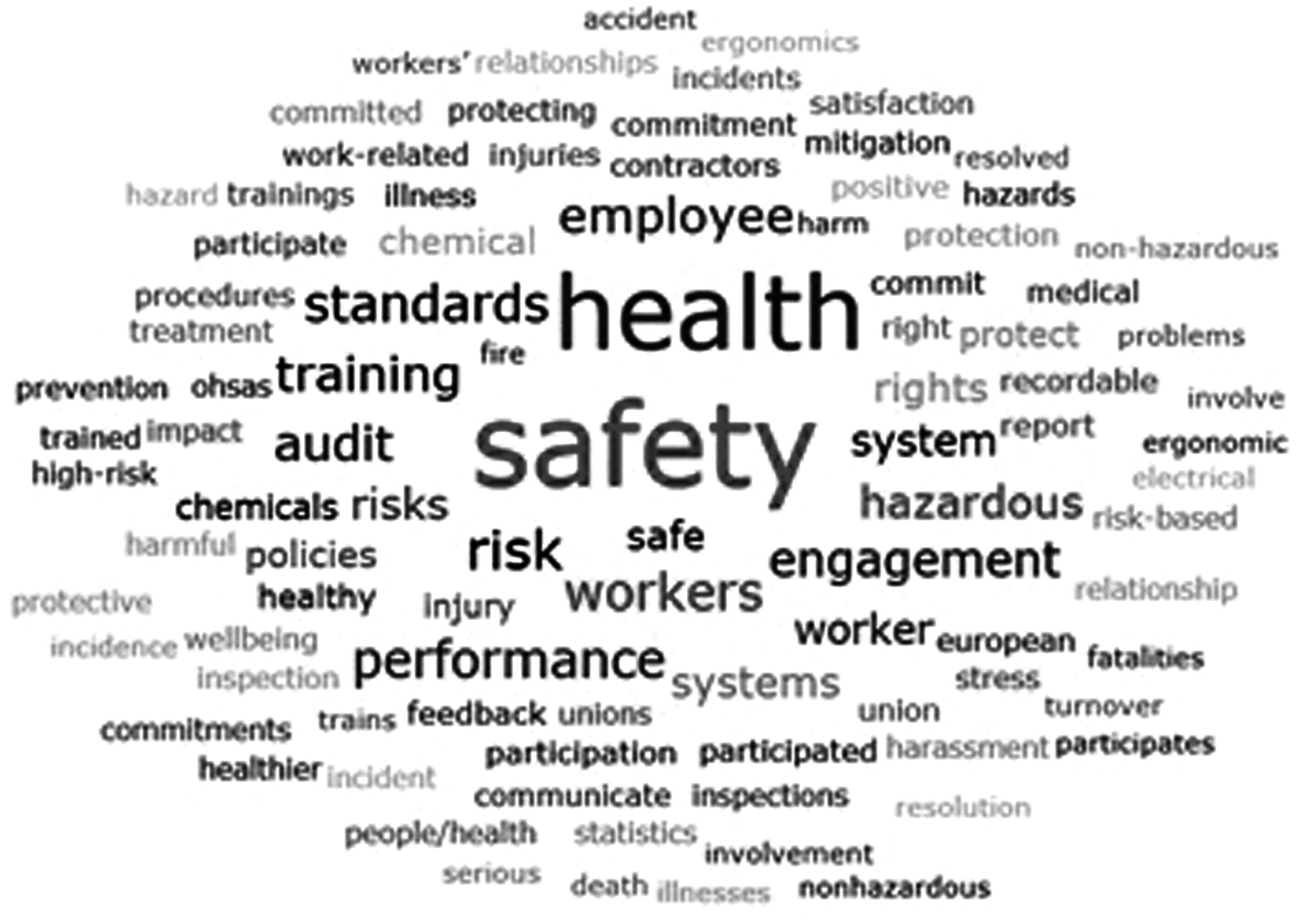
Frequently-used terms in the sustainability reports (technology sector)
Each document group/industry sector analyzed in ATLAS.ti had a different number of documents, causing one group to be underrepresented and another group overrepresented. Data can be weighted to help solve the problem of misrepresenting the data (Bethlehem, 2019). Therefore, the raw data results were multiplied by a ratio to allow for an equal comparison. As shown in Table 2, the data were weighted by multiplying the Cycle One Raw Data by a weight-calculated ratio of the population of sustainability reports in the study divided by the sample of the sustainability reports for each sector. The initial results of the study revealed that the financials sector had the highest measure of health and safety terminology aligning with GRI 403. The second coding cycle helped to ensure that the codes related specifically to occupational health and safety.
Cycle One Initial Coding Results a
Note: Data represents the Cycle One frequency results after multiplying the data by a weight to allow for comparison. BM=Basic Materials; CG=Consumer Goods; FINAN=Financials; HC=Health care; IG=Industrial Goods; SERV=Services; TECH=Technology; and UTIL=Utilities
Discussion
Although GRI 403 mentions the new ISO 4500l standard, neither the CSRs or SRs in the study mention the standard. Therefore, OHSAS 18001 was added to the code list. OHSAS 18001 is an international standard for occupational safety and health management systems created by BSI being phased out and replaced by the new ISO 45001:2018 standard. However, it was still relevant for approximately three years after ISO 45001:2018 was established and, notably, companies were given an extra 6 months due to COVID-19. In general, companies find value in EHS reporting, but less than 30 percent mentioned an ISO 45001 or OHSAS 18001 management system (Jose & Lee, 2007). The coding results revealed that 38 percent of the technology companies discussed OHSAS 18001 in the sustainability reports culled in the study.
Since companies typically disclose lagging indicators, such as injuries, a focus of the 2018 GRI 403 involves increasing the disclosure of leading indicators. As one example, the leading indicator “near miss” appeared only six times in the analysis of 77 documents from technology companies as well as others. There were 168 codes for “death,” 242 codes for “fatal,” and 574 codes for “disease,” indicating that companies were disclosing potentially negative information to the public. However, “disease” referred primarily to the community rather than workplace-related problems. Thirty percent of the technology companies reported information about fatalities, but no specific fatalities were mentioned. One company stated in their omissions that work-related fatalities and severe injuries are not reported in the work-related injuries section of the sustainability report. Furthermore, GRI 403 mentions specific injuries with 116 codes for “burn” that were found in the sustainability documents.
Interestingly, “injury” (n=362 codes) and “injuries” (n=450 codes) were disclosed in the documentation. Cycle One showed evidence of occupational health and safety information from GRI 403: 2018 terms were mentioned in sustainability documents. However, several codes did not appear in the initial coding or when looking further at technology companies. The disclosures may be in the beginning stages for the new GRI 403 Occupational Safety and Health 2018, which encourages employer reporting of more health and safety information in future documents.
To validate the data, Occupational Health and Safety Administration (OSHA) inspection records were checked to identify any fatality/catastrophic (FAT/CAT) inspections among the technology companies included in this study. The results revealed that OSHA performed six FAT/CAT inspections in a five-year search from 2016 to 2021. Of the six inspections, one FAT/CAT occurred during the study period (a crushing injury) and three occurred in 2020. Although injury statistics were reported, fatality data was not found. The inspection details revealed that four of these inspections were fatalities and two were unknown; the four were listed as heart attack, fall, trauma, and crushing. In reporting injuries, companies reporting health and safety information should not omit severe injuries and fatalities. As previously stated, one company stated that this information was omitted from its work-related injury reporting.
Some of the health and safety terminology most often used in today's sustainability reports is related to risk, training, audit, performance, and engagement. Sustainability report writers emphasize minimizing “impact,” wording that is part of the GRI 403 terminology. The term “impact” refers to health and safety, environmental, business, economic, community, and societal impacts; however, this study only considered health and safety impacts in the technology sector. As an aside, sustainability reports contain top management's commitment to several issues, such as sustainable products, environment, lifelong learning, energy reduction, climate change, pay equality, and rights for women. These issues were not included in the current research.
Since the coronavirus pandemic, the number of employees reporting workplace safety violations has increased (Andrews, 2020). These violations are primarily related to personal protective equipment, sanitizers, and social distancing (Andrews, 2020). With the heightened awareness of health and safety, it is expected that more companies will report information in future sustainability reports related to COVID-19 occupational health and safety.
Future Study and Limitations
Studies in the future could focus on other sectors not considered in Cycle Two of this research, such as the financials sector. There were several other topics addressed in the SRs and CSRs that were not considered for analysis in the current study, including issues such as diversity or fair wages. Also, a study of other GRI guidelines for environmental or economic topics could be considered in a future study. This study relied on the content in the CSR/SR reports to answer research questions. Manual coding of several lengthy documents often leads to coder fatigue. The documents were coded in smaller numbers to help solve the problem and allow for better results. Also, since the information was gathered from Fortune 100 companies, it may be difficult to generalize over a larger population and a larger number of companies.
Conclusion
Fortune 100 technology companies reported both positive and negative health and safety information and also provided a dedicated section in the CSR/SR reports for GRI reporting in sustainability reports. These sections are populated by a wide array of information that depends on the health and safety focus and objectives of the companies in the current study. For example, telecommunication companies are concerned about the safety of customers, combating distracted driving while using mobile phones. Online safety is one of the issues discussed in their sustainability reports. It was found that some companies also promote health and wellness initiatives for employees, such as smoking cessation and prevention, and physical fitness. As expected, reporting of positive information remains predominant by technology companies. For instance, a telecommunications company reported the actual injuries and illness rate as part of their GRI 403 data and then compared it to the industry average, stating that it was 50 percent below the industry average. Reporting of specific data sets the example for other companies to disclose this information to their stakeholders.
Transparent reporting of positive and negative health and safety information appears to be gaining momentum as companies are encouraged to follow the voluntary guidelines outlined in GRI 403 Occupational Safety and Health 2018. For example, one technology company reported compliance based on a third-party Electronic Industry Citizenship Coalition (EICC) audit, showing in some cases numbers below 50 percent, but also showing progress in the next annual audit cycle. Reporting of negative health and safety information occurred most often when it was not a direct reflection on the company or its activities, for example company reporting of worldwide health problems, such as the opioid crisis or HIV.
Also, omissions of severe injuries and fatalities do not support the initiatives to prevent greenwashing by following the GRI 403 guidelines. To align with the updated GRI 403 standards, companies reported information such as injury and illness rates, sprains, strains, lacerations, and/or ergonomic injuries. Companies are moving toward transparency in reporting of environmental, health, and safety data in future sustainability reports. As a result, this study revealed that technology companies are starting to report health and safety data as specified in the latest GRI 403 guidelines. However, conveying more of this information is recommended, whether positive or negative, to be socially responsible.
Footnotes

References
Supplementary Material
Please find the following supplemental material available below.
For Open Access articles published under a Creative Commons License, all supplemental material carries the same license as the article it is associated with.
For non-Open Access articles published, all supplemental material carries a non-exclusive license, and permission requests for re-use of supplemental material or any part of supplemental material shall be sent directly to the copyright owner as specified in the copyright notice associated with the article.
