




Abstract
This study evaluated the factors influencing environmental sustainability (ES) performance of construction projects from the perspective of construction industry professionals working in the Free State province in South Africa. Using a quantitative research approach, questionnaires were administered to a sample of purposively selected respondents (N=165) of construction professionals working on designated construction sites. A total of 101 questionnaires were returned and analyzed to ascertain drivers for improved ES performance, strategies for improving ES performance, and the degree of prioritization of the implementation of these strategies within projects. Results indicated a considerably high level of awareness of ES among respondents. Also, client requirements and compliance with ES-related policies were identified as critical drivers of improved ES performance, and the use of sustainable construction methods proved to be the most salient strategy for improving ES performance. However, the implementation of identified strategies for ES performance improvement was not shown to be a priority, pointing to a need for more client-driven implementation as a pivot for improved ES performance on construction projects. This study has important implications for construction stakeholders seeking to improve ES performance in the South African construction industry.
Introduction
The construction industry has a long-standing reputation for negating sustainability performance (Kibert, 2016), mostly attributable to the plethora of anthropogenic activities and unsustainable consumption patterns associated with the industry. These activities necessitate the adoption and implementation of innovative approaches and methods for curbing the impact of such activities on environmental sustainability.
Since it is the environmental dimension of sustainability that suffers the most from these activities, achieving improved environmental sustainability (ES) performance on construction projects remains critical to the industry's quest to become more sustainable. Scholars posit that the delivery of construction projects in a manner that creates less harm to the ecological equilibrium will contribute significantly toward sustainable development (Bamgbade et al., 2019; Shen et al., 2002).
Accordingly, attaining improved levels of environmental sustainability performance has gained traction with several countries that are working toward finding and maintaining a balance between developing the built environment and protecting the natural environment. Although concerted efforts are being made to make this a reality, they appear to have had minimal impact. This is particularly the case within developing economies where the emphasis remains on improving the performance of construction projects and built assets related to the economic and social dimensions of sustainability (Aghimien et al., 2019; Mensah et al., 2014).
The direct and indirect contributions of the construction industry to the attainment of a variety of the Sustainability Development Goals (SDGs), especially SDGs # 6–9, 11, and 13, make any attempts at improving ES performance in the industry both timely and topical. According to the sustainable development (SD) annual report (Sustainable Development Report, 2020), South Africa has recorded marginal performance in achieving several SDG indicators. From the information on the report dashboard, the nation has recorded stagnated performance as it pertains to SDG #8 (decent work and economic growth) and SDG #11 (sustainable cities and communities), alongside moderate improvements in SDG #9 (industry, innovation and infrastructure) and SDG #13 (climate action).
Considering the potential contribution of the construction industry via its activities (projects) and assets (products) toward the attainment of these SDGs, there is no gainsaying that improving the ES performance of construction projects will expedite their achievement. Efforts to develop business models for transitioning construction organizations include steps that would improve ES performance. However, limited studies have explored this phenomenon in the construction industry, particularly in developing countries, making this study all the more relevant.
The central premise of this study was to document the incidence of ES activities in construction projects as seen from the perspectives of construction industry stakeholders working within the Free State Province of South Africa. The first step was to explore the awareness of various stakeholders concerning the measures taken to advance ES performance on construction sites and then to identify and evaluate the factors influencing use of ES-related methods and materials. A review of the literature related to the impact of construction industry activities on sustainability, sustainable development, and ES performance in construction was undertaken followed by an analysis of the data collected.
Literature Review
Impact of the Construction Industry on the Dimensions of Sustainability/Sustainable Development
As concepts, sustainability and sustainable development have become global concerns. Their centrality to societal development resulted in the adoption of the SDGs as the main developmental framework by 194 countries across the globe. The sustainable development agenda takes its roots from the Our Common Future, a report advanced by the Brundtland Commission under the auspices of the UN (World Commission on Environmental Development, 1987) (de Toledo et al., 2019; Olawumi & Chan, 2018; Purvis et al., 2019).
Predicated on the reputed idea that the construction industry has a negative impact on the environment but also the potential to achieve some of the SDGs, the industry has been put under enormous pressure to take action. According to Alkhaddar et al. (2012), Abuzeinab et al. (2016), and Bamgbade et al. (2019), construction firms have been confronted with requests to incorporate sustainability ethos into their business models and during the delivery of projects. Such requests are relevant to several aspects of their regular activities and could be changed to include proactive environmentally conscious design and construction, sustainable procurement of materials, effective and efficient resource management, and utilization, resulting in sustainably built assets.
Zhong and Wu (2015) chronicle these demands to show how the industry has tried to meet the challenges associated with curbing the negative impacts on the environment, evidenced by posting high economic sustainability and construction performance on their projects. Furthermore, new taxonomies have been introduced in the industry's project delivery environment, indicating a renewed focus ameliorating the impact of its activities on the environment. Of significance among such emergent taxonomies is sustainable construction.
Sustainable construction considers three dimensions of sustainability—environmental protection (environment), economic growth (economic), and social equity (social)—during decision-making processes across the different phases of a construction project lifecycle (Opoku & Fortune, 2011). The environmental dimension deals with the adoption and implementation of methods that reduce or prevent the project's adverse impacts on the environment, such as poor waste management, pollution of water resources, inappropriate land use, and greenhouse gas emissions (Bamgbade et al. 2019; Opoku et al., 2019; Zhong & Wu, 2015).
Social sustainability within the construction industry deals with the moral, legal, and ethical obligation of construction organizations to their stakeholders and society (Hendiani & Bagherpour, 2019; Monyane & Awuzie, 2019). Social sustainability also addresses concerns about the impact of a construction project or product (asset) on the quality of life in the surrounding geographical area (Monyane & Awuzie, 2019). The economic dimension addresses issues such as job creation, lower maintenance/operating costs, quality of the working environment, etc. (Opoku & Fortune, 2011).
There appears to be a consensus among scholars that optimal sustainability performance can be achieved in the construction industry through the integration of these dimensions. The relationship between the sustainability dimensions are highlighted in Figure 1. However, achieving this integration in a manner that engenders improved sustainability performance of construction projects remains a challenge as a widely-accepted methodology is still evolving (Goh et al., 2020). Addressing such gaps does not lie within the scope of the present study.
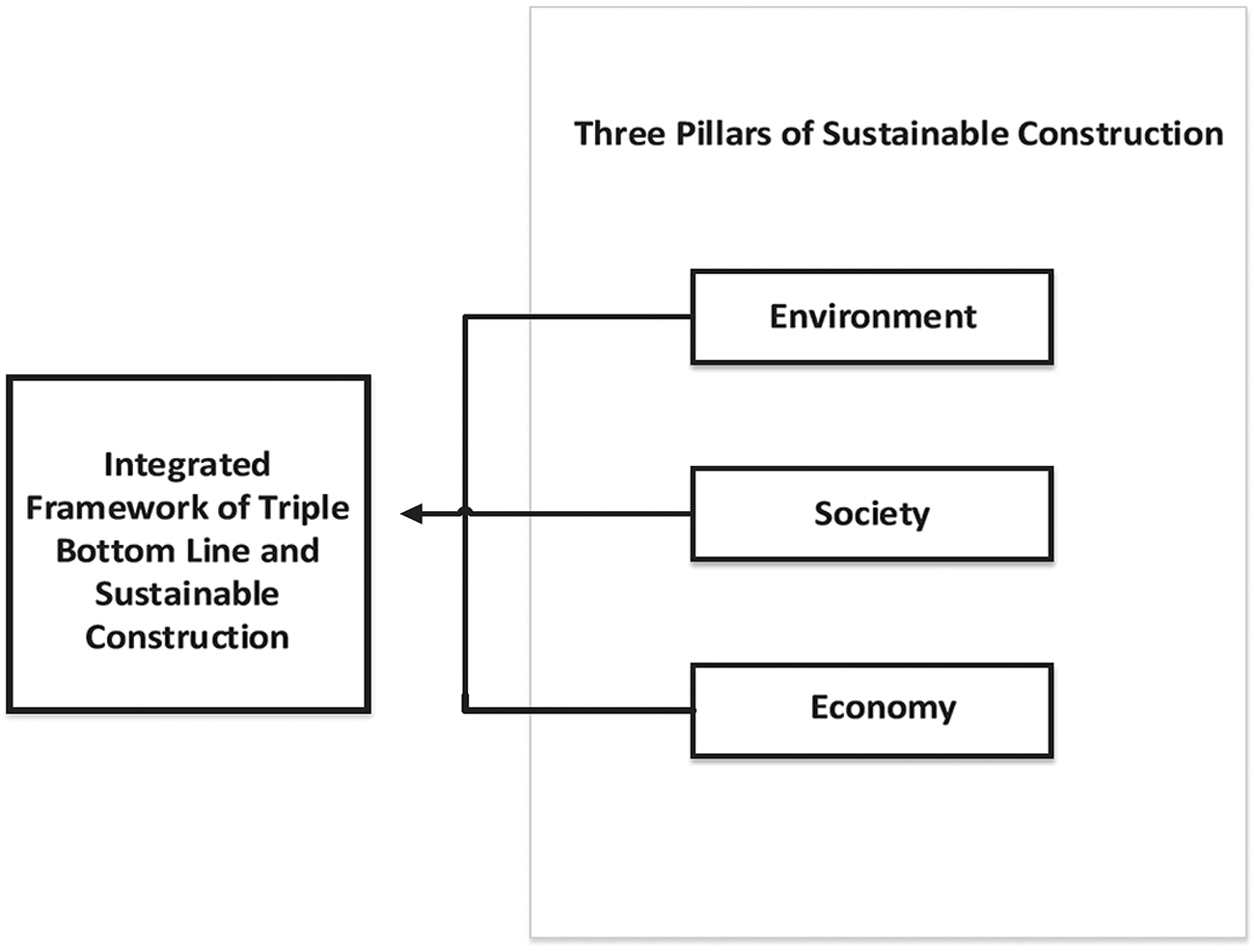
The integration of the three sustainability dimensions in sustainable construction (Adapted from Goh et al., 2020.)
Environmental Sustainability Performance
Environmental sustainability (ES) performance has been described as the way in which an organization's management approaches its operations and/or activities in order to ensure minimal impacts on the environment (Tseng et al., 2019). Key elements for engendering optimal ES performance are energy consumption, pollution control, material use, and non-product outputs (Opoku et al. 2019; Sezen & Çankaya, 2013). Also, eco-innovation has become very important as a strategic tool to achieve desired ES performance levels in supply chains (Tseng et al., 2019).
According to Tseng et al. (2019), optimal environmental sustainability performance makes good business sense and serves as a value proposition when adopted by suppliers and other entities to gain a competitive edge over and above their competition. The management of energy, natural resources, and waste have an influence on sustainability performance; failure to plan for a future in which environmental factors are likely to be increasingly significant may risk the long-term future of a business.
Environmental issues are also prime social concerns. Firms in industries that generate significant pollution may encounter strict governmental regulations, public protests by environmental activists, and increased negative media attention. Such firms have responded to these external critiques by implementing evolving strategies that assist and promote good ES performance and decrease their negative environmental impact (Hoffman, 2000). Evidence suggests that firms that reward their executives for environmental remediation actions have the potential of gaining legitimacy, leading to improved firm performance directly or indirectly (Coombs & Gilley, 2005).
Suffice it to say that organizations that manage, measure, and communicate their ES performance are generally considered to be better off than others who fall short in ES performance.
Improving Environmental Sustainability Performance in Construction
Reliance on project design or effective management of construction processes to minimize the incidence of adverse environmental impacts is not sufficient to handle the current ES problem. Sustainability assessment should take place before and during the design stage of a project (Awuzie & Ngowi, 2018). To be effective, such assessments should actually be carried out before any detailed design or even before a commitment is made to go ahead with the development. Some factors have the potential to influence ES performance and should be considered during this time, such as occupant behavior modeling and others (Hensen & Lamberts, 2012). Enshassi et al. (2016) concluded that improving sustainability performance in construction projects involves the delivery of infrastructure using environmentally friendly construction methods.
The construction and deconstruction phases of a project consume a large amount of energy, water, and raw materials (Banihashemi et al., 2020), which have environmental impacts that have been extensively addressed in the current literature and include the following: energy consumption, water use, noise and air pollution, waste generation, dust and gas emissions, resources, land use and pollution, and consumption of nonrenewable natural resources. The need to reduce the negative impacts of these construction activities has culminated in increasing pressure on construction organizations to adopt proactive, environmentally-sustainable strategies and actions in the design and construction process (Akadiri & Olomolaiye, 2012).
Various drivers for sustainable construction have been identified in the literature as enabling improved sustainability performance of construction projects (Awang and Iranmanesh, 2017; Bamgbade et al., 2019; Tsai et al., 2013). These drivers illustrate various strategies employed in the process and include the following:
Clients' requirements Availability of sustainable materials Increased investment in sustainable construction projects Incorporation of proven alternative technologies Affordability Reduction of energy use Availability of financial incentives Improved construction waste management Compliance with existing policies Reduced water use Competitive advantage (Awang & Iranmanesh, 2017; Bamgbade et al., 2019; Tsai et al., 2013).
Strategies for Improving Environmental Sustainability Performance in Construction Projects
All aspects of construction work require a specific level of knowledge in order to deliver an efficient final product. Experienced and trained employees are needed for specific work or tasks. Before operations can commence, workers must also be familiar with the laws and applicable regulations.
Reasonable practicability measures (Table 1) are some of the measures the principal agent and client should take to ensure adherence to environmental impact prevention before or during project life cycle. Table 1, complied from the literature, highlights strategies for improving ES performance on construction projects. It is expected that the deployment of any one, or a combination of any of these strategies, will contribute toward improved ES performance on construction projects. However, often, the deployment of these strategies has been undermined by barriers which are outlined in the next section.
Strategies for Improving Environmental Sustainability Performance on Construction Projects a
Complied from Yin et al. (2018)
Challenges to Improved Environmental Sustainability Performance
The drive for improved ES performance in construction projects is often undermined by a plethora of implementation challenges that prevent the industry from providing guidance for effective environmental practices. Although legislation and policies have been put in place to tackle these obstacles, effective implementation has continued to pose a significant challenge (Hamid & Kamar, 2012).
These challenges, as identified in the literature, are outlined in Table 2, which categorizes them as either internal or external barriers to improving ES performance. The internal barriers emanate from the internal processes of the construction project or organization; the external barriers lie outside the construction project or organization but impact ES performance.
Challenges to Improved Environmental Sustainability Performance on Construction Projects a
Walker, et al. (2008)
Research Method
To evaluate factors that influence environmental sustainability performance in construction projects, this study used a quantitative research approach, a method often used to elicit numerical data or data that can be converted into usable statistics. This method is also used to quantify and generalize results from a larger sample population and to obtain measurable data to formulate facts and uncover patterns in the research process. The objective is to plan and structure a research project so that validation of the research can be summarized (Saunders et al., 2016).
The study obtained data through a well-structured questionnaire, which was circulated to the respondents by the researcher working with research assistants and distributed at the workplaces of the relevant professionals. The goals were to: 1.) develop an understanding of the concept of environmental sustainability performance related to construction project delivery, 2.) evaluate and identify the factors influencing the environmental sustainability performance of construction projects in South Africa, 3.) to determine the key performance indicators (KPIs) for measuring environmental sustainability performance of construction projects, and 4.) to identify the various approaches to managing environmental sustainability performance in construction projects.
In total, 165 questionnaires were distributed among various construction professionals, including architects, civil engineers, project managers, quantity surveyors, construction managers, construction project managers, and health and safety officers, each working on different construction projects within the Free State province of South Africa. Of the total, 101 questionnaires were returned, giving an average response rate of 61 percent, which is considered an acceptable response rate (Sekaran, 2003). A total of 64 respondents failed to return their completed questionnaires despite several promptings by the researchers.
The profile of respondents' gender and age is detailed in Tables 3 and 4: 84.2 percent of the respondents were males and 15.8 percent were females. The largest cohort of respondents was between the ages of 31 and 45, making up 72 percent of the total respondents.
Gender of the Respondents
Age Group of the Respondents
Respondents all participated on a totally voluntary basis to avoid any ethical issues. Participants were required to give informed consent and were promised confidentiality to protect their privacy. Their identities remained anonymous throughout the research.
The questionnaire was personally administered by one of the authors working with research assistants, through visits to the workplaces of relevant professionals. They visited the relevant professionals' workplaces to personally administer the questionnaire. A questionnaire is defined as a research instrument comprised of a set of questions or other types of prompts that aim to collect information from an individual (Lavrakas, 2008). The quantitative research usually entails the use of closed-ended questions where the respondent is usually not offered an opportunity to elaborate on their thoughts. A questionnaire may or may not be delivered in the form of a survey, but a survey always consists of questionnaire (Bhat, 2019). For this research, a closed-ended questionnaire was used because it was easier to manage and analyze in relation with the study.
This research used descriptive statistics to analyze the data collection as this method helps to simplify large amounts of data. Data presentation and analysis used the percentages and frequency distributions of all the respondents. A five-point Likert scale was used to gather data from the questionnaires. For one scale, participants were asked to respond with: 1=strongly disagree; 2=disagree; 3=neutral; 4=agree; or 5=strongly agree. For the other scale, the response range was: 1=very significant; 2=somewhat significant; 3=somewhat not significant; or 4=not significant.
The computation of the mean item score was calculated from the total of all weighted responses and then connected to the total responses for a specific variable. The rationale for selecting this method was based on the principle that respondents' scores on all the criteria, considered together, are the empirically determined indices of relative importance. The index of the Mean Item Score (MIS) of a particular variable is the sum of the respondents' actual scores, on the five-point scale, as a proportion of the sum of all maximum possible scores on the five-point scale that all the respondents could give that criterion. Weightings were assigned to each response, from 1 to 5 for strongly disagree to strongly agree responses, and from 1 to 4 for the very significant to not significant. The MIS was derived using the following formula:
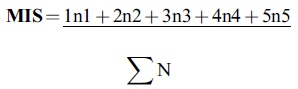
Where: n1=number of respondents for strongly disagree, n2=number of respondents for disagree, n3=number of respondents for neutral, n4=number of respondents for agree, n5=number of respondents for strongly agree, and N=total number of respondents.
Quantitative analysis deploys a syntax of mathematical operations to investigate the properties of data (Walliman, 2006). Statistics can be divided into nonparametric statistics and description, and parametric statistics, which can be further divided into description and inferential statistics. The quantitative data was analyzed statistically, and both descriptive and inferential analytical tools were adopted. The study deployed the Statistical Package for the Social Sciences (SPSS) version 20 to analyze various statistical tests to reduce the data to reasonable units for gaining meaningful insight. The MIS was utilized to rank the variables according to the participants' perceptions and then compare the variables across the categories of participants.
Cronbach's alpha (α), a statistical tool widely used by quantitative researchers, is used to test internal reliability or consistency within a group of items (Pallant, 2013). It measures scores on tools like questionnaires to determine their reliability. If the scores are deemed consistent, the questionnaire is considered reliable (Taber, 2018). Applied to the statistics gathered for the study, Cronbach's alpha values ranged between 0 and 1 (from 0.892 to 0.956); values closer to 1 signify high reliability of the scale.
Results
Responses to the survey were categorized as follows: demographics; degree of awareness concerning ES performance among respondents; drivers for improved ES performance on construction projects; measures that would enhance ES performance on construction projects; and respondents' knowledge of the degree of incorporation and/or prioritization of ES strategies on projects that respondents have been involved with.
Demographics
Table 3 illustrates the gender distribution of the survey respondents. The disparity between male workers in comparison to female workers suggests the male-dominated nature of the construction industry.
Table 4 shows that a majority of respondents were between the ages 31 and 45, and shows a large drop in respondents older than 45, also reflective of the profile of workers in the construction industry. Table 5 shows respondents' areas of specialization as follows: 6.9 percent were architects, 8.9 percent were civil engineers, 17.8 percent were project managers, and 18.8 percent quantity surveyors. Construction managers made up the majority, 33.7 percent, and construction project managers at 12.9 percent, and health and safety officers were part of remaining respondents.
Respondents' Area of Specialization
Awareness of Environmental Sustainability Performance
The ability of construction industry practitioners to adopt and implement strategies for improving ES performance on construction projects is related to their level of awareness and knowledge of ES (Chang et al., 2018; Pham & Kim, 2019; Tayeh et al., 2020). The questionnaire sought to establish their level of awareness/knowledge. Results indicated a considerably high level of awareness about ES, with 61 percent indicating that they were significantly aware of the phenomenon compared to 39 percent indicating that they did not have sufficient knowledge. (See Figure 2.) Given that wide margin, the study assumed that most respondents had some degree of ES experience.
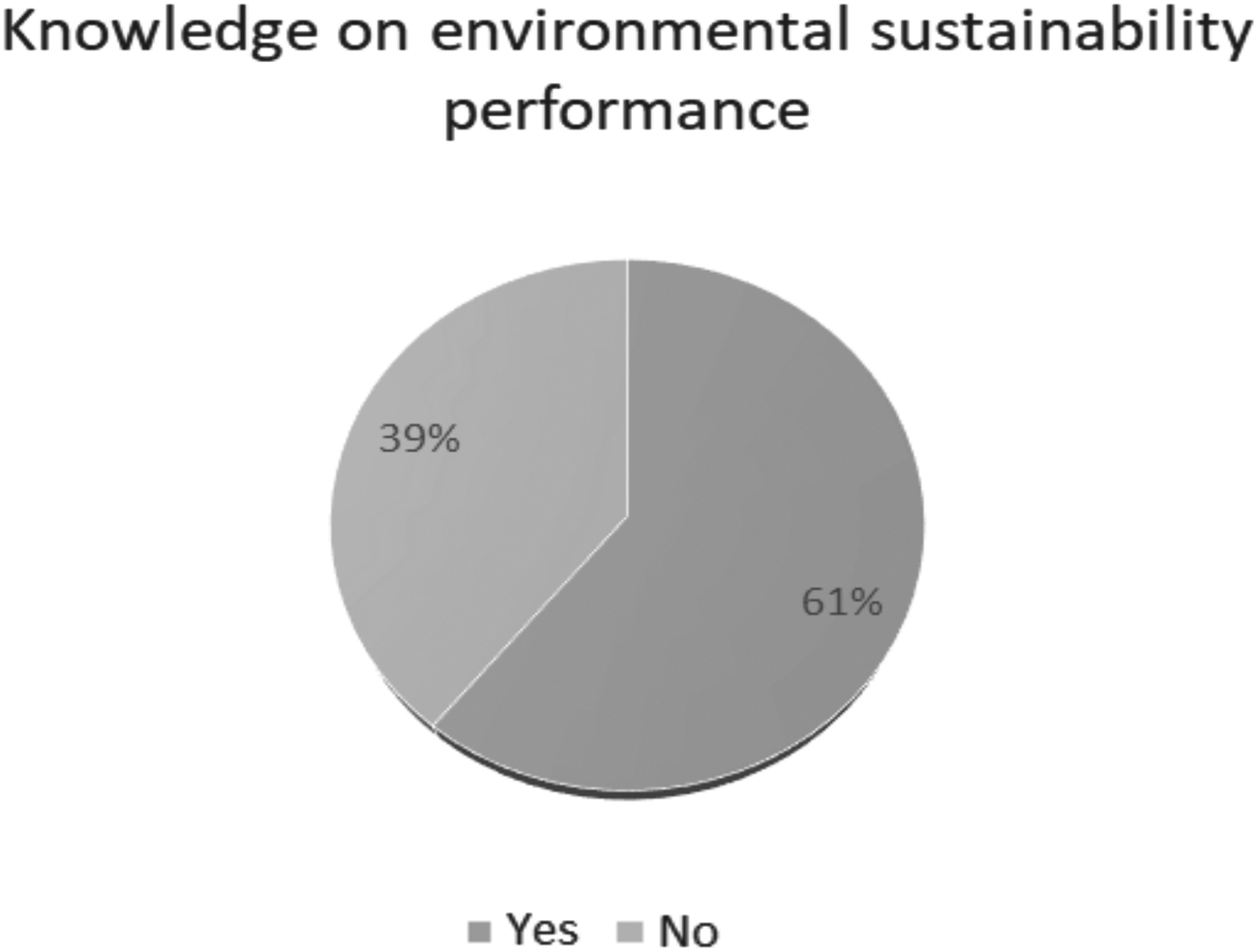
Percentage of respondents with knowledge of environmental sustainability performance.
Drivers of Improved Environmental Sustainability Performance
In the context of ES in construction projects, drivers are those measures that indicate what is needed to improve ES performance. Whereas the literature is replete with drivers for improved sustainability performance, studies seeking to highlight the drivers specific for improved ES performance are limited (Bamgbade et al., 2019). Table 6 displays the results regarding the drivers of environmental sustainability performance on construction projects, and Table 7 depicts a high reliability as the Cronbach alpha is 0.892, which indicates an excellent reliability and internal consistency. It was observed that the following drivers ranked highly among the respondents: clients' requirements; compliance with existing policies; quest for improved construction waste management; increased investment in sustainable construction practices; availability of sustainable materials; reduced water and energy use; and affordability. Ranking lowest were additional proven alternative technologies, more financial incentives towards environmental sustainability performance, and competitive advantage.
Drivers of Environmental Sustainability Performance
Reliability Statistics for the Drivers of Environmental Sustainability
These results align with the results from similar studies in different contexts (Roufechael et al., 2015; Yin et al., 2018). Construction project deliverables are usually prioritized based on the requirements put in place by the developer during the briefing phases. These specificiations are often used as KPIs for measuring and managing project success.
Strategies for Improving Environmental Sustainability Performance in Construction Projects
Table 8 lists actions that can be used to implement environmental sustainability performance on construction projects. A system to control materials used on site should be adopted; material wastage on site cannot be treated fully without materials control. Appointment of experienced contractors and consultancies are key to eradication of unsustainable building methods. Most loss of materials is attributable to poor decisions by site management. Table 9 provides reliability statistics for measures taken to improve environmental sustainability performance on construction projects. An excellent reliability is evident due to the Cronbach alpha of 0.956, as analyzed.
Strategies for Enhancing Environmental Sustainability Performance in Construction Projects
Reliability Statistics for Measures Taken to Improve Environmental Sustainability Performance on Construction Projects
Prioritization of Pro-Environmental Sustainability Strategy Implementation
To attain improved sustainability performance on construction projects, scholars have underscored the importance of identifying and prioritizing the implementation of various strategies within the scope of such projects. The attainment of improved ES performance is not an exception. Accordingly, respondents were asked if they thought the implementation of any one or more strategies for improved ES performance had been prioritized on construction projects that they had worked on. Their response is shown in Figure 3. The majority (61.4%) of the respondents indicated that implementation of the various strategies listed in Table 6 had not been prioritized in any of their projects. Another 36.6 percent of the respondents indicated that implementation of some of these strategies was prioritized in one or two projects, and 2 percent maintained that implementation of most of these strategies had been prioritized across three or more projects.

Prioritization of implementation of strategies for improving environmental sustainability performance in construction projects
Discussion
Attainment of sustainability measures, including the SDGs, in South Africa has been slow, as shown through the perspective of the population of construction industry professionals used in this study. It is evident from the results reported herein that the mere possession of a considerable level of awareness/knowledge of sustainable construction practices, particularly ES, does not translate into effective implementation of pro-ES performance strategies on construction project sites. Rather, the implementation of these strategies was shown to be largely dependent on drivers like client requirements and an increasing need to comply with existing policies and legislation related to ES improvement. This study indicated the importance of the role of clients, and to some extent, legislation, in enabling the implementation of sustainable and innovative practices in the construction industry, which has been confirmed in various other studies (Roufechael et al., 2015; Tayeh et al, 2020; Yin et al., 2018).
It should be noted that how the respondents perceived prioritization of ES strategies could be due to the non-specification of improved ES performance as a KPI for measuring construction performance by construction clients. This perception could serve as evidence to buttress the increasing inclination of clients in the developing world to focus on KPIs relating to lowest cost and other socio-economic performance indicators rather than on ES indicators, as reported in similar studies (Monyane & Awuzie, 2019; Sibiya et al., 2015).
Conclusion
The potential of the construction industry to make meaningful contribution to the achievement of furthering sustainability and toward meeting the SDGs has been noted. Conscious of this perception, over the past three decades, the industry has embarked on a transformational process to promote the incorporation and implementation of sustainable construction practices and business models across its facets. The South African construction industry has continued to experience performance challenges, which have impeded the attainment of improved environmental sustainability performance. Existing government policies have been found to be too weak to propel the required industry-wide transformation needed to improve construction project performance. The research reported in this article highlights the various factors influencing ES performance on a select number of construction projects within South Africa's Free State province.
This study relied on the perspectives of various construction industry stakeholders working on construction sites within the Free State province. Data was collected using questionnaires that were subsequently analyzed using descriptive and quantitative statistics. Results indicate an increasing need for construction education related to improved ES performance on construction projects. Such education will stimulate demand for implementation of identified strategies for improving ES performance. In addition, the need for improved enforcement of legislation and update of policies associated with ES performance on construction project sites was reinforced by the results of this study.
Lack of prioritization of ES performance improvement strategies within construction projects were shown to be a major obstacle. This study suggested the modalities for improving ES performance on construction projects. It is expected that the consideration of these modalities will facilitate an upward trajectory of the industry's contribution towards the attainment of sustainability measures, including the SDGs, within the South African context. The results of this study have important implications for stakeholders who want to improve ES performance in the construction industry.
Footnotes
Funding Information
No funding was received in connection to this article.
Author Disclosure Statement
No competing financial interests exist