




Abstract
In the remote communities of India, government policies have allowed for an increase in the share of solar energy-based technologies used by consumers, making the low-income households in these areas an emerging market for decentralized energy distribution. Despite the policies and involvement of both public and private energy developers, this market has not seen significant expansion in the last decade. Development is plagued by improper promotion strategies, incoherent financial models, and unpredictable markets. These missteps have fostered a negative perception of the technologies, which has a direct effect on low-income households and their ability to purchase renewable energy, impeding expansion of the energy sector. Decentralized solar energy technologies can serve as a major energy provider, but energy market developers have been tapping the wrong energy markets, leading to misappropriation of such technologies. This article explores the concept of energy poverty, with emphasis on solar energy markets and their potential to address the energy crisis in remote communities. It reviews the challenges and opportunities in this sector and suggests methods to accelerate their development.
Introduction
India is one of the fastest growing economies of the world. However, nearly 24,500 villages are located in a remote area that is not electrified (Nouni 2009). Energy infrastructure is crucial for a fast-paced economy, but is lacking, making it impossible to extend the existing conventional grid to the numerous isolated communities. Electricity is essential for developing the rural sector, including agricultural fields, which require electricity for agricultural development and agro-industries to expand. There are hardly any rural economic activities not affected by the lack of reliable electric power, which includes but is not limited to lift irrigation for food production, food processing, and food preservation industries, with power-intensive agricultural equipment.
Though there has been considerable expansion in energy production—344,000 MW at the end of March 2018 (Sharma, 2018)—as well as energy transmission and distribution, rural areas have not benefitted equally compared to urban areas. There are many communities in rural areas where it is exceedingly difficult to build and maintain the energy infrastructure required for seamless supply and distribution. Further, at present, due to cross-subsidization—charges levied on an industrial consumer against the free power or subsidized power given to other consumers, e.g., agriculture—and due to huge Aggregate Technical & Commercial (AT&C) losses, electricity transmission and distribution companies are finding it hard to expand and maintain the infrastructure in rural areas (Mishra, 2017).
Varied public and state-level initiatives have been undertaken by the government of India to improve solar photovoltaic (PV)-based technologies to address the challenges and the long-term objectives of the power sector (Sindhu 2017). These strategies have attempted to keep up with continually developing renewable energy technologies. However, these approaches require consideration of the needs and comfort of the target market, and these individuals are atypical supporters of decentralized energy access (Urpelainen, 2016). Although there are segments of the population that may not completely benefit from the current strategies, it is nevertheless important that their perspectives and voices are also heard throughout the developmental process. This article focuses on the relationship between remote communities and the developmental challenges of solar-energy technologies. Recent energy trends point to new technologies that may help overcome current shortcomings.
Framework for Energy Assessment
In India, total electric power generation capacity is 370,106 MW, yet approximately 1.3 billion people are without electricity (Zubi 2019). Most of these people are located in rural and/or remote areas of the country where GDP per capita is low and security problems (among others) are common. Although, various government programs are concerned about bringing electricity to remote and rural areas as part of the development of the country, extension of the central grid is not feasible; the need for restructuring the network entails heavy wiring and long transmission lines to the distribution end, making the cost prohibitive. A better alternative is deployment of distributed generation resources, or a microgrid (Zeb et al., 2014). This, too, has some challenges, mainly related to infrastructure, e.g., sizing and siting, storage, daily and seasonal weather patterns, all of which have to be addressed to provide reliable power and revenue. The grid code, which is a code that defines the technical parameter specifications for deployment of an electrical grid, should be followed (Yadav 2017).
In India, there are currently seven microgrid developers—OREDA, WBREDA, CREDA, Husk Power Systems, DESI Power, Malaysian Borneo (Green Empowerment), and Haiti. These developers represent currently available business models and funding (Li 2016).
Basic Needs Approach
One method for assessing energy needs utilizes certain predefined sets of minimal basics needed by the population. However, this approach assumes that all individuals have the same essential necessities, disregarding the possibility that their needs can change in intra social orders (Blair 2019). It is necessary to define the parameters of an energy poverty line to identify households that are energy deficient based on previous thresholds of energy usage. Although there are varied units used for measuring energy, for example Kcal (kilocalorie), kJ (kilojoules), and kWh (kilowatt hour) (Zeb et al., 2014), for the purposes of this discussion, the essential electrical energy unit of MW will be used.
CARES Approach
During an energy crisis, the Community Access Resource for Electricity Sustainability (CARES) approach is particularly useful (Blair 2019). Applied to a remote community, CARES first explores the cultural values of the population, both real and perceived, and then decides how best to provide electricity. (See Table 1.) Step 1 of the CARES approach is not directly related to electricity; it is an attempt to understand the local values of the people in the area and take an inventory of the existing equipment. All steps are indirectly linked to delivering electricity to the remote location.
Seven Steps of CARES Approach
From Blair, 2019.
Surveys of communities in rural areas indicate that a large portion of the people, especially those in remote areas, are poor and illiterate. They therefore find it difficult to read electricity meters, and because of their location, it is often a hardship to periodically travel to the electric company's office, which is usually located far from their village, to make payments. Further, it was found that whenever there has been a problem, for example a faulty meter or a problem in a local distribution network, the power companies were nonresponsive (Urpelainen 2016).
Under these conditions, it can take weeks or even months in some far-flung areas, to resolve a power outage. While hardship is relative, it is generally agreed that lack of electricity is a hardship (Alem & Demeke, 2020). That said, the idea of energy deprivation can be understood from Table 2, which provides the perspective of two individuals who view the concept differently. For both individuals, the perception of hardship is an eventuality that is either available or missing. Though both individuals may have a similar way of life, they think differently about what is reasonable, what is a priority, and what is necessary.
Contrast in Perspective of Two People in the Same Community
Understanding hardship is critical to understanding how individuals view their own prospects or conditions. A need for a light bulb cannot be assessed without considering how individuals perceive that need, and emotions often guide and impact perceptions. One person may feel that a cooling fan is a necessity while another may think it would be a nice thing to have, but is not essential to their fulfillment. Thus, the concept of energy deprivation is relative (Banerjee & Duflo, 2007).
Similarly, there is no universal agreement on what constitutes access to electricity. Access can refer to the percentage of people in a particular zone who have a minimum level of electricity available for consumption, or it can refer to the rate of electrification of individual households. Electricity is crucial for social and economic growth, so access to electricity underlies economic growth and is an important indicator of standard of living. However, 13 percent of the world population does not have access to electricity, according to 2016 data (Ritchie & Roser, 2018) mainly in Africa and Asia (Bisaga et al., 2017).
A government that does not believe people should be in the dark at night may define energy poverty as a lack of basic lighting. If the government believes that it is their responsibility for all people to have good illuminance and sufficient electric units for their well-being, then energy poverty is defined as all the resources that must be provided to ensure maximum satisfaction. If a public authority recognizes that individuals are living without electrical power once the sun goes down, energy poverty is defined as an absence of fundamental facilities. Additionally, if a public authority believes it is their obligation to ensure that all individuals have adequate illumination and electric units for their well-being, energy poverty is then defined as the lack of assets needed to guarantee these conditions.
There are several disadvantages of government policies to increase energy access. For instance, it is not a dependable strategy since the policy could change with change in administration (Bisaga et al., 2017). Power blackouts or shortfalls would have an immediate impact on energy access. Further, the poverty line becomes arbitrary if a nation produces surplus power but does not expand its own power sector.
Energy Disruption
Demand Aspect
There is a big difference in the energy demand in urban and rural areas. In rural areas, energy demand is mostly driven by the need for energy for cooking and agriculture, whereas in urban areas, the big industries and luxurious residences are among the many drivers of demand. The overall demand of rural areas and the degree of stress it will put on the grid is impossible to predict because there has been no measurement of the exact amount of the current energy demand. Therefore, a proper analysis of the details of energy consumption in rural and remote areas is needed.
Voltage and Frequency Control
Uncertainty about electric loads in rural areas is caused by voltage fluctuation. Poorly maintained transformers often cause voltage and frequency fluctuations at the nearest grid. Outdated submersible pumps, use of incandescent light bulbs, and power theft also impact fluctuations.
Daily Load Curves
There is currently no data about load calculation in remote areas. Such calculations would need to consider the change in energy needed for agricultural irrigation based on the season, weather conditions, and the stage of crops harvesting. Without this data, there is no way to monitor load curves since they change frequently, impacting power supply and quality.
Renewable Integration
Renewable energy networks are driven by policy incentives, goals, and financial markets. Distributed power creates resilience and provides economic benefits and can be achieved using environmentally benign technologies. Greater penetration of renewable energy makes it easier for the power grid to operate at baseload conditions, thus allowing supply and demand balancing for the grid. In addition, using solar energy-based systems can compensate for grid intermittency issues and transmission losses. However, except for large-scale solar PV farms, renewable energy is mainly connected to local levels of power distribution, which are often separate and disparate local systems that therefore do not play a large role in connecting to an electricity grid. At the local level, it is difficult for operators to monitor distributed systems and troubleshoot any disruptions. In addition, contingency analysis simulations, while taking renewable energy into account, undermine the overall load levels for a particular system.
Renewable Energy Impact
Denser penetration of renewable energy has basically changed the timing of daily peaks. Conventionally, electrical loads peak around 2 p.m. when commercial energy demand has reached its highest point; however, presently, loads peak after sundown. Moreover, crucial for grid operators, the daily load shape changes dramatically on sunny days. Figure 1 shows the duck load curve in which electrical demand ramps up during morning hours, peaks in midday, and drops gradually. On a sunny day, midday demand drops to the bottom of the duck's belly, and then rises back to peak post-sunset.
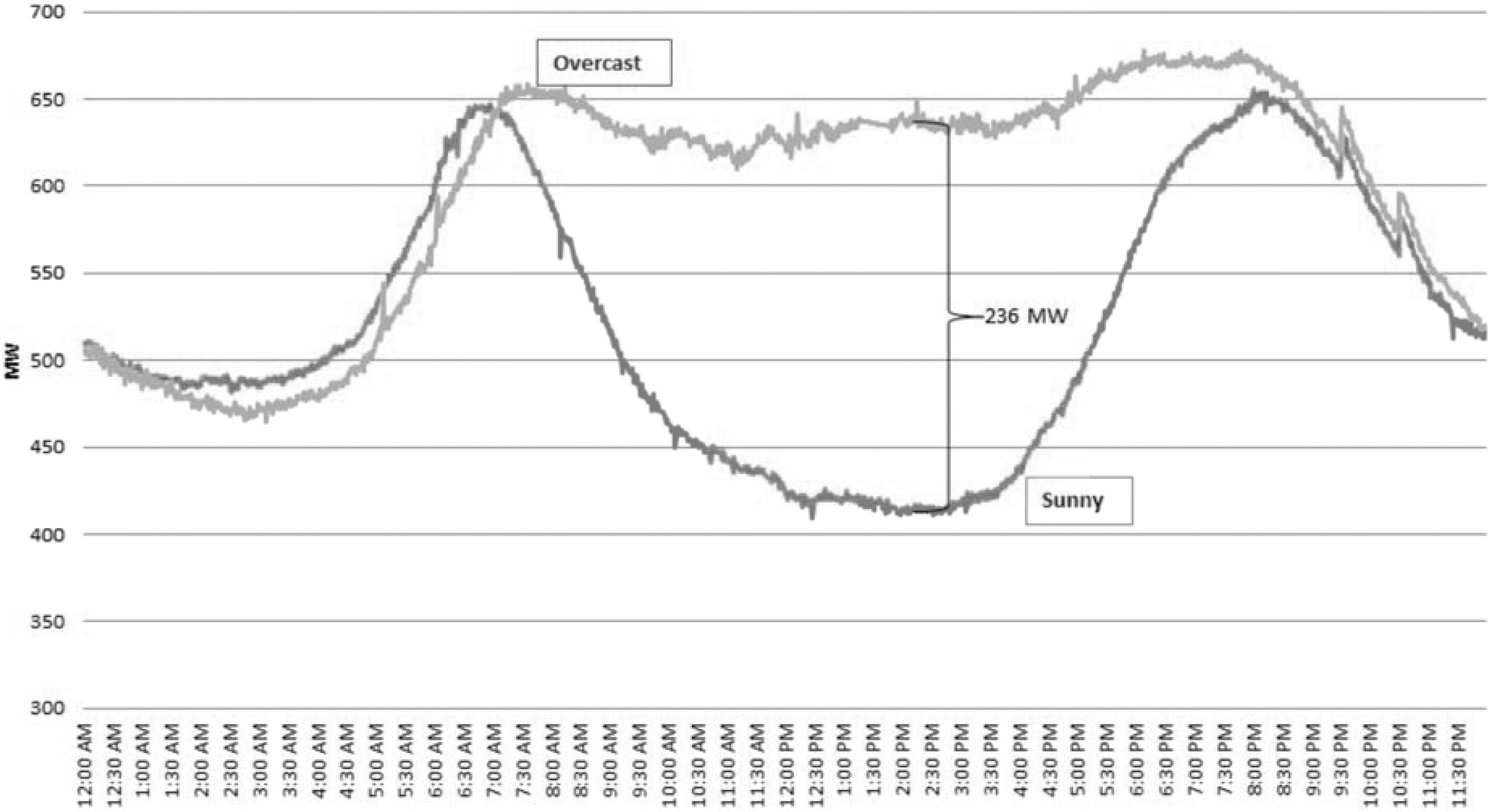
The duck load curve of power demand over the course of one day shows the imbalance between peak demand and renewable energy production (Pai & Hiremath, 2016).
Need for Renewable Energy
The government of India ought to focus on ensuring that the poor have access to the fundamental necessities (Sen, 1985), which includes electric power. However, given the intricate political structures, the focus has been on short-term fixes (Banerjee & Duflo, 2007). However, to develop the country, a long-term approach will be more productive and successful, and is needed, though it will require more effort and tolerance (Kaur & Sandhu, 2020).
Like any business, there needs to be sufficient demand for the product or service offered (Rathore 2018). To ascertain demand, businesses track the market and develop a business and financial plan, which will then help to determine the market for the product or service. Similarly, the metrics for the market in India for solar generated power needs to be determined. Because the government has not prioritized using renewable energy, its development has been delayed until recent years (Balachandra, 2011), and development has been slower in rural areas where there is actually a greater need given their unreliable and poor-quality power.
The Logistics of Energy
There is a positive correlation between energy access and the GDP per capita, which means energy access for poor people is restricted in developing or poor countries. Figure 2 shows the number of people with and without electricity access in India. The number of people who have electricity access has grown faster over the 16-year period shown; the rate of those people without such access has decreased, but much more slowly.

Population densities with and without electricity access in India, 1990–2016.
The rural population is a big portion of those with restricted electricity access. Such deprivation has several negative effects, for example, unsafe and unclean cooking, and dependence on burning coal, wood, and fossil fuels that create air pollution (Yadav 2020b). Almost, 2.8 billion people in India still depend on fossil fuels.
In an attempt to remedy this situation, many energy service companies have come forward to help improve the structure of rural electrification using a microgrid (Kaur & Sandhu, 2020; Nouni 2009). To improve sufficient energy access, decentralized systems that include solar energy-based businesses should be instituted. Greater energy access helps improve overall well-being. A minimum baseline requirement for electricity access is needed for the development of children, which includes a clean cooking environment and mitigation of air pollution. Education will help advance these ideas while contributing to reducing the impacts of climate change.
Solar energy-based products like solar mobile phone chargers, lanterns, pumps, solar home systems, solar cookers, and water heaters, among other items, are available in the market today (Rathore 2018). Such products are cost-effective, simple to operate, have practically zero after-purchase cost, provide ideal quantities of energy, and are more secure. In contrast to other energy products, solar-based systems require less specialized information to operate while also decreasing GHG emissions more successfully (Balachandra, 2011).
Extending the electrical grid in non-industrialized countries like India should be a priority. A large and complex country, India neglects assuring electricity coverage to over 30 percent of country territories and a large portion of the distant areas. Assessments by the International Energy Agency (IEA) of all developing countries show that to guarantee total energy access, off-grid and remote areas should be provided with 55 percent of the necessary energy. This ratio needs further study since the results could impact better determining the current hindrances to universal access (Mohanty 2017).
Prospects of Energy Markets
Cost and Income
The price of solar appliances is generally out of reach for most family units (Pachauri & Spreng, 2011), and people often prefer to pay smaller sums over time than a larger one-time payment, even if they will be paying more in the long run. For this reason, people often opt to buy power from the energy grid as it appears to be less expensive than the one-time cost of solar lighting systems (Kumar, 2016).
In India, the culture supports the idea of using credit as a way to assure appropriate accessibility and avoid a large up-front payment (Mohanti, et al., 2017). This behavior can also be observed in the purchase of vehicles, commonly done with financing plans, for example equated monthly installments (EMI), which permits consumers to pay for an item over time (Pachauri & Spreng, 2011). Most people, however, are not eligible for this type of credit and therefore turn to private moneylenders, companions/family, or banks. As per India's 70th National Sample Survey Office report, almost one out of three provincial family units is in debt (Singh, 2016). Local governments could help people in their communities to acquire solar energy devices on an individual basis by offering small amounts of short-term, low interest credit. Such a program would go a long way to helping make solar energy costs affordable while also helping to close the wealth gap.
Level of Satisfaction
In general, areas of India that have low power networks have exceptionally low energy costs (Sampaio & González, 2017). However, few people in the nation are happy with their lighting load (Yadav 2020a), exposing the broad need for more energy access and availability. The satisfaction level of people in regions that get sufficient or more power is not known, making it impossible to know much improvement is needed overall (Li 2016).
Almost 44.4 percent of rural families use lamp oil as a source of essential lighting (Ritchie & Roser, 2018). Lamp fuel is inexpensive yet terrible for indoor air quality, so much so that it can cause health issues like stroke, pneumonia, lung cancer, ischemic coronary illness, and constant obstructive aspiratory sickness (COPD) (Imami et al., 2020). Lamp oil utilization also poses safety issues, including risk of children ingesting it. Substantial reliance on lamp fuel invites accidents.
In certain regions, there may be power, but it is too weak to be useful. This is another point of dissatisfaction among the population in these areas (Mier & Weissbart, 2020). Energy companies that want to offer their services in these regions must be able to provide comprehensive credit plans that use clean fuel as a component and can be scaled up (Bouzarovski & Petrova, 2015; Hou & Urpelainen, 2020; Singh & Vashishtha, 2019). The cost of solar energy off the grid is lower than the cost of lamp fuel when factoring in the necessary time spent on travel to get lamp oil.
Basic Requirement
Everyone needs sufficient lighting, which consists of a specific number of appropriate lighting devices and a charging unit. These are basic possessions that should be present in every household (Herrington et al., 2017). Any additional lighting devices could be classified as extravagant in poor households because accessing them may require credit. As shown in Figure 3, the solar-powered energy markets are fundamentally focused on reducing the energy burden of the grid and supporting the business sectors in India. In contrast, business sectors in other countries do not address the large amount of energy waste (Rathore 2018). In India, people are not used to energy wastage; rather, they try to preserve energy because it is expensive and not common in average middle-class and lower-middle class family units. Financial models need to consider this while planning to advance solar energy access.

Global solar energy market size and trends (Murdock, 2019).
Safety
Inadequate lighting is also a safety issue, both in the home and in the streets of rural environments. In a home, there are hazards navigating a space that is poorly lit and possibly crowded. Outside of the home, dark environments make it easier for criminals to hide and prey upon the vulnerable. Women are especially vulnerable to crimes such as kidnappings, assaults, and theft, and the entire family unit is generally defenseless against such dangers (Bose et al., 2018a). Legislation that would assist remote areas by supplying outdoor lighting would enhance security.
Effect of Chinese Markets
Many solar generated products available in India are made in China and marketed to people in rural parts of the country. Although these items are cheaper than others on the market, they do not come with a warranty of any kind, compared to other products that do. In addition, they require maintenance (Kapoor 2017). If these Chinese-made products break, their owners are not likely to have the money to repair them. This experience reinforces the idea that solar-powered lighting is unattainable for them. Unfortunately, the Chinese market for these items continues unabated while the market for more costly items of better quality that have some sort of warranty have lost market share (Rathore 2018). Most of this is attributable to the absence of legitimate information on how solar-powered devices operate and how to maintain them.
The government in India has not attempted to control the importation of solar-powered devices from China. In the first half of fiscal 2016, India imported from China solar-based lighting devices and sun powered PV cells valued at USD $826 million (Kapoor 2017).
Developmental Perspective for Solar Energy Access
Across the literature, there is evidence that individuals who access energy networks in remote areas of the country have low levels of trust toward local privately owned businesses. On the other hand, their degree of trust is significantly higher toward government specialists who support solar-generated energy products. Thus, the government specialists should assume a vital role in providing power to the people in these areas, many of whom depend on grid power and expect the government to expand the grid rather than offer decentralized networks of renewable energy.
Given the public absence of trust in private businesses and vendors, these industries may want to figure out a way to enlist trust among their consumers. The government, however, has not stepped up to fill the gap and it only advocates one type of solar-powered device. The NGOs working in these parts of the country push only certain types of solar-energy devices. A public-private partnership might be able to advance trust to encourage people to change to solar powered products. As shown in Figure 4, many countries have addressed energy with new policies that advance renewables. Power policy components include feed-in tariffs, net metering, premiums, tendering, and renewable portfolio standards. Heating and cooling policies include solar heaters and refrigeration systems. Transport sector policies include blending of biodiesel and bioethanol fuels and similar mandates.

Since 2004, many countries have increased their support for renewable energy policies (Hasbani, 2020).
The Gram Panchayat, the local government bodies of rural India, could endorse solar-energy products to help bridge the gap in trust (Balachandra, 2011). Promotion strategies could help ensure positive public perception and increased usage. Financial models and subsidy schemes, along with technological improvements, could help drive policies that could significantly increase the market share of such decentralized energy products.
India is the fourth largest energy consumer in the world. The Ministry of Power has reported that the country's per capita electricity consumption in 2018–19 was 1.181 kWh (Yadav 2020a). The present government plan to boost the manufacturing sector and rural food processing industries will help double the country's estimated energy consumption by 2040. Per India's 2011 census, of the 1.21 billion Indians, .833 billion lived in rural areas while .377 billion were living in urban areas. According to the National Statistical Office (NSO) 76th round survey, Drinking Water, Sanitation, Hygiene, and Housing Conditions, about 93.9 percent of households in rural areas and 99.1 percent of households in urban areas had used electricity in for domestic uses (National Statistical Office, 2018).
Countries in the Asia Pacific region have made significant progress in connecting remote communities with electricity. (See Figure 5.) This region of the world is home to three-quarters of the 570 million people worldwide who gained electricity access between 2011 and 2017. However, an estimated 350 million people across the developing nations lack access. In this regard, India achieved a significant milestone in 2018 when it announced complete rural electrification; however, this does not mean that every households in each region had access to electricity.
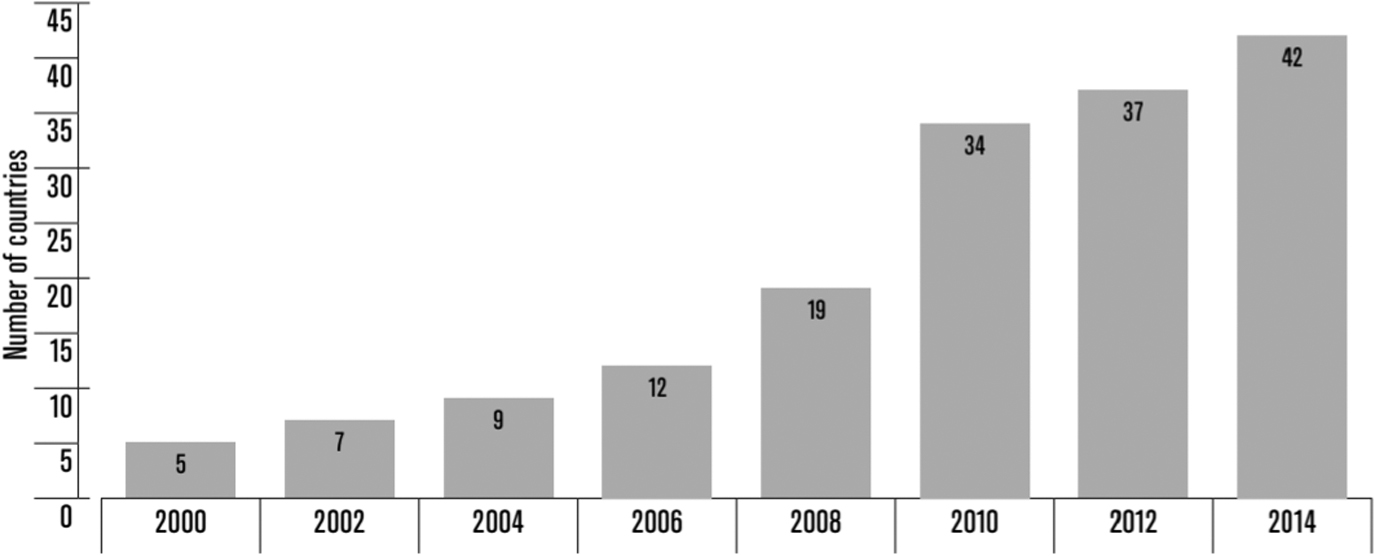
Electricity access overview in selected Asia Pacific countries, in the timeline contrast from 2000 and 2014 (Yadov et al., 2020b).
Subsidies and Incentives
Right now, most rural communities are very much reliant on lamp oil for lighting, which is driven by government sponsorship of lamp fuel (Ritchie & Roser, 2018). Various alternatives, for example, changing the subsidies from lamp oil to solar energy-based devices, should be investigated.
The government has a choice in changing the current subsidies. Should the government decide to make the switch, it is likely to increase utilization. However, the caveat is the 1981 example of the solar cooker program under which most of the purchases were made because of the subsidies and the cookers were never widely used (Imami et al., 2020).
Quality Benchmark
The current policy framework is inadequate for supporting solar-based devices for lighting (Ali 2020). Approaches to promoting these policies ought to incorporate a rating system for every device that would help consumers make more educated decisions. Other measures that might instill trust would enhance those organizations that earn it while eliminating those who do not. Guaranteeing quality in sun-based devices would likewise expand rivalry among engineers as they compete to develop better quality items at reasonable costs.
Financial Models
Government subsidies could be extended to also include families in towns who cannot easily bear the cost of a solar-powered system. One method would be to guarantee simple credit lines and/or microloans, financed at the local area through special reserve funds (Mahajan 2020). Town committees could likewise provide simple financial models for investments that lead to better electrical accessibility. These aspects of policies are likely to help increase people's trust toward such initiatives. Like SELCO, an ever-increasing number of solar energy-based businesses need to establish a more productive relationship with neighborhood banks in the rural areas that they serve (Maertens & Swinnen, 2009; Pai & Hiremath, 2016). Reliable credit cooperatives and micro-financing organizations could act as guarantors of credit.
Businesses and organizations engaged in a specific region can focus on specific policies that could help develop and reinforce a positive relationship with the consumers. Forming partnerships could expand their reach to other areas besides solar-based devices so as to include other organizations that are involved in the supply chain. Priority should be given to stable financial institutions to guarantee consistent deployment of loans. One strategy could be to get endorsements from other businesses that people trust (Maertens & Swinnen, 2009). While the models and plans make a solid authoritative structure and monetary dependability, society contribution helps in making the market itself by spreading information. With financial matters kept under control while acquiring trust, the odds increase for expanded recipients.
Outlook
As a start, in the upper working class and wealthier sections of the country, the government could push independent grid-based power generation since this population can manage the cost of renewable energy. Sections of the country where the grid has not yet been extended could be incentivized to install sustainable alternatives such as solar home systems (SHS). The wealthier segments of the population advocating for alternatives could be key to making them popular. Where there is minimal or no basic electrical power, there will be no need to move from fossil fuel-based energy to renewable (Yadav, 2020b).
For the average rural household in India, minimal electricity is sufficient to run two to three compact fluorescence light bulbs for lighting purposes and basic appliances such as ceiling or table fans and various electronics charging ports. In the rural settings, meters are not generally available to monitor electricity consumption, but where meters have been installed, they are often tampered with to change the readings. In addition to household needs, electricity is needed for agriculture and running irrigation equipment (Urpelainen, 2016). Electricity should be provided to the farmers at subsidized rates through various government initiatives as part of support to the rural infrastructure.
Off-grid, or decentralized electricity, solutions are the only feasible option to fulfil the steadily rising demand for electricity in rural India. One central government scheme, called Kusum Yojana, is a strategy that would boost off-grid solar energy in rural communities. Such strategies would be a big step toward reducing energy poverty in rural areas.
Conclusion and Discussion
Energy poverty as a concept needs redefinition and the strategies to provide electricity access should begin with essential necessities and lead to sustainable forms of energy. The focus should be on providing universal access to clean energy to individuals. Absence of attention to solar energy-based innovation in micro-networks has created an endless loop that omits and therefore cripples the off-grid market. Low-income families are reluctant to bear the significant expense of home-based solar appliances. Their mistrust of the devices and financial mechanisms that would enable them to benefit such devices paves the way for government policy and marketing strategies that could change these perceptions. Off-grid sectors in rural India can achieve high solar-energy penetration through effective promotion strategies supported by the government, local councils, and private developers. The presence of Chinese products in the Indian market has further eroded the quality of solar energy-based products in a continuously changing global business sector.
Strategic expansion in this sector will come through subsidy; however, the government must carefully analyze the situation to determine whether this subsidy provides energy freedom or results in systemic corruption.
Establishing benchmarks for reliability of electrical access will foster trust in clean energy and the idea that it can improve people's lives. Incorporating microgrids is a sustainable solution for areas where grid electricity is not yet available. Research has shown that private developers in the energy sector have been tapping the wrong market for some time and therefore have misidentified their proper customer base. Recommendations include the endorsement of solar off-grid appliances to upper middle-class populations as well as others and opening the market to private players across the spectrum to help expand their market share. The goal is to extend low-grade power to non-electrified rural communities that have no history of using the grid in order to enable these areas to become more sustainable, economic powerhouses.
As the world copes with COVID-19, there is a potentially even greater economic catastrophe waiting: the conditions of poverty and hopelessness may well set the scene for the next great epidemic, particularly if governments keep pursuing the same strategies that have failed so abysmally in the past. This evokes a greater need for new policies that offer ways to bridge the disconnect.
Footnotes
Acknowledgments
The authors acknowledge the inputs received from both Shoolini University, Solan, Himachal Pradesh and University of Petroleum & Energy Studies, Dehradun, Uttarakhand, India.
Funding Information
No funding in connection to this article was received.
Author Disclosure Statement
The authors declare no conflict of interest.