




Abstract
Utah suffers from some of the worst air pollution in the nation from inversions during its winter months. Since 2015, the authors have led a growing annual high school public service announcement (PSA) contest that teaches teens about the air pollution implications of their new driving privilege and driving/transportation strategies to help preserve air quality (e.g., refraining from idling, carpooling, taking the bus, etc.). Creating a clean air PSA is a hands-on, action-oriented undertaking that motivates contestants to think about what they can do to tackle local air pollution and how they can influence others to adopt clean air actions. Past survey evaluations of contest participants indicate a higher likelihood to engage in air pollution-reduction behaviors after the contest and that the teens engage and influence their parents and family members to follow suit. Drawing on semi-structured interviews with nine contestants and their parents/guardians (n=19), this study investigates 1.) teens' perceptions and experience with the contest and how its design and implementation contribute to their understanding of Utah's air pollution and motivations to adopt clean air actions; and 2.) what aspects of the contest trigger teen engagement with their parents/guardians about air pollution. Findings illuminate how contests may be designed to motivate adolescents to adopt more sustainable behaviors and become persuasive environmental change agents within their families.
Introduction
Various valley regions along Utah's heavily populated Wasatch Front suffer occasionally from some of the most polluted air in the country, especially during the winter inversion months (Scribner, 2017). Under normal weather conditions, air is warmer near the ground and cooler at higher elevations. Inversions occur, however, when the situation reverses due to cold snow-covered valley floors reflecting rather than absorbing heat, preventing the normal vertical mixing of warm and cold air. Thus, warm air aloft becomes a lid and traps cold air, along with unhealthy emissions from cars, buildings, and agriculture, onto valley floors. Cars and trucks account for about 50 percent of Utah's air pollution in the winter (Utah Department of Environmental Quality, 2021). Of particular concern is particulate matter (PM)2.5 concentrations that are formed through chemical and photochemical reactions in the atmosphere from nitrogen oxides, volatile organic compounds, sulfur dioxide, and ammonia (Martin et. al., 2016). A typical Utah winter sees about five to six multiday inversion episodes and, on average, 18 days with high PM2.5 levels exceeding the National Ambient Air Quality Standard (Utah Department of Environmental Quality, 2021). Often, a strong storm or low-pressure system is needed to clear out the inversion, but fresh snow on the ground can start the cycle over again.
For many Utahns, the murky haze is viewed, with chagrin, as being beyond their control (Stafford, 2014). People need to drive and heat their homes (through natural gas, propane, and wood-burning stoves), and local dairy and farming operations have existed since the 1850s when the Mormon pioneers settled the region. Nevertheless, exposure to PM2.5 emissions has been linked to a variety of cardiovascular and respiratory ailments, cancer, low birth weight, autism, premature death, depression, and even suicide (Stewart, 2014). Additionally, the U.S. Environmental Protection Agency has designated various Utah counties as nonattainment areas for the National Ambient Air Quality Standards, mandating that the state develop plans to reduce pollution concentrations to safe levels (Utah Department of Environmental Quality, 2015).
In October 2014, approximately 100 concerned residents, business owners, local and state policy makers, university faculty, and students convened at the inaugural Cache Clean Air Consortium summit at Utah State University to discuss the status of the science, policy, and outreach efforts concerning local air pollution (Stafford & Brain, 2015). One of the summit's conclusions was that too many segments of Utah's population remained unaware or unconcerned about air pollution, and education outreach was insufficient. For example, there were no programs targeting high school teens who were abandoning the bus to drive to school. Given that local air pollution was likely the most salient sustainability issue facing Utah teens, causing asthma, respiratory illness, and other physical and mental health problems, the question arose about how to make clean air relevant for them and empower them to engage in appropriate driving behaviors.
Consequently, as part of a university-community outreach initiative to address local air pollution, the authors piloted a clean air contest at a local high school in 2015 (Stafford & Brain, 2015). Since then, the initiative has evolved into the annual Utah High School Clean Air Marketing Contest, engaging hundreds of teens in high schools from southern Idaho (which shares Utah's airshed) to southern Utah. The contest teaches teens the air pollution implications of their new driving privilege as well as responsible driving and transportation strategies to help preserve air quality (e.g., limiting idling, carpooling, taking the bus, trip-chaining, etc.). Combining environmental science, art, and marketing, teens create public service announcements to appeal to their high school peers and Utah citizens about ways to preserve air quality. Winning PSA images are then used for education outreach across the state (Utah State University, n.d.-b)
Survey evaluations of contests in past years indicate that contestants report a greater willingness to act in ways to preserve air quality, such as refraining from idling or carpooling (Stafford & Brain, 2015, 2017). Additionally, the contest encourages teens to converse with and persuade their parents to do the same, in what is called “the inconvenient youth” effect, and parents report generally welcoming such interactions (Brain McCann et al., 2018).
Study Objectives
Building on past evaluations and drawing on semi-structured interviews with nine contestants and their parents/guardians, the purposes of this study are two-fold:
Explore how teens' experience with the contest affects their understanding of local air pollution and motivation to adopt clean air behaviors Uncover how the contest triggers teen engagement with their parents/guardians (or other family members) about air pollution and parent/guardian response
Insights drawn offer a better understanding of how adolescents may learn and adopt sustainable behaviors and disseminate sustainability information to their parents and families. These insights offer guideposts for designing effective environmental education outreach initiatives encouraging youth to become persuasive change agents.
Education Contests, Commitment-Making, and the Inconvenient Youth
A systematic review examining a broad array of environmental education programs aimed at K-12 children found that such initiatives overwhelmingly increase students' environmental knowledge, attitudes, competencies, and behaviors (Ardoin et al., 2018). Aside from the long-standing National Conservation Foundation Envirothon competition, which reaches over 500,000 students annually and is the largest high school environmental competition in North America (Pineau, 2014), one form of environmental education that has not received significant attention is the use of various contests and competitions as a means of driving behavior change (for exceptions, see Brain McCann et al., 2018; Stafford & Brain, 2015, 2017; Weiser, 2001).
High school competitions have been widely employed for decades in a host of other disciplines, including computer science, mathematics, business, robotics, and music, as a means of attracting students into those fields (Qidwai et al., 2013), and they may involve exams, tournaments, fairs, performances, presentations, and submissions (Neubert, 2016). High-profile competitions such as the U.S. Department of Energy's National Science Bowl, the Congressional Art Competition, and the Blue Ocean Competition (for entrepreneurship) engage thousands of teens annually, motivating them to learn, stretch their talents, and have fun (Kuech & Sanford, 2014).
Despite the prevalence of educational competitions, there is significant debate about their merits (Verhoeff, 1997). Specifically, competition can lead to student stress and anxiety, disappointment, and a potentially destructive focus on winning rather than learning or working as a team (Cumberland, 2017).
Advocates, nevertheless, proclaim that educational contests may spark the joy of learning and self-discovery that is difficult to replicate in the classroom (Ozturk & Debelak, 2008). To be competitive, students often need to study and learn new information or strengthen previously learned material. It encourages students to respect the quality of others' work and better assess their own performance among their peers. Davis and Rimm (2004) report that some students often need competition to push themselves to produce at a higher level. Academic competitions build resiliency, teaching children how to succeed, how to handle and recover from failure, and subsequently learn and improve—skills necessary for later in life (Verhoeff, 1997). Finally, contests can make education exciting. Abernathy and Vineyard (2001) found that students' number one reason for competing in the Science Olympiad, for example, was because they believed it would be fun.
For sustainability, research is needed to understand how contests and competitions may be employed as effective learning tools. Verhoeff (1997) asserts that designing effective competitions is challenging, and enthusiastic contest organizers are critical for success. Additionally, a contest's three main phases warrant careful attention and transparency.
The preparation stage requires providing or communicating to contestants the types of knowledge needed, rules, competition tasks, and judging procedures. During execution, students need support and coaching to be inspired to perform competitively. The contest challenge must have many possible solutions that are not obvious initially to encourage contestants to discuss and explore new creative ideas with their teammates or, if allowed, with others (Gregson & Little, 1998). Finally, during follow-up, results must be analyzed and presented in a transparent way so that winners can be distinguished and celebrated while others can receive feedback on their performances for future improvement (Gregson & Little, 1998).
As with other forms of environmental education, contests should empower students with improved awareness, attitudes, and commitment to engage in more sustainable behaviors (see for example, Ardoin et al., 2018). Drawing from the social psychology literature, Cialdini (2001) has identified four critical features of commitment-making that increase the chances of long-term behavioral follow-through, including that the commitment should be 1.) active rather than passive, such as writing a statement rather than just reading about it; 2.) made in public or have the potential to be publicized so that others are aware of it; 3.) effortful or difficult; and 4.) perceived by the individual to be voluntary or freely chosen. Thus, a contest's competitive task should be active, public, effortful, and freely chosen to increase the chances of long-term behavioral change among contestants.
Finally, a common aspiration of environmental programs has been participants' sharing of their new knowledge with parents and families and their influence in getting them to engage in more sustainable behaviors, sometimes dubbed “the inconvenient youth” effect (Stafford & Brain 2017). In 2007, the Wall Street Journal reported on the potentially annoying trend of how school environmental programs were inspiring youth to pester their parents about sustainability issues and behaviors, and begrudgingly parents felt compelled to comply (Gamerman, 2007). While meant to be an amusing take on child-parent relationships, Gamerman's article echoed the established premise in academic literature that children can educate and influence their parents, families, and communities about environmental behaviors (see for example, Vaughan et al., 2003).
Adults are notoriously difficult to reach for teaching sustainability issues (Ballantyne et al., 2001). Between work and rearing children, adults have little free time, and there are few institutions in which adults are part of a captive audience. Consequently, for many parents, the primary way they receive up-to-date sustainability information may be via their children. Indeed, many social advocacy campaigns target youth as a proxy to reach adults and families. For instance, the success behind the well-known Smokey Bear “Only You Can Prevent Forest Fires” campaign is its call-to-action aimed at school children, who in turn educate their parents about campfire safety (The Advertising Council, 2004).
It has long been recognized that youth can exhibit strong influence on parental attitudes and behaviors. A review by Kuczynski et al. (2016) identified four conditions needed to make parents open to their children's influence: 1.) the child's petition makes sense; 2.) the child appears to be mature enough to understand the issue and/or speaks from authority; 3.) the child is passionate, expresses a sense of responsibility, and/or conveys vulnerability concerning the request; and 4.) the parent wants to maintain a mutually agreeable relationship with the child.
In the context of environmental education, however, past research finds that the ability of youth to influence parents' environmental knowledge, attitudes, and behaviors is not always automatic (Straub & Leahy 2017). Indeed, Duval & Zint (2007) reviewed intergenerational impacts in environmental education and found only modest potential, though none of the reviewed studies, involved contests or competitions. Their research did discern several conditions and pedagogical strategies for designing environmental education that may facilitate intergenerational conversations and influence. These conditions include student's status in the family and parent acceptance of students' knowledge and expertise on environmental issues; perception of schools serving as credible sources of environmental information and guiding action on local problems; parent involvement in student activities, such as homework; and community involvement in school activities, such as service-learning projects in which students seek to solve local problems or meet community needs. Pedagogical strategies included hands-on, action-oriented activities in which students and parents work together to solve problems; adequate time for in-depth learning of issues; and a focus on local issues that may have a higher level of inherent relevance. Employing enthusiastic teachers was also identified as facilitating intergenerational effects. Research needs to examine if contests, as a vehicle for environmental education, can involve these conditions to help facilitate youths' engagement with and influence on their parents.
In summary, research is needed to investigate how environmental contests may empower youth with improved knowledge, encourage adoption of more sustainable behaviors, and disseminate sustainability information to influence their parents and families. This investigation of the Utah High School Clean Air Marketing Contest attempts to better understand environmental contests and how they may foster contestant commitment to clean air actions and facilitate intergenerational conversations and influence.
Contest Design and Implementation
Preparation
The Utah High School Clean Air Marketing Contest educates teen drivers about Utah's winter air pollution and adopting driving and transportation strategies to help preserve air quality through a fun public service announcement (PSA) design competition. Each fall, the authors engage students in dozens of high school art, business, and environmental science classes, and club meetings via a high-energy 50-minute presentation. Topics include the science behind Utah's winter inversions and associated pollution, driving/transportation strategies that can help preserve air quality (e.g., refrain from idling, carpooling, etc.), and persuasive marketing and advertising appeals such as call-to-action, rational, bandwagon, emotional, parody, etc. (Stafford & Lamm, 2016) using past contest-winning PSAs as examples (Utah State University, n.d.-a). Constructing the PSA entries becomes a class assignment or club activity.
Execution
By design, the contest attempts to instill commitment-making to anti-idling and other clean air actions through contestants' hands-on, action-oriented development of compelling PSAs. Following Cialdini's (2001) four critical features of commitment-making (active, public, effortful, and freely chosen), the act of creating a PSA is an active rather than passive task. Contestants create their PSAs publicly alongside their teachers (as homework), families, and peers, and winning entries are displayed publicly in schools across the state, in the news, and on social media. Thinking like a marketer to create a competitive, persuasive PSA is effortful, requiring ingenuity and problem solving, and while the PSAs are required class/club assignments, contestants may design their PSAs around whichever clean air action and creative art and marketing message they wish, with encouragement to tie in to their knowledge of popular culture.
Students are urged to have fun and make their PSAs entertaining and provocative. The best PSAs are often funny, edgy, terrifying, and reflective of teen pop culture. For example, Figure 1 shows a PSA incorporating a parody of Baby Yoda from the popular The Mandalorian series. Figure 2 presents a 1970s retro parody of the Neil Diamond song, “Sweet Caroline.” Figure 3 features a parody of the Beatles' Abbey Road album cover. Figure 4 uses humor to point out the pollution implications of using fast-food drive-thru lanes.
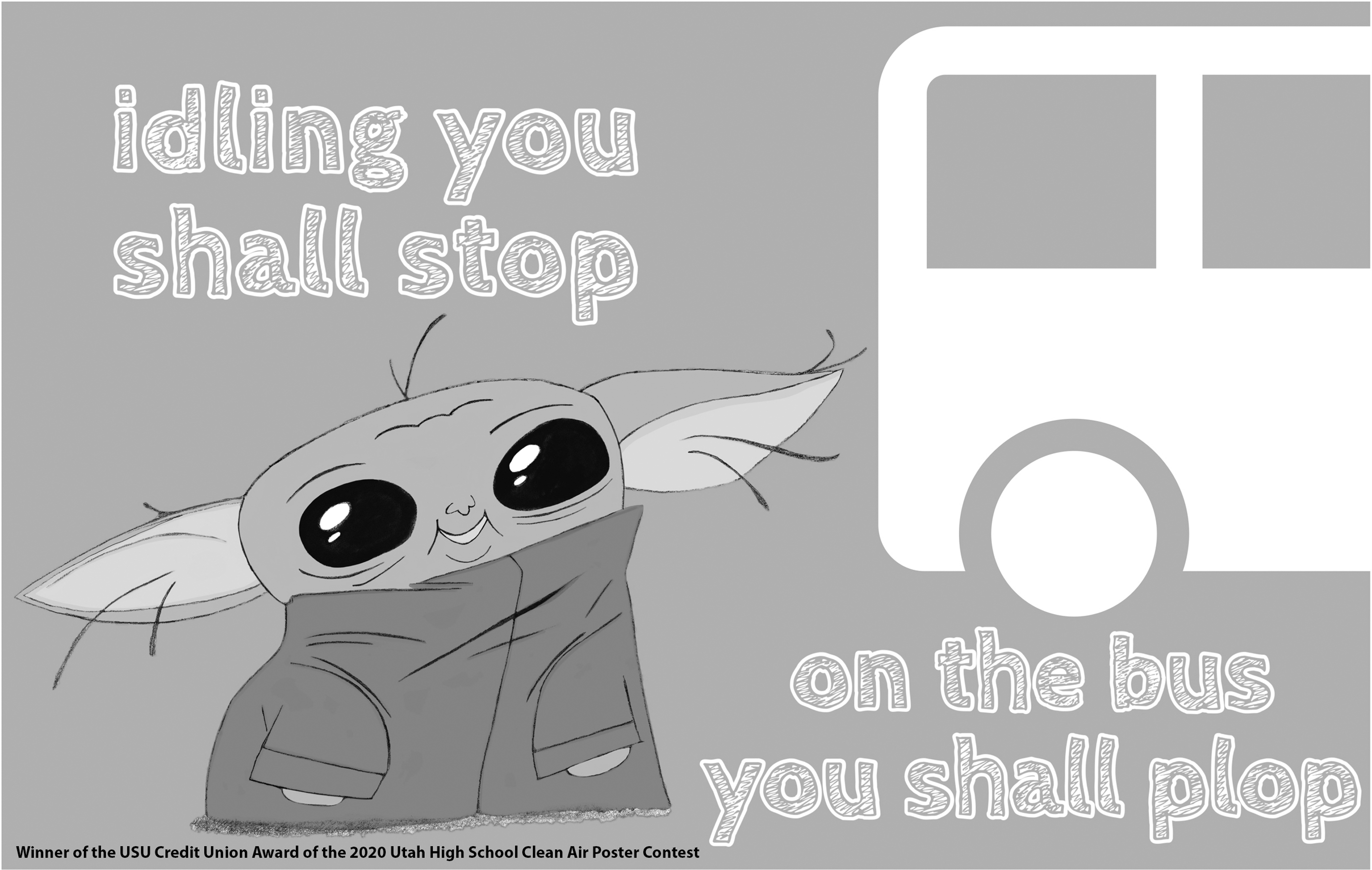
Parody of The Mandalorian's Baby Yoda
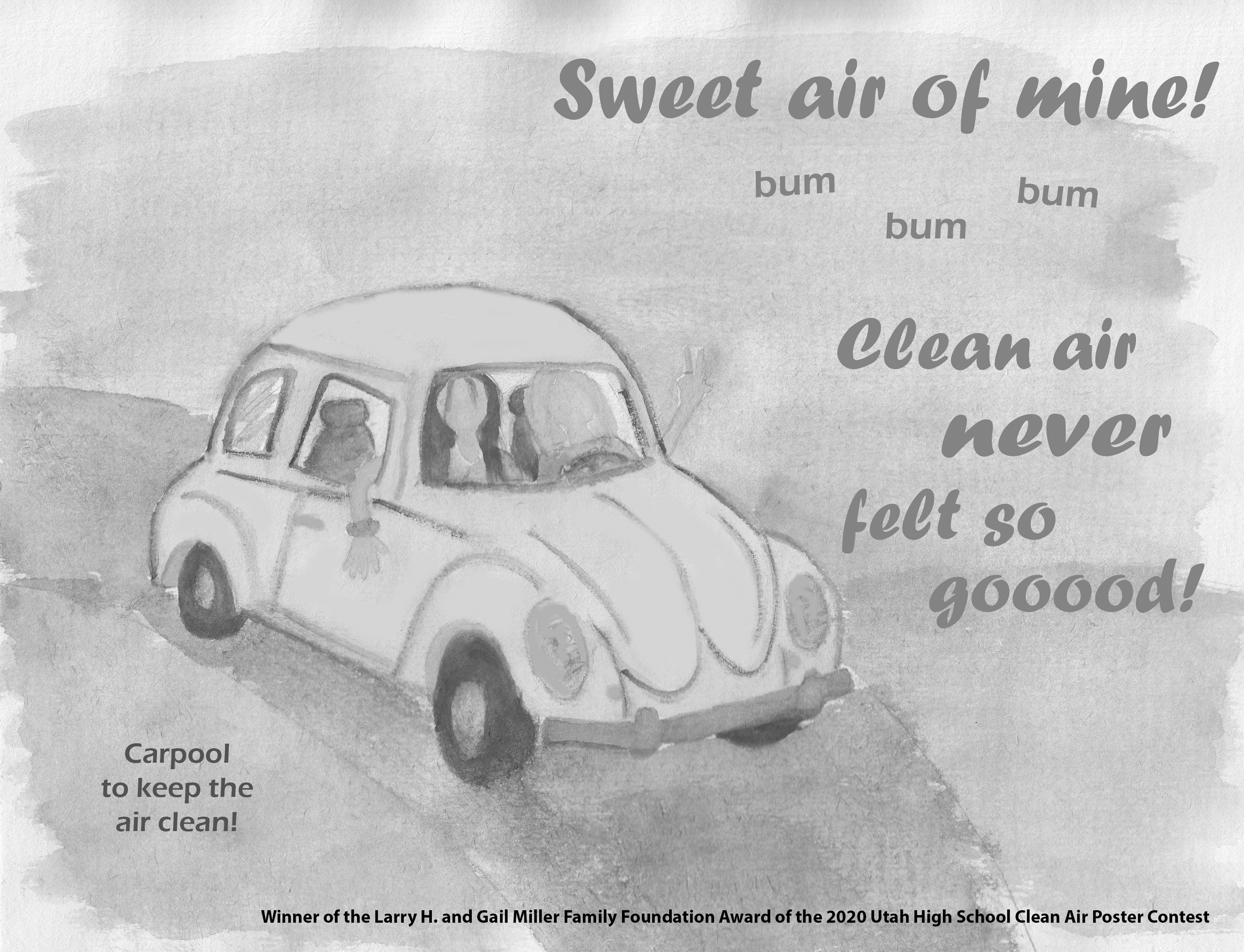
Parody of Neil Diamond's “Sweet Caroline”
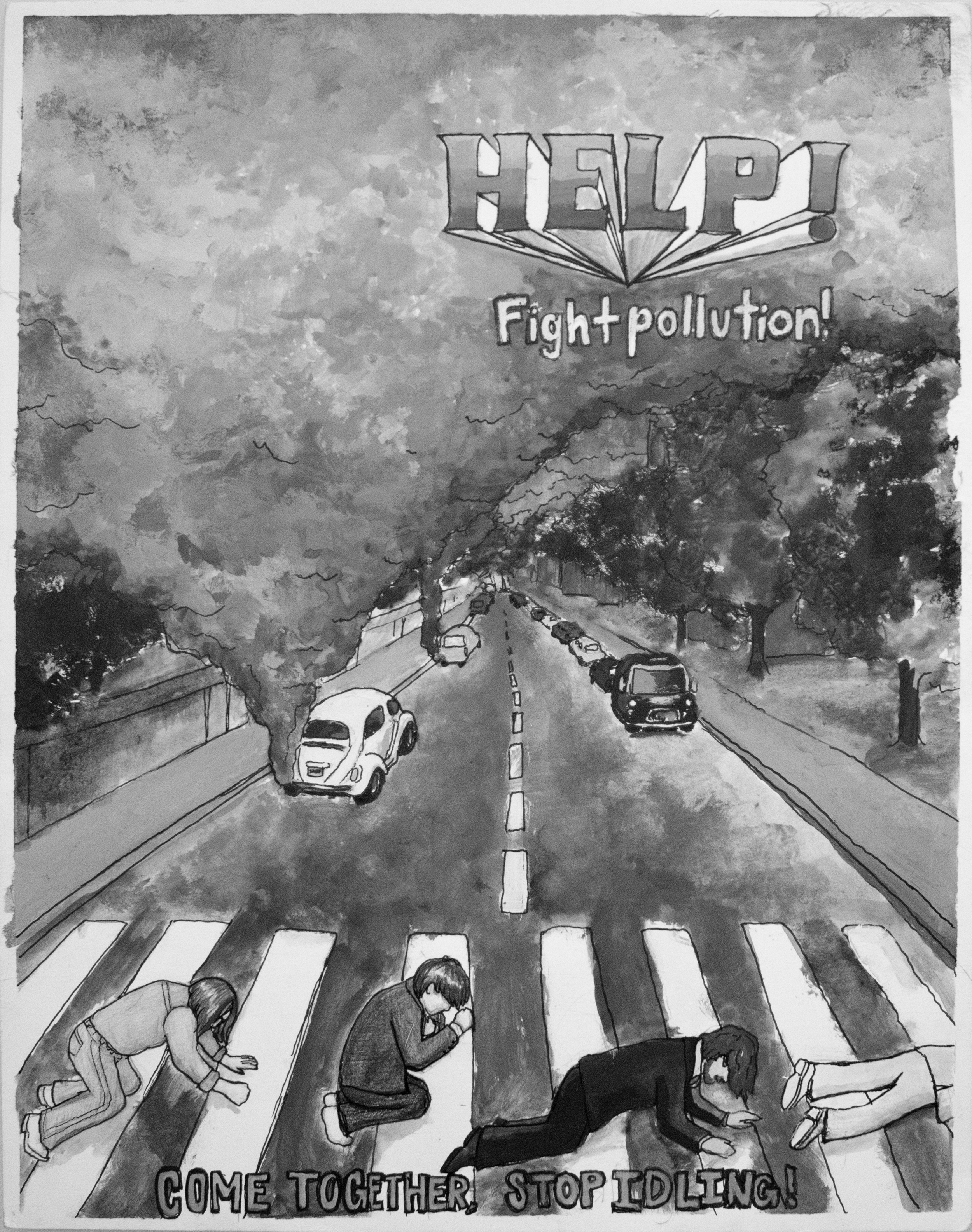
Parody of the Beatles' Abbey Road album cover
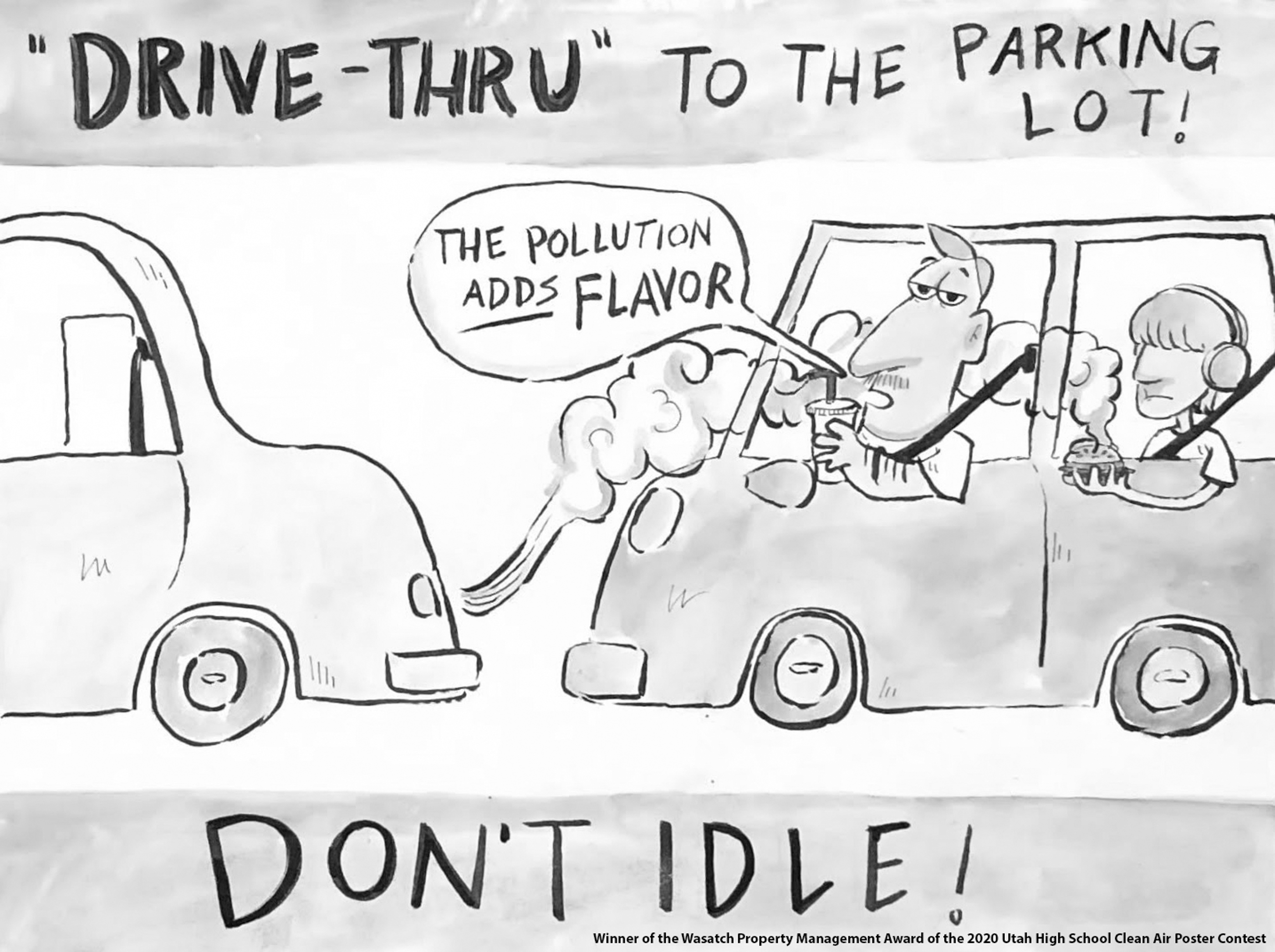
Humor appeal
Follow-Up
By each December, every participating high school has selected its winning PSAs (typically one for every 20 to 25 entries). Students win merchandise prizes (mostly $50 gift cards donated by local eateries and merchants), and the prizes are named after the donors (e.g., “Lucky Slice Pizza Prize”). This naming serves two purposes: 1.) to thank the individuals and organizations for contributing, and 2.) to shift their perceptions about caring about air quality through publicly associating individual and organizational names with the contest (see for example, Cialdini, 2001; Lokhorst, 2009; McKenzie-Mohr, 2011).
The winning high school entries become finalists at the state level where larger cash amounts ($100 to $250) are awarded, also named after their donors (e.g., “Mountain America Credit Union Award”). State winners are selected by a panel of judges consisting of past winners, prominent citizens, community and business leaders, government officials, and high school principals, and they are announced the following February during the height of Utah's winter inversion season. Announcements take place at an awards ceremony at Utah State University's Nora Eccles Harrison Museum of Art, where an exhibition of the PSA finalists is displayed for several weeks. To incentivize participation, the contest offers many opportunities to win prizes. For 2021-2022, for example, almost $6,000 was awarded to 60 PSA high school winner-finalists and 23 state winners (Mora, 2022). Winning PSAs are then displayed publicly for education outreach at schools, libraries, businesses, art museums and festivals, plakat billboards, farmers' markets, on social media, and in the news media.
Past Evaluations of Contest Outcomes
Surveys of previous contest iterations indicate students report a better understanding of local air pollution and a higher likelihood to engage in air pollution-reduction behaviors (e.g., refrain from idling) than before the contest (Stafford & Brain, 2015, 2017; Brain McCann et. al., 2018). Contestant feedback from 2017 found that approximately two-thirds of respondents (n=205) reported engaging others, primarily parents and siblings, about clean air actions, and 43 percent believed that they had actually changed others' behaviors (Stafford & Brain, 2017), providing some evidence of the inconvenient youth effect.
Subsequently, an evaluation of the 2018 iteration of the contest surveyed contestants' parents for the first time, and contrary to Gamerman's (2007) Wall Street Journal report, parents overwhelmingly welcomed their teens' initiating conversation about local air pollution and requests to engage in carpooling and not idling (Brain McCann et. al., 2018). Analysis of variance indicated that teens who talked about specific actions to preserve air quality, as opposed to just talking more generally about Utah's air pollution or about the contest only, were the most influential in changing their parents' reported behaviors (Brain McCann et. al., 2018). This may support the assertion that if teens' petitions make sense, or if teens speak passionately and with authority about an issue, they may be more persuasive among their parents (Kuczynski et. al., 2016).
Building on these findings, this study explores how teens' experience with the contest affects their understanding of local air pollution, motivations to adopt clean air behaviors, and how the contest triggers teen engagement and influence with their parents/families.
Methods
This study draws on nine semi-structured interviews (each lasting between 30 and 60 minutes) of teen contestants and at least one of their parents or relevant guardians (two parents were included in one interview; in another, a grandparent guardian was interviewed; in another, an adult cousin was interviewed) (n=19). With ethical approval from Utah State University's Institution Review Board (IRB), informants were recruited with the help of high school teachers, who identified students they perceived as making faithful efforts in developing their PSAs and representative of students in their classes, regardless of whether the teens won a prize or not.
The researchers procured both participant and parent/guardian consent prior to the interviews, and each contestant-parent/guardian pair was given a $50 gift card to a local restaurant for their joint participation. After the ninth contestant-parent/guardian interview, it appeared that no new information was gleaned, and the researchers closed their outreach for participation.
The resulting pool of informants included six students who were winners at the high school or state level, and three who were not. Seven of the students were female and two were male. Two were Hispanic, one was Black, and the remaining were White. Eight of the students were recent contestants, including one who had participated in the contest three times throughout high school. One student, interviewed with her mother, was a participant from the first 2015 contest, offering insights about how the contest impacted her over time. Three of the interviews were conducted in person, but due to COVID restrictions, the remaining interviews were conducted over video conferencing. Hatch's (2002) recommendations for conducting successful qualitative interviews were followed, including establishing respect, paying attention, and encouraging participants throughout. Journaling was also used to document researchers' initial impressions immediately following each interview to identify emerging themes.
Interviews were recorded and transcribed verbatim using Otter.ai. The researchers first coded the interview transcripts independently and then collaboratively using a combination of both closed and open codes. Specifically, commitment making (Cialdini, 2001), conditions fostering the persuasiveness of a child (Kuczynski et. al., 2016), and factors facilitating intergenerational learning (Duvall & Zint, 2007) were used as theoretical lenses (Yin, 1994) to identify key themes and experiences that contestants and parents/guardians had with the contest and that had been identified previously in surveys of earlier contest iterations (Brain McCann et al., 2018). Inductive thematic content analysis was also employed to identify other data-driven themes (Tracy, 2020). Together, the researchers discussed relevant codes and themes, which included issues such as initial impressions about the contest, challenges for coming up with ideas, contestant-parent interactions, and post-contest experiences and outcomes.
An accessible, comprehensive draft report synthesizing the data was constructed to describe contestant and parent/guardian experiences at various stages of the contest (from initial presentation about local air pollution and parameters of the contest, brainstorming/construction of PSAs, to announcement of awards) along with illustrative quotes from transcripts, which were shared with two contestants and their parents (n=4) as a member check for respondent validation of the initial findings. Following Birt et al. (2016), these informants were asked to comment on whether the preliminary results accurately aligned and resonated with their own experiences of the contest, and they were offered an opportunity to disagree with the analysis and add further input if necessary. Additionally, the member check occurred several months after their initial interviews (Birt et al., 2016). None of the participants reported any fundamental disagreements with the analysis.
Finally, member checking was also supplemented with a review of the findings by one teacher who has been involved with the contest for several years and a government official from a sponsoring state agency who has worked closely with teachers and students participating in the contest for several years and has judged PSAs at the high school level. The concluding findings are summarized in Figure 5.
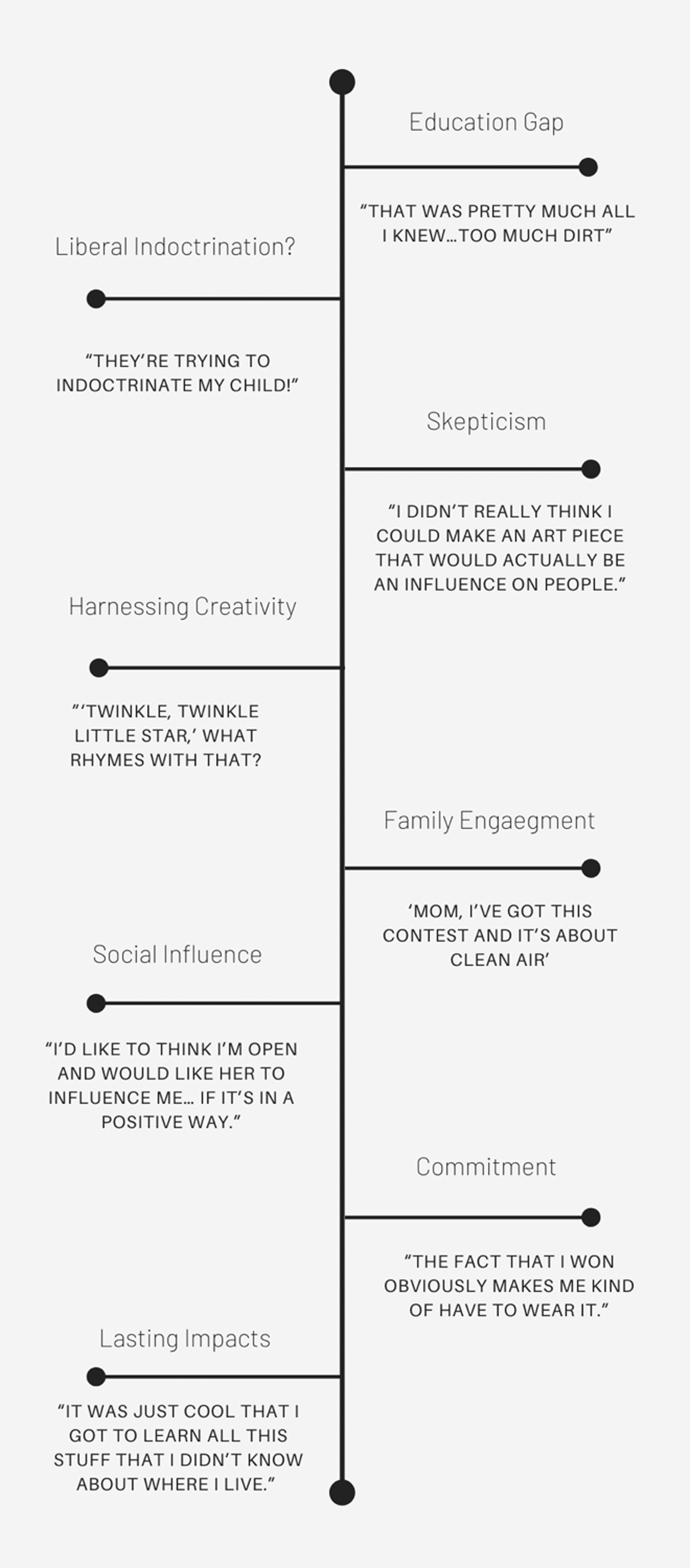
Summary of identified themes
Emerging Themes
Education Gap
Contestants reported that they had limited education and understanding about Utah's air pollution prior to the contest. The contest “was the first time it'd ever been brought up,” noted one contestant. Another explained, “without the contest, without that information, I probably would have never learned [about Utah's air pollution].” With the exception of one student from an environmental science class, virtually all of the informants said that they could not recall being taught about local air pollution in school. For example, one noted that at her elementary school, children were told, “‘Oh, it's a red air day. You can't go outside,’ but they didn't tell us what that meant or anything.” Another added:
As kids, we were very curious as to why we couldn't go outside, and it was just because of the air pollution was really bad during the winters. They just told us that we couldn't go outside because the air was really dirty. That was pretty much all I knew… too much dirt.
Other students admitted their understanding about local air pollution came about in a haphazard way. One asserted:
I knew we had air pollution problems, but I didn't really think about it. I know from older people telling me, “Oh we just need a really big storm to come in a blow all the smog away.” And I guess that was how I thought about it. You just have air pollution until a storm comes through. I just figured it was normal … I don't really need to concern myself about this.
Another student added:
We all hear the term inversion, but I don't think the kids actually know it's something or that even grownups are aware of it. Do they fully understand what an inversion is? “We know that it'll be gone in a few days. Why should I stop driving my car? Why should I have to? It's just a few days a year.” It's that little bit of knowledge and a lot of ignorance that ends up being really dangerous. They don't actually see the bigger picture or understand the full concept.
Liberal Indoctrination?
Some parents perceived that teaching state-of-the-art sustainability education in schools was hindered by local conservative culture. “I don't know if they [teachers] have the freedom to be that cutting edge because of our conservative state. I don't know if the schools feel free to speak out on social issues,” one parent asserted. Another added, “I feel like they're striving to do that but they're probably not perfect at it. I feel like our community appears a little sheltered from what we might see around our nation or … globally.”
For example, “In regard to … climate change being taught as a science,” one parent continued,
Some parents feel that their kids are being indoctrinated by a liberalist viewpoint. That by doing these kinds of things, they're promoting this to try and indoctrinate the children, which really it's not because it's about science. But they take a very different stand … “They're trying to indoctrinate my child!”
Consequently, to counter the general lack of timely environmental education in schools, one parent asserted, “There's a lot of things that they don't learn at school, and we'll come home and discuss [instead].”
Duvall and Zint (2007) assert that schools can act as agents of social change at the community level by encouraging teachers and students to take action on local problems, and this is important for fostering student-parent learning for environmental education. In Utah, however, because local schools may not be fulfilling this role on sustainability education, extracurricular outreach programs, such as the Utah High School Clean Air Marketing Contest, may be necessary to fill that void. One student noted that because the contest was affiliated with Utah State University, her mother found the information about local air pollution to be “very credible … and she knew that it was a serious matter.”
Skepticism
While some students expressed interest and excitement when first learning about the contest, others were skeptical. They became encouraged to participate, however, by the creative challenge of applying art and marketing to promote clean air actions, the multiple prize opportunities, and the prospect of public recognition and making a difference. For example, one intrigued contestant described her initial reaction as, “Our teacher had told us this would be our school's second year participating in this contest. I was excited to try my hand at it [and] see if I'd be any good.” One other student said she was interested to “come up with something creative that would persuade people and catch their eye.” This aligned with previous research that found students are often excited to participate in education contests (Abernathy & Vineyard 2001).
Others, however, expressed uncertainty. “I didn't think I could do much with it,” asserted one student, “I didn't really think I could make an art piece that would actually be an influence on people.” Another student mentioned, “I was kind of skeptical. I was kind of new to Photoshop and everything.”
Eventually, these students became more interested. “At first, I was a little bit skeptical. Just another class assignment,” noted one student, “But when [contest organizer] kept talking about it and showing us the really cool [marketing] ideas, I started to get excited.” Another teen said, “I liked the competition in general. … I think it was a good creative opportunity, and I think it's cool that there was like a reward opportunity.” One contestant further explained:
Originally, I thought it was just not going to be worth my time. [For] most contests, I would submit my artwork, and I would never receive anything back. … But I told my mom about all these benefits. They're giving out prizes! There's going to be recognition in the newspaper. And my mom was like, “You know, it's really worth it. I think you should put in your time and your effort. … This is a really big thing!” … I liked the prizes and money that was [sic] being given [and that] my work … was actually going to be [potentially] recognized.
One student characterized her thoughts about the possibility of influencing others on clean air action as “…a sense of this is important. And you could do something great with this. You could change the world in a small way. You could change your community in a small way.”
Harnessing Creativity
Contestants reported that creating their PSAs was challenging, and they turned to conversing with fellow students, parents, family, and teachers for inspiration. One contestant who participated in the contest three times explained how she struggled to come up with something original each year. “I had the same themes running through my head … with idling,” she said, “Black smoke clouds … What haven't I done before? [Can I think of] anything new?”
Another contestant recounted how creating her vision required significant problem solving on how she would procure the right visuals:
Idling in school [parking lots] affects children being picked up [after school]. That really hit me, and I wanted to do something about that. Do it from the perspective of a child to connect emotionally [with the PSA's audience] … I just didn't know how to put it together. I also needed a picture of a child, but I didn't want to go to the neighbor and be like, “Can I take a picture of your child?” It'd be a little weird. So I decided to try and find a picture of myself as a kid that I could use.
Another student revealed:
[Contest organizer] mentioned using children's storybooks and stuff like that. And then, “Twinkle, Twinkle Little Star,” what rhymes with that? … It was like something that everybody knows. [Contest organizer was] talking about how to market to other people and making sure that people would remember and like catch their attention. [the resulting slogan was, “Twinkle, Twinkle Little Star, Utah's Air Has Gone Too Far. Turn Your Key, Be Idle Free.”]
Other students also talked about how engaging with and witnessing what their peers were developing enhanced the creative process. One remarked:
I really did enjoy seeing other people's [PSAs]. …We would talk to each other and … we would go see [what] they were working on. It was really cool to share that experience and look at all their great ideas.
Another explained, “I liked seeing how creative my classmates would get with it because we're all a little bit competitive.”
Enthusiastic teachers who ran the contest through their classes and clubs were also significant creative inspirations. At one high school whose students often won awards at the state level, for example, a contestant noted how an inspiring art teacher “really pushed us” by using creativity exercises. She explained:
[Name of teacher] had this thing where he'd have us roll these dice and pick from the chart [a theme or design element] what you rolled and then you had to incorporate that into your [PSA]. So he forced us to think about it differently. A lot of people didn't like it, but I really liked it. He made us think and made us do things that we wouldn't usually do. … He was amazing!
In sum, the challenge of developing a PSA resulted in contestants digging deep to harness their creativity, and this encouraged the students to converse with others (see for example, Gregson & Little, 1998).
Family Engagement
As contestants engaged their parents and families in brainstorming and developing their PSAs, it often led to broader discussions, occasional nagging, and changed behaviors among parents and family members. Sometimes, family members became clean air advocates as well. At first, some parents were unaware of Utah's air pollution. One contestant asserted:
When I first brought [local air pollution] up to my mom, she thought it was a joke. She was like, “no really?”… We started doing more research, looking online, YouTube videos, and also asking my uncle who was going to college, and he was like, “Yeah, did you guys not know about this?” So we became more educated, and that's when I started becoming more involved.
The parent of this contestant noted that she didn't learn about air pollution in high school, but her daughter encouraged her to act.
She was annoying. She's the one that told me we're not supposed to turn our car on for too long, and when you [wait] for us at school to just turn off your car. … I learned everything from [my daughter]. I started paying more attention. …I learned a lot from her.
Brainstorming for the contest often evolved into broader discussions about air pollution. Another parent added:
She came to me and said, “Mom, I've got this contest and it's about clean air.”… We talked about different ideas. I don't think she used a single one of mine. …We kind of talked about it, and it ended up leading to a bigger discussion about air pollution.”
Conversations also led to parents and family members adopting clean air actions that sometimes could become habitual. One cousin of a contestant said:
Sometimes I'll idle as we usually carpool for lunch sometimes. I'll forget to turn off my car, and she'll just tell me, “That's bad! Turn it off!”… It's kind of become a habit. I'll just be like, “Oh, if [name of contestant] was here, she'd tell me to turn it off.
Another contestant remarked, “My dad is always like if he sees any idling [around town], he'll talk about my [PSA].” The father followed up with:
This is just ironic, but I went to work last night and there were two vehicles idling outside my work. They were emergency vehicles, but they didn't need to be idling. “Are those your cars? Why are they running out there?” I asked. They kind of laughed and called me a hippie. They said they didn't realize I was a hippie.
Another parent mentioned how she, too, carried the message about air pollution to others:
I actually did talk to the principal at the elementary school at one point … because I was still picking up my [younger] daughter from there. … I said this is one of the worst areas [for idling] and so they put up “don't idle” signs. …I don't know if that was because of me. … [The principal] said that she'd been thinking about that.
Finally, another parent said after the contest:
My husband bought me a bike and so that was when I started saying, “Okay, I think this is a time that I can ride my bike and it's going to be for me because I'm doing exercise, and it's for air pollution.” So it's almost [like] killing two birds.
These quotes suggest that teens can be influential in encouraging their parents and family members to engage in clean air actions and advocacy (Gamerman, 2007; Stafford & Brain, 2017). This aligns with Duvall and Zint's (2007) assertions that intergenerational learning is facilitated when teens as “experts” bring up-to-date sustainability information home to their parents, ask for advice on planning and implementing projects to address community needs (as in designing PSAs), and parents take an interest in their teens' schoolwork.
Social Influence
Parents are generally comfortable with their teens' social influence on motivating clean air actions. “We definitely listen to our kids when we have a lot of discussions and they actually can give us some pretty good insights and some good perspectives. So I'm always open to listening,” noted one parent.
Many of the parents' explanations as to why they welcome their teens' influence on clean air behaviors echo the conditions summarized by Kuczynski et al. (2016): The children's requests make sense, the children appear mature enough to understand the issue, the children are passionate or wanting to accept responsibility, and the parents want to maintain positive parent-child relationships. For example, one parent said, “I feel like she has accurate information.” Another parent asserted:
It's nice to see my daughter giving me a reminder [on idling]. I think what helped is that she's been featured in the [news]paper [for winning] and everything, you know, obviously makes a bigger deal out of it. … I'd like to think I'm open and would like her to influence me … if it's in a positive way.
In sum, students appeared to have sufficient status within their families for parents and other family members to accept them as passionate “experts” on local air pollution and their requests to act accordingly made sense (Duvall & Zint, 2007; Kuczynski et al., 2016).
Behavioral Commitment
Aside from personally engaging in—and potentially influencing their parents and families to engage in—clean air actions, participation in the contest raised teen awareness and encouraged teen commitment to clean air action as well. “After making the [PSA], it made me … more aware of the pollution,” noted one contestant. “I noticed my idling habits,” added another, “and I noticed other people's idling as well. I try not to be judgmental, but I was like, ‘You really shouldn't be idling that long.’”
A parent also noticed a change in her teen as well:
The other day, we went to Tractor Supply, and when we got back in the car, she was “Mom, that car's been idling the entire time we were in the store.” She never would have said something like that before. … I don't remember her saying things like that.
Another student added:
It wasn't until after the air contest where I started becoming more aware and tried to start doing my part when it came down to the environment. … One bad habit … was letting my car warm up. I would let it warm up a little longer than I was supposed to, and so I started cutting back.
A student who had participated in the contest and had heard the presentation multiple times in her art classes and art club meetings throughout high school said, “I memorized [the] presentation.” What affected her most, she explained, was “the part [about] where the inversion [lasts] just a few days, but the pollution doesn't go away from your lungs. [People who discount the inversion problem] don't see the long-term effects.” This encouraged her to engage in clean air actions.
The contest appears to motivate contestants to become advocates to encourage others to adopt and commit to clean air actions. “I had to think about these things and come up with [persuasive PSA] ideas,” concluded one contestant. Another student who won a state-level award and whose winning PSA was featured in two different newspapers, declared, “The fact that I won obviously makes me kind of have to wear it. I definitely tell people and tell my friends don't idle.” She continued, “It was cool to win. I was really proud of myself [that] I brought [clean air issues] to people. It made me way more aware, and it made me want to tell other people to be aware.”
Publicity about her award prompted this contestant to take on a new self-image (i.e., “to wear it”) as someone who cares about air pollution. This aligns with research showing that commitment-making, demonstrated by actions such as signing a petition or writing a statement, can change the way people view themselves. Consequently, they will adopt values and act accordingly to be consistent with that new self-perception or how they think others expect them to act (Cialdini, 2001; Lokhorst, 2009; McKenzie-Mohr, 2011). This may suggest that contests that offer many opportunities for prizes and recognition may contribute to behavioral change.
Finally, one student who had participated in the contest in 2015 asserted that even years later, her contest experience continued to impact her and her mother's behaviors. She explained:
Like when me and mom will go to [the local grocery store] now, we'll go on our bikes sometimes. Or when we try to go to different places [by car], we just make sure that we go in one trip and not to drive every day. Yeah, now we're more aware.
In sum, many of the contestants' assertions about how they have adopted new behaviors, such as refraining from idling or increased biking and trip-chaining, provides some evidence that creating clean air PSAs contributes to commitment-making.
Lasting Impacts
Students and parents had positive attitudes about their experience with the contest and appreciated how it opened opportunities beyond learning about local air pollution. “I thought it was amazing. I really enjoyed it,” noted one student, “… it really pushed me to want to do more [about the environment].” Another said, “It was definitely the funnest thing that I did last year because I got to learn and participate in something. And so, I loved it!” Another student added, “It's really cool for me to have an award and to say I won this amazing contest and be proud of this artwork that I made. It's just something that defines my senior year.” Another contestant asserted, “It was just cool that I got to learn all this stuff that I didn't know about where I live.” These comments echo previous assertions that contests can spark the joy of learning and be fun (Abernathy & Vineyard, 2001; Ozturk & Debelak, 2008).
Public recognition was important for some of the students. “When I won, [my friends] were super proud of me. Some adults and even my parents sent me a picture of [my PSA] in the newspaper, and said, ‘This is yours, isn't it?’” Another added, “One of the things that I loved the most was meeting the mayor [at a recognition event]. … It was nice for me.”
Parents also expressed enthusiasm for the contest. One parent noted that the skills learned in the contest had changed her son's attitude about school, “Photoshop really inspired him,” she explained, “This is the first thing he is actually really enjoying in school. He's never really been involved in school before.” Another parent noted, “it's really important for me to see her doing other things [rather than soccer] to make her more well-rounded.” These comments are in line with past environmental education research that suggests such programs can enhance broader academic skills and interests (Ardoin et al., 2018).
Implications for Designing Education Outreach
In its exploration of how the design of the Utah High School Clean Air Marketing Contest affects contestants' understanding of local air pollution and motivations to adopt clean air behaviors, this study uncovered how the contest motivates teen engagement with their parents or other family members about air pollution and how those family members respond. Interview findings indicate that a contest as a vehicle for sustainability education can be effective for sparking student interest in local air pollution, encouraging students to commit to clean air actions, and motivating students to engage their parents about the contest and broader air pollution issues.
To summarize, most students claimed that they had limited education about local air pollution prior to the contest, and some parents believed that local conservative culture inhibited schools' ability to provide state-of-the-art sustainability education. This may support the need for programs, such as the Utah High School Clean Air Marketing Contest, to fill that void. Organizers of outreach programs might first evaluate existing environmental curricula in schools, such as in drivers' education, science, and health classes, to determine relevant gaps and offer programming to fill those gaps accordingly.
Students reported being motivated to participate in the contest due to the fun and opportunity of applying art and marketing to design persuasive PSAs, the multiple worthwhile prizes, and the prospect of public recognition and making a difference. This illuminates the importance of making environmental education fun (Abernathy & Vineyard, 2001), understanding what motivates target audiences of sustainability outreach programs, and offering appropriate incentives to encourage participation. Competitions, in particular, may spark the joy of learning (Ozturk & Debelak, 2001).
Contestants reported that constructing compelling PSAs was challenging, and they turned to fellow students, teachers, parents, and family to brainstorm and realize their PSA concepts, which in some cases, led to broader discusses about air pollution. This is in line with past research on how contests may motivate students to converse with others to explore creative ideas and solutions (Gregson & Little 1998). Contestants also noted the importance of enthusiastic and inspirational teachers, and past research has found, not surprisingly, that committed and interested teachers had greater success in creating enthusiasm about environmental causes among their students, which, in turn, may encourage students to engage their parents (Ballantyne et. al., 2001; Legault & Pelletier, 2000). Consequently, partnering with supportive teachers is critical for effective education outreach design to foster intergenerational effects (Duval & Zint, 2007).
Conversations with parents, in particular, could lead to broader discussions about air pollution, resulting in parents being prodded by their teens to take on clean air actions themselves (e.g., inconvenient youth effect). Moreover, parents reported that they welcomed the positive influence. These findings point to some of the conditions that help facilitate intergenerational learning (Duvall & Zint, 2007) and enhance adolescents' influence on parents (Kuczynski et. al., 2016). Specifically, when students are encouraged to develop solutions to environmental problems, such as constructing persuasive PSAs, they are likely to engage in discussions with their parents (Ballantyne et. al., 2001). If parents are routinely involved with student activities and accept their adolescents as experts on the environmental issues at hand (Kuczynski et. al., 2016), intergenerational learning and teen persuasion may occur. Consequently, sustainability outreach should strive to make participants experts and include take-home activities that warrant creativity, problem solving, and incentives to compel students to seek out help and initiate conversations with their parents.
A common tactic among environmental and social advocacy campaigns that target youth as a proxy to reach adults is to include the instruction, “Kids, tell your parents!” (Gamerman, 2007). Architects of sustainability education programs may consider similar calls to action to embolden the inconvenient youth (Brain McCann et al., 2018).
One reported risk for encouraging youth to instruct their parents about environmental issues is that it may awkwardly upend traditional parent-child relationships in which parents typically strive to be teachers in guiding and shaping their children's values (Gramerman, 2007; Stafford & Brain, 2017). This, in turn, can threaten parents and disrupt their teen's influence. The fact that parents in this study reported that they generally were comfortable and welcoming of their teens' requests to refrain from idling and engage in other clean air actions (an outcome also reported in Brain McCann et al., 2018) suggests that parents recognize that their children are learning more up-to-date information on sustainability issues at school and their knowledge and reminders warrant consideration.
Finally, Cialdini (2001) asserts that to increase long-term behavior follow-through, commitment-making by individuals needs to be active, public, effortful, and freely chosen. The contest requires students to become clean air advocates by mastering not only environmental knowledge on how to act more sustainably and preserve air quality, but also art and marketing skills to create PSAs encouraging others to follow suit. Contestants concurred that the task of creating PSAs was indeed effortful, and this encouraged them to want to engage in clean air actions. Moreover, for those who won a prize, public recognition also reportedly motivated commitment to clean air actions and a desire to encourage others to do so as well. This provides evidence that educators should incorporate commitment-making into sustainability outreach activities that ideally are active, public (with multiple opportunities for recognition), effortful, and freely chosen to encourage behavioral change.
Future Research and Conclusions
This qualitative inquiry into the annual Utah High School Clean Air Marketing Contest and its potential to empower teens to tackle air pollution and engage and influence their parents/guardians on clean air action provides insights about designing more impactful contests and sustainability education outreach programs. Further research is needed to uncover what sustainability information is being learned through environmental competitions and the many nuances involved with the transfer of information to parents (Ardoin et al., 2018). Additionally, longitudinal research is needed on information retention and actual behavior change. Given the potentially devastating sustainability crises facing society today and schools' limited abilities to teach about them, understanding how to enact effective education outreach campaigns may empower adolescents to adopt more sustainable behaviors and promote environmental knowledge and changed behaviors among their parents (and communities). These actions may be crucial for cultivating a more informed populace, which is needed to confront sustainability problems now and in the future.
Footnotes
Acknowledgments
The authors thank Courtney Flint, Cathy Hartman, and Victoria Stafford for their insightful comments on an earlier draft of this article.
Funding Information
Funding provided by the Department of Marketing & Strategy, Jon M. Huntsman School of Business, Utah State University.
Author Disclosure Statement
No competing financial interests exist.