




Abstract
Tribal populations in India largely reside in climatic-sensitive geographic regions and maintain close relationship with their surrounding environment. They are most vulnerable to climate change and its impact. This article captures the tribal people's conceptualization of climate change, reflects on its variations from scientific understanding, and examines various perceived impacts. A cross-sectional perceptual survey was carried out among Gonds, a tribal community in India. The findings indicate that the tribal people perceive climate change and strongly agree that the changes occur in all the key climatic sensitive parameters—rainfall, temperature, groundwater, surface water, and forests. Their perception, to an extent, corroborates the observed and recorded changes in these parameters. However, their perceptions are largely restricted to a limited time frame highlighting local variations in weather conditions influencing their perceptions. Gonds possess a comprehensive understanding of the intricate linkages that exist between different climatic parameters. Understanding and incorporating these perceptions in climate strategies are important in efforts to build climate-resilient tribal communities.
Introduction
The occurrence of climate change is no longer a contentious issue. There is consensus among the scientific community worldwide that climate change is happening. Changing weather patterns related to temperature, precipitation, sea-level rise, or more frequent extreme events, all provide scientific evidence that verifies climate change. In addition, there is generally accepted certainty within the scientific community that the genesis of climate change has anthropogenic factors.
Human activities since the onset of 19th century have led to a substantial increase in greenhouse gases such as carbon dioxide, methane, nitrous oxide, et al., in the Earth's atmosphere, leading to global warming. The global average temperature has increased by around 1°C since pre-industrial times. In India, there has been a rise in average temperatures; a decrease in monsoon precipitation; a rise in extreme temperature and rainfall events, droughts, and sea levels; and an increase in the intensity of severe cyclones, alongside other changes in the monsoon system, with scientific evidence pointing toward the influence of human activities behind these changes (Krishna et al., 2021).
Climate change is also posing a great threat to humankind with impacts varying from agriculture production loss to water scarcity to loss of human lives, and many more. Though climate change impacts are increasingly becoming certain, they are not uniformly distributed. Literature highlights that vulnerable populations bear the maximum impact (Ebi & Paulson, 2010; McMichael et al., 2003; O'Neill & Ebi, 2009; Patz & Olson, 2006; Wiley & Gostin, 2009).
Tribal groups are considered to be a vulnerable group. In India there are 705 tribal groups, which are listed as Schedule Tribes (STs), constituting 8.6 percent of the total population (Office of the Registrar General & Census Commissioner, 2011). These tribes are spread across the country with varying population sizes ranging between lakhs (one lakh is equal to 0.1 million) and a few, inhabiting various ecologically sensitive geographies and landscapes. A substantial tribal population, close to 70 percent, lives in rural and hilly areas and are dependent on natural resources for their livelihoods. Any change in the environment as a result of climate change is more likely to impact them more than populations that do not live as close to the land. In addition, the tribal populations are in a disadvantageous position in comparison to other social groups and lag behind on many of the development indicators either pertaining to sociological, economic, political, or health domains, which makes them more vulnerable to climate change impacts.
Despite being so vulnerable, the tribes hold a unique position in terms of dealing with the challenge of climate change itself and its impacts. Tribal communities are known to have rich indigenous knowledge that plays an important role in defining their adaptive capacity toward climate change and its impacts. The climate risks and impacts can be minimized if the tribes' adaptive capacities can be strengthened further.
One approach in that direction is to understand the tribes' perceptions of climate change and its varied impacts. There is a growing literature that emphasizes the need for and importance of understanding such perceptions in relation to climate strategies that can strengthen these communities to take climate change adaptation and mitigation actions (Bouman et al., 2020; Clayton et al., 2015; Corner et al., 2014; Poortinga et al., 2019). It would be apt to highlight here that both mitigation and adaptation are complementary strategies that are required to address climate change and its impacts. While mitigation strategies are largely oriented toward the drivers of climate change (like emission of greenhouse gases), adaptations are more about building resilience to climate change impacts. The adaptive strategies play an important role in preparing communities to respond to climate uncertainties as well as its impacts; therefore it is paramount that adaptation planning takes into consideration people's perception (Mitter et al., 2019; Ofuoku, 2011).
The Intergovernmental Panel on Climate Change, in its fourth assessment, also aptly underscores the importance of perceptions in climatic adaptation and mitigation decision making, which takes place at different levels, from individual households, farmers, and private firms to national planning agencies and international agreements (Klein et al., 2007). Efforts to minimize the impacts of climate change are dependent on the actions of many people across different levels of society, and tribal populations are important stakeholders. Within this context, this article attempts to capture tribal people's conceptualization of climate change, reflects on its variations from scientific understanding, and examines its perceived impacts.
Materials and Methods
The data for this study is derived from a larger study that focused on climate change and its health and economic impact. In the present study, which is the focus of the present discussion, a cross-sectional survey was carried out in Madhya Pradesh, one of the five Indian states covered under the larger study. Madhya Pradesh was selected because of its particular geographic characteristics, tribal population concentration, and experience of extreme weather events. The state has a substantial concentration of tribal population, 21 percent compared to 9 percent overall in the country (Office of the Registrar General & Census Commissioner, 2011). Within the state, the most populous tribal group, Gonds, was selected in the Anuppur district where Gonds have a predominating presence and an overall vulnerability to natural hazards (Figure 1).
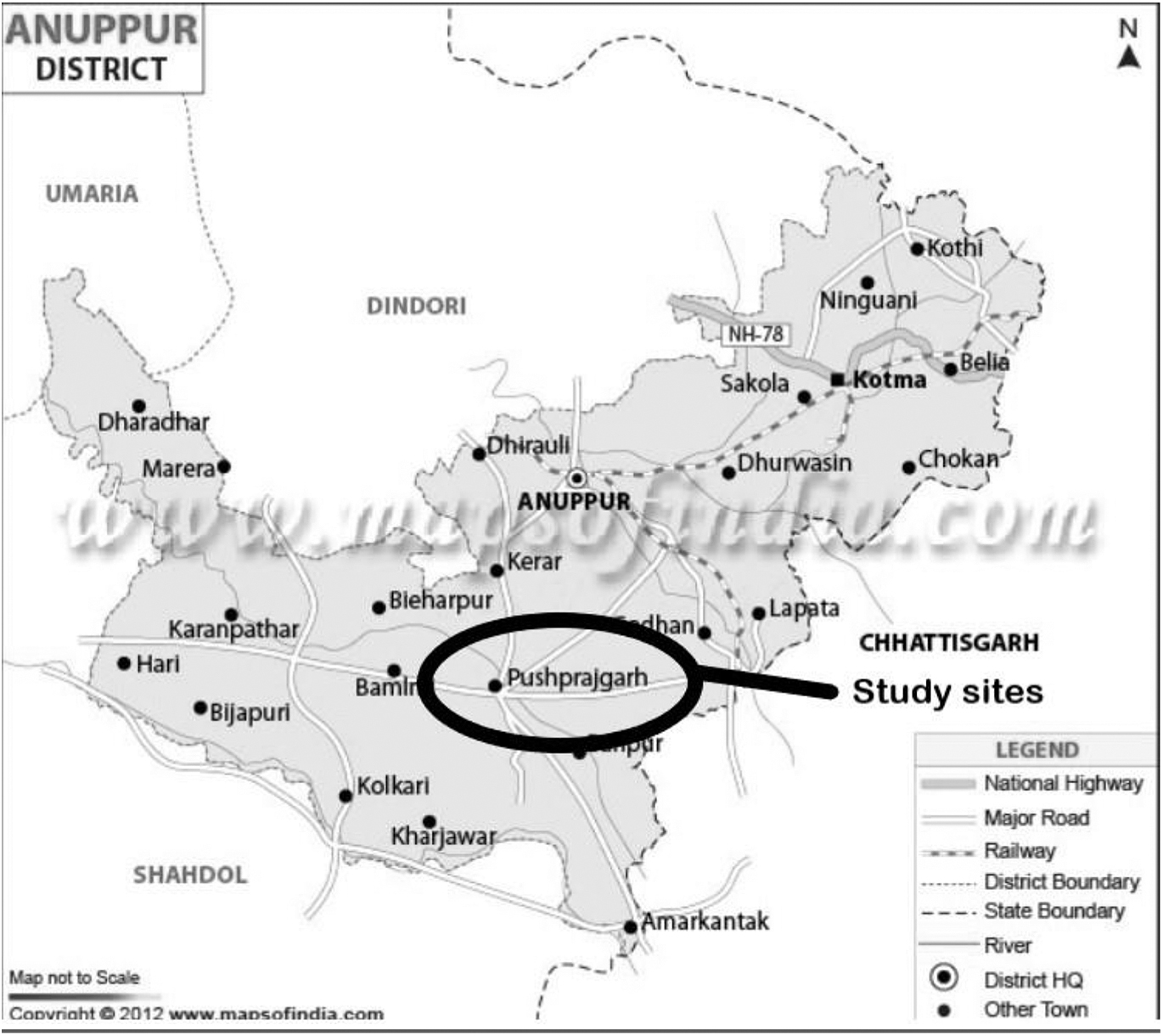
Site of the study. Adapted from “Anuppur district map.” https://www.mapsofindia.com/maps/madhyapradesh/districts/anuppur.html.
To conduct a comprehensive and in-depth analysis within the Anuppur district, the Pushprajgarh block was selected. This block is home to the highest concentration of Gonds. Within the Pushprajgarh block, four populous revenue villages located adjacent to each other were identified and selected. From these four villages, a sample of 800 households was extracted. For definitional purposes, a district is divided into administrative blocks. Within these administrative blocks, there are revenue villages. A revenue village can consist of a village or more than one village. The headquarters of the block is a small town.
All the households belonging to Gonds were sampled in the first revenue village, then in the second adjacent revenue village, and so on. This process continued until the required sample size was attained. The estimated sample size for Madhya Pradesh was 1,000 households. Figure 1 depicts the map of Anuppur district showing the geographic location of the villages selected for the study.
A Likert scale was developed to capture the perception of tribal groups on five climate-sensitive parameters: rainfall, temperature, groundwater, surface water bodies, and forest. Each of these parameters was assigned a set of variables to capture perceptions about environmental changes and each respondent was asked to rate their perception on a five-point Likert scale with 1 representing “strongly disagree” and 5 representing “strongly agree” with the noted change. These variables were identified from a literature review and past studies assessed by the researcher. To capture the respondents' rationale for their perceptions of changes on the parameters and the impacts of these changes, open-ended questions were asked. The responses were grouped into different categories, which were generated inductively from analyzing them. A team of field investigators familiar with the local dialect as well as the topography of the district was recruited for data collection. The field investigators administered the questions and recorded responses in the survey tool. All the investigators were trained on the survey tool before initiating the data collection. The collected data was entered and analyzed using the SPSS version 22.0. Ethical approval for the study was obtained from the Institutional Review Board.
Results
Most of the 800 respondents in the survey are heads of their household. A large majority of the respondents are males (84.8%), while 15.2 percent are females. The mean age of the respondents is 48; the median age is 46. Close to three-fourths of the respondents are more than 40 years old. Most respondents are married (95%). A little more than half of the respondents did not receive any schooling; a significant majority is involved in farming (77.9%) while a minority work as laborers (17.5%) (Table 1).
Demographic Profile of Respondents
The distribution of responses across the five-point Likert scale on the climatic sensitive parameters indicates that none of the respondents were in disagreement; rather, all of them agree about the changes in different parameters of climate, and a substantial proportion of respondents “strongly agree” that climate change is occurring (Table 2). The median score, computed for each of the parameters (rainfall, temperature, groundwater levels, surface water bodies, and forests), was found to be highest for all the parameters (Table 2).
Distribution of Respondents Across the Scale and Median Score
A Mann-Whitney U test was also carried out to examine the variation in perceived changes to the climatic parameters based on respondents' educational background, employment status, and gender. The test shows a significant difference in perception for both illiterate and literate respondents with respect to: changes in rainfall patterns (U=68481, p=0.001); temperature (U=73919, p=0.029); and surface water bodies (U=11294.5, p=0.008). In contrast, the differences in perception based on respondents' occupation are significant only for changes in surface water bodies (U=6078, p=0.001), and those based on gender are significant only for changes in rainfall patterns (U=35696, p=0.020). (See Table 3.)
Results of Mann-Whitney U Test
Significant difference (P < .05); **significant difference (P < .01)
In order to examine which variables of the climatic parameters received the maximum score, the median score of each of the variables was computed. Findings indicate that one variable under each climatic parameter received the maximum scores. For instance, under rainfall, respondents were asked to respond to variables like perceived changes in quantity of rainfall, number of rainy days, heavy downpours, and delayed rainfall. Findings indicate that decline in rainfall quantity received the maximum score. Likewise, respondents had a very strong perception of temperature increases, groundwater level decreases, declines in quantity of surface water bodies, and decline in trees found in the forest under the temperature, groundwater, surface water bodies, and forest parameters of climate change (Figure 2). Each of these variables had a median score of 5. The respondents were also asked to indicate the number of years they have been observing these changes; the median response was 5 years.
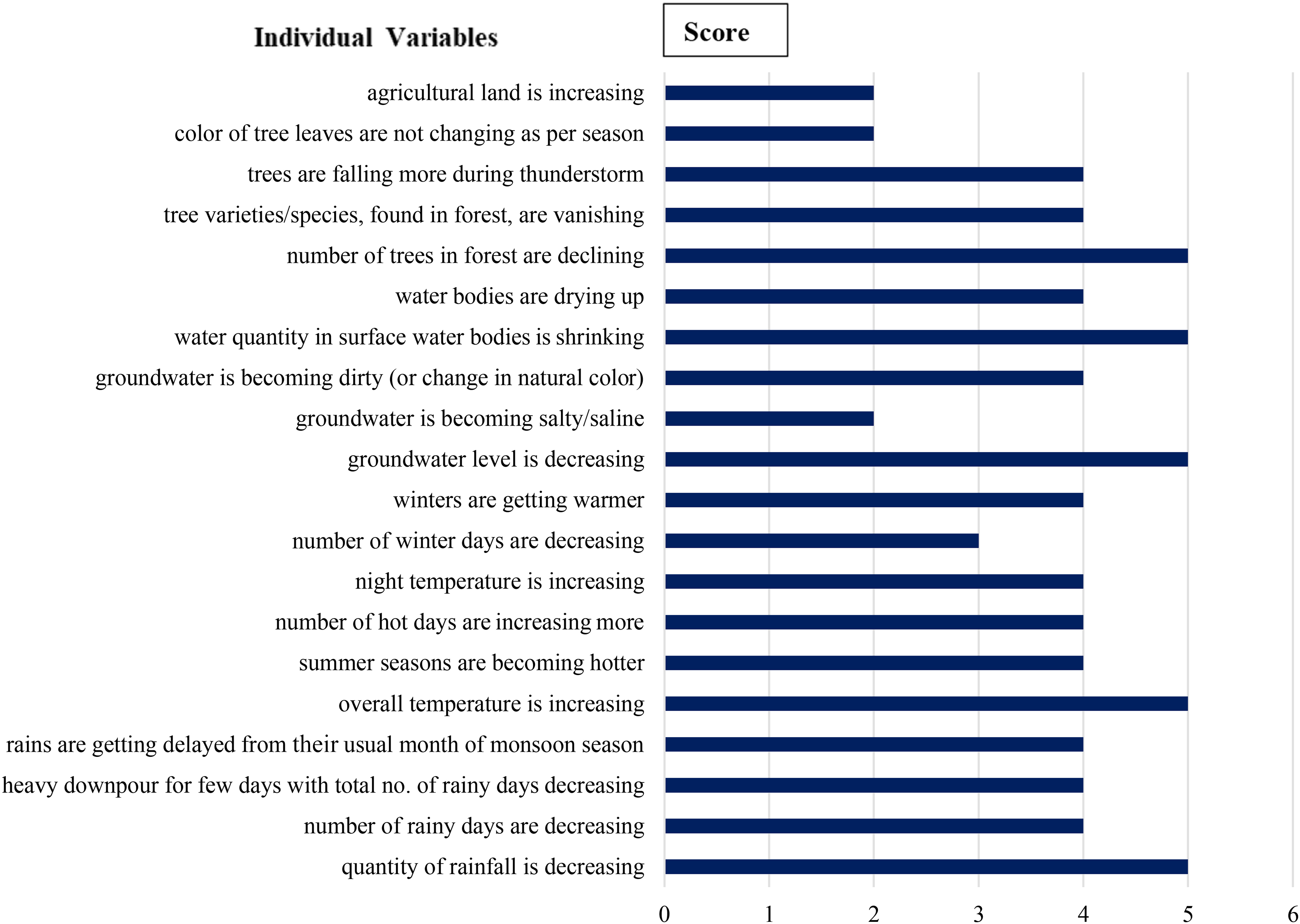
Variables of climatic parameters and their scores
For the years between 2010 and 2020, the secondary data of the climatic parameters for rainfall, temperature, and groundwater level were analyzed to corroborate respondents' perceived changes with the official trends observed and recorded. The normal monsoon rainfall for Anuppur district is 1,099.6 mm. The mean rainfall data between 2012 and 2018 remained below normal, except for the years 2019 and 2020 (Figure 3). Likewise, the normal annual mean maximum and minimum temperatures of Anuppur district are 31.6°C and 18.2°C, respectively (District Environment Plan for District, 2021).
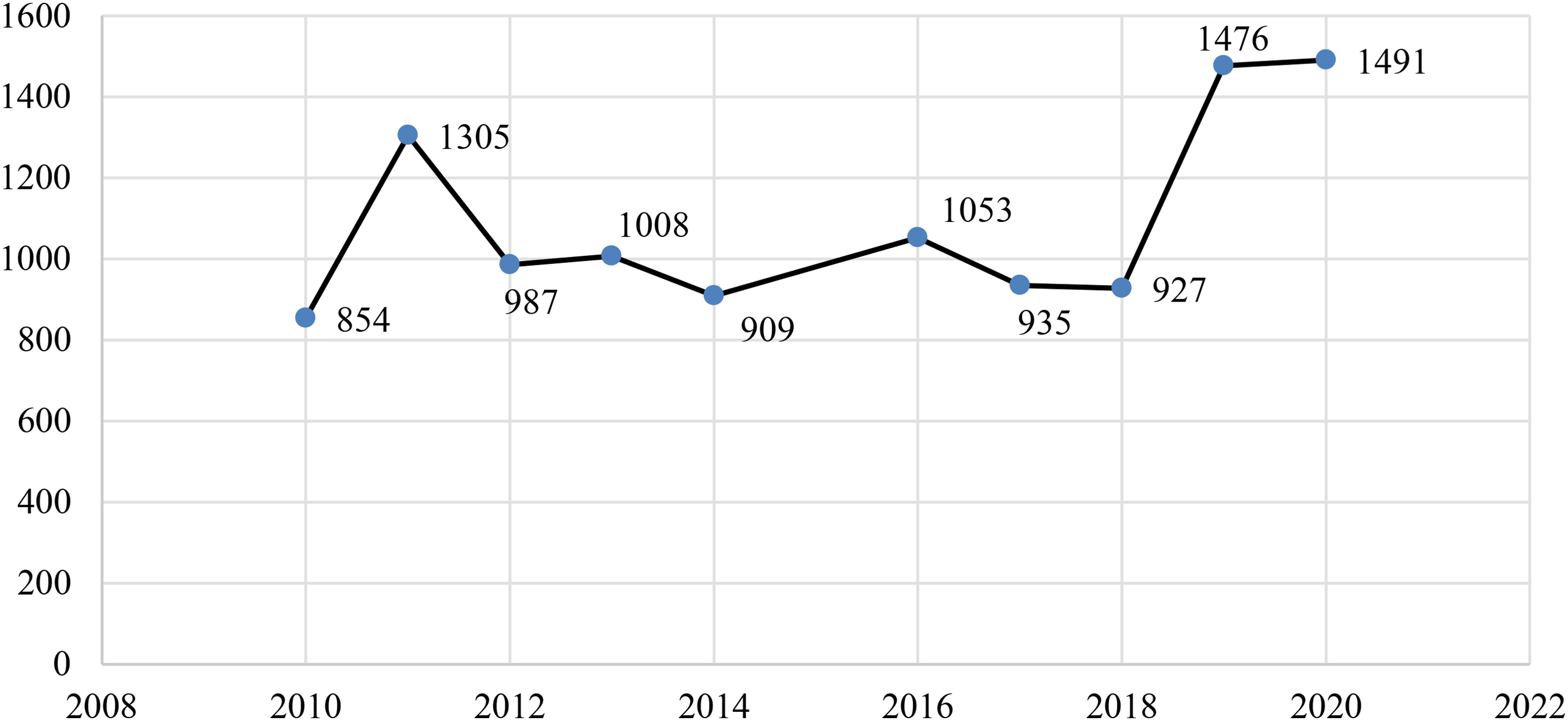
Trend of total rainfall (in mm) from 2008 to 2022
The analysis of temperature data shows that the mean maximum temperature during the same 10-year period was around 31.0 °C. However, there was an increase in the mean minimum temperature during the same time period (Figure 4). To analyze the data related to the decline in groundwater level, a proxy indicator was used (an area sowed more than once in a year). In 2010, the district had 43,429 hectares that were sown more than once, compared to 2020, when there was an increase to 61,685 hectares, a substantial 30 percent increase that suggests a proportionate increase in the use of groundwater.
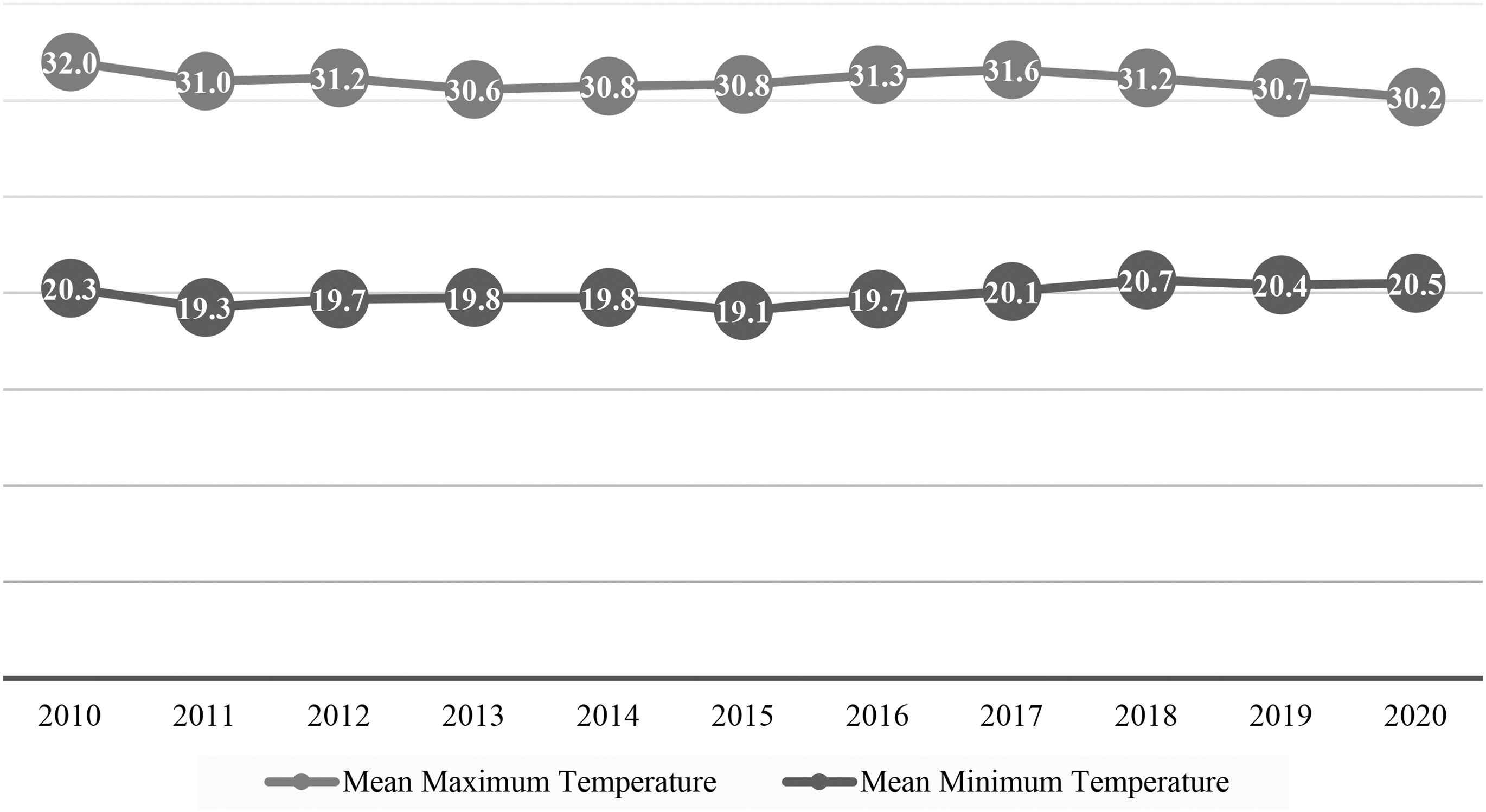
Annual mean minimum and mean maximum temperature, 2010 to 2020
Respondents were asked to share their perception as to why these changes are occurring and how they are being impacted by the changes. Some respondents did not share the reasons. Close to 50 percent of the respondents mentioned deforestation as the primary reason for the perceived changes in rainfall. About 12 percent also mentioned construction of small dams as a cause of changes in rainfall. Likewise, 76.5 percent of the respondents cited insufficient rains as the reason for their perceived increase in temperature, while 9.1 percent attributed the increase in temperature to deforestation. Construction of small dams and insufficient rains were also the reasons reported by respondents for changes in surface water. For the perceived changes in forests in the vicinity, the majority of respondents perceive deforestation (73.3 percent) or forest fire (17.3 percent) as the reason for these changes occurring in the surrounding forests (Table 4).
Perceived Reasons for and Impacts of Changes to Climate
For example, wood for cook stoves, house constructions, leaves etc. for medicines, among others
Almost 95 percent of respondents mentioned that changes in rainfall impact their farming and related activities, for example in terms of low yield, delay in sowing, etc. Respondents also perceive that changes in temperature impact their health and farming. The impacts of changes in surface water are perceived in terms of less availability of water for irrigation (46.7%), for daily needs (23.3%), and for drinking water for cattle (16.7%). Perceived impacts attributable to changes in forest include lack of fresh air, unavailability of woods and insufficient forest products to meet their needs (Table 4).
Discussion
The whole phenomena of climate change and its varied impacts have received a great deal of attention worldwide, including in India. The tribal communities, a marginalized section of Indian society, are known to be most vulnerable to climate change and are disproportionately at higher risk of being affected by climate change.
The findings indicate that Gonds too are observing the changes in climatic conditions as evidenced by their high level of agreement on the Likert scale, with the changes occurring in all the key climatic sensitive parameters (rainfall, temperature, groundwater, surface water, and forests). The findings with respect to the perceived changes in temperature and rainfall are in line with the literature on climate change that highlights the impacts of different parameters of changes at a global level (Intergovernmental Panel on Climate Change, 2023; World Meteorological Organization, 2022), a national level (Krishna et al., 2021), and a state level (Government of Madhya Pradesh, 2014). In Madhya Pradesh, the average annual temperature increased by 0.6°C between 1950 and 2010, and is projected to increase in the near future; projections indicate an average surface daily maximum and minimum temperature increase of from 1.8°C to 2.0°C and 2.0°C to 2.4°C, respectively, throughout the state by the 2030s.
It would be apt to highlight here that the eastern part of the state, where Anuppur district is located, is experiencing more warming than the western part (Government of Madhya Pradesh, 2014). Likewise, the state as a whole is witnessing a decrease in rainfall during the monsoon period, with an erratic and uneven spatial and temporal distribution of rainfall. The declining trend in rainfall is witnessed across all seven of the agro-climatic zones of the state. The Northern Hill Region, the agro-climatic zone where district Anuppur and other districts (e.g., Umaria, Shadol, and Dindori, among others) are located, is witnessing a significant decrease in rainfall (Thakkar & Kurup, 2014). The average rainfall during the monsoon season of June to September declined by 18 percent between 1961 and 2002 (District Environment Plan for District, 2021; Mishra et al., 2016). Furthermore, studies indicate that the districts located in the eastern part of the state are more vulnerable to climate change (Government of Madhya Pradesh, 2014; Intergovernmental Panel on Climate Change, 2023; Thakkar & Kurup, 2014).
Both the increasing temperature and declining rainfall are known to have a bearing on groundwater level and flora-fauna of the area (Basavarajappa et al, 2015; Behera et al., 2019; Kumar & Chopra, 2009; Ramachandra & Nagarathna, 2009). Gonds have reported a perceptible decline in groundwater levels, which can be attributed to both natural and human-made causes. For instance, climatic conditions such as declines in rainfall, changes in land use, and overextraction of groundwater can lead to a decline in groundwater levels.
In Madhya Pradesh, over the decade that stretched between 2006 and 2015, the mean groundwater level in May declined substantially in most parts of the state with the exception of the Malwa region; Anuppur district is not part of the Malwa region (Water Resources Department, 2018). The declining trend of pre-monsoon water levels is an indication that groundwater is being extracted such that it exceeds its natural recharge capacity. In Anuppur district, a number of tube wells were drilled in the Rajendragram plateau under the direction of the Central Ground Water Board (CGWB) (CGWB, 2022). It should be noted that the CGWB's dynamic groundwater resource assessment report cited underutilization of groundwater and the huge potential of extracting groundwater in the Anuppur district since it had been categorized as a “safe” zone. The Board recommended construction of approximately 7,700 dug wells and 8,200 bore wells across the entire district to maximize groundwater extraction for ground-water dependent activities like farming and mining (CGWB, 2022).
Concurrently in the district, there was a substantial increase in the land area sown more than once per year, which also involved additional extraction of groundwater. This combination of declined rainfall, enhanced extraction, land use, and depleting groundwater, eroded the natural recharge potential of groundwater. The study respondents perceived and reported lower groundwater levels.
Respondents' perceptions of a declining number of trees in the forest is in line with the findings of other studies conducted in this region of the state (Bose, n.d.). Tribal communities, including Gonds, depend heavily on the forest and use different varieties of plant species as part of their daily life. Non-timber resources, largely known as non-timber forest products (NTFPs), include a wide spectrum of forest products, from resins, bamboo, oils, latex, medicinal plants to wild fruits and vegetables, all of which play an important role in tribal sustenance (Arnold & Perez, 1998). These NTFPs support the primary health and special nutrition needs of close to 80 percent of the tribal population living in forest fringe areas of developing countries (Koppell & Falconer, 1990). In Madhya Pradesh, 22,600 villages (out of 52,739 villages in the state) are located in or near the forest areas (Environment Planning and Coordination Organization, 2006). Findings from other studies conducted in this region highlight both climatic change (Ahirvar et al., 2020; Magry et al., 2022; Pandey & Bhargava, 2010) and overextraction and unsustainable use of forest products (Pandey & Bhargava, 2010; Sushant, 2013) accounting for the decline in these resources.
The climate sensitive parameters are linked to each other such that a change in one has a bearing on other. These linkages, though complex in nature, are quite well understood by the Gonds, as evidenced by their perceptions with respect to causes of changes in the parameters of climate change. Their understanding is primarily attributable to their close association with nature. Gonds and other tribal communities of India reside in geographies rich in natural resources, which they depend on for their sustenance. Any change, therefore, is easily perceptible to them. However, Gonds perceptions are more in line with climate variability than climate change. This may in large measure be attributable to the real-time, five-year observational period related to the changes, which is their primary source of information.
This finding is in line with other studies that highlight how rural or farming communities perceive the immediate changes in their natural environment (Datta et al., 2022). The literature focusing on the perception of climate change also highlights that these perceptions vary based on specific demographic or socioeconomic characteristics of the individuals. For instance, level of education influences an individual's perception of climate change (Mustapha et al., 2012). People with higher levels of education tend to have greater awareness about climate change and this in turn may be related to the news basis for information flow. In contrast, however, the findings of this study show that illiterate people perceive more changes in climatic parameters in comparison to their literate counterparts. This could be because tribal communities have a close relationship with their surrounding environment and their sustenance is largely natural-resource dependent. Hence, they may be able to easily perceive any changes in the environment regardless of their educational status.
This study did not find any significant differences in gender related to perceived climatic changes (except rainfall), which is also in contrast to findings of studies reporting gender differences in perceived climate change (Bessah et al., 2021; Hauzer et al., 2013). However, it is in line with findings of studies that did not report varied perception of climatic changes in different gender categories (Mohapatra & George, 2021). Likewise, variation in the perception of climate change was not found to be significantly different among farmers and non-farmers. In fact, the differences in perceived changes across different climatic parameters are not significant except for changes in surface water bodies, which may be because tribal people engaged in farming have more encounters with water bodies than those who are not engaged in farming. This study found that the impacts of changes within the climatic parameters are perceived largely in the farming sector, a finding similar to that reported in other studies (Datta et al., 2022).
It is important to note that, among all the climatic parameters, the change in temperature alone is perceived to have health impacts. The relationship between abnormally high atmospheric temperatures and the human body is quite well known (Nori-Sarma et al., 2019; Perkins, 2015; Shartova et al., 2018). These unusually hot episodes can cause dehydration, cramps, exhaustion, and heatstroke in humans, with greater vulnerability among those whose occupation exposes them to such abnormal temperatures.
As agricultural laborers who largely live below the poverty line, Gonds are no exception. The eastern part of Madhya Pradesh is more prone to such temperature abnormalities and have been experiencing such events. Between 2020 and 2022, the state has witnessed 16 such heat wave events, with the maximum in 2022. The findings for other impacts, such as reduced availability of drinking water for cattle, forest products, woods, among others, are inconsistent with the findings of other studies that focus on tribal areas (Bhalerao et al., 2022; Ghosh et al., 2021; Halder et al, 2012).
This study has a few limitations. Its focus on one tribal group, though a dominant one in a limited geographic region, restricts its generalization to tribal groups residing in other locations. Further, this study did not focus on capturing local-level adaptive measures adopted by the tribal communities. Nevertheless, the study underscores that Gonds are cognizant of the changes occurring in climate and their awareness level. Both recognition and awareness are important as they contribute toward the response and preparation of communities as they take up the challenges of climate risk-management measures.
Conclusion
The conceptualization of climate change among tribal people, to an extent, corroborates the observed changes in the climatic conditions of their environment. There appears to be a relative consistency between their perception of annual variations in climatic-sensitive parameters and the observed meteorological official records. However, their perceptions are largely restricted to a limited time frame of five years, which suggests that the variations of localized weather conditions play an important role in their perceived understanding of climate change and its impacts. Nevertheless, the perceived causes of changes and impacts reflect on tribes' comprehension about the intricate interplay of climatic parameters and their sensitive relationship with the natural resources in their immediate environment.
Understanding of these community-based perceptions, particularly of those who are most vulnerable, is important for determining climate adaptation and mitigation strategies to build climate resilient tribal communities. Existing evidence points toward a relationship between people's perception and their engagement in positive and desirable behavior, which includes decision making to take required actions. Understanding this perceptual process is therefore critical. Increasing the resilience of the tribal communities, which are the groups most vulnerable to climate change impacts, is a key driver to reducing climate change impacts. Incorporating tribal views and empowering them, supported by climate policy and mitigation actions, can facilitate building climate resilient communities.
Footnotes
Acknowledgments
The Department of Science and Technology, Government of India, is duly acknowledged for funding this study. The support and participation of the respondents, who kindly agreed to share their views on this important topic is highly appreciated and acknowledged.
Author's Contributions
Vinay Tripathi conceptualized the idea, carried out data analysis, and wrote the manuscript.
IRB Statement
Ethical approval for this study was obtained from the Institutional Review Board.
Funding Information
This study was funded by the Department of Science and Technology, Government of India.
Author Disclosure Statement
The author declares there is no conflicting financial interest.