




Abstract

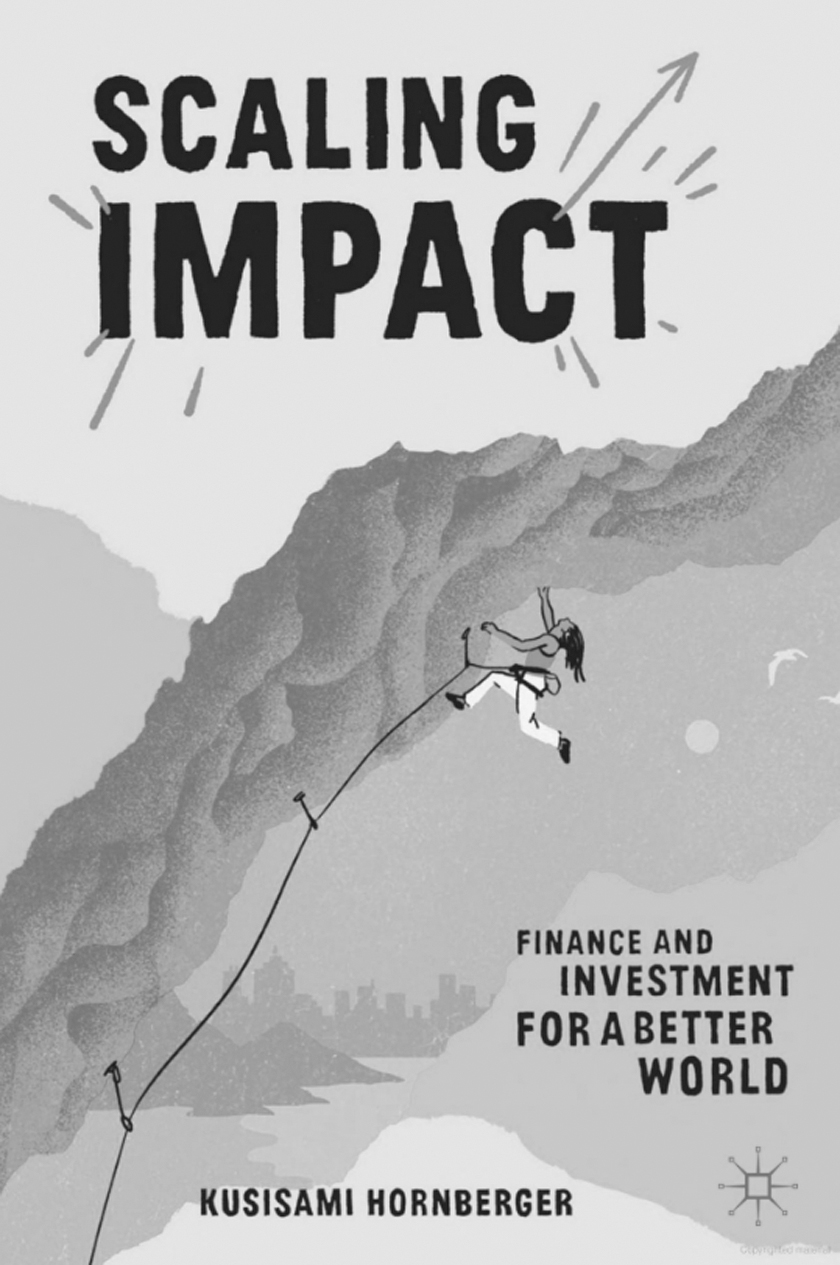
The issue of climate change is gaining more attention as evidence of its presence increases. While many recognize the threat, arguably little is being done to curb it. Corporate greed remains high, although policy makers are often accused of being influenced to favor of corporate lobbyists. Some believe the reason that the impacts of climate change fall most heavily on developing countries is attributable to injustices inherent in capitalism and this disparity is symptomatic of a broken system. While there are certainly signals of systemic issues at play, there remains a sense of optimism. This begs the question: Is it possible to create meaningful change under capitalism? Kusisami Hornberger in Scaling Impact: Finance and Investment for a Better World delves into changes that can be made within the finance space. Hornberger notes that impact investing has slowly been on the rise as many push for solutions in the wake of the climate crisis. Despite this, progress toward the United Nation's 17 Sustainable Development Goals (SDGs) remains slow.
Hornberger provides an optimistic take, though, stating that a lot has been achieved toward reaching these goals already. He cites the decline in global poverty rates (SDG#1), reduced racial inequity, and a reduction in the 2100 global warming projection as signs of progress (pp. 5-6); but these issues are far from solved and point to greater systemic issues at play. Embedded in the economic, political, and social systems is racism, exploitation, and a lack of regard for the environment. A great deal of unwinding needs to be done in order to achieve all 17 SDGs.
In Scaling Impact, Hornberger proposes six “paradigm shifts” to reimagine capitalism and produce sustainable development outcomes. Within each of the paradigms, Hornberger explores solutions and provides insights into initiatives that are already taking place. He includes interviews with professionals from organizations such as Acumen, Omidyar Network, and Roots of Impact. These provide necessary context to understand solutions as they are being applied in a real-world context.
The first Hornberger paradigm is “seek financial health, not financial access” (p. 12). This addresses a significant gap in financial services that is often overlooked. Finance is results-driven. Bank account ownership is one metric that is often used as a barometer of financial access. Institutions aim to get as much of the population banked as possible, but they completely fail to address the education piece. Few actually engage in the second step: teaching people about personal finance, credit, how to use banking services, etc. Since this part does not contribute to the data, many organizations wash their hands of it. It looks great that 76 percent of people globally have a bank account (p. 24), but how many are financially literate? Few institutions are willing to contribute the money and resources needed to properly educate the population about banking and get them financially healthy. As the first paradigm, this presents the critical first piece in bettering the world financially.
Hornberger highlights the importance of micro-, small-, and medium-size enterprises (MSMEs), particularly in emerging markets. They “contribute more than 80 percent of all jobs in those economies” (p. 60) but suffer from a lack of financing. This issue is discussed within his second paradigm: “provide patient capital, not venture capital” (p. 12). Hornberger cites the many flaws of venture capital, from its inability to cater to wide ranging business needs and overall lack of success rates: “only one in 10 investments (on average) provide a return” (p. 58). Additionally, venture capital has provided less than 1 percent of US companies with funding (Mulcahy, 2013), confirming that its use is not as widespread as some may believe. Hornberger argues instead for the use of “patient capital,” which “prioritizes impact over financial returns” and meets the “diverse needs of enterprise families” (pp. 71-72). This approach, and others like it, are certainly needed within finance. The use of blended capital structures, customized financing products, and more flexible time horizons (p. 72) can set businesses up for long-term success. Instead of name-dropping venture capital, Hornberger's assertion may have been strengthened by simply referring to traditional funding methods in general. Still, a push for flexible funding methods for small- and medium-size businesses in emerging markets is critical, and the aforementioned solutions offer promise.
Within finance, the concept of Environmental, Social, and Governance (ESG) investing has been around for decades if not centuries, though not in its present formal form. As the pressure to take action on climate change has increased, ESG has more recently become a popular way for investors to align their money with their values. Born of good intentions, the concept appears equally good in theory; however, ESG has become a prime example of greenwashing culture. It serves as a deceptive tool for institutional investors to say they are doing their part to contribute to a more sustainable and equitable world without having to change much. Institutions can create funds targeted toward investors who care about sustainability and doing social good. But what happens when those funds contain the likes of Amazon (Vanguard, 2024) and Coca-Cola (Nuveen, 2024)? Nothing. These funds are touted by Forbes as the best ESG ETFs (Friedberg, 2024), but what does that really mean? ESG is entirely unregulated, so firms can use the label no matter what holdings their portfolios contain.
In Scaling Impact, Hornberger asserts that “there is room for both ESG and impact investment strategies” (p. 95). If truly sustainable investments are the goal, there is no room for ESG. Greenwashing has ruined a once well-intentioned effort to incorporate social and environmental values into investing. Financial institutions will continue to exploit the ESG label and slap together a portfolio containing obviously unsustainable blue-chip stocks and call it “good.” Hornberger acknowledges the disingenuous nature of ESG and the way “companies with negative impacts but ESG facades are rewarded for good practices” (p. 94) despite not actually producing sustainable results. Disconnection from the ESG name will be necessary to move toward real, impactful investment.
A $3.7 trillion financing gap (p. 138) is an obstacle to achieving the SDGs, making private capital critical to full achievement. There is certainly a lack of public funding for social programs and environmental preservation, and government funding is often hard to get and moves slowly. Private capital can bridge the gap and get initiatives moving much more quickly. Hornberger advocates for the use of catalytic capital, not just blended finance, in his fourth paradigm (p. 135). Defined as “capital that accepts disproportionate risk or concessionary returns to generate positive impact and to enable third-party investment that otherwise would not be possible” (p. 142), catalytic capital serves to get more grassroots organizations that are working toward positive change off the ground. Institutions will need to be willing to take on more risk with impact investments as this space continues to grow. Small enterprises in emerging markets need funding, and while these projects are inherently riskier, they are necessary for progress.
Hornberger's fifth paradigm is key for holding institutions accountable: “Measure success based on results, not activities” (p. 177). The primary pitfall of practices such as ESG investing is that institutions can say their activities are for good without producing any outcome. Finding a way to measure actual results of impact activities is critical to success. Finance typically consists of a number of standardized metrics that serve as comps for analysis. While these work wonderfully in traditional finance, they may not translate well into impact finance.
Hornberger asserts that “more than one metric is OK” and can create “multiple pathways for earning outcome payments while still recognizing the overarching goal” (p. 195). He advocates for this within a results-based finance structure, which will give organizations “greater flexibility to adjust their programs as needed to changing circumstances” while pursuing impactful outcomes. Given the great variety in projects—from goals, size, capital base, and location—the use of one standard metric is completely unreasonable. Those who push for one lack critical understanding of the complexities of impact investing. It may deviate from traditional capitalist practices at times, but this is necessary as the current methods are not working.
Profit at any cost cannot be the mentality for any organization. The goal is entirely unsustainable and has done immense harm, creating a deep-seated system of exploitation of the Global South. Creating transparent metrics and more robust reporting that measures real outcomes is necessary to keep firms accountable. Hornberger has it right that the focus needs to be on results. Too many firms get a pass for their greenwashing practices that do not lead to any real positive impact.
The sixth and final paradigm ties together the previous five with: “provide capacity building, not just capital” (p. 213). There is certainly a great need for capital within the impact space, but without education, funds may not be allocated in a way that is conducive to long-term success. Hornberger opens his final section with the proverb: “If you give a man a fish, you feed him for a day. If you teach a man to fish, you feed him for a lifetime” (p. 215). Aiding enterprises with knowledge and technical skills will provide them with the tools to successfully run and scale their businesses. Capital alone is not enough, and as more organizations recognize this and adjust their practices, lasting impact can be achieved.
“Training, mentoring, consulting, networking, and coaching” (p. 217) are some examples of nonfinancial support that Hornberger advocates. Put into action, these initiatives can lead to more sustainable outcomes and greater success. This final paradigm ties together all the preceding paradigms as both education and capital are needed to create more impactful finance and investment. Firms need to be willing to make a few concessions and work under a reimagined form of capitalism for a better world. A huge gap still exists, though, and there are not enough firms engaging in this type of work at present.
Scaling Impact falls short in its lack of discussion surrounding policy. In a world where profit is paramount, it is overoptimistic to believe that financial institutions will change without regulatory pressure. The political environment is overrun by private interests that have made it difficult for the public to force change. While government officials often say climate change is a problem, too few policy changes have been made to improve it. The presence of lobbyists and bribery makes it so the superrich and powerful will always get their way. Corporations have too much influence on the government, and green policy initiatives are often viewed as an overreach of government, or an infringement on freedom. Large-scale change is needed to respond to this imminent threat, and governments cannot bend to the demands of the corporations doing the harm.
Overall, Scaling Impact: Finance and Investment for a Better World provides a nice starting point for those interested in sustainable finance. Hornberger is aware of his position as an optimist and notes it multiple times throughout the text; it is important that readers understand the text through this lens. However, if this book can inspire those interested in impact finance, or those already in it, to pursue change, then it has certainly accomplished something good. Hornberger's passion for impact investing is admirable, and he clearly wants real changes to be made in finance. Despite a few missing pieces, this book offers a solid analysis of initiatives already underway and presents topics to be explored further. The optimistic viewpoint offers a breath of fresh air into a space that can be depressing. The state of the climate is dire, and it will take efforts from all sectors to produce real change.