




Abstract
Climate change affects countries worldwide, challenging economies and livelihoods. It negatively impacts food production due to temperature variability, irregular precipitation, frost, and drought, increasing pressure on agrosilvopastoral resources and reducing agricultural and livestock productivity. In Peru, the tropical dry forest, an ecosystem highly vulnerable to climate change, supports traditional goat farming, a primary livelihood for many, with a population of approximately 256,860 goats in Piura. This ecosystem is particularly sensitive to temperature and precipitation changes, which directly affect forage availability and livestock productivity. This study aimed to determine goat producers’ perceptions and adaptation strategies to climate change in Marcavelica, Lancones, and La Brea. Data from 130 goat producers were analyzed using descriptive and multivariate statistics (principal component analysis, multiple correspondence analysis, and cluster analysis). Results showed that goat farming occurs predominantly in extensive systems (84.62%). Most producers (56.9%) acknowledged climate change, perceiving changes in temperature (69.9%), precipitation patterns (100%), soil productivity (79.2%), and water availability (50%). Four producer clusters were identified based on adaptive capacity: excellent (6.16%), good (23.08%), regular (75.38%), and poor (24.62%). Producers with higher education, associativity, and training demonstrated better knowledge and adaptive capacity. Climate change is evident in the dry forest ecosystem, negatively affecting goat farming. These findings underscore the importance of education, technical support, and associativity to enhance producers’ resilience and sustain livestock production under climate variability.
Introduction
Currently, climate change plays an important role in decision-making in livestock management around the world. The effect of global warming influences food availability and water resources for livestock, leading to adverse effects on animal welfare and production (Godde et al., 2021). The increase in temperature results in a negative impact on the quality and quantity of available food by altering the phenology of grasses and their nutritional value (Giridhar and Samireddypalle, 2015). Furthermore, prolonged droughts and precipitation deficits can cause heat stress in animals (Thornton et al., 2009), and climate variations can alter the distribution of disease-carrying vectors, leading to the emergence of cases in new zones (Bett et al., 2017). These factors contribute to the decrease in animal production and the economic income of producers (Silvestri et al., 2012; Thornton et al., 2009). However, livestock is one of the most relevant activities that improve the resilience of the most vulnerable people in the face of climate change challenges, disease presence, and poor market access opportunities (Freeman, 2008; Krishna et al., 2004).
One of the ecosystems most susceptible to climate change is dry forests due to changes in ecosystem dynamics and changes in the distribution, persistence, and diversity of species (Silva et al., 2019). The pressures on tropical dry forests through degradation and change in land use, as well as the intensification of climate change, substantially affect the balance of the ecosystems where cattle ranching areas are located (Ojeda Bustamante et al., 2012). In most Latin American countries, the impact of climate change on tropical dry forests has been evaluated. Reports suggest that carbon reserves in these areas are more sensitive to changes in precipitation patterns (Seidl et al., 2017), and carbon absorption decreases significantly with increasing temperatures (Siyum, 2020).
Peru is considered one of the most vulnerable countries susceptible to climate change due to its geographical distribution and the diversity of ecosystems and microclimates (Altea, 2020). The dry forest represents 4.7 percent of the country’s forest heritage and is located on the north coast. This region is characterized by elevated temperatures and extreme concurrence and susceptibility to the natural phenomenon “El Niño” (MINAM, 2018; Rodríguez et al., 2005). This type of forest presents prolonged droughts throughout the year with a short frequency of rainfall between 30 and 300 mm and a temperature that exceeds 40°C (Parra, 2015; Rodríguez and Álvarez, 2005). El Niño is essential for the dynamics of this ecosystem by increasing rainfall, favoring soil moisture, and, consequently, the development of crops such as rice, the appearance of temporary meadows available for livestock feeding, groundwater recharge, and the natural regeneration of dry forest (Parra, 2015; Pécastaing and Chávez, 2020; SENAMHI, 2014).
One of the most important economic activities for the population in the dry forests of northern Peru is goat production (Sarria et al., 2014), specifically in the regions of Piura, Tumbes, Lambayeque, and La Libertad, where this activity mainly thrives within this ecosystem. Goat producers often practice extensive breeding in farmland located in dry forests and depend on forage availability (Gómez Urviola et al., 2016; Requena, 2016). The availability of forage for goats has been directly affected by climate change, according to temperature and rainfall regimes that can favor or harm livestock productivity in dry forests (Lasco et al., 2011; Whaley et al., 2010).
In this sense, there is a need to know and evaluate the perception of goat producers about climate change and its impact on goat farming. Based on their answers, it will be possible to determine the adaptation measures or mechanisms that producers are adopting or will implement to deal with this situation (Burnham & Ma, 2017; Feleke et al., 2016). To date, there are few studies conducted in Peru on the perception of producers about climate change and even fewer on goat producers.
In relation to previous studies carried out on the perception and adaptation strategies to climate change of goat producers, there is sufficient evidence, generally coming from African and Asian countries, where goat production is a relevant economic activity. The authors of the articles, mainly from Nigeria, Ethiopia, and Ghana, agree that goat producers perceive climate change as unpredictable and that the most observed changes in weather patterns are the increase in temperature, the reduction of precipitation frequency, short rainy seasons, prolonged droughts, and therefore the depletion of water availability (Tetteh et al., 2020; Mihiretu et al., 2020; Mihiretu et al., 2021; Saravanan et al., 2021; Feleke et al., 2016). Some of the adaptation and mitigation strategies adopted by goat producers were selling animals during the season of grass scarcity, offering an extra supply of water and feed during the dry season, rearing other livestock species, increasing the number of animals in the herd, and changing economic activity such as crop production (Banjoko et al., 2021; Tetteh et al., 2020; Mihiretu et al., 2020; Mihiretu et al., 2021; Ankrah Twumasi and Jiang, 2021). It would be correct that future advanced interventions in goat production systems contemplate outstanding training and extension work. In addition, meteorological services and the generation of nonagricultural income opportunities should be included since they would play an important role in adaptation to climate change (Mihiretu et al., 2020; Tetteh et al., 2020).
The purpose of this study is to report on the perception of climate change and the socioeconomic variables associated with it, as well as to identify the adaptation strategies to climate change applied by goat producers settled in the tropical dry forest of northern Peru.
Evaluation
The study area was carried out in the Lancones and Marcavelica districts in the province of Sullana and La Brea in Talara, located in the department of Piura. The department of Piura, located in the north of Peru, represents the top goat producer in the country, with a population of 330,308 goats and 17,246 producers (MIDAGRI, 2020). Goat farming is carried out mainly in the tropical dry forest of northern Peru.
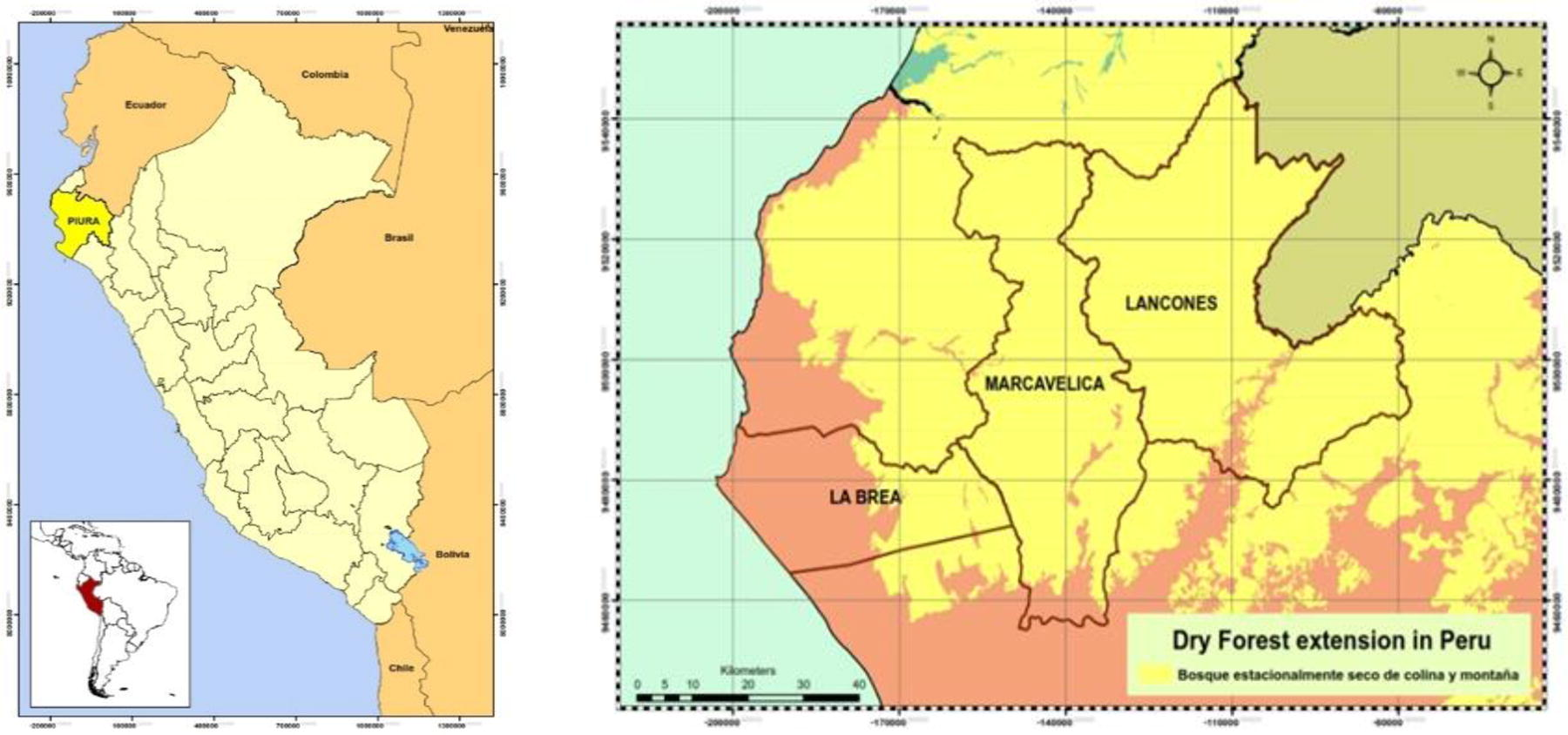
Map of the study areas located in the Piura region and extended in the dry forest of Peru
Climate variability gives unique characteristics to this place due to the clash of two currents: the cold Humboldt current reaches temperatures from 13°C to 19°C, and the El Niño current has a temperature between 22°C and 27°C (SENAMHI, 2016).
The data on climatic parameters collected from the Mallares and Lancones meteorological stations located in the study area showed that the maximum temperature pattern varied between 16.8°C and 33.4°C during the study period. Since 2010, the average temperature recorded was above 34°C, and the minimum temperature oscillated from 9.2°C to 21.5°C (SENAMHI, 2020; Zegarra, 2010). In Piura, the temperature projections suggest that the local temperature could increase an additional 1.5–1.75°C, while in Lancones the temperature could exceed 2°C (SENAMHI, 2016).
Pluvial precipitation represents a key parameter involved in the functioning of the ecosystem and the biological community (Uribe, 2015). The precipitation in the Piura region shows a seasonal rhythm throughout the year. It is characterized by a rainy period that starts in December and ends in April, followed by a light rain period from July to November. On an annual basis, this region would present marked changes between the coastal zone below about 500 m above this altitude (SENAMHI, 2016). By 2030, it is estimated that the precipitation level of this coastal zone of Piura may increase up to 230 percent (SENAMHI, 2016).
Selection and Data Collection of Goat Producers
The total respondents in this study were made up of 130 goat producers, who were randomly selected from 27 local communities. For this semi-structured survey, the face-to-face method was used, and it lasted 30 min. The purpose of the survey was to collect information on the sociocultural, productive, economic, environmental, and ecological components. Subsequently, the information collected from goat producers was contrasted with the information obtained from a focus group of leading producers.
Selection of Qualitative and Quantitative Variables for the Characterization
The methodology was developed according to the characterization and typification of livestock systems proposed by Cabrera et al. (1997). A total of five components were selected for the characterization of livestock systems: social, economic, productive, ecological, and environmental. Subsequently, the objectives were determined for each component. The perception of climate change was an objective of the environmental component. Identification and classification of quantitative and qualitative variables were developed for each component. Sixty-two variables were evaluated in the environmental component to determine the perception of climate change, the perception of the impact on the livestock production system, the adaptation strategies, and the classification according to their adaptation capacity. To reduce the qualitative and quantitative variables, multiple correspondence analysis (MCA) and principal component analysis were used, respectively.
Correlation Between the Variables of Perception of Climate Change and the Socioeconomic and Productive Components
An MCA was developed to determine the degree of correlation between the variables of perception of climate change and the socioeconomic (education, sex, age, associativity, birthplace, land tenure, and income) and productivity (level of production and herd size) variables.
Forming Groups of Producers According to the Most Representative Variables of Each Component
A two-stage cluster analysis was developed to group producers according to their adaptation capacity and the relation with sociocultural and economic variables. The variables were the use of adaptive strategies, age, education, capacitation, associativity, land tenure, and the use of strategies to minimize forest degradation. Levels and values were assigned to these variables based on the classification methodology used by Salazar (2016). Finally, four groups of producers were obtained based on the degree of their adaptive capacity (high to low). The variables used for this classification can be seen in Table 1.
Description of Variables to Determine the Adaptative Capacity of the Goat Producer to Climate Change
Discussion
Perception of Climate Change
The perception of goat producers regarding climate change is summarized in Figure 1. All producers (100%) reported having observed variations in climate in recent years, particularly through changes in temperature and rainfall, as well as the recurring occurrence of climatic phenomena. A significant proportion of producers (63.8%) identified these changes within the last 5 years, while 36.15 percent reported noticing them within the last decade. These observations align with the climatic reports of SENAMHI (2016), which documented a rise in temperature and a decline in rainfall in the region between 1995 and 2016.

Perception of climate change by goat producers in dry forests (%, n = 130)
Notably, during the study period (2016–2017), the El Niño phenomenon impacted Peru, particularly the departments of Piura, Lambayeque, and La Libertad, causing severe consequences (INDECI, 2017; Ramírez and Briones, 2017). This event may explain the producers’ heightened perception of climate change, as temperatures during this period increased by +2°C to +6°C, and rainfall reached the second-highest recorded level, with 258.5 mm within 24 h. The 2017 El Niño was classified by ENFEN (2017) as the third most intense El Niño event of the past century, further contextualizing the results of the study.
However, although goat producers perceived climate change through variations in weather conditions, only 79.2 percent of them reported having knowledge about what climate change is, 12.31 percent know little, 56.9 percent are well informed, and 30.7 percent have no knowledge (Fig. 1a). Authors such as Karki et al. (2020) and Burnham and Ma (2017) conclude that although climate change is widely perceived by goat producers through climate variability (temperature and rainfall), the understanding of its meaning can vary among individuals living in the same locality or even between family members, mainly because knowledge is influenced by education level and access to information.
Regarding the perception of temperature variation, 100 percent of the producers reported perceiving increases in temperature in recent years, especially during the wet season (66.92%) (Fig. 1b). There was high variability in the answers regarding the perception of changes in rainfall, as during the wet season, 41.54 percent of producers observed an increase in rainfall, while 40 percent perceived a decrease (Fig. 1c). Furthermore, some producers (7.6 9%) indicated an increase in rainfall during the dry season. The variability in the perception of these variables can be explained by the fact that the present research was conducted during the El Niño coaster, when the temperature increased by at least 3°C and the frequency and intensity of precipitations were higher, especially during the wet season, as reported by ENFEN (2017). Furthermore, some traditional producers, regardless of the ecosystem in which they operate, are highly influenced by and have perceived climate variability through changes in temperature and rainfall—factors that affect the availability of water resources and forage biomass, which are essential for normal productivity development (Burnham & Ma, 2017; Karki et al., 2020; Roco et al., 2015).
Regarding the availability of water and the perception of droughts, it should be noted that 43.08 percent noticed a decrease in surface water in hand-built tubular wells due to the higher frequency of droughts (Fig. 1d). These results coincide with those reported by López Reyes et al. (2009), Olmos et al. (2013), Roco et al. (2015), and Morales et al. (1999), who state that rural producers have experienced negative changes in water supplies, mainly due to the droughts of recent years that affected agricultural activities. Furthermore, according to the historical record of CONAM (2005), it was reported that the water levels of the phreatic layer in the Piura River basin would not be sufficient to supply water for agricultural activities.
Perception of the Impact of Climate Change on the Productive System of Goat Farming
The impacts of climate change were perceived through the variability of factors such as meat and milk production, herd size, fertility, land use, and forest productivity, as shown in Figure 2. The authors Godde et al. (2021), Karki et al. (2020), and Thornton et al. (2009) considered other indirect impacts such as the employment and unemployment rate, labor, and the rising prices of farm inputs, which finally influence the living conditions of farmers.
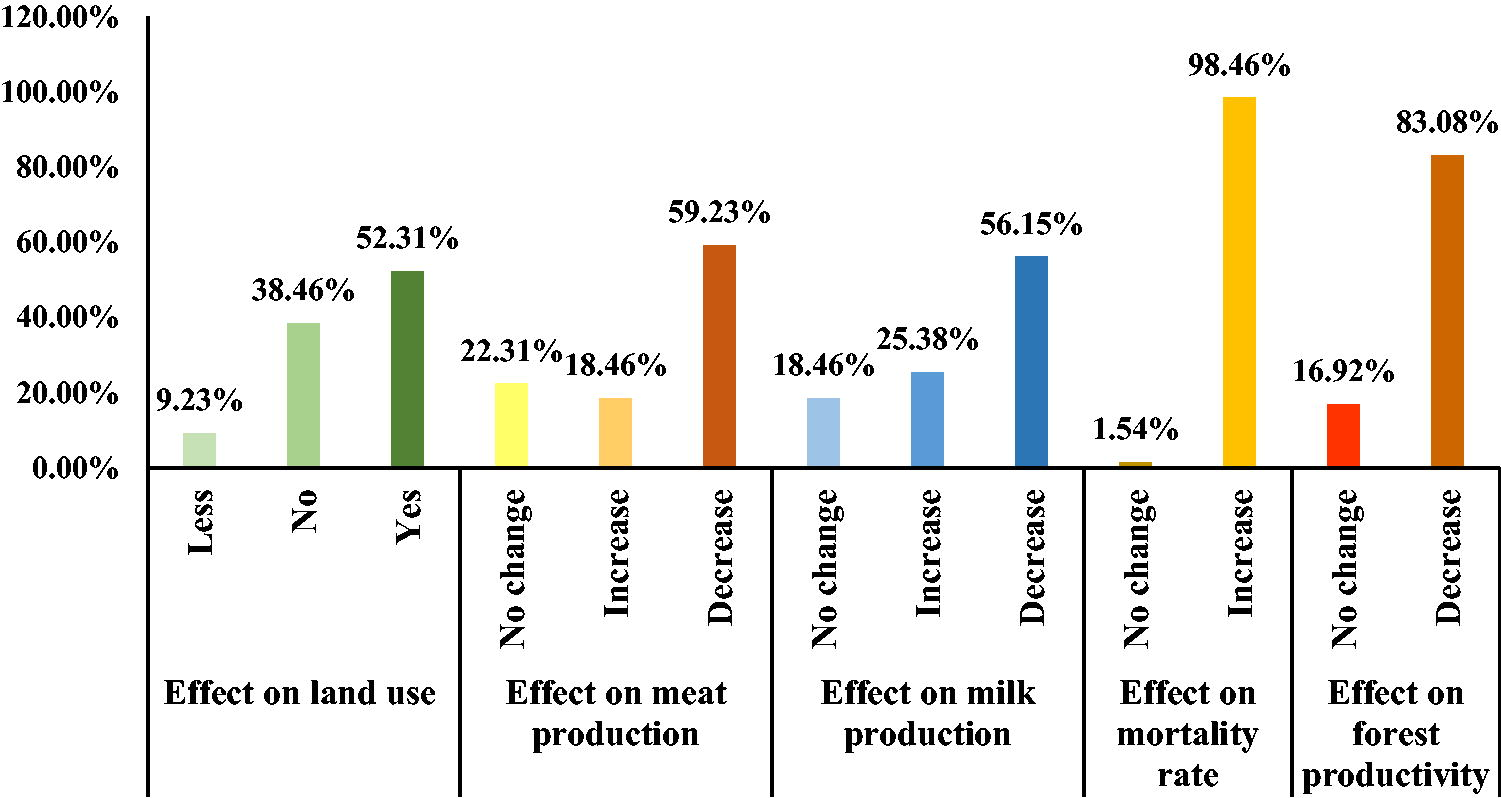
The main impacts of climate change on the production systems identified by goat producers in dry forests (%, n = 130)
The impact perceived by producers on production (meat and milk) in recent years was irregular. The goat producers believe that climate change affected the production of meat (59.23%) and milk (56.15%). These results coincide with those found by Godde et al. (2021), who reported that around 30 and 6 percent of milk and meat production, respectively, obtained under an extensive system, are affected by climate change. Producers also state that, as a consequence of climate change, animal mortality increased due to the presence of diseases and the lack of food during the dry season, with no opportunity to recover their animals after this event, and consequently their production decreased (Carrillo, 2016; Godde et al., 2021; Rivas et al., 2021). However, some producers state that their production of meat (18.46%) and milk (25.36%) increased. In this case, it can be inferred that the producers adopted different feeding alternatives, such as concentrated supplementation, the use of pasture associations of creeping-type grasses and legumes supplemented with additives that optimize the nutritional quality of the food (Y. K, 2014 ), to obtain a higher meat and dairy production.
Diseases and mortality have been one of the most perceived variables of the impact of climate change (98.46%), according to goat producers, especially during the summer seasons regardless of precipitation. However, similar findings reported by Mendoza et al. (2020), Oyhantçabal et al. (2010), and Rodas et al. (2017) indicate that there are multiple factors related, not only environmental but also social, and are determined by the production system and the region.
Most producers (83.03%) determine that there is a negative impact on the quality and quantity of these pastures. Some of them (49.2%) maintain that the worst impact occurs in the summer when the temperature is high and the rainfall is not heavy, so the quality of the pasture is different compared to other years. Various authors have reported that changes, specifically in precipitation, prevent or delay the germination of native pastures, negatively influencing the availability and quality of forage biomass in these ecosystems (López Reyes et al., 2009; Mendoza et al., 2020; Morales et al., 1999).
Correlation Between Variables and the Perception of Climate Change
In Figure 3, it can be observed that there is a high correlation between knowledge and perception variables of climate change with education level, associativity, gender, and capacitation. In contrast, there is no correlation with the variables of production, land tenure, income level, and the birthplace of the producer.
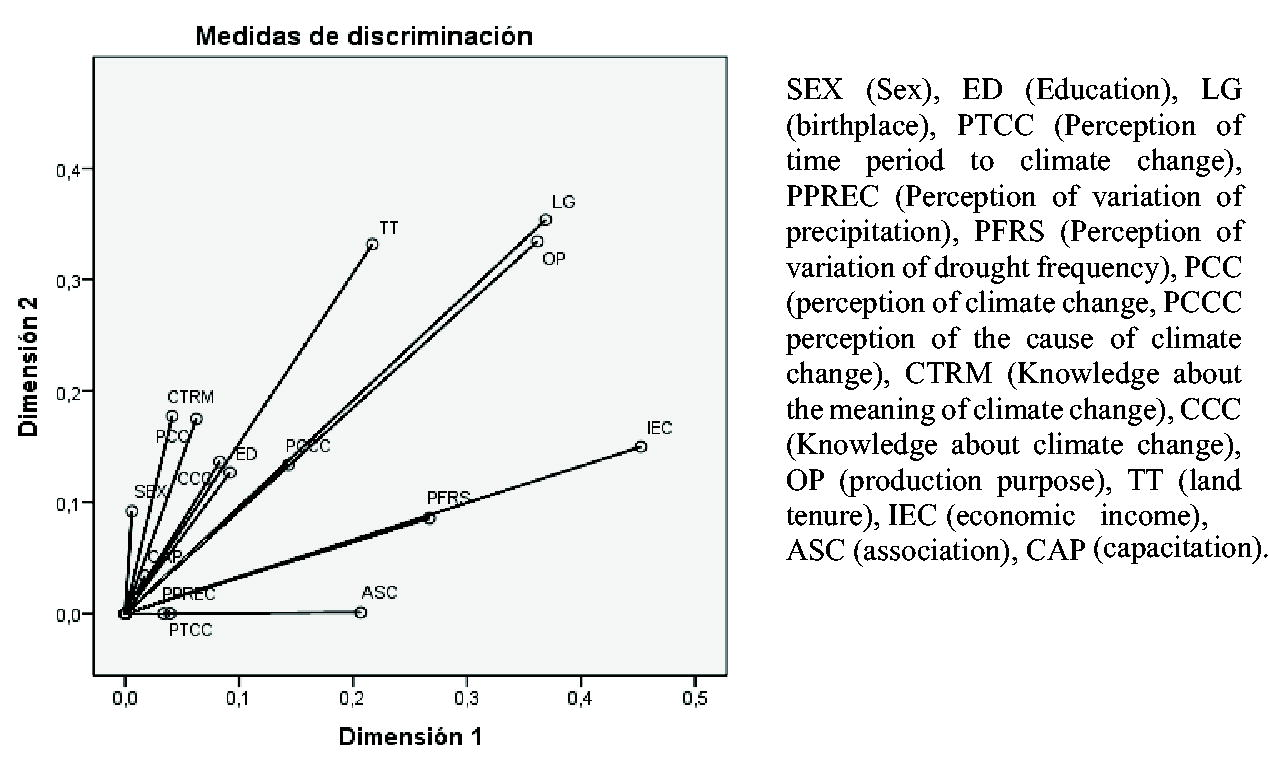
Multiple correspondence analysis of climate perception and socioeconomic and productive variables
In this sense, it can be deduced that male producers with a higher educational level, associated and technically trained, have better knowledge and perception of climate change, regardless of their level of income, production, birthplace, or size of the land owned. The most considerable proportion of goat producers are men who have more opportunities to be trained and receive access to education than women in this locality (Sarria et al., 2014).
Authors such as Karki et al. (2020), Mihiretu et al. (2020a), and Salazar (2016) found similar results; however, they also correlated the perception of climate change with variables such as extension services, experience, and slope of the territory, which positively influenced perception. Education and access to information have a substantial effect on the producer’s understanding of climate change, facilitating the ability to comprehend this emerging phenomenon and helping the producer to make decisions about alternatives of adaptation to reduce the consequences of climate variability.
Adaptation Strategies to Climate Variability
Farmers’ understanding of climate can be an important asset when it comes to adapting to climate change, but it is rarely considered in the design and implementation of adaptation strategies. Similarly, decision-making for the adoption of these strategies depends on factors such as access to credit, access to information on climatic conditions, commercial access, the educational level of the producer, access to extension services, the time of experience in goat rearing, and economic income (Feleke et al., 2016; Mihiretu et al., 2020; Tetteh et al., 2020; Smiles et al., 2018).
In Figure 4, six components can be identified as the most requested by producers to be improved and adapted to climate change. Regarding the feeding component, the most widely used strategy is stubble feeding (Fig. 4a). The producer acquires the crop residues generated by the main agricultural activities in the area. On the contrary, another group of producers provides commercial concentrated feed to their goats, and in a minimal proportion, they also cultivate and offer cut grass. Similar results were found in studies by Arroyo (2007) and Sarria et al. (2014) that conclude that the most common strategy is stubble feeding in areas such as the central coast of Peru.
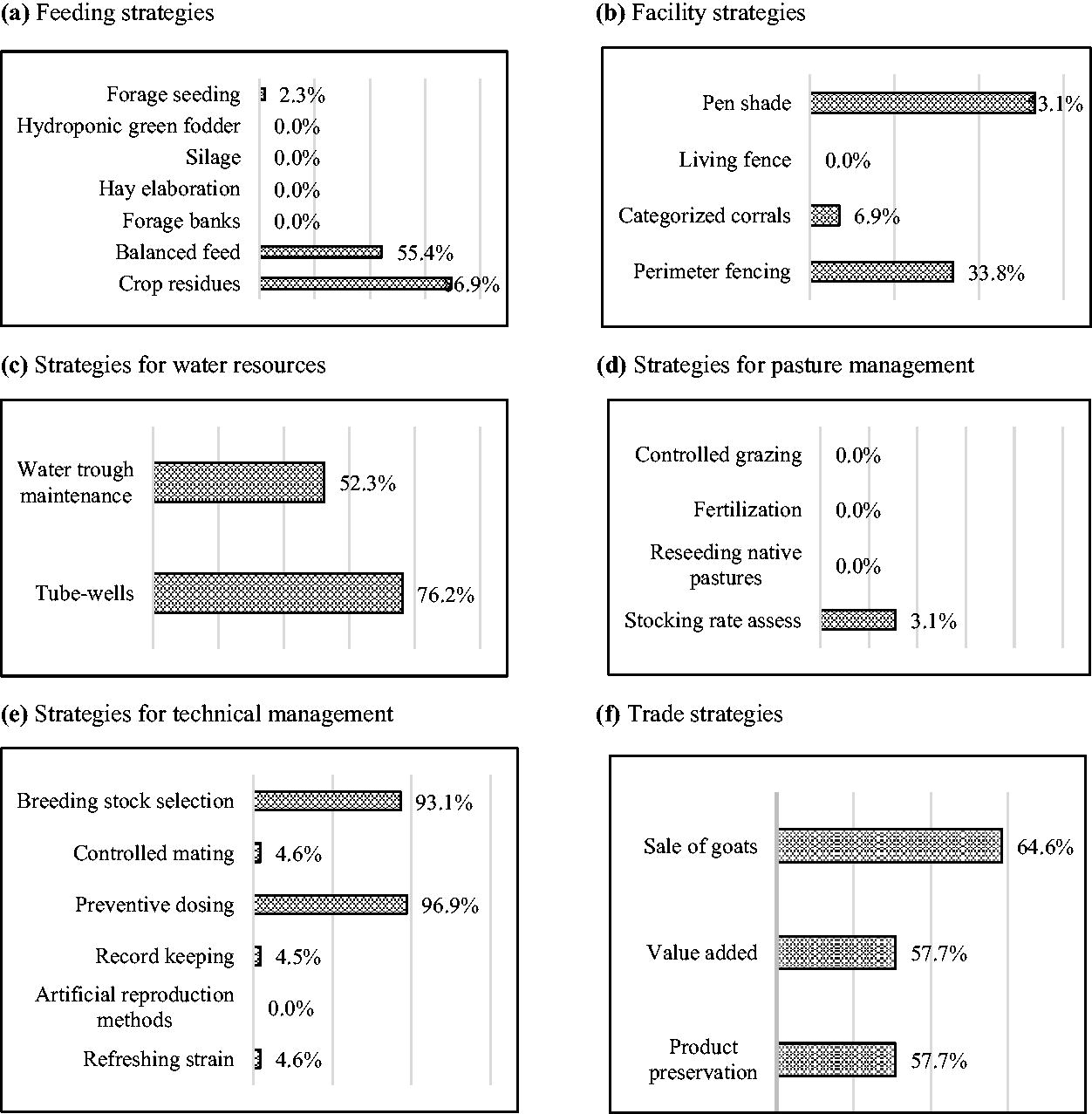
Adaptation strategies by component adopted by goat farmers in the dry forest of northern Peru
Regarding the facilities component (Fig. 4b), the most employed strategy is the implementation of roof pens to avoid the heat stress of the animals or respiratory problems due to heavy rainfall. Sometimes, producers plant trees such as Prosopis pallida (algarrobo) and Cordia lutea (muyuyo) inside pens to guarantee continuous shade (Otivo, 2015). Sánchez et al. (2014) reported that, as an adaptation strategy to face climate change, tree species play a crucial role in production systems since they provide shade, building material for facilities, conservation of tubular wells, and food supply; thus, the producer tries to improve the use of these plant species in critical situations.
Regarding the water component (Fig. 4c), the most widely used adaptation strategy within the dry forest is the construction and possession of water reservoirs; however, due to heavy rain, these wells are covered by mud and stones, preventing their use and requiring maintenance. Another proposed strategy is to condition and clean natural gutters to supply water for livestock and agricultural production.
The pasture management strategies used by producers in the Piura region have been minimal (Fig. 4d). Showing that producers have little knowledge on this subject because there is no control of the stocking rate per hectare of pasture, making it prone to soil erosion and delaying pasture recovery. In addition, fertilization, controlled grazing management, and reseeding native pastures require funds that producers do not dispense. Additionally, these management alternatives could not be applied unless the right conditions for pasture establishment are met, such as water availability.
Among the strategies in the technical management of goats, the most used are preventive dosing and selection of animals (Fig. 4e). Selection is an important aspect of this component because it prioritizes the rusticity of the animals based on the perception and experience of the producer. However, animal dosing was conducted irregularly, but now producers are trying to follow a schedule for application that is periodically and in a controlled manner. These strategies are necessary to minimize the impacts caused by climate change, since, by taking vitamins, minerals, and antiparasitic and applying them, goats can become more resistant to diseases and thus reduce herd mortality. With animal selection, the producer discards animals that do not provide profits and at the same time reduces the stocking rate and the need for scarce food requirements during the dry period or prolonged droughts. Although controlled breeding and a refreshing strain background are strategies that are less practiced, they allow the producer to improve their production system and mitigate the effects of climate variability.
Finally, in the trade component (Fig. 4f), it was observed that the strategy most used by goat producers is the sale of goats in batches during food scarcity. Producers with greater purchasing power and the availability of food processing plant services provide added value to their products to elaborate the caramelized milk or custards derived from goat milk to guarantee income. Likewise, some dairy farmers implement measures to optimize the cold chain in their facilities to conserve their products for the longest time and prevent deterioration.
Producers Cluster According to Their Adaptation Capacity
The clusters on the producer’s adaptive capacity obtained according to the use of adaptation strategies in the productive systems are described in the following sections.
Cluster I: Excellent Adaptation Capacity
The excellent adaptive capacity is represented by 6.16 percent of producers. Within this class, 75.12 percent of producers make excellent use of adaptation strategies. These alternatives consist of the use of harvest residues and concentrate, the use of roof pens as a defense mechanism against precipitation and solar radiation, and stable or potable water reservoirs. Additionally, all producers (100%) carry out preventive dosing (up to twice a year), selection of the best animals based on their phenotype, sale of goats during low forage availability, and use of records.
Within this group, 72.36 percent of the producers are older than 60 years. This implies that older people bring experience and knowledge, which allows them to adapt positively. Education is an essential factor in accepting and practicing adaptation mechanisms. In this class, 49.36 percent of producers are reported to have access to education and received continuous capacitation, which implies that producers who have completed high school studies were favored by the capacitation and technical assistance given by the institutions.
Furthermore, 56.95 percent of the producers considered that the associativity was positive, and 30.32 percent had a high tenure on land, which could mean that those producers who own more land have a better ability to adapt to adverse changes or, rather, have more resources to deal with climate change. Last, 45.32 percent of the producers had a high level of use of strategies to reduce forest degradation. The main strategies selected by the producers were capacitation of forest use, eventual extraction of forest resources, reforestation, and reduction of the stocking rate to reduce overgrazing.
Cluster II: Good Adaptation Capacity
This group is represented by 23.08 percent of goat producers. The use of adaptation strategies is considered good for 58.36 percent of them, highlighting the occasional use of stubble and the supplementation of their animals. In this class, the availability of water is intermittent and limited to a periodic search for new reservoirs. The facilities of the producers are precarious, and only a few have roofs, and the dosing of the animals is carried out annually during drought periods. In addition, producers have many animals that exceed their workforce availability, thus limiting the management practices necessary in production. The producers’ age in this class is between 31 and 60 years old, which means that it is mainly constituted of young people and adults, representing 41.23 percent, who provide experience to develop adaptation capacities. Regarding education, in this class, there are producers with a high classification level of 35.3 percent, which means that they are producers who completed high school studies and received occasional capacitation. Associativity is represented by 32.36 percent of goat producers, and land areas vary from 1 to 3 hectares per producer, whose level is good for 36.3 percent of producers. The reduction of forest degradation is considered good for 16.35 percent of the producers and medium for 13.23 percent of them, the producers raising concern about participation in reforestation projects and the use of forest resources to reduce tree fall.
Cluster III: Regular Adaptation Capacity
This class represents 75.38 percent of producers and is the class with the largest proportion of producers. The use of strategies is considered regular for 51.23 percent, which implies that at this level only stubble is used as an adaptation mechanism. Furthermore, the water resource is deficient, especially during drought. Dosing is not performed as a preventive strategy; instead, it is carried out when the disease has been diagnosed or when it is decided to sacrifice the animal. The percentage of young producers in this class is 36.65 percent, which implies that they do not provide much knowledge. Similarly, the levels of education are medium and low, with values of 16.32 and 23.32 percent, respectively. Associativity is null for 32.61 percent of producers, only approved by 17.89 percent of them, and land tenure is low for 52.32 percent of producers.
Cluster IV: Bad or Null Adaptation Capacity
This classification represents 24.62 percent of producers in whom the use of adaptation strategies is scarce or null and is considered bad for 59.62 percent of goat producers. Most of the people here are young between 18 and 30 years old, with poor education instruction. Many of these producers have decided to dispense with livestock activity, and 72.36 percent of them are not associated and own land areas of <1 hectare (78.63%). Finally, 78.36 percent of producers do not use any adaptation strategy to reduce forest degradation.
In this survey, it was shown that to determine the adaptive capacity of livestock activity, the perception of climate change, sociocultural variables, and productive variables are positively correlated and can be used for decision-making and to predict their response to extreme phenomena. Various authors have studied the perception of livestock and agricultural producers about climate change and the adaptation strategies implemented, concluding that they practice it empirically due to the lack of precise and necessary information (Ankrah Twumasi and Jiang, 2021; Banjoko et al., 2021; López Reyes et al., 2009; Mihiretu et al., 2020; 2021; Olmos et al., 2013; Rodas et al., 2017; Salazar, 2016; Tetteh et al., 2020). However, despite these limitations, the strategies adopted by these producers are also related to other variables such as technical assistance, extension, government subsidies, and public policies that have influenced the categorization and persistence of producers in livestock activity.
Conclusions
The perception of climate change by goat producers covers a variety of patterns; however, the temperature and precipitation variables stand out in the development of the producer’s perception, which can be influenced by the degree of relationship between these variables and their impact on the development of the producer’s daily activities. Producers are shown to be more sensitive to climate change when they perceive an impact directly on the economic component or have been able to access information about climate change.
Producers with a higher educational level, who are associated and have received capacitation, had more significant knowledge and perceived climate change better regardless of their level of income, production, birthplace, or number of properties.
Climate change adaptation strategies are mainly developed to ensure food and water within a declining production system. The perception of climate change plays a vital role in adopting these strategies because, under the limitations faced by the producer, it prepares him to mitigate the consequences of climate change on his farming system. These strategies depend on economic and social factors that influence their success or failure. Likewise, the producer who implements these strategies can be characterized according to age, education, level of associativity, land tenure, and perception of forest degradation.
Footnotes
Ethics Statement
This study did not require approval from an institutional review board, as the data collected through surveys were entirely anonymous and did not include personally identifiable information. The questions focused exclusively on the producers’ perceptions of climate change. All participants provided informed consent prior to participating in the study, and their participation was entirely voluntary.
Authors’ Contributions
V.T. was responsible for the conceptualization of the study, data curation, methodology, investigation, formal analysis, validation, and visualization of the results. He also took charge of drafting the original article. C.B. contributed to the conceptualization, investigation, formal analysis, resource provision, and project supervision, as well as participating in the review and editing of the article. D.G. contributed to the conceptualization, investigation, resource provision, and supervision, along with critical review and editing of the final article.
Author Disclosure Statement
No competing financial interests exist.
Funding Information
This work was supported by the animal production scholarship funded by the National Council of Science, Technology, and Innovation (CONCYTEC) and was partially supported by the National Institute for Agriculture Innovation.