




Abstract

Introduction
Global warming is among the most pressing challenges of our time, threatening ecosystems, economies, and global security (Calderon et al., 2015). Carbon dioxide (CO2) emissions are a major component of greenhouse gases (GHG), accounting for nearly two thirds of all GHG emissions (Sanglimsuwan, 2011). According to the United Nations Environment Program’s (UNEP, 2018) “Carbon Emissions Gap Report 2018,” global carbon emissions must decrease by 7.6 percent annually between 2020 and 2030 to achieve the Paris Agreement’s target of limiting global temperature increases to 1.5°C above preindustrial levels. Meeting this target demands urgent action and the development of effective strategy to address the steady rise in emissions.
Transitioning from fossil fuels, the largest source of CO2 emissions, to cleaner energy alternatives has become a central focus for many countries in their fight against climate change (Fan et al., 2016). In this context, and as outlined in Article 6 of the Paris Agreement, nations are encouraged to implement climate policies, including carbon trading, to meet their nationally determined contributions (NDCs). Since the Kyoto Protocol was introduced, carbon trading systems have been established in numerous countries (Bataille et al., 2018). By 2019, there were 21 active carbon trading markets spanning four continents, with an additional 24 markets either in development or under consideration (ICAP, 2020).
Carbon trading has emerged as a vital tool in global climate mitigation strategies. By assigning a financial value to carbon emissions, mechanisms such as cap-and-trade systems and carbon offset markets create economic incentives for reducing emissions. These systems encourage industries to innovate and adopt cleaner technologies while simultaneously generating revenue that can be reinvested in sustainable development initiatives (Albrizio et al., 2017).
Carbon Trading System are on the Rise Globally
Globally, 39 national and 23 subnational jurisdictions have adopted or are planning to adopt carbon pricing instruments, including emissions trading systems (ETS) and carbon taxes (Kossoy, 2015). These instruments are pivotal in aligning economic incentives with environmental objectives by placing a financial value on GHG emissions. Among these, the European Union ETS (EU ETS) is the largest and most established carbon market, covering sectors responsible for over 2 billion tons of CO2 emissions annually (Boutabba and Lardic, 2016). This comprehensive framework not only sets emission caps but also fosters innovation and efficiency by allowing market participants to trade emission allowances (see Fig. 1).

The timeline of ETS and carbon taxes introduced and planned (Kossoi et al., 2015). ETS, emissions trading systems.
In Asia, South Korea has implemented a robust ETS, which is notable for its scale and impact, regulating sectors that emit over half a billion tons of GHG annually (Woo et al., 2021). This program has become a regional leader, showcasing how a well-structured ETS can effectively balance industrial growth with environmental responsibility. China has also made significant strides in carbon trading. Its seven pilot ETS programs collectively cover sources emitting over one billion tons of CO2, setting the foundation for its national carbon market launched in 2021 (ICAP, 2020).
Current Indonesia Carbon Trading System
For Indonesia, a nation that contributes significantly to global emissions due to deforestation, peatland degradation, and reliance on fossil fuels, establishing an effective carbon trading system is not just a policy imperative but also a crucial step toward meeting its international climate commitments. Indonesia has made considerable progress in laying the groundwork for its carbon trading system, driven by a combination of national regulations and international commitments. One of the key regulatory frameworks is the Presidential Regulation No. 98 of 2021, which outlines the procedures for implementing economic value policies for carbon, including the establishment of a domestic carbon trading mechanism. This regulation is aligned with Indonesia’s updated NDC, which aims to reduce GHG emissions by 29 percent on its own and up to 41 percent with international assistance by 2030.
Furthermore, the Financial Services Authority (OJK) issued POJK No. 14/2023, a critical regulation that provides the legal foundation for carbon trading activities within Indonesia’s financial sector. This regulation is intended to integrate carbon trading into the broader financial system, facilitating the mobilization of capital for sustainable projects and ensuring that emissions reduction efforts are economically viable and aligned with the country’s broader economic goals. In parallel, the Ministry of Environment and Forestry (KLHK) has been actively involved in developing the technical guidelines for carbon trading, particularly in terms of monitoring, reporting, and verifying (MRV) emissions. These guidelines are crucial for ensuring the transparency and accountability of the carbon market, addressing one of the major concerns regarding the integrity of emissions data and the effectiveness of the trading system. Additionally, Indonesia is in the process of establishing the IDX Carbon, a specialized trading platform under the Indonesia Stock Exchange (IDX). This platform is designed to facilitate the trading of carbon credits, making it easier for companies to meet their emissions reduction targets.
Since its launch on September 26, 2023, IDX Carbon has recorded three carbon credit projects under the Verified Emission Reduction (Sertifikat Pengurangan Emisi Gas Rumah Kaca or SPE-GRK) mechanism. These include the Pertamina Geothermal Lahendong project, the Muara Karang Gas and Steam Power Plant operated by Perusahaan Listrik Negara (PLN), and the Wugul Mountain Mini Hydropower Plant under the PLN group. While these initial projects represent a significant step forward in Indonesia’s efforts to operationalize its carbon trading system, the scale of participation remains limited.
Given Indonesia’s regulatory advancements, there is now an opportunity to draw on global best practices to further strengthen its carbon trading framework. Many well-established carbon markets around the world offer valuable insights into technologies, policies, and approaches that have proven effective in fostering transparency, market efficiency, and compliance.
Best practices for carbon trading remain in development. In this Commentary, best practices were developed using the eight-step guidelines proposed by Okoli and Schabram (2010) using a systematic literature review (see Fig. 2).
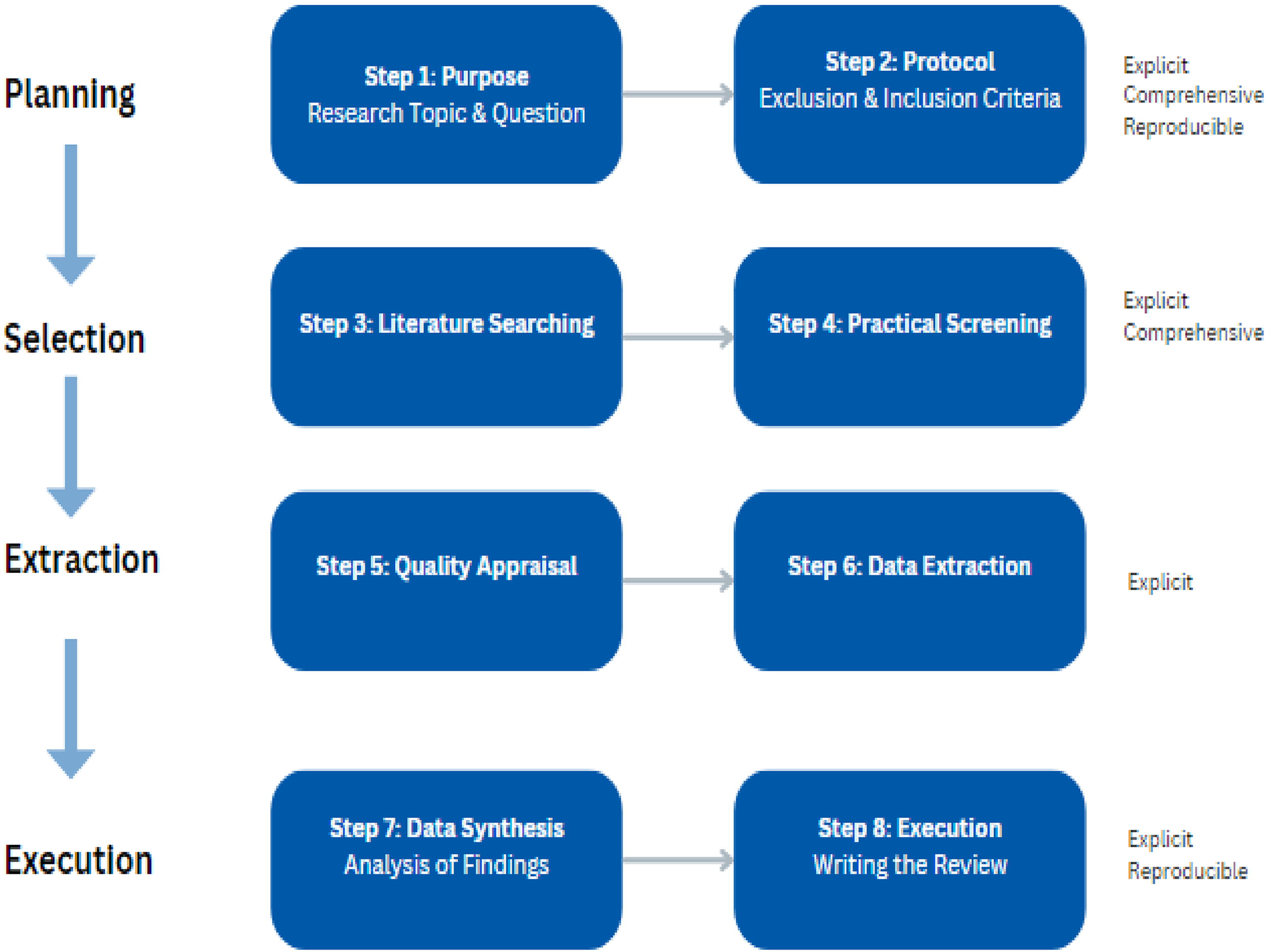
The systematic review process (Okoli and Schabram, 2010).
Step 1: Purpose
Synthesis of the existing empirical knowledge on the global carbon trading system and to identify the best practices of the emerging carbon trading system.
Step 2: Protocol
Screen based on predefined eligibility criteria (step 3). The protocol consists of “inclusion and exclusion” criteria. Articles that meet these delimitation criteria are included in the review with time-frame restriction from 2015 to 2024. Conversely, articles written in languages other than English, research in progress, or “articles in press” are excluded based on the criteria (see Table 1).
Inclusion and Exclusion Criteria
Step 3: Literature Search
Search process and the initial selection of papers, including the keywords and databases used, based on the delimitation criteria set in Table 1, and the number of articles found through the search process (see Table 2).
The Searching and Selection Process
Step 4: Practical Screen
Screen based on article content relevance to the research questions (see Table 3).
Articles Selected Through Steps 4 and 5)
Step 5: Quality Screen
Screen based on the methodology used, including data collection methods and findings (Fink, 2019).
Step 6: Data Extraction
Data extraction and collection using a data extraction form (Excel form), defined and piloted during the protocol (step 2).
Step 7: Data Synthesis
Data analysis, comparison, and categorization into key themes (Levy and Ellis, 2006); a logical approach was strategized for categorizing and presenting the extracted data (Webster and Watson, 2002).
Step 8: Writing the Review
Documentation of review process to provide full replicability (Chitu and Schabram, 2010).
Themes for Best Practices
The implementation of an effective carbon trading system plays a crucial role in global efforts to reduce GHG emissions and mitigate climate change. As countries transition toward a low-carbon economy, the development of a well-functioning carbon market becomes essential in incentivizing companies and individuals to reduce their carbon footprint. To achieve this, best practices must be adopted across multiple dimensions, including pricing strategies, policy frameworks, technological innovations, and regulatory mechanisms (see Table 4).
Best Practices of Carbon Trading System and Reviewed Studies
One of the fundamental aspects of a successful carbon trading system is a well-designed pricing strategy. Research has demonstrated that a unified carbon market is more efficient than fragmented trading systems, as seen in China’s transition toward a unified carbon market (Wu et al., 2023). Implementing dynamic pricing mechanisms has proven to be effective in reducing wind curtailment, lowering carbon emissions, and cutting costs. For instance, a differentiated dynamic pricing mechanism has been found to significantly reduce curtailment and emissions compared with traditional Time-of-Use pricing models (Qi et al., 2024). Furthermore, strategies such as hierarchical energy-carbon pricing can facilitate the equitable distribution of costs among end users, ensuring that economic burdens are shared in a fair and efficient manner (Liu et al., 2024). The use of optimization models, game theory, and simulation experiments also contributes to determining equilibrium carbon prices and identifying optimal technology adoption strategies (Fang & Ma, 2019).
An equally significant factor in ensuring the success of carbon trading systems is the development of robust policies and regulations. Effective policies create a financial incentive for enterprises to reduce emissions, but their impact varies across regions (Yu and Xu, 2023). A structured climate trading system that fosters global participation is necessary to overcome regulatory inconsistencies and ensure effective implementation. Collaboration between policymakers and financial regulators is crucial in designing comprehensive low-carbon policies and trading mechanisms (Yadav, 2022). To enhance transparency and accountability, a standardized accounting system, clear quota allocation methods, and proper supervision mechanisms must be established (Guo et al., 2019). In addition, integrating green certificates with carbon trading has been identified as an effective way to lower costs while ensuring emissions reduction in regional energy systems (Li et al., 2024).
The integration of blockchain technology has emerged as a transformative solution in carbon trading, addressing challenges related to transparency, security, and efficiency. Blockchain’s decentralized nature eliminates intermediaries, allowing for direct transactions between participants while ensuring immutability and tamper-proof recordkeeping (Boumaiza, 2024). Its transparency feature fosters trust and accountability, while automation through smart contracts reduces manual labor and enhances efficiency. The tokenization of carbon credits further simplifies trading and settlement, contributing to a more fluid and efficient market (Zhang et al., 2024). The benefits of blockchain adoption in carbon trading extend beyond reducing transaction costs, as it also aids in minimizing carbon emissions associated with traditional administrative processes.
Another vital component in enhancing the effectiveness of carbon trading is the integration of Carbon Capture and Storage (CCS) technologies. A hybrid approach, which combines CCS with other low-carbon technologies such as hydrogen-doped natural gas and Power-to-Gas (P2G) coupling, has demonstrated its potential in improving energy trading efficiency (Zhao and Chen, 2024). Direct measurement protocols, including Eddy Covariance methodology and carbon isotopocule analysis, offer precise and reliable data on carbon sequestration, ensuring accurate emissions accounting (Bautista et al., 2021). Additionally, financial modeling and revenue scenarios applied to carbon trading projects help illustrate the economic feasibility of implementing direct measurement protocols (Bautista et al., 2021) . The use of computable general equilibrium models also facilitates the simulation of global economic and energy impacts, highlighting the importance of linking carbon markets for optimal efficiency (Younsi et al., 2015). Advanced CCS technologies that capture and store CO2 emissions from industrial processes further contribute to reducing the overall carbon footprint of high-emission industries (Boutabba and Lardic, 2016).
A well-designed cap-and-trade system remains a cornerstone of effective carbon trading. Establishing a hard cap on emissions ensures that the market remains efficient and demand-driven. A clear linkage between government climate ambitions and the scale of emission permits within the carbon market is necessary to maintain a functioning trading system (Goulder et al., 2017). The shift from an intensity-based cap to an absolute cap has gained traction among policymakers, as it requires technical preparation, political will, and stakeholder engagement.
Finally, advancements in satellite and remote sensing technologies have significantly improved emissions monitoring within carbon trading systems. The use of Geographic Information Systems and geospatial analysis tools allows for a detailed examination of land use, energy consumption, and emissions patterns across regions. Additionally, robust MRV systems ensure data integrity and compliance with emissions trading regulations (Duan and Zhou, 2017). Countries such as China have successfully implemented pilot ETS in selected regions, allowing policymakers to address region-specific challenges and refine the overall design of national trading programs.
By integrating these approaches, ranging from pricing strategies and policy frameworks to technological advancements and regulatory oversight, carbon trading systems can become more resilient and effective. The adoption of these insights will be critical for policymakers, businesses, and researchers striving to build sustainable and efficient carbon markets that drive meaningful emissions reductions.
Suggestions for Indonesia
Indonesia has a unique opportunity to lead the fight against climate change by developing a robust carbon trading system that aligns with both its domestic needs and international commitments. By drawing insights from global best practices, Indonesia can create a market that is transparent, inclusive, and effective in driving emissions reductions. Establishing a credible carbon trading system begins with strengthening MRV systems to ensure accurate emissions data. A reliable MRV framework is essential for building trust among stakeholders and maintaining market integrity. China’s national ETS mandates third-party verification for large emitters, reinforcing data integrity. Indonesia can adopt similar measures by leveraging advanced technologies such as blockchain for secure data recording and satellite monitoring to track deforestation and peatland emissions in real time. These innovations will mitigate the risk of data manipulation and lay the groundwork for a transparent carbon market.
Fragmentation within carbon markets can lead to inefficiencies and limit participation. To avoid this, Indonesia should develop a phased strategy for unifying its carbon trading system across industries and regions. China’s transition from regional pilot programs to a unified national ETS, covering billions of tons of CO2 annually, serves as a valuable model. Indonesia can start with high-emission sectors such as energy and industry before gradually expanding the market to include transportation, agriculture, and waste management. A unified carbon market will not only improve efficiency but also attract investors, positioning IDX Carbon as a competitive entity in the global carbon trading landscape.
Market stability is a crucial component of a well-functioning carbon trading system. Carbon price volatility can undermine market confidence and deter long-term investments. To address this challenge, Indonesia should implement dynamic pricing mechanisms, such as price corridors, to maintain market stability. South Korea’s ETS enforces a price floor and ceiling, successfully mitigating extreme fluctuations. For IDX Carbon, setting an initial floor price of $5 per ton of CO2 could provide much-needed stability while keeping participation accessible to smaller stakeholders. Over time, this price floor can be adjusted in line with market development, fostering predictable conditions that encourage investment in emissions reduction initiatives.
A well-functioning carbon trading system requires clear and consistent regulations. To eliminate bureaucratic inefficiencies, Indonesia must streamline its policies by establishing a centralized authority dedicated to overseeing carbon trading activities. The EU’s governance through the European Commission offers a relevant example of coordinated regulatory oversight. Similarly, Indonesia could empower Bappenas to coordinate with the KLHK and the OJK, ensuring regulatory coherence. A centralized governance structure would reduce uncertainty, improve compliance, and enable the carbon market to evolve in harmony with national climate objectives.
By implementing these strategic measures, Indonesia can position itself as a regional leader in carbon trading while meeting its climate commitments. Strengthening MRV systems, unifying the carbon market, stabilizing pricing mechanisms, enhancing regulatory coordination, and leveraging advanced technologies are all crucial steps toward building a transparent and effective ETS. With strong institutional support and technological innovation, Indonesia has the potential to develop a carbon market that not only drives domestic emissions reductions but also attracts global investment, ultimately reinforcing its commitment to sustainable economic growth and climate resilience.
Conclusion
This Commentary highlights the growing significance of carbon trading systems as a strategic tool for mitigating climate change. The analysis of global carbon markets, including successful models such as the EU ETS, South Korea’s ETS, and China’s evolving national market, demonstrates the effectiveness of structured emissions trading in driving emission reductions while fostering economic incentives. These established markets provide valuable lessons on pricing mechanisms, regulatory frameworks, and technological innovations, offering critical insights for countries such as Indonesia aiming to develop a robust carbon trading system.
Indonesia has made commendable progress in laying the foundation for its domestic carbon trading system, with regulatory measures such as Presidential Regulation No. 98/2021 and POJK No. 14/2023 setting the legal groundwork. However, challenges remain, including the need for a unified and scalable market, transparent monitoring and verification systems, stable pricing mechanisms, and enhanced policy coordination. By leveraging emerging technologies such as blockchain and satellite monitoring, as well as adopting best practices from global markets, Indonesia can strengthen the credibility and efficiency of its carbon trading framework.
In conclusion, the success of Indonesia’s carbon market will depend on its ability to integrate global best practices with localized solutions. Strengthening institutional governance, fostering regulatory clarity, and ensuring price stability are essential steps toward achieving an effective ETS. If successfully implemented, Indonesia’s carbon market could serve as a model for other emerging economies, demonstrating that economic growth and environmental sustainability can coexist through well-structured market mechanisms.
Footnotes
Acknowledgment
The authors acknowledge the LPDP/Indonesia Endowment Fund for Education under the Ministry of Finance of the Republic of Indonesia for guidance and support.
Funding Information
This research did not receive any specific grant from funding agencies in the public, commercial, or not-for-profit sectors.
Author Disclosure Statement
No potential conflict of interest was reported by the author(s).