




Abstract
Allogeneic hematopoietic stem cell transplantation (HSCT) is the treatment of choice for some hematological diseases; however, graft-versus-host disease (GVHD) is still one of the most important and deleterious complications. Regulatory T cells and iNKT cells can decrease the incidence and severity of GVHD, while preserving the graft-versus-tumor response. In order to analyze the relationship between the transfused dose of these cells, the presence of GVHD and survival, 15 normal donors and 15 patients with hematological diseases who underwent allogeneic HSCT from HLA-identical siblings were studied. The mobilization and infused doses of vα24-vβ11(iNKT cells) lymphocytes and CD4+CD25+FoxP3+, CD4+CD25+FoxP3+CD62L+, regulatory T cells were analyzed. All patients were conditioned with busulfan and cyclophosphamide and received cyclosporine and methotrexate as GVHD prophylaxis. iNKT and FoxP3 cells were mobilized after G-CSF administration. Acute GVHD was present in 9 of 15 (60%) and cGVHD in 7 of 13 (54%) patients. Patients who received a dose <0.6 × 10⁶/kg of iNKT cells and >4 × 10⁶/kg of FoxP3 had better disease-free survival and overall survival. Individuals transfused with >1.1 × 10⁶/kg of FoxP3+ CD62L+ Treg cells had better overall survival. In conclusion, iNKT and Treg cells are mobilized with G-CSF in healthy donors and the dose of iNKT cells and FoxP3 and CD62L+ regulatory T cells is of clinical importance in human HSCT.
Introduction
A
These effector T cells and their subsets play an important role in HSCT immunology; for instance, NKT cells may act as suppressor as well as potent antitumor cells because they produce cytokines such as IL-4, IL-10, IL-13, and IFN-γ [2], and by this mechanism, either a Th1 or Th2 response is initiated. The capacity of NKT cells to suppress GVHD has been demonstrated in murine models of bone marrow transplantation. This phenomenon is dependent of suppressive cytokines such as IL-4 [3].
Regulatory T cells are classified in 3 groups: the classic CD4+CD25+ cells that are generated in the thymus causing secretion of IL-10 and TGF-β and suppression of effector T cells by cell-to-cell contact; the Tr1 cells that are inducible and develop in the periphery in the presence of IL-10, causing inhibition of inflammation; and Th3 cells that are also inducible and developed using high doses of TGF-β [4]. These cells, when expanded in vitro are able to prevent GVHD in mice, increasing the immune reconstitution, while preserving graft-versus-tumor effect [5]. Interestingly, they are efficient in preventing GVHD in mouse when infused in early phases of the disease. In contrast, there is no prevention of GVHD when regulatory T cells are applied when extensive damage to target organs has occurred [6].
In humans, the importance of these cells in the prevention of GVHD has also been reported. Rieger et al. demonstrated that in patients with acute and chronic GVHD, the ratio of CD8+FOXP3+ regulatory T cells was decreased. These results indicate that regulatory T cells play an important role in the pathophysiology and control of GVHD and possibly the number of these cells infused during transplantation may be essential for the control of the disease [7].
A subset of regulatory T cells that express CD62L+ has been reported. This molecule is an L-selectin, member of the family of adhesion molecules expressed in most of the leukocytes that regulates both, the recruitment of lymphocytes to secondary lymphoid organs and the accumulation of leukocytes in inflammatory tissues [8].
In studies conducted in mice, it has been reported that CD4+ CD25+ CD62L+ regulatory T cells confers protection from death by GVHD, whereas CD4+ CD25+ CD62L− cells do not have this effect. In a model of lethal acute GVHD in which CD4+CD25− T cells of an unrelated donor were transplanted, CD4+CD25+CD62L+ regulatory T cells were able to migrate to secondary lymphoid organs, causing inhibition of the expansion of CD4+CD25− T cells of donor origin. For this reason, it is believed that this particular subset of cells confers a protective function in GVHD [9]. Additionally, it has been reported that regulatory T cells having CD62Lhi are the better cells to inhibit the expansion of activated T cells, whereas CD62Llo cells have the opposite effect [10].
Although the suppressive function of CD4+CD25+ regulatory T cells on GVHD has been already reported, as far as we know, CD62L+ regulatory T cells have not been studied in humans treated with HSCT.
The main objectives of this work were to analyze if the doses of CD4+CD25+FoxP3+CD62L+ regulatory T cells and iNKT cells infused into allogeneic HSCT recipients are of clinical relevance in terms of survival and GVHD frequency, and to investigate if these cells are mobilized to peripheral blood after G-CSF in healthy donors.
Materials and Methods
The present study was conducted from July 2006 to May 2009. After obtaining the informed consent, samples from 15 patients and their HLA-identical sibling donors were taken. We performed in each donor and recipient a clinical history, physical examination, and general laboratory tests, including HLA haplotypes. Allogeneic peripheral blood HSCT was performed from July 2006 to January 2007 in 15 patients: 10 (66%) males and 5 (34%) females. The indication of HSCT was acute myeloid leukemia in 5 (33%), imatinib-resistant chronic myeloid leukemia in 5 (33%), non-Hodgkin’s lymphoma in 3 (20%), and multiple myeloma in 2 (13%) patients.
Mobilization of hematopoietic cells
The donors received 16 μg/kg/day of G-CSF (Filgrastim, Neupogen, Roche, Thousand Oaks, CA) subcutaneously, once a day (at 04:00 a.m.), for 5 days. Before the mobilization and 3 h after receiving the fourth and fifth dose of G-CSF, blood samples were taken for flow cytometry analysis. Another sample was obtained from each apheresis product.
Apheresis procedure
Apheresis was made using a Fenwall CS300 Plus (Baxtwer Healthcare System, Deerfield, IL) continuous flow cell separator. The apheresis procedures were conducted 3 h after the application of the fourth and fifth doses of G-CSF (7 a.m.). The donors received oral calcium and i.v. calcium gluconate to prevent hypocalcemia related to citrate.
Conditioning regimen
Conditioning regimen consisted of oral busulfan 4 mg/kg for 4 days (16 mg/kg), and cyclophosphamide 60 mg/kg i.v. once a day for 2 days (120 mg/kg).
GVHD prophylaxis
All patients received cyclosporine and methotrexate (15 mg/m2 i.v. on day +1 and 10 mg/m2 on days +3, +6, and +11) as the regimen of GVHD prophylaxis. Cyclosporine was tapered of on day +180 if GVHD was not present.
GVHD
The diagnosis of acute and chronic GVHD was based on clinical and histological criteria as previously reported [11].
Flow cytometry analysis
Blood samples were obtained from donors before and after the administration of G-CSF, as well as from the aphaeresis products.
The lymphocyte subsets were analyzed by flow cytometry with a FaCSCalibur (Becton Dickinson, San Jose, CA) cytometer using the CellquestPro software (Becton Dickinson) for data acquisition. The parameters acquired for the analysis were forward to scatter (FSC) and side to scatter (SSC).
Lymphocyte subsets were determined using the following antibodies: CD4-FITC/CD8-PE/CD3-PerCP; CD3FITC/CD16+CD56+PE; TCRVβ11-FITC/ Vα24-PE/CD3-PerCP; CD4-PerCP/CD25-APC/anti-FoxP3-PE/ CD62L-FITC.
The invariant NKT cells were identified with CD3+ anti-vα24+vβ11+ antibodies (Becton Dickinson, San Jose, CA). Regulatory T cells were quantified with anti-CD4+CD25brilliant+, anti-CD4+CD25brilliant+FoxP3+, and anti-CD4+CD25brilliant+ FoxP3+CD62L+. Cell samples without coupled fluorochrome and monoclonal antibody were used as controls (self-fluorescence).
An aliquot of 100 μL of blood was incubated adding 20 μL of each monoclonal antibody for 20 min at room temperature in the dark. In order to lyse the red blood cells, a Facs lysis solution (Becton Dickinson) was used, following the instructions of the manufacturer. Cells were washed twice with a phosphate-buffered saline (PBS) and then the acquisition was made. For the determination of FoxP3, the cells were treated with a permeabilizing solution (Becton Dickinson) following the instructions of the manufacturer.
The absolute number of iNKT cells and regulatory T cells was obtained multiplying the percentage obtained in the cytometry analysis by the total number of nucleated cells obtained in the automated cell counter (Coulter Immunotech, Marseille, France).
Statistical analysis
Data were analyzed using the statistical program SPSS10.0 (SPSS, Inc., Chicago, IL). The values obtained were the mean ± standard deviation (σ). A significant level (P < 0.05) was used for all the analyses. The differences between samples from basal and mobilized donors were analyzed by paired t-test.
Chi-square and Fisher exact tests were used to evaluate the proportion of patients having GVHD in relation with the dose of lymphocyte subsets they received.
To analyze survival, Kaplan and Meier curves were used. Comparisons between 2 curves were made using log-rank test.
Results
Mobilization of iNKT and Treg cells
Table 1 shows the total values and percentages of lymphocyte subsets before and after G-CSF administration in healthy donors. We observed mobilization in both, invariant NKT cells as well as regulatory T cells (2- to 6-fold increases in both populations, Figs. 1 and 2). Of interest, we noted almost a 6-fold increase in CD4+CD25+FoxP3+ Treg cells after administration of G-CSF.
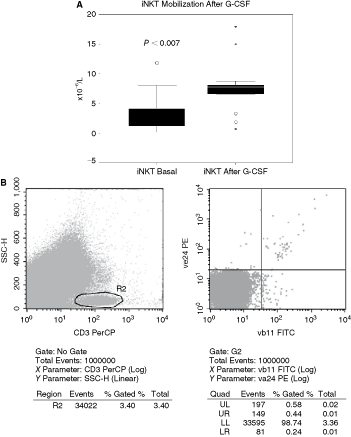
(
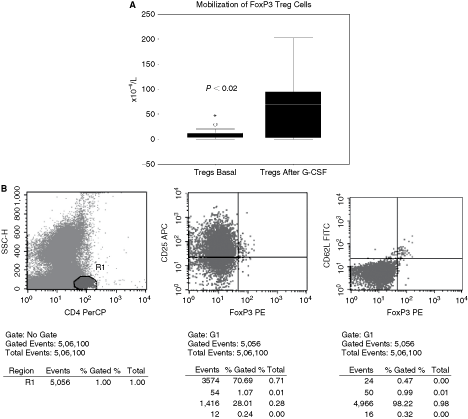
(
iNKT
There was a trend to increase number of CD4+CD25+FoxP3+CD62L+ Treg cells in peripheral blood after G-CSF administration. The total number of cells infused in the graft is shown in Table 2.
T
Graft-versus-host disease
Acute GVDH was present in 9 of the 15 (60%) patients. Grade I–II GVHD developed in 5 patients (33%) and grades III–IV appeared in 4 patients (26%). cGVHD developed in 7 of 13 (54%) analyzed patients (Table 3). There was no correlation between the infused dose of lymphocyte subsets and the presence of acute or chronic GVHD.
C
There was a trend for a higher frequency of acute and chronic GVHD in those patients who receive a dose of iNKT cells >0.2 × 10⁶/kg (P = 0.1 and 0.09, respectively).
Survival
Median time to follow-up after transplantation was 18 months (range, 2–28 months).
Disease-free survival was longer in those patients who received <0.6 × 10⁶/kg of iNKT cells (median of 9 months, 95% CI 7.9–23.7 months) in comparison with patients receiving higher doses (median of 5 months, 95% CI 2–10.1 months, P < 0.05, Fig. 3A).
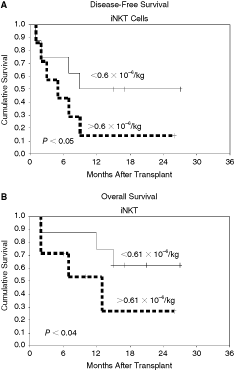
Disease-free survival and overall survival according to the dose of iNKT cells transfused to patients. (
Disease-free survival was different in patients who received >4 × 10⁶/kg of CD4+CD25+FoxP3+ Treg cells (median not reached) versus patients who received lower doses (median of 3 months, 95% CI 2–10.7 months, P < 0.05, Fig. 4A).
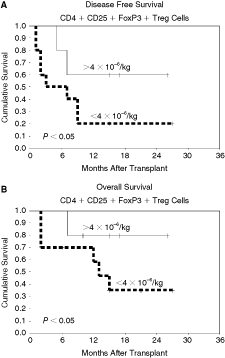
Disease-free survival and overall survival according to the dose of CD4+CD25+FoxP3+ Treg cells transfused to patients. (
Overall survival was better in patients without chronic GVHD (median not reached vs. median of 13 months, 95% CI 5.3–20.6 months, P < 0.05), and in patients receiving a dose of iNKT cells <0.6 × 10⁶/kg (median not reached vs. median of 13 months, 95% CI 2.6–23.3 months, P < 0.04, Fig. 3B).
Patients who received a higher dose of CD4+CD25+FoxP3+ regulatory T cells (>4 × 10⁶/kg) had better overall survival than those patients who received a smaller dose (median not reached vs. median of 13 months, 95% CI 8.8–17.1 months, P < 0.05, Fig. 4B).
Finally, patients who received a dose greater than 1.1 × 10⁶/kg of CD4+CD25+FOXP3+CD62L+ Treg cells showed better overall survival than those who received a lower dose (median not reached vs. median of 7 months, 95% CI 2–16.7 months; P < 0.05) (Fig. 5).
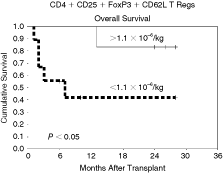
Overall survival according to the dose of CD62L regulatory T cells received after peripheral blood hematopoietic stem cell transplantation. Solid line: >1.1 × 10⁶/kg; dotted line: <1.1 × 10⁶/kg.
Discussion
In the present study we observed that in humans, the dose of iNKT cells and CD4+CD25+brightFoxP3+CD62L+ Treg cells received during transplant seems to be of particular interest in allogeneic HSCT. Those patients who received <0.6 × 10⁶/kg of iNKT cells and >1.1 × 10⁶/kg of Treg CD62L+ cells have better disease-free survival and overall survival. As far as we know, this is the first study in the medical literature dealing with iNKT and CD62L Treg cells in humans.
These lymphocyte subsets are of particular interest in acute and chronic GVHD physiopathology. It has been shown that the frequency of GVHD is higher when patients are transplanted using peripheral blood as a source of stem cells, as in the case of our patients. This phenomenon can be explained because peripheral blood contains an amount of T lymphocytes in the order of one log higher than bone marrow [12].
Invariant NKT cells are a subset of T cells that are professionals in recognizing glycolipid antigens presented by dendritic cells [13]. They can secrete Th1 as well as Th2 cytokines such as IFN-γ, and IL-4, IL-5, IL-13, and IL-10, respectively [14]. In addition, these cells can mediate a potent antitumor effect by direct (secretion of IL-12) or indirect (activation of NK cells) mechanisms [15,16].
In our patients, we found a trend of a higher frequency of GVHD in patients who received >0.2 × 10⁶/kg of iNKT cells. In contrast, some authors suggested that these cells are important as possible medical weapons to prevent GVHD since they may have regulatory functions. In mice and humans, it has been noted that when these cells are decreased after transplantation (slow iNKT cell reconstitution), GVHD is more frequent, a phenomena that could be explained by their predominant suppressive effect through secretion of IL-4 and IL-10 [17,18].
CD4+CD25+bright FoxP3+CD62L Treg cells are a different subset of regulatory cells with an enhanced capacity of chemotaxis to the sites where inflammation is present, such as tissues affected by GVHD.
In murine models, it has been reported that these cells confer protection against GVHD and other autoimmune diseases.
CD62L is an adhesion molecule of the L-selectin type that regulates extravasation through high endothelial venules, especially from secondary lymphoid tissues. At this site, T cells that express this molecule can exert an inhibitory effect in the expansion of activated CD4+CD25− T cells [9,19]. In theory, we believe that the in vivo infusion of a considerable dose of these cells (>1.1 × 10⁶/kg) is enough to inhibit activated T cells from the donor that are responsible, at least in part, for the pathogenesis of GVHD.
Even with the fact that we did not find any correlation between the infused dose of CD62L Treg cells and GVHD, we can speculate that improvement in overall survival in this cohort of patients was due not only by a lower incidence of GVHD, but rather by preservation of the graft-versus-malignancy effect, a phenomena described previously in mouse models.
In our study, we detected that the dose of CD4+CD25+brightFoxP3 Treg cells infused to patients confers a better disease-free survival and overall survival. Even though, a more specific Treg subset (CD62L Treg cells) was also related to better overall survival.
Some years ago, some investigators [20] demonstrated that FoxP3 is a general specific marker of Treg cells that confers no particular location to inflamed tissues as CD62L cells do; in addition, some other investigators have shown that FoxP3 is not an exclusive marker of Treg cells because it can be expressed by other cells [21]. So, it seems to be that CD62L+ Treg cells play a more important role in the control of GVHD.
In this work, we showed that iNKT and Treg cells can be mobilized using intermediate doses of G-CSF. Our group and others [22] have previously demonstrated that CD4+CD25+bright Treg cells can be mobilized with the use of G-CSF, both in normal donors and in patients who underwent autologous stem cell transplantation. In our knowledge, there are no reports in the medical literature concerning mobilization of iNKT and CD4+CD25+brightFoxP3 Treg cells.
In order to obtain an important dose of these cells to be used in transplantation, they can be mobilized with G-CSF and then concentrated by apheresis procedures and even purified by positive or negative selection for use in clinical research, especially in the fields of GVHD and autoimmune diseases. The cell dose that we proposed (>1.1 × 10⁶/kg) could be taken as a clinical precedent for future studies.
An important restriction of our study is the limited number of patients and donors included (15 donors and 15 patients), but even with this small sample size, statistical analysis is significantly different in some variables. It is probable that increase in sample size may result in more precise conclusions. Despite this, follow-up time of these patients was relatively long and these findings could be important for future studies dealing with GVHD and allogeneic HSCT.
In conclusion, we believe that the transfused dose of iNKT cells and Treg cells is important in order to improve disease-free survival and overall survival. CD4+CD25+FoxP3+ Tregs and particularly CD62L+ Treg cells may be important as predictors for disease-free survival and overall survival. Treg cells and iNKT cells can be mobilized with intermediate doses of G-CSF. More studies are needed (especially with a bigger sample size) in order to verify our results.
Footnotes
Acknowledgments
This work was made in part due to the support provided by FUNDACION IMSS A.C. Granados-Lara PH received a grant (No. 137948) from the National Council of Science and Technology (CONACYT, Mexico).
Author Disclosure Statement
No competing financial interests exist in any of the authors of this manuscript.