




Abstract
The last decade has been marked by a growing interest in an employment of intravenous cell delivery for treatment of neurological disorders. Numerous preclinical experimental studies have reported functional benefits, and have recently been followed by clinical trials. Some early clinical studies have indicated only modest positive effects, suggesting that the optimal conditions have not been defined yet. Thus, the evaluation of factors that influence outcomes, on the level of the whole population of preclinical studies by advanced statistical analysis, is warranted. PubMed search was conducted from the inception through 2006, and 60 preclinical studies were found and subjected to analysis. Categorical and continuous independent variables (IVs) were extracted. Three distinct outcomes of interest were selected as dependent variables (DVs) and named treatment effects: morphological, behavioral, and molecular, respectively. Mean outcomes, standard deviations (SDs), and animal numbers were retrieved and calculated by individual comparisons of experimental and control groups, based on the Hedges g formula, and were expressed as effect sizes (ESs) and variances. Publication bias and homogeneity were evaluated. The mainspring analyses were performed under a random effect model using Proc Mixed (SAS, version 9.2). A significant heterogeneity and publication bias were found. The ES pooling revealed large treatment effects. Univariate and multivariate meta-regression revealed that cell-related variables explained most of the heterogeneity. Cells retrieved from established lines and genetic modification of cells warrants the highest efficiency, in a dose-dependent manner. The stratified analysis of molecular effect measures revealed that apoptosis inhibition is the strongest brain tissue-positive change induced by cell therapy.
Introduction
T
L
To understand the discrepancy between the efficiency of intravenous route of cell delivery in preclinical studies and clinical trials, animal experimental data has been reviewed systematically in a problem-oriented fashion [14]. This review has revealed that many factors critical for the proper design of clinical trials were not addressed sufficiently on the level of individual studies. In addition, contradictory results between studies were reported. Thus, the effort to perform an advanced statistical analysis is justified in order to evaluate the factors that influence outcome on the level of the whole population of preclinical studies.
Such an approach was introduced by researchers many years ago, and was called “meta-analysis” [15]. After further methodological improvement with a random effects model, this approach has proven to be a very valuable method of the data aggregation and analysis that result from clinical trials [16]. Later, it was applied in animal experiments [17] and in the analysis of preclinical data [18]. Recently, it is being widely employed for animal studies that deal with neuroprotection [19 –26]. Meta-analytic methodology has also been employed to study the genetics of stem cells [27]. Several meta-analyses of cell therapy of solid organ diseases (myocardial infarction) have been published over the last 3 years [28 –32]. However, no meta-analysis of cell therapy for neurological disorders on both the preclinical and the clinical level has been conducted.
The power of meta-analysis has been recognized and influences the daily clinical routine. Bench-to-bedside translation should be preceded by a meta-analysis of animal experimental data [33]. Particularly because animal data often comes from many small studies, there is even more demand for pooling results by meta-analytic methods than for large clinical trials.
Materials and Methods
The PubMed database search was conducted from the inception through 2006, and 60 preclinical studies utilizing the intravenous route of cell delivery for neurological disorders were found and subjected to analysis (Table 1). The first author was responsible for data collection from the articles. Clinical studies usually involve complex statistical analyses to combat with patient heterogeneity and large quantities and these inherently are associated with the risk of disagreements between interpreters. In contrast, animal studies, at least in neurotransplantation field, involve small experimental groups that are usually homogeneous and for those simple statistical tests (expressed as mean and SD or SE) are used till now. Thus in our opinion in case of animal studies no obvious necessity for independent data extraction exists, as there is no necessity for animal behavioral test assessment by a minimum of 2 investigators.
Thirteen categorical and 7 continuous independent variables (IVs) were extracted. Their definitions are presented in Tables 2 and 3, respectively. Three distinct outcomes of interest (morphological, behavioral, and molecular) were selected as dependent variables (DV) and called “treatment effects.” Morphological effect refers to the measurements of lesion size. Behavioral effect presents functional recovery as evaluated by behavioral tests. Molecular effect describes changes in brain tissue on a molecular level, such as neurogenesis, apoptosis inhibition, and growth factors (GF) expression, and so on. The measures of molecular effect were introduced to the design of studies to explain the mechanisms that mediate morphological and behavioral cell-dependent effects. These factors are listed and defined in Table 4.
D
Abbreviations: BM, bone marrow; CNS, central nervous system; GF, growth factor; HSC, hematopoietic stem cell; ICH, intracerebral hemorrhage; IV, independent variable; TBI, traumatic brain injury.
D
Abbreviation: CNS, central nervous system.
M
Abbreviation: GF, growth factor.
Mean outcomes, standard deviations (SDs), and animal numbers were retrieved and calculated by individual comparisons of experimental and control groups, based on the Hedges g formula, for each treatment effect and then were expressed as effect sizes (ESs) and variances (Vs) (Excel, Microsoft) [34]. When only graphic presentation of data was available, the values were carefully read from graphs using Corel Draw 11 (Corel Corporate Communications, Ottawa, Canada). Each pair of an experimental and a control group, regardless of origin from the same or another study, was named an experimental unit (EU). If a study consisted of several experimental groups, they were considered as distinct EUs. Where multiple behavioral outcomes or molecular measures were reported within any EU, they were combined to give an overall behavioral or molecular score per EU, using a fixed effect model. Publication bias (file drawer problem) was addressed by a Begg rank correlation [35], an Egger regression [36], and a trim-and-fill method [37] using freeware MIX, version 1.7 [38]. Then, a test for homogeneity across EUs was performed to choose between a fixed and a random effect model for further analysis. The extent of heterogeneity among EUs was statistically quantified by Q, H, and I 2 (Excel, Microsoft) [39,40].
If the criterion of homogeneity is fulfilled (there is no significant difference between variances of particular EUs), all EUs are considered as samples from the same population; thus within-studies variance is solely taken to influence uncertainty of results (confidence interval). It is implemented into statistical analysis by fixed effect model. The model is strongly influenced by EU sizes and robust narrowing of confidence interval with increase of number of EUs is observed.
The presence of heterogeneity assumes that samples come from various populations, thus both within-studies and between-studies variances have to be taken into account. It is put into practice by random effect model. The addition of second variance estimator results with widening of confidence intervals and limits the weight of study size. It prevents from claim of unjustified statistical significance. However, fixed effects model is a special case of random effects model and is equivalent when variance between studies equals zero.
The mainspring analyses were performed under a random effect model using Proc Mixed (SAS Institute, version 9.2). As the overall effect estimate has been found to be influenced by between-study variance (τ2—variation coefficient), a likelihood-based approach was used [41]. For evaluation of the global estimate of treatment effects, ESs from EUs were pooled. The pooled ES was considered large when it exceeded 0.8 according to Cohen’s rule of thumb. The potential source of heterogeneity was evaluated by meta-regression [42]. For reconnaissance of heterogeneity distribution within the population of IVs, a univariate analysis was performed. Then, a multivariate regression model was fitted by Bayesian information criterion (BIC) for each outcome separately. An additional hierarchical, stepwise forward and stepwise backward meta-regression was also conducted, based on F statistics and P values. During this process, the interrelationship of variables was explored and insignificant and redundant variables were removed from the model. Then, the stratified analysis of mechanisms that mediated cell-dependent effects was conducted. P values <0.05 were considered significant.
Results
Data characteristic
A total number of 2,145 animals were included in the meta-analysis. Of 60 articles, 138 distinct EUs were retrieved. Within these, 313 elementary comparisons of particular tests/measures were performed. After pooling of data within each treatment effect and within EUs, the results were as follows:
1. Morphological effect was evaluated in 57 EUs coming from 26 studies
2. Behavioral effect was evaluated in 69 EUs coming from 37 studies
3. Molecular effect was evaluated in 40 EUs coming from 24 studies.
A total of 109 measures of molecular effect were grouped into 9 mechanisms that mediate cell-dependent effects: apoptosis, neurogenesis, GFs, angiogenesis, white matter function, gray matter function, axonal function, immunomodulation, and enzyme supplementation to prepare data for stratified analysis.
A significant heterogeneity and publication bias was found within each treatment effect (Table 5). The ES pooling revealed a large treatment effect within each outcome of interest (morphological ES = 1.75, CI 1.25–2.26, P < 0.0001; behavioral ES = 2.07, CI 1.49–2.64, P < 0.0001; molecular ES = 2.18, CI 1.66–2.71, P < 0.0001) (Fig. 1). However, there was no difference between mean outcomes with regard to the magnitude of treatment effects (Type III test, F = 0.66; P = 0.52).
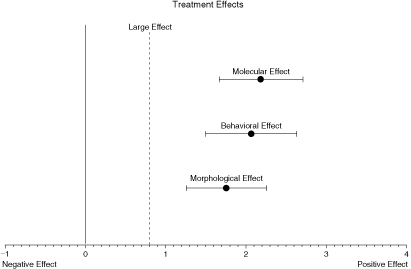
Overall estimates of treatment effects. Vertical continuous line separates positive effect of treatment (experimental group did better than control group) on the right and negative effect on the left side of chart. Vertical interrupted line denotes where the positive effect begins to be large (0.8 according to Cohen’s rule of thumb). Everything to the right of this line indicates a large positive effect.
Abbreviation: EU, experimental unit.
Random effect meta-regression
Univariate approach. The categorical IVs related to the characteristics of transplanted cells, such as cell source, cell type, cell history, cell line, and genetic modification of cells, have been found to significantly model DVs. On the contrary, species- and recipient-related IVs, such as type of disease, type of experimental model, species of donor and recipient, as well as immunosuppression, did not reveal such an influence on the treatment effects (Fig. 2).
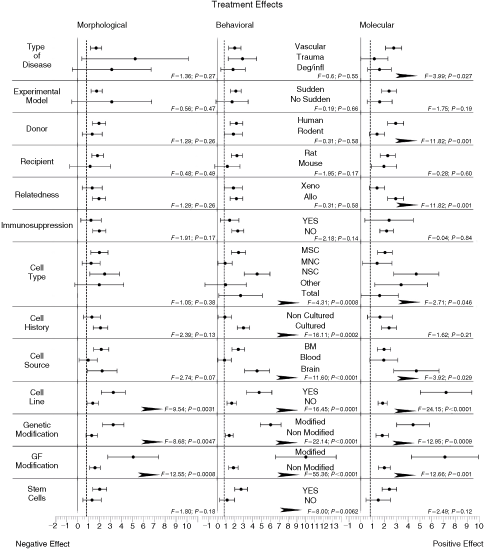
Forest plot presenting univariate approach for categorical independent variables (IVs) conducted for all dependent variables (DVs). Vertical continuous lines separate positive effect of treatment (experimental group did better than control group) on the right and negative effect on the left side of chart. Vertical interrupted line denotes where the positive effect begins to be large (0.8 according to Cohen’s rule of thumb). Everything to the right of this line indicates a large positive effect. Abbreviations: BM, bone marrow; GF, growth factor; MNC, mononuclear cell; MSC, mesenchymal stem cell; NSC, neural stem cell.
The analysis of continuous IVs (Table 6) disclosed the existence of a dose–response association between injected cell number and treatment effects (Fig. 3). However, the information about the fate of cells following transplantation was underreported. Such data were found in 1/3 of studies, and only 9 studies included information about all of these 3 variables; thus, the conclusion is very limited. The variables related to the timeline of the studies, that is, length of study, timing, and follow-up, did not model DVs. However, the inspection of regression lines showed a consistently downward course (negative slopes), which indicates a trend toward smaller effects as the time window of cell application widens and follow-up is extended (data not shown).
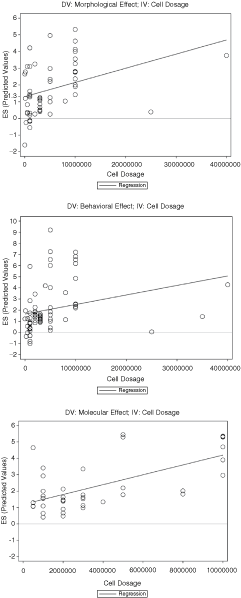
The influence of cell dosage on treatment effects: scatter plots and regression lines. Abbreviations: DV, dependent variable; ES, effect size; IV, independent variable.
U
Hierarchical approach. The univariate approach pointed to cell characteristics as the major source of heterogeneity. The inspection of interrelationships between IVs revealed their nested structure. From detail to general direction of investigation has been undertaken. The genetic modification, GF modification, and cell line IVs significantly influenced outcome in the univariate analysis of all outcomes of interest. However, IV GF modification is entirely nested in IV genetic modification. The analysis of IV GF modification within the frame of IV genetic modification resulted in a lack of significance of the former IV in each treatment effect: morphological (df = 1, F = 1.55, P = 0.24); behavioral (df = 1, F = 4.06, P = 0.08); and molecular (df = 1, F = 3.09, P = 0.14). Thus, IV GF modification has been excluded from the model and not subjected to further analyses.
Further inspection disclosed that both the genetic modification and cell line IVs are nested within IV cell history. They proved to be significant source of heterogeneity within IV cell history, and no additive interaction of both IVs was found (Table 7). Furthermore, IV cell history was almost entirely within IV stem cells, but was not the source of significant heterogeneity (morphological: F = 0.54; P = 0.47, behavioral: F = 2.88; P = 0.1, molecular: F = 0.59; P = 0.45).
The visual assessment of the donor and relatedness IVs showed that they are the same or almost entirely overlap. As the donor IV seems to be more important from a conceptual point of view, the IV relatedness has been excluded from the model. The influence of immunosuppression on outcome within xenotransplants was added to the analysis, but no significance was found.
H
Abbreviation: IV, independent variable.
Multivariate approach. The constellations of significant IVs selected by both methods, stepwise forward and stepwise backward across treatment effects are presented in Table 8. Stepwise forward selection is more oriented toward the single strongest IV, while stepwise backward selection allows for identification of a well-fitted set of IVs. To summarize the overall predictive values the IVs for the whole meta-analysis, the frequency of IVs appearance in Table 8 was calculated. The most significant IVs are: cell line and cell dosage (both 5 times), followed by genetic modification (3 times) and cell source (2 times). The comparison with the univariate approach revealed a reduction in the number of significant IVs.
M
The analysis of IVs related to the fate of transplanted cells revealed a positive interaction between the number of engrafted cells and their differentiation rate in vivo (df = 1; F = 1.91; P = 0.028).
Stratified analysis of mechanisms that mediate the cell-dependent effect
The analysis of molecular effect measures revealed that apoptosis inhibition is the strongest brain tissue-positive change evoked by cell therapy (Fig. 4). In addition to the above measure, there were also 3 measures for which significance exceeded 0.0001: neurogenesis, GFs, and angiogenesis. Two measures were not significantly changed following cell transplantation: immunomodulation and axonal function.
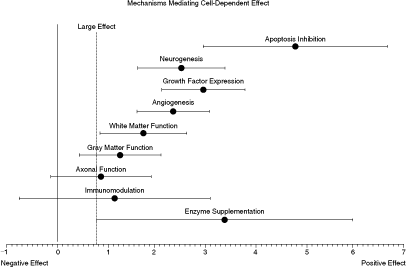
Forest plot presenting the range of molecular measure changes induced by cell therapy.
Discussion
The focus of our search was on PubMed database. Relying on single database would be considered as significant weakness by clinicians; however for animal researchers, the PubMed is an absolutely crucial platform of knowledge exchange and they do not routinely use other ones.
The meta-analysis was open to all experiments using the intravenous route of cell delivery for neurological disorders; thus, it was plagued by significant variability of study designs and conditions. However, we were interested in common determinants that influenced outcomes across all applications of this approach.
This approach revealed large treatment effects in a preclinical setup. Cell-related factors are the most powerful predictors of results. The culture of stem cells as cell line or genetic modification of cells (no additive interaction) revealed the highest efficiency, in a dose-dependent manner. This emphasizes the role of cell processing in preparing cells before a transplantation procedure. It seems that adequate cell adjustment to the recipient requirements will be superior to transplantation of “raw” cells, directly after cell collection from the donor, without advanced cell processing. However, long in vitro culture of cells prior to clinical transplantation is currently not recommended due to the risk of malignant transformation. It may be that this restriction should be challenged to enable further development of therapeutic options for neurological disorders.
The focus on cell features, not on cell donor and recipient characteristics or timeline of the study, raises the issue of the still-unidentified holistic mechanisms of central nervous system (CNS) healing by cell transplantation. Tissue changes on a molecular level, that is, inhibition of apoptosis, increase of neurogenesis, and angiogenesis seem to mediate a positive effect.
To date, transplanted cells were believed to replace dead or dysfunctional endogenous counterparts or, more frequently, to enhance CNS function by secreting molecules, such as GFs. But, the surprisingly high impact of cell therapy on apoptosis inhibition encourages the consideration of an alternative hypothesis about the overall mechanism of cell-based therapy. In addition to the above-mentioned mechanisms, one may speculate that transplanted cells also participate in the utilization of toxic waste products from diseased brain tissue, perhaps by acting as scavengers. A less toxic environment may favor the survival of endogenous cells through the inhibition of apoptosis.
In addition to the heterogeneity of the study designs, there is another weakness of this meta-analysis—many studies used in this report were plagued by missing data or the data presented had little or no value (no information on data dispersion or animal number used for each test). The information regarding cell fate following transplantation has been especially underreported, but data on this topic could be critical for the cut of Gordian knot in the search for mechanisms that mediate cell-dependent effects. It is worth mentioning that, in general, data from human studies are much more complete and even individual patient data (IPD) meta-analyses are recommended [43], although patient data would be more difficult to place into the public domain due to personal data protection laws. Thus, more comprehensive reporting of experimental results by researchers would address this issue. One way to attempt to gather missing data in an article being included in a meta-analysis is to simply contact the author(s) of the study. However, no all authors respond and others may have original database missed what we experienced while contacting with them. Thus we wish to propose a more restrictive solution. As all animal experiments worldwide are (or should be) approved by Ethical Commissions, these commissions could require researchers to share individual animal data and basic statistics as soon as the study ends, regardless of whether more advanced statistics are performed subsequently and the article is submitted for publication. Such a special platform would provide better control of preclinical research, particularly in such a demanding and incompletely understood field as stem cell-based therapy for neurological disorders. In addition, it would enable individual animal data (IAD) meta-analysis in the future and protect against publication bias.
It is also worth mentioning that the cell therapy is equally effective in animal models of sudden brain damage as well with models of a slow progression of symptoms. Immunosuppression does not have an impact on outcome, with a tendency toward a decreasing therapeutic effect. As cyclosporine inhibits calcineurin, which is involved in the process of cell migration, it can also inhibit the migration of transplanted cells toward CNS tissue, thus decreasing their therapeutic potential.
The comparison of results between different meta-analyses is difficult due to methodological issues. As we were working with continuous DVs, we chose to calculate standardized mean differences with a Hedges adjustment, without any data pre-processing. Thus, our results are expressed as original ESs, which should be interpreted according to Cohen’s rule of thumb. Other researchers have used ratios of the results for similar continuous data that required logarithmic processing [19]. Other groups have normalized data to outcomes in the control group [20]. The results of both groups were expressed as percentages, but these results cannot be directly compared. Thus, manipulation of data enables the presentation of data in a more reader-friendly form, but it does not allow for direct comparisons of data between meta-analyses. Thus, we do not support such an approach. The DVs used in clinical trials are usually categorical (binary) and, in such circumstances, the calculation of ratios is necessary [44].
Conclusions
Intravenous route of cell delivery improves outcome in animal models of neurological disorders. This effect is most pronounced in stem cell lines and genetically modified cells. The existence of a dose–response association between injected cell number and treatment effects has also been revealed. Apoptosis inhibition is the most significant change, on a molecular level, in diseased brain tissue following cell therapy. However, significant variability and publication bias limit the strength of these conclusions. Significant findings were summarized in Table 9.
S
Abbreviation: GF, growth factor.
Footnotes
Acknowledgments
We are grateful to Mary McAllister from Johns Hopkins University for editorial assistance. This study was supported by the Polish Ministry of Scientific Research and Higher Education, grant no. 142/B/P01/2008/35.
Author Disclosure Statement
No competing financial interests exist.