




Abstract
Increased global connectivity has catalyzed technological development in almost all industries, in part through the facilitation of novel collaborative structures. Notably, open innovation and crowd-sourcing—of expertise and/or funding—has tremendous potential to increase the efficiency with which biomedical ecosystems interact to deliver safe, efficacious and affordable therapies to patients. Consequently, such practices offer tremendous potential in advancing development of cellular therapies.
In this vein, the CASMI Translational Stem Cell Consortium (CTSCC) was formed to unite global thought-leaders, producing academically rigorous and commercially practicable solutions to a range of challenges in pluripotent stem cell translation. Critically, the CTSCC research agenda is defined through continuous consultation with its international funding and research partners.
Herein, initial findings for all research focus areas are presented to inform global product development strategies, and to stimulate continued industry interaction around biomanufacturing, strategic partnerships, standards, regulation and intellectual property and clinical adoption.
Introduction
Stem cell technologies can stake a reasonable claim as the leading biomedical advancement of the new millennium. Previous decades were dominated by the elucidation of the structure of DNA, paving the way for progress in genomics and proteomics. Simultaneously, the socioeconomic context for scientific translation has evolved.
Reduced in-house research and development (R&D) productivity combined with increasing shareholder pressure in a challenging fiscal climate has catalyzed increased engagement between academia and industry. This has occurred via the provision of public–private partnerships, cross-licensing agreements, and other collaborative models. Concurrently, the roles of patient advocacy groups and disease-specific foundations have undergone extraordinary development, as observed in the recent approvals of Kalydeco (Ivacaftor; Vertex Pharmaceuticals, Cambridge, MA) and Glybera (Alipogene Tiparvovec; uniQure, Amsterdam, The Netherlands).
The demands of life science translation have changed; consequently, life science research is increasingly multidisciplinary and multi-institutional. However, the stem cell community has arguably been slow to respond to such changes in the ecosystems in which it operates, perhaps in part because of historic global and regional disharmonies in the funding landscape for stem cell technologies.
The Centre for the Advancement of Sustainable Medical Innovation (CASMI) Translational Stem Cell Consortium (CTSCC) was formed to redress this unacceptable status quo and act as a global nexus for stem cell translation.
Inspired by thought leaders in open innovation, the CTSCC aims to approach its research in two novel ways. First, it attempts to disaggregate the formulation of research problems from their delivery. In the past, research questions have been posed and answered by academia. Conversely, the research questions tackled by the CTSCC are formulated by a range of stakeholders in the stem cell translational pathway. This has been achieved by outlining their most pressing issues and assembling the very best teams to deliver academically rigorous and commercially practicable answers [1,2]. Second, the CTSCC attempts to utilize a requirements-based approach whereby the hurdles of potential technology adopters, including end users such as clinicians, are first assessed. Then, based upon these specifications, the highest possible impact contributions from all stakeholders are identified, including those from fundamental scientists (Fig. 1).
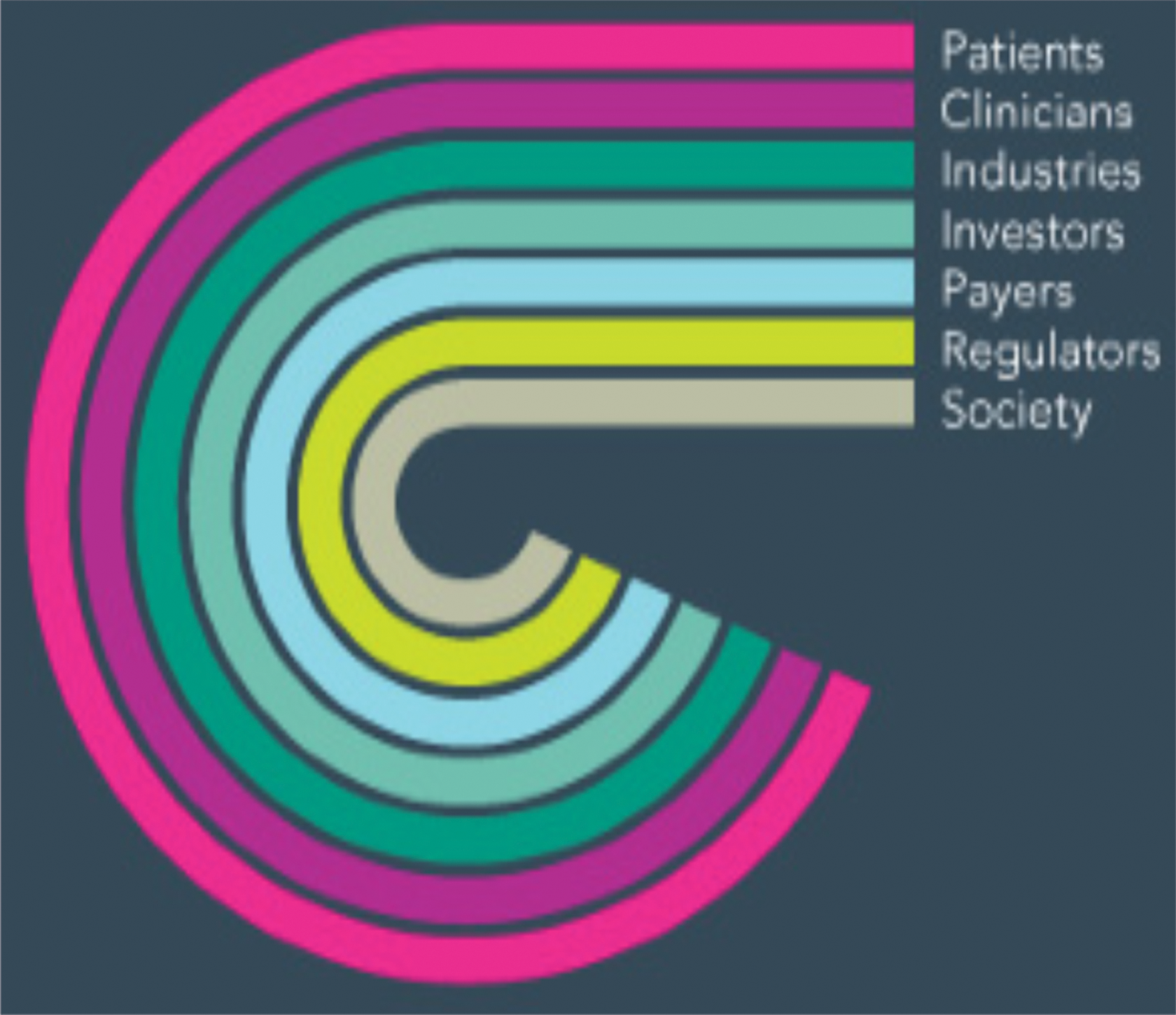
Overview of Key Stakeholders in Biomedical Translation
Accordingly, the principal translational needs identified by CTSCC partners are categorized into five focus areas: Standards, Biomanufacturing, Regulation and Intellectual Property, Strategic Partnerships, and Clinical Adoption. Additionally, the Consortium's technological focus is defined around pluripotent stem cells (PSCs), particularly induced pluripotent stem cells (iPSC) and embryonic stem cells, and their use in drug screening, as therapeutics themselves or as potential targets. However, because of the limited commercial development of PSC technologies to date [1 –3], obtaining data from relevant nonpluripotent products is necessary to extrapolate likely future trends.
This unique and holistic approach to the effective and sustainable translation of stem cell technologies, generously supported by our funding and delivery partners, formally commenced in the elegant surroundings of the Saint James Club, Paris, France, on the July 30, 2013. Herein, we will provide an overview of the issues raised, which we hope will stimulate input from the global stem community.
Event structure
The event format was based upon that of the Harvard Stem Cell Institute, Harvard Business School and Multiple Myeloma Foundation, 2nd Conference on Advancing the Role of Non-Profit Organizations in Drug Development, held on May 17, 2013 (Boston, MA).
The event was divided into five sections, reflecting the focus areas outlined above. Each section was framed by two short provocative presentations from academic and industry leaders, followed by roundtable discussions of precirculated questions (Table 1). Importantly, seating arrangements were made such that an expert from each focus area was seated at each table, to encourage interdisciplinary discussions. Primary discussion points were then summarized and debated by an expert panel. The points raised were collated and have been incorporated into a questionnaire that has been distributed to all delegates who have been asked to prioritize, refine, and define the future work of the CTSCC.
Roundtable and Panel Discussion Questions
ASCs, adipose-derived stem cells; ESCs, embryonic stem cells; iPSCs, induced pluripotent stem cells.
Overview of roundtable and panel discussions:
Standards
Defining standards for PSC technologies is inherently complex because of the heterogeneity and plasticity of both the cells themselves and their therapeutically relevant differentiated products [4,5]. Indeed, it is differences between these cells that will make one product a success and another product a failure in relation to a particular indication. Therefore, for PSC-derived cell products, the provision of a generalized standardization specification would be challenging. Similar challenges have been encountered in the clinical implementation of genomics in stratified medicines and their delivery through the use of companion diagnostics [6,7].
Progress has been made with regard to the minimum requirements for PSC banking, as well as efforts to coordinate approaches and concepts in the academic R&D space [12 –14]. Characterization of cell therapies more broadly requires an assessment of cellular critical quality attributes associated with identity, purity, potency, and safety (Table 2). Approaches taken to assess PSC identity include transcriptomics, analysis of the phosphoproteome, expression of pluripotency markers, telomere length, and epigenetic signatures [15 –19].
FDA Definitions of Critical Quality Attributes as Per CFR 21 600.3 and Part 610
Rapid technological progress within the field, such as the generation of iPSC lines using small molecules alone, will likely continue with vigor [8] further stimulating efforts to standardize iPSC lines suitable for clinical and industrial use [9]. Reference standards for methodologies and instrumentation would bring a wide range of benefits, facilitating comparability and reproducibility, which are fundamental challenges for the sector. Reference standards are also a decisive requirement for the development of manufacturing instrumentation and reagents, as well as for the manufacturing process itself [10]. Furthermore, reference standards would enable productive communication with the regulatory authorities and provide a positive step toward global harmonization [11]. Pertinent questions relate to the type of in-process measurements that should be recorded and their acceptable ranges, including the identification of permissible and potentially efficacious ranges for PSC products.
Pluripotency potential, in relation to the ability to differentiate into all three germ layers, has been commonly assessed by embryoid body differentiation, teratoma formation, and directed differentiation methodologies. Therapeutic potency assays for differentiated cell types, however, will vary on a cell type-to-cell type and indication basis. With PSC products, it may become increasingly necessary to model the in vivo environment in vitro, to predict cell identity and potency in a physiologically relevant context. Moreover, for the scalable and reproducible generation of PSC products, nondestructive methods to continuously monitor and characterize cells in real time are required. Biomaterials may play a pivotal role in controlling the environment of implanted cells, in addition to biodistribution and engraftment profiles [20,21]. Here, the triad of cell therapy, host, and biomaterial interaction must be predicted. In summary, standardization efforts in the PSC sector should focus on defining methods, and instrumentation to accelerate effective translation.
Biomanufacturing
Firmly positioned at the interface of the focus areas selected for investigation, biomanufacturing is in some respects responsive, and others informative. For example, technical specifications for biomanufacturing equipment respond to the needs defined by clinicians, operators, validation teams, and regulators. However, bioprocessing parameters can also inform the work of fundamental scientists and development groups, particularly around standardization of industrial-scale processes. These are then subject to current Good Manufacturing Practice (cGMP) requirements, which seek to remove the “art” from inherently manual (and hence variable) laboratory processes [22] (Table 3).
Evaluation of Biomanufacturing Automation
Encouragingly, there is evidence that the expertise required to conform to cGMP standards, often limited in academia, is being provided by public and/or privately funded translation centers. Additionally, contract manufacturing organizations are engaging at progressively earlier stages of development with academia and/or small–medium enterprise. There are considerable benefits in expanding communication between academia and early-stage providers so that initial processes are amenable to industrial scale-up.
Throughout the day, a number of lessons were highlighted that can be learnt from the evolution of cell-based high-throughput screening technologies and early monoclonal antibody manufacturing strategies. Critically, the provision of in-process analytical technologies and process automation advances [23] will facilitate improvements in the consistency of cellular bioprocesses and the comparability of products manufactured—an essential step toward broad stakeholder adoption [24].
Additionally, strong market prospects exist to innovate better cGMP-level processing tools that are cognizant of the final product sterilization limitations to develop microcarriers or aggregate processes for bioreactor production and to adapt existing process and media development technologies for cost of goods reductions [25,26]. Media development and in-process technologies to monitor expansion and differentiation of stem cell-derived products in real time represent a major unmet market need [27]. Also, novel release criteria offer opportunities for bioprocess engineers to develop noninvasive monitoring and testing platforms to enable thorough product characterization, a necessity for biologically active products [28].
Strategic partnerships
Successful translation of scientific discoveries from the lab to the clinic requires the coordination of multiple stakeholders in the healthcare industry who are each crucial to the translational process. This interdisciplinary network, its utility and its effectiveness, plays an important role in stem cell science. Therefore, the emergence of strategic partnerships in the stem cell space has demonstrated that productive collaborations, often spanning academia and industry, are vital in driving technological developments [29]. As such, it is critical to understand the various partnerships that have been forged to date and identify which models for strategic partnerships are accelerating stem cell translation most effectively. It is hoped that these findings may also elucidate new opportunities for collaborations that could address translational gaps.
First, when academia, foundations, service providers, and/or pharmaceutical companies enter into collaborations, it is imperative that all partners have clearly aligned interests and a shared vision. Increasingly, it is essential that university technology transfer offices are engaged in this process, to ensure that underlying intellectual property (IP) licensing agreements support, as opposed to constrain, multistakeholder collaborations.
In order for the partnership to add value, groups should communicate how each partner can combine their capabilities, expertise, and resources in the most effective and additive manner. Examples of some categories of strategic partnerships that have been formed within the stem cell landscape are: academic and industry partnerships for commercializing early-stage stem cell research; academic and industry partnerships for advancing the clinical translation of stem cell therapeutics; public and private partnerships for launching specific stem cell initiatives; strategic partnerships for improved manufacturing of stem cell products; and strategic partnerships involving major publicly funded translational institutions. However, academic-industry partnerships—including with CMOs and/or CROs—have been less common than hoped. Consequently, it is essential to thoroughly evaluate existing partnership models to ensure that the objectives of all parties are effectively aligned.
While the growing number of strategic partnerships is an excellent catalyst for stem cell translation, it is crucial that patient benefit is not delayed because of the poor coordination of partner contributions. This is a critical role of the growing international network of stem cell translation centers. However, several significant questions remain, including, how exactly we define a translation center, what are their optimal funding sources and capabilities, and how should access to said resources be allocated among stakeholders? By comparing commonalities between different centers and understanding their strengths and weaknesses, we aim to suggest the criteria of effective models for future strategic partnerships—within and beyond the stem cell community.
Regulation and IP
Stem cell therapy has stimulated the emergence of a new area of interest in law, particularly concerning the optimal routes by which to capture value in the development and delivery of cell-based technologies. An example would be the as yet unproven value of (biomanufacturing) process patents. Consequently, some investor hesitance persists.
The stem cell IP landscape is vast and poorly understood, despite a number of efforts to perform broad IP landscaping exercises (Table 4). However, prior studies failed to effectively distinguish between different aspects of stem cell R&D. Patent data analytic software offers a powerful tool to mine and reveal decisive trends and information, since a number of factors can skew results, such as delays in the granting of applications in the face of different regulatory challenges.
Notable Stem Cell Intellectual Property Landscape Reports
Therefore, the value and best practices for freedom-to-operate licensing schemes, such as that offered by iPS Academia Japan, remains uncertain. Other proposed solutions include creating a stem cell research exemption to patent infringement and compulsory broad licensing for publicly funded discoveries. There may be a requirement for novel mechanisms that facilitate collaboration and expedite commercial translation through patent brokering or clearing houses, without undermining industrial proprietary value. However, it is reasonable to assert that the impact of such challenges will decline overtime as the number of clinical stage, and ultimately revenue-generating products, increases.
Regulation is a challenging topic in that few PSC technologies are near a clinical stage; therefore, regulatory recommendations must be based on similar technologies and assessed potential risks. Significant risks debated at the event were biodistribution, tracking, cell overgrowth, immunogenicity, inappropriate homing, teratoma formation, and allowable residual pluripotent cell level in final differentiated product. The impact of deficiencies in regulatory training for academics was also highlighted.
Historically, regulatory standards have commonly relied heavily on defining the basis of the mechanism of action for the treatment, which in many cases is not fully elucidated for cellular therapeutics. Appropriately, there remains a strong regulatory stimulus for the development of in vivo monitoring technologies to determine cell engraftment, distribution, and fate.
To produce affordable therapies, duplicate costs and delays to meet unnecessary regulatory standards must be avoided. Presently, separate regulatory approvals are required for multiple components of combinational products (cells + biomaterials). Although there are strong regulatory arguments for this approach, there is also compelling evidence from a practical and commercial perspective against this approach—not least because of the unique financial risks associated with the development of combinational products [21]. Subsequently, bolstered stakeholder efforts are required to investigate robust risk:benefit appraisal methodologies for cell-based therapies (Table 5).
Challenges in the Risk:Benefit Appraisal of Cell-Based Healthcare Innovations
Clinical adoption
Stem cells of all varieties have held the promise of delivering a wide variety of healthcare treatments for a number of years; however, in most cases their broad clinical efficacy is yet to be satisfactorily established. The academic and professional literature is replete with short case series and reports detailing their use in small numbers of patients, while only a limited number of comparative trials have been conducted [30]. From a clinical perspective, the most significant question to consider with any new product is: Does this provide a better outcome for the patient than currently available treatments? The second consideration is: At what cost does this improvement come? Establishing answers to these questions are essential steps in the broad adoption of cell-based therapies and/or biomaterials, requiring appropriately designed and conducted clinical trials.
Clinical trials must be designed to enable the comparison of new technologies with the currently accepted gold standard [31]. For instance, in the treatment of cartilage defects in the knee, comparisons to microfracture, the best available option currently in use, are most appropriate and will provide the most relevant clinical data. The relatively high cost of cell-based treatments is solely justified, if they provide long-term symptom relief. Autologous chondrocyte implantation and similar stem cell–based treatments are only legitimately cost effective from a healthcare system point of view if they lead to a significant delay in the necessity for end-stage treatments such as joint arthroplasty when compared with procedures such as microfracture [32].
Equally critical is the selection of appropriate endpoints and follow-up timeframes. Validated clinical outcome measures are vital to allow for a reproducible assessment of interventions and to monitor long-term progress. Of equal importance is the assurance that follow-up periods are sufficiently long enough to determine whether treatment is worthwhile in the long-term and to monitor treatment reproducibility in the target patient population. It is also imperative that trials be conducted so that all results are reported in a manner that allows representative comparison and does not neglect negative outcomes. This can then inform the optimal patient selection for the specific cell-based treatment and correctly assess the full impact upon the healthcare infrastructure (Table 6).
Barriers to Clinical Adoption of Cell-Based Therapies
Finally, clinician engagement can be assured only upon demonstration that the new technologies are effective in both medium- and long-term to warrant the increased cost and potential heightened short-term morbidity for patients. Achieving these aims can be greatly assisted by establishing early clinician involvement in both initial product development and trial design.
Conclusion
The multistakeholder pursuit of sustainable and efficient stem cell translation is essential to the delivery of patient outcomes. However, as this event demonstrates, this remit will not be achieved unless rigorous and continuous assessments of the translational environment are conducted—not least the requirements of ultimate clinical adopters.
Therefore, while existing efforts of translatory and trade organizations in the stem cell space to convene multistakeholder meetings are welcomed, arguably their value has been limited by the quality of the interaction between the participants. As such, the most impactful discussions and collaborative relationships forged at this meeting are a result of disaggregating the formulation and delivery of research questions—a process supported by a (mildly) draconian seating arrangement forcing unconventional multidisciplinary interactions.
Hence, the stem cell community needs to innovate and translate more effectively, with a focus on clinical and commercial needs, and we firmly believe that the work of the CTSCC will continue to be an essential mechanism to facilitate this.
We extend our sincere thanks to all participants in the CTSCC's activities, including this meeting, and look forward to contributing academically rigorous and commercially practicable findings to the global stem cell technology industry.
Footnotes
Acknowledgments
We wish to extend our thanks to the following individuals whose contributions have been critical to the development of the CTSCC: Stewart Abbot (Celgene), Houman Ashrafian (University of Oxford), Elona Baum (Californian Institute for Regenerative Medicine [CIRM]), Robert Beale (Cystic Fibrosis Foundation), Chas Bountra (University of Oxford), James Bradner (Harvard), John Brown (UK Cell Therapy Catapult), Guillermo-Garcia Cardena (Harvard), Dan Cho (Centre for Applied Research [CFAR]), Emanuela Costigliola (GE), George Church (Harvard), George Daley (Harvard), Barry Dornfeld (CFAR), Nick Edwards (CASMI), Simon Ellison (UK Cell Therapy Catapult), Paul Fairchild (University of Oxford), Thomas Fellner (Lonza), Kathy Giusti (Multiple Myeloma Research Foundation), Joe Gold (Stanford University), Christopher Huge (CFAR), Johan Hyllner (UK Cell Therapy Catapult), Perry Karsen (Celgene), Karim Lakhani (Harvard Business School [HBS]), Mark Lewis (Loughborough University), Neil Littmann (CIRM), Andrew Lo (MIT), Lorenz Mayr (AstraZeneca), Alison McEwen (UK Trade and Investment/(UK) Foreign and Commonwealth Office), Stephen Minger (GE), David Newble (TAP Biosystems), Mahendra Rao (NIH Center for Regenerative Medicine), William Sahlman (HBS), John Sinden (ReNeuron), Sue Solomon (New York Stem Cell Foundation), Matthias Steger (Roche), Molly Stevens (Imperial College London), Thomson Reuters IP Team (London), Keith Thompson (UK Cell Therapy Catapult), Sam Ulin (ClearView Healthcare Partners), Nat Welch (CFAR), Michael West (BioTime), Joe Wu (Stanford University), and Jesus Zurdo (Lonza).
We wish to express our sincere thanks to the following organizations that have contributed to the consortium as funding and events partners—without whom the consortium and the benefits it will bring to stem cell translation would be unacceptably constrained: GE Healthcare, CCRM, TAP Biosystems, Lonza, CIRM, SENS Research Foundation, UK Cell Therapy Catapult, and NIH Centre for Regenerative Medicine. Additionally, CASMI is a past recipient of funding from the Technology Strategy Board in order to support an investigation into cell therapy regulation.
Author disclosure statement
The content outlined herein represents the individual opinions of the authors and may not necessarily represent the viewpoints of their employers. D.A.B. gratefully acknowledges support from the SENS Research Foundation (Mountain View, CA). D.A.B. is a stockholder in Translation Ventures Ltd. (Charlbury, Oxfordshire, UK), a company that amongst other services provides cell therapy biomanufacturing, regulatory, and financial advice to clients in the cell therapy sector. D.A.B. is subject to the CFA Institute's Codes, Standards, and Guidelines, and as such, this author must stress that this piece is provided for academic interest only and must not be construed in any way as an investment recommendation. Additionally, at time of publication, D.A.B. and the organizations with which he is affiliated, may or may not have agreed and/or pending funding commitments from the organisations named herein. All other authors, do not declare any additional conflicts of interest, as defined by the journal. However, are happy to respond to direct requests for confirmation; and stress that affiliations stated may or may not constitute a disclosure of employment and/or ownership of financial instruments in the named entity.