




Abstract

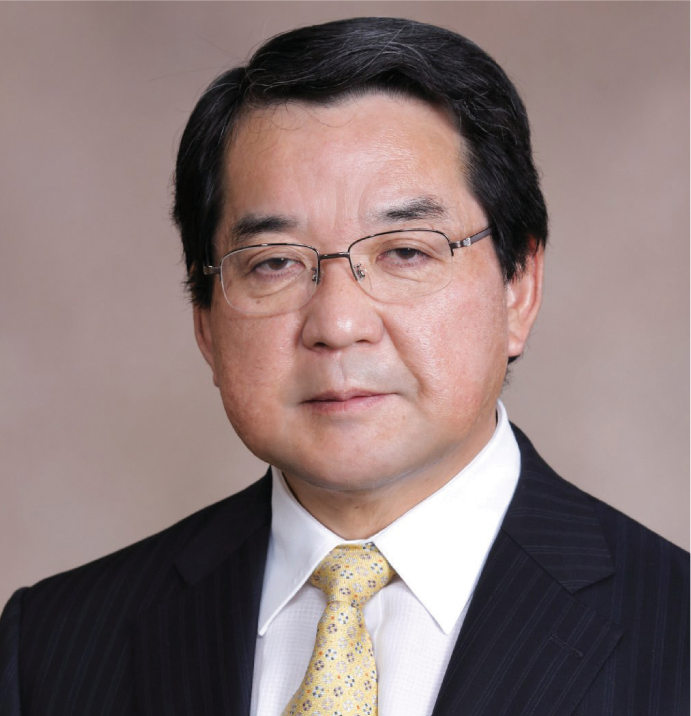
Dr. Teruo Okano
The JSRM was born from the integration of two academic societies representing the tissue engineering and cell therapy fields in Japan. The first one, the Forum for Organogenesis, was established in 1984 to discuss among biomedical engineering scientists basic and translational research issues arising in the field of tissue engineering. In 1998, the Forum for Organogenesis became the Japan Society for Tissue Engineering. The second society, the Forum for Cell Therapy, was established in 1992, also by basic scientists and clinicians, with the guiding purpose of accelerating tissue engineering and regenerative medicine research as well as clinical translation. In addition, the Forum for Cell Therapy had as an objective the expansion of the scientific community by including basic researchers to clinicians and industry representatives. In 2001, the forum became the Japanese Society for Regenerative Medicine.
These two societies, the Japan Society for Tissue Engineering and the Japanese Society for Regenerative Medicine, were in turn integrated in 2008 and called The Japanese Society for Regenerative Medicine (JSRM).
The aim of JSRM is to promote research, clinical care, and advocacy in regenerative medicine. Basically our society presents three core missions as follows: a) Accelerating basic science, translational research, and clinical applications in the field of regenerative medicine. b) Promoting diffusion by encouraging industry participation and networking. c) Fostering educational activities to improve social literacy and contribute to the establishment of new social platforms.
JSRM is dedicated to establishing programs promoting strong basic science and clinical applications as well as fostering mutual communications platforms for our community. In addition, we grant scientific awards for outstanding researchers and clinicians. Adding to our annual society meetings, the JSRM manages 11 committees and media literacy seminars. The society committees cover a wide range of activities, including journal editing, award planning, bioethics, public relations, industry promotion, international networking, conflicts of interest, and finances.
Yes. The JSRM holds a press conference at our annual society meeting to advance specific policy recommendations to the Japanese government, industry, and academia. As necessary, the JSRM raises public awareness regarding the proper clinical applications of regenerative medicine through our society's web site.
The membership of the JSRM has steadily grown. We currently maintain 3,689 members. Our decade of growth has been steady: In 2004 we had a membership of 2,353 members; by 2010 membership increased to more than 3,000. The percentages of the members are academic, 40%; professional, 50%; and corporate, 10%.
Our membership has diverse interests. They include stem cell biology, cell-based therapy, ethics, safety, quality control, tissue engineering, regulatory science, and related advanced industry technologies.
Our society is really successful at implementing public awareness campaigns focusing on many important issues facing our field. They include regenerative medicine, cell-based therapy, ethics, and stem cell science. We also promote networking and collaboration between academia, industry, and government. Moreover, we have an agenda aimed at developing commercialization opportunities. To promote commercialization, our society works with the government to promote legislation to move the field forward.
Another milestone of JSRM is the publication of our official journal Saisei-iryo (Regenerative Medicine). Our journal is quite unique in that it is a hybrid between a traditional commercial magazine and a scientific journal—created from discussions with publishers and editors from the society's editorial board. Our articles are written by leading experts in the field but in a language easy to understand by the various stakeholders.
In addition to focusing on state-of-the-art scientific advances in regenerative medicine, the journal focus requires fusion with the biomedical engineering and pharmacology fields, given that they include the commercialization of therapeutic applications regarding research outcomes. Moreover, we provide updates on industry developments, regulatory issues, and the international landscape.
The Japanese government promotes the field of regenerative medicine through three types of support: public funding, legislation/guidance generation, and industry promotion/reconstruction. The Ministry of Education, Culture, Sports, Science and Technology (MEXT) has jurisdiction over affairs related to public (i.e., grant) funding of research. In turn, the Ministry of Health, Labour and Welfare (MHLW) is in charge of drafting legislation or regulations. Finally, the Ministry of Economy, Trade, and Industry (METI) has jurisdiction over industry promotion. Adding to the roles of these ministries, our government established the Special Office of Health Promotion and Strategy under the strong leadership of our prime minister, directing national policy and strategic actions for advanced therapies.
Yes, the JSRM interacts with several government agencies. For instance, we participated in the drafting and preparation of legislation and guidance in the development of principles for public/grant funding. Moreover, we collaborated in the preparation of guidance related to ethical issues and warnings about the inadequate use of cell-based therapy. As the JSRM requested, three new laws were proposed to the government relating to regenerative medicine, cell-based therapy, and ex vivo gene therapy, of which we anticipate the passage of these laws is likely.
I think the future of the field is quite promising: Japan will create a new and integrated science in our field and will continue to collaborate with the international community.
In addition, we will: 1) Bring various clinical applications of tissue engineered autologous cells to the bedside to continuously treat as many patients as possible; 2) Establish scientific, clinical, and social platforms to realize the diffusion of regenerative medicine by utilizing allogeneic cells; 3) Concurrently develop automatic cell processing and manufacturing technologies that will support regulatory science and analytical technological processes. At the same time, they will encourage industry to develop safe and effective products to patients. 4) Educate and create a new type of clinician and researcher as innovative multidisciplinary specialists.