




Abstract
As in many jurisdictions around the world, there are a growing number of doctors in Australia who are offering autologous cell therapies outside of a clinical trial setting and in the absence of sound and convincing evidence of safety or efficacy. Such interventions, often marketed as “stem cell” treatments, involve the administration of the patient's own cells—or products derived from them—for a wide range of conditions at considerable financial cost to patients. At present, Australian regulations treat autologous cell treatments as medical practice, exempt from the regulatory framework for cell and gene therapy and biologicals. As a consequence, Australia risks becoming the destination of choice for those practitioners seeking to capitalize on community demand for “stem cell” therapies.
Since 2011, the growth in the Australian market has been exponential. From 1 or 2 sole practitioners, there are now more than 40 known providers.
Australian regulatory framework
The inherent risks associated with cell therapies have long been recognized in Australia. More than 10 years ago, the Australian Health Ministers Conference recommended that the Australian Therapeutic Goods Administration (TGA) introduce a national regulatory framework for human tissues and emerging biological therapies due to concerns such as the risk associated with infectious disease transmission, the need to foster international regulatory harmonization, and a requirement to provide industry with more regulatory certainty given that the use of cellular products for therapeutic purposes was predominantly unregulated [1].
From the outset, the proposed framework acknowledged the need to categorize cell and tissue therapies according to potential risk, and envisaged regulatory measures commensurate with those levels of risk. Indeed, the key features of the Biologicals Framework when finally introduced in 2011 provided stringent oversight requirements in relation to the development of new products [101] (summarized in Table 1).
However, due in part to concerns about restricting the use of human cells and tissues in contemporary Australian medical practice, the TGA also included a series of exclusions when introducing the Biologicals Framework [102]. As a result, certain practices, including the use of human hematopoietic progenitor cells for reconstitution of the blood and immune system, direct transplantation of organs, and use of reproductive tissues in infertility treatment (all of which are already overseen by existing peer-review and accreditation processes), were deemed outside the remit of the TGA and not subject to the requirements of the new framework [1].
In addition, a further broad exclusion was introduced to ensure that single surgical procedures and other medical practices involving autologous use of cells and tissues did not have to comply with TGA requirements. According to item 4q, any human tissue and cells that are “collected from a patient who is under the clinical care and treatment of a medical practitioner registered under a law of a State or an internal Territory; and manufactured by that medical practitioner, or by a person or persons under the professional supervision of that medical practitioner, for therapeutic application in the treatment of a single indication and in a single course of treatment of that patient by the same medical practitioner, or by a person or persons under the professional supervision of the same medical practitioner” were to be excluded [102].
Although intended to exempt straightforward procedures—such as the use of veins from a patient's limb(s) for grafts in cardiac bypass surgery, or collection, processing, and administration of pancreatic islet cells for a diabetic patient—from undue regulatory interference [103], this Exclusion Order is in fact very broad and has had the unintended consequence of facilitating the proliferation of unfounded, unproven, and potentially unsafe cell treatments by clinics in the private sector.
Growth of autologous interventions in Australia
Over the last 3 years, there has been a proliferation of clinics, operated by licensed medical practitioners, offering autologous stem cell “treatments” for a myriad of conditions (Fig. 1). While the majority of available procedures involved the administration of adipose-derived extracts—sometimes marketed as stromal vascular fractions assumed to contain mesenchymal stromal cells or MSCs—there are also a number of clinics that utilize cells or plasma from peripheral blood. For around $10,000, Australian patients are being offered intra-articular injections for osteoarthritis and cartilage repair, as well as intravenous delivery of crude tissue extracts for anti-aging/rejuvenation therapy, stroke, multiple sclerosis, retinal neuropathy, spinal cord injury, amyotrophic lateral sclerosis, and even autism [2]. All of these treatments are being offered as medical procedures outside clinical trials.
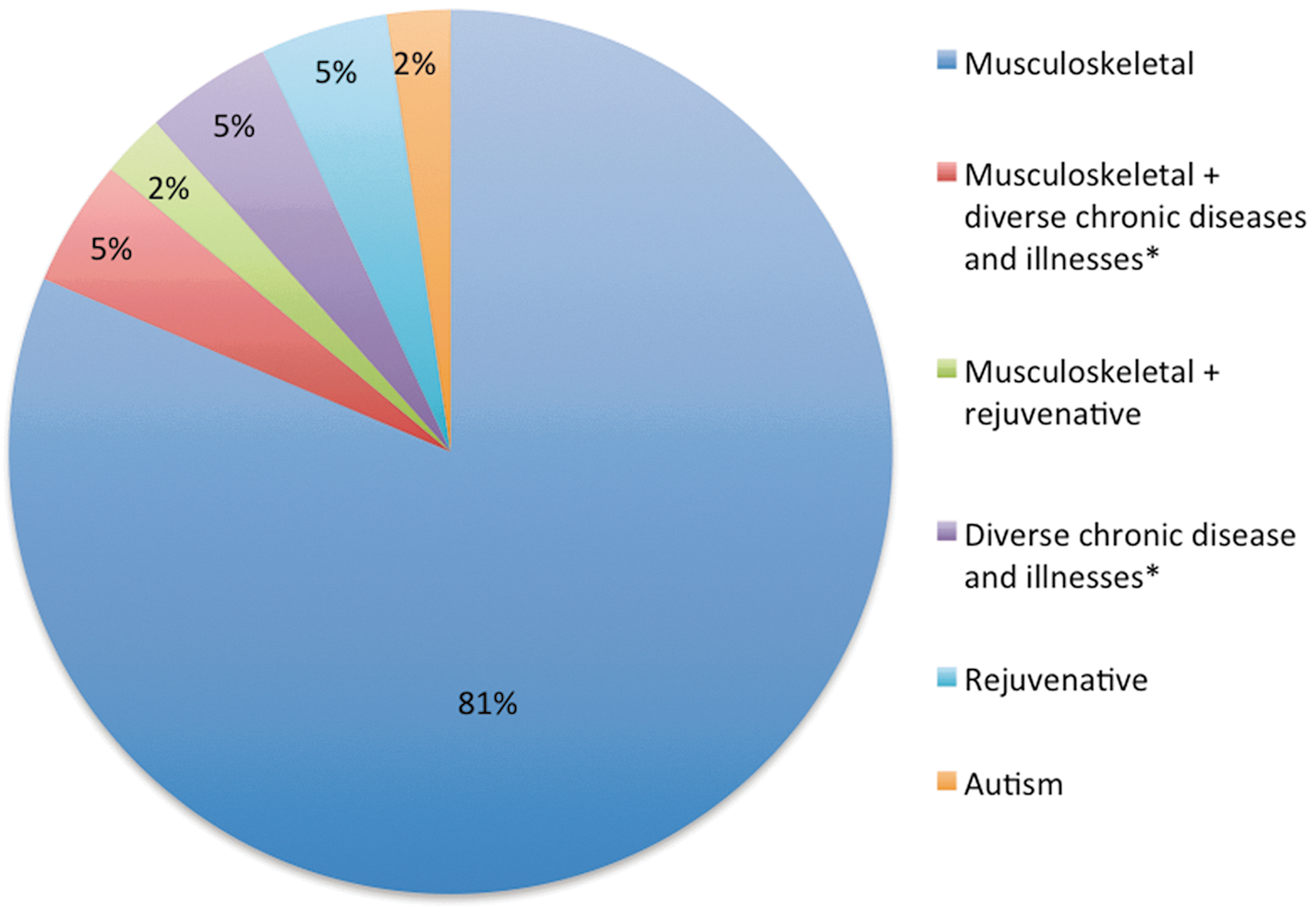
Since 2011, the growth in the Australian market has been exponential. From 1 or 2 sole practitioners, there are now over 40 known providers (Fig. 1). Although most providers were identified from website claims, several were first brought to our attention following correspondence with patients and relatives who reported being offered “stem cell” treatments. Indeed, this more hidden promotion via consumer word-of-mouth may mean that the actual number of Australian providers is even higher.
While the majority of the identified Australian providers appear to restrict their practice to osteoarthritis and sports injuries, others appear prepared to treat a wide range of serious medical conditions. Such unproven treatments are widely promoted by providers via dedicated websites, and endorsed through patient networks and community groups such as an Australian charity claiming to have “over 900 doctors join and over 400 physiotherapists, chiropractors, osteopaths and other health professionals” endorse the value of what they are achieving [104].
For patients and their loved ones seeking potential means to alleviate suffering, claims of “significant success” and “improvement in their quality of life” with claimed minimal risks because the “cells are sourced from your own body” are understandably tempting [105]. However, exactly what is being injected is difficult to determine. As there are currently no requirements for these autologous cellular therapeutics to be prepared in an accredited laboratory—nor any requirement to adhere to good manufacturing practice standards in their production—the dose and composition of the product being delivered is often undefined, with no or little evidence that the preparations actually contain stem cells. Despite this lack of clarity and standards, several franchises are being established across Australia to train interested Australian doctors and to facilitate access to untested and unregulated consumables and devices used in cell manufacture.
In a disturbing development, a new provider has entered the Australian marketplace claiming to utilize patented technology of a global partner to convert autologous peripheral blood cells to pluripotent stem cells for the treatment of “Multiple Sclerosis, Cancer, Acute Myeloid Leukaemia, Stroke, Alzheimer's Disease/Dementia, Diabetes Type I and II, Cardiovascular Disease, Hepatitis B and C, Parkinson's Disease, Crohn's Disease, Facial Beauty Rejuvenation, Male Infertility and Male Erectile Dysfunction” [106]. If such an approach is actually being made available to Australian patients, it would clearly represent a very high level of risk to patient health in terms of tumorigenicity and other potential adverse events. Yet, astonishingly, such autologous therapy using reprogrammed cells would indeed be exempt from current Australian regulations.
Several of the Australian clinics are also offering to provide assistance with travel both to and from the medical facility in Australia, in likely violation of the Excluded Goods Order that envisages a medical practitioner will provide ongoing clinical care of the patient—and paving the way for Australia to become the destination of choice for “stem cell tourism” in the Asia-Pacific region.
Call for action to curb growth in unproven autologous cell therapy
The growth of unproven autologous cell interventions has not gone unnoticed in Australia. The National Health and Medical Research Council (NHMRC) is Australia's lead agency for supporting health and medical research, for provision of health care advice to the public, and for formulating ethical standards for the conduct of health and medical research and health care delivery. The NHMRC has recently called on Australian doctors to report concerns about professional conduct of these practitioners to the Australian Health Practitioner Regulation Agency (AHPRA) or to the Australian Competition and Consumer Commission, where it is believed “consumers are misled or deceived into believing that certain treatments are safe or effective when that is not the case” [107].
The growth of unproven autologous cell interventions has not gone unnoticed in Australia.
The following are conditions that must be met to support applications of unproven autologous cell-based interventions in patients outside the context of a formal clinical trial: •provision to at most a small number of patients; •a scientific rationale, including preclinical evidence of efficacy and safety; •full characterization of the types of cells being transplanted and their processing; •a peer-reviewed plan for the procedure and for clinical follow-up and data collection to assess the effectiveness and safety; •an action plan for adverse events; •a commitment to report results of innovative use; •moving to formal clinical trials in a timely manner after experience with at most a few patients; and •the ISSCR condemns the administration of unproven stem cells or their direct derivatives to a large series of patients outside of clinical trials, particularly when patients are charged for such services.
For more information, visit
Currently, the only control over autologous cell therapies lies with AHPRA's authority to investigate false and misleading advertising, as well as unsafe and unsound medical practices. However, such inquiries can only be triggered ex post facto on a case-by-case basis. There is no scope for prevention of unsafe or unsound practice. Instead, under the current framework, we must wait until sufficiently egregious conduct involving actual harm is reported. With limited resources and expertise in cell therapy available to a body charged with enforcing all malpractice regulations across the health professions nationally, these mechanisms are an unsatisfactory means to tackle the growing epidemic of unfounded cell therapy clinics.
It has also been proposed that self-regulation may provide a possible interim solution to the control of autologous cell therapy [3]. There are obvious inherent conflicts of interest in any self-regulatory scheme, and it remains to be seen whether the code of conduct being developed will have sufficient power to ensure the practice of evidence-based medicine, especially when there is a high financial imperative to continue business as usual.
To enable medical innovation in the field of cell therapy, scientists, physicians, and regulators need to ensure that prospective new treatments are introduced in a responsible fashion, and that patients are provided with a realistic perspective of the proposed interventions. Australians need to be better informed of the risks and true benefits of pursuing “stem cell” treatment (Table 2). We need to dispel the view that stem cells are a “silver bullet” capable of knowing where in the body they are needed and being able to restore function. Most stem cell therapies are experimental. Patients and their families and friends need to be aware that the benefits of most treatments are unknown, and that some treatments do pose real risks to their health—even if they use the patient's own cells. They need to know that just because a treatment is being offered in Australia, that does not make it legitimate. All stem cell treatments should be shown in phase I, II, and III clinical trials to be safe and effective before being introduced into widespread practice. Patients should also consider whether these expensive interventions are diverting them, and their resources, from standard treatments based on sound scientific evidence that, even if not curative, have demonstrable beneficial or palliative effects.
Adapted from The Australian Stem Cell Handbook [110]. Courtesy of The National Stem Cell Foundation of Australia.
Restraint is required from medical practitioners fervent about stem cells and their potential. The International Society for Stem Cell Research (ISSCR) has long recognized the potential contribution of medical innovators to regenerative medicine, but provides a very clear set of guidelines around the very exceptional circumstances under which innovative stem cell treatments may be attempted outside the context of a clinical trial [108]. More recently, ISSCR has issued a statement on autologous cell interventions that calls on medical licensing bodies, legal authorities, patient advocacy organizations, physicians, and others to exercise their influence to discourage commercial provision of unproven autologous cell-based interventions outside of clinical trials [109]. Ultimately evidence, not simply enthusiasm, must underpin the translation of stem cell science into clinical practice in Australia and throughout the world.
Acknowledgments
Authors are members of Stem Cells Australia, a special research initiative funded by the Australian Research Council.
Footnotes
Author Disclosure Statement
No competing financial interests exist.