




Abstract
Exposure to microgravity causes significant mechanical unloading of mammalian tissues, resulting in rapid alterations of their physiology, which poses a significant risk for long-duration manned spaceflight. The immediate degenerative effects of spaceflight we understand best are those studied during short-term low-Earth-orbit experiments, and include rapid microgravity-adaptive bone and muscle loss, loss of cardiovascular capacity, defects in wound and bone fracture healing, and impaired immune function. Over the long-term, exposure to microgravity may cause severe deficits in mammalian stem cell-based tissue regenerative health, including, osteogenesis, hematopoiesis, and lymphopoeisis, as well as cause significant stem cell-based tissue degeneration in amphibian tail and lens regeneration. To address the needs for stem cell and other cell science research on the International Space Station (ISS), NASA has developed the new Bioculture System that will allow investigators to initiate and conduct on-orbit experiments that astronauts will be able to monitor and interact with during the course of cell cultures. This cell culture capability combined with advanced technologies for molecular biology and on-orbit measurement of gene expression (WetLab2) and other tools that are now coming online bring the ISS National Laboratory a step closer to becoming a fully functional space laboratory for advancing space biological sciences.
The lack of gravity in space is a major concern for stem cell and tissue regenerative health during long-term spaceflight.
Introduction
Humanity has both a strong aspiration and a practical need to become a space-faring race, and to expand and establish its presence on other solar system moons and planets, such as Mars. However, in order to achieve these long-term aims, terrestrial life, both human and other species essential to our survival, need to overcome the many challenges that arise from existing in a low-gravity space environment. The predominant space conditions that differ from those found on Earth are the absence of gravity, absence of a charged-particle-deflecting geomagnetic field, and the lack of an atmosphere. Because of this unique environment, we need to understand the response of terrestrial life to space from single cells to the level of integrated tissues and organ systems, before further human space exploration and expansion beyond Earth can occur. Here we focus on how the lack of gravity mechanostimulatory forces in space is a major concern for stem cell and tissue regenerative health during long-term spaceflight, and how NASA ISS Space Biology experimental capabilities can address these science questions.
The space environment induces tissue degeneration
Astronauts in space are exposed to several different gravitational environments that affect basic biological processes. The majority of human spaceflights have been conducted in low Earth orbit (LEO), which is approximately 160–2,000 km above the Earth's surface [1], still protected from charged particle space radiation. Normal terrestrial gravity (1 g) forces objects to accelerate toward the center of the Earth. The Earth’s surface resists the downward acceleration of gravity, and it is this force that shapes the nature of our musculoskeletal system and how it supports our body. Therefore, on Earth, organisms are constantly subjected to contact forces that provide an array of mechanical stimulation essential for the function of many physiological systems. The influence of these mechanical contact forces on the human body is especially evident in the effects of physical exercise loads on the weight-bearing skeleton. Increased load during weight-bearing exercise causes increased musculoskeletal growth to enable the body to withstand these increased forces. For orbital flight around the Earth, the force of the Earth's gravity keeps the spacecraft moving in an orbital path. Although zero gravity is not experienced in LEO, near-zero contact forces are exerted by the spacecraft on its inhabitants, or in other words, the astronauts and the contents of the spacecraft are in a state of free fall in orbit around the Earth [1], resulting in gravitational force of approximately 1 × 10⁻⁶ g, microgravity. In space, this lack of normal gravity and resulting loss of mechanical stimulation of cells and tissues are responsible for many of the physiological problems that astronauts experience—from space motion sickness and otolith dysfunction, to cardiovascular, bone, and muscle degeneration. Specifically, as astronauts have journeyed in microgravity, the spaceflight gravitational environment revealed many immediate tissue degenerative consequences for life. These include bone loss [2 –9], muscle loss [2,10 –15], loss of cardiovascular capacity [16 –19], possible defects in wound [20 –22] and bone fracture healing [23 –25], and impaired immune function [6,26 –31]. The majority of space biological experimentation was conducted on the Space Shuttle, which supported short-term (1–2 weeks) experiments on spaceflight effects. In particular, research concentrated on the more noticeable changes that occur as an adaptation to moving from loaded conditions at 1 g to unloaded conditions in microgravity. In the long-term, however, microgravity may also affect normal ongoing tissue regenerative growth and repair, a process dependent on the proliferation and differentiation of tissue-specific adult stem cells that are progenitors of mature terminally differentiated cells in most tissues. New investigations on ISS are now focusing on longer-term experiments that are becoming possible with ISS completion and ISS-resident experimental biology hardware.
The physiological effects of spaceflight on stem cells
The cell culture experiments conducted in space have used a variety of cell types, including somatic stem cells, embryonic stem cells, and cell culture lines, to attempt to determine the influence of microgravity on cellular function (Fig. 1). Through these experiments, the detrimental effects of microgravity on cellular function were consistently revealed, including inhibition of osteoblast differentiation [2,32,33], reduced osteoblast numbers [34], atrophy of skeletal muscle cells [14,35,36], impaired activation of immune cells and consequently the immune system [37 –39], abnormal formation of chondrocytes [40], and collapse of the cytoskeleton in T lymphoblastoid cells (Jurkat) [41], thereby displaying the impact of microgravity on various physiological systems.
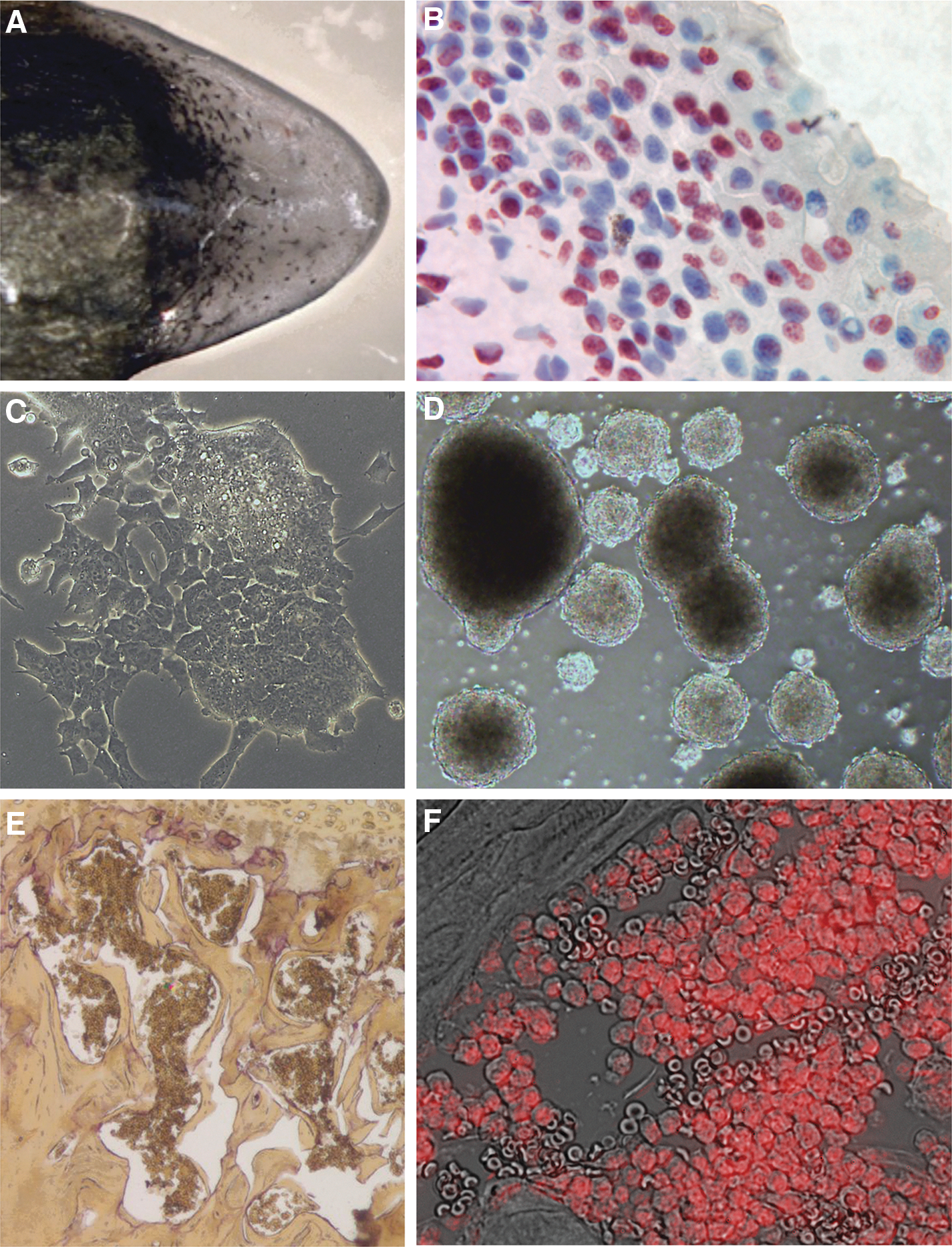
In a majority of cases, microgravity cell studies focused on terminally differentiated cells and immortalized cell lines. However, considering the widespread effects of mechanical unloading on the body, it is likely that somatic stem cells will also be adversely affected by this environment. Somatic stem cells have the ability to differentiate into a number of lineage-specific terminally differentiated cells, as such altered somatic stem cell function will have significant ramifications to multiple cell lineages throughout the body. A very small subset of spaceflight experiments have focused on somatic stem cells, with the majority studying the differentiation and proliferation capacity of bone marrow-derived hematopoietic stem cells (HSCs) and mesenchymal stem cells. Exposure to spaceflight following addition of osteogenic differentiation factors resulted in increased expression of genes related to neural development, neural morphogenesis, and transmission of nerve impulses and synapses in studies conducted on ISS [42]. This same study found increased expression of cell cycle arrest molecules indicating either increased differentiation of cells in space or activation of cellular quiescence or senescence [42]. In the HSC lineage, a suppression of proliferation and differentiation has also been noted [6,26,43]. Additionally, shifts in immune cell phenotypes were noted in experiments flown on board STS-108 with an increase in the numbers of bone marrow–derived T cells and a decrease in bone marrow–derived B cells [44]. Studies on STS-63 and STS-69 with CD34+ bone marrow progenitor cells revealed decreases in total cell number in microgravity samples, and additionally decreased erythropoiesis and increased macrophage differentiation [45]. Furthermore, studies investigating the bone marrow stem cell population in the femoral head of space-flown mice revealed an accumulation of red blood cells, decreased numbers of megakaryocytes, and decreased capacity of both mesenchymal and hematopoietic stem cells to differentiate into terminal lineages [43]. Such results highlight the alterations in stem cell proliferation and differentiation during spaceflight.
Recent spaceflight experiments addressed the role of microgravity in regulating stem cell-based tissue regeneration. In collaborative NASA-U.S./Russian experiments conducted during the Foton M2 and M3 missions, tissue regeneration in microgravity was studied using a lower vertebrate newt tail blastema model, which established that microgravity inhibited the transition between stem cell progenitor and differentiated cells. Conversely, ground centrifugation experiments showed that hypergravity promoted stem cell-based tissue regeneration by stimulating progenitor differentiation. In the STS-131 and STS-135 space shuttle missions to ISS, the influence of microgravity on embryonic stem cell differentiation was studied by inducing differentiation into an early embryogenesis model, of embryoid body formation, and with the terminal differentiation of the keratinocyte lineage. In both studies, microgravity significantly impaired the ability of embryonic stem cells to express differentiation markers and instead resulted in maintenance of “stemness” [46 –48]. Similar results were seen in studies of somatic bone marrow stem cells isolated from mouse bones flown on the STS-131 mission. In these studies, microgravity caused an inhibition of differentiation in mouse bone marrow osteoprogenitors required for normal bone regeneration, accompanied by p21-mediated cell cycle arrest [43,49]. Upon reloading following microgravity, the regenerative potential of bone marrow stromal cells to differentiate was greatly increased reflecting an accumulation of undifferentiated stem cell precursors in bone marrow. Studies of gene expression in these cells displayed widespread downregulation of hematopoietic and mesenchymal stem cell marker genes, with no alteration in early markers of stemness. Recent NASA-U.S./Russian microgravity experiments in the Bion M1 mission confirm previous results on stem cell differentiation inhibition by microgravity, and accumulation of stem cell precursors in bone marrow (E. Almeida, unpublished data).
In total, these recent experiments suggest a possible universal microgravity response by stem cells across various cell, tissue, and organismal experimental models, consisting of a partial inhibition of the transition from dividing progenitors to cell cycle-arrested, terminally differentiated adult cells. Such a fundamental need for gravity mechanical stimulation to maintain stem cell regenerative health appears more and more to be a basic feature of mammalian life on Earth at 1 g, and it suggests that long-term spaceflight in microgravity may cause a broad inhibition of stem cell-based tissue regeneration.
New capability for conducting stem cell culture studies on ISS
It allows NASA to gain greater insight into how the space environment affects stem cells in microgravity.
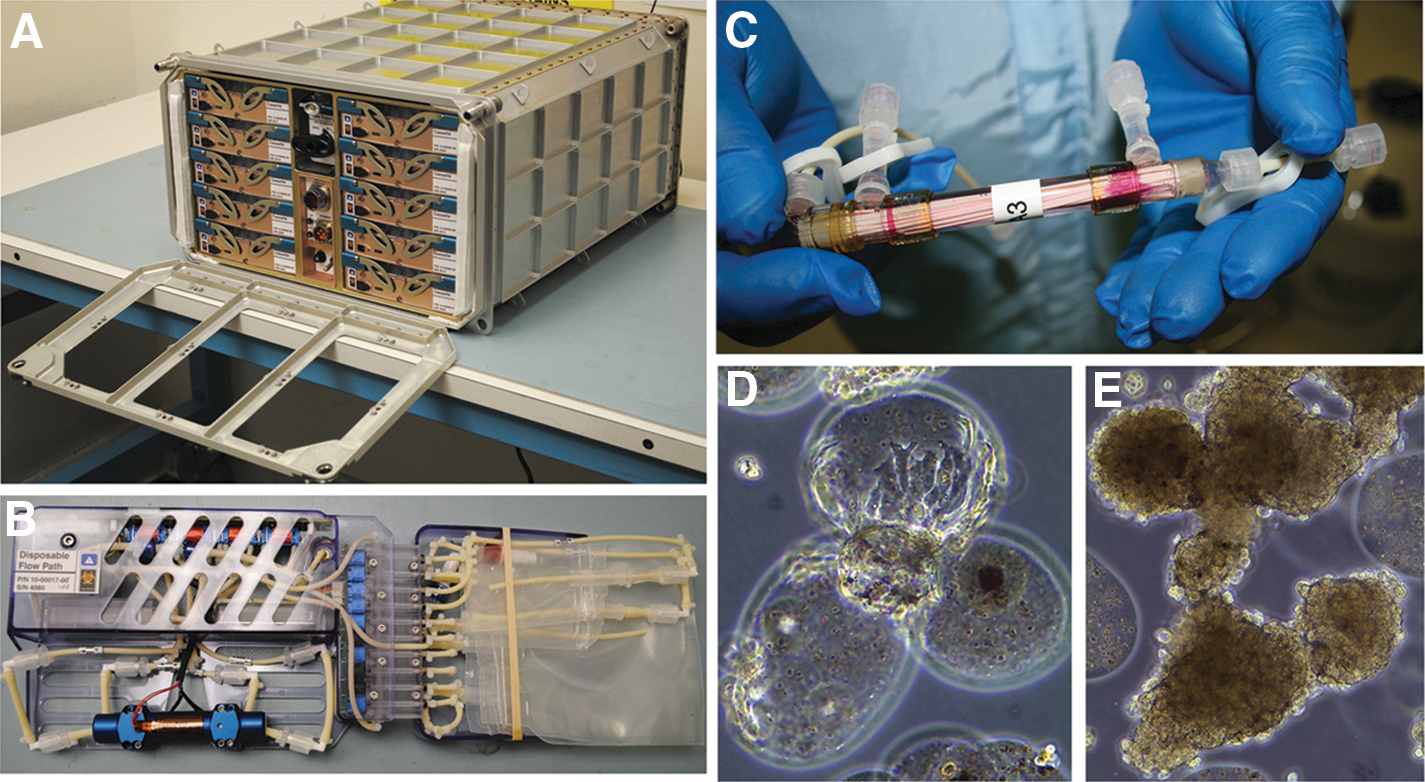
The Cell Culture Module (CCM; DoD) used in many of the experiments described above was designed in the 1990s for the Space Shuttle middeck locker, and it required functional and operational upgrades for long-duration ISS experiments. The CCM design supported fully automated hollow fiber bioreactor cell culturing for up to 2 weeks with fixation on-orbit or live cell return, but it had no options to start cultures on-orbit, collect samples of the cultures, conduct microscopic observations, change the culture medium, and conduct other standard cell culture activities on-orbit. As the NASA Space Life and Physical Sciences and ISS programs sought to replace the CCM hardware for the ISS National Lab, it incorporated requirements for extensive user-interactive features to allow on-orbit cell science experimentation in the new Bioculture System (Fig. 2). Specifically, the new Bioculture System is both an automated and crew-accessible cell culture hardware that provides controlled maintenance/growth medium, gas, and temperature of cell cultures in the microgravity environment of space. The system incorporates 10 independent cassettes each with perfusion-based cell culture porous-hollow fiber bioreactors. The porous hollow fibers protect cells from fluid shear forces created by perfused feeding, which would otherwise mask microgravity effects. Computer-controlled fluidics allow for manual or fully automated operation of medium change, injections, medium or cell sample collection, and an internal refrigerated storage compartment. NASA envisions investigators being able to conduct cell science experiments end-to-end on ISS, with on-orbit capabilities for initiating cultures from frozen stocks, sampling cell cultures for on-orbit studies of gene expression by qPCR (using the WetLab2 capabilities), and for microscopic observation and imaging, adding growth and differentiation factors to cultures depending on culture progression, and preserving and/or isolating RNA, DNA, and proteins on-orbit. This approach of using ISS as a National Laboratory, similar to ground-based laboratories, is challenging but also promises improved science outcomes. Furthermore, it allows NASA to develop the capability to conduct biological experimentation in space for future long-term exploration, and to gain greater insight into how the space environment affects stem cells and stem cell-based regenerative health in microgravity.
Footnotes
Acknowledgments
This work was supported by the NASA Space Biology Program, NASA Fundamental Space Biology Grants NNH08ZTT003N and NNH07ZTT001N to E. Almeida, and NASA Postdoctoral Program Fellowship to E. Blaber.
Author Disclosure Statement
No competing financial interests exist.