




Abstract
As thermally driven smart materials capable of large reversible deformations, liquid crystal elastomers (LCEs) have great potential for applications in bionic soft robots, artificial muscles, controllable actuators, and flexible sensors due to their ability to program controllable motion into materials. In this article, we introduce conductive LCE actuators using a liquid metal electrothermal layer and a polyethylene terephthalate substrate. Our LCE actuators can be stimulated at low currents from 2 to 4 A and produce a maximum work density of 9.4
Introduction
Actuatable soft materials are at the cornerstone of soft robotics due to their relatively low stiffness making them relevant for many biomimetic systems1,2 and medical applications.3–5 Unlike machines composed of typical engineering materials, soft robots are often driven by the material itself as opposed to external equipment or machinery. The goal of much research in actuatable design is, thus, to develop smart materials capable of undergoing a precisely predefined motion, which can be appropriately leveraged to perform work and achieve a given task. In recent years, soft robots have been designed to perform a large variety of tasks, including lifting objects,6,7 releasing drugs, 8 or programming the motion of robotic devices. 9 As the informed design of soft robotics becomes more understood, the development of autonomous biomimetic systems becomes more of a reality, which has broad applications ranging from oceanographic and spatial exploration 10 to biomedicine and surgical assistance. 2
The practical usefulness of actuating materials relies on the efficient conversion of mechanical energy. However, the current state of actuatable materials is typically limited by either complex manufacturing processes or inconvenient actuation methods. For example, programmed thermal actuation of unidirectional shape memory alloys has been used for a variety of applications, including the construction of millimeter-scale terrestrial robots 1 and flexible grippers, 11 but their thermal actuation is limited by high energy consumption and difficult temperature control, resulting in low actuation efficiency. Magnetically driven soft robots that incorporate magneto-rheological fluids have demonstrated versatile design possibilities6,7,12 and have been used to create paper-folding robots that can store and release drugs, 8 as well as millimeter-scale soft robots that can climb on tissue surfaces. 9 With this said, the applications of magnetically driven soft robots are severely limited by magnetic field-generating devices, which are inconvenient to handle in practical settings.
Researchers have also developed flexible manipulator ends based on the electrodynamic expansion effect of dielectric elastomers that can reach up to 10 times their payload. 13 However, dielectric elastomer drives require high driving voltages, typically in the kilovolt range. It can be concluded that the manufacturing and assembly process should be simplified, and the complexity of flexible actuator control should be reduced.
Liquid crystal elastomers (LCEs) are a particularly promising class of actuating materials as they are highly versatile in their mechanical properties and diverse modes of actuation.14–18 LCE structures driven by direct ambient heating19,20 or photothermal and photochemical effects21–28 have been fabricated by taking advantage of the fast and reversible reconfigurability of the mesogens during the nematic to isotropic phase change. Researchers have also integrated stretchable resistance heaters into LCEs to achieve electrodynamic actuation of the material.29,30 Moreover, LCE-based designs have been successful at creating artificial muscles with highly efficient electrothermal actuation, which may be induced by low voltages under 10 V. 31 We, therefore, consider LCEs as a solid foundation upon which to build soft robotic systems with a diverse range of bioinspired functions.
A significant step in the development of independent biologically inspired soft robots is achieving autonomous motion without a dynamically changing external input. Recently, researchers have designed and successfully fabricated various electrically driven LCE-based structures based on conductive materials to create soft robots that mimic the crawling of biological organisms such as the inchworm32,33 and the caterpillar. 34 While these systems represent promising milestones, their motion is still governed by oscillating patterns of electricity or heat input. Fully autonomous motion has been achieved, however, using various material systems, including thermosensitive hydrogels 10 and microfluidic soft controllers. 35 Furthermore, clever kirigami-based 3D printing designs have been used to create autonomous motion in a liquid crystal network by applying a constant light source. 36 Currently, there have been no reports of autonomous motion in an electricity-driven LCE material.
This article combines an LCE substrate with a soft, stretchable liquid metal (LM) electrothermal film using micro and nano processing technology and printed electronics to create a conductive LCE actuator with diverse functionalities (Fig. 1). Under low current stimulation from 2 to 4 A, the actuator can grip folders, screws, beakers, and other shaped objects with precise external gripping when implemented as a robotic gripper. To demonstrate the incorporation of motion into our design, a new conductive LCE soft robot inspired by the movement of solid fly larvae is developed. The bioinspired crawling motion is achieved using an asymmetric design that encourages an exploitable imbalance in frictional forces at the front and back of the robot. By independently actuating left and right “muscles” on the robot, a controllable steering motion is achieved on a flat and inclined surface.

Diverse motions achievable with LM-LCE systems. LCE, liquid crystal elastomer; LM, liquid metal.
Finally, to achieve autonomous motion in an electricity driven LCE setting, we present a wheel design inspired by the work of Feynman 37 that rotates by the nonuniform contraction of its spokes. The research work in this article will thus provide important theoretical and experimental paradigms for the potential applications of flexible actuation modulation and soft thermoelectric robots with autonomous and diverse modes of motion.
Material Design and Optimization
Materials and synthesis of LCEs
The materials used in this article are as follows: liquid crystal monomer (RM257; Xi'an Colorchip Technology; 99%), toluene (MACKLIN; AR), pentaerythritol tetrakis (3-mercaptopropionate) (PETMP; aladdin; 95%), 2,2-(ethylenedioxy) diethanethiol (EDDET; Shanghai TCI; 95%), (2-hydr-oxyethoxy)-2-methylpropiophenone (HHMP; Shanghai TCI; 98%), Dipropy lamine (DPA; Shanghai TCI; 98%), Polyethylene terephthalate (PET), Gallium indium LM (GaIn LM), and Anhydrous ethanol (Huatian Biotechnology; AR). All materials were used as received without further purification.
Referring to the two-stage thiol-acrylate Michael addition-photopolymerization reaction proposed by the Yakacki research group at the University of Colorado, 18 in this article, the preparation process of LCEs is divided into two steps: (1) the crosslinking reaction and (2) the photopolymerization process. Acrylic mesogen RM257 (2 g) is used as liquid crystal monomer, which is first mixed with PETMP (0.1085 g) and EDDET (0.4578 g), two thiol monomers, and dissolved in toluene (0.8 g) solution. By adding amine catalyst DPA (0.284 g) and photoinitiator HHMP (0.0128 g), through Michael addition reaction, the sample with multidomain structure was obtained.
To obtain LCEs with shape memory effect, the samples were mechanically prestretched and cured by ultraviolet light. The maximum extensibility of the samples prepared in this article is 300–400% of the original size, and after ultraviolet curing, a LCE with a single domain structure is finally obtained. Once heated above the phase-transitioning temperature, the mesogens align into an isotropic phase and drive the macroscopic deformation of the LCE (Fig. 2a). For convenience, the main steps of preparing LCE films are illustrated schematically in Supplementary Figure S1.

Fabrication of electric-driven LCE actuators
To enable electrically driven actuation of the material, an LCE actuator with a PET substrate and LM drive layer was fabricated (Fig. 2b, c). In this article, gallium-indium alloy was used as the LM conductor, which has a melting point of 15.6°C and a conductivity of up to 3.46 × 10⁶ Siemens per unit volume. The fabrication is as follows: first, the pattern for the LM layer was cut by laser to provide a template. A 20% wt. silica powder was dispersed into the LM using ultrasonic waves to improve the adhesion of the LM leads to the LCE surface. Next, we apply a layer of acrylic tape (VHB) to the LCE for better adhesion and place the printing template of the LM pattern on the VHB. We brush the printing plate with LM injected with a low concentration of silica particles (20%) until the gap is filled. After the LM driver is encapsulated in the PET substrate, an LCE actuator is obtained.
Rapid actuation is achieved by applying current to the LM heater film, generating Joule heating, which subsequently heats the adjacent LCE and causes contraction (See Supplementary Fig. S2). Since the PET substrate is insensitive to temperature changes, a strain gradient is created between the LCE film and the substrate, resulting in bend repulsion control of the driver. The observable actuation can perform work such as lifting weights as illustrated schematically in Figure 2d (see Supplementary Fig. S3 for real system) and is efficiently reversible.
Optimal LCE actuator design and performance
To ensure the most optimal design of our LCE actuators, we characterized the performance of bidirectional robotic grippers constructed with two separate actuators placed on either side of the PET substrate (Fig. 3a). The gripper can be actuated to bend left or right depending on which side is powered, which increases the variety of objects that it can manipulate. Moreover, the soft substrate creates a bionic gripper that can be used to move objects of a variety of shapes and sizes in a manufacturing setting (Fig. 3b).

In this study, we considered five different patterns of the LM drive layer (templates included in Supplementary Fig. S4) and three different gripper aspect ratios of 1:3, 1:4, and 1:5. Each conductive pattern was placed onto LCE drivers according to the procedure described above. To assess their range of motion, we measured the bending angle of the actuators during heating cycles (Fig. 3c). To quantitatively measure the work density of each driver, we measured the actuation stress by placing the material into a QT-6203S tensile testing machine, fixing the displacement, and applying a constant current. The same experiment was performed on each driver for currents ranging from 2 to 4 A at intervals of 0.5 A.
Our experimental results show that the conductive LCE driver with the most surface area and the highest aspect ratio of 1:5 has the largest deformation across all current inputs, with its maximum bending angle being 116° at a current of 4 (see Supplementary Figs. S5–S10 for cohesive comparison data). As expected, the LM pattern with the smallest surface area exhibited the smallest bending angle. For the optimally shaped actuator, as the current increases from 2 to 4 A, the maximum driving stress (defined as force per initial cross-sectional area) increases from 0.17 to 0.96 MPa. Based on lifting a 55 g load, we determined the work density to be
To illustrate the basic applications of our LCE actuators, we created a variety of performance experiments that mimic object manipulation in an industrial setting (See Supplementary Movies S1–S2). The optimally designed conductive LCE driver is used as the main building block to fabricate a palm movable conductive LCE gripper with an adjustable width from 5 to 55 mm. Under low current stimulation of 2 to 4 A, the driver heats up to bend inward and is capable of grasping and transporting objects of varying shapes and sizes. Notably, the softness of the grippers prevents excessive force from being transferred to the object, allowing it to handle sensitive objects. In Supplementary Figure S12, we demonstrate the gripper manipulating a wet absorbent sponge while retaining 97% of its water weight.
Results and Applications
Directionally controllable crawling soft robots
Directed motion driven by controlled actuation is foundational to the development of soft robots capable of autonomous motion. In this light, it is essential to understand the mechanisms governing simple modes of motion such as crawling. Previously, we have developed crawling soft robots inspired by the peristaltic motion of worms. 42 In this work, we extend this design to an LCE system and improve our design by integrating multiple motors, which enable the robot to turn. To begin, we illustrate the basic design with a unidirectional robot inspired by the movement of fruit fly larvae (Fig. 4a). The weight of the soft robot is ∼1.9 g, and its dimensions and design are illustrated in the Supplementary Fig. S13. An ADC-regulated power supply (UNI-T UTP3704S) provides the power, which excites the material at low voltages ranging from 1 to 3 V.

The principle of the directional movement of the soft robot is based on anisotropic friction due to the asymmetric design of the feet. We provide here a brief overview of the physics and note that this was studied in previous publications.42–44
When crawling, the surface roughness, stiffness, and geometry of the substrate material all affect the frictional properties of the robot and, thus, its motion. In this study, it is assumed that the coefficient of friction
where d is the current distance between the front foot and the rear foot and r is the orthogonal distance of the robot's center-of-mass to the front foot (Fig. 4a). When this ratio exceeds one, the front foot has a greater normal force and will break static friction first upon actuation. In contrast, when it is less than one, the rear foot has a greater normal force and will break static friction first upon actuation. In a symmetric design, this ratio is equal to one, resulting in simultaneous sliding and, subsequently, no net motion of the robot.
To optimize the distance traveled by our robot, we, therefore, designed the geometry of our robot such that this ratio is greater than one in its resting state but less than one in its actuated state. Due to the asymmetric geometry of the design, the ratio
In the experiment, the soft robot was given different voltages of excitation ranging from 1 to 3 V, and its directional crawling motion was induced by continuous power-on and power-off cycling. We illustrate the motion of the robot over two cyclic processes in Figure 4c. In one cycle, the time required to fully contract is around 24 s, while the cooling time is around 90 s. However, the rate of forward motion is much greater than the rate of backward motion, resulting in a consistent forward displacement over multiple cycles. In this experiment, the step size actuation cycle is around 6, 9, and 13 mm for 1, 2, and 3 V, respectively. If the load distribution does not change for each experiment, this corresponds to a 217% increase in the normal force exerted by the robot when changing the excitation voltage from 1 to 3 V.
The simple soft robot illustrated above is only capable of moving in one direction. On this basis, we also designed and manufactured a steerable soft crawling robot (Fig. 5a and Supplementary Fig. S14 and Supplementary Movie S3). To obtain a more lightweight actuator, we designed a PET substrate with a smaller area and installed the LCE driver on both sides of the substrate. As illustrated in Figure 5a, when currents of different magnitudes are applied to the LCE actuators on the left and right sides of the soft robot, the robot can be induced to turn. The left and right actuators thus act as artificial muscles to create controlled directional steering of the soft robot. Moreover, the steering angle of the robot can be controlled by adjusting the current, resulting in cyclic motion with different turning radii (Fig. 5b and Supplementary Fig. S15). From currents of 1 to 3 A, we can control the turning radius from ∼70 to ∼100 mm.

Conductive LCE wheel with autonomous cyclic motion
By realizing diverse forms of autonomously induced motion, the design space of soft robots capable of complex and arbitrary motion becomes greater. In this study, we take inspiration from The Feynman Lectures on Physics 37 and introduce an autonomously rotating wheel based on asymmetric contraction of the spokes. The wheel itself is 80 mm in diameter and composed of PET with eight LCE actuators (40 × 10 mm) acting as spokes that connect to the exterior of the wheel and the interior hub. The exterior is then lined with conductive foil, which is connected asymmetrically to the following spoke (Fig. 6a). When placed on a conductive sheet, a complete circuit is formed between the exterior foil and the spoke that it is connected to, thereby contracting the spoke. Subsequently, the center-of-mass of the wheel is displaced slightly to the right, which causes rotation of the wheel. Due to its own rotation, the following spoke will actuate while the previous recovers and so on.

Autonomous wheel design based on asymmetric contraction of spokes.
The motion of this wheel is governed by the conversion of electrical energy provided by the battery, to mechanical energy created by the contraction of the spoke, and finally to the kinetic energy of the wheel in motion. To characterize its motion, let us consider that when the actuating spoke contracts by a strain
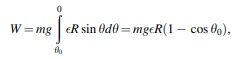
where
The moment of inertia may, thus, be used as a design parameter to optimize the angular velocity of the wheel. In this case, for a given strain
In terms of the actuation time ta of the spoke (i.e., the total time it takes to reach maximum contraction), the angular velocity cannot exceed a value of
Interestingly, this places a material constraint required to achieve the desired optimal angle
which provides the optimal initial spoke angle
In our experiment, after 120 s of continuous motion, the robot rolled autonomously for three cycles and advanced ∼9.42 mm (Supplementary Movie S4). As suggested by our analysis, future work could improve this performance by improving the speed of recovery, adjusting the initial angle of the actuating spoke, and adding more spokes to the design. Nonetheless, our design acts as a promising proof of concept representing a step forward in the design of autonomously moving robots by integrating a circular wheel design with rapidly actuating thermoelectric LCEs.
Conclusions
In this article, the design and fabrication of a conductive LCE-based electrically controlled actuator that can selectively exhibit bidirectional bending and uniform contraction under low current stimulation were discussed. The applications of the LCE actuators were demonstrated with four design implementations, illustrating a variety of potential uses in soft robotics, biomedicine, and manufacturing processes. First, a soft gripper was constructed to achieve precise external clamping or internal support. The gripper demonstrated the capability to target soft items of various sizes such as folders, screws, beakers, and ring-shaped workpieces without excessive force exerted onto the object. Moreover, two crawlable soft robot designs were illustrated based on the concept of asymmetric friction distributions. The soft robots were stimulated with low excitation voltages and could carry loads of over three times its weight, as well as steer on an inclined plane. Finally, an autonomously rotating wheel was designed based on the asymmetric contraction of its spokes. The LCE actuators presented here are thus a versatile tool for a variety of engineering design applications.
Due to the embedded LM electrothermal film, the actuator can be fully activated by applying an electrical current, which is desirable for many industrial applications due to its convenience and affordability. With this said, previous electrically controlled flexible robots, in particular, those fabricated with dielectric elastomers, have shown faster speeds and higher energy efficiency than LCE-based actuators. To optimize the efficiency of our LCE actuators, we studied the effect of the LM geometry on the actuation capability. In the future, studies could be done to optimize the type of metal used, as well as its adherence to the substrate, which could further improve the efficiency of actuation. We also note that we have provided studies on the actuation of our materials using low current stimulation—under a higher excitation, the speed of actuation may be increased further. This feature makes the proposed LCE actuators compatible with most low-cost and commercially available electronics.
Footnotes
Authors' Contributions
L.X. conceived the idea and concept of the project. C.Z., S.L., X.Z., and Y.Y. performed the experimental procedures. L.X., C.Z., S.L., and F.J.V. wrote the article. All authors participated in the data collection, data analysis, and article proofreading.
Author Disclosure Statement
No competing financial interests exist.
Funding Information
L.X. was supported by National Natural Science Foundation of China (grant nos. 52275290, 51905222), Natural Science Foundation of Jiangsu Province (grant no. BK20211068), Senior Talent Scientific Research Fund of Jiangsu University (grant no.15JDG179), Research of Project of State Key Laboratory of Mechanical System and Vibration MSV202419 and Major Program of National Natural Science Foundation of China (NSFC) for Basic Theory and Key Technology of Tri-Co Robots (grant no. 92248301).

References
Supplementary Material
Please find the following supplemental material available below.
For Open Access articles published under a Creative Commons License, all supplemental material carries the same license as the article it is associated with.
For non-Open Access articles published, all supplemental material carries a non-exclusive license, and permission requests for re-use of supplemental material or any part of supplemental material shall be sent directly to the copyright owner as specified in the copyright notice associated with the article.
