




Abstract
Abstract
Commercial orbital spaceflight vehicles are now a reality and are expected to carry passengers in the next year or 2. SpaceX and Boeing should begin their commercial flight services to the International Space Station (ISS) before or during 2020. Furthermore, companies such as Bigelow and Axiom aim to provide low Earth orbit destinations in the years ahead as ISS operations come to a close. The advent of these new vehicles and commercial space stations elicits a need for the development of dedicated commercial spaceflight training services to enable safe and productive spaceflight operations for commercial customers, including commercial extravehicular activity (EVA). Blue Abyss Ltd. is developing dedicated spaceflight training facilities and associated training curricula at several locations around the world including in the United States and the United Kingdom. The Blue Abyss U.K. facility will include the largest pool in the world, larger than the National Aeronautics and Space Administration's Neutral Buoyancy Laboratory in Houston. The pool will include a 50-m deep shaft, and platforms at multiple depths for high-pressure training for technical diving and remotely operated vehicle work. A unique feature of the Blue Abyss neutral buoyancy training system will be the ability to combine virtual reality (VR) and augmented reality (AR) with neutral buoyancy EVA suit training for a totally immersive and realistic training experience. Full body suspension harnesses will also be utilized in conjunction with VR—AR to provide partial gravity simulation for lunar and Mars surface EVA training and suit testing. Among other services, Blue Abyss with its partners will offer a parabolic flight capability to provide weightless and partial gravity familiarization, orientation, and training. These flights will be used to provide a realistic bespoke training experience that can include pressure suit don—doffing and airlock ingress and egress during weightlessness and the likes of Moon and Mars gravities. Once the development of the initial facilities is underway, Blue Abyss plans to construct additional facilities in the Middle East and Asia to serve regional energy and space sector needs. This article outlines the facilities, training curricula, and future aspirations for the Blue Abyss commercial spaceflight preparation services.
Introduction
Blue Abyss 1 will facilitate a step change in the future of aquatic and space operations, research, and exploration. The pioneering Blue Abyss centers will provide the most comprehensive research, training, and test facilities of their kind in the world.
The centers' primary functions will be to enable extreme environment development, both human and robotic, for industries ranging from offshore energy to the growing human spaceflight sector and adventure tourism.
The first Blue Abyss centers will be in the United States and the United Kingdom. The facilities and services provided will play a significant role in the mitigation of risk and reduction of cost across the industries served. The centers will also support strategic industrial growth by offering a stimulating and fertile environment that inspires technical education, promotes innovative research, creates skilled job opportunities, and enables the capitalization of the burgeoning human spaceflight market.
Blue Abyss Facilities
The U.K. Blue Abyss complex (Fig. 1) will house several facilities, all geared to support research, test and training in the areas of underwater recreational and technical diving, maritime technology research and development (R&D) and operations, space mission preparation and training, education, and outreach. Blue Abyss will offer the world's first dedicated commercial astronaut training centers.
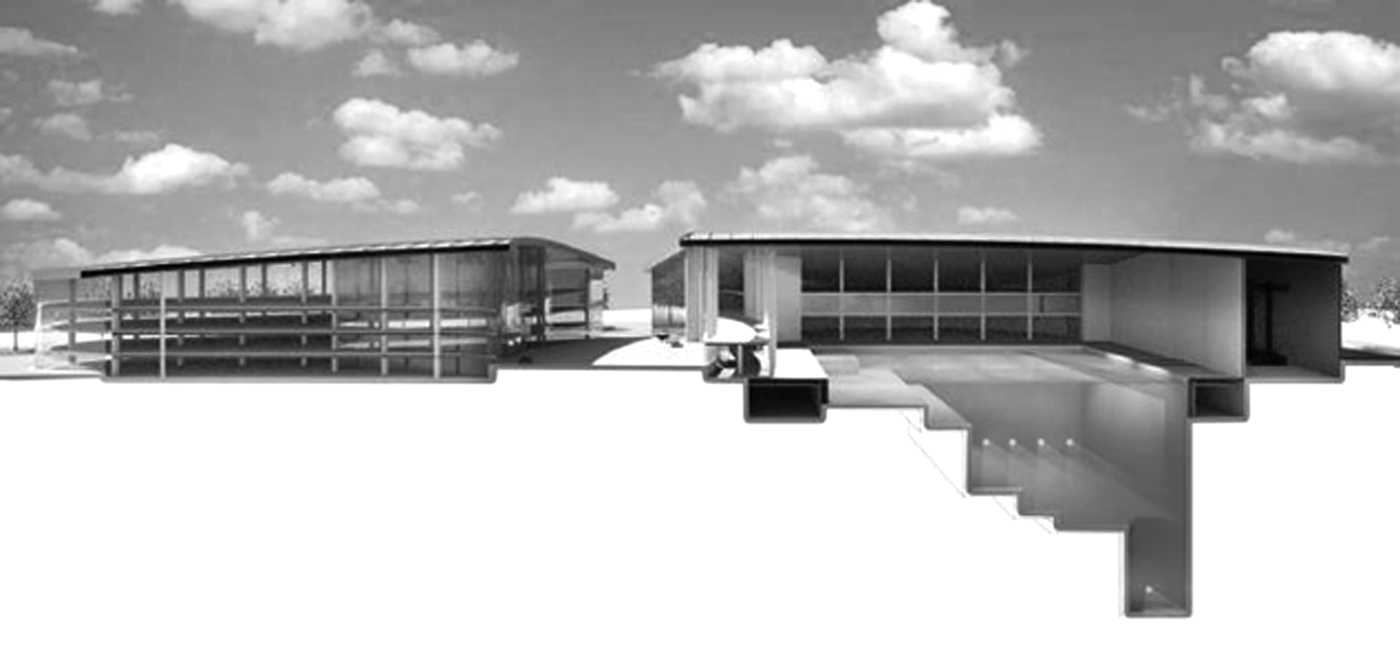
Cutaway view of the Blue Abyss pool and facilities (credit: R. Partington).
Blue Abyss Pool
Blue Abyss UK will host the largest and deepest fresh-water pool in the world, with a volume of 42,000 m3 and a maximum depth of 50 m. The pool area on surface will be 50 m × 40 m. The pool volume (Fig. 2) will be divided into several areas at several depths ranging from 3 to 50 m at the deepest point.
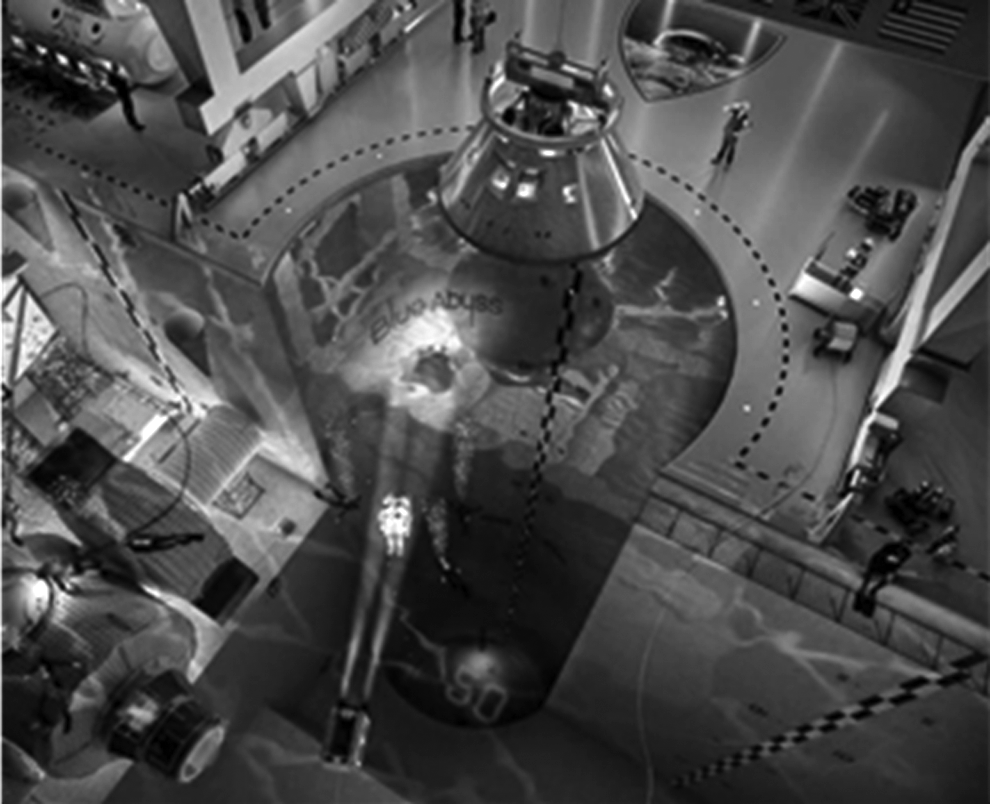
Artist view of the Blue Abyss pool (Credit: Cityscape).
An underwater research and training area, called Astrolab, will house a permanent pressurized habitat at 12 m. The pool operations will be supported by a full onsite mission control room and several hyperbaric chambers. Mechanical operations will be supported by lifting platforms, and large access openings for the insertion of training mockups.
Blue Abyss High-G Service
The Blue Abyss High-G service will feature an “FAA-approved” centrifuge capable of replicating the acceleration, vibration, trajectory, and out-the-window visual experiences created by high-performance aircraft and space vehicles. With a capability of reaching accelerations that replicate space launch and recovery, it will be used to perform high-G human physiology research and to enable preparation for spaceflight.
Blue Abyss Parabolic Flights
Blue Abyss will offer a parabolic flight capability to provide zero, reduced, and hypergravity for astronaut training (Fig. 3), space mission familiarization, and human physiology research (see example in Fig. 4). The entire facility will provide onboard microgravity and reduced gravity areas during parabolic flight maneuvers, with the possibility of embarking up to 35 passengers, and ground facilities for pre- and postflight briefings and operational preparation.
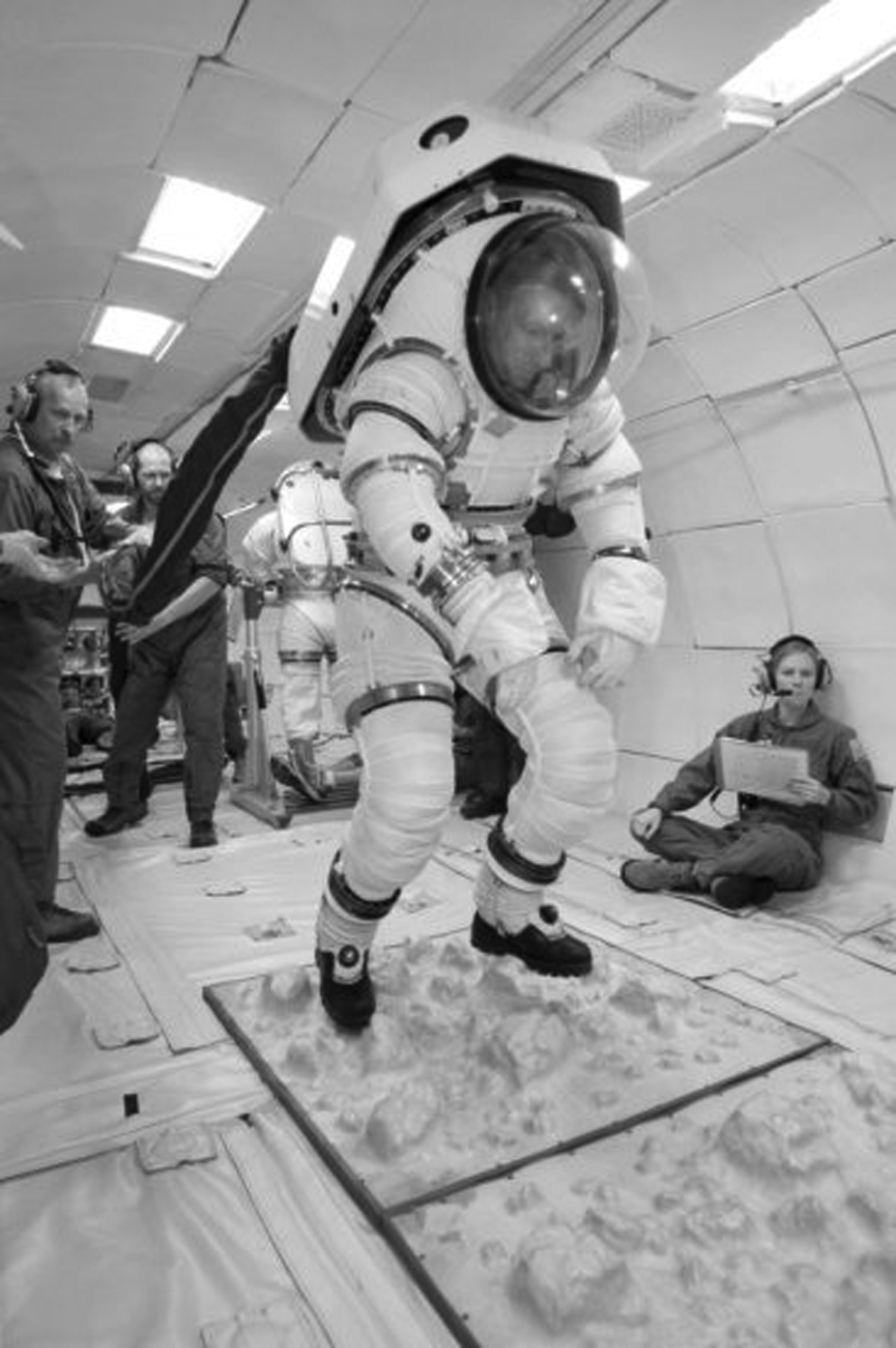
Spacesuit testing during parabolic flight (credit: NASA). NASA, National Aeronautics and Space Administration.
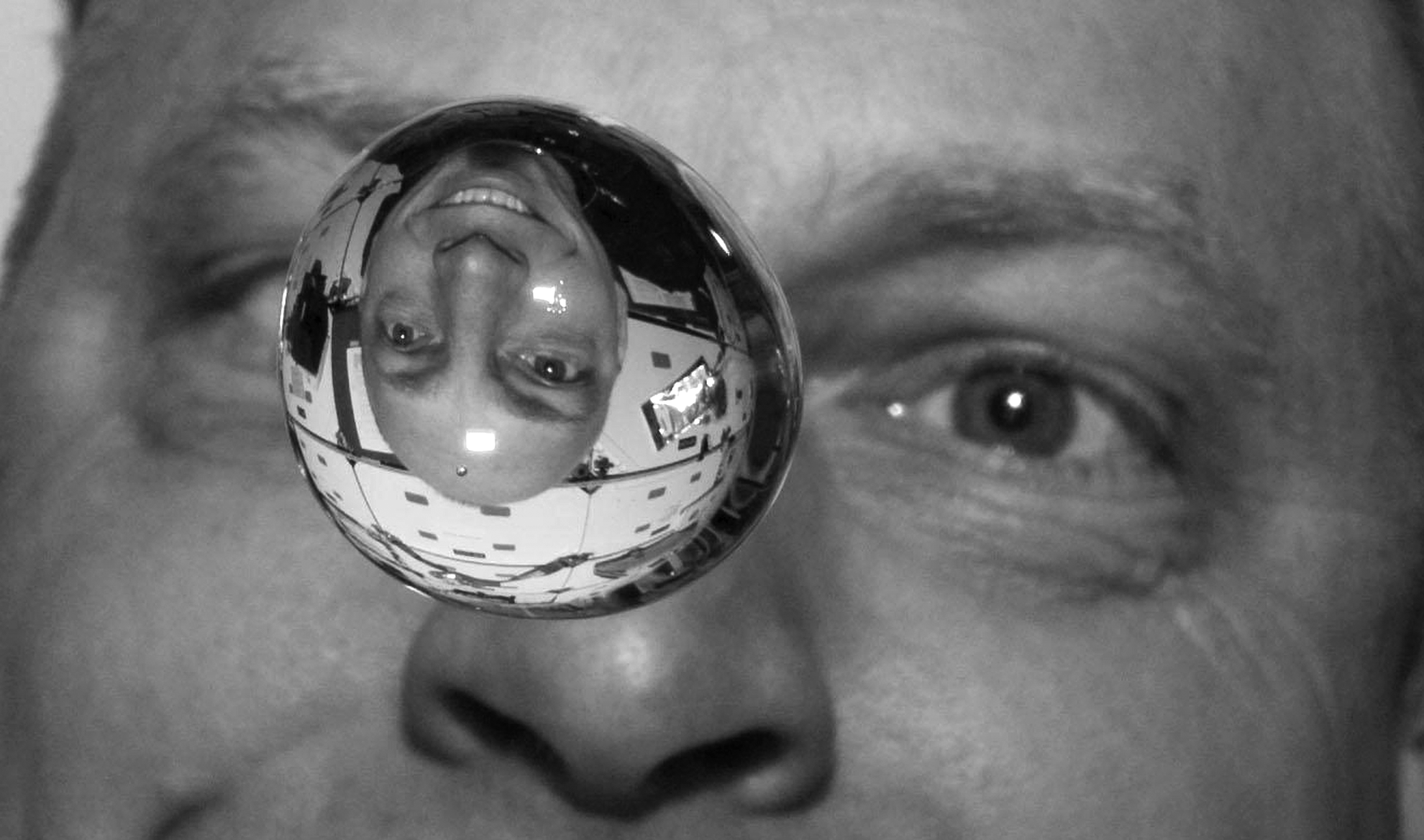
Educational activities able to be conducted during parabolic flights (credit: NASA).
The Blue Abyss Kuehnegger Human Performance R&D Centers
The Kuehnegger Centers are named after Prof. Walter Kuehnegger, Principal Investigator for the National Aeronautics and Space Administration (NASA) Apollo Lunar Exploration Ergonomics Programme. Kuehnegger developed the understanding required by NASA to enable humans to walk and explore the Moon, iconically depicted by his innovative “Kangaroo hop” form of lunar locomotion.
The research centers will host a series of human physiology-related facilities, including (1) onsite hyperbaric chambers, providing research and therapeutic recompression facilities and private medical practice for oxygen-enriched medical treatments and (2) hypobaric (altitude) facilities for astronaut training, sports training, and physiological studies.
In the words of Prof. Kuehnegger: “The Blue Abyss R&D Centre will provide a unique core for multi-disciplinary R&D in analytics, evaluation and optimization in support of projects related to Space, Sea and the health of humans on Earth.”
Blue Abyss Pedagogical and Outreach Facility
Blue Abyss is committed to provide pedagogical and outreach facilities to promote dynamic science, technology, engineering, and mathematics (STEM) programs for the general public and in particular pupils and students. University partnerships are under development to facilitate future higher education STEM activities.
Blue Abyss Activities
Blue Abyss will offer comprehensive commercial research and testing facilities to enable the next generation of subsea and space technology and human endeavors to flourish in the years ahead. The pools' staged landings down to 50 m and partitioned floor space have been designed to be incredibly flexible, to allow multiple users to utilize the pool simultaneously for a variety of tasks. Multiple sectors will use the centers as an evaluatory and predeployment proving ground for future generations of divers, underwater and space robots, submersibles and other ancillary aquatic and space-related equipment, and the procedures that support them.
Human Spaceflight
Human spaceflight is an exciting market that is set to take off when commercial transport of humans into space begins routinely in 2019/20. Blue Abyss will be ideally and uniquely positioned to capitalize on this global opportunity by providing the world's first commercial astronaut training centers serving international markets.
These training centers will offer essential familiarization and training for commercial astronauts, that is, commercial human spaceflight company staff, scientists, and “space tourists,” alongside complementary astronaut training services for official space agency needs.
Together with our partners, the centers will offer the full suite of services needed to prepare humans for safe travel to, through, and from space. These will include health assessments, neutral buoyancy familiarization and training in the pool (Fig. 5), microgravity activities on parabolic flights, and high-G human centrifuge experiences, which will include programs for service personnel, academic R&D, film producers, and microsatellite manufacturers.
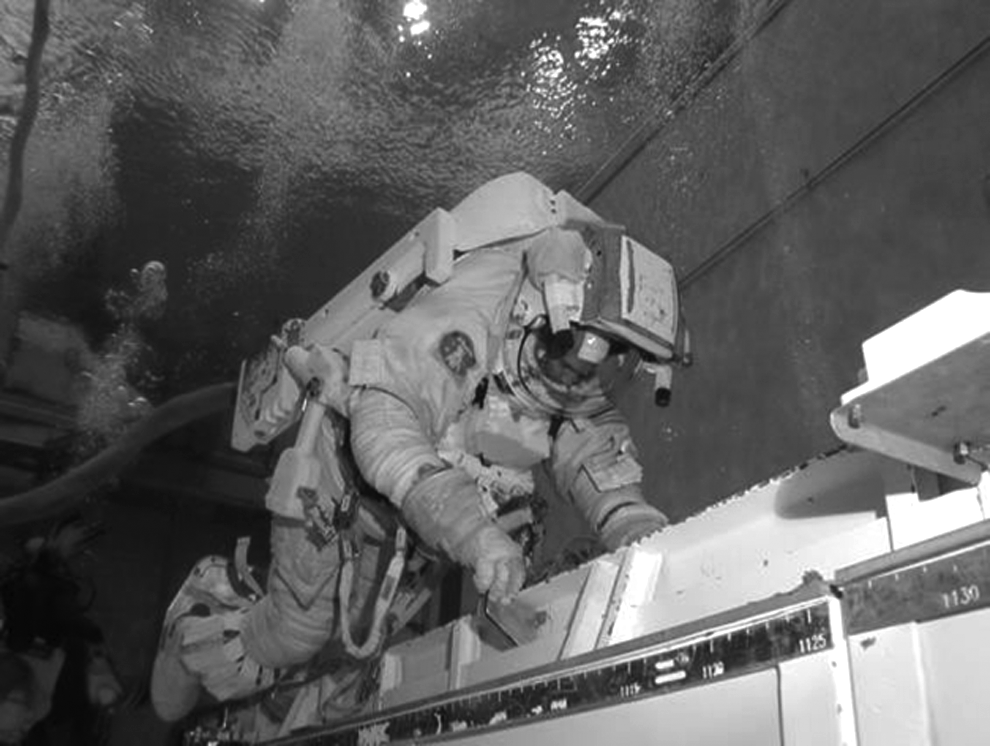
Neutral buoyancy EVA training (Photo: NASA). EVA, extravehicular activity.
The neutral buoyancy familiarization and training services will incorporate cutting-edge technology combining virtual reality and augmented reality (AR) systems outside and within the pools. Control of local and ambient lighting, biomechanical tracking, physiological monitoring, and the provision of robotic assistance will progress neutral buoyancy and microgravity training to be able to support the next generation of human spaceflight activities and needs. The AR programs offered will provide a degree of fidelity unachievable to date, to enable a step change in the quality of training and preparation for extravehicular activity and other space activities.
Astronaut Experiences
These services will be tailored to supply the growing adventure tourism and corporate reward markets, where novel experiences are increasingly in demand. “Out of this World” astronaut experiences will provide unparalleled realism for those wishing to feel real weightlessness or “alien planet” gravity, but who do not intend to travel to space. The opportunity to enjoy a week-long “space mission,” seeing and experiencing what an astronaut actually feels in space or on the Moon will be in everyone's grasp.
In the words of Blue Abyss Non-Executive Director and Veteran NASA Astronaut, Dr. Scott Parazynski: “Blue Abyss is uniquely positioned to provide a pioneering state-of-the-art facility delivering ‘space- ready’ humans for flight.”
Extreme Environment R&D
Blue Abyss will pursue research programs, including partnerships with underwater remotely operated vehicles, automated underwater vehicles, submersible manufacturers, and space agencies, to exploit the opportunities offered by challenging environments.
R&D will be centerd on the innovative technology required in extreme environments, and on the physiological and psychological effects of living in these environments, conducted at the Kuehnegger R&D Centre, academic partner laboratories, and within the Blue Abyss purpose-built pressurized habitats at 12 m depth.
The centers will bring together universities, industry, and research institutes to support and develop improved supply chains, creating new networks to reduce cost and risk, and increasing innovation through technology development. Alongside larger organizations, smaller companies normally without the budget for bespoke R&D will be able to undertake projects at more attractive rates and with world-class academic R&D partners.
An exciting prospect that adds to the unique quality of this venture is the ability to bridge the offshore energy and space sectors, which have so many common needs and challenges. This will provide significant opportunities to share knowledge and learning, leading to synergistic benefits and new market opportunities across both sectors and allowing outreach and STEM activities (see Fig. 6).
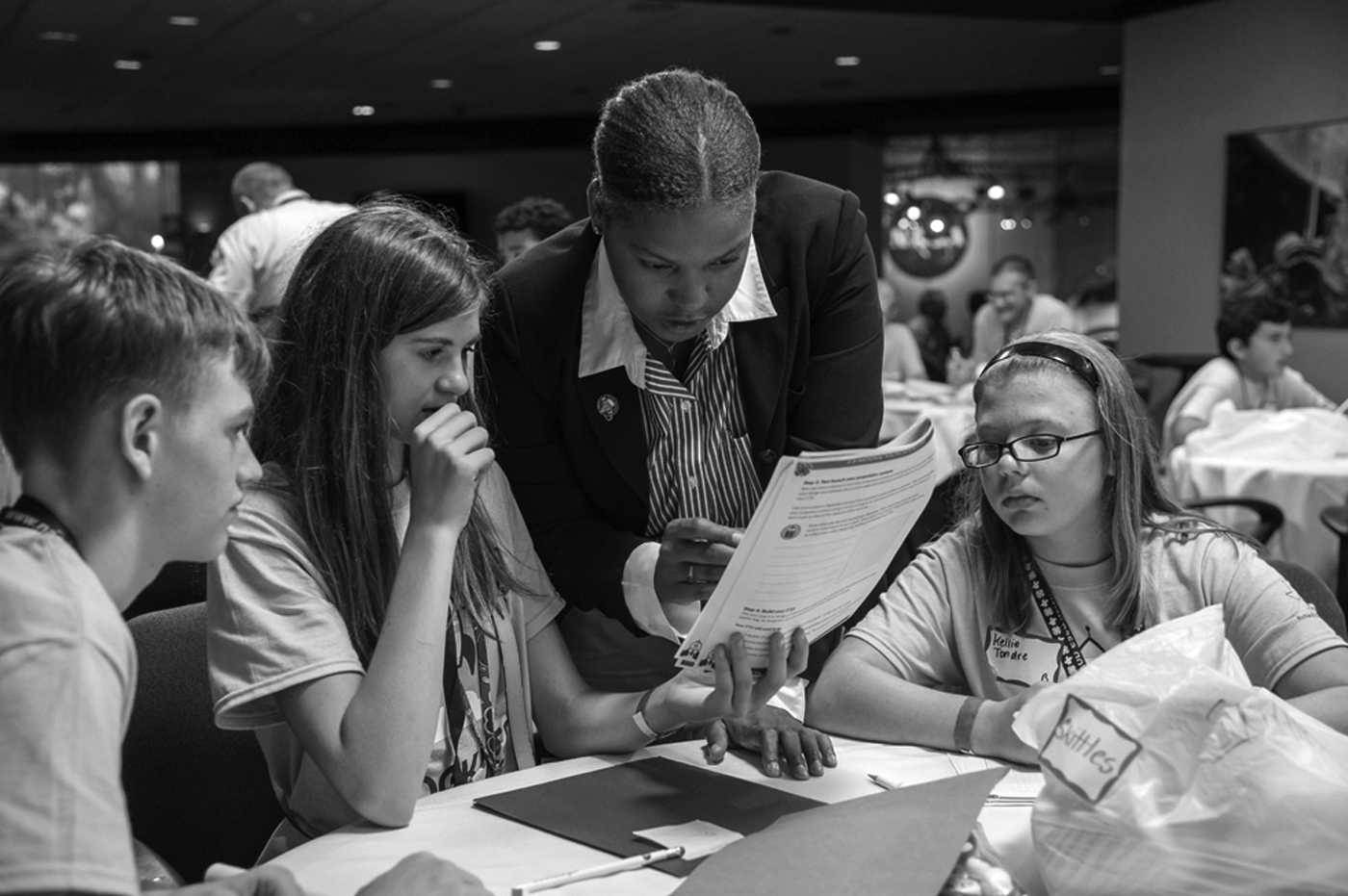
Outreach and STEM activities will be pursued at the Blue Abyss training facility (Credit: NASA/Bill Stafford). STEM, science, technology, engineering, and mathematics.
Current Status
Corporate Approach
Established in November 2014, Blue Abyss was formed to fill gaps within several related markets to enable the industries involved in marine research, oil and energy production, and spaceflight to meet current and future research, development, and training needs.
To date, feasibility studies, market engagement, land agreement negotiations, online presence, and team assembly have all taken place, enabling strong and positive progress of the business, while minimizing risk and ensuring that the foundations for success are established. A world-class supporting “build” team has been formed, comprising project managers, cost and planning consultants, civil and structural engineers, and relevant other parties.
Funding and support have enabled the business to achieve a significant amount since incorporation. The forthcoming funding round will enable the current studies to be developed into the full planning and design specification application for the U.K. facility, enable initial groundworks to be undertaken, and assist further in developing and formalizing the other revenue strands of the project. This will include an amount of international business development, initially in the United States and the Middle East.
The U.K. facility will be established within the Wirral Waters regeneration project, in the Mersey Waters Enterprise Zone, close to Liverpool (Fig. 7). The northwest region of England has extensive energy and maritime industrial and academic activities. The Liverpool City Region has established a strategic program with the aim of becoming a global center of excellence for marine and maritime innovation, knowledge, skills, and industry within the next 10 years and the Blue Abyss center will be a part of the underpinnings to this endeavor.
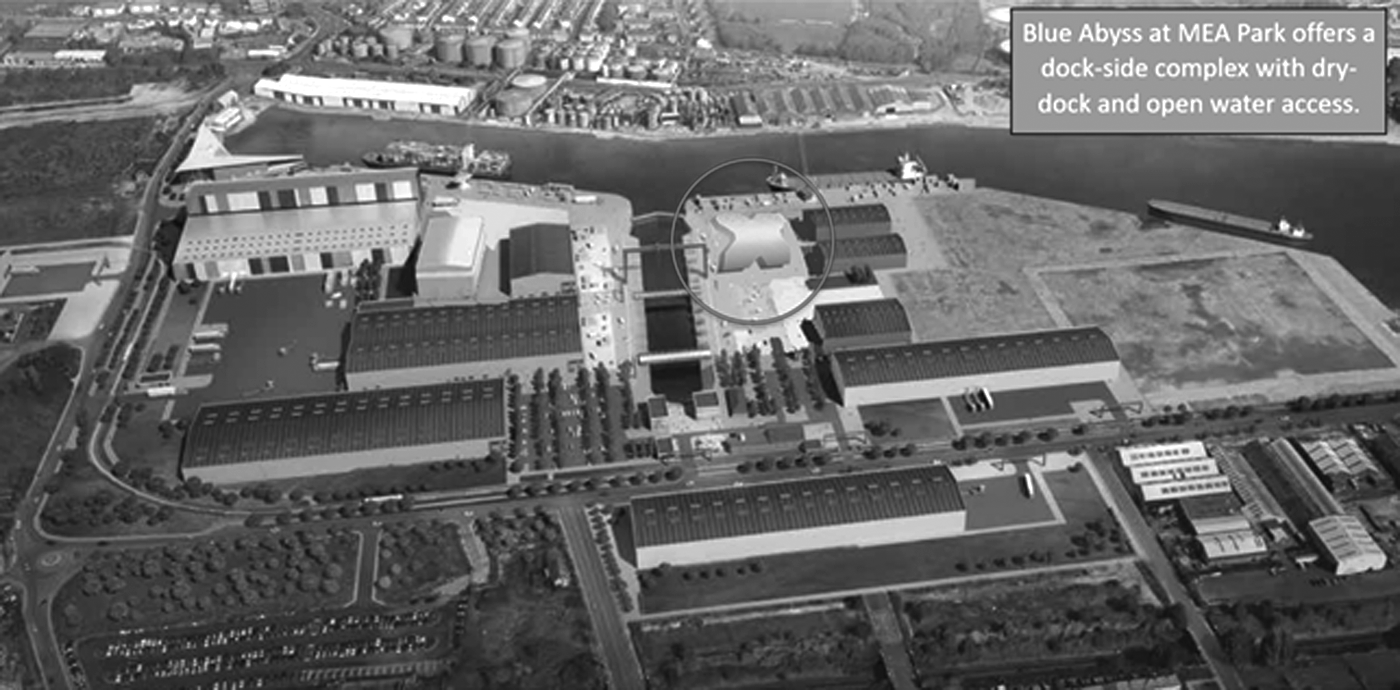
Wirral Waters MEA Park and Blue Abyss U.K. Wirral Waters (X on picture) (Credit: Apt [architects] and Blue Abyss). MEA, maritime, energy, and automotive.
Regional stakeholders recognize that the Blue Abyss center will act as a crystallization point for extreme environment research, testing, and training in the region, and as such local government support and incentives are proposed to facilitate the center's establishment at this site. The complex will consist of internationally relevant pool facilities, an extreme environment R&D center, and high specification training and conference suites. The human centrifuge and parabolic flights for, respectively, high- and low-gravity capabilities are presently being discussed.
Beyond the United Kingdom, high-level contacts with the city of Houston indicate that the establishment of a Blue Abyss center close to NASA's Johnson Space Centre is possible. This location will place the U.S. Blue Abyss center at the heart of international human spaceflight. Discussions are ongoing regarding commercial neutral buoyancy facility provision in the United States. Furthermore, interest has been expressed with regard to establishing a center in the Middle East.
The expectation is that there are up to 7 other regions in the world suitable for Blue Abyss centers.
Executive Management Structure and Project Timeline
John Vickers, Founder and CEO, has assembled a highly experienced and appropriately diverse executive management team to develop, commission, and operate Blue Abyss to the very highest standards. The combination of the background and talents of the executive management team ensures that the experience of all customers, employees, partners, and stakeholders is second to none regarding innovation, service, outcomes, and value for money.
The project timeline is summarized in Figure 8, where construction of the main facilities (pool and centrifuge) is planned to take 1.5 to 2 years, yielding an operational opening in early 2021.
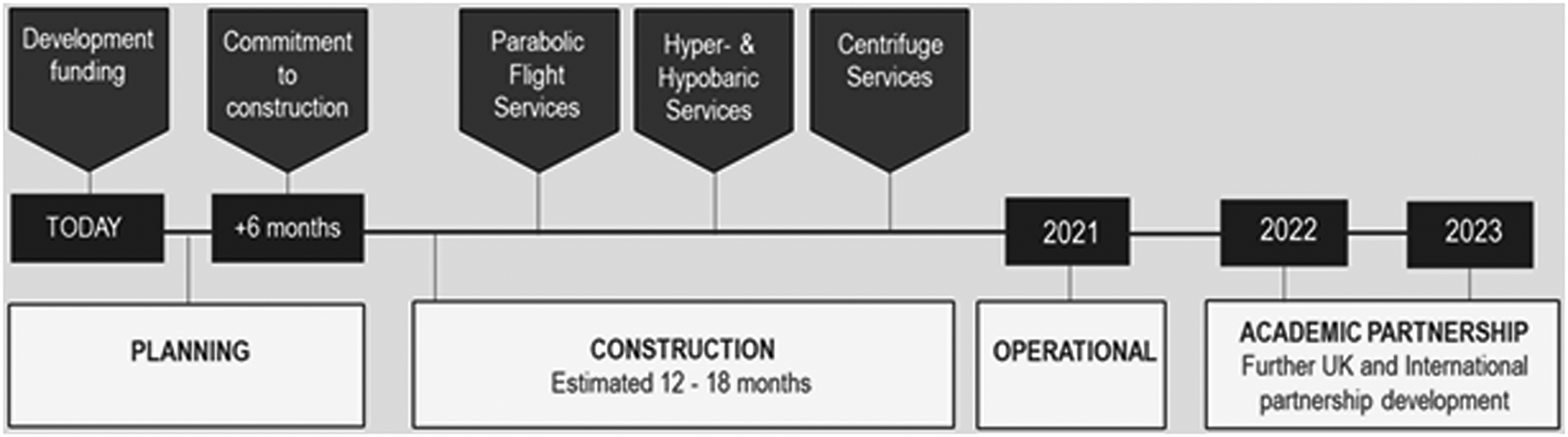
Project timeline (Credit Blue Abyss).
Conclusions
Blue Abyss intends to facilitate the progress of technology and human endeavor as humanity expands its realm of activities. Blue Abyss is a pioneering venture that will extend the possibilities for education, commercial and scientific research, technical development, and training, beyond anything that exists today.
By combining appropriate leadership and management competencies with a global and far-reaching vision, at a time when challenging environments require innovative solutions, Blue Abyss is perfectly timed to exploit and disrupt. The present schedule foresees the beginning of operations in 2021, delivering excellence in training, and R&D in all of the fields described in this article.
Footnotes
Author Disclosure Statement
No competing financial interests exist.