




Abstract
Extravehicular activity (EVA) space suits are complex, expensive, and difficult to operate and manage. However, EVA is all but required for any human spaceflight operation in orbit or beyond. Final Frontier Design (FFD) has developed and is currently in beta testing of a commercially focused and complete EVA space suit system. This article presents the research and development, testing, and preliminary validation of FFD's EVA space suit enclosure (ESSE) systems, including the liquid cooling garment, pressure garment, bearings, hatch, outer garment, life support system, interfaces, support equipment, and test procedures. The ESSE leverages a decade of work with National Aeronautics and Space Administration and a career of engineering with Zvezda. FFD has developed ground support equipment for laboratory testing and is partnering with Integrated Spaceflight Services to create an immersive test protocol for validation of the systems including a 2 degree gravity offset system. The introduction of a complete commercial EVA system is unique and unprecedented. Although multiple companies have developed intravehicular activity space suits alone, the EVA suit system is massively more complex and traditionally has been assembled using multiple contractors. FFD aims to offer a complete system in-house with ESSE.
Introduction
Extravehicular activity (EVA) space suits have enabled safe operations in open space for >50 years. Beginning with relatively simple garment assemblies, EVA space suits have developed into very complex and expensive individual space crafts, complete with power, avionics, propulsion, life support, thermal control, communications, and a flexible enclosure. The extravehicular mobility unit (EMU) in the United States and the Orlan in Russia are the current EVA space suits on the International Space Station (ISS).
The Orlan and the EMU have different operational concepts, with the Orlan being essentially disposable, whereas the EMU is reused after ground refurbishment. The National Aeronautics and Space Administration (NASA) estimates it spends $300 million per year on EVA operations and maintenance alone (Fig. 1).1,2
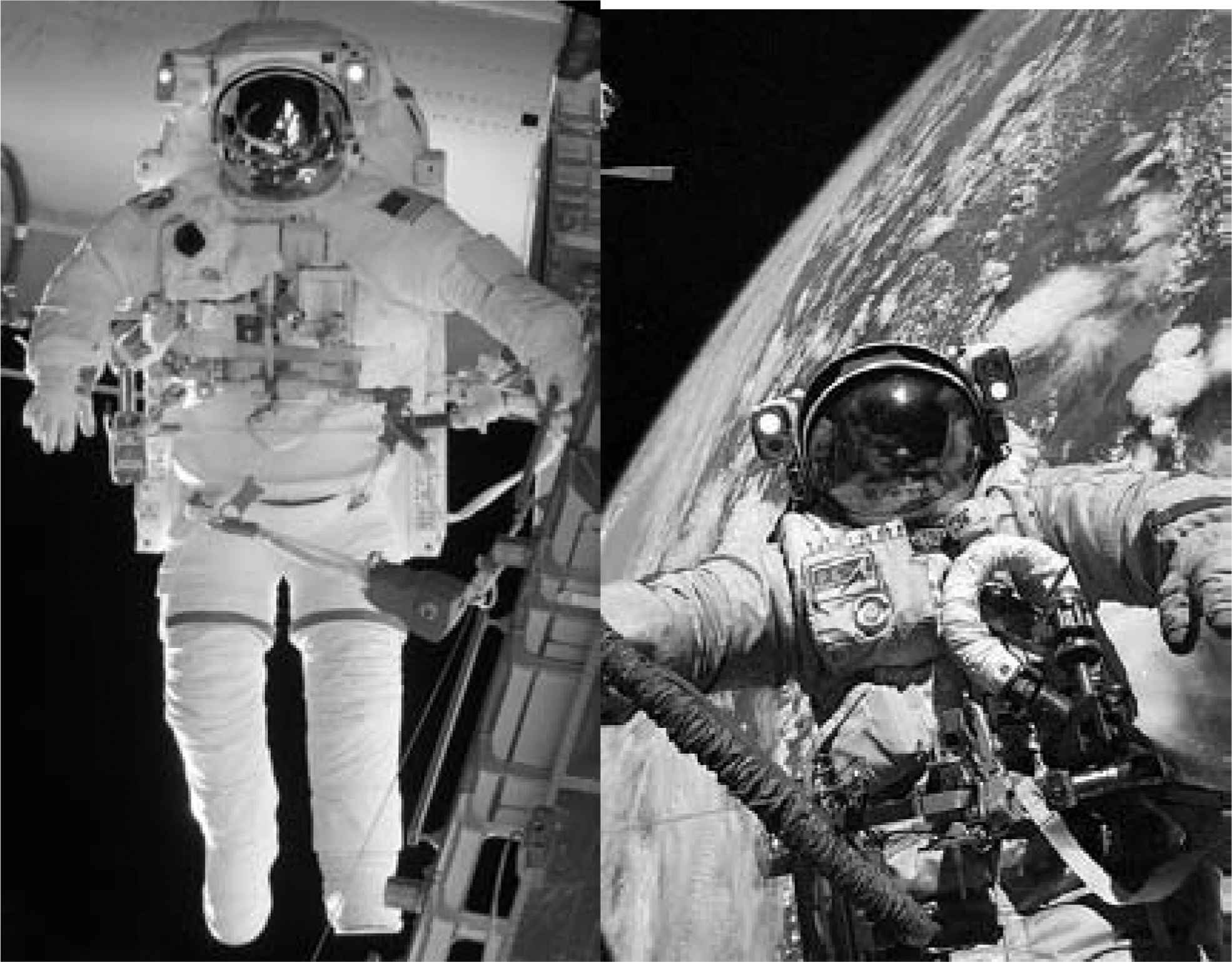
EMU (left) and Orlan EVA space suits. EMU, extravehicular mobility unit; EVA, extravehicular activity.
EVA has proven critical throughout human spaceflight; it has become iconic of the missions themselves. The Apollo missions are signified by the A7L suits, and were perhaps the most important part of that mission. Skylab was literally saved by the modified Apollo EVA space suit, in the famous parasol EVAs of 1973's SL-2 mission. Skylab's solar arrays were damaged during launch, and the first human mission to the space station was tasked with manually deploying the arrays quickly. If the station was without power for too long, it could overheat. To buy time to deploy the arrays in EVA, a parasol was contrived and arranged manually in EVA to block solar rays from the station. The first EVAs of Skylab literally saved the entire station because of these unplanned contingencies (Fig. 2). 3

Skylab's parasol deployed after EVA.
The Russian Mir space station relied on 80 total EVAs from 1987 to 2000, with critical station keeping tasks including inspection of ports and removal of debris, attachments of modules and systems, scientific deployment and retrieval of experiments, and repair of hatches and air locks. 4
The ISS has famously relied on the “Wall of EVAs” during its assembly, which saw a repeated doubling of EVA operations through the first several years of assembly. In a similar problem as Skylab decades earlier, the ISS suffered from solar array P6 deployment and retraction issues that were resolved through manual muscle in multiple EVAs. Undoubtedly the ISS would not still be functional, and could not have been built, without EVA capability. 4
The Hubble Space Telescope is another powerful example of the criticality of EVA. Hubble has provided some of the most important imaging in the world of science, but its existence is hugely indebted to 2 EVA missions, the first to repair the mirror optics and the second to update the gyros and electronics. These missions would not have been possible robotically because of the sheer complexity of the structure, including hundreds of small screws holding critical access plates. 5
Future human operations in space will also likely rely on EVA capability for assembly, science, and contingency issues. Orbital and interplanetary space stations will require EVA, no less than planetary operations. There are currently very limited options for EVA space suits commercially; the same providers for the U.S. and Russian governments are perhaps the only source for these systems.
Final Frontier Design (FFD) is creating a new commercially focused EVA system for the future of space exploration. Our focus is to design a system that is affordable, low complexity, simpler to integrate, and more useable than historical EVA space suits (Fig. 3).

FFD's EVA space suit enclosure. FFD, Final Frontier Design.
The EVA Space Suit Enclosure
FFD's EVA space suit enclosure (ESSE) is the result of nearly a decade of component development with NASA and the commercial space industry. FFD leverages Russian EVA design experience with our lead designer's background at Zvezda, along with multiple NASA contracts for space suit development, to create a unique hybrid suit concept.6,7
Use Case, Concept of Operations
FFD envisions a variety of use cases, including for commercial orbital space station, commercial crew transport, and military orbital applications. We anticipate that the need for EVA suits will not be predicted by these users until their systems are already well defined. The overall concept of operations for these use cases should include station construction, maintenance, tourism, and contingency repairs. Design drivers for these use cases include simplicity of integration to a pre-existing system, overall cost, bulk, and weight, suit mobility, logistical simplicity, and a maximization of mobility and comfort.
The ESSE is envisioned as a disposable suit concept, with initial capability of 10 EVAs in orbit before retirement. Based on a comparison of U.S. and Russian EVA suit unit costs and operational budget, this concept of operation will be less expensive and more logistically realistic than reusing suits by returning them to Earth for refurbishment. The U.S. EVA space suit is estimated to cost $15 m per unit, and the agency drives a $300 m annual budget for operations; the Russian Orlan has a unit cost of closer to $2 m, and presumably much lower annual operations costs based on Zvezda's overall annual budget. 8 Future designs of the ESSE may be certified for greater use cases based on performance. The suit is built for operations in an engineered location in the low earth orbit (LEO) microgravity environment.
FFD has focused on a relatively low operating pressure of +5 psia, slightly higher than the current EMU (+4.3 psia) and a little less than the Orlan (+5.8 pound square inch absolute). The middle ground maximizes structural efficiencies in the pressure garment while slightly reducing the current prebreathe penalty. The prebreathe penalty is based on the statistical analysis of decompression sickness likelihood in a variety of potential ambient station environments. Although ideally an EVA suit will be “zero prebreathe,” the additional weight of restraints and restriction in motion adds considerable cost. In addition, the built-in holds of suit donning and check out allow for the short duration prebreathe likely required, which will also depend on the spacecraft cabin pressure.
The ESSE pressure garment leverages development work done by FFD for NASA under multiple Small Business Innovation Research contracts since 2001. Relevant contracts for research with NASA include pressure garment and outer garment glove development, outer garment radiation shielding prototypes, elbow/shoulder assemblies, and life support systems. The rear entry concept of the ESSE allows for easier donning and doffing; the goal is to allow self-donning and doffing capability.
Pressure Garment
The pressure garment includes a redundant pressure tight layer; in nominal operations, the pressure is held by the restraint layer, while in emergency the inner bladder holds pressure. Asymmetrical convolute style joints throughout the suit guide range of motion with low effort under pressure. Fully digital patterns ensure repeatable manufacturing processes. Fifteen individual sizing points on the pressure garment allow for a vertical sizing range of 8 inches (203 mm).
Gloves
FFD's gloves are the refined result of multiple NASA contracts and awards, offering exceptional mobility through the wrist, thumb, and fingers, thanks to a single layer pressure garment and very low wall thickness. Integrated cast fingertips eliminate seam allowance at the fingertips. An ergonomic palm bar ensures comfortable and conformal restraint to the hand in operations (Fig. 4).
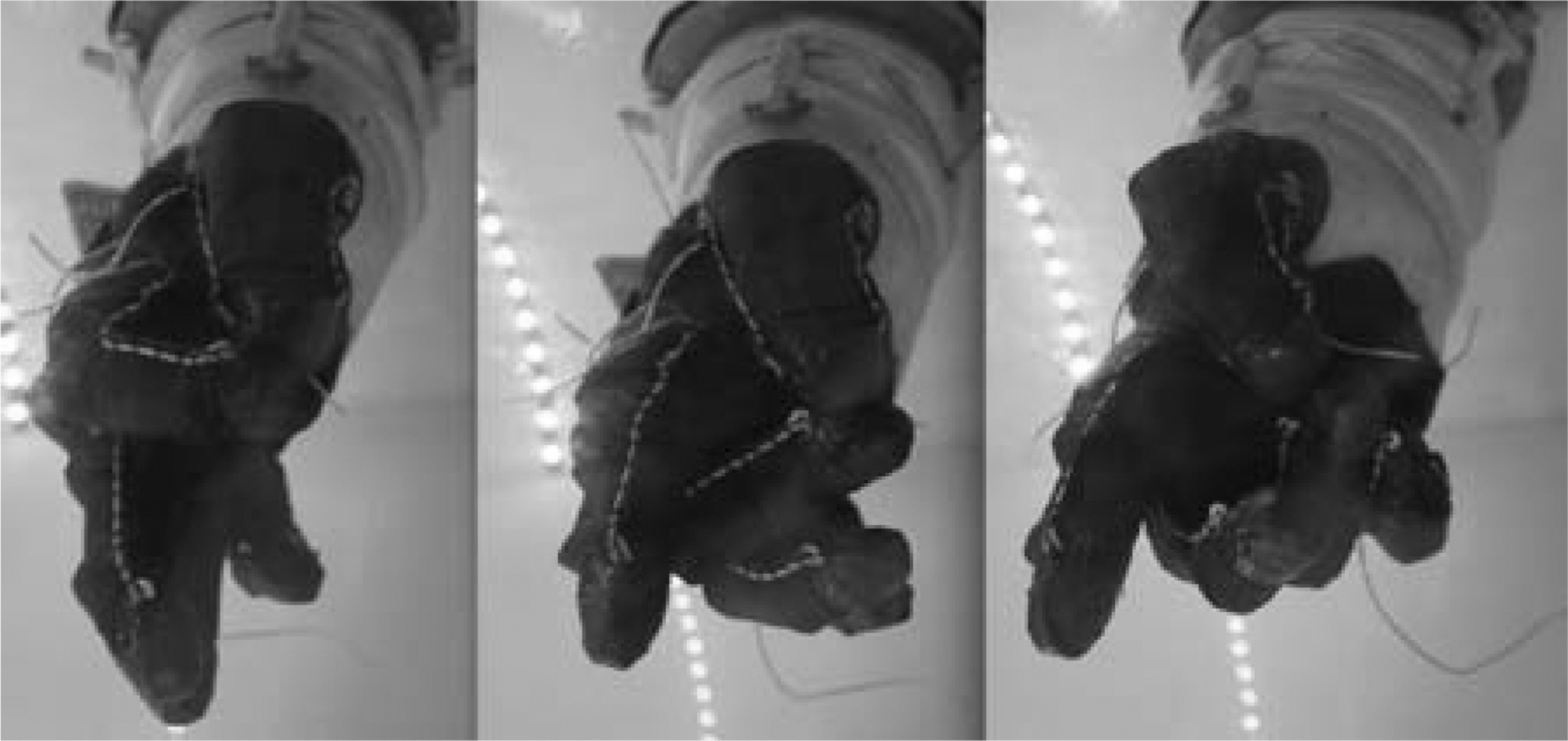
FFD's EVA pressure garment gloves.
Bearings
FFD has spent several years in modeling and refining bearings for the ESSE arms. Bearings are planned for the wrist, upper arm, and shoulders to enable mobility in the upper body, critical for microgravity operations.
FFD has fabricated from 3-dimensional printed plastic preliminary bearing prototypes, assembled the elements, and mounted them in the right arm of our current prototype (Fig. 5).
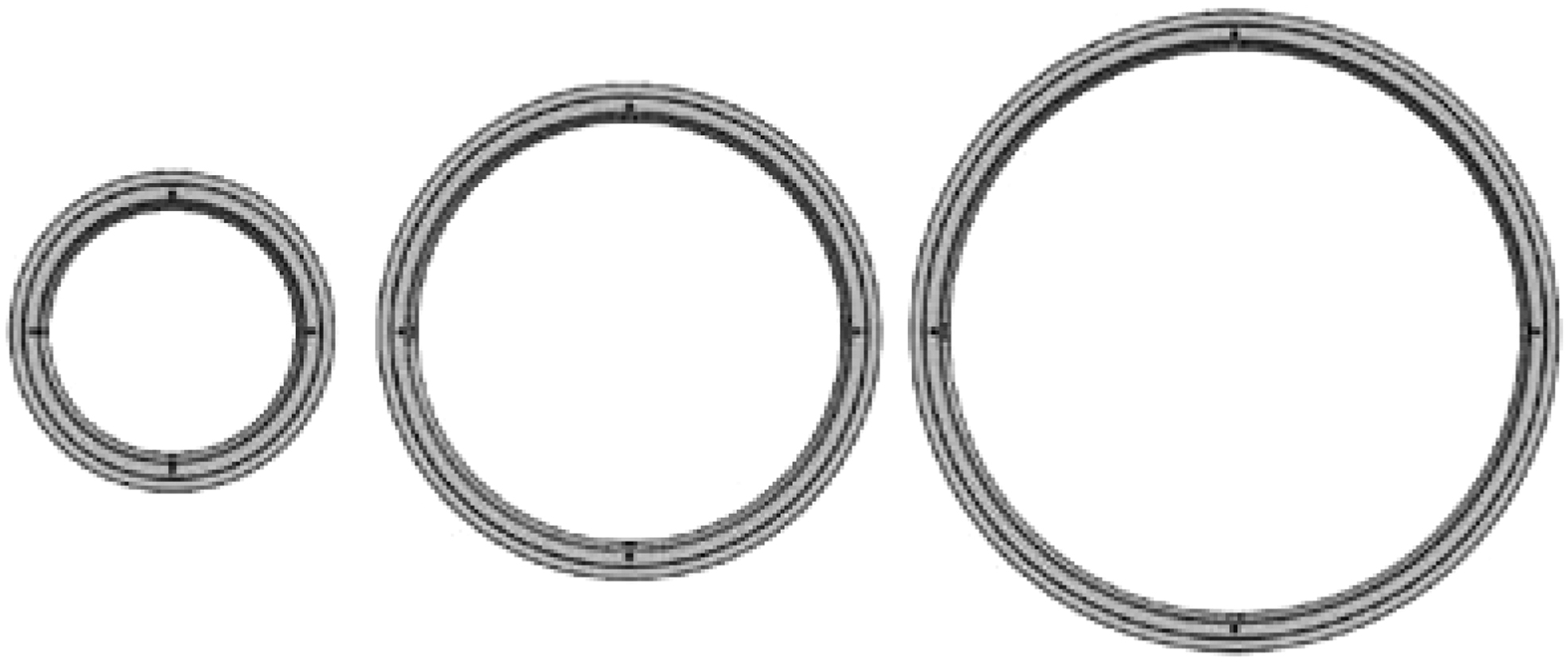
Range of bearing sizes for the arm, including wrist, upper arm, and scye.
Soft Upper Torso
The upper torso of the ESSE utilizes a reinforced coated aramid/nomex fabric to enable simple flat-patterned interfaces to the many interfaces of the torso. The torso includes interfaces to the waist ring to the waist and pants, shoulder bearings, helmet, and hatch.
The helmet of the ESSE is integrated to the suit, there is no mechanism to remove the visor. The visor is hemispherical in shape for simplicity of manufacturing, and to reduce distortion from lensing. A sunshade can be manually deployed to partially cover the visor. The rear-entry hatch is designed to minimize bulk of the overall suit profile, and clamps onto the softgoods of the upper torso using a circumferential band rather than bolts to minimize outer dimensions.
Outer Garment
The ESSE outer garment utilizes traditional mylar for thermal insulation, optimized in multiple layers for different parts of the suit. Outer garment patterning is optimized to reduce restriction of the enclosure. The outer layer of the garment is a hybrid nomex–aramid fabric developed for extreme firefighting scenarios.
Liquid Cooling Garment
FFD has developed a unique flat-tube panel system for more efficient heat transfer from the body to the garment. Traditional liquid cooling garments (LCGs) use tubing with a circular cross section and line point-of-contact with the body; FFD's flat tubes greatly increase the surface area of the liquid against the skin. The flat tube LCG has been fabricated in multiple prototypes, with the potential to be simplified and edited to just a vest on the torso, with all arm and leg elements eliminated. This represents a significant reduction in the overall bulk, mobility restrictions, and weight of the system (Fig. 6).
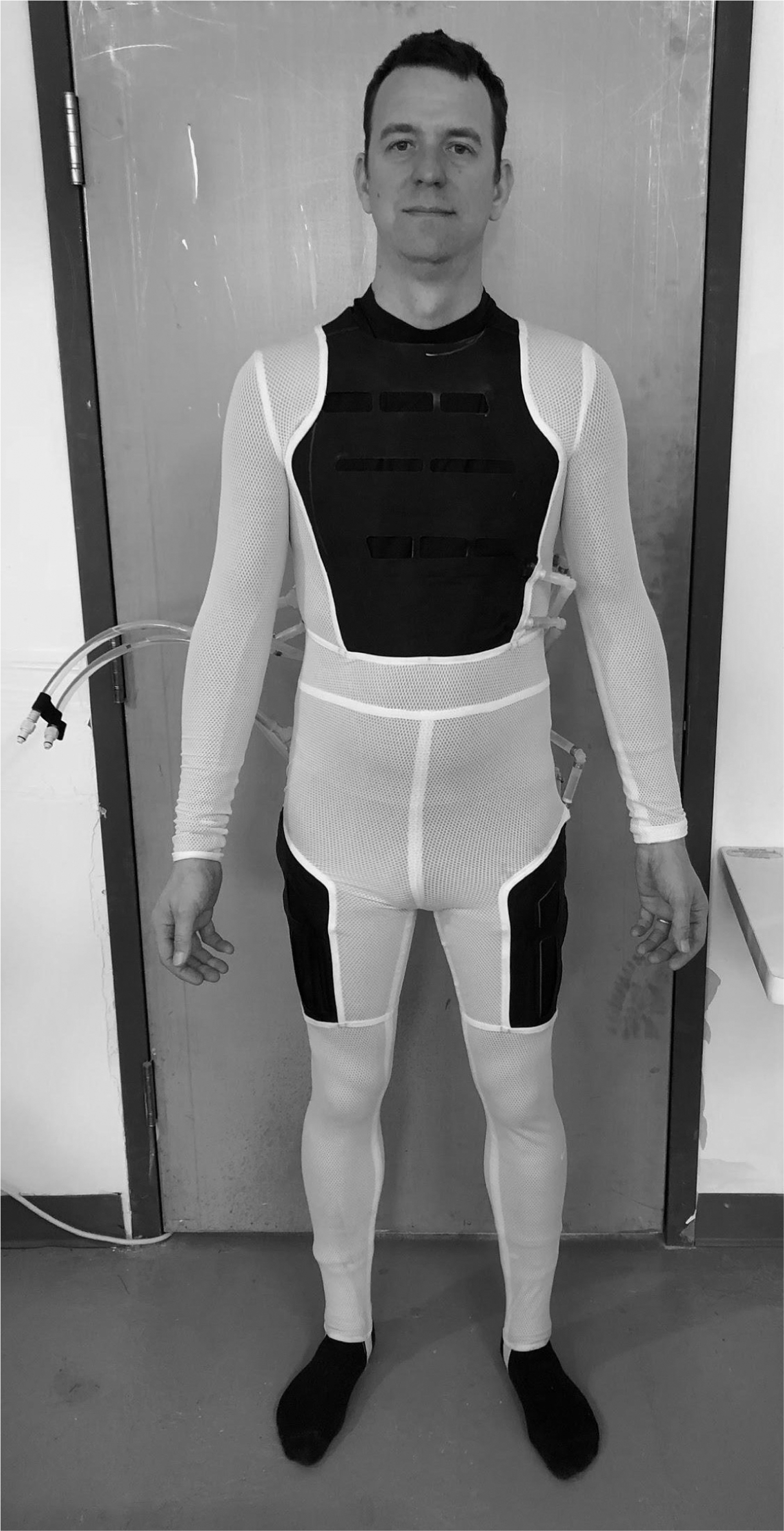
Flat tube liquid cooling garment.
Ground Support Equipment
FFD has developed the necessary ground support equipment (GSE) into a portable package that allows for operations in a variety of locations. The GSE includes an air breathing blower, air chiller, air flow gauge and reducer, communications system, water pump and water chiller, water flow gauge, and suit-mounted thermostat.
An on-suit microcontroller allows for data logging of relevant environmental data, including differential pressure, water temperature in and out of the suit, and accelerometer data. Future sensor integration is to include a hard wired carbon dioxide (CO2) sensor, interior thermistors, and internal humidity sensors (Fig. 7).
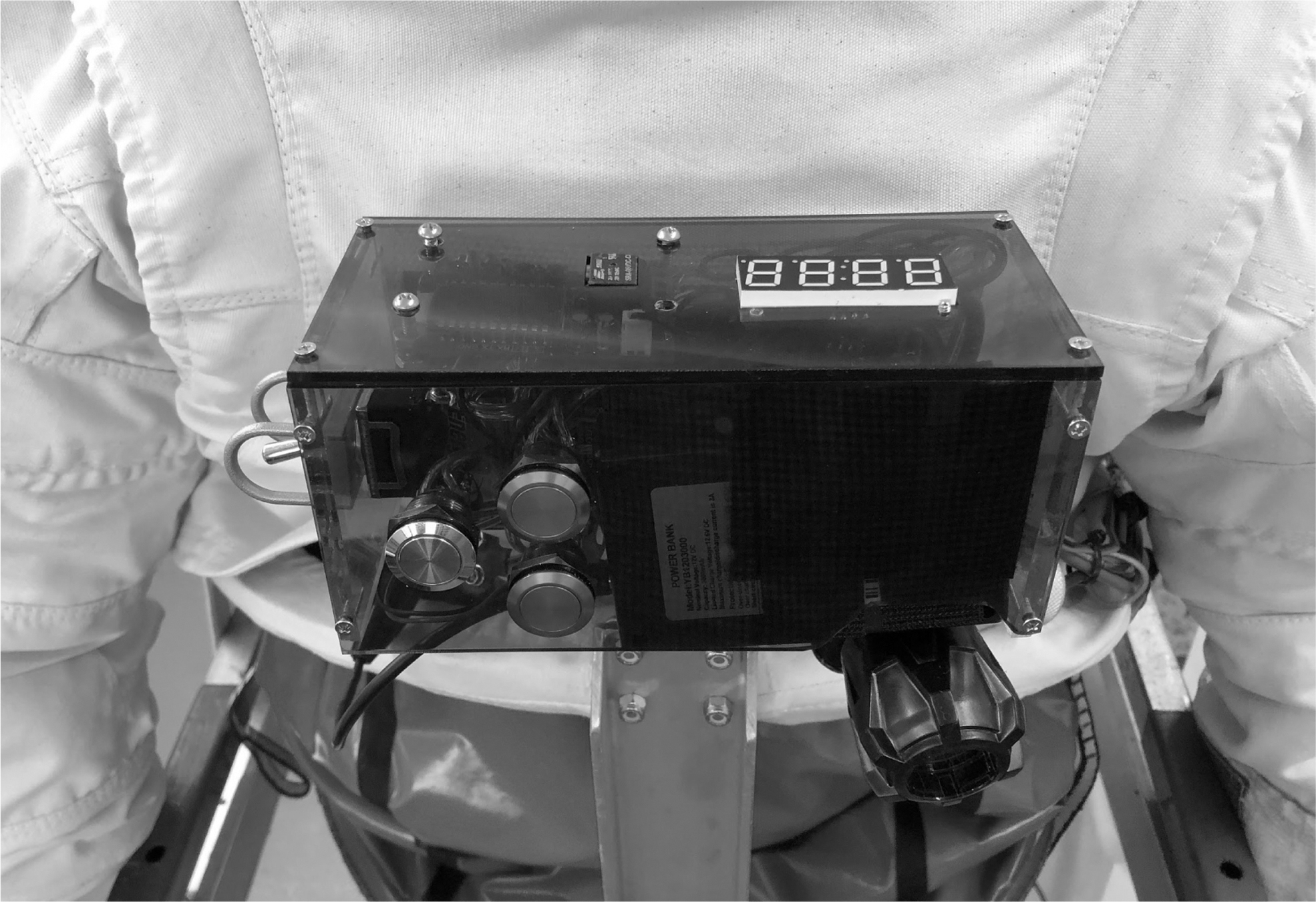
ESSE suit microcontroller. ESSE, EVA space suit enclosure.
Current testing has been restricted to umbilical supported operations with GSE.
Human Testing of the ESSE
Preliminary In-Laboratory Testing
FFD has conducted preliminary fit and functionality checks of our EVA space suit system in our laboratory in the Brooklyn Navy Yard, with 5 test subjects. Waiver statements were completed and archived at FFD or at project OTTER. Upper limit sizing for hatch donning and doffing, leg and arm sizing, and LCG have been defined. A sizing range of 10 vertical inches (5′2″ to 6′0″) height has been determined, and several maximum sizes have been defined, as given in Table 1.
Maximum EVA Space Suit Enclosure Dimensions
Donning and doffing protocols have been made, as well as emergency egress procedures, to ensure safe operations of the system. A suit stands to support the weight of the suit during donning and doffing has been iterated, to allow for disconnection from the stand while the suit is worn (Fig. 8).
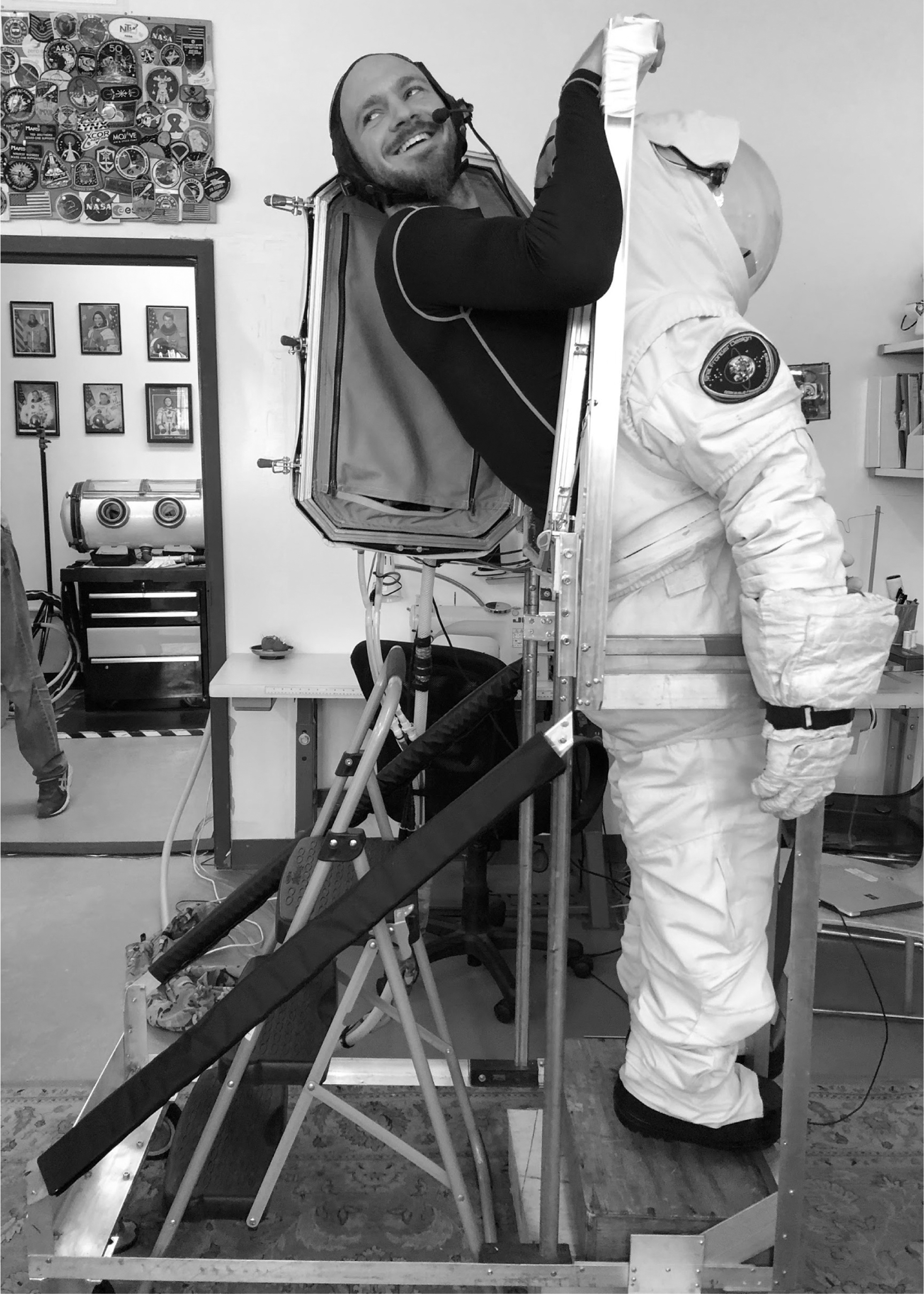
Suit donning with stand.
Preliminary hang checks of the suit with overhead pick points have been performed with humans inside the pressure suit. This helps us to better define the optimal interface location for future gravity offset systems (Fig. 9).
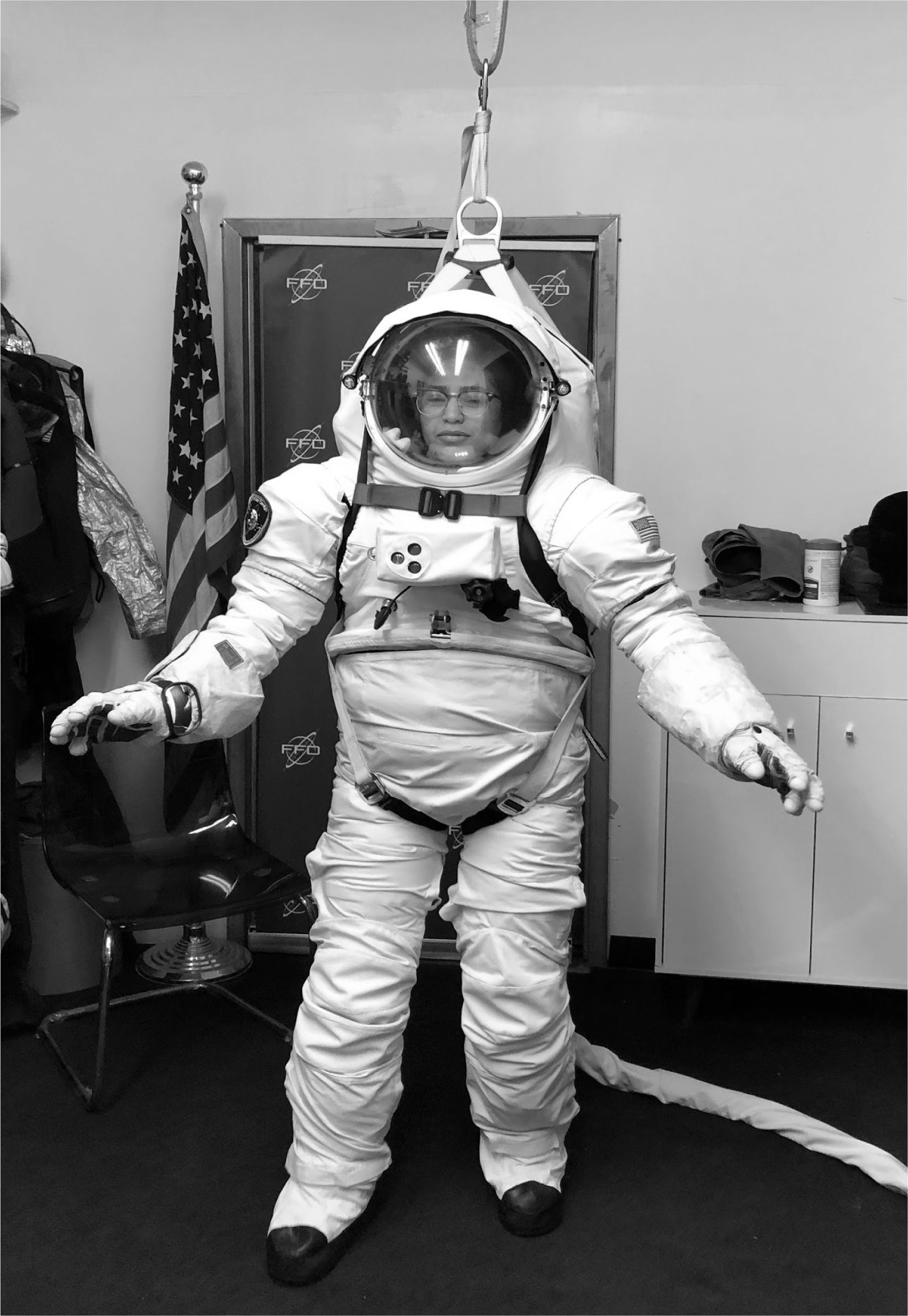
ESSE overhead harness check-out.
Development of Test Protocol
A test protocol and test plan have been developed for the ESSE, in coordination with Project OTTER/Integrated Spaceflight Services. Project OTTER is a citizen scientist commercial program aimed at enabling citizens to experience and troubleshoot high fidelity EVA scenarios. Multiple test subjects were slated to don the suit system, with biomedical, environmental, and life support sensors recording the general operational environment.
Testing took place in a high bay lunar yard, and will include an overhead gravity offset system, with 2 axis (x and z) capabilities, provided by Project Orbital Technologies & Tools for EVA Research (OTTER). Gravity scenarios included microgravity, martian gravity, and lunar gravity. A mockup airlock, including external railings and experiments, was utilized to evaluate operational capabilities. Testing was restricted to a differential pressure of less than +1 pound square inch differential.
Testing included a range of sized individuals, and confirms their ability to don, stand, walk, and operate equipment with the suit. Thermal stress on the LCG enables measurements of the garment's thermal efficiency and can be controlled by the user. A variety of sensors can track the suit environment and biomedical status of the test subject. The sensors deployed included pressure, temperature, and humidity data loggers internal and external to the suit, a CO2 monitor in the helmet, water temperature sensors for inlet and outlet monitoring of heat transfer by the LCG, biomedical monitoring including breath rate, heart rate, and skin temperature, accelerometer data, and real-time differential pressure of the suit. Not-to-exceed parameters were set for adequate suit performance, as outlined in Table 2.
EVA Space Suit Enclosure Operational Parameters
CO2, carbon dioxide.
Lunar Yard Testing
In October 2019, 11 test subjects donned FFD's ESSE EVA space suit at the Canadian Space Agency's lunar yard. The test subjects included a large vertical height range of 11 inches as well as both male and female subjects. A gravity offset system helped to carry the weight of the suit, mimicking lunar, martian, and microgravity conditions.
The test subjects utilized a variety of tools for geological inspection, station interface, and scientific study during tests. Although the tools were generally utilized with ease, some microgravity operations were very difficult because of the lack of support structures.
The suit was inflated to approximately +1 psid, with at worst minor discomfort sensations reported by the test subjects. Sizing, especially of the gloves, caused some problems for smaller and larger subjects. FFD's customized liquid cooling vest proved very effective in removing metabolic heat and was able to adapt to all test subject sizes. Donning and doffing procedures were optimized through the testing. The control box was reported as a visual obstacle, especially for planetary gravity conditions.
Future short-term upgrades based on the testing include a new don/doff stand, optimized seals and hatch latches, an upgraded control system, and interfaces for different boots (Figs. 10 and 11 ).
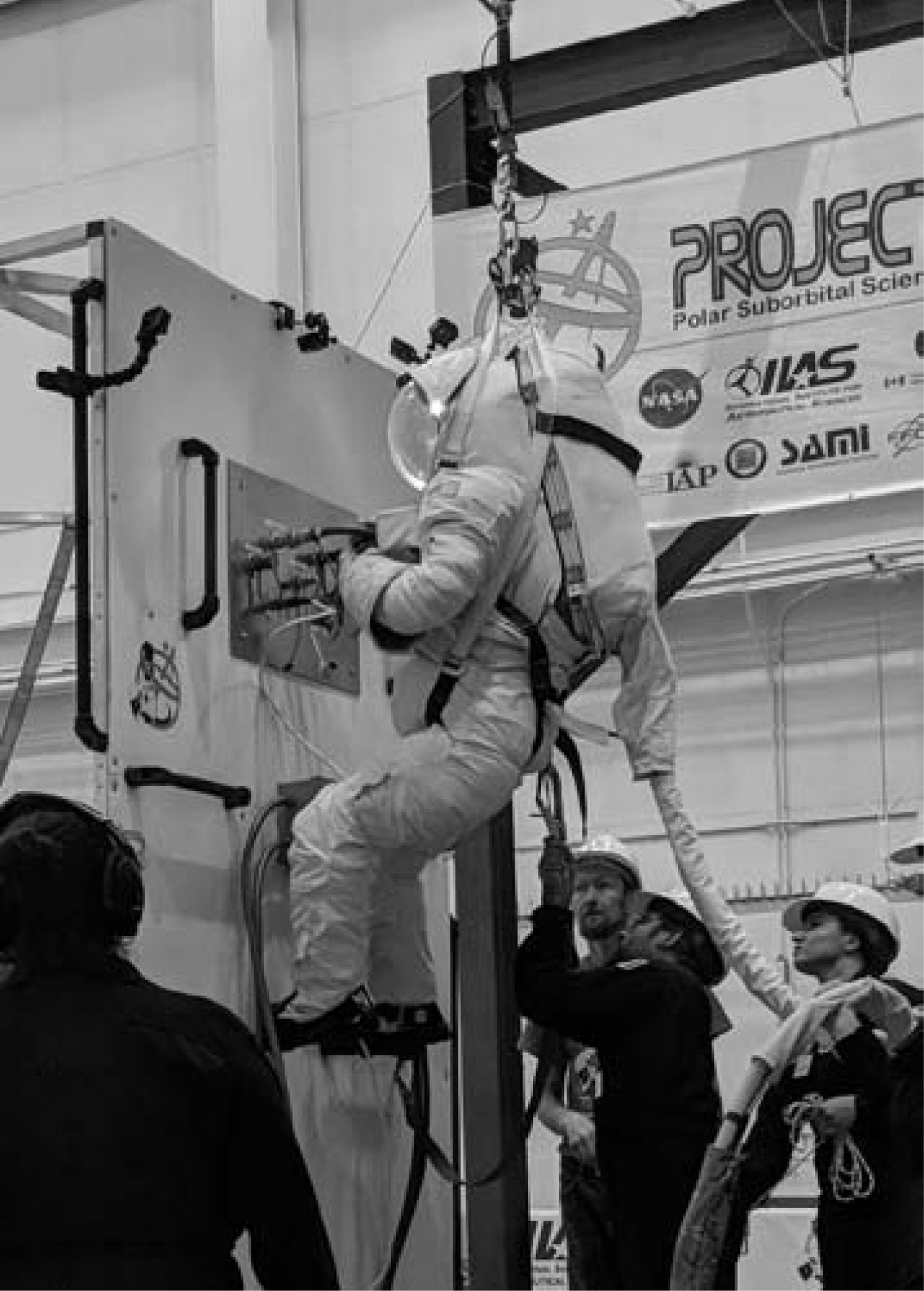
Microgavity offset testing of FFD's ESSE.
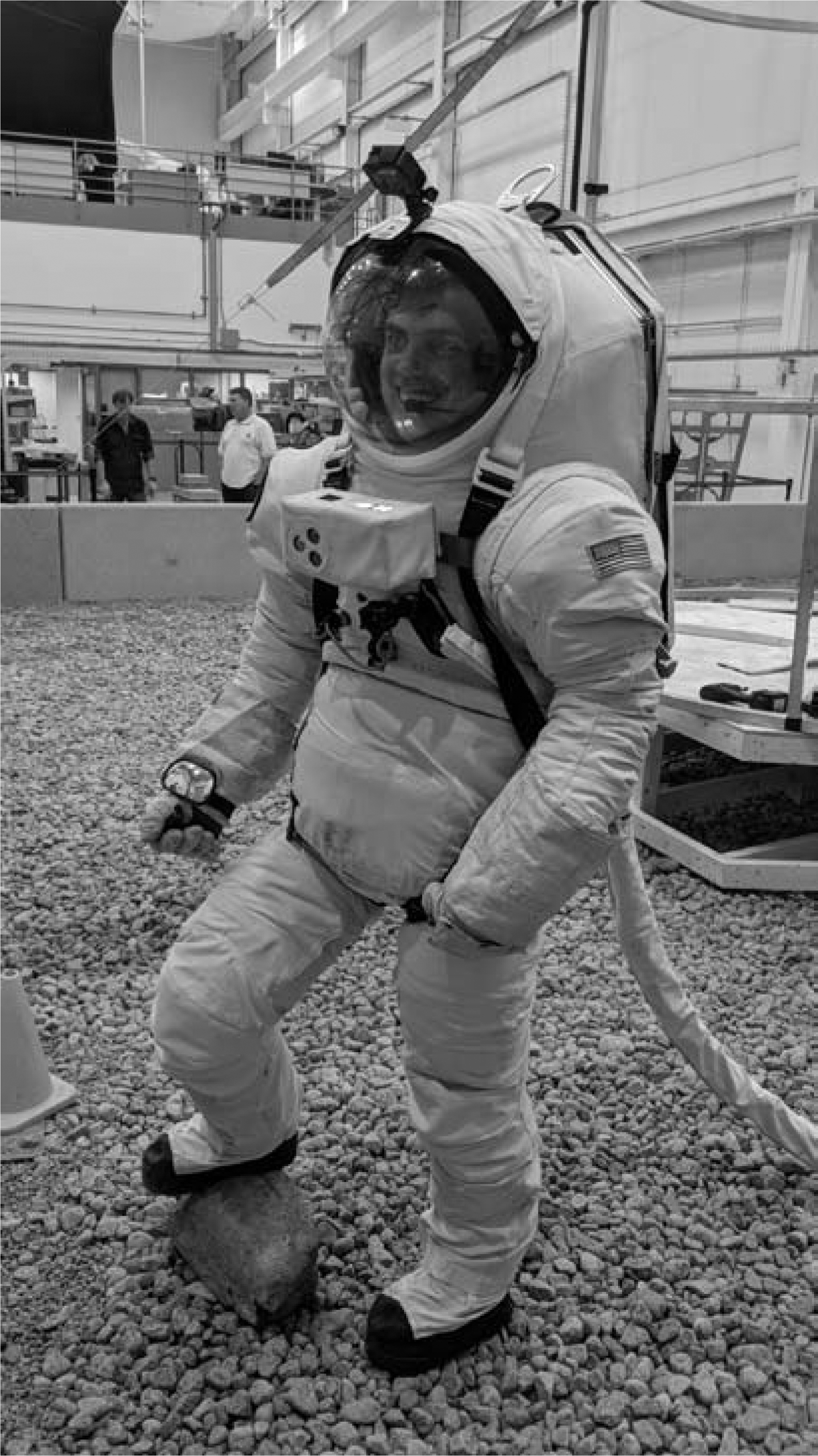
FFD's ESSE space suit at CSA's lunar yard.
Discussion and Conclusions
FFD has developed a prototype ESSE appropriate for future commercial microgravity operations. Significant design development has been dedicated to the system, including all major “front end” systems of the enclosure. Preliminary operational evaluations of the suit have taken place with good results.
Sizing, operations, safety procedures, and test protocol for evaluation of performance of the EVA suit have been drafted, with meaningful human testing of the system to be completed in September 2019.
FFD anticipates a future need for commercial EVA space suits, as humans venture to space in larger numbers. Our goal is to have a system ready to supply flight providers, space stations, governments, and institutions with the capabilities to enable safe and affordable EVA exploration. Beginning with microgravity operations in LEO, we envision our system being used.
Footnotes
Acknowledgments
FFD thanks Integrated Spaceflight Services (Jason Reimuller, Aaron Persad, Chris Lundeen, and many others), NASA, and the Canadian Space Agency for their support.
Author Disclosure Statement
No competing financial interests exist.
Funding Information
No funding were received. All developments were made at FFD's own expense.