




Abstract
Astrobiology is an emerging and interdisciplinary scientific field that aims at studying and understanding life in the universe, with research topics including the origin of life and the feasibility of life existing and being detected elsewhere in the universe. In this article, we highlight the critical role that astrobiology plays toward inspiring students and the general public toward space exploration. The cross-disciplinary nature of the field brings together scientists from various backgrounds, breaking down silos that exist in today's scientific community in India. Finally, astrobiology has continuously played a pivotal role in shaping outer space exploration programs and will be an important scientific area of development for the Indian Space Research Organization as well. The formation of the Indian National Space Promotion and Authorization Centre (IN-SPACe) body and the emerging New Space ecosystem in India are discussed, as they offer unique opportunities to bring down the cost, time, and programmatic challenges traditionally faced by Astrobiology missions.
Introduction
The growth of space technology found its roots in geopolitics at the end of the Second World War. The fear of a global outbreak of a Third World War and competition to gain the higher ground in aerial warfare led to the United States and the Soviet Union developing rockets that could enter the Earth's orbit and eventually a race to land their citizens on the Moon. The two countries tried to outperform each other, eventually giving up the race after the Soviet Union disbanded its space ambitions in the early 1980s.
A generation of people around the world were inspired by these heroes heading into the final frontier, beckoning them to think about their future. As astronauts started sending back images of the Earth from space, first from the lower orbit and then from a distance, while orbiting the Moon, something profoundly deep was observed. They started seeing the Earth as a whole, without political borders, a lone ecosystem floating in space, fragile yet beautiful. This thought, termed as the “big picture” or the “overview effect” by Frank White, was a true symbol of a new kind of self-awareness that was reflected in the formation of various international organizations and passing of Acts for the humanitarian needs, environmental protection, and endangered species conservation (e.g., Doctors without borders [1971], Comprehensive Clean Air Act [1970], Clean Water Act [1971], Endangered Species Act [1972], Banning of DDT pesticides [1972], and unleaded gas [1973], etc.)
For many, this realization about our place in the Universe, or “looking back at our planet” was perhaps the first biggest achievement of space exploration. Heading further into outer space, as humanity explores new worlds, in search of answers to cosmic questions, one such is: Are we alone in this Universe? The answer has a similar potential to bring about a perspective shift in our world affairs, scientific and philosophical understanding of our place in the Universe. In the early 1960s, developments in biochemistry (discoveries pertaining to the chemical processes underlying the origin of life on the Earth) and growing space-based technology led to the emergence of the field of “Exobiology,” which was later termed as “Astrobiology.” The fundamental questions pertaining to life's origins and distribution in the universe are a significant motivator for various space agencies to pursue exploration missions. One of the crucial highlights of the field of astrobiology is its interdisciplinary nature, encompassing fields such as biology, geology, astronomy, physics, chemistry, and engineering, within the context of planetary and Earth sciences. Astrobiology can be considered a useful tool for Science Technology Engineering Mathematics awareness, while also increasing opportunities for academia-industry and international collaborations. In India, a few research groups have been undertaking relevant work involving laboratory-based research activities, and field studies in a wide range of terrestrial analogue environments. Traditionally, the focus has been on Earth-centric questions, particularly for Early-Earth scientists (such as Precambrian paleobiologists, prebiotic chemists, and geomorphologists). With the recent discovery of water on Mars, liquid subsurface oceans on icy moons of Jupiter and Saturn, and many Earth-like exoplanets, the questions pertaining to life in and outside the Solar system have become more relevant than ever. Astrobiology is still an emerging field in India. Further collaborations between space technology companies, life, and physical science research organizations and universities are required to advance India's space competencies to attempt to answer important questions in astrobiology (e.g., the possibility of origin and evolution of life on ocean planets and how microbial life survives in extreme space environments1,2).
In this article, we first present the significance of Astrobiology research in India, particularly the work carried out in niche natural environments here on Earth that have played a major role not only for the research but also for education and public outreach goals. After that, the interdisciplinary nature of the field is brought out by highlighting the number of Astrobiology research groups around the world and the current scenario in India. The article then describes the essence of Astrobiology in various outer space exploration missions and what role the field has played in shaping the strategic exploration roadmaps for various space agencies. Finally, we describe India's space exploration missions with an emphasis on indigenous instruments that could be reincorporated into Astrobiology missions in the near to mid future. The emergence of various Non-Government Private Entities (NGPEs) in the New Space ecosystem and the formation of Indian National Space Promotion and Authorization Centre (IN-SPACe; Department of Space) usher in new opportunities for faster, cheaper development of such missions.
Education and Public Awareness About Natural Environments and Space Exploration
An analogue environment is a region or site that has physical and chemical conditions approximating that of a celestial body of interest (such as a planet or moon). Importantly, analogues serve only as cognate sites for a specific location and at a specific point in the history of the celestial body of interest. For example, an analogue for early Mars (4 billion years old), when there were standing bodies of water on the surface, would be very different from an analogue for the arid surface of Modern-day Mars.3–5 These environments can also be analogous to the conditions on early Earth and used to inform research into the origin and the initial diversification of life.
The approximation provided by these analogue environments is important to consider, as any environment on Earth will vary with regards to their similarity to the celestial body, especially considering the relatively high concentration of oxygen in the Earth's atmosphere, which has a major impact on elemental cycling and mineral formation. For some celestial bodies, there is also a lack of empirical data regarding specific traits (e.g., the presence/concentration of specific elements), meaning this trait cannot be directly compared. 6 However, the study of analogue environments is important to astrobiology and space science as it allows the development of scientific hypotheses and testing of scientific equipment. Examples of this include: Developing and testing hypotheses with regards to habitability and the viability of specific microbes, metabolism, and survival strategies,2,7,8 the identification of potential evidence of life within these environments that could be used for life detection missions (biosignatures),9,10 and the testing of equipment and instruments under field condition. 11 The study of analogue environments can then inform further experimentation to investigate astrobiology-relevant research questions, such as performing simulation experiments to more accurately replicate the conditions of the celestial body,12–15 or via modeling to estimate changes in fluid or precipitate chemistry under accurate physical parameters.16,17
Recent endeavors relating to astrobiology have led to a number of experiments being performed in analogue sites across the Indian subcontinent, with various groups in India addressing distinct aspects of astrobiological research. The relevant analogue sites in India have featured as a vital part of this research, as a source of sample collection, the ground for field experiments, as well as for exploring the terrain for signs of extant life. Questions pertaining to the origin of life along with the emergence of biomolecules that are fundamental to life on Earth are being pursued by groups such as the Chemical Origin of Life (COoL) lab at the Indian Institute of Science Education and Research (IISER) Pune; using the hot water springs of Ladakh region, researchers from this institute have observed the importance of the ionic content of these hot springs in determining the stability of vesicular structures that may have led to the emergence of protocells under early Earth conditions. 18 Various research groups at Birbal Sahni Institute of Palaeosciences (BSIP), Lucknow and the National Centre for Cell Sciences (NCCS), Pune have also been investigating questions of evolutionary biology, the habitability of extreme environments, and the search for biosignatures. Analogue sites that these groups have studied include the cold deserts of Ladakh and the signs of extant life in the upper stratospheric layers. In addition to these laboratory-based experiments, theoretical groups from BITS, Goa have also been attempting to solve the intricacies of habitability.
The Amity Centre of Excellence in Astrobiology (ACoEA) at Amity University, Mumbai has been attempting to focus such efforts to provide a common integrated approach for the advancement of astrobiology in India. Previous work by ACoEA includes research and educational expeditions to various analogue sites across India to raise awareness about their scientific value, in addition to their broader climatic and sociological significance. The exploration of the terrestrial analogue environments for astrobiology research activities is related to investigating aspects of climate change, with recent scientific investigations broadly highlighting the effects of climate change evident in the altered biogeography of these regions. 19 Given the wide scope of astrobiology as a field, these analogue sites are inclined to attract the interests of a wide variety of scientific activities that help generate documented evidence of the observed changes, thus building awareness about the issues of climate change.
Outreach Expeditions and Activities
Space agencies and space advocacy organizations around the world are promoting planetary analogue expeditions among the general public as well as among the scientific community to increase the knowledge that could be gathered from these sites as well as increase awareness. Interested candidates are allowed to stay in an analogue environment for a stipulated period, during which they carry out similar tasks that an astronaut would undertake on any extraterrestrial site of their interest. This allows participants to experience the field site and understand the challenges associated with exploration. Some such programs include:
The Hawai‘i Space Exploration Analog and Simulation
This analogue site is a habitat on the Mauna Loa side of the saddle area on the Big Island of Hawaii, USA, whose geology and aesthetics around the habitat make it an ideal environment for Mars analogue research and simulation.
University Rover Challenge
Student competitions are a great way to capture student interest and educate them about space exploration. University Rover Challenge is a competition that has been initiated by The Mars Society in 2006 to promote rover designing among students across universities. This competition involves constructing a rover that can perform a series of graded tasks manually and autonomously at Mars Desert Research Station (MDRS). This includes various robotically challenging tasks as well as a science task, which requires the rover to have tools to analyze environmental samples and determine the presence or absence of life. There are many similar competitions being organized internationally. These competitions allow early career scientists and engineers to work collaboratively and receive exposure for their work on an international platform, with many of these projects resulting in published articles and conference presentations.
There are many similar competitions being organized around the world. In 2019, Mars Society South Asia, a chapter of The Mars Society, organized the Indian Rover Challenge (IRC) (now known as the International Rover Challenge), which allowed 32 teams from 4 different countries with a total of 176 members to participate. 20 The chapter is actively organizing competitions and hackathons to encourage south Asian students to promote robotics and space sciences (Figs. 1 and 2).
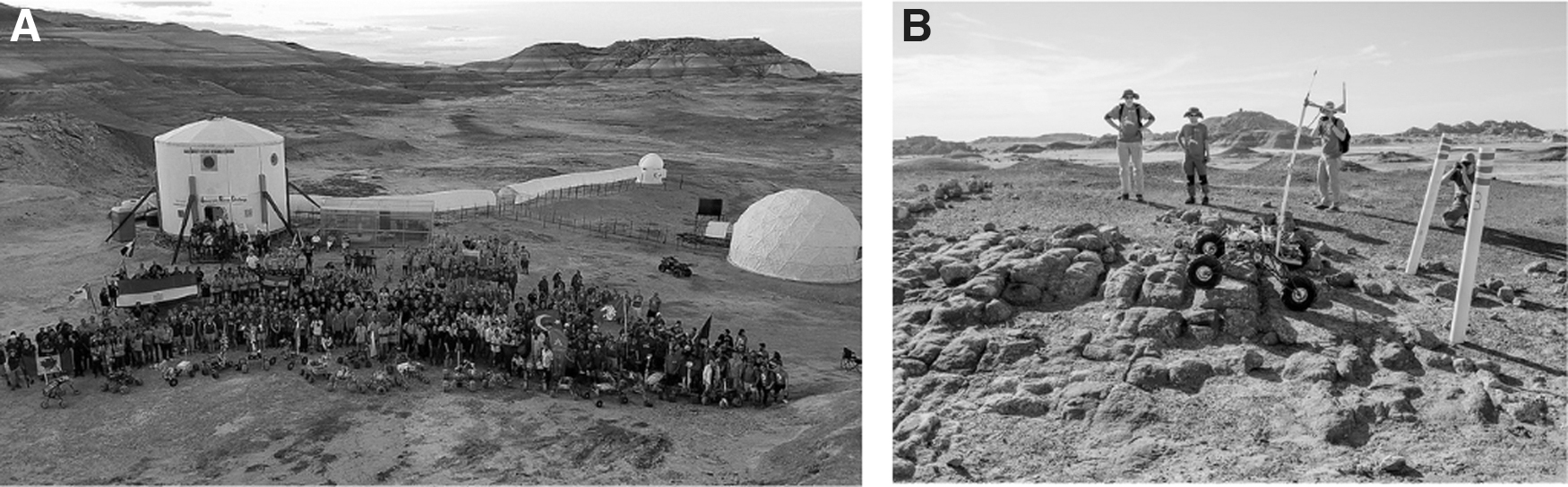

Team Rudra, the Mars rover team of SRM Institute of Science and Technology, performing the Science task at IRC 2020.
Spaceward Bound
Spaceward Bound is an educational program conducted by NASA Ames Research Center in partnership with The Mars Society and funded by the Exploration Systems Mission Directorate at NASA Headquarters. As per this program, students and teachers of various backgrounds are encouraged to participate with astrobiologists in field expeditions to some scientifically interesting, analogue environments. The places that have been explored include the Atacama desert in Chile, the Mojave desert in California, and the MDRS in Utah, USA. Moreover, Spaceward Bound programs have also been conducted in several parts of the world, including the Namibian desert, Antarctic, High Arctic, UAE, Australia, and New Zealand, in collaboration with several international partners and participants. India has not been far behind, with 2016 seeing the first Spaceward Bound India program in the Mars analogue site Ladakh.
Education and Outreach During Spaceward Bound India 2016
Ladakh 2016 Education Program
Analogue sites simulating Moon and Mars-like environments on Earth offer an excellent opportunity to promote student and teacher engagement as well as outreach activities in space education. In August 2016, the Spaceward Bound India program formed the first formal astrobiology-driven research and education expedition in India. A diverse, international team of scientists and educators explored the high-altitude region of Ladakh, in the Indian Himalayas, with the broad goals of (1) recommending Ladakh as a site of astrobiological significance to the global community, (2) developing a framework for hands-on science learning programs in village-based and nomadic small primary schools in India, and (3) establishing similar expeditions as a recurring program for Indian scientists and students. Educational and engagement with local school children formed an important aspect of the outreach activity during the spaceward bound program as well.
School visits
Four rural schools in the Ladakh region were involved in the outreach activity, where the educator team interacted with students to help them learn regarding space science and research and promote their interests in astrobiology. The schools involved and the activities carried out in them have been summarized here:
(A) Students Educational and Cultural Movement in Ladakh (SECMOL) school: SECMOL is an alternative form of education meant for students who have not been successful in traditional government schools. It involves practical training for vocational skills that relate to the unique challenges in the Ladakhi region. (B) Panamik School: The school is located relatively near to the Panamik Hot Springs (<2 km) in the Nubra Valley, which is a popular destination for tourists. This was one of the smaller schools on the tour, with only about 35 students ranging in age from 5 to 18. It had very little in the way of educational or other resources. (C) Puga School: The school is relatively new, constructed on a permanent site in 2007. It caters to 160 students. The school is a free boarding school and supplies food, clothes, and tuition to students between the ages of 4 and 16. (D) Rengdum School: The Rangdum children come from very poor remote villages where attending school is a challenge and the school itself is closed during Winter. More than fifty students between the ages of 8 and 18 traveled 2 days from Rangdum in the isolated region of the Suru Valley to meet our Spaceward Bound science and educator team in Leh.
During these visits, the educator team conducted activities, including constructing and launching paper rockets, dialogues about space, videos about Mars exploration (Table 1), and discovery exercises using magnifying lenses and compasses. Local teachers were welcoming and passionate about obtaining new ideas and materials for hands-on learning exercises, and students were excited to learn about Mars and space-related subjects. Such programs have contributed largely toward enhancing public support for space exploration and inspired many children to pursue space science as a career. A summary of conducted education activities, teacher and student responses, and planned future work at the different schools visited on the expedition transects was presented at the International Astronautical Congress 2017 in Adelaide, Australia. 21 The number of projects and collaborations resulting from these projects is proof of the programs' success.
Scope of Activities Carried Out per School During Spaceward Bound India 2016
A, SECMOL Ladakh; B, Panamik School; C, Puga Valley School; D, Rengdum School Kargil.
Educator development
Teachers worked alongside researchers and were trained in field methods that could be taken to students in the classroom. Some of the field methods that were taught and practiced were field notebook guidelines, a protocol for site selection, field drawing, learning about different types of data collection techniques, the equipment needed for data and sample collection, as well as protocol for the sterile collection of sediment and liquid for biological and geo/hydrochemical analysis. In the evenings, educators were trained on analyzing various samples by using simple biochemical tests, such as the catalase assay experiment, that can easily be adapted to a classroom setting because of its simple apparatus setup, which does not require in-depth skill or costly supplies. These tests are relevant to astrobiology, as they can identify the functional potential of resident microbes that help them to survive extreme conditions of the analogue sites. As a spinoff of these efforts, lesson plans are being developed that could be made for worldwide distribution, as these techniques are relevant for all countries and multiple scientific domains. Figure 3 shows some of the research, education, and outreach activities carried out during the Spaceward Bound India 2016.
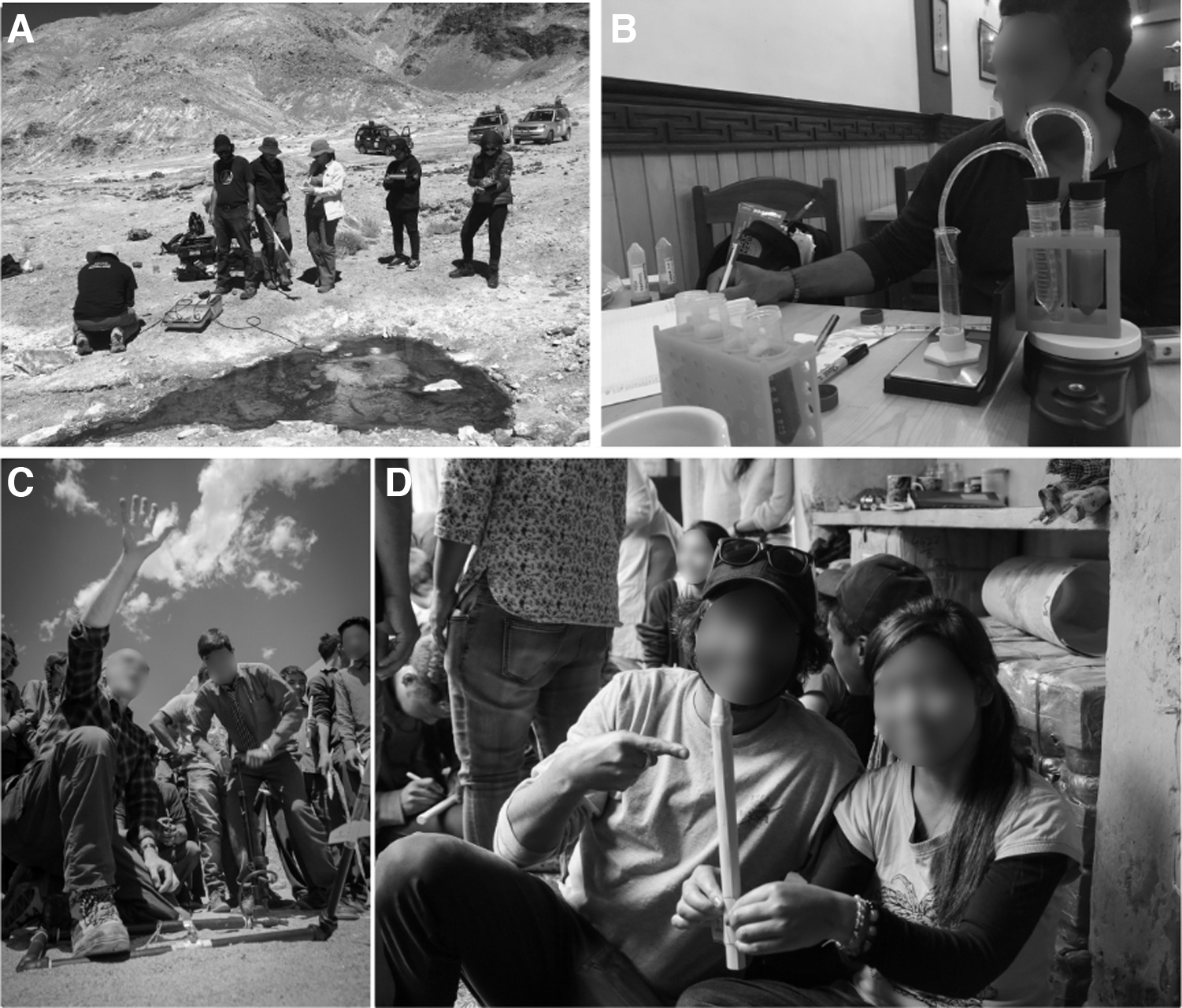
Photos of 2016 Spaceward Bound India.
Future Possibilities During Earth Space Exploration Program 2021, Lonar, Kutch, and Astrobiology Online Course
Following the accomplishments achieved during the Spaceward Bound India program in Ladakh in 2016, ACoEA is organizing the Earth Space Exploration Program (ESEP) 2021, which aims at developing an interdisciplinary collective to experience, explore, and engage awareness about the Ladakh analogue sites not just among students but also among interested members from the public. In 2020, ACoEA, in collaboration with Mars Society Australia, Blue Marble Space Institute of Science, and the Open University, United Kingdom, developed and delivered an online astrobiology course. This course attracted 795 candidates from more than 53 countries and across a multitude of disciplines and levels of education, indicating the growing interest in the field of astrobiology and the value of such programs. Building from the widespread awareness of the online course and the participation of students from nonscientific disciplines, the ESEP intends to attract people across the disciplines of science, art, and humanities in the exploration of the Mars analogue sites at Ladakh. The ESEP intends to be a hub for various space exploration activities on Earth analogue sites. It aims at promoting interdisciplinary collaboration among scientists and at giving teachers and students an opportunity to work alongside researchers who develop and test various scientific hypotheses for Mars exploration. The program also aims at involving researchers from the field of humanities to experience the sites and provide their perspective by engaging their respective modes of expression.
The ESEP also aims at raising awareness and at helping train participants on various aspects of climate change monitoring. Climate change has visibly affected various regions in Ladakh and other parts of the Himalayan region in North India. To further expand the field of astrobiology in India, there are planned research expeditions to other analogue sites across India, such as the Lonar crater in central India and the Rann of Kutch located in the border regions of Gujarat and Pakistan. Both these sites are considered Mars analogue sites specific to different regions of Mars, with Lonar crater, a hyper alkaline soda lake that is the only meteorite impact crater in the world situated in basalt rocks, considered as an analogue site for Jezero crater, 22 the recent landing site for the NASA Perseverance. The delta basin formed by the Lonar crater has amassed organic sediments over its period of existence and therefore also represents an appropriate site for the testing of sample collection missions by rovers and drones with relevance to future life-detection missions. The Jarosite mineral composition of Kutch is considered to represent an analogue for early Mars. 23 The diversity of organisms found in the salt crust of Kutch, as well as the subsurface, could provide clues to the type of life that could have potentially inhabited the mineral-rich and fluvial-lacustrine sediment enriched crater lakes on Mars in the past. 24
Interdisciplinarity in Astrobiology
As evident from the diversity of the research work enabled at analogue sites, astrobiology as a discipline involves the integration of a multitude of research themes, from geology, chemistry, and biology to the physical sciences of engineering and astronomy (Fig. 3). Astrobiological pursuits also encompass the philosophical angle pertaining to the origin and evolution of life in the universe. Theoretical pursuits have also enriched the field by envisioning the enigmas of life's origin. The social sciences and humanities also play a role in informing how we access and research analogue environments. This multidisciplinary nature of the field provides the perfect working grounds for scientists from all fields to work together in a mutually enriching and supportive environment to achieve common goals (Fig. 4).
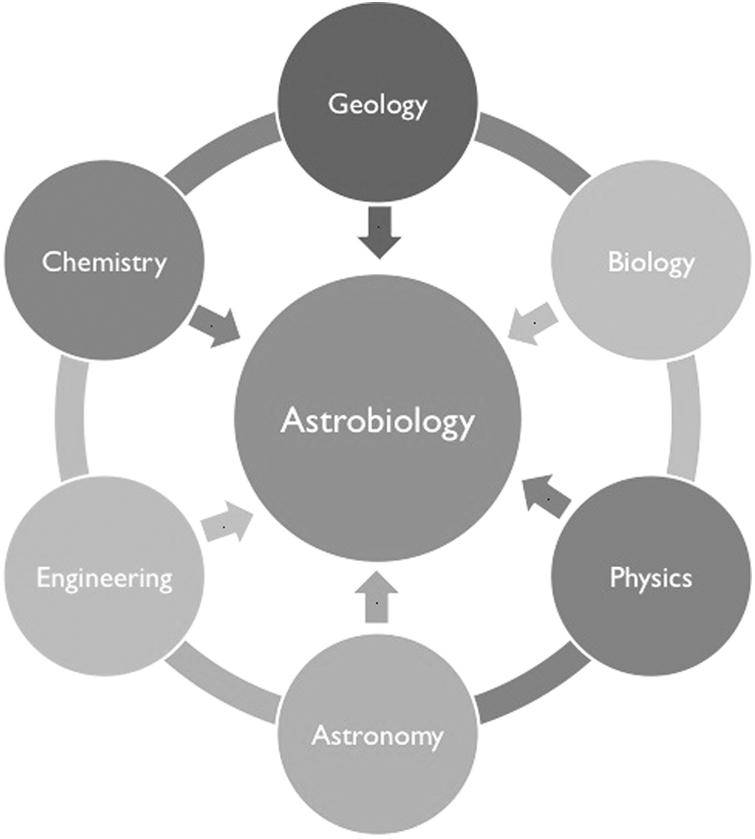
A representation of the intersection of different branches of science in Astrobiology. Credit: SAGANet.
This leads to the development of collaborative projects and common working groups among scientists across boundaries of discipline, organization, division, and geography. The virtual networks being developed have made communication easier. These virtual networks include the Research Coordination Networks (RCNs), introduced by the NASA Astrobiology Program.
A total of five RCNs exist that have been listed in Table 2. These networks have common goals that will be reviewed by a NASA panel every ∼5 years to ensure they are achieving their goals and decide whether they require restructuring. 25
The NASA Research Coordination Networks and Their Goals
FECM, From Early Cells to Multicellularity; NExSS, The Nexus for Exoplanet System Science; NfoLD, The Network for Life Detection; NOW, Network for Ocean Worlds; PCE3, Prebiotic Chemistry and Early Earth Environments; RCN, Research Coordination Network.
Meetings and Societies Relevant to Astrobiology
There are multiple scientific organizations and conferences series that are relevant to astrobiology (with some listed in Table 3, although this list is not intended to be exhaustive), either directly covering the subject area (e.g., the Astrobiology Society of Great Britain) or covering scientific content that is fundamental to the field (e.g., the Microbiology Society and the study of extremophiles and survivability). Many of the organizations and conferences that are Astrobiology focused are international in reach and cover an interdisciplinary range of subjects (e.g., AbSciCon).
A List of Some of the Societies, Conferences, and Meetings Relevant to Astrobiology Around the World
Astrobiology India Members, Working Groups and Research Outputs
India has also been taking a lead in the astrobiological arena, with various research groups working under alternate aliases such as biochemistry, microbiology, and geochemistry as has been previously described. In August 2016, astrobiologists from across India and the world carried out the first international astrobiological field expedition in Ladakh. The program was performed as part of the aforementioned Spaceward Bound program. The program facilitated the analysis of analogue sites of early Mars in Ladakh, providing observations on habitability and environmental conditions. 30 The environments analyzed included hot springs (Panamik, Puga, Chumathang), a hypersaline lake and wet basins (Tso Kar), sand dunes with ephemeral ponds (Hunder), and glacial deposits (Khardung La and Taglang La). This interdisciplinary and open program enabled the first meeting of scientists in the country to get together and collaborate. The first and second national Astrobiology conferences in India, held at the BSIP in Lucknow in April 2019, and the NCCS in Pune in October 2019, resulted in the formation of the Society for Astrobiology Education and Research (SABER), an Astrobiology working group (Table 4).
The Society for Astrobiology Education and Research Astrobiology Working Groups and Their Research Focus
BSIP, Birbal Sahni Institute of Palaeosciences; NCCS, National Centre for Cell Sciences.
Challenges Faced in Indian Astrobiology Community
With research in such a wide variety of topics related to astrobiology, India has made significant progress in astrobiology research output over the past few years. However, the field still faces challenges for establishing itself on the map of leading research themes of the country.
The significant challenges faced by the astrobiology community in India are:
The dearth of programmatic support for research in Astrobiology: The absence of national-level coordination on scientific research across India lays down the lack of clarity and vision, lack of funding from a national body, and the need for collaboration on MoUs in this field.
Appropriate research area-based funding opportunities: There is a shortfall of funding from government agencies, with Indian researchers in physical and life sciences being unable to obtain funds and grants that directly promote key Astrobiology goals.
Early career researcher support: Graduate students and postdoctoral researchers are in high demand in the field of astrobiology in India. A National Postdoctoral Program and summer internships in Astrobiology would help to develop the field, as the “lack of opportunity” discourages scientists from pursuing careers in this area.
Lack of research networking activities: Indian researchers must attempt to develop connections with other members of the astrobiology community. Scientific meetings and mentor–mentee schemes would potentially play a role in fostering this interdisciplinary field.
Astrobiology analogue sites protection: Many terrestrial analogue sites in India are being damaged by pollution and weathering. These analogue sites need to be protected by suitable government ministries to prevent their destruction.
Entry and sample collection permits for research in Astrobiological sites: Any individual researcher needs multiple clearances at regional, state, and national levels unless they are from established organizations to visit India's terrestrial analogue sites. The consistent development of directives and procedures would support efficient and stable analysis for research.
Education and Outreach programs for students, parents, and the general public: There is a need for a national-level recognition and outreach program in India for Astrobiology that empowers students and researchers to disseminate scientific knowledge. Science communication training should be imparted to scientists, students with resources from the government, and host institution to condense complex results into easily understandable information.
Astrobiology Missions
Explorative research activities in the field of astrobiology are fundamentally linked to the space missions that endeavor to explore the universe in search of answers to the fundamental questions. The knowledge and information resulting from these missions help us understand the early Earth conditions that could have led the path of origin and evolution of life. The information gleaned from these missions also help identify analogue sites on Earth simulating the extraterrestrial sites and those resembling the early Earth conditions, thus enabling the origin of life research to be pursued at a more rapid pace on Earth. Some of the major missions having astrobiological relevance are listed here.
Exploration of Moon and Venus: Surface Exploration Technology Capabilities
In August 1962, NASA launched Mariner 2 orbiter to Venus, which became the first successful interplanetary mission. Mariner 2 relayed data about the surface temperature of the planet and subsequent missions provided information about the magnetic field, atmospheric pressure, and wind speeds. The Soviet Union observed and discovered important features of the planet by multiple landers, orbiters, and balloons. The Apollo program can be considered a significant step forward toward Human exploration of an Off-Earth environment and successful retrieval of samples, both of which are critical requirements for near-term Astrobiology missions. Apollo 11 can be considered as the first of such missions. Lunar dust, rock, and regolith Regolith samples from the Moon were collected and brought back to the Earth successfully by the Astronauts over several missions. Petrographical and mineralogical analyses have given significant information about the surface of the Moon. 40 Post-Apollo, NASA and other space agencies are aiming at exploring other parts of the Solar System.
Mars exploration
Since 1971, there have been nine missions that have successfully landed on Mars. There are also 14 satellites orbiting the planet. Viking was the first mission launched by NASA that successfully landed on Mars in November 1982. The objectives of the Viking mission included performing biological experiments and estimating the composition of Martian regolith. Post-Viking missions were launched to explore Martian geology and assess evidence of water-ice on Mars. 41
Subsequent rover and lander missions have identified the presence of the six key elements required for life. 42 One of these missions, the NASA Mars Science Laboratory Curiosity rover landed on Mars in August 2012 and has examined multiple samples of the Martian regolith over the course of 3,000 Sols (1 Sol = 1 Martian Solar Day = 24 h and 39 min), furthering the understanding of their formation, structure, and chemical composition. 43 The Mars 2020 Perseverance rover that landed on Mars in February 2021 is the first NASA mission with the goal of searching for life.
Asteroid belt and beyond: icy moons
Apart from the inner planets, space agencies have also conducted missions beyond the asteroid belt, exploring Near Earth Asteroids, Jupiter, Saturn, Uranus, Neptune, and Pluto. In December 1973, Pioneer 10 became the first spacecraft to cross the asteroid belt. 44 Voyager 1 and 2 were launched in 1977 with the objective of exploring the solar system and beyond, with both spacecraft providing tremendous information about the outer solar system and closely inspecting the outer planets of the solar system and their moons. 45
NASA's Galileo and Cassini-Huygens launched in October 1997 have investigated Jupiter and the Saturn system, respectively. Data from Galileo suggested the presence of a subsurface ocean under one of Galilean moons, Europa.46,47 Cassini's onboard instruments suggested the evidence of a subsurface ocean under the south pole of Saturnian moon, Enceladus. 48 Lakes and rivers of liquid methane have been discovered on the surface of Titan, another Saturnian moon of astrobiological interest. 49 The universal requirement of water for life on Earth and the proposed oceans on the icy moons raises the possibility of active life,1,50 with more missions needed to further investigate this possibility. Space organizations have future planned orbiters and landers to investigate the icy moons, such as the Europa Clipper and JUICE.51,52
Exploration beyond the solar system: exoplanets
Besides sending the flybys and interplanetary missions, space agencies have also been searching for habitable exoplanets using ground- and space-based telescopes. The Kepler space telescope is one of the engineering feats that served humankind by hunting exoplanets. Launched in 2009, Kepler has surveyed the sky and detected more than 2,600 exoplanets during its 9.6 year life cycle. Ground-based observatories such as WIYN (Wisconsin, Indiana, Yale and National) and Keck observatories are being used along with Transiting Exoplanet Survey Satellite (TESS) to characterize and confirm exoplanets in different parts of the universe.
Lessons from these missions
Each mission has paved the way for new technology to be developed and mastered, which is relevant for Astrobiology missions. Apollo missions substantially improved NASA's soft landing, human exploration, and sample return capability from a celestial body (Moon). Venus has a very dense atmosphere and clouds, making it challenging to study the surface and subsurface features. Various missions to Venus over time have aided the development of remote-sensing capabilities, which helped us obtain data from obscure targets. The discovery of water-ice being present on Mars has opened the room for new speculations about possible life forms that might exist or have existed in the past. Space agencies are now conducting missions to Mars that would contribute not only to the exploration of possible biosignatures on Mars but also toward possible future human settlement on Mars. These missions have accelerated the development of rovers with sophisticated scientific instruments with landing capability on difficult terrains. Asteroids and Icy moons of gas giants are further potential candidates for the possibility of extant life in the solar system. Future missions are being planned to study these moons in detail by using spectroscopic techniques. To study distant planets, space telescopes have been developed and launched to avoid interference from the Earth's atmosphere. Several “habitable” exoplanets have been detected through such lenses. Institutes such as Search for Extraterrestrial Intelligence (SETI) and Messaging Extraterrestrial Intelligence (METI) primarily focus their search to detect and communicate with possible extraterrestrial intelligence through radio signals. There is also the field of nonradio Technosignatures, whose goal is to identify signatures of extraterrestrial technology by using nonradio methods. 53
This new segment of science continues to develop as more countries join the voyage of understanding the origin, evolution, and distribution of life in the universe. As technical advancement unfolds, the frequency of astrobiology-relevant missions has increased after 2009 at a lower term cost (Fig. 5). This figure indicates the number of missions with relevance to astrobiology sent by NASA since 1960 and the budgetary allocation (in today's value) for such missions. It can be seen that soon after the establishment of NASA's Exobiology program, some significant missions have been sent to Mars and Venus but as the development progresses, missions such as Stardust and DeepImpact have been carried out to study and map the targeted asteroids and collect dust samples from comets. Over the years, the number of astrobiology relevant missions has increased, as can be noticed from the timeline of 2000–2020, with more sophisticated missions being launched focusing on the detection of habitable exoplanets as well as biosignatures on Mars.
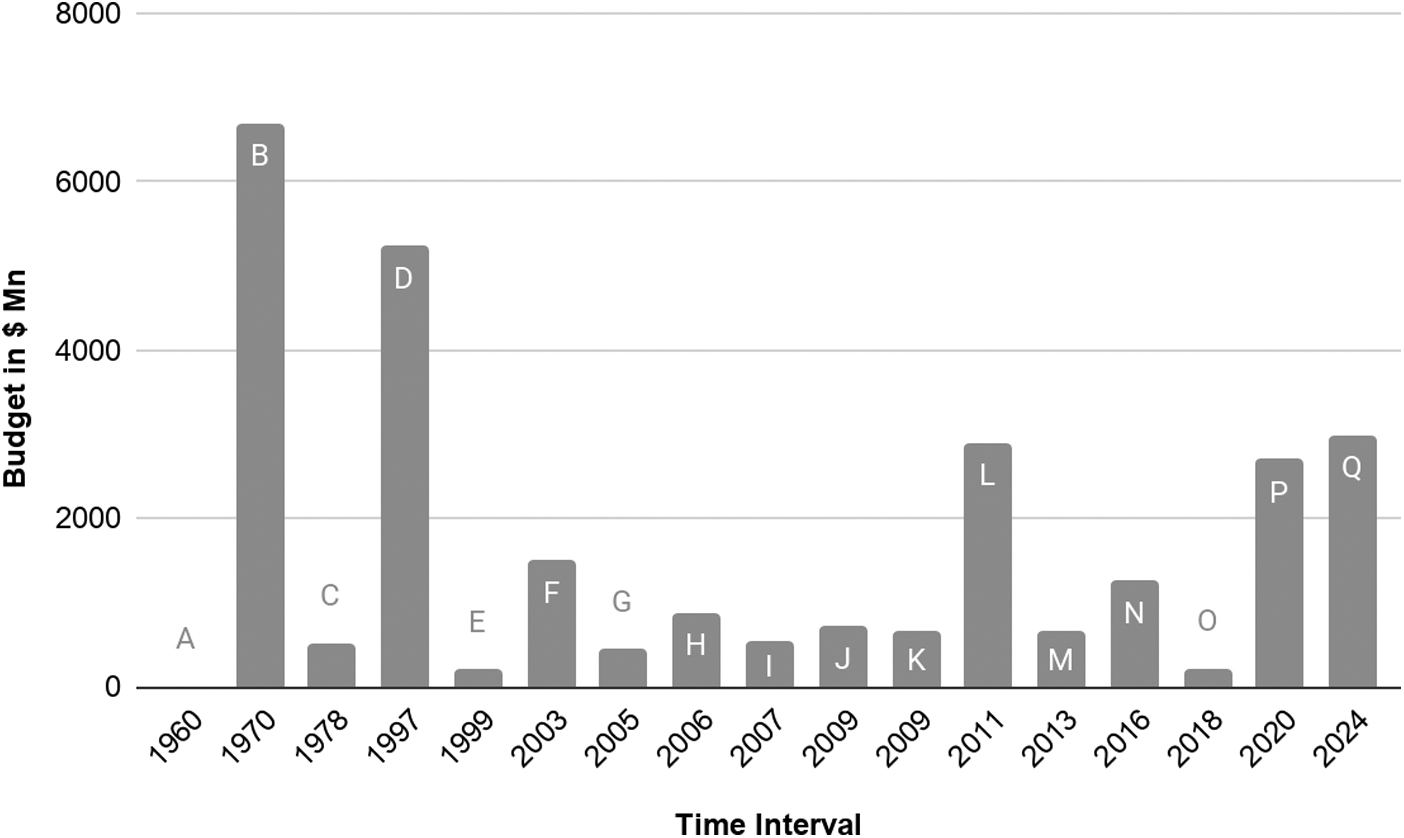
Astrobiology-relevant missions by NASA since 1960 and their budgets. (A) Exobiology program established, (B) Vikings, (C) Pioneer Venus, (D) Cassini Huygens, (E) Stardust, (F) MERS, (G) DeepImpact, (H) New Horizon, (I) Phoenix, (J) LCROSS, (K) Kepler, (L) Curiosity, (M) MAVEN, (N) OSIRIS-REx, (O) TESS, (P) Perseverance, (Q) Europa Clipper. MERS, Mars Exploration Rovers; LCROSS, Lunar Crater Observation and Sensing Satellite; MAVEN, Mars Atmosphere and Volatile Evolution; OSIRIS-REx, Origins, Spectral Interpretation, Resource Identification, Security, Regolith Explorer; TESS, Transiting Exoplanet Survey Spacecraft.
A few future NASA missions have been translated into the figure, including a mission to Europa that has been dictated on the graph below along with its budget, which will be tentatively launched in October 2024.
In Situ Resource Utilization: Materials to Minerals
With a multitude of missions already in execution and in development, human exploration of deep space is still challenged by the availability of resources needed to sustain long mission durations. Several critical resources such as water (H2O), oxygen (O2), and minerals are required for living and working on Moon or Mars surface environments. In situ resource utilization (ISRU) is one such endeavor that defines the practice of storing, collecting, refining, and processing of the materials found on other celestial bodies. A good example of ISRU is the Mars Oxygen In situ resource utilization Experiment (MOXIE) instrument onboard the perseverance rover with a purpose of demonstrating the production of O2 from carbon dioxide (CO2) in the Martian environment. 54 Moreover, ESA 55 is working to demonstrate the technology that production of H2O and O2 is feasible on the lunar surface. The ISRU would not only eliminate the problem of transporting needful human resources but also cut down the cost of missions significantly.
Several commercial corporations such as Deep Space Industries and Moon Express are organizing projects for the purpose of asteroid mining. 56 India has also proposed the extraction of helium-3 from the lunar surface as a part of demonstrating technology. 57 Biomining, the process of using microorganisms to extract metals, another area that is under the umbrella of astrobiology, could potentially yield promising results. An experiment called BioRock was conducted on the ISS, which investigated the effect of altered gravity on the biomining of basaltic rocks. 58 Results from the experiment showed that biomining can be achieved in varied microgravity conditions without significantly affecting the cells 59 and with enhanced mining of specific elements. 60 Although human settlement is an idea that will take decades if not centuries to implement, this technique can be used to mine important minerals from asteroids or moons by future settlements in an efficient way with the aid of synthetic geomicrobiology. 61
Planetary Protection
Astrobiology also plays a role in the precautionary measures of planetary protection. With the growing number of missions to planetary bodies such as Mars, Venus as well as the moons of planetary bodies such as Europa, Enceladus, and Titan, it becomes imperative for the missions to protect the home environment and the destination from contamination. Therefore, international bodies such as the United Nations have introduced precautionary measures for every mission being planned, designed or fabricated. Planetary protection concerns were first raised in a discussion of the nascent field of space law at the International Astronautical Federation's 7th Congress, held in Rome 62 in 1956. Thereafter, the Committee on Space Research (COSPAR) was established in 1958 by the International Council for Scientific Unions to develop guidelines for missions with the potential to contaminate another planet or moon. Many successive efforts have led to the formulation of rules of planetary protection that provide a guiding principle to the design process of any space mission, with the aim of preventing the contamination of celestial bodies with life from Earth, known as forward contamination and keeping humans safe from potential extraterrestrial life, called backward contamination. In 1967, the United States, USSR, and the United Kingdom signed the UN Outer Space Treaty, which included Article IX, that suggested planetary protection guidelines. This treaty was signed by many other countries, including India. The guidelines given by COSPAR legally abide by article IX, and the designs of interplanetary missions have been modified to abide by them. To reduce the risk of forward contamination, spacecraft are assembled and handled in clean rooms that have precise sterilization procedures to ensure spacecraft have the lowest possible “microbial load” (the amount of contaminating microbes).
Relevant Instruments Flown on ISRO Missions
In the global race of space missions, India has also made a strong stand with various successful missions being executed in the past and a string of future missions lined up for launch in the near future. Based on a review of its successful missions, India has the relevant technical and programmatic capabilities to embark on an Astrobiology mission (Table 5). In fact, many of the flown instruments have been indirectly working on Astrobiological objectives.
A List of Some Indigenously Developed Spacecraft Instruments Along with Their Key Role Specifications
DFSAR, Dual Frequency L-band and S-band Synthetic Aperture Radar; HEX, High-Energy X-ray Spectrometer; IIRS, Imaging Infrared Spectrometer; MSM, Methane Sensor for Mars; TIS, Thermal Infrared Imaging Spectrometer.
ISRO Chandrayaan Program
ISRO Chandrayaan 1 mission was launched in October 2008, as a lunar orbiter and an impactor. The objective of the mission was to map the chemical composition and three-dimensional topography of the lunar surface. One of the main achievements of this mission was the discovery of widespread occurrence of hydroxyl (OH) and water molecules (H2O) in the lunar regolith by the Moon Mineralogy Mapper (M3) instrument. 63 Along with M3, Chandrayaan included five scientific payloads calibrated from India, including a High-Energy X-ray Spectrometer and a Moon Impact Probe to examine radioactive elements and confirm the presence of water on the lunar south pole. 64 The astrobiological significance of studying the Moon comes from the giant-impact hypothesis that suggests the Moon was formed because of the collision of the proto-Earth with a Mars-sized planetesimal. 65 Studying the Moon can, therefore, provide information about the early Earth, because the Moon has limited geological activity and lacks dynamic processes (e.g., volcanic eruptions and rain), enhancing the preservation of its surface. There is also the potential for instruments onboard Chandrayaan 1 and 2 to be recalibrated and used for a future Mars mission. The ISRO's upcoming lunar mission, Chandrayaan-3, is planned to launch in 2022 in collaboration with Japan Aerospace Exploration Agency (JAXA). Chandrayaan-3 will have a similar configuration as Chandrayaan-2 sans an orbiter. The rover and lander of Chandrayaan-3 will instead use the orbiter of Chandrayaan-2.
Stratospheric Balloon Experiments
The ISRO, with collaborators, had conducted an experiment in 2000 to test the presence of the remnant signs of life in the upper atmospheric layers. This was done to investigate the feasibility of the panspermia hypothesis, which proposes an extraterrestrial origin of life, transferred to Earth via meteorites, comets, asteroids, or planetoid bodies colliding with the early Earth surface. 66 The experiment involved sending a helium balloon to the stratosphere and collecting samples in sterile containers. This led to the identification of several species of bacteria and fungi, but concerns about contamination because of the low altitude were raised. 67 The successive experiment in January 2001 ensured sample collection above the tropopause in the height range of 19–41 km. The samples captured during this experiment included viable living cells thriving at these heights above the surface of the earth. In the subsequent flights, new species of radio-resistant bacteria were also discovered. This experimental series paved the way for future research with an aim to establish the origin of such stratospheric bacteria.38,68
Shukrayaan Mission
Shukrayaan-1 is a proposed orbiter tentatively launching around 2026–27. The current payloads have the primary objective of understanding dynamics and composition of the atmosphere of Venus and the geologic history preserved on the surface of Venus. 69 The recent proposed detection of a “significant” amount of phosphine in the Venusian clouds with the help of radio telescope data has posed many questions that can be answered by the upcoming missions. Scientists around the world have suggested the recalibration of Shukrayaan instruments to make use of this opportunity. 70
Mangalyaan Mission
After the detection of hydroxyl and water molecules on the lunar surface by Chandrayaan-1, India launched its first interplanetary mission to Mars, the Mars orbiter Mission (MOM) also known as Mangalyaan in November 2013, which eventually reached the orbit of the red planet in 9 months, along with five onboard scientific instruments. 71 The primary objectives of the mission were capturing surface features of Mars, atmospheric remote-sensing measurements, information about the volatile gases escaping the atmosphere, and the effects of radiation on the Martian atmosphere and available volatiles. One of the major roles of MOM was to detect the traces of methane (with the precision of parts per billion) in the Martian atmosphere with the help of its Methane Sensor for Mars. 72 With methane being a biosignature, any possible detection of methane would play a crucial role in providing clues about the presence of life on Mars. 73 The onboard Thermal Infrared Imaging Spectrometer was designed to observe the thermal signatures from the Martian surface and to detect possible remnants of hotspots and hydrothermal vents on the surface. Any possible detection of such hydrothermal vents on the Martian surface would give enough room for speculations of possible life that thrived on the vents' energy source. 74 The MOM was India's technological demonstration mission toward an interplanetary expedition but it also carried some astrobiological relevance, providing altitudinal profiles of CO2 nitric oxide, carbon monoxide, and oxygen in the Martian atmosphere. 75 Mangalyaan-2, the successor of Mangalyaan-1, with an upgraded orbiter, is expected to be launched by 2024, and will carry 100 kg of scientific load to perform a set of science on Mars, including understanding of the Martian evolution and detection of biosignatures. With the missions that ISRO has already performed, it can consider the data obtained from such missions to design the instruments that could be dedicated to explore the biggest questions, including the evaluation of life on Earth and the scope of biosignatures and life on other celestial bodies for near-future missions.
Leveraging ISRO's Flight Heritage and New Space India Ecosystem
With the success of ISRO missions to the Moon with its Chandrayaan 1 in 2008, Chandrayaan 2 in 2019, and Mars mission through Mangalyaan 1 in 2014, the space sector in India has received a huge boost in interest. Keeping in sync with the technological advancement in recent years, space technology has found increasing applications in a wide variety of fields, which require satellite data and technology. To leverage the growing Indian space ecosystem, the ISRO has taken new initiatives to open its doors to Indian NGPEs that have emerged over the past 10 years in the space sector to ensure better resource utilization and also to preserve its focus toward the core objective of advancement of scientific research. This has led to the establishment of new divisions such as the New Space India, IN-SPACe, and ISRO's Capacity Building Program Office (CBPO), which manage the marketing and resource utilization domains of ISRO respectively. Under the umbrella of these initiatives, ISRO has allowed sharing and sustainable reutilization of its mission instruments by the private partners.
To leverage the growing Indian space ecosystem, the Indian Space Research Organization has taken new initiatives to open its doors to Indian NGPEs that have emerged over the past 10 years in the space sector. This is being handled via the newly constituted IN-SPACe and ISRO's CBPO A report briefing identified that more than 50 startups have emerged in the segment of space science, with most of them focusing on either space education, satellite applications, or spacecraft subsystems, with a few lines up possessing launching capability. Though currently limited in terms of capacity, the companies such as Dhruva Space, Bellatrix Aerospace, Xovian, etc. can play a crucial role in developing the satellite or orbiter subcomponents, which could be further used to analyze the biosignatures in different planetary systems. Smaller aerospace companies, such as Skyroot Aerospace and Agnikul Cosmos, may also play a role in the expansion of space in India. Figure 6 depicts 50 Indian startups and their domain specificities. 76
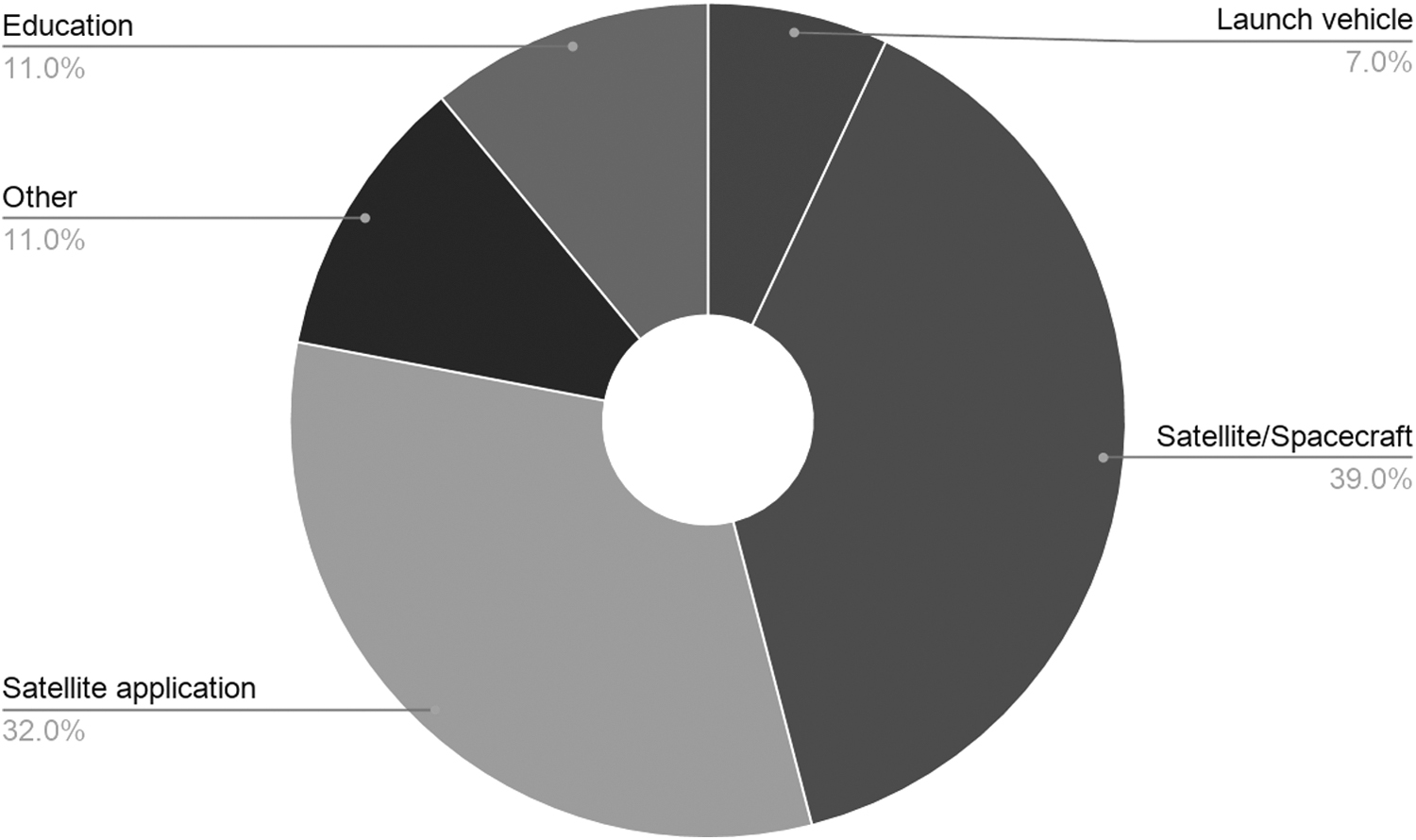
Discipline-wise percentage distribution of startups in the Indian space industry. 77
The hurdles of a dedicated Indian astrobiology mission can be potentially improved through the strategy of reusability of instruments that ISRO has already flown in its past mission. A few such suggestions have been summarized in Table 6. Strong collaboration between ISRO and its private partners also stands to play an important role in the expansion of the role of India in space exploration and astrobiology.
A List of Instruments That Could Potentially Be Reutilized from ISRO's Past Missions to a Future Dedicated Astrobiology Mission
LASA, Laser Altimeter; OHRC, Orbiter High-Resolution Camera.
Conclusion
Astrobiology provides a cosmic perspective to the people of our planet. It allows people to focus on the grander challenges that we as the residents of a “global biosphere” face, of how actions on one side of the planet can have consequences to people on the other side. The curiosity about other alien worlds, the journeys they have taken, and whether life ever started and still exists, such discoveries have the potential to again remind us to focus on the “big picture” and wonder about our place in the Universe. It empowers a new generation of scientists and technologists to work to push the boundaries to conserve our planet, improve lives, and continue our journey of exploration. Astrobiology is an exciting and interdisciplinary area of research, bringing together researchers from various scientific disciplines and inspiring thousands of school students who have their eyes set on embarking on a career in Space in India. Over the past two decades, there have been several programs, including a few in India, that have proven how teaching and training students in natural environments that simulate celestial surface environments is an amazing way to nurture interest and spread awareness about space. There is, however, a compelling need for the government to provide resources to inculcate science communication skills in students and researchers to make complex scientific information accessible to the general public. Astrobiology serves as the bridge to bring together researchers from various disciplines of geology, atmospheric, polar, biology, chemistry sciences, and engineering to work together on the fundamental questions around life as we know it. This carries the immense potential for this exciting field to serve as an example for other fields to collaborate in similar spirits and work on such challenges faced by humanity. The Indian space ecosystem is also evolving rapidly, with the Government, Industry, and Academia finding new ways to work together on new missions to the low Earth Orbit, Moon, Venus, Mars, and beyond. The mushrooming of new space companies and their capabilities in building small satellite components, launch vehicles, and materials and manufacturing capabilities will surely empower Indian researchers in the coming decade to collaborate and work on executing missions to other worlds in the search of life or proof of its past existence. When wars, global pandemics, and extreme weather events hit us, they brought people together. In a similar manner, the realization of such grander discoveries and challenges could potentially play a significant role in unifying people across religious, caste, and economic strata within India.
Footnotes
Acknowledgments
The authors would like to thank the members of the Spaceward Bound India 2016 community, Society of Astrobiology Education and Research for their inputs for this article. The work carried out in Ladakh was possible due to the support and cooperation of the Chief Wildlife Warden of Ladakh, Union Territory of Ladakh. Information Technology infrastructure support was provided by Blue Marble Space Institute of Science for the virtual meetings and shared cloud storage for the completion of this article.
Author Disclosure Statement
No competing financial interests exist.
Funding Information
No funding was received for this study.