




Abstract
The design of a European Commercial Space Station in Low Earth Orbit (LEO) is a topic of growing interest in the space community. Considering the future retirement of the International Space Station and the exponential growth of commercial interests, human establishment in the LEO will involve new actors. In particular, private companies are expected to play a leading role in this area because of the many potential business opportunities, such as space tourism and in-orbit manufacturing. In this scenario, the realization of an orbital space station will represent an opportunity to increase the technology readiness level and lay the basis for the future development of space science. A potential architecture has been investigated within the framework of the 15th edition of the Second Level Specializing Master’s Program in SpacE Exploration and Development Systems XV, which involved a group of students from Politecnico di Torino, Institut Supérieur de l'Aéronautique et de l'Espace (ISAE-SUPAERO), and the University of Leicester, supported by experts from Thales Alenia Space Italy, ALTEC, the Italian Space Agency, and the European Space Agency. This article summarizes the key concepts for the preliminary design of a European Commercial Space Station in the LEO. Starting from the identification of mission requirements and design drivers, different technical solutions were investigated and traded off. The referred space station would serve as a hub for various commercial activities in LEO, such as science research and development, manufacturing, assembly, storage, and parking, providing also the opportunity to implement advanced and innovative on-orbit operations, namely refueling and maintenance services. Furthermore, the realization of this outpost would enable more opportunities for international cooperation, empowering the role of Europe in the global space industry.
INTRODUCTION
The exploration and utilization of space have captivated the human imagination for decades, driving us to push the boundaries of scientific knowledge and technological achievement. As we approach a transformative phase in space exploration marked by the upcoming retirement of the International Space Station (ISS) in 2030, the need for a sustainable and commercially viable presence in Low Earth Orbit (LEO) becomes paramount. In this context, conducting a feasibility study on establishing a European Commercial Space Station holds immense significance, as it represents a crucial step toward ensuring Europe’s continued leadership and contribution in the space arena.
This article comprehensively analyzes the feasibility of establishing a European Commercial Space Station in LEO. With the evolving landscape of space exploration, characterized by increased commercialization and private sector participation, Europe has a unique opportunity to leverage its technological prowess, scientific expertise, and collaborative framework to spearhead the development of a commercially viable space station. By evaluating technical requirements, financial considerations, operational models, and potential partnerships, this study aims to provide valuable insights for realizing an European Cooperation for Space Standardization (ECSS). Inspired by recent achievements in space station construction, such as the rapid development of the Chinese Space Station and the strategic initiatives undertaken by leading space agencies like NASA to embrace commercial opportunities in LEO, the prospect of an ECSS becomes increasingly compelling.
By harnessing the capabilities of European Space Agencies (ESAs), industry partners, and research institutions, this initiative has the potential to foster economic growth, technological innovation, and scientific advancements while nurturing international collaboration and cooperation.
The establishment of a European Commercial Space Station represents a paradigm shift in space exploration, positioning Europe as a key player in the commercial space industry. Through strategic investments, technology development, and forward-thinking policies, Europe can harness the potential of LEO for various applications, including microgravity research, technology demonstrations, manufacturing and assembly activities, and space tourism.
In conclusion, the feasibility study of a European Commercial Space Station in LEO is essential to explore such an initiative’s viability and potential benefits.
By evaluating technical, financial, and operational aspects, this study aims to provide a roadmap for Europe to establish a commercially sustainable presence in LEO, ensuring continued scientific exploration, economic growth, and international cooperation. The findings of this study will contribute to the broader discourse on the future of space exploration and stimulate discussions among policymakers, space agencies, industry leaders, and researchers, driving Europe toward realizing its vision of a European Commercial Space Station.
MISSION CONTEXT AND SOCIOPOLITICAL ASPECTS
The project operates within the realm of the space sector in the European context, where the European Union (EU) and the ESA emerge as the principal stakeholders. Both entities share a common objective of enhancing Europe’s standing in the space economy. However, it is important to note that they are distinct organizations, each employing unique methodologies and possessing certain peculiarities pertaining to membership, undertaken space activities, competencies in space, and budgetary arrangements with their respective members. Despite their shared goal, the EU and ESA operate as separate entities, contributing to the overall advancement of Europe’s presence and influence in the field of space exploration and technology. In the present era, the EU and the ESA are collaboratively engaged in efforts to advance the space sector within Europe, with a focus on identifying key challenges that are necessary to be addressed to foster a prosperous future for the region in the space economy. This collaborative endeavor underscores their shared commitment to harnessing the potential of space exploration and technology to support Europe’s position in the global space industry. By jointly examining the obstacles and opportunities that lie ahead, the EU and ESA aim to lay the foundation for strategic initiatives and policies that will propel Europe toward a brighter and more competitive future in the frame of space.
According to European Parliamentary Research Service,
1
the main European Space Sector challenges are:
Strategic autonomy in the space domain. Staying internationally competitive. Ensuring a long-term vision. Complex government system. Uneven distribution of the EU space sector. Fragmented legal and policy framework.
Multiple countermeasures have been identified to address the identified challenges, such as increasing cooperation between the EU and the ESA and enhancing coordination among diverse countries to create an organic working environment. Supporting the EU space industry through the implementation of clear space policies holds the potential to optimize efficiency and mitigate financial risks, ensuring safe and coherent utilization of public funds. By adopting these measures, Europe can establish a resilient long-term vision and implement an effective growth strategy that will contribute to the overall development and advancement of the European economy, providing an even distribution of resources to all involved countries.
Identified Solution
After the ISS decommissioning, scheduled in 2030, European and ESA astronauts will theoretically not have access to LEO environments because of the absence of European cooperation in space stations in LEO. Establishing comprehensive European space infrastructure holds significant potential in aligning with the strategic objectives delineated by the EU and the ESA for the European Space Sector. Such an endeavor presents a momentous opportunity to fulfill the identified goals and aspirations set forth by these entities, by which Europe can effectively leverage its resources, capabilities, and collective expertise to realize the envisioned advancements and improvements in the pursuit of excellence within the European Space Sector. In fact, according to the ESA HLAG Report, 2 “Europe should design and implement a European Space Mission to establish an independent European presence in Earth orbit […], including a European Commercial LEO Station […].”
Within the framework of Master SpacE Exploration and Development Systems (SEEDS) XV, a student team has identified a solution to address the dearth of space infrastructures in Europe: the development of a European Commercial Space Station. This project, named ECLIPSE (European Commercial in LEO In-space Platform for Science and Exploration), has been assessed for technical feasibility. ECLIPSE aims to establish a pressurized European environment capable of accommodating various activities while also paving the path for future exploration endeavors in outer space.
The presence of a European Space Station in LEO will allow Europe to gain a strategic European Autonomy in the Space Sector; it will imply a lot of benefits such as:
Peace, security, and cooperation. Prosperity and wealth. Society and inspiration. Climate action and sustainability.
Moreover, the interest in space stations is growing globally, as reported in documents: ESA’s “Terrae Novae 2030+,”
3
and International Space Exploration Coordination Group (ISECG) Global Exploration Roadmap.
4
Recently, ESA, in its document “Revolution Space,” identified the project of a European Space Station as an important need for the future of Europe in space to fill the gap with respect to NASA and China. Moreover, such a station could represent the perfect kick-starter for the European Space Economy due to the fact it will be able to:
Leverage European know-how in space stations and transfer vehicles. Accelerate other space European ambitions through innovative technologies. Foster European competition and ambitious start-ups while improving life on Earth.
MISSION DEFINITION
Hence, the objective is unequivocal: In the forthcoming years, Europe will require a new orbital facility to confer autonomy and bolster its credibility in the global arena. Moreover, to proactively embrace the future decade’s trends, it is imperative that the station goes beyond the boundaries of simple research and development (R&D) and engages in commercially viable activities that not only support space exploration but also yield positive repercussions for terrestrial activities.
Consequently, the ECSS must embody a harmonious fusion of commercial ventures and scientific research, ensuring profitability and adherence to ethical and social standards upheld by the European community, member state governments, and national space agencies.
Undoubtedly, this undertaking presents multiple challenges, encompassing geopolitical and technical complexities. Geopolitically, Europe’s political fragmentation across diverse states poses a significant hurdle. Technically, Europe’s current lack of autonomy in the space sector makes the development of essential technologies, such as crew and cargo launchers, necessary to develop an independent and self-sufficient space station.
The identification of activities to be carried out on the station is the result of a meticulous technical and economic analysis. Initially, all activities were identified and subjected to thorough examination, and a trade-off was made to determine the most suitable activities to be performed in orbit.
Table 1 illustrates the various figures of merit that have contributed to the selection process. A value representing its impact on the decision has been assigned, and its coherence has been verified using the consistency ratio of the matrix, which is <10%.
Trade-off figures of merit
As a result of a comprehensive market analysis,
5
it was found that the most promising activities to be undertaken may be the following:
Manufacturing: It allows for producing advanced materials in a microgravity environment, leading to higher-quality products. It can represent the future of medicine and pharmaceuticals. Unfortunately, this field is primarily unexplored, but it holds tremendous potential despite the technological challenges. Assembly: Intended to construct and assemble spacecraft and satellites of medium and large dimensions, aims to reduce costs on Earth and facilitate launch operations. This activity is particularly interesting for satellites that require the deployment of enormous solar panels, antennas, or instrumentation. Science: This is an essential activity as microgravity provides a unique environment for scientific research. Future research will primarily focus on the production of food for an extended stay in orbit missions, studies on the human tissues, and so on. Storage and parking: The activity is relatively straightforward as storage provides the internal space of the station to potential customers, while parking makes the entire capacity of the station available to customers who can dock through a docking port. MRO: The activity aligns well with the context of sustainability. The idea is to provide a maintenance service to satellites in need. For this purpose, the use of a space tug has been considered. Refueling: This activity is in line with the current sustainability objectives. The primary goal is to extend the operational lifespan of the satellites by enabling satellite refueling. The possibility of using a space tug is considered for this purpose. Deep space relay: The station will work as the crucial point of a communication network to relay data and signals between spacecraft operating in deep space and Earth-based ground stations with their external payloads. Relays enable continuous and efficient communication overcoming the limitations over vast distances and celestial obstacles. Tourism: Consists of hosting people in the space station as tourists, giving them a unique experience. It is one of the only activities already gaining concrete momentum in space. It offers numerous economic advantages, but it may need to be compatible with other activities or in line with European programs. Debris removal: Space is currently filled with space debris, posing a real threat to space exploration. The activity aims to actively remove them with active space applications. Astronaut training: Opening the European Station to visitors from other private companies or national agencies, granting access to the experiments, or simply for training purposes can prove to be strategic and profitable. Advertising and naming right: It is a passive activity suitable for recouping the investment.
The activities mentioned above have been thoroughly analyzed. At the end of the study, it emerged that the activities most suitable for a European Commercial Space Station are R&D, assembly, and manufacturing. Other activities, such as refueling and satellite deployment, are technically challenging but complementary to the abovementioned activities, so they need to be appropriately customized.
Although tourism scored highly, it is incompatible with the Terrae Novae 2030 3 because of ethical considerations and the market will be quite saturated by competitors. However, the station can accommodate other astronauts or scientists from private companies or national agencies.
COMPETITORS
Before starting to define the ECLIPSE project, it is necessary to understand which are the possible competitors and what they are planning to perform in space. Space stations in LEO are mainly divided into two categories: pre-existing space stations and future concepts.
Two stations are fully operative in LEO:
ISS: The ISS is a joint venture among space agencies such as NASA, Roscosmos, ESA, JAXA, and CSA. It functions as both a research laboratory and a platform for international cooperation in space exploration. Construction of the ISS began in 1998, and its initial assembly was completed in 2011. However, upgrades and new modules have continued to expand its capabilities. It is a living space for astronauts, scientific labs, and storage facilities. The ISS’s primary objective is to conduct scientific research in various fields, including biology, physics, astronomy, and human physiology. The station can accommodate up to six astronauts at a time, hailing from different countries and selected and trained by their respective space agencies. Tiangong Space Station: The Tiangong Space Station in China is their first space station constructed over the period of 2021–2022. With three modules, a core, and two laboratories, it can accommodate up to three taikonauts for long durations. The Tiangong Space Station (TSS) serves as a foundation for scientific research, technological experiments, and the testing of diverse space systems. It promotes global cooperation and is estimated to last for a minimum of 10 years.
For the ECLIPSE project, these space stations are not considered competitors since they have no commercial purposes, and they are developed by national space agencies.
On the other hand, many private companies in the space industry are developing several exciting concepts and designs for space stations in LEO. These visionary companies are pushing the boundaries of innovation and technology, aiming to establish sustainable and versatile platforms for human habitation and scientific endeavors. This section will explore some of the cutting-edge concepts proposed by companies such as Northrop Grumman, Sierra Space, Vast, the Voyager and Airbus joint venture, and Axiom Space. These concepts represent the next phase of space station development and hold immense potential for expanding human presence in space while revolutionizing our research and exploration beyond Earth and ECLIPSE project is placing in this domain.
ECLIPSE Competitors
ECLIPSE, European Commercial in LEO In-space Platform for Science and Exploration; LEO, Low Earth Orbit.
All the companies mentioned above are U.S.-based and, according to their schedule, will be operative years before the ECLIPSE project. This delay to other stations means focusing the project within the European panorama and providing customers added value concerning U.S. competitors.
ORBIT DEFINITION
The choice of the ECLIPSE orbit is a crucial decision, impacting numerous aspects of the station’s operations, from its mission capabilities to the costs and risks associated with its deployment and operation. The orbit has been determined through a careful trade-off analysis involving several factors, including the number of satellites in the vicinity, debris collision avoidance, radiation levels, launch costs, communication challenges, and atmospheric drag.
The key parameters to identify are the inclination and the altitude. After an exhaustive trade-off analysis, it lies between 390 and 420 km, while the optimal inclination lies between 50° and 60°.
This decision is supported by the ISS, which is in the same range, and its successful history of operations, demonstrating this orbit’s viability for supporting a range of commercial activities. The selected orbit balances the ECLIPSE project’s operational efficiency, cost-effectiveness, and risk mitigation. It allows for enough satellites for in-orbit servicing missions, minimizes the risk of collision with space debris, ensures manageable radiation levels, reduces launch costs, mitigates communication challenges, and minimizes the impact of atmospheric drag. With this orbit, the ECSS is well-positioned to serve as a hub for Europe’s commercial activities in LEO following the deorbiting of the ISS.
CHOSEN ACTIVITIES DESCRIPTION
This section provides an overview of all the activities that will be performed on the ECLIPSE space station, considering them from a technical point of view, highlighting the advantages given by the unique environment in LEO, and defining the criticalities the station will face in the future. Further economic and financial considerations that are part of the case study are reported in our article, “European Commercial Space Station: study of a preliminary design.” 5
Manufacturing
Manufacturing in the unique microgravity environment of a space station in LEO provides a platform for ground-breaking R&D, presenting a realm of untapped potential.
One of the most notable characteristics of the microgravity environment is that objects and materials flow freely without gravity—leading to significantly reduced fluid sheer forces and no buoyancy or convection effects. This leads to many processes vastly improved compared to performing the same process on Earth. A new development platform in LEO would spearhead new advances in biopharmaceuticals, advanced medical technologies, advanced materials, and semiconductor production—which are all impeded in the presence of Earth’s gravity.
Manufacturing and R&D are tightly coupled segments within the LEO economic value chain. Findings from microgravity R&D will lead to refinement in the testing and manufacturing processes, maturing the technology readiness level, and eventually enabling the outlined use cases for on-orbit manufacturing.
The fundamental value of these R&D activities is to understand physical phenomena in the absence of gravity and then apply that knowledge to improve terrestrial and in-space services and technologies. As such, the R&D activities have been grouped into the following subsegments:
Terrestrial applications: Use cases with primarily terrestrial benefits, such as a better understanding of fundamental physical properties of materials for applications on Earth. Spaceflight applications: Use cases intended to improve future spaceflight endeavors, such as improving on-orbit infrastructure and better understanding how microgravity affects human health.
Considering the potential of in-space manufacturing, three activities stand out as particularly promising:
Space structure manufacturing: On-orbit production of space structures offers advantages such as reduced fairing volume constraints and lower launch costs. Additive manufacturing is a crucial technology for enhancing space vehicle designs and enabling affordable missions.
6
Biopharmaceuticals: Utilizing the microgravity environment provides the potential to produce superior quality protein crystals at a higher yield and speed as compared to on Earth.
7
These protein crystals are the active ingredient in advanced medicines used in vaccines, gene therapies, and treating cancers.
Bioprinting tissues and organs: While the complexity of reentry poses challenges, research into growing sophisticated tissues and organs in microgravity holds immense potential for addressing the global shortage of donor organs. Printed cell structures can collapse under their own weight under gravity, challenging terrestrial printing and representing a unique opportunity for in-space R&D. 8 R&D of biopharmaceuticals and bioprinting will produce a plethora of data that can be sold to industry for large profits, given the billions of dollars invested into R&D by private pharmaceutical companies. 9 Renting services for using such equipment on board the space station could be priced relative to the expected value of data produced by R&D conducted by private institutions.10,11 R&D in additive manufacturing has the potential to vastly reduce operational spending on spare parts, 12 as well as develop the ability to grow manufacturing technology to commercially viable levels. However, several challenges must be overcome to realize this potential. Conducting R&D and manufacturing in LEO is a logistically demanding activity in terms of feedstock supply and astronaut hours. Furthermore, the potential to provide profit and the real-world capability of these new technologies must be obtained compared with current terrestrial operations. Currently, this is still an area of high speculation but with the potential to greatly impact the world.
In conclusion, manufacturing in the microgravity environment of a space station offers an unparalleled platform for innovation and exploration. The unique characteristics of microgravity enable advancements in space and terrestrial applications alike—with a focus on producing superior materials, ground-breaking pharmaceuticals, and even life-saving organs. As the boundaries of what can be achieved on Earth and in space continue to expand, the potential for in-space manufacturing to reshape industries and improve lives becomes ever more apparent.
Assembly
Satellites are currently designed and manufactured on Earth and launched into space fully assembled. They are, therefore, designed to withstand the strong constraints of a launch: vibrations, acceleration, and fairing’s size. Thus, it is necessary to make the structures more robust and, therefore, heavier and to use complex deployment systems. These design constraints add costs in the development, launch, and insurance (due to the failure risk of deployment systems) and limit the size of structures such as solar panels, reflectors, antennas, and mirrors. In-orbit assembly allows manufacturers to reduce these costs and achieve larger structures with more performance. Three significant opportunities were identified in this study: the reduction of the overall mass of a satellite by optimizing the positioning of components in a launcher, the elimination of deployment systems, and finally, the possibility of expanding the size of the spacecraft.
According to the NASA, most processes required to perform in-orbit assembly have been demonstrated and carried out over the past 50 years. 13 Various large structures have been assembled in orbit, and the largest one is the ISS. The various Space Transport System (STS) missions and the ISS maintenance missions have shown the possibility of dismantling and reassembling different components in orbit. All the technological bricks exist; however, without the Space Shuttle, there is no infrastructure for these operations today.
The study of existing satellites and platforms available on the market, such as those of OHB 14 and Airbus DS, leads to four case studies in Table 3.
Satellite Use Cases
However, two additional cases of giant antennas of 20–30 m for telecommunications satellites can also be considered. 15
In addition to the previous cases, it has been recognized that in-orbit assembly could greatly benefit a wide range of potential projects, particularly those involving large structures. Therefore, the following list, provided either by space agencies roadmaps or entities such as the American Institute of Aeronautics and Astronautics, is intended to illustrate the importance of having large-scale assembly capabilities in space:
Another idea of assembly is to build on the station modular satellites. This concept was studied to reduce the mass of satellites. By carrying out the structural assembly, it would be possible to significantly reduce the masses of the satellites. 24 Some companies are working on it and could be possible partners for this assembly. 25 Nevertheless, after research and interviews with experts, assembling satellites at the structural level would not drastically reduce mass, and the impact on design would not make this solution economically advantageous today. A focus on assembling parts for structures around the satellite’s body was also done. Standardized components were defined as “Brick Reflector,” 15 mirror parts, 26 and solar panels.
Then, the first concept of the assembly facility has been formulated based on the different needs of the activity and previous studies. 26 The factory will comprise three assembly areas of different sizes: satellite and component storage. Its function must be the assembly of components, the validation of the satellite, the fueling, and finally, the deployment.
The trim assembly area comprises four low-precision robotic arms of 4 m in length fixed on a workbench. This assembly area makes it possible to assemble satellites or parts up to 4 m in diameter. The second assembly area will use the big robotic arm to assemble up to 15 m in diameter structures. The last assembly area will allow vast structures to be assembled with no size limit. Different tools, such as X-rays, visible and Infrared (IR) cameras, thermal and electrical sensors, and dedicated microscopes, will be available to perform satellite validation before deployment.
A study on the impact of satellite deployments from the station was also conducted. An addition of about 25% fuel is required for Geostationary Earth Orbit (GEO) satellites and using space tugs for LEO is mandatory. 27 This shows that autonomous stations must be placed directly in the targeted orbits.
Science Space Lab
The Science Space Lab is designed to conduct various microgravity experiments by equipping it with specialized tools. Additionally, it allows clients, such as research institutes and private companies, to rent space on board for their experiments. These experiments will cover areas like physics, materials science, and biotechnology, aligning with the research conducted on other LEO space stations.
The approach to defining the potential of the space lab aboard the commercial orbiter has involved market research and an in-depth examination of Columbus’ current architecture and activities. The goal is to reuse Columbus Space Lab to achieve operational readiness as quickly as possible, ensuring a steady profit from the early stages of the station’s operation and then expanding the science research activity, adding a new science module to provide more space to perform experiments and R&D activities. Within this framework, the primary objective is to utilize the International Standard Payload Rack (ISPR) 28 within the module.
On the Columbus module, ESA’s ISPRs
29
include:
Biolab: experiments on microorganisms, cells, tissue cultures, and even small plants and insects. EPM: investigates the effects of long-duration spaceflight on the human body. FSL: accommodates experiments looking into the behavior of liquids in microgravity. EDR: a modular and flexible experiment carrier system for various scientific disciplines. The ETC: accommodates items for transport and stowage. It also serves as a workbench.
As for the five additional ISPRs, the plan is to incorporate two systems: the Minus Eighty-degree Laboratory Freezer 30 for ISS and the Microgravity Science Glovebox experiments. 31 ESA initially designed these two systems for NASA’s laboratory. The experiments for the last three racks have yet to be selected. To ensure the scientific community’s satisfaction and the utility of these experiments, a call for proposals from the scientific community can be organized. Additionally, private companies will have the option to rent an empty ISPR for their experiments.
Each ISPR can host a maximum of 980 kg, and each external payload facility has a maximum sustainable mass of 370 kg. Thanks to Columbus, ECLIPSE will have 10 ISPRs dedicated to science at the beginning of the station lifespan. On the other hand, the new space lab module will have 18 ISPRs dedicated to science to increase the capability to perform many experiments in the station.
Regarding external payloads, there is the possibility of having access to Bartolomeo, 32 Airbus’ external racks on Columbus. The external space lab will become operational when Columbus is ready. If not, there will be the need to design new external payloads that can be launched to the station to face the needs of the scientific community.
Astronaut Training
One of the most fascinating and promising ventures in the commercial space industry involves expanding the number of individuals on board a space station beyond the regular crew. The concept of enabling ordinary citizens to experience the wonders of microgravity and participate in spaceflight is incredibly thrilling, gaining popularity in the public eye. Space tourism presents a tremendous opportunity for the space market, as its high demand and relatively low implementation complexity make it a prime target for space companies and agencies seeking to expand their economic interests.
Notably, emerging players in the commercial space sector, such as Axiom Space and Virgin Galactic, are actively pursuing this direction by designing dedicated infrastructure for tourism. The possibility of incorporating space tourism in the ECLIPSE project was initially considered due to its profitability. However, it was ultimately discarded due to its fundamental incompatibility with European interests. As a result, the focus shifted to a similar but more suitable activity known as private astronaut training. Private astronaut training involves bringing trained astronauts from private companies or governments onto the station, providing them with access to space. The station would accommodate several astronauts from various entities, allowing them to engage in specialized tasks such as physical training, scientific experiments, extravehicular activities (EVAs), and adapting to the microgravity environment. This training would be crucial for their future missions, enabling them to gain valuable experience and to expand human future capabilities to perform space exploration missions. Additionally, hosting private astronauts would serve as a significant source of revenue for the company.
Refueling
The increasing number of debris in Earth’s orbit poses challenges to space exploration, as highlighted by the Kessler syndrome. Space servicing operations are being developed to mitigate debris and, at the same time, to promote sustainability in space. These services include positioning in the final orbit, orbit change, debris removal, and end-of-life deorbiting. Services satellites will thus proliferate in Earth’s orbit in the coming years, allowing a wide range of operations to be carried out without generating debris. On-orbit refueling (OOR) is a crucial aspect of these operations, leading to cost savings and aligning with the goal of sustainability in space. However, the growing need for OOR presents a significant financial challenge for the space industry.
Satellites use several types of fuel, but only the electric one is compatible with the design of such a station.
ECLIPSE station will be in LEO, where the space tug market is set to expand over the next decade, and electric propulsion is considered one of the key technologies for these vehicles, 33 while the market is growing by 15% by 2025. Xenon and Krypton refueling therefore seem to be the more relevant, while Hydrazine one would be considered outdated for the next decade and cryogenic one poses technical challenges related to volume and temperature management, making it less suitable for the envisioned operations.
Using the ECLIPSE station as a fuel depot makes perfect sense in this context. Cargo ships regularly will take off for the station to supply raw materials, goods, and scientific experiments. Using part of this cargo to transport fuel, storing it in orbit, and then selling it to the customers would be possible.
However, achieving this presents several challenges. First, transferring fuel into orbit is still a relatively young process with little experience.
Despite some experiments on the ISS and by Northrop Grumman, many improvements still need to be made. Moreover, certain phases of such a mission (such as rendezvous and docking) also need to be perfected from a European point of view, as they are currently only carried out on the ISS. Despite these challenges, refueling within ECLIPSE could be achieved. Since space tugs need large quantities of fuel to operate their services, offering a refueling service would open the door to a significant market and many potential customers. The concept of operations would be relatively simple: Space tugs would dock at the station to allow refueling before leaving to perform their services.
A large number of customers would be reached through the space tug market. The case of GEO satellites is a perfect illustration: they are costly (an average cost between $150 M and $400 M for telecommunications ones, for instance), and their lifespan is limited by the amount of fuel they can carry. Refueling fuel-deficient satellites would make extending their lifespan possible rather than replacing them, representing a significant financial gain. The concept of operations would be quite the same in this case: A partner space tug would first dock at ECLIPSE. It would be refueled with propellants, enabling it to reach GEO orbit simultaneously. It could then refuel one or more satellites in GEO before returning to its initial orbit once the work is done.
Despite the numerous challenges involved, the infrastructure required for satellite refueling aligns with the infrastructure needed for fueling the satellites being assembled at the station. Therefore, despite the daunting market conditions, using such infrastructure for refueling can be advantageous and present an opportunity to explore and be a pioneer in this business.
Storage
Storage capabilities have always played an essential role in human operations in LEO: storing many types of equipment, supplies, and cargo is crucial to supporting the space station and ensuring the mission’s success. However, interesting new applications for storage activities have risen within the commercial space environment in the last few years. Business-centered storage to be performed on board could represent a promising opportunity to expand the market toward new horizons, and it could assume many different forms depending on public needs. The basic idea is to temporarily store in space specific items that can gain value and then be sold for high prices on the market. The most exciting and profitable ways to offer storage capabilities for business are the storage of luxury goods and cargo and payloads for other space missions.
The luxury goods industry is highly profitable and constantly evolving. The popularity of space activities presents an opportunity to sell items that have been part of space missions, which can lead to unexpected economic growth. For example, 12 bottles of wine stored on the ISS for 14 months were sold for over $1 million each. 27 Specific goods like jewelry, perfumes, and refined drinks can be targeted for this business.
Commercial storage can also host cargo and payloads from external entities on our space station to support their missions and expand our in-orbit servicing capabilities. Moreover, this activity is efficient and easily implemented as it requires little space. Therefore, specific ISPR will be utilized from the initial modules to serve this purpose.
Parking
Recently, the number of space missions in LEO has increased dramatically, and it is expected to keep rising in the following years with more and more projects being developed. In particular, human exploration will experience a massive extension, which is directly linked to an increase in the production of habitable modules. Thus, the possibility of introducing a parking service in LEO is not so farfetched; the idea is to provide free docking ports where external spacecraft and pressurized modules can link and receive different types of services depending on the necessity: life support, power supply, station keeping, access to scientific experiments in a safe microgravity environment. An example can be provided by the commercial contract established between Axiom Space and NASA. The American aerospace company will send pressurized modules in LEO and dock them to the ISS in 2024, occupying some of the docking ports. The market for parking services is relatively recent and still growing, which makes it the perfect opportunity to introduce a new, unique, and valuable service in LEO. The activity could also be customized according to the client and provide only specific services depending on the type of vehicle that docks at the station. The physical configuration of the space station foresees the presence of integrated nodes connecting the modules, each with up to five available docking ports that can be exploited for renting.
ESTIMATED COST AND REVENUES FOR PLANNED ACTIVITIES
Revenues for Each Planned Activity
The same article analyzes various business cases and scenarios; according to the proposed plan, the break-even point is expected to be reached after 11 years of operation (Fig. 1). It also estimates the total cost by aggregating the expenses related to each activity implemented on the station, which has a target lifespan of 15 years and is estimated to be 20.4 billion euros (Fig. 1).
Break Even Point (BEP) graph.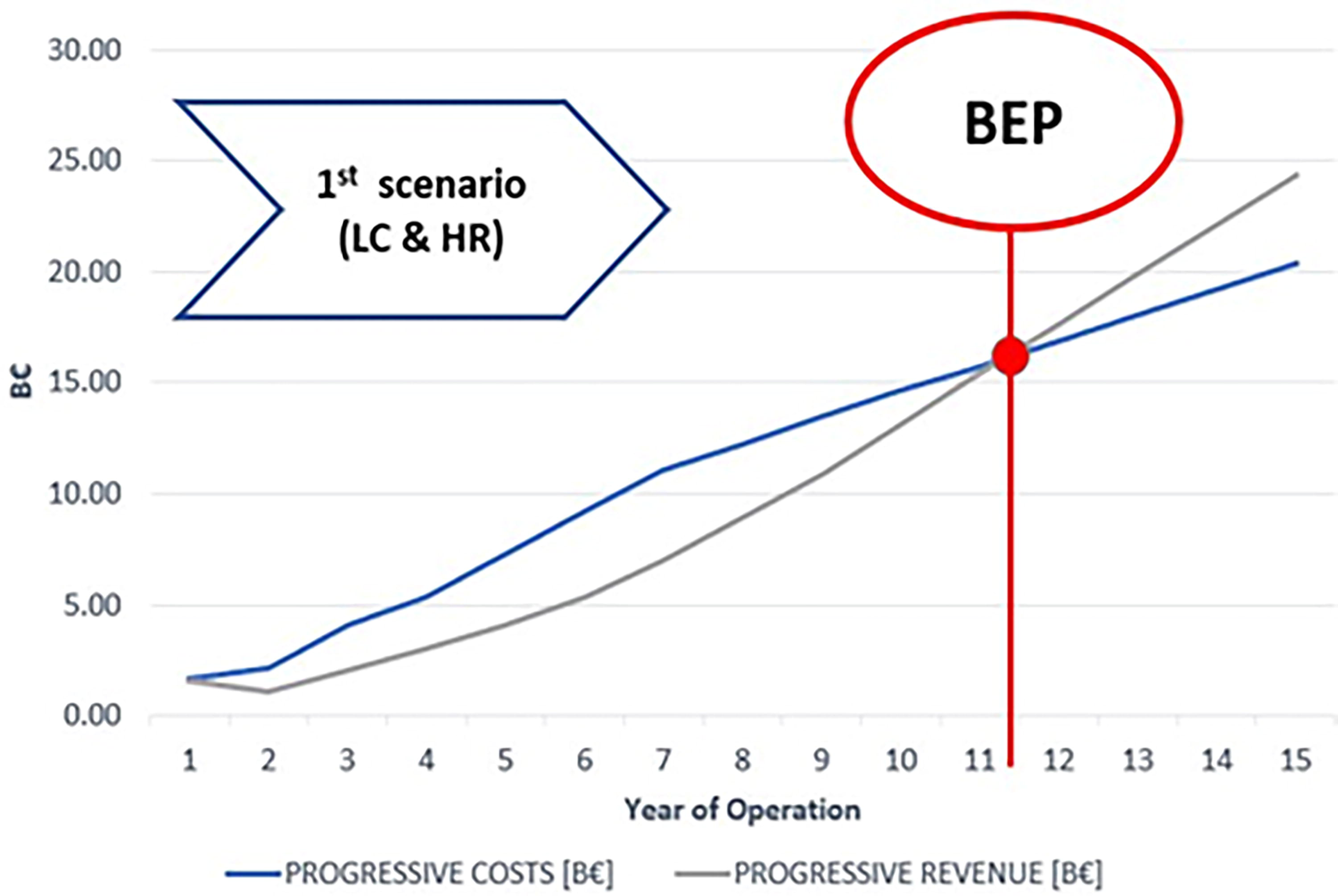
STATION ASSEMBLY STRATEGY
In order to maintain Europe’s presence in space, there is a proposal to initiate the construction of ECLIPSE before the decommissioning of the ISS. Recent reports indicate that the ISS will be deorbited from 2030. 34
As previously mentioned, an initial activity to be conducted on the station is scientific R&D, and it has been determined that the Columbus laboratory, currently attached to the ISS, will be utilized for this purpose. This approach ensures cost savings while aligning with the overarching sustainability principles that will govern the deorbiting of the international station.
For these reasons, the first ECLIPSE module, the core module, is slated for launch by the end of 2029, coinciding with Axiom’s departure from the station, and will dock at the same docking port as Node 2. Subsequently, the Canadarm 2 will detach Columbus from its current location and reposition it to connect with the core module. It will serve as the station’s core, boasting many utilities. It will accommodate three astronauts and provide all the necessary facilities for their sustenance, including food storage and a gym. Moreover, the module can generate and store power through its solar panels and batteries. Equipped with guidance, navigation, and orientation control systems, it will autonomously achieve the desired orbit and execute emergency maneuvers when required. Communication with Earth will be established, and ample storage capacity will be available.
Furthermore, the core module will feature six docking ports, facilitating future expansion of the station. To enhance the management of various modules in the future, a robotic arm with capabilities equivalent to those of the Canadarm 2 will be sent to the station. At the same time, it is still docked to the ISS, thereby leveraging the unique advantages offered by the ISS regarding resources provided.
After that, the station, consisting of the core module and laboratory, reaches the correct orbit, poised for expansion. Indeed, in 2030, the second module, the crew module, will be launched, significantly augmenting the station’s capacity to accommodate seven permanent astronauts with all the amenities they need and possibly host up to 11 people simultaneously. Although a large crew is unnecessary for carrying out activities, ECLIPSE needs to accommodate private astronauts or scientists for their space training or experiments. This collaboration with private space agencies or governments accelerates the recoupment of investments and enhances credibility, attracting future investments. Furthermore, it allows sufficient time to develop and refine the technologies required for other activities. Therefore, this module is designed to prioritize the crew’s well-being and address the psychological effects of space travel. To achieve this, it will feature a spacious environment, complemented by a large window that offers panoramic views of outer space and the Earth from above. Additionally, the module will include an airlock for EVAs. In order to facilitate module relocation and assist with EVA operations, an adapter for the robotic arm will also be incorporated into this module’s design. Like the core module, the crew module will have six docking ports, a power generation and storage unit, and storage capability.
From 2033 onward, additional modules will be incorporated for various activities. The upcoming module scheduled to arrive at the station is a module that serves as a dedicated space for manufacturing R&D processes. Additionally, it will also accommodate external tanks used for refurbishing another spacecraft. Also, this module has six docking ports, with one allocated explicitly for refueling.
Launching in 2034, the Assembly facility will be directly connected to the previous module sent. This module will serve as the dedicated space for assembly activities. Given the specific requirements of the assembly process, it will be strategically positioned as far away as possible from other modules. Additionally, it will feature a large window to facilitate guided assembly operations and some robotic arms for satellite handling. Considering the substantial space needed for storage during the assembly activity, a big, nonpressurized module will be located close to the assembly module. This storage module will accommodate the necessary inventory and spare parts, allowing robotic arms to retrieve the required components directly.
The completion of ECLIPSE has arrived. In its fully operational state, the station can accommodate seven astronauts who will engage in different activities, training, and maintenance tasks. Additionally, the docking facilities of the station will be utilized for at least two crew capsules and two cargo vessels simultaneously. As for the remaining docking ports, which are currently unoccupied, can be addressed for parking purposes. In the future, there are plans to further expand the capabilities of the Columbus module by adding a laboratory. This new laboratory will enhance the existing facilities and enable the station to undertake a broader range of scientific research and experiments.
In order to optimize the psychological well-being of the crew and assist with their orientation, all modules designed for extended stays or work purposes are strategically aligned in the same plane. This arrangement provides the crew with a consistent floor and ceiling reference, aiding their sense of spatial orientation within the station (Fig. 2).
Mission timeline.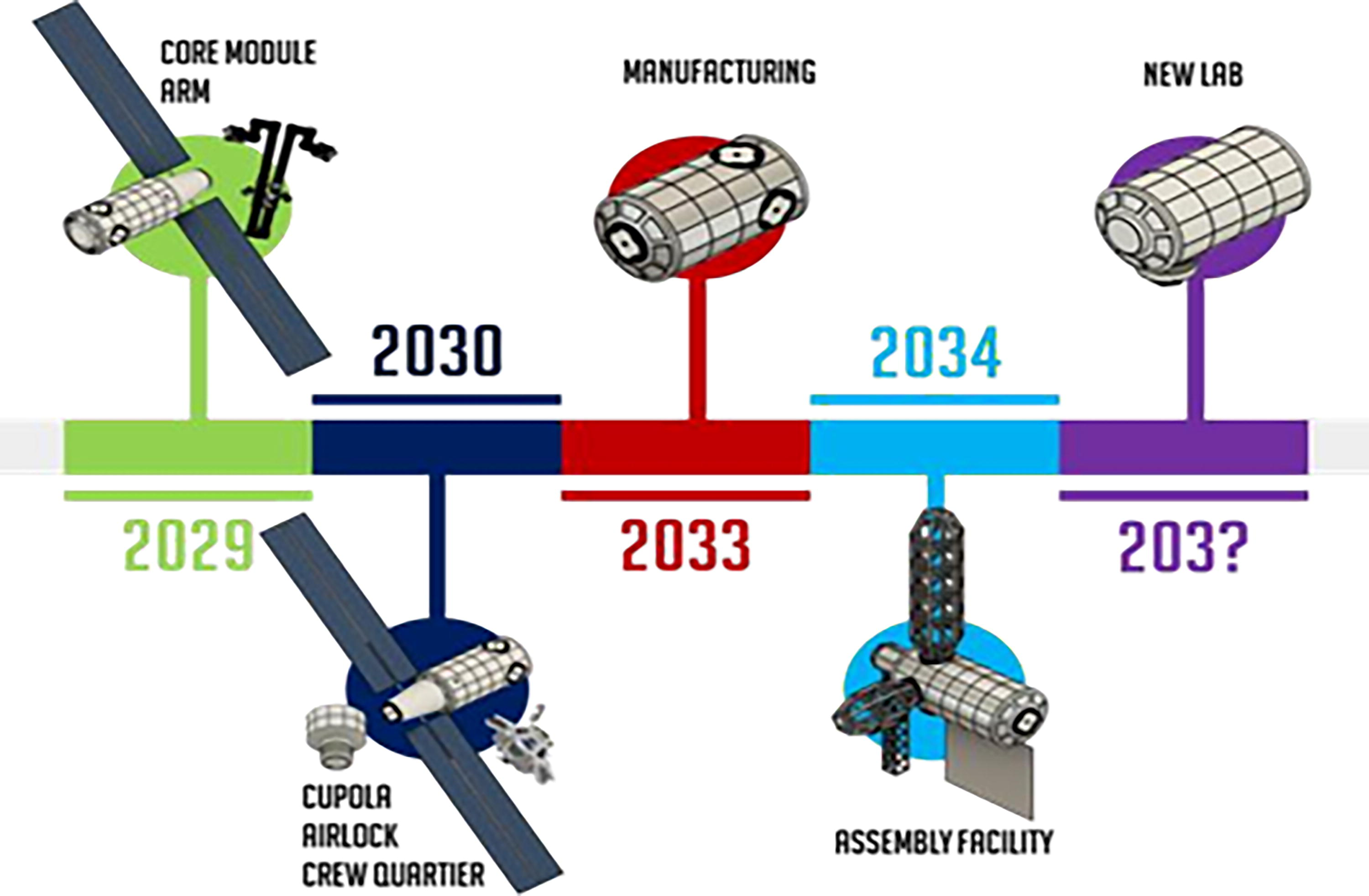
COLUMBUS TRANSITION PLAN
This section aims to provide a qualitative estimation of the technical feasibility of its removal from the ISS to berth it at the ECLIPSE station and give a procedure that will be required to extend its current lifetime of about 5 years.
First, the motivation behind the reuse of the Columbus module has multiple origins: its European origin and ownership, its flagship role in the ISS, its relatively young age (15 years compared to 25 for Zarya), the modularity of the experiments inside and the recent push toward its commercialization, the short-term cost savings and revenue generation for ECLIPSE, and finally a strong statement toward reusability in space and in-orbit reuse experience.
Technically, the Columbus module is accessible as one of the external appendices of Node 2, docked with a Common Berthing Mechanism 35 designed to be reused. However, EVAs have been reported 36 to commission the module and physically install fluid, air, data, and power cables to Harmony, which will require planning and further EVAs to recommission ECLIPSE. From a technical perspective, the Columbus module is only qualified until 2030. As highlighted in, 37 the main concerns include the primary structure dynamic loading and orbital cycling, which are not repairable in orbit. From expert interviews (Ciampolini—Fondazione Amaldi, Gargioli—Thales Alenia Space), provided safety measures are taken to ensure no catastrophic single-point failures would occur on the module, the extension of the module’s lifetime past 2030 should be possible. As a point of comparison, Zarya was initially designed for 15 years and is currently at its 25th.
Finally, a procedure will be detailed below to accommodate the safety concerns that may arise when the lifetime has to be extended, based mainly on the previous work done for the first lifetime extension of the Columbus module. 38
The current state of the primary structure should first be assessed, as well as other nonreplaceable items. This is the driver of three main objectives: the assessment of the old design hazard control validity and/or the identification of new controls, the modification of previous designs to comply with safety requirements, and the assessment of the need and extent to which the Columbus maintenance should be increased or its strategy modified. Then, the initial worst-case design requirements of the module and its systems should be reevaluated for a longer period. Consequently, all documents referring to waivers, requests for approval, and noncompliance reports should be checked to assess their validity with an increased lifetime. Finally, mission anomalies inherent to the Columbus module should be studied to identify if any are related to the aging of the module. While not exhaustive, this procedure should give some insights to prepare the work for a future technical assessment.
ECLIPSE SIZING
The sizing of each module has been meticulously determined based on the number of ISPRs required for the specific activities they are intended to accommodate and the needed vital systems and equipment to keep the station alive and to allow the host of the crew. Moreover, the overall dimensions in terms of length, radius, and mass have been carefully established to ensure they do not exceed the launch capability of the Ariane 64.
ECLIPSE Module Characteristics
ECLIPSE station will have a total pressurized volume of over 550 cubic meters in its final configuration, with a total mass of over 90 metric tons (after the detachment of Columbus).
Starting with the characteristics described in Table 5 it has been possible to define a cargo and crew vehicles strategy and, at the same time, to develop a parametric cost model, described widely in the previously mentioned paper,
5
to evaluate the total cost of the project and study the business plan. Additionally, the subsystems and the size of specific components, such as solar panels and radiators, have been estimated and appropriately scaled based on the specifications of the ISS. To leverage the European heritage and optimize cost efficiency, all modules have been designed using a conventional approach, avoiding overly innovative structures. This approach allows for the utilization of established and proven design principles, ultimately contributing to financial savings and pushing European Autonomy in the Space Sector (Fig. 3).
ECLIPSE CAD. ECLIPSE, European Commercial in LEO In-space Platform for Science and Exploration.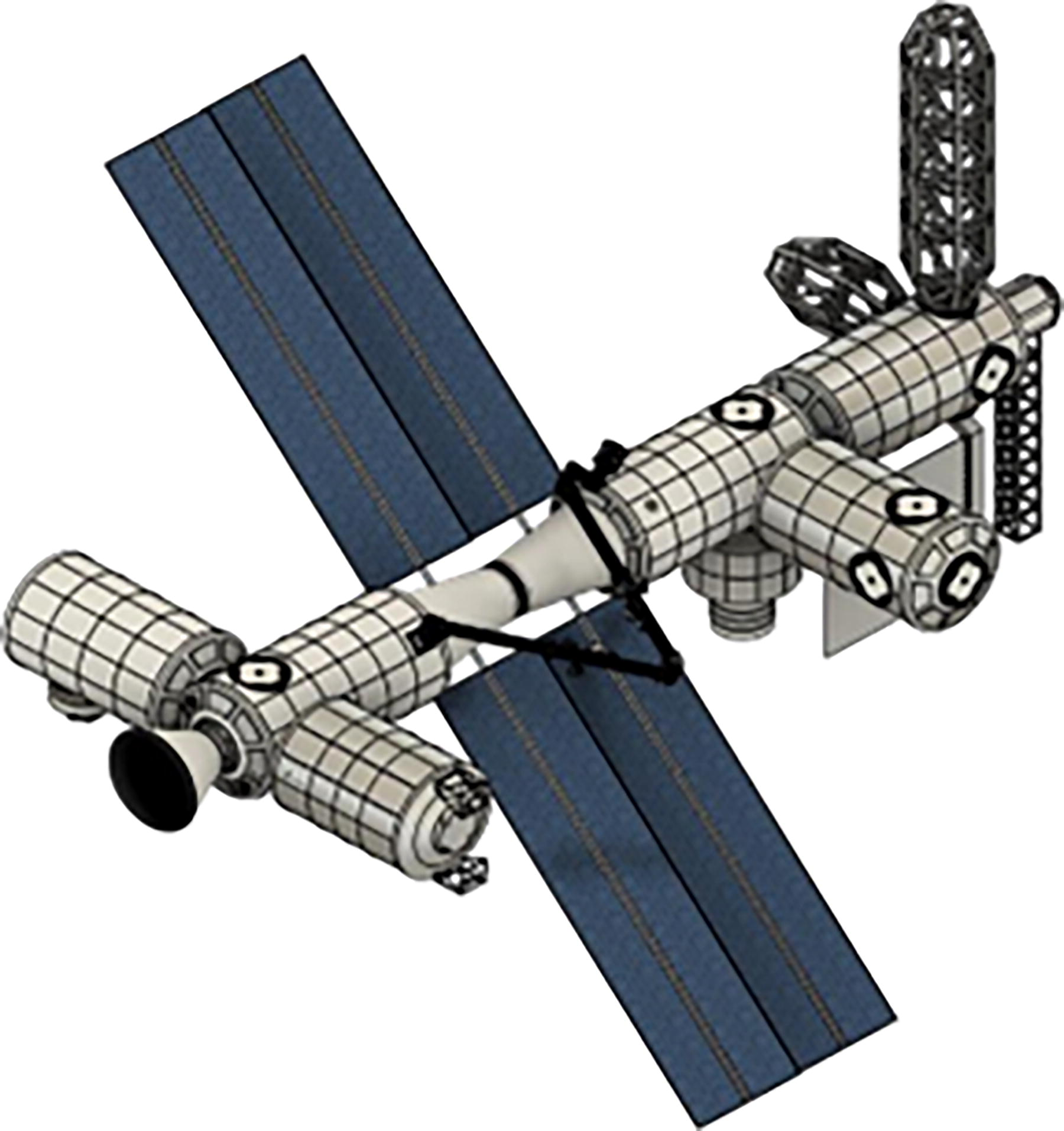
CARGO, REFUELING, AND CREWED VEHICLES
To ascertain the feasibility of the ECLIPSE project, a comprehensive understanding of the essential resources required by the space station throughout its operational lifespan is imperative. This understanding will enable the formulation of a well-defined plan to procure and supply the necessary resources while simultaneously establishing a continuous crew rotation schedule for the station. Once the vehicles capable of transporting cargo and crew to the space station have been identified, developing a meticulously crafted multiyear plan becomes essential to ensure sustained support for the entirety of the mission.
This chapter delves into the intricate details of crewed and cargo vehicles, examining their pivotal role in the successful execution of the ECLIPSE project by thoroughly analyzing the resource requirements, devising robust procurement strategies, and establishing efficient crew rotation procedures.
Cargo Strategy
Cargo Vehicles
EU, European Union.
Actually, Europe does not possess its own dedicated cargo resupply vehicle. However, efforts are underway to develop projects such as NYX
39
and SUSIE
40
to address this gap. The cargo resupply strategy can be divided into three distinct stages:
Extra EU providers: Initially, during the early stages of the ECLIPSE program, the most likely scenario involves relying solely on non-EU providers for the supply chain of the station. This would entail utilizing available cargo vehicles from non-EU entities such as Cargo Dragon and Cygnus.41,42 Hybrid providers: In the second stage, as the EU achieves significant milestones with its NYX, SUSIE, or other forthcoming conceptual vehicles, the supply chain for the ISS will involve a combination of EU and non-EU companies. This hybrid approach will leverage the capabilities of both EU and non-EU providers to ensure a robust and reliable supply chain. EU providers: Ultimately, as the European market for cargo vehicles becomes well-established, the strategic objective will be to move toward European autonomy. In this final stage, the supply chain for ECLIPSE will exclusively rely on European providers. This marks a pivotal milestone in pushing toward self-sufficiency and solidifying the European presence in the cargo resupply domain.
By outlining this three-step approach, the European space industry aims to progressively enhance its capabilities, transition from dependence on external providers, and establish a self-reliant and autonomous supply chain. These strategic measures reflect the ESA’s commitment to fostering European contributions to space exploration and strengthening the region’s position in the field of cargo resupply.
The resupply chain will sustain the needs of the ECLIPSE space station in terms of:
Crew supplies Hardware Science payloads and experiments Spacewalk equipment Computer resources
Specific resources are needed by activities. Considering the literature, in the last years, the ISS has been resupplied by several cargo vehicles, bringing to LEO environment an average of about 3400 kg per launch. The resources follow, on average, the distribution shown in Figure 4.
Average cargo distribution.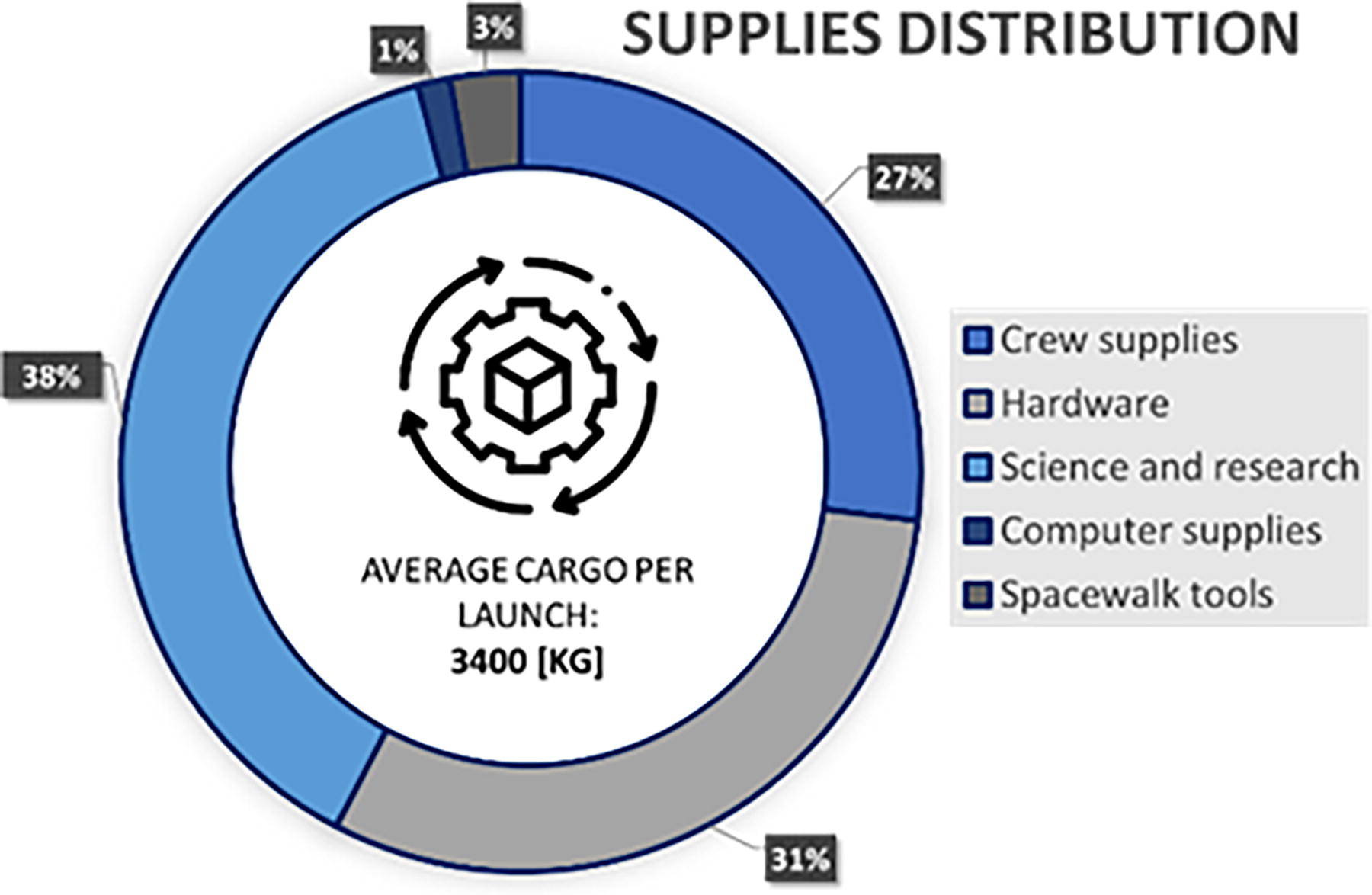
Within the framework of the ECLIPSE project, a comprehensive resupply vehicle program is necessary to ensure the availability of essential resources for our space station. Presently, the European landscape lacks fuel resupply vehicles. Only two vehicles can refuel space stations: the Roscosmos Progress capsule to refuel the ISS and the Tianzhou resupply vehicle for the Chinese Space Station. ECLIPSE fuel resupply strategy can be based on a cooperative agreement with other country suppliers.
Alternatively, given the escalating interest in space stations and considering the heritage gained with Automated Transfer Vehicles (ATV), numerous European companies will accept the challenge of developing fuel-supplier vehicles and closing the gap in the coming years to meet the growing demand. This vehicle could provide fuel to the station or perform direct station-keeping maneuvers with its service module. ESA SUSIE represents a good candidate to perform refueling and station-keeping maneuvers, according to ARIANE Group expert interview.
Resupply Chain
Starting with the distribution presented in the subsections above, developing a parametric model to estimate the needed resources for the ECLIPSE station is possible. Three main parameters have been considered: obtaining the amount of resources to be provided to the station based on the number of permanent astronauts, the global pressurized volume, and the number of ISPR dedicated to research activities, leaving margins for other activities needs (Fig. 5).
ECLIPSE resupply chain.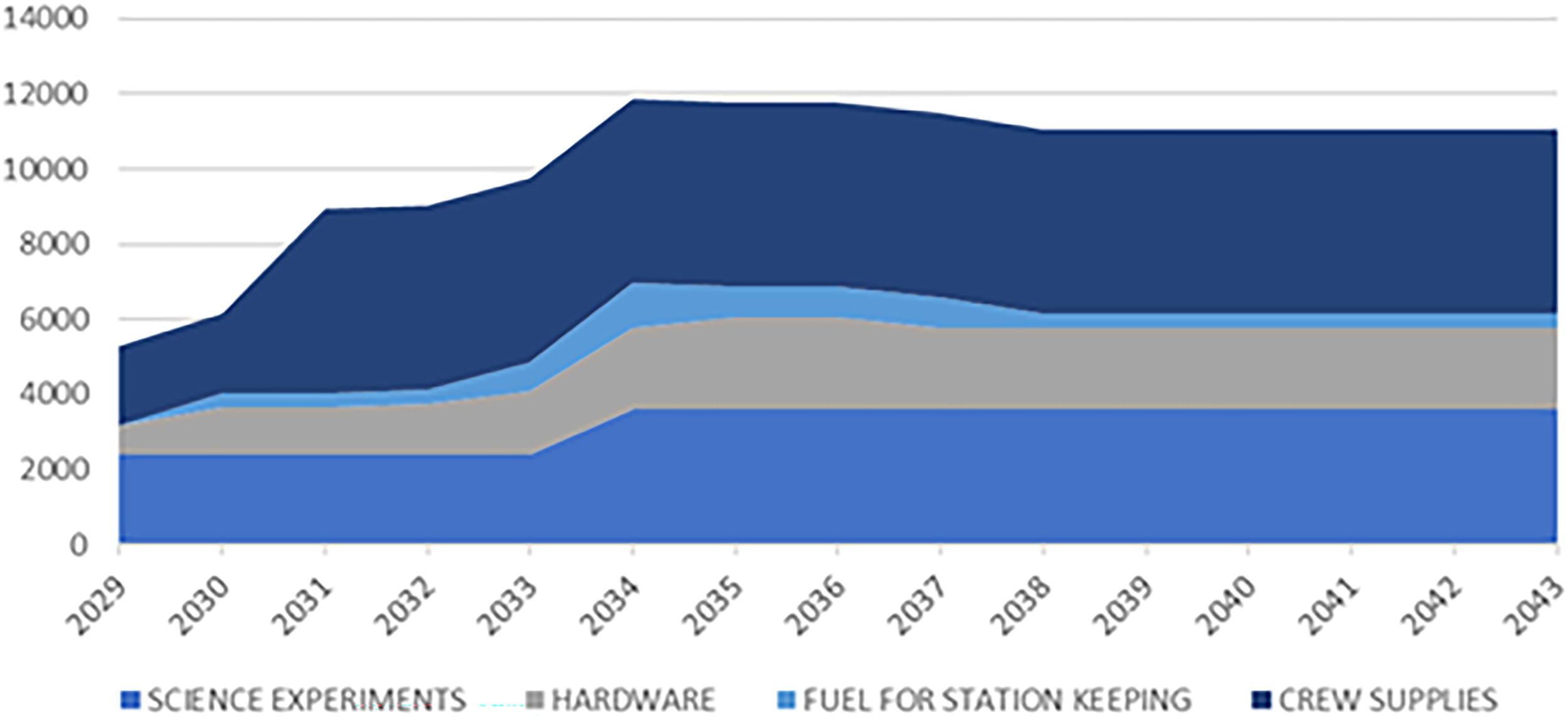
The graph shows the distribution of resources for the station, divided into categories. Considering the vehicles described above and considering the actual missions performed to the ISS, the average amount of supplies for each launch is:
Cargo: 3400 [kg].
Fuel: 2500 [kg].
It is then possible to perform a preliminary estimation of the needed vehicle for ECLIPSE, reaching a maximum of seven vehicles (five cargo and two fuel vehicles) when the station is fully operative with more than 550 cubic meters of pressurized volume, shown in Figure 4. The reduction shown in the graph below after 8 years is due to the detachment of Columbus (Fig. 6).
ECLIPSE resupply vehicle.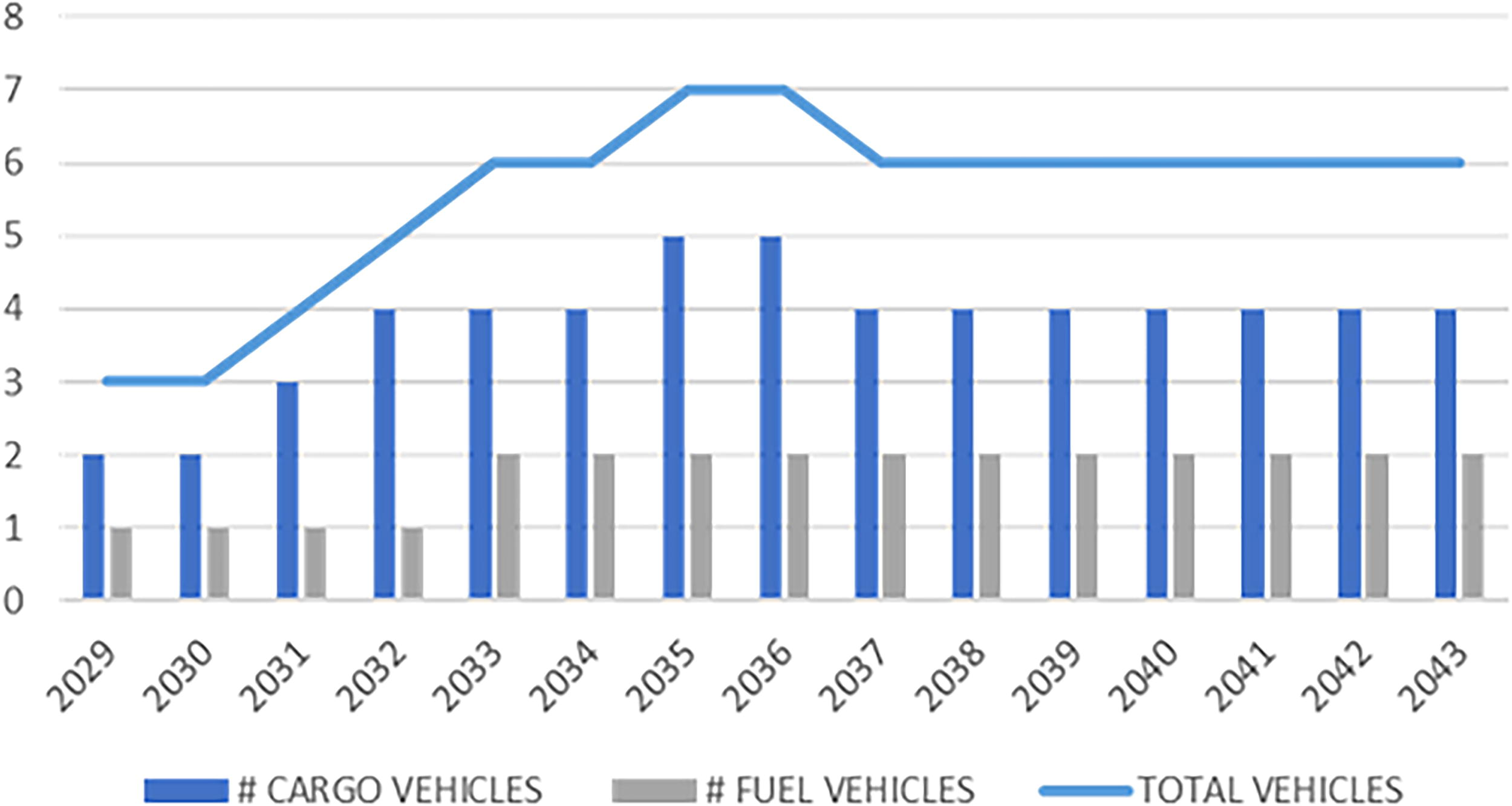
Crew Strategy
Crewed vehicles represent a critical technology to sustain a space station, having the capability to bring astronauts in LEO and back safely to Earth with a reentry capsule. The current primary capsules and EU concepts that will arise in the following years are listed below in Table 7 with characteristics:
Crewed Vehicles
The station will mainly use three different crew capsules to enable the renewal and transfer of astronauts to the station:
Crew Dragon: reusable spacecraft developed by Space X, which ensures the succession of astronauts in the ISS. This capsule allows the possibility to send from 4 to 7 astronauts to the station and will be docked for 210 days. NYX: reusable spacecraft developed by The Exploration Company, a European entity. The objective of this capsule is first to be used as cargo for the resupply of future space stations (contract with Axiom). Then, it will be used to send a crew into space, probably at the beginning of the 30’s. SUSIE: Reusable spacecraft developed by ARIANE Group with mainly the same objectives as Nyx. The first aim is to use it as pressurized cargo for the space station supply and then as a crew capsule.
The crew strategy for the ECLIPSE space station will be divided into two sections. In the beginning, the station will host three permanent astronauts simultaneously, performing a mission cycle every 6 months with a three-person crew. After the launch and the crew quarter’s attachment, ECLIPSE’s capacity will grow to seven permanent astronauts, with two permanent crews of three and four astronauts performing a cycle of exchange every 6 months. At the same time, to allow crew interchange, the station will host a maximum of 11 astronauts at the same time for short stays.
DISCUSSIONS
The implications of the ECLIPSE project within the European panorama present a combination of opportunities and challenges. The project’s timeline may be influenced by the need for additional technologies related to cargo transportation, refueling, and crew vehicles, as well as potential delays in critical component development. Nevertheless, the unwavering commitment of European stakeholders to invest in the space sector holds the potential to energize and advance the ECLIPSE project.
By building upon the accumulated heritage and knowledge in space station design, the proposed approach for the ECLIPSE station aligns with existing concepts rather than venturing into overly futuristic territory. The ECLIPSE station aspires to pioneer the exploration and utilization of the microgravity environment by encompassing a diverse range of onboard activities, with the possibility to discover and develop some cutting-edge technologies that will drastically change the future in space, having at the same time significant economic and healthiness benefits on Earth. However, it is essential to note that the successful realization of each activity depends on the readiness level of the involved technologies, necessitating continued attention to technical challenges in the future.
ECLIPSE will serve as a platform for further exploration and discussion, underscoring the importance of addressing technical obstacles while nurturing the development of space-based endeavors.
However, the project’s technical feasibility is greatly influenced by its economic viability, as thoroughly addressed in the dedicated paper. 5 The substantial investment required to construct the space station must be considered. Nevertheless, Europe’s involvement in this project is crucial. It brings significant advantages, such as leveraging the extensive heritage of the ESA and accessing public funds, but it also faces acknowledged disadvantages. Overall, Europe needs to establish its presence in space, and the most effective way to assert its autonomy is by having a LEO (LEO) space station to compete with other major powers. Despite the tremendous effort required, this endeavor is worthwhile. The project’s success could finally earn Europe the reputation it deserves and position it on par with the most remarkable space powers. However, Europe would need to develop the missing technologies to be autonomous in the LEO environment to achieve this.
Another factor that could significantly impact the realization of the mission is the current geopolitical context. The tense relationships between western and eastern countries developed in the past few years have caused major effects on many sociopolitical aspects, as well as the global economy. On the economical side, one of the most noticeable outcomes is the variations in raw material costs and commercial exchanges worldwide, which is basically affecting every industrial production sector. Even though the Commercial Space Station envisages for the most part a European involvement, the consequence of the recent international events may determine great changes in short-term necessities and interests of the involved entities, therefore potentially limiting the development of the processes. As a result, the scheduled timeline for ECLIPSE could be subjected to delays and reprogramming depending on the scenarios’ unfolding; regarding this aspect, the intention of reusing Columbus could also represent an obstacle since its lifetime cannot be prolonged too far.
In conclusion, constructing a European Commercial Space Station poses immense challenges. However, the potential benefits for Europe in establishing its presence in space and competing with other significant powers make it a venture worth undertaking. Despite the risks involved, the combination of technical feasibility and economic viability positions Europe to seize opportunities in a rapidly expanding market.
CONCLUSION
In conclusion, this technical paper has presented a comprehensive overview of the ECLIPSE project, a modular European Commercial Space Station, in the following steps:
Mission context: An overview of the socioeconomic environment in which ECLIPSE is placed is provided and discussed, with the identification of the proposed solution. Mission definition: The high-level characteristics are presented, with a technical study of the main competitors, the list of the possible activities, and the definition of ECLIPSE orbit. Activities description: A technical discussion of the chosen activities, highlighting the main features, benefits, and criticalities. Technical definition: It includes the assembly strategy of the station with its timeline, the high-level definition of the modules, and the description of the overall resupply chain of the station.
Furthermore, economic considerations to assess the feasibility of the whole project have been done in the other article, which completes the work presented so far. 5
Footnotes
ACKNOWLEDGMENTS
This research has been carried out in collaboration with international students from the University of Leicester, Politecnico di Torino, and ISAE-SUPAERO, as part of the SpacE Exploration and Development Systems (SEEDS) masters project. The authors would like to express their gratitude to all the tutors from each institution, as well as the experts from Thales Alenia Space, ALTEC, Center National D’Etudes Spatiales (CNES), Agenzia Spaziale Italiana (ASI), and European Space Agency (ESA). Their invaluable guidance and feedback have played a pivotal role in the successful execution of this study.
AUTHORS’ CONTRIBUTIONS
Mission analysis and system engineering: A.M., A.P., J.T., and H.W. Market and cost analysis: B.C., G.A.C., M.P., and L.W. Manufacturing: F.L., A.P., R.T., and J.W. Assembly: S.C., D.M., S.P., B.A., and N.C.B. Science space lab: S.A., N.L., A.M., C.N., and S.S. Astronaut training, storage, and parking: A.A., A.B., A.G., and E.S. Refueling: M.C., H.D., H.H., M.S., and Y.S.
AUTHOR DISCLOSURE STATEMENT
No competing financial interests exist.
FUNDING INFORMATION
No funding was received for this article.