




Abstract
Abstract
Background:
The past 25 years have witnessed immense progress in our understanding of the systemic, tissue-specific, and cellular consequences of severe injury and infection. Despite such insights, considerable controversy remains regarding appropriate biologic and management interventions to prevent or ameliorate the associated adverse outcomes.
Methods:
A review of several scientific developments arising from studies initiated at Cornell University Medical College during the tenure of Dr. G. Tom Shires. The implications of those and subsequent studies are discussed.
Results:
An understanding of patient-specific variation and adaptability could direct individualized biologic and management interventions for severe injury and infection.
Conclusion:
Despite more detailed appreciation of the molecular mechanisms of danger and pathogen recognition and response biology, we have much to learn about the complexity of severe injury and infection. There is a great need to extend our investigation of these mechanisms to experimental and stress-modified clinical scenarios.
“I'm a lot like you—I think this is pretty important data”
Dr. G. Tom Shires to the author, 1985
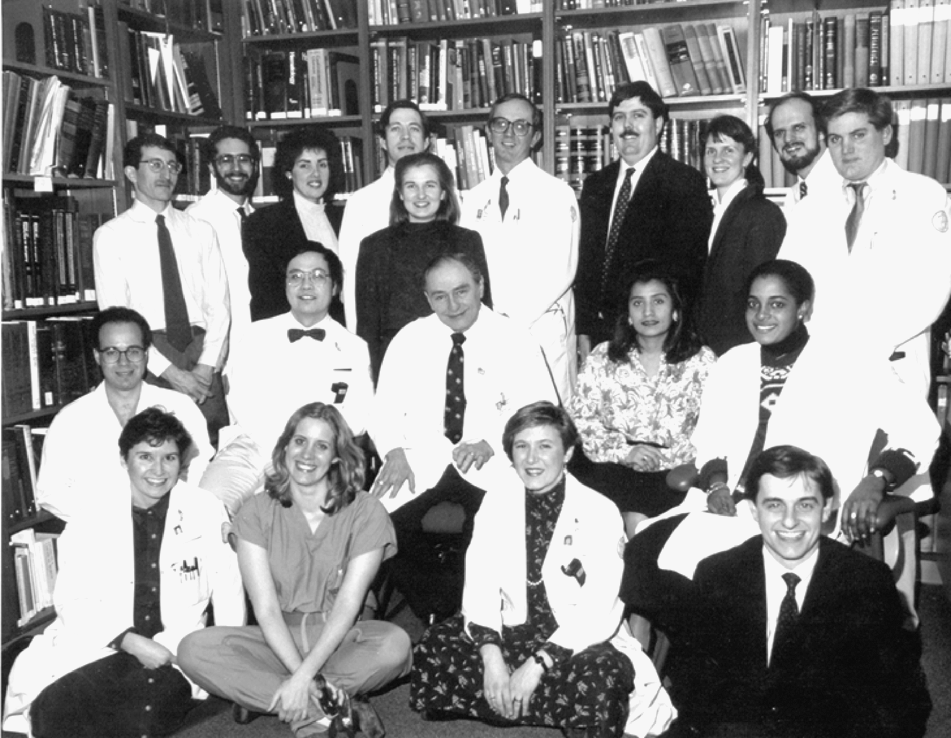
Current and former members of the Laboratory of Surgical Metabolism at the New York Hospital-Cornell Medical Center with Dr. G. Tom Shires, circa 1991.
Some Early Insights
In many respects, the scientific accomplishments of the Shires era in the Department of Surgery at Cornell can be defined as an underpinning for the cytokine theory of disease. Those of us in the Department certainly were not alone in these endeavors: We shared this early journey with many outstanding scientists, such as Carl Nathan at Cornell; the late George Clowes, Doug Wilmore, and John Mannick at Harvard; as well as Charles Dinarello (then at Tufts) and others who were pursuing cytokine-mediated disease concepts. Our group's early interest in cachexia was shared with a mentor, Murray Brennan, at Memorial Sloan-Kettering Cancer Center, where Lloyd Old had discovered an endogenous protein, aptly termed “tumor necrosis factor” (TNF), that destroyed cancer cells in vitro [3]. Anthony Cerami and Bruce Beutler at The Rockefeller University had recently identified a substance they termed “cachectin” for its presumed role in promoting weight loss in parasite-infected animals [4]. Our interest in the metabolic parallels between cancer-imposed stress conditions and those of injury stimulated us to understand in greater detail the relevance of these endogenous factors during acute and chronic stress. In collaboration with the Rockefeller group, we documented that cachectin reproduced some of the tissue [5] and systemic metabolic [6] responses that characterize severe injury states.
Even as our interests in cachectin as a mediator of cachexia continued [7], we focused on the study of its role in acute human injury. We sought to extend our initial experimental results to the clinic, where we observed that a brisk cachectin/TNF response was an early signature of the human endotoxin response [8] as well as a persistent signal in high-risk burn injury [9]. Several groups subsequently demonstrated that the TNF-associated human phenotype could be modified by pharmacological anti-inflammatory approaches [10–12]. This focus on biological observation and translational human investigation became a distinguishing feature of many surgeons and scientists who came of age during Tom Shires' tenure at Cornell.
Concurrent with these studies on cachectin/TNF (now called simply “TNF-α”), several laboratories around the country were confirming the biological significance of the long-reported “leukocyte endogenous mediator” [13] (now recognized as several isoforms of interleukin [IL]-1). Together, these mediators became prototypes for what are now referred to as pro-inflammatory cytokines. In response to our initial study suggesting a role for TNF-α [14] as an initiator of the sepsis response, several pro-inflammatory cytokine antagonists were subjected to clinical trials in sepsis and septic shock. Our group participated in the experimental and early-phase clinical assessment of many of these agents [15–19].
Over ensuing years, the results of prospective trials proved disappointing for virtually every cytokine antagonist tested [20]. Despite efforts to ascribe the failure of these trials to errors of reagent, dosing, or subject selection, consensus reasons for the lack of a therapeutic signal have never been established. It has became increasingly clear, however, that such agents are more effective during higher-risk presentations of the septic phenotype [21].
Another insight into the pathophysiology of sepsis arose from suggestions that hemostatic imbalances could contribute to adverse outcomes during severe sepsis. In collaboration with colleagues in The Netherlands, we participated in several studies to confirm such disordered hemostatic balance in both controlled models of human infection [22] and clinical injury contexts [23]. The development of reagents directed toward such disorders also prompted clinical trials of several hemostatic therapies with mixed results [20]. Once again, it became evident that more severely afflicted patients appeared to benefit from such interventions [24], and we confirmed that one such agent had some anti-inflammatory activity in human endotoxinemia [25]. Recent post-hoc analyses of the defining trial of recombinant activated protein C (aPC) suggested benefit to surgical patients [26, 27] as well as selected populations of non-surgical patients. There are continuing efforts to define the clinical profile of subjects who might benefit from such therapies.
Other established anti-inflammatory agents, such as glucocorticoids, also have been explored in severe sepsis. Although early studies of high-dose steroid administration during severe sepsis proved unrewarding [28], the subsequent concept of glucocorticoid deficiency in some septic or injured patients [29] provided a new impetus for the study of such therapy. Unfortunately, recent studies have diminished the expectation that steroid replacement therapy will prove to be a cost-effective intervention in this situation [30].
There is an advantage to having been long-term participants in this roller coaster of translational science. It has provided many members of our group with the excitement of shared discovery and hypothesis generation as well as the humility wrought of incomplete understanding. Doubtless from the lessons of his own distinguished research career, Tom Shires taught us to expect and enjoy these experiences and to grow from them. From this perspective, we cannot ignore the recurring theme that individual patient responses may differ significantly within and across clinical contexts. The relevant phenotype of the injured or septic subject is captured only inadequately by population-based measures and accrual criteria derived from them. Hence, perceived lack of responsiveness to many of the above therapeutic strategies probably is influenced by our imperfect understanding of how individual patients adapt to the complex signals of injury and recovery. We have begun to grasp the dynamic nature of these processes only recently [31].
Confounding Influences of Individual Diversity and Therapeutics
The unanticipated results of the clinical trials mentioned above probably should have engendered little surprise. All such trials to date have failed to account for the potential underlying variations in human physiological and cellular adaptability within the target populations. It probably can be assumed that inter-individual variation of patient adaptability and fitness had a bearing on the outcome of these prospective efforts. Here, too, we can take a lesson from the pioneering clinical studies of Tom Shires in burn patients: It is important to limit the diversity of patient pathologies and management co-variables if we are to make sense of injury biology. Even our still-limited understanding of the complex interactions of inheritance and environmental influences would predict some of the expressed phenotype variability we observe in the context of severe inflammation and therapeutic interventions [31–34].
Appreciating that stressful conditions often precede the insult of pathogen invasion in surgical patients, the two-hit model of inflammatory insult has become the operating paradigm for complicated injuries (Fig. 2). We are now increasingly aware that the second hit may be either “sterile” or pathogen-induced. Although the second insult generally is perceived to occur one or more days after the initial insult, some authors have suggested that a demonstrable secondary host response may be elicited within a matter of hours after the initial traumatic event [35].

Representation of two-hit model of the inflammatory response. The systemic host phenotype as well as cellular responses respond to initial injury conditions as modified by individual patient features, such as age, sex, and associated illnesses or therapies. Over time, other influences, including management practices and acquired dampening of signal input or tissue responsiveness (“connectedness”), modify the inflammatory responses, including any resulting from secondary stressors. Tx = therapy.
In many cases, the initial systemic and cell activation responses elicited by sterile injury are indistinguishable from those arising from infection [36]. Not surprisingly, signals derived from either tissue injury or infection converge on the same receptors. Hence, a major consideration is how the immune system recognizes such non-infection signals [37] and provides informational cues that constrain the more damaging inflammatory responses evoked by pathogen invasion [38]. Beyond the significant progress achieved over the past 25 years in defining the molecular recognition, signaling, and cellular responses resulting from sterile stress or infection, we have a lesser appreciation of how stress-modified individual and environmental cues modulate host adaptability.
The Variable Rhythms of Injury and Sepsis
Homeostasis exhibits rhythmic physiological and biochemical activities. The temporal predictability of this endogenous control is presumed to confer acute adaptive advantages [39, 40]. Several of these inter-related processes are discussed briefly below.
Circadian entrainment
The core circadian clock regulates several networks required for normal cell function [41]. During health, circadian rhythms entrained by light/dark and food intake cycles are readily detectable as neuro-endocrine secretory and autonomic activities, including heart rate and blood pressure. These circadian entrainment cues frequently are altered in stressed hospitalized patients, and the consequences of this loss of environmental cues have yet to be fully defined in the context of stress [42]. Recent data document that inflammation-inducing ligands, including endotoxin [43] and TNF-α [44], suppress the expression of clock regulatory genes in the suprchiasmic nucleus and peripheral tissues. The linkage of innate immune system function to circadian rhythm control has not been explored adequately in the setting of persistent systemic inflammation.
Autonomic rhythms
Autonomic function also exhibits circadian rhythmicity, as assessed by measures of heart rate variability [45]. This daily fluctuation in both frequency and power spectra has implications for sympathetic and parasympathetic balance and the acute regulation of systemic inflammatory activity. Autonomic imbalance, reflected by sympathetic activity excess (or parasympathetic attenuation), is associated with greater morbidity in patients with severe sepsis [46]. A reduction in parasympathetic activity may be associated with diminished capacity to exert vagal cholinergic control over pro-inflammatory mediator activity [47]. We and others have confirmed the in vivo alterations of parasympathetic activity following controlled inflammatory challenge. Hence, continued attenuation of vagal activity may impede this alternative mechanism for controlling the inflammatory balance.
Endocrine rhythms
The secretion of endocrine hormones is subject to circadian rhythms as well as to intermittent stimuli such as feeding and emotion [48]. Neurally regulated endocrine hormone secretion characteristically is enhanced during the early response to injury or infection [49, 50] but appears to be markedly dampened during prolonged stress. To what extent this diminished amplitude of hormone signaling influences end-organ responsiveness remains an important question.
A healthy person subjected to an acute insult relies on the above stereotypic responses to recognize, contain, and resolve local sites of injury or pathogen invasion. The concept of a prototypical, “healthy” host response may, however, be modified by patient-specific (endogenous) factors, some of which will be discussed below (Fig. 2).
Age
The majority of patients receiving intensive care in this country are older than 65 years [51]. Advancing age clearly is associated with increased morbidity and mortality rates. The relation of age-related immune competence and confounding illness is more complex than commonly appreciated, however [52,53]. Epidemiologic data attest to the concept of “immuno-aging” wherein pro-inflammatory, innate immune responsiveness is reasonably well preserved among many older subjects [54]. However, the aging population exhibits increased cytokine markers of low-grade inflammation (i.e., IL-6) associated with a higher risk of both infection [55] and other stressful events [56]. Elderly subjects challenged with lipopolysaccharide exhibit a longer febrile response and hypotension [57] and prolonged and enhanced cytokine responses during pneumococcal pneumonia [58].
Other interacting factors may promote net pro-inflammatory tendencies during aging. For instance, the age-related diminution of autonomic variability, in particular of vagal activity [45], may promote enhanced TNF-α activity during initial stress. By contrast, physical conditioning enhances parasympathetic system signaling and may promote a survival advantage in physically fit older patients by attenuating cytokine excesses during acute inflammatory stress.
Sex
It is widely assumed that sex influences the initial inflammatory response and risk profile resulting from injury. Nevertheless, recent reports [59,60] question the validity of any female benefit among trauma patients. We have been unable to confirm any sex-related differences in systemic inflammatory responses to endotoxin in younger subjects. At present, there are no consistent reports of sex-specific differences in inflammatory responses in adults subjected to injury or infection-induced stress.
Confounding illness and treatment
There has been surprisingly little prospective correlation of acute inflammatory responses among non-cardiac surgical patients that have assessed the influence of confounding illnesses carefully. Indeed, the precise classification of relevant confounding illness remains in flux [52].
Genetic factors
Although the mechanism(s) of inherited risk of premature, life-threatening infection [61] are not defined, there are identifiable low and high inflammatory cytokine response patterns among random subjects [62] and a strong genetic linkage for stimulated cytokine production among monozygotic twins [63]. Needless to say, we have much to learn about how human genetic variation influences the host capacity to recognize and resolve tissue inflammation or respond to pathogen invasion.
Variation introduced by iatrogenesis
Little is known about how many management practices (exogenous factors) alter the dynamics of endogenous response/recovery capacities. Some current intensive care support strategies actually diminish signal input variance by intention. These strategies may make sense from a care-process perspective and may increase the intensity of patient/provider encounters. However, we simply do not know if these approaches enhance or perhaps reduce the bio-adaptability of stressed patients.
A prolonged stress state may manifest as diminishing amplitude, frequency, and efficiency of both autonomic and neuro-endocrine signaling [31, 64]. For example, several reports document diminished time domain measures of heart rate variability among critically ill infected and injured patients that correlate with adverse outcomes [46,65–67]. Reduced host adaptability, as reflected in such measures of total power, may serve as surrogate markers of organ system “connectedness” and of overall host capacity to respond effectively to inflammatory stressors [31, 68] (Fig. 2).
Disturbances in both short-term variability and circadian rhythmicity of neuro-endocrine hormone secretion are observed during inflammatory illness [69]. Attenuated hormone rhythmicity and signal amplitude are associated with ischemic events [48] and may likewise contribute to disordered metabolic and immune function [42]. An intriguing association of reduced cardiac rate variability with adrenal cortical tolerance (or relative insufficiency) has been noted in some injured patients [70]. It is intriguing to ask whether antecedent conditions (management) contribute to these changes. Two examples from issues frequently discussed at Tom Shires' weekly Cornell surgery conferences illustrate this point.
Resuscitation
Tom Shires clearly taught us that the means, adequacy, and timing of fluid resuscitation could modify the host response to injury. His seminal observations have been extended to both infective [71,72] and non-infective insults [73–75]. Variations in fluid resuscitation regimens also result in differing inflammatory responses among older patients [76]. It is unknown if these initial resuscitation-modified inflammatory changes influence immune, endocrine, and autonomic capacities during later phases of recovery. Perhaps current trials of various resuscitation strategies will be informative about these issues.
Route and composition of feeding
The use of parenteral nutrition in stressed patients has diminished greatly [77]. We earlier demonstrated that pro-inflammatory mediator responses are enhanced during continuous parenteral feeding [78–80] and provided early evidence that this enhanced response might be related to the composition of the feeding regimens [81]. I have discussed a new concept of nutrition-modified inflammatory risk wherein either continuous enteral or parenteral feeding dampens the normal variation of regulatory inputs from autonomic and circadian rhythms [82]. Hence, alternative management strategies designed to enhance the variability of nutrient provision may be necessary to optimize the benefits of nutritional support.
Conclusions
There has been immense progress in our understanding of injury and infection biology over the quarter century since Tom Shires inspired many of us to pursue the embryonic field of cytokine-mediated injury. None would have anticipated the pace of subsequent discoveries, and yet many would have expected the emergence of more effective therapies at this juncture. We are, once again, reminded that the biology of severe injury and infection is complex and often resists simplifying assumptions.
Footnotes
Acknowledgments
The author recognizes the contributions of many colleagues to the body of work described here. Among them are Annabel Barber, MD, Carla Braxton, MD, Eva Fischer, MD, Yuman Fong, MD, Michael Marano, MD, Kevin Tracey, MD, Kimberly van Zee, MD, and Tom van der Poll MD, PhD, who worked in our laboratory at Cornell University Medical Center, as well as Doreen Agnese, MD, Sonia Alvarez, MD, Badar Jan, MD, George Kotani, MD, Edward Lin, DO, and Xavier Wittebol, MD, who have worked with us at Robert Wood Johnson Medical School. I also recognize the career-long collaborations and friendship with research colleagues, including Steve Calvano, PhD, and Linc Moldawer, PhD, as well as the contributions of clinical faculty, including Phil Barie, MD, John Davis, MD, and Roger Yurt, MD, who provided valuable perspectives on this work.
Author Disclosure Statement
The author has been supported by National Institutes of Health grant GM-34695 throughout the entirety of these endeavors.
Presented at the Memorial Celebration and Festschrift for Doctor G. Tom Shires, New York, New York, October 25, 2008.